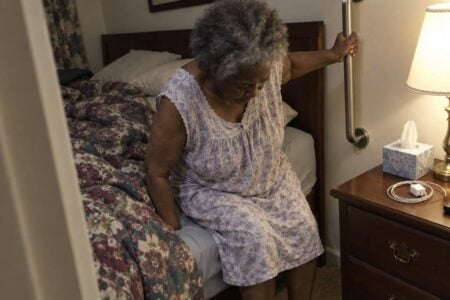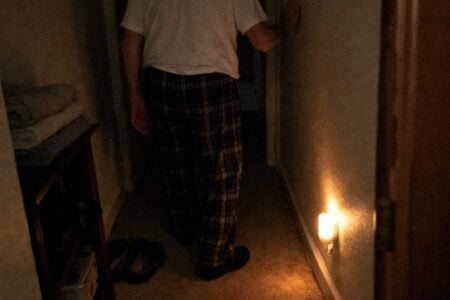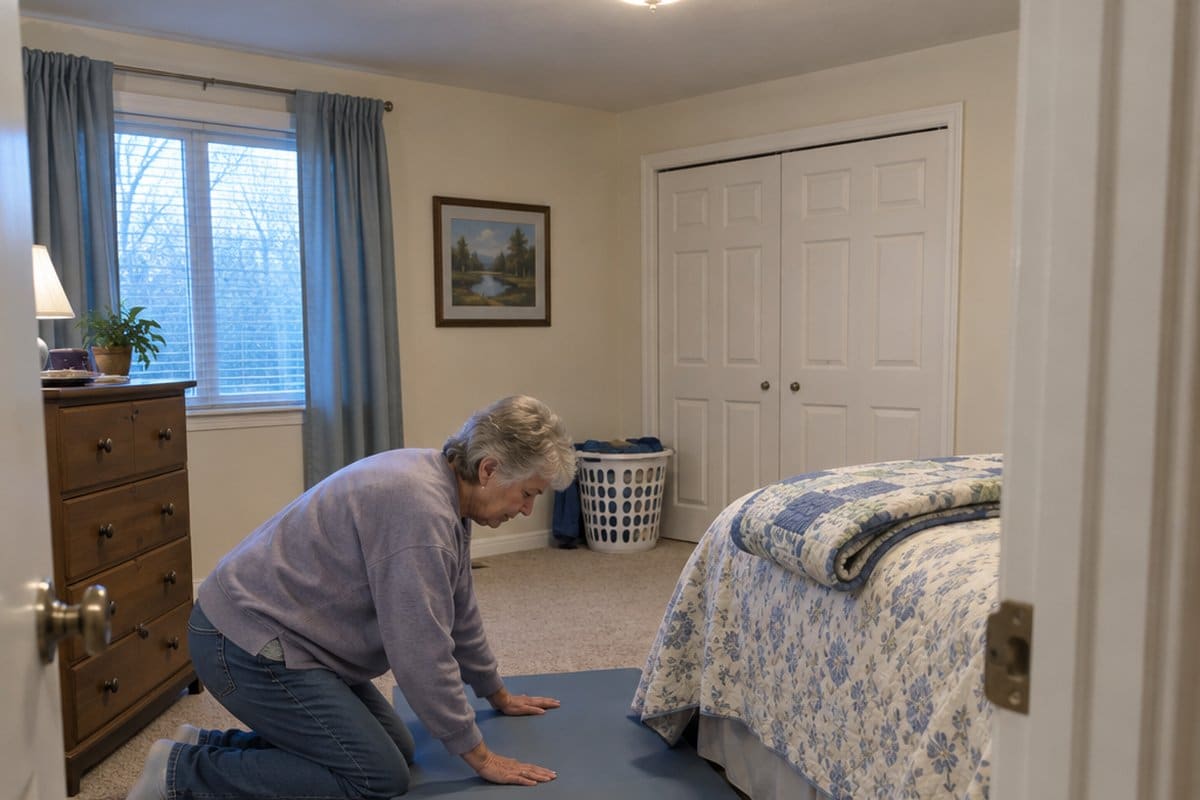
You can’t be at your loved one’s side every hour of the day, and it is a real worry when someone with dementia tries to get out of bed on their own. The best bed alarms for elderly people let you know the moment that happens, so you can get to the room quickly.
A fall can cause serious injury (here is more on the consequences of a fall). Below I cover bed alarm reviews, chair alarms, door alarms for wandering, whether bed alarms really prevent falls, and what to look for before you buy.


Bed Alarm Reviews
Wireless Patient Monitoring Bed Alarm
The Wireless Patient Monitoring System 12″x30″ Bed Alarm Set is built for people at risk of falls or wandering, including those living with dementia, Alzheimer’s, or cognitive impairment. It comes with three pieces: a 12″ x 30″ wireless bed sensor pad, a wireless alarm transmitter, and a wireless alarm monitor.
The pad senses when someone leaves the bed. The transmitter sends that signal to the alarm monitor, which is the part that makes noise. Because it is wireless, there is no cord running across the floor to trip over.
The monitor is where most of the useful settings live. You get several alert tones, adjustable volume, and a flashing light, so you can match the alarm to the room and the person who needs to hear it. It also has pause and delay functions, a low battery indicator, and automatic reset.
The transmitter can be removed and moved between bed, chair, and floor mat sensors. That helps if the person is at risk in more than one spot. The system also supports up to three transmitters, so one alarm monitor can watch multiple sensor pads.
If you are in a care setting with a nurse call system, the monitor can connect to it. That needs the NCI-1 Nurse Call Interface Cable, which is sold separately.
The trade-off is that this is a system with several parts and settings. It suits a caregiver who is comfortable setting up a few devices. If you want one plug-in unit with nothing to adjust, it may be more than you need. Like any bed alarm, it tells you someone is up. It does not stop the fall, so you still need to be able to get to the room quickly.
Vive Health Bed Alarm With Pager

First up is the Bed Alarm With Pager from Vive Health. It tells you when someone sits up in bed or gets out of it, which is often the moment a fall starts. That makes it useful for dementia care, where wandering at night is a real worry.
The set includes a bed sensor pad and an alarm pager. The pager has a large stop button, so silencing it is easy even when you are half asleep. It also has three notification settings, so you can pick the one that fits your situation.
You can choose when the alert sounds. It can go off instantly, or after a two-second or four-second delay. The delay is handy for someone who shifts around a lot in bed, since it can cut down on false alarms.
The bed pad measures 29.5″ x 10″. It is sealed against dust, dirt, spills and incontinence, so an accident should not ruin it. That matters for any pad that sits under a person all night.
The transmitter can connect to multiple devices, so you can use it with a connected pager or monitor.
The trade-off is that a sensor pad only tells you someone is moving. It cannot stop a fall, and it will not help if you sleep too far from the pager to hear it. It also covers the bed only, so it will not catch someone who is already up and wandering. If that is the concern, you may want to pair it with a door alert.
CallToU Bed Alarm

The CallToU Bed Alarm is a good fit if you want to know when someone gets up without waking the whole house. It is a bed exit sensor with a portable pager, and it is not worn by the person in bed.
When the person stands, the pager vibrates. There is a silent mode that uses vibration only, so a caregiver can sleep nearby without a loud alarm going off in the person’s room.
The sensor is meant to tell the difference between someone standing up on purpose and someone just tossing and turning. That can cut down on false alarms, which matters when you are the one getting up at 2 a.m.
The pager works from 50 to 100 feet away. That is enough to carry it to the kitchen, the laundry room, or upstairs.
Now the downsides. Each sensor goes with one receiver, so if you want to watch more than one room, you will need to buy additional units.
Placement also matters. The sensor needs to sit within 1 to 3 feet of the bed edge to detect reliably, so take a minute to set it up carefully and check it.
It may not suit you if you want a loud alarm that wakes a sound sleeper. Vibration only works if the pager is on you or right beside you.
Caregiver Alert System Bed Alarm

The Caregiver Alert System Bed Alarm Set is a full package for alerting you when someone gets out of bed. It is not a good fit if you want a setup with no cords at all, since the sensor pad connects to the alarm monitor.
The set includes three pieces: the Fall Alarm Monitor (CAS-FAM), a 12″ x 30″ bed sensor pad (Bed Pad-1), and a Caregiver Pager receiver (CAS-PGR). The monitor sounds the alarm, and the pager carries the alert to you in another room.
The pad is rated for one year, and the set comes with a one-year warranty. After that, you would need to plan on replacing the pad.
The monitor also works with other Caregiver Alert System components, so you can add to it later if your needs change.
For another take on a sensor and pager combination, see my review of the CallToU wireless bed alarm with pager and whether it helps prevent falls.
If you only need a way for your loved one to call you, and not a bed sensor, a separate wireless caregiver pager with a call button may be enough. For a look at one, see my review of the simple one-button caregiver pager without a monthly fee.
Smart Caregiver Wireless Pager System


This next pick is not a bed sensor pad. It is a caregiver pager with two call buttons, and it suits a person who can still reach for a button when they need you.
It comes pre-paired, with batteries included, so you can have it working in minutes. There is no app to download and no setup to puzzle over.
The range is 300 feet, so you can move around the house and out in the yard and still hear when you are called. There is also no monthly fee. You pay once, and that is it.
It has two alert tones. That is not much choice, but it gives you a bit of room to pick the one you can hear best.
Now the downsides. It only works inside your home and between the buttons and the pager. It does not call 911 or anyone outside the house.
It also depends on your loved one pressing the button. With dementia, that may not happen, and it will not warn you when someone is getting out of bed on their own. For that, you want a bed sensor pad like the ones above.
For another take on a sensor and pager combination, see my review of the CallToU wireless bed alarm with pager and whether it helps prevent falls.
If a call button is all you need, a separate wireless caregiver pager with a call button may be enough. For a look at one, see my review of the simple one-button caregiver pager without a monthly fee.
Smart Caregiver Bed Exit Alarm
The Smart Caregiver Bed Exit Alarm with Wireless Pager is a simple setup. A soft bed pad senses weight, and when the pressure is gone because the person has gotten up, it sends a signal to a pager you carry.
The pad measures 10″ x 30″ and has a full-coverage weight sensor. That means it does not depend on the person lying in one exact spot.
The pager can vibrate or sound an alert, and you choose which. Vibrate is handy at night if you do not want a noise waking the person you are caring for. Sound is better if you are busy around the house and might not feel a buzz.
The pager also works with up to six Smart Caregiver sensors. You could put one on the bed, one on a chair, and one at a doorway, all reporting to the same pager. That helps if wandering is a worry as well as falls.
One thing to know: this kind of alarm tells you after the person has left the bed, not before. It gives you a head start, but you still need to be able to get there quickly. If the person is up and moving very often, the alerts may wear on you.
It is a good fit for a family caregiver who wants to sleep or get things done in another room and still know when someone is getting up.
Vive Health Floor Alarm

If you want an alternative to a bed sensor pad, the Vive Health Floor Alarm is worth a look. It is a pad that goes on the floor, so it notices when someone steps onto it.
Placement matters. It works best at the side of the bed, in a doorway, or at the edge of any space you want to keep an eye on, such as the bathroom entrance.
When someone steps on it, the included wireless pager sounds an alert. That lets you know when a loved one gets out of bed, heads for the bathroom, or leaves a safe space, which can help cut down on wandering and on slips and falls.
You can also choose a two-second or four-second delay before the alert goes off. That is handy if a quick step onto the pad doesn’t need to bring you running every time.
The pager has a large stop button and three notification settings, so you can set it up the way that suits your household. It also connects to a nurse call receiver or a door light, if you already use one.
One thing to keep in mind: a floor pad only tells you someone has stepped on it. It doesn’t stop a fall, and it won’t help if the person gets up on the other side of the bed. For someone who moves around a lot at night, a bed sensor pad may suit better.
Vive Health Chair Alarm With Pager

If you want a simple alarm for a chair or wheelchair, the Vive Health Chair Alarm with Pager is worth a look.
It watches for the moment a person tries to get out of the chair and lets you know right away. That gives you a chance to reach them before a fall happens.
A pager comes in the box, so you can be in another part of the house and still get the alert. It also connects to a variety of monitoring devices. The stop button is large and has three notification settings, so you can pick what suits your home.
You can choose instant alerts, or a two-second or four-second delay. A short delay can help if the person tends to shift around in the chair and you want fewer false alarms.
The chair pad is 14 inches by 10 inches, latex-free, and sealed to be waterproof, so spills are less of a worry.
One thing to know: this one is made for chairs and wheelchairs. If your worry is someone getting out of bed at night, you will want a bed alarm instead.
Vive Magnet Pull Cord Chair Alarm

The last one on this list works differently from the rest. Instead of a pad under the person, it uses a magnetic pull cord to trigger the alarm.
The Vive Magnet Pull Cord Chair Alarm can be used for a bed or a chair. When the magnetic connection breaks, it sounds a loud alert, so a caregiver knows the person is trying to stand or move before a fall happens. It suits older adults, people recovering from surgery, and anyone with mobility challenges, at home or in a care facility.
You can pick from four sounds: high volume, low volume, a standard alert tone, or a gentle musical chime. That helps when you need to hear it across a noisy room. It also helps when you would rather have a softer sound in a bedroom.
The trade-off is how a pull cord works. The alarm goes off whenever the magnet comes loose, and that includes a person rolling over in bed and tugging it free by accident. For someone who moves a lot in their sleep, that can mean false alarms and lost rest for everyone.
It tends to work best for a person who sits or lies fairly still and needs a clear signal when they get up. If the person shifts a lot at night, a pressure pad alarm is probably a better fit.
Vive Health Pull Cord Alarm

The last alarm on this list works differently from the rest. Instead of a pad under the person, it uses a pull cord with a magnet on the end.
The Vive Magnet Pull Cord Alarm is set up in three steps. You insert the included 9V battery, attach the magnet to the front metal plate, and clip the cord to the person’s clothing, somewhere out of reach, such as the back of their shirt.
When the person moves away and the cord pulls the magnet free, the alarm sounds. It is meant to help you reduce the risk of falls and know about unassisted movements. The sound alert can also be customized.
The trade-off is how it triggers. The cord has to stay attached, and a clip can come loose from a tug in any direction. That could happen if someone rolls over in their sleep, which means a false alarm.
It also depends on the person leaving the clip where you put it. If someone with dementia tends to pick at their clothing, this may not be the right fit, and a pressure pad may suit better.
It is a simple, easy-to-set-up option for someone who will keep the clip on and for a caregiver who wants a straightforward alert.
Vive Health Door And Window Alarm

This one is a little different from the bed alarms above. The Vive Door and Window Alarm watches a door or window instead of a bed, and it sends an alert when someone opens it. That makes it useful for families worried about wandering, which is common with dementia.
It comes in two pieces that stick to the door or window and its frame with strong self-adhesive. No drilling or tools are needed. It also comes with a wireless pager that has a large stop button and three notification settings, so you can choose how you get alerted.
The range is up to 150 feet. That means a caregiver can be in another room, or out in the yard, and still get the alert right away.
The trade-off is that it only tells you after the door or window has been opened. It won’t stop anyone from going out, and it can’t tell you someone is getting out of bed. If a fall at the bedside is your main worry, a bed alarm is the better fit. This one suits people who want an extra set of ears on an exit.
Door Alarms for Dementia Safety
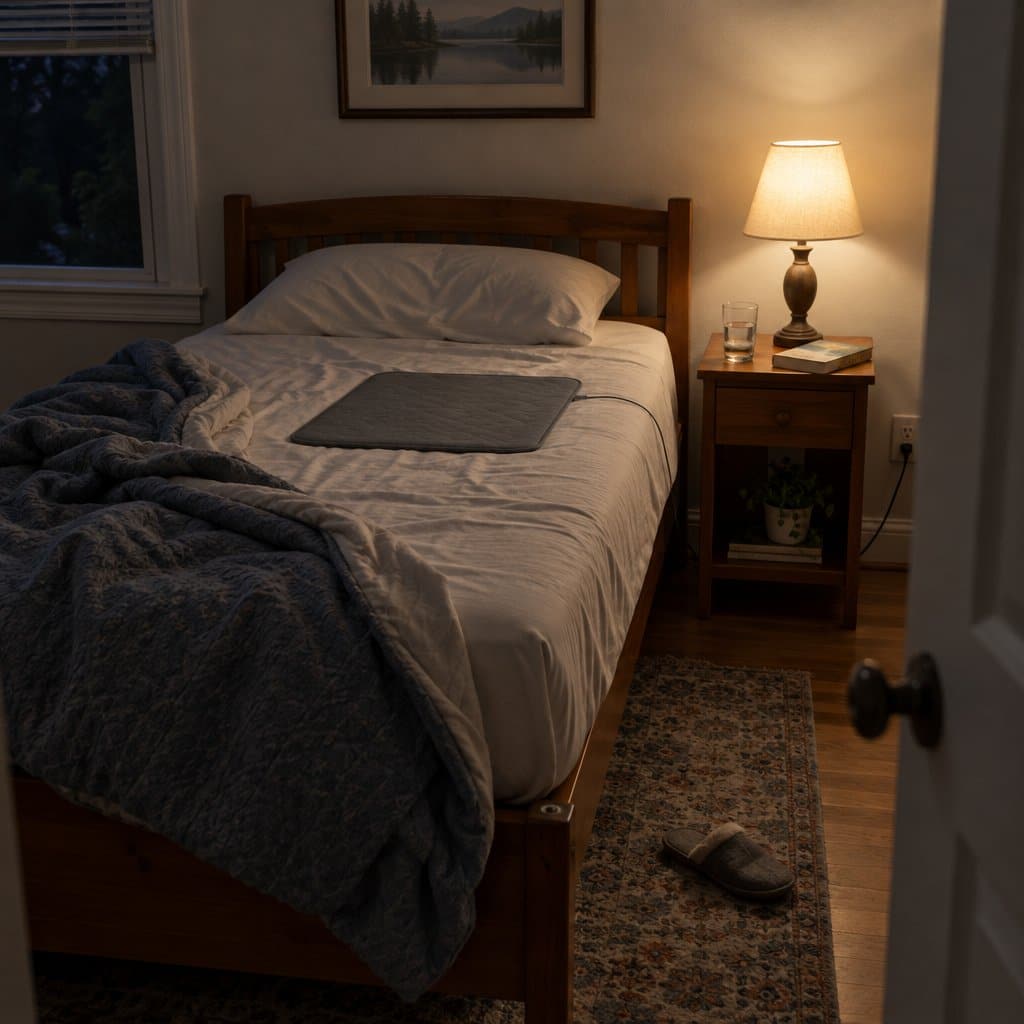
A bed alarm tells you when someone gets up. It does not tell you when they head out the front door. If you are caring for someone with dementia, wandering at night or during the day is often the next worry. A door alarm covers that gap. It is a small sensor on the door frame that sounds a chime in another room when the door opens.
Here is what to look for. First, how simple it is to set up. The best ones need no wiring and no phone app. You stick the sensor on and plug the receiver in. Second, the receiver. Many plug into a wall outlet, so check that you have one near where you spend your time. Third, choose a sound you will actually hear. Look for adjustable volume, and a flashing light if you want quiet alerts. If you have more than one door, pick a set that lets you add sensors and gives each door its own chime. One thing to know up front is that the advertised range is measured in open air. Walls and floors will shorten it, so test it in your own home. The one below is a plug-in model that does all of this.
Door Chime Alarm
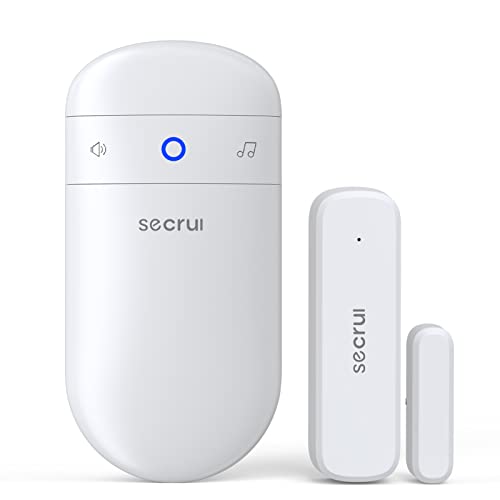

This one is not a bed alarm at all. It is a door chime, and it earns a spot here because wandering at night is a real worry with dementia. A sensor goes on the door, and when the door opens, a receiver in another room sounds a chime.
Setup is simple. It is plug and play, with no wiring and no app. You can pick from 58 chimes, so if you have more than one door, each can have its own sound and you know which one opened. Five volume levels are included, and at the mute setting it flashes a light silently, which helps if you want to stay quiet and not wake the person you are caring for. You can also add more sensors to the same receiver to cover several doors.
The trade-off is that the receiver has to be plugged into a wall outlet, so where you can put it depends on where the outlets are. The 500-foot range is measured in open space. Through walls it will be shorter, so test it from the room where you will be listening.
It tells you a door has opened. It will not tell you someone is getting out of bed, so it works best alongside a bed alarm, not in place of one.
How Bed Alarms for Dementia Patients Help Prevent Falls
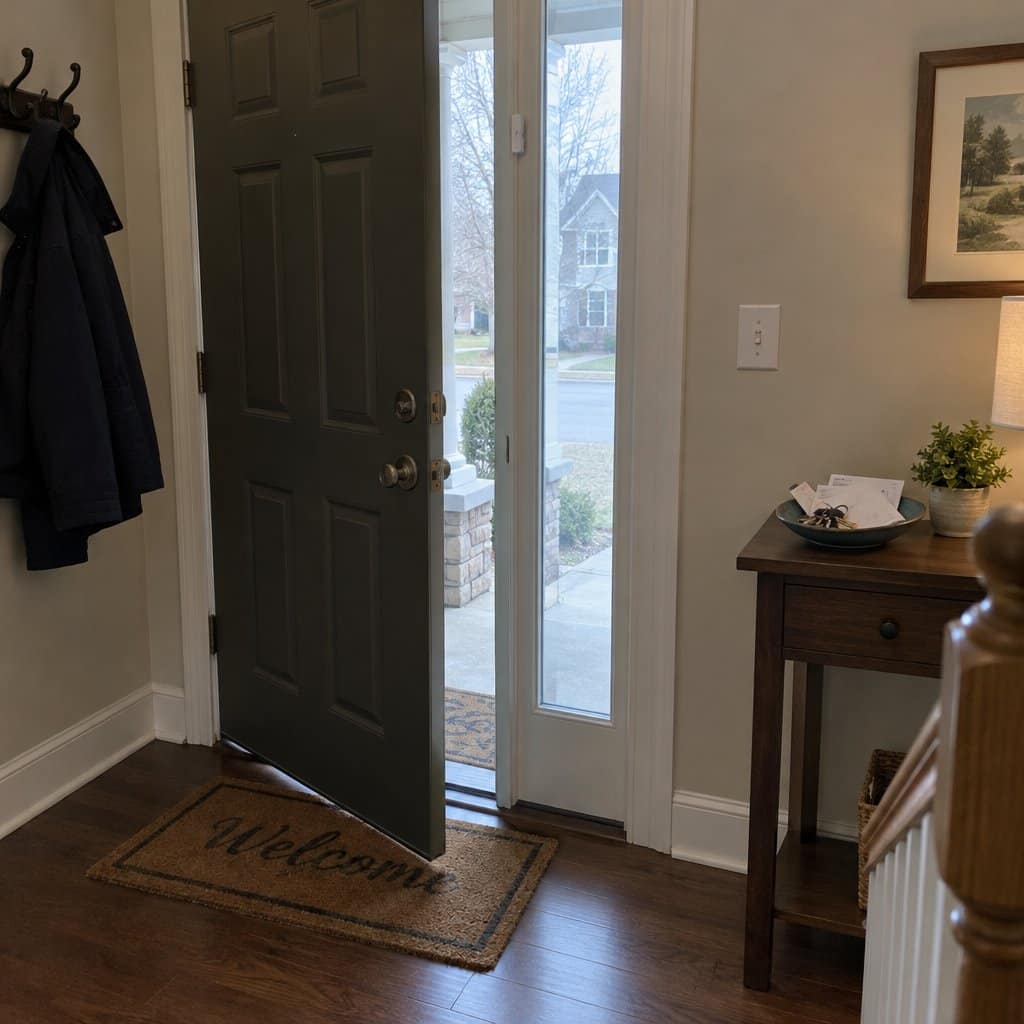
Just to be clear, even the best bed alarms for elderly people cannot directly prevent the elderly or dementia patients from falling out of bed. Instead, they do the job of alerting caregivers that a patient is moving around and could be in need of help.
Some sensor pads activate the alarm when pressure is placed on them (floor pad), while others will sound the alarm when pressure is taken off (bed pad).
Thus, you have to assess the situation before you invest in any of the bed alarm reviews mentioned above.
Here are some benefits that both caregivers and patients can appreciate when using the best bed alarms:
- Reduces the pressure on caregivers
- Alarms respond quickly
- Prevent other dangers in addition to falling (when patients leave their rooms)
Pairing a Bed Alarm With Other Fall-Prevention Products
A bed alarm tells you someone is moving. It does not stop a fall. Pairing it with a few other products covers more of the gaps.
Bed rails are among the most effective fall prevention products out there. Many falls happen when a person tries to get out of bed, and rails mean they have to call for help first. They also stop someone from rolling out while tossing and turning at night. If you want more ideas on this, I wrote about keeping a person from falling out of bed.
A fall prevention mattress may be even better than rails. It has a barrier along each side that keeps a person from rolling off. The barrier is much softer than a rail, and it is built in, so arms and legs cannot get caught in metal parts.
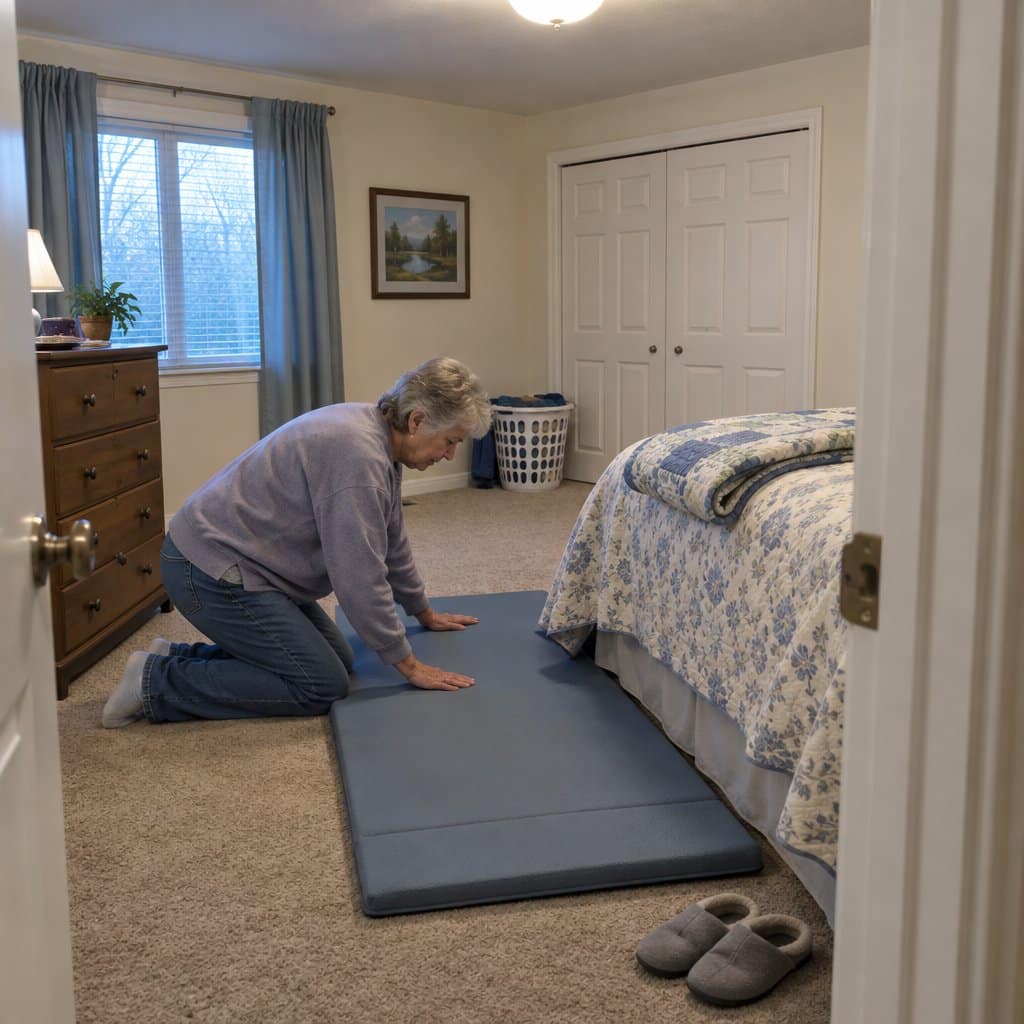
A fall mat will not prevent a fall. It does lessen the impact if one happens, which can spare your loved one a serious injury while sleeping or getting in and out of bed.
A floor pad alarm adds a second warning. The bed alarm goes off first, and the floor pad sounds once your loved one has stepped out and is trying to stand. A good set of bed steps can also help with that moment of getting up and down safely.
The trade-off is that each added product is one more thing to buy, set up and keep an eye on. Start with the one that fits your loved one’s biggest risk.
Chair Alarms for Seniors Who Get Up From a Chair
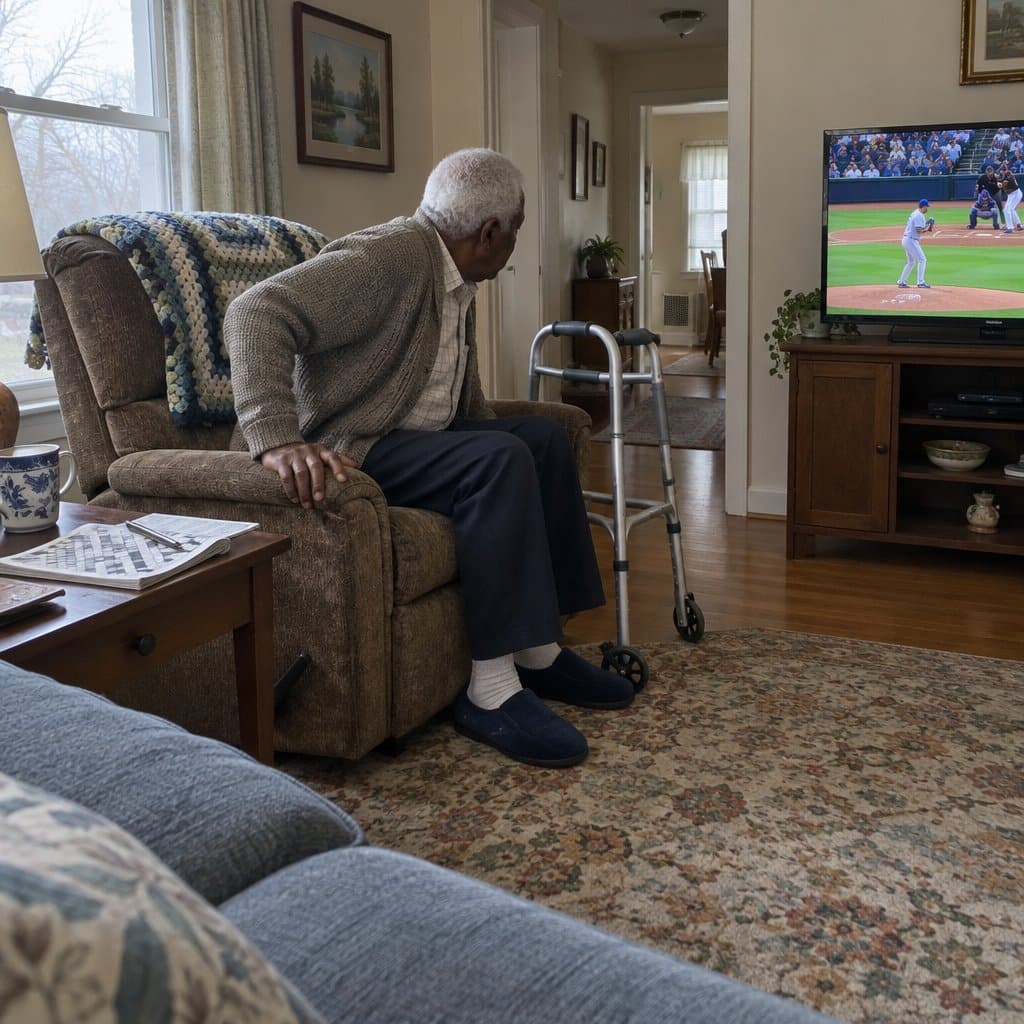
Falls do not only happen in bed. Falls are a common and serious risk for older adults. Someone with dementia or Alzheimer’s may forget they cannot walk safely on their own and try to stand the way they used to.
A chair alarm can monitor an elderly parent’s movement and sound an alert when they try to stand. It will also sound if they fall forward in the chair. That gives you a chance to respond before an injury. Chair alarms come in three main kinds.
Motion sensor alarms detect when a senior is getting up. Some come with a cordless call button, so a person who cannot easily signal for help can ask for it. A sensor can even be placed outside a door to tell you someone is leaving a room. These suit seniors who need some support while walking, but not those with serious mobility issues. The alarm keeps sounding until you disable it, and batteries or an AC adapter may need to be bought separately.
Pressure pads sit on the chair and sound when weight comes off them. There is nothing to clip to clothing, and many have adjustable volume and a low battery light. Look for a vinyl or latex cover that wipes clean and handles incontinence. A pad that resets by itself when the person sits back down is easier than one you must reset by hand, which can be hard with someone seated. Pads need a firm surface, and some cannot be placed outside the room.
Magnetic pull-cord alarms clip to clothing. When the person stands, the cord pulls away from the magnet and the alarm sounds. They mount to a chair, bed frame or wheelchair, and the cord is designed to pull free so it does not add a fall risk. Some have no off switch, so the person cannot disable them. A strong clip is also harder to take off, and these can be awkward with recliners or lift chairs.
Whichever you choose, check for adjustable volume and a low battery warning. Know too that some models have limited features, and the loudest setting may not carry far. The trade-off with any chair alarm is that it only tells you someone is moving. You still need to be close enough to get there.
Smart Caregiver Motion Sensor Nurse Call
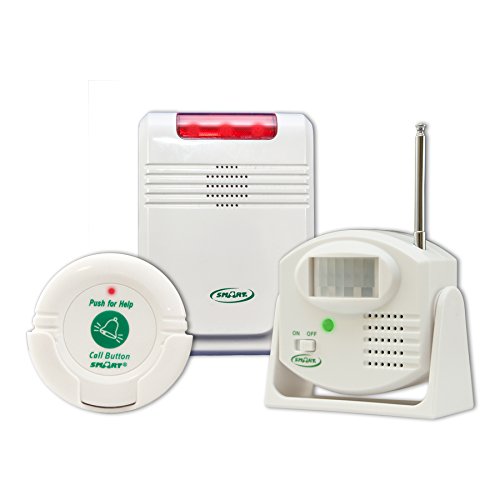
The Smart Caregiver Cordless Motion Sensor and Nurse Call System is a three-piece set: a cordless monitor, a motion sensor, and a call button. It suits a family caregiver who wants to know when someone is getting out of bed or heading through a doorway.
The motion sensor can be placed to pick up either one. The monitor then sounds an alert, and you can set it to high, medium, or low volume. That helps if you want it loud enough to wake you at night, or quieter during the day.
The call button is a useful extra. It can hang around the neck on a lanyard or sit on the wall in its cradle, so the person can ask for help without shouting. It runs on a 12 volt battery that is included.
One thing to plan for is power. The sensor needs 3 AA batteries and the monitor needs 3 C batteries, and neither set is included. You can use the AC-04 adapter instead, but that is sold separately too. A motion sensor also tells you someone is up, not that they are safe, so it is not a substitute for someone being close by.
Smart Caregiver Chair Exit Alert

Falls do not only happen in bed. A chair is where many people sit for hours, and someone with dementia may forget they cannot stand safely on their own. The Smart Caregiver Chair Pad and Monitor sounds an alert when the person gets up from their chair.
You set the pad on the chair before they sit down. It is 10 by 15 inches, made of soft vinyl, wipes clean, and is resistant to incontinence accidents. When the weight comes off, the alarm sounds.
The monitor has a prominent reset button to silence the alert, a low battery indicator, and volume adjustment. It also warns you if the pad gets disconnected, which saves you from thinking you are covered when you are not. Both parts carry a 1 year warranty.
The trade-off: it takes one 9 volt battery, which is not included, so keep a spare on hand. An AC-02 power adapter is sold separately if you would rather plug it in. Also, it tells you after the person has stood up, so it works best when a caregiver is close enough to reach them quickly. It does not stop a fall by itself.
Secure Safety Solutions Chair Alarm

Falls do not only happen in bed. Someone with dementia may get up from a chair or wheelchair without remembering they cannot walk safely on their own. The Secure Safety Solutions Chair Alarm (model 45CSET-1) is built for that moment.
A 12″ x 12″ sensor pad sits on the seat. When the person rises, the alarm monitor sounds an 80 dB alert so a caregiver knows right away. If the person sits back down, the monitor resets by itself. You can also reset it by holding the reset button for three seconds, and that button is tamper-proof, so it is not easily switched off by the person being watched.
The set comes with the alarm monitor, a protective holder and a secure mounting strap. The pad is incontinent-proof, latex-free and foldable for easy storage. It works well alongside a bed alarm if the person spends long hours in a chair.
The trade-off: it only tells you someone has stood up. It does not stop a fall, so a caregiver has to be close enough to hear it and get there quickly. It is not a good fit if you will be in another part of the house or out of earshot.
Sammons Preston Magnet Alarm

The Sammons Preston Magnet Alarm is a clip-on alarm that sounds when someone stands up. A spring-loaded clip attaches to a wheelchair or another surface. A cord with a small metal clip fastens to the person’s clothing.
When the person stands, the magnetic end of the cord pulls away and the alarm goes off. A red light flashes when it sounds, and also when the battery is low. The cord adjusts up to 30 inches, so you can set how much distance the person has before it triggers.
The alarm has two volume settings, 105 dB and 90 dB. The battery door opens without tools but will not pop open if the unit is dropped, which makes it harder for someone with dementia to switch the alarm off by accident.
The trade-off: it only works if the cord is clipped to clothing, and it sounds after the person has already started to stand. It alerts a caregiver but does not prevent the fall. It is also not a good fit for someone who is likely to pull the clip off, or for a home where no one is close enough to hear the alarm.
Do Bed Alarms Prevent Falls? The Good and the Bad
Studies have not shown that bed alarms keep falls from happening. Even so, hospitals and nursing homes use them and rely on them, and groups that oversee healthcare organizations still endorse them as useful tools. Here is what they do well and where they fall short.
The first benefit is fall alerts. Many falls in nursing homes happen in the resident’s room while getting in or out of bed. An alarm gives you a better chance of reaching your loved one in time to help them move safely. Even if technology prevents a single fall, that is worth a lot.
The second is wandering. Anyone with a degenerative mental disease is at risk for wandering, and someone who wakes and wanders at night could trip or get hurt. You cannot watch a person all night, and an alarm lets you know when they get up.
The third is peace of mind. If you worry constantly about a loved one getting hurt in bed, knowing someone will be alerted lets you rest easier.
The fourth is a reminder. For someone with dementia, the alarm can be a cue that they are not supposed to get out of bed alone. It will not work every time, but it can help them wait for assistance.
Now the downsides. Alarms are noisy, and they need to be loud enough to work. That same noise can startle a person who is trying to get out of bed, which could make a fall more likely. This is why the sound options I covered above matter.
Alarms can also fail. Many run on batteries, and a dead battery means no alarm. Most have low battery warnings, so you can swap them in time. Moisture is the other cause, though some pads are made to protect against incontinence.
Because no study definitively shows alarms stop falls, do not rely on one alone. Pair it with other products, such as bed rails, a fall prevention mattress with a soft barrier on each side, or a fall mat to limit the impact if a fall happens. A floor pad alarm also adds a second alert once the person has stepped out of bed.
Important Features of the Best Bed Alarms for Elderly People
Now that you have read about some of the best bed alarm options and understand their purpose better, it is time to focus on some important questions and considerations.
1. Wired vs Wireless Systems
For the most part, wireless systems are preferred because they reduce tripping hazards. However, this does not mean wired bed alarms are less effective.
If used with precaution, they can be just as safe. At the end of the day, wireless alarms make monitoring more convenient.
2. Floor Mat vs Bed Mat
First of all, there are no rules that state you can only use one mat. As you might have noticed during the bed alarm reviews, several mats can be paired to a single monitor.
But if you have to make a choice, consider the circumstances. Both are effective when used properly, but if you fear the floor mat option can turn into a tripping hazard, stick with the bed mat.
3. Alarm Options
In some cases, it can be helpful to have an alarm inside the room of the patient. Especially if there are other people nearby who can lend a hand. However, you do not want the sound of the alarm to disorientate the patient or elderly individual.
This is why you should opt for a bed alarm with different sound options. For example, switching the alarm to sound like chimes.
4. Alarm Sound/Volume
An alarm is meant to draw attention, but the volume doesn’t always have to be at the maximum level. More specifically, the caregiver should be able to adjust the volume according to how close he or she is to the patient.
5. Pad Materials
Why are quality pad materials important? Firstly, the pad materials are responsible for protecting the sensors. Secondly, pad materials undergo a lot of wear and tear, so they have to be durable.
Thirdly, the material should either be ultra-thin or very comfortable. The list goes on, but ultimately, you want the sensor pads to last as long as possible.
6. Pad Lifespan and Replacement
A sensor pad will wear out with steady use, so plan to replace it from time to time. It is also a good idea to test the pads on a regular basis.
While you shouldn’t run into any problems, manufacturing faults do creep in every now and then. And you want the manufacturer to repair/replace the bed alarm if this happens to be the case.
Hence the reason for paying close attention to the warranty.
7. Power Source/Batteries
Even though batteries are great for portability reasons, they do require more maintenance. At the same time, a wired system ensures the alarm is always powered, but the wires can lead to a tripping hazard.
Based on these pros and cons, you have to decide which option is better for you. Plus, you want to look at how often you’ll need to replace the batteries if that is the option you go with.
What Can Make a Bed Alarm Stop Working
An alarm only helps if it is working when your loved one gets up. Two things cause most of the trouble: power and moisture.
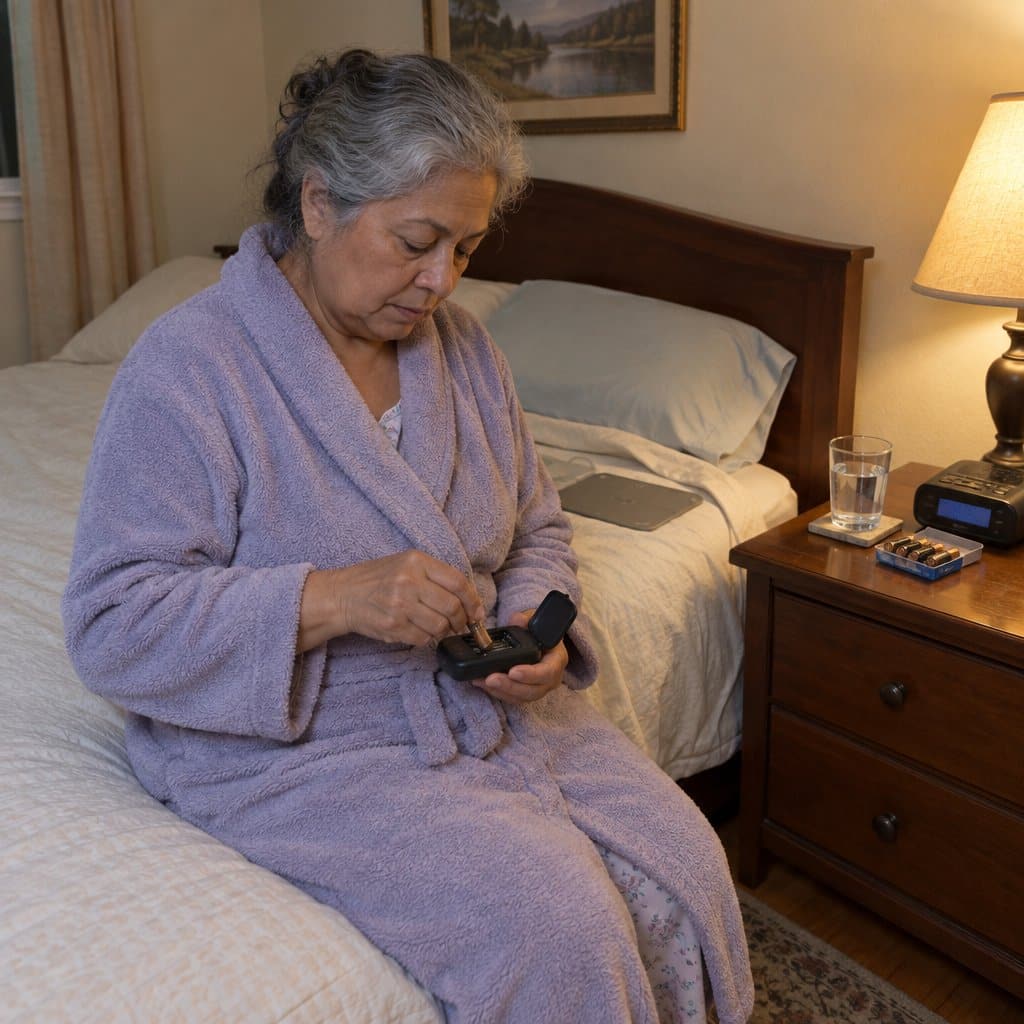
Many bed alarms need batteries. If the batteries run out, the alarm fails, and you will have to replace them or recharge the unit to get it going again.
Most alarms on the market have a low battery warning. That gives you time to swap the batteries before the alarm quits, so pay attention when it beeps.
Wet electronics are the other cause. If the pad or its parts get soaked, the alarm can fail.
Some pads are made with materials that protect against incontinence. If that is a concern for your loved one, look for that on the label.
The trade-off is that batteries mean checking on the alarm now and then, even when everything seems fine. A plug-in model skips that chore, but then you have a cord to manage.
Summary and Final Recommendations of the Best Bed Alarms for Fall Prevention
One of the things you should ask yourself is where you will be using the bed alarm. For example, if you are a caregiver at a facility, there is a risk of interference if you choose the wrong wireless system.
But if you are a caregiver at the patient’s home, interference shouldn’t be much of a problem. The point is that you should be able to trust the bed alarm and the conditions you use it in.
From a personal perspective, the first bed alarm mentioned during the reviews offers the best of both worlds and I think is the best bed alarm for elderly people overall.
The Secure Wireless Patient Monitor Bed Set offers quality components at a very affordable price. Everything depends on what you can afford to spend and how effectively you need to monitor the patient.
Plus, do you mind changing or charging batteries when a cord is available?
For those who can afford it, take extra measures by pairing up other sensor pads. Most of those mentioned in the reviews are interchangeable with other Secure components.
And after you make an informed decision, you can start preventing more falls with the aid of the best bed alarms.