![Senior man using medication reminder app holiday armchair[1]](https://www.grayingwithgrace.com/wp-content/uploads/2025/12/senior_man_using_medication_reminder_app_holiday_armchair1-e1765210746636.jpg)
Picture yourself at Thanksgiving dinner, surrounded by family laughter and the aroma of roasted turkey, when you suddenly realize—did Mom take her blood pressure medication this morning?
Your heart sinks as you try to remember between the cooking chaos and early-morning pie baking.
If you’ve ever felt that stomach-dropping moment of medication panic during the holidays, you’re not alone. The truth is, holidays are supposed to be joyful, but for caregivers, they often bring a unique kind of stress that nobody talks about.
Here’s what might surprise you: with the right preparation, you can navigate the holiday season without sacrificing safety—or your sanity. Let me show you how.

The Hidden Challenges Nobody Warns You About
The holidays disrupt everything we count on for consistent medication management.
Travel throws schedules into chaos. When you’re crossing time zones or dealing with jet lag, suddenly that “take at 8 AM” becomes confusing. Is that 8 AM home time or destination time?
Being away from home strips away the environmental cues that help us remember. That pill organizer sitting by the coffee maker? It’s now buried in a suitcase somewhere.
Holiday events completely rewire our daily rhythms. Breakfast happens at noon because everyone slept in. Dinner stretches from 4 PM to 9 PM with multiple courses and conversations.
For medications that must be taken with food or at specific times, this creates real problems.
Social obligations become distractions. You’re catching up with relatives you haven’t seen all year, helping in the kitchen, or wrangling excited grandchildren. Those scheduled medication times slip by unnoticed.
Here’s what keeps me up at night as someone who’s been there: increased visitors and guests create safety risks. Medications need to stay secure, away from curious children or confused guests who might mistake them for their own prescriptions.
One family I know returned from a holiday party to find their toddler grandson had opened Grandma’s purse and scattered her pill bottles across the living room floor. Everything turned out fine, but the near-miss haunts them still.
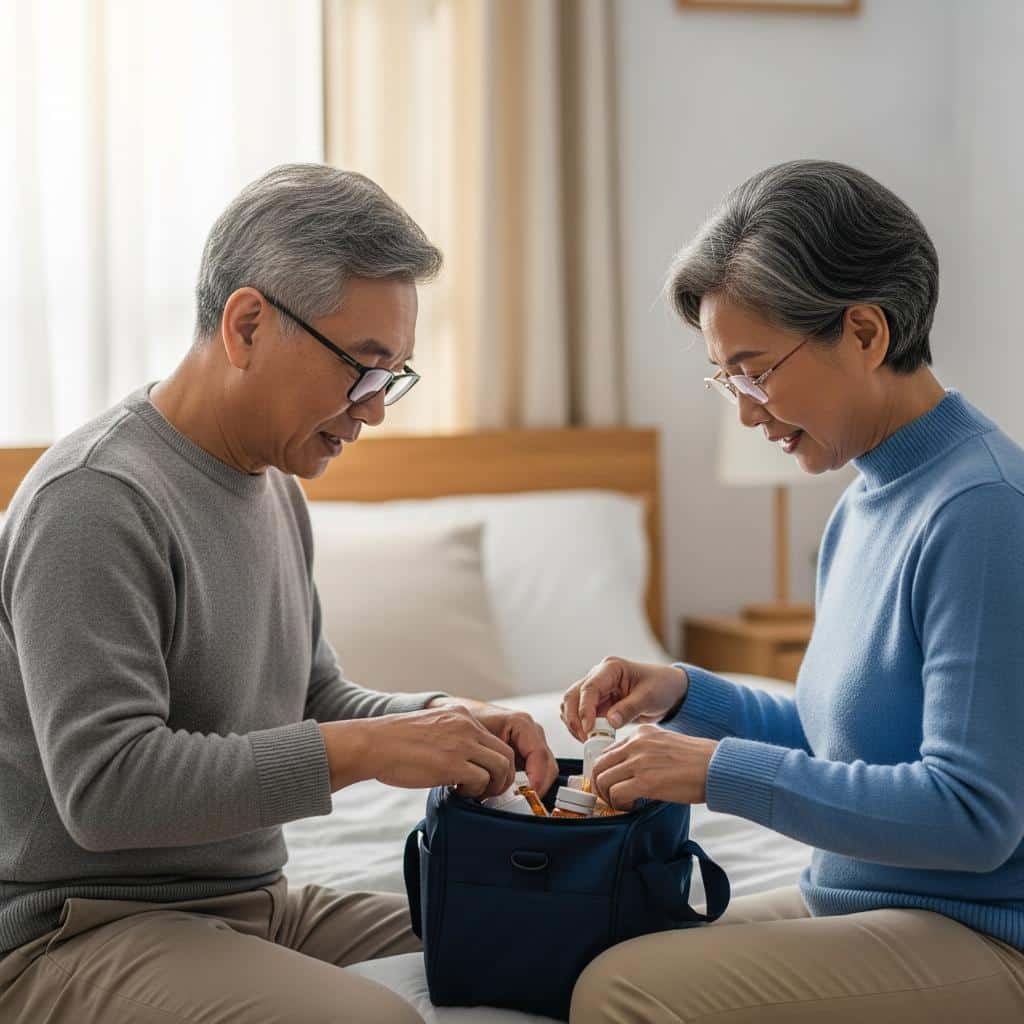
Your Pre-Holiday Medication Battle Plan
Start your preparation one week before any holiday travel or major gathering.
Week before: The foundation work. Check every medication bottle for expiration dates. You’d be surprised how often we discover that arthritis cream expired six months ago.
Call your pharmacy now—not the day before you leave. Request refills for anything running low. Pharmacies get slammed during holiday weeks, and you don’t want to be stuck waiting. If your loved one takes multiple medications, understanding safe medication practices becomes even more critical during travel when routines are disrupted.
Confirm any recent changes with your loved one’s healthcare provider. Did the doctor adjust the blood pressure medication dosage last month? Now’s the time to clarify before you’re managing it away from home.
Three days before: Organization time. Get out that weekly pill organizer and sort medications by day and time. This single step eliminates so much confusion and second-guessing. For more ideas on creating reminder systems that don’t feel intrusive, there are tools and approaches that preserve dignity while ensuring nothing gets missed.
If you’re flying, keep all medications in their original labeled containers. TSA requires this, and it also helps emergency medical personnel if something goes wrong.
Make copies of all prescriptions and create a one-page medical summary. Include medication names, dosages, prescribing doctors, and known allergies. Keep one copy with you and leave one with a trusted family member at your destination.
Day before departure: Final checks. Pack a small water bottle specifically for taking pills. You don’t want to be scrambling for water at a rest stop or on a plane.
Research and save contact information for local healthcare facilities at your destination. Where’s the nearest 24-hour pharmacy? Which urgent care center takes your insurance?
Temperature matters more than most people realize. Never store medications in car glove compartments or trunks during travel. Extreme heat or cold can reduce effectiveness. Keep them in your carry-on bag or a temperature-controlled part of your vehicle.
Ready to discover more innovative strategies for healthy, comfortable aging? Subscribe to our newsletter for expert-tested tips and product recommendations designed specifically for older adults.

The Food-Medication Minefield at Holiday Tables
Holiday meals create hidden medication risks that most people never consider.
Grapefruit is the sneaky troublemaker. That innocent-looking fruit salad or morning juice can interfere with dozens of medications, including some cholesterol drugs, blood pressure medications, and anxiety treatments. The interaction can make medications less effective or dangerously potent.
Leafy greens show up everywhere during holidays—in salads, as side dishes, in casseroles. For anyone taking blood thinners like warfarin, these vitamin K-rich foods can reduce medication effectiveness. Consistency matters more than avoidance, so if your loved one typically eats greens regularly, maintain that pattern.
Alcohol deserves serious attention. That champagne toast or glass of wine with dinner can cause dangerous interactions with pain medications, diabetes drugs, and many others. Some combinations can cause severe drowsiness, dizziness, or liver damage.
Here’s my practical approach: read ingredient labels on packaged foods carefully. When someone serves a homemade dish, politely ask about specific ingredients. Most hosts appreciate the question and want to keep guests safe.
When in doubt, skip the food. It’s better to pass on Aunt Martha’s famous grapefruit cake than risk a medication interaction.
For special dietary needs like low-sodium or gluten-free requirements tied to medication effectiveness, communicate with hosts in advance. Offer to bring a safe dish you can enjoy without worry.
The conversation doesn’t have to be complicated: “Mom needs to watch her vitamin K intake because of her blood thinner. I’m bringing a salad we know works for her.”
Watch for symptoms that might indicate a food-drug interaction: unusual dizziness, rapid heartbeat, severe drowsiness, confusion, or sudden changes in blood pressure. If you notice these, contact a healthcare provider immediately.
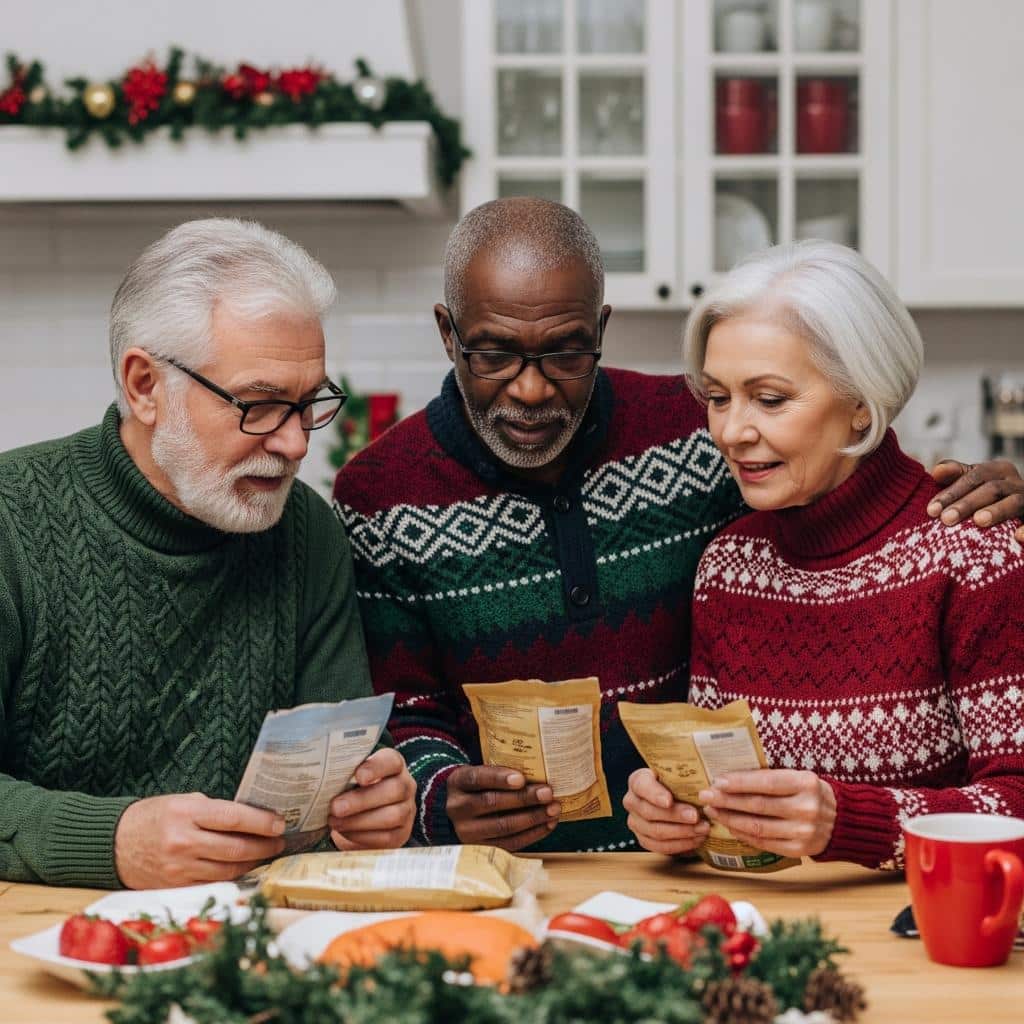
Communication Strategies That Preserve Everyone’s Dignity
The most delicate part of holiday medication management isn’t the pills—it’s the people.
Start conversations early. Two weeks before gathering, sit down with family members who’ll be present. Discuss medication schedules clearly and assign specific responsibilities. Coordinating family caregiving responsibilities prevents both gaps and duplication in care.
Maybe your sister handles morning medications while you manage evening doses. Perhaps your brother takes over the reminder duties during the big meal preparation. Clear assignments prevent both gaps and duplication.
Use a shared calendar or medication tracking app. Apps like Medisafe or MyTherapy allow multiple family members to see when doses are due and confirm when they’ve been given. This eliminates the “did someone already give her the afternoon pills?” panic.
Engage your loved one in the planning process. This isn’t just about compliance—it’s about respecting their autonomy and leveraging their knowledge of their own body.
Ask: “How do you want to handle your medications during the family party? Would you prefer to take them privately, or are you comfortable with me bringing them to you at the table?”
Some older adults feel embarrassed taking multiple medications in front of judgmental relatives. Others don’t mind at all. The key is asking rather than assuming.
When well-meaning relatives overstep, have clear language ready.
If someone suggests, “Can’t she just skip it for one day?” respond with: “The doctor was very specific about maintaining the schedule. Missing doses can cause serious problems.”
When Aunt Carol pushes her supplement recommendations: “We appreciate the suggestion, but any changes need to go through her doctor to avoid interactions with her current medications.”
For the relative who insists natural remedies are better: “Her current plan is working well. We’re not making changes without medical guidance.”
Discreet administration matters. If your loved one prefers privacy, establish a signal. When it’s medication time, you might say “I’m going to check on dessert—want to help me?” This creates a natural exit from the gathering.
Keep a small, elegant case in your purse or pocket with the necessary doses. This beats pulling out an obvious pill organizer at the dinner table.
Offering choices promotes dignity and cooperation. “Would you like to take your evening medications before dessert or after?” This small acknowledgment of control makes a significant difference in how people feel about their care.

Technology and Tools That Actually Help
Modern solutions can shoulder some of your medication management burden during busy holidays.
Medication reminder apps are more than just alarms. Apps like Medisafe and MyTherapy offer dose reminders that account for travel and time zone changes. They track refill dates and can send alerts when you’re running low.
The game-changer? Multiple users can access the same medication log. Your sister in another state can see that Mom took her morning medications, so everyone stays informed without constant phone calls.
Smart pill dispensers take this further. These devices automatically dispense the correct dose at scheduled times and send alerts if doses are missed. Some even notify family members via text or app.
During chaotic holiday hosting when you’re juggling ten things, that automated backup provides real peace of mind. Learn more about smart home devices that support medication management and other safety features for aging in place.
Telemedicine platforms become invaluable during holidays. If questions arise about medication timing or you notice concerning side effects, you can often get same-day virtual consultations with providers. Many insurance plans now cover telemedicine services, and some pharmacies offer 24/7 pharmacist consultations.
Mail-order pharmacy services and delivery options prevent last-minute pharmacy runs during holiday rushes. Set up automatic refills through your insurance’s preferred mail-order pharmacy. Medications arrive at your door, often with three-month supplies that eliminate mid-holiday refill stress.
Medication synchronization programs let you get all prescriptions refilled on the same day each month. Instead of managing five different refill dates, you make one monthly pharmacy trip. Ask your pharmacy if they offer this service—most major chains do.
Online resources provide backup when you need quick answers. AgingCare.com offers medication management tools and caregiver forums where you can get advice from others who’ve faced similar situations. AARP’s Caregiver Resource Center provides medication safety checklists and printable tracking sheets.
The key is setting these systems up before the holidays hit, not trying to configure new apps while the turkey’s burning.
When Things Don’t Go As Planned
Even with perfect preparation, unexpected situations happen.
If a dose gets missed during holiday chaos, don’t panic. The general rule: never double up on the next dose to “catch up.” This can be dangerous with many medications.
Instead, call the pharmacist immediately. Most pharmacies have 24-hour hotlines, and pharmacists can tell you exactly how to proceed based on the specific medication and how much time has passed. This is also a great time to strengthen your overall approach to being an active participant in healthcare decisions so you’re better prepared for these moments.
For time-sensitive medications like insulin or blood thinners, contact the prescribing doctor or on-call provider. Many practices have after-hours numbers for urgent questions.
Medication lost or left at home? First, call your regular pharmacy to see if they can transfer a partial prescription to a pharmacy near your holiday destination. Explain it’s an emergency situation.
If your pharmacy can’t help, contact your loved one’s doctor. Many physicians can call in a small emergency prescription to a local pharmacy. You’ll need the medication name, dosage, and the doctor’s contact information—this is why having that written medication summary is crucial.
For urgent situations when regular pharmacies are closed, hospital emergency departments can provide small emergency supplies of critical medications. Yes, it’s expensive and time-consuming, but it’s better than going without essential medications.
Watch for symptoms requiring immediate medical attention. Severe dizziness, confusion, difficulty breathing, chest pain, or sudden changes in vision or speech always warrant emergency care.
Save all key phone numbers in your phone before the holidays: your loved one’s primary care physician, specialists, pharmacy, and insurance company’s nurse line. Having these readily available eliminates precious minutes of searching during stressful moments.
Ready to discover more innovative strategies for healthy, comfortable aging? Subscribe to our newsletter for expert-tested tips and product recommendations designed specifically for older adults.
Your Health, Your Holidays, Your Way
You don’t have to choose between enjoying the holidays and keeping your loved one safe.
With preparation and clear communication, medication management becomes just another part of your holiday routine—not a constant source of anxiety.
Remember that caregivers deserve to enjoy holidays too. You’re not a medication robot. You’re a caring person doing your best in a complex situation.
It’s okay to ask for help. Assign tasks to willing family members. Use technology to share the burden. Accept that perfection isn’t the goal—safety and connection are.
Watch for signs of caregiver burnout during high-stress seasons. If you’re feeling constantly exhausted, irritable, or overwhelmed, that’s your body telling you something needs to change. Taking care of yourself isn’t selfish—it’s necessary for sustainable caregiving.
One small preparation step today prevents multiple crises tomorrow. Start with just one thing from this article. Maybe it’s setting up a medication reminder app. Maybe it’s having that conversation with family about holiday responsibilities.
Small actions compound into significant peace of mind.
What strategies have helped you manage medications during holidays? Have you found tools or approaches that made everything easier? Share your experience in the comments below—your insight might be exactly what another caregiver needs to hear.