Memorial Day comes around, and walking the parade route or standing at the cemetery just isn’t something you can do anymore. If that sounds familiar, you’re not alone. This article is about simple acts of patriotism for those with mobility challenges, and none of them ask you to leave your chair.
You’ll find seated Memorial Day activities you can do at home, forgotten traditions worth bringing back, tips for visiting the cemetery when walking is hard, and small ways to honor your country every day.
Good to know: Many people feel left out of traditional events when walking or standing is hard, but there are plenty of ways to take part. Patriotism isn’t about what your body can do. It’s about what’s in your heart and how you choose to share it.

Meaningful Ways to Honor Your Country from Home
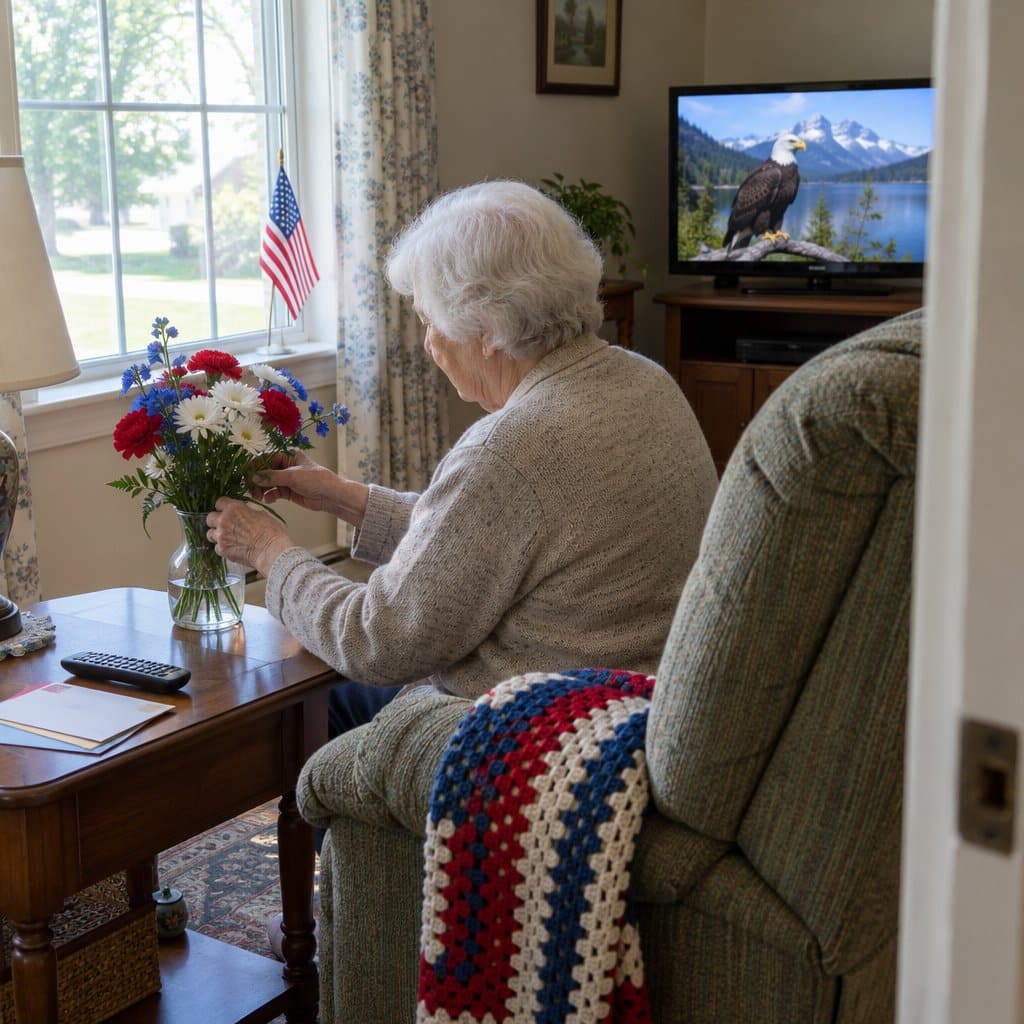
Your living room can become a powerful place of patriotic expression. Displaying the American flag in your window or on your porch is a simple yet profound way to show your pride.
Many people find joy in creating patriotic decorations for their homes, whether it’s arranging red, white, and blue flowers in a vase or hanging bunting during national holidays.
Consider starting a tradition of watching patriotic movies or documentaries on significant dates. Films about American history, biographies of founding fathers, or stories of military heroes can deepen your connection to your country’s heritage while providing meaningful entertainment from the comfort of your home.
Writing letters or emails to active military personnel through organizations like Operation Gratitude or Any Soldier offers another powerful way to serve. Your words of encouragement and gratitude can mean the world to someone serving far from home, and it requires nothing more than your time and heartfelt thoughts.
Memorial Day Activities for Seniors With Limited Mobility
If standing for long stretches or walking far is hard, Memorial Day can still be full. About ten ideas fit the day, and every one can be done sitting down. Here is how they sort out.
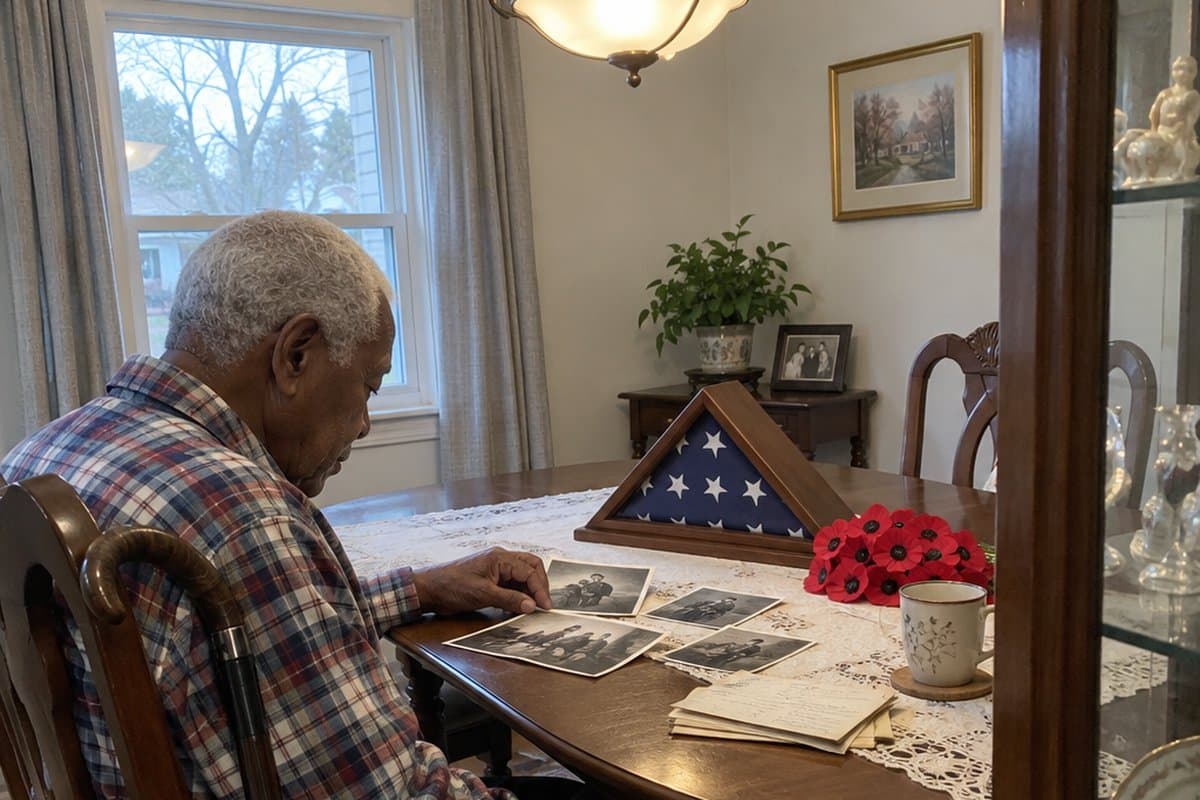
For the home, build a memory display of photos, medals, and letters. Host a “Stories of Service” circle where family shares service stories. Set up a flag ceremony with a small tabletop flag, and decorate your doorway from a table nearby with items that need no climbing or reaching.
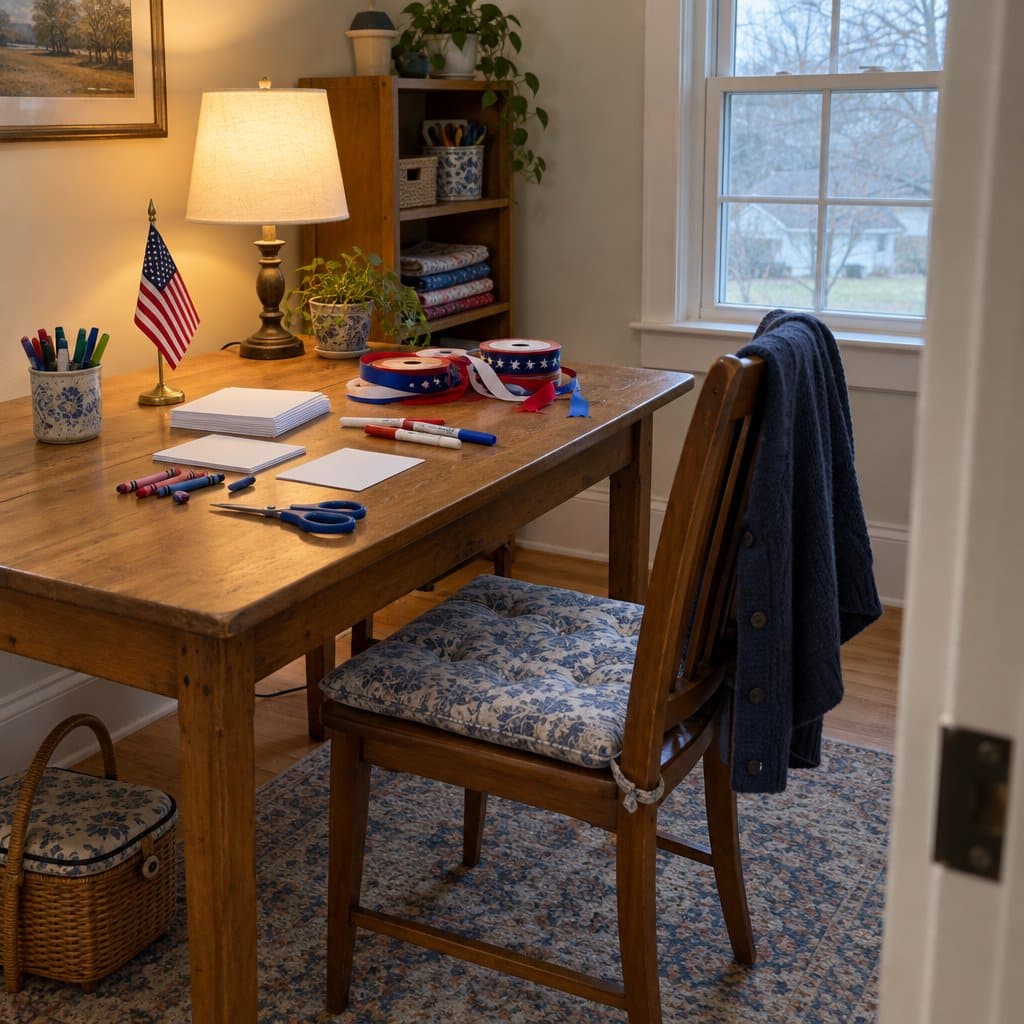
For the hands, set up a craft station for cards to service members, centerpieces, photo frames, or ribbon pins. Write letters to active service members at a comfortable writing station, with stationery, pens, and the guidelines that letter-delivery groups post on their websites. Hold a recipe exchange where each dish carries a family story.
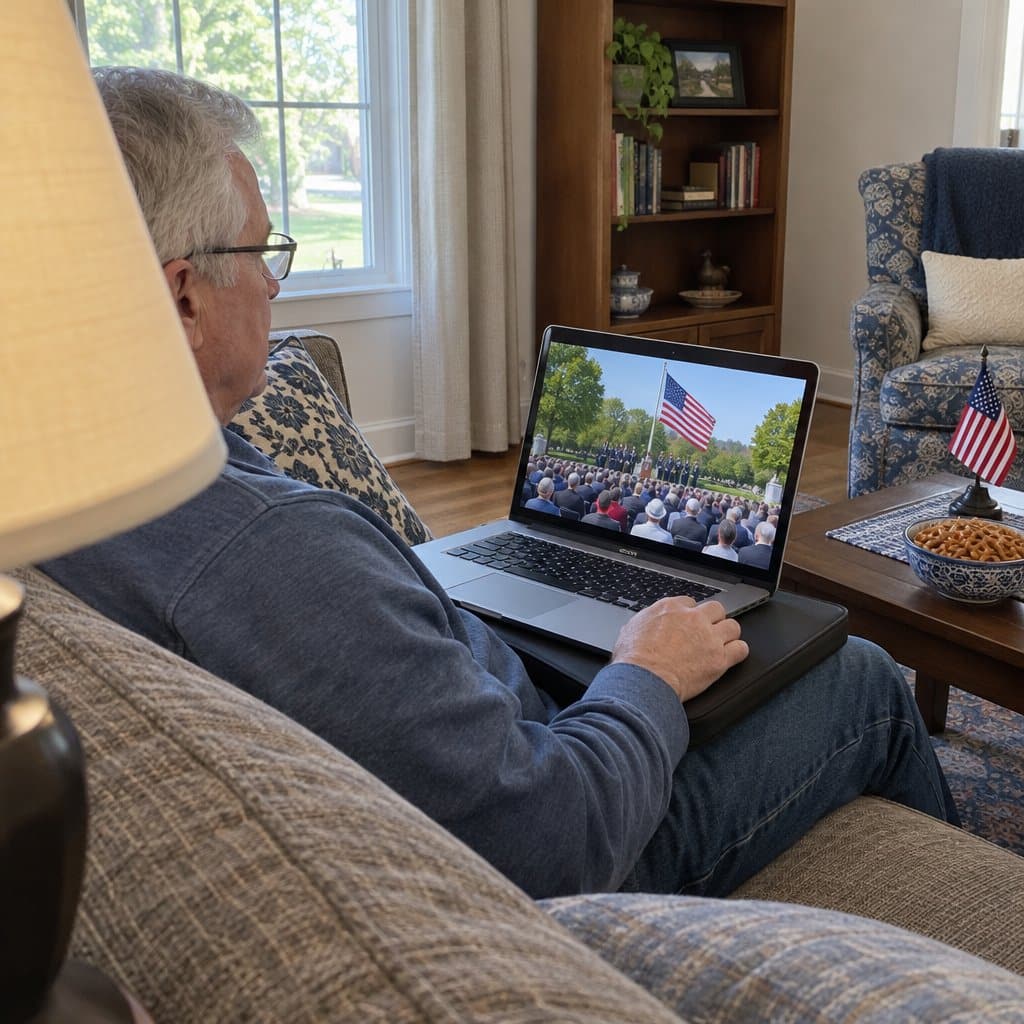
For watching and listening, many towns livestream their parades and ceremonies. Make a viewing spot in a comfortable spot with good lighting and visibility, add small flags, and invite family in person or by video call. You can even be the family’s parade commentator, sharing memories as you watch.
A movie marathon works the same way. Pick films from different military eras, keep snacks, drinks, pillows, and a lap desk for notes within reach, and bring a few historical facts to share between films.
The tenth idea is passing history to younger family. Set up a comfortable seating area, gather photos, maps of where relatives served, or objects from that time, and prepare a few stories with details suited to the children’s ages. It can become a tradition you repeat each year.
One fun fact for the flag ceremony: a folded flag has 13 folds, each with its own meaning, and the triangle recalls the tricorner hats of Colonial soldiers.
The trade-off is that you will be the host, so a little preparation helps. Gather your photos, supplies, and questions ahead of time so you can enjoy the day instead of hunting for things.
Forgotten Memorial Day Traditions You Can Bring Back
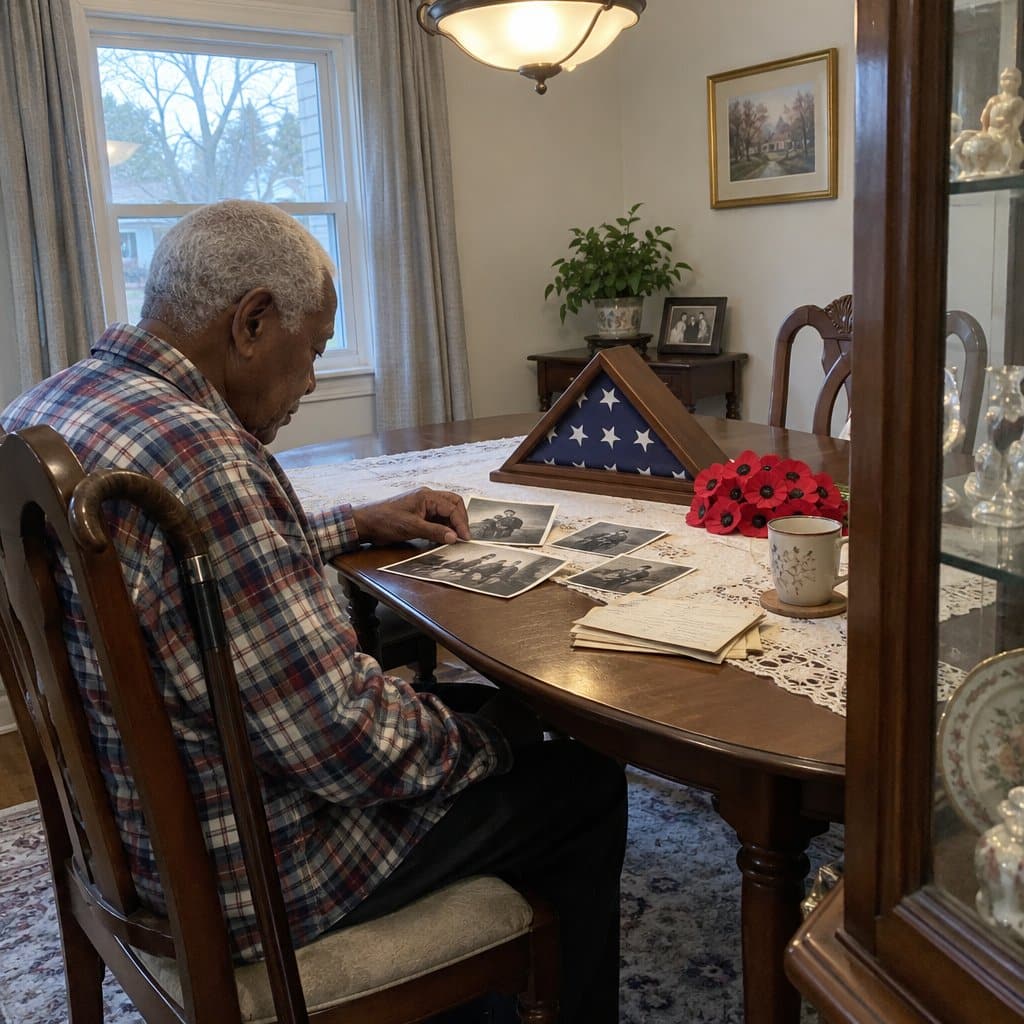
Memorial Day was once called “Decoration Day.” The name came from decorating the graves of Civil War soldiers with flowers, wreaths, and flags. After World War I, the day grew to honor those lost in all American wars. If your parents or grandparents seem unimpressed by barbecues and sales, this older, quieter holiday is probably what they remember.
Here are seven of those customs, and how to bring each one back.
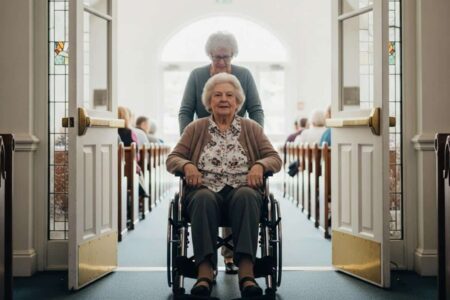
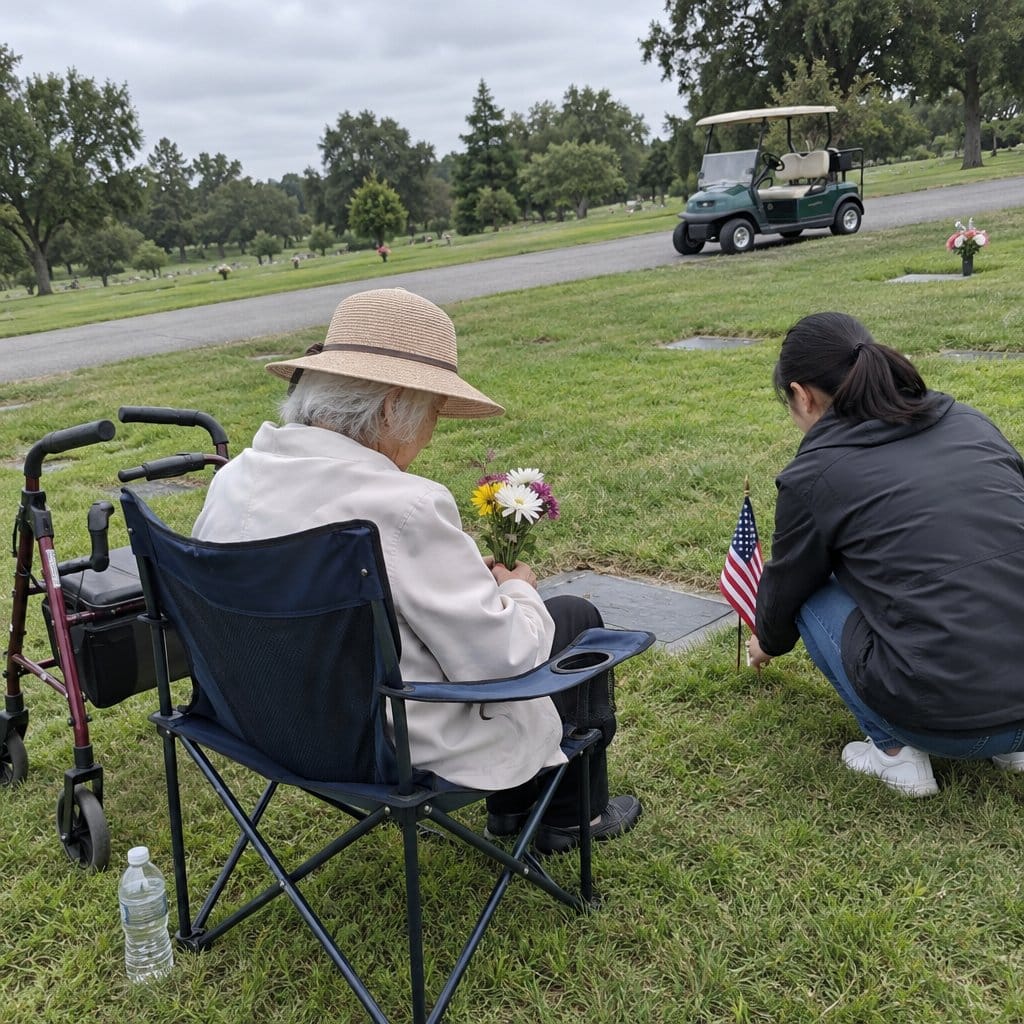
Cemetery visits. Families once gathered at the cemetery to clean graves, place fresh flowers, and hold remembrance ceremonies. These were community events. Ask which cemeteries matter to your family, go in the morning before it warms up, and bring chairs, water, and sun protection. Some cemeteries offer golf cart rides, so call ahead. A comfortable portable chair and a plan to visit just a few special graves also help.
Community processions. People once walked together to a cemetery or memorial carrying flowers and flags. Check with your local American Legion, VFW, or historical society for small ones still held. If there are none, walk to a local memorial with family and bring small flags or flowers.
Home displays. Decorating focused on remembrance. Set up a memory table with photos of family members who served, hang a wreath with red poppies on the door, and put bunting on the porch railing. Flags go at half-staff until noon, then up to full staff. Your parent can direct where things go and share stories about each item.
Readings and poems. “In Flanders Fields” and Lincoln’s Gettysburg Address were favorites. Ask what readings your parent remembers, then have each generation share one. For someone with memory challenges, print the readings in large font, or let them listen.
Victory Gardens. After World War II, this weekend was a planting time, often with plantings honoring the fallen. Try a container garden of red, white, and blue flowers, or red poppies, the international symbol of remembrance. Your parent can direct the planting from a seat.
A moment of silence. The National Moment of Remembrance is at 3 p.m. local time. Pause for one minute, and consider playing “Taps” afterward. It often reaches people with memory impairments deeply.
Potlucks with family recipes. Communities shared dishes tied to those who served, or wartime recipes. Ask your parent about dishes from their childhood. Even if they can’t cook anymore, they can guide the preparation and share the stories with younger family members. Ideas for cooking when a parent can’t actively cook can help.
You don’t have to give up the barbecue. One or two of these can build connections between grandparents and grandchildren. The trade-off is that some need a little planning, such as calling a cemetery ahead or finding a local ceremony.
Seated Memorial Day Activities You Can Do at Home
Memorial Day does not have to mean a parade route. Plenty of ways to mark the day need very little walking, and you can do all of these sitting down.
Start with a memory display. Gather photos of family members who served, medals, letters, or other keepsakes, and arrange them on a small table or bookshelf within easy reach. Small flags, ribbons, or battery-operated candles finish it off, and it can stay up long after the holiday.
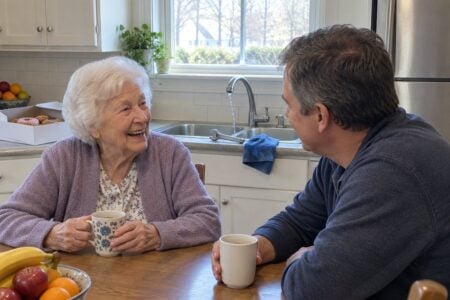
You could also host a small “Stories of Service” gathering. Set chairs in a circle, put out light refreshments, and invite family or friends to share service stories, their own or a loved one’s. Your connection to history is a real gift, and you can guide the talk with a few questions you prepared ahead of time.
For your front door, set up a decorating station at a table nearby. A wreath with flags, magnetic door decorations, or battery-operated red, white, and blue string lights can all go up without climbing or reaching.
A comfortable crafting area with good lighting and supplies close by works well for greeting cards for service members, small centerpieces, decorated photo frames, or ribbon pins.
A recipe exchange brings in food traditions without hours at the stove. Ask family to bring dishes tied to your family’s military history, such as a recipe from a place someone served, then share the story behind each one.
A flag ceremony works with a small flag on a tabletop stand. You can teach younger family members how to fold a flag, when to display it, and what each fold means.
For a movie marathon, choose films from different military eras or branches, and keep snacks, drinks, pillows, and good lighting within reach. A few discussion questions between films make it more than TV watching.
The trade-off is a little planning. Most of these go best when you set things up ahead of time, so everything you need is close at hand.
Why Memorial Day Can Be Hard When Mobility Is Limited
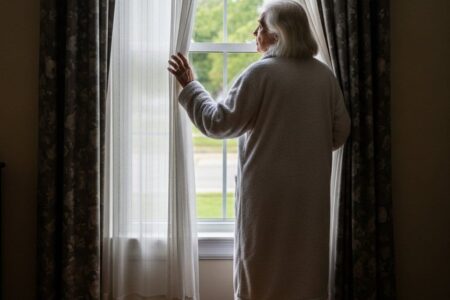
Memorial Day often centers on things that ask a lot of the body. Standing through a long parade, crossing uneven cemetery grounds, or sitting at a backyard barbecue with too few chairs can turn a meaningful day into an exhausting one.
The emotional side is real too. Many people feel left out, or like a burden, when they can’t join family traditions the way they once did.
Here is the good news. Some of the most meaningful ways to honor veterans require very little mobility at all.
Remembrance and gratitude are the heart of the day, and neither one depends on how far you can travel or how long you can stand. You can share a family member’s service story from a comfortable chair, write to someone who is serving now, or watch a livestreamed ceremony with family beside you.
Many of these seated activities can bring people closer than a crowded parade would. The trade-off is that you won’t be standing in the crowd, so it helps to plan one small tradition of your own to make the day feel special.
Community-Based Patriotic Activities
Your local community likely offers numerous opportunities for patriotic participation that accommodate various mobility levels. Many senior centers host patriotic sing-alongs, flag ceremonies, or educational programs about American history.
These events are typically designed with accessibility in mind, offering seating and easy navigation. If you’re struggling with feelings of isolation, discovering new tech and community solutions for addressing loneliness can help you find meaningful connections in your community.
Volunteering for veteran organizations or participating in community service projects from a seated position can be deeply fulfilling. Many organizations need help with tasks like sorting donations, making phone calls, or providing administrative support. All of these can be done comfortably regardless of mobility challenges.
Consider joining or forming a patriotic discussion group with friends or neighbors. Sharing stories about American history, discussing current events, or reminiscing about past patriotic experiences can create meaningful connections while honoring your shared love of country.
Ready to stay connected with more ideas for active aging? Join our newsletter for weekly tips and inspiration delivered right to your inbox.
Visiting the Cemetery When Walking Is Hard
For many families, a trip to the cemetery was part of Memorial Day weekend. Entire families gathered to clean grave sites, place fresh flowers, and take part in remembrance ceremonies, much like the community events that bring people together to give back.
If your parent has mobility challenges, a few small choices make the visit easier. Many cemeteries now offer golf cart transportation for visitors. Call ahead to arrange it.
Plan a morning visit, before the day gets too warm. Bring water and sun protection along with portable chairs.
A comfortable portable chair gives your parent a place to sit while the family cleans the grave and sets out flowers.
Plan to visit just a few special graves rather than all of them. Ask your parent which ones hold the most meaning for your family. Then leave time for your parent to share memories and stories while you are there.
Some families also like to walk to a local memorial together, in the spirit of the old processions where neighbors carried flowers and flags. If that sounds right for your parent, look at walking shoes that are well designed for the trip.
The trade-off is that you will need to plan ahead. A golf cart has to be arranged by phone, and keeping the list of graves short means some will wait for another visit.
Technology-Enabled Patriotic Participation
Modern technology opens up remarkable opportunities for patriotic engagement from anywhere. Virtual tours of national monuments, museums, and historical sites allow you to explore America’s treasures without leaving home.
The National Park Service offers excellent online experiences that bring places like Gettysburg, Mount Rushmore, and the Statue of Liberty directly to your screen.
Participating in online veteran support communities or social media groups dedicated to patriotic causes can help you connect with like-minded individuals across the country. Sharing patriotic content, historical facts, or words of encouragement online amplifies your patriotic voice and helps build community spirit.
Many organizations now offer virtual participation in ceremonies and events. You might attend a Memorial Day service via livestream, participate in online flag ceremonies, or join virtual discussions about American history and values.
For seniors who want to explore how technology can enhance their daily lives, learning about why grandparents are often better at technology than expected can be both encouraging and empowering.
Small Gestures with Big Impact
Sometimes the most meaningful patriotic acts are the smallest ones. Wearing patriotic colors or pins shows your pride and often sparks conversations with others who share your values. A simple red, white, and blue scarf or a flag pin on your lapel can be a quiet but powerful statement of your patriotic spirit.
Teaching younger family members about American history and values represents one of the most important patriotic acts possible. Sharing your knowledge, experiences, and stories helps preserve our nation’s heritage for future generations.
Whether it’s explaining the significance of the Fourth of July to a grandchild or sharing memories of significant historical events you’ve witnessed, you’re contributing to the continuity of American values.
For inspiration on meaningful ways to connect across generations, explore these grandparent-grandchild bonding activities that go beyond traditional games.
Supporting American-made products when possible, even in small ways, contributes to the economic strength of your country. This might mean choosing American-made clothing, supporting local businesses, or selecting products that keep American workers employed.
Creating Your Personal Patriotic Routine
Developing a daily or weekly patriotic routine can provide structure and meaning to your expression of love for country. This might include reading about American history for a few minutes each day, listening to patriotic music, or simply taking a moment each morning to reflect on what your country means to you.
Consider creating a patriotic memory book or journal where you record your thoughts about America, your memories of historical events, or your hopes for the country’s future. This personal project becomes both a patriotic act and a meaningful legacy for your family.
Participating in patriotic holidays and observances, even in modified ways, keeps you connected to the national community. This might mean listening to Fourth of July fireworks from your porch instead of attending a crowded celebration, or watching the Memorial Day parade on television while holding your own moment of silence for fallen heroes.
Want more inspiring ideas for staying engaged and active? Sign up for our newsletter to receive practical tips and uplifting content for people who want to live life to the fullest.
The Heart of True Patriotism
Remember that patriotism isn’t measured by your ability to stand, walk, or travel. It’s measured by the love in your heart and your commitment to the values that make America special. Your service to this country, whether through military service, raising a family, working hard, or simply being a good citizen, has already contributed immeasurably to the American story.
Every act of kindness to a neighbor, every vote cast, every story shared about American values, and every moment spent in gratitude for the freedoms we enjoy represents genuine patriotism.
Your mobility challenges don’t diminish your capacity for patriotic expression. They simply redirect it toward the meaningful, heartfelt actions that often matter most.
Have you found creative ways to express your patriotism despite mobility challenges?
What traditions or activities have brought you the most joy and meaning?
Share your experiences in the comments below. Your ideas might inspire others who are looking for their own ways to honor the country they love.