
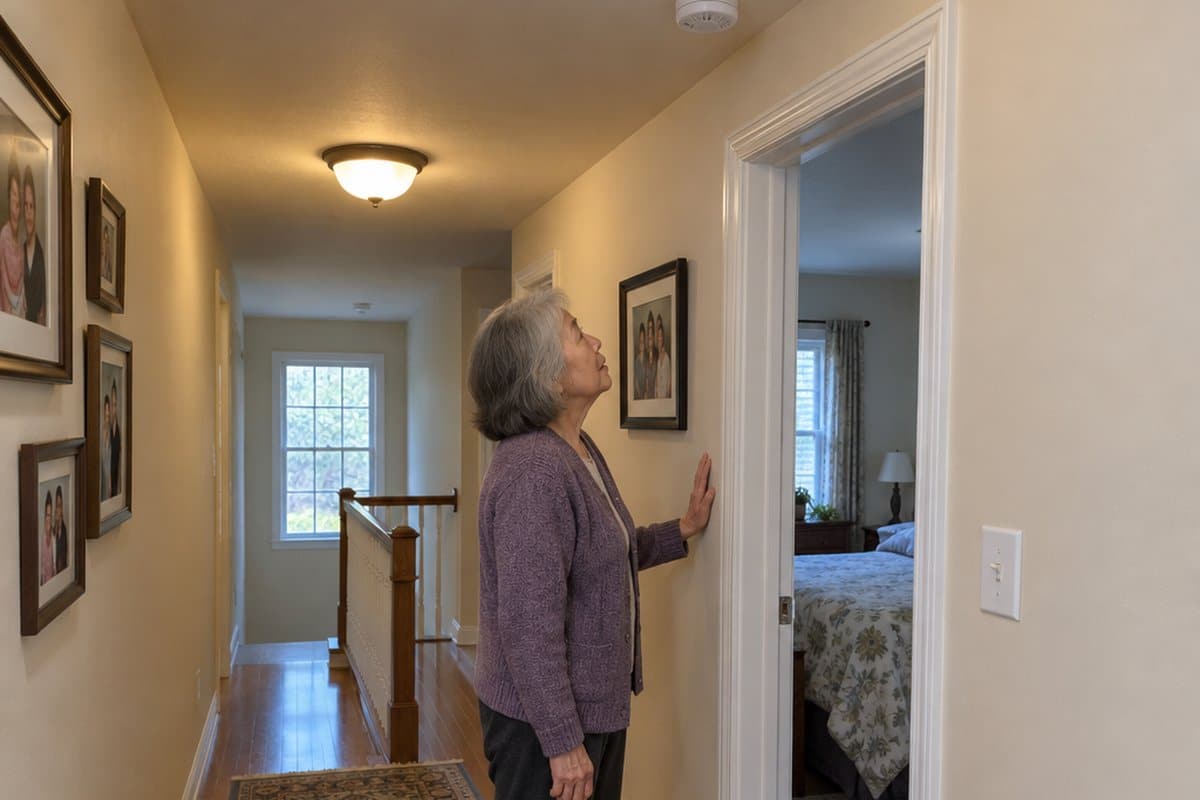
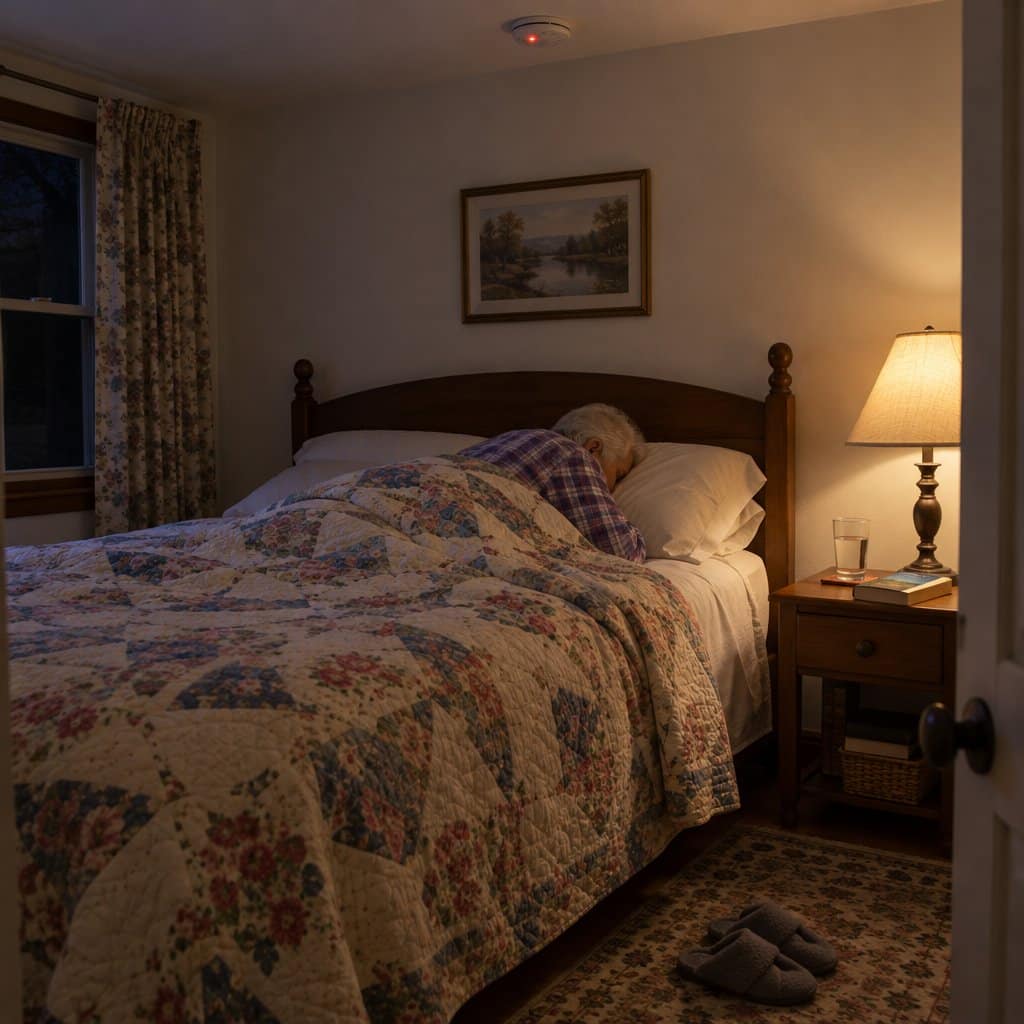
It is the middle of the night, and you wonder whether you would really hear the smoke alarm down the hall. If that worry sounds familiar, you are in the right place.
The best smoke detectors for seniors are loud, bright, and able to alert family when you need it. Below are my top picks, with the good and the bad of each.
I also cover a buying guide, installing alarms yourself or hiring help, free alarm programs, carbon monoxide alarms, and how to test and replace what you already have.


Top 3 Smoke Detector Recommendations
The best smoke detectors for seniors are easy to install, loud, have multiple alert systems, and bed shakers to address hearing loss and mobility limitations. Placement and maintenance are important so you can stay safe in a fire!
When picking a smoke alarm for seniors,
- prioritize loud 85dB+ alarms,
- strobe lights/bed shakers, voice alerts,
- easy access buttons,
- long-life batteries,
- and remote connectivity to caregivers’ phones.
These tailored features for hearing loss, mobility, and convenience provide needed protection.
The right smoke detector can give you peace of mind at home.
Searching for the right smoke alarm? These alarms are perfect for seniors and the elderly because they are loud, with bright flashing lights for easy visibility.
Reviews: Fire Alarms and Smoke Detectors for Seniors
X-Sense Interconnected Smoke And CO Detector
The X-Sense SC01-W is a smoke and carbon monoxide alarm in one, sold here as a 6-pack. It suits a home with more than one floor, or a house where you can’t count on hearing an alarm from the other end of the hall.
The main feature is that the alarms talk to each other wirelessly. When one detects smoke or CO, all of them sound. You can link up to 18 alarms over 820 feet, which covers upstairs bedrooms, the basement, and even a detached garage.
The battery is sealed in and lasts 10 years. That means no battery swaps, no low-battery beeping at 2 a.m., and no climbing a ladder every year or two.
It has two sensors. The photoelectric smoke sensor responds to slow, smoldering fires and helps cut down on false alarms from cooking. A separate electrochemical sensor watches for carbon monoxide.
Installation is simple. Each alarm mounts on a ceiling or wall with the supplied bracket, screws, and anchors, and no wiring is needed. It is certified to UL 217 and UL 2034 safety standards.
One thing to know: this model does not have Wi-Fi. It won’t send a notification to your phone or to a family member far away. If you want that kind of remote alert, you need a different model.
Also, a sealed battery means that when the 10 years are up, you replace the whole alarm. Six alarms is plenty for many homes, so it may be more than you need if you live in a small apartment.
Sonic Bomb Dual Alarm Clock With Bed Shaker
The Sonic Bomb Dual Extra Loud Alarm Clock with Bed Shaker is for people who sleep so deeply that an ordinary alarm clock doesn’t get the job done. One thing to know up front: this is an alarm clock, not a smoke detector. It will not sense smoke or fire.
It wakes you three ways. The alarm is rated at 113 decibels, red lights flash, and a bed shaker vibrates when the alarm goes off. You can adjust the volume.
You can also set how long the alarm runs, from 1 to 59 minutes, and the snooze time, from 1 to 30 minutes. It has a battery backup, so a power outage won’t leave you without a wake-up.
That makes it a good fit for a heavy sleeper or someone who is hard of hearing and needs to get up for medications, appointments, or an early morning routine. It does the waking up, and your smoke detectors keep doing the protecting.
If your main worry is waking up during a fire, you need a smoke alarm that has its own strong alerts built in. This clock won’t do that for you.
Also, the sound is meant to be very loud. If you share a room with someone who sleeps lightly, the shaker and the lights may be enough, so turn the volume down.
Kidde Smoke & Carbon Monoxide Detector
For a battery-powered alarm that covers both smoke and carbon monoxide (CO), I point people to the Kidde 30CUDR. It comes as a 3 pack, so you can cover more than one spot in the home.
One unit detects both dangers. It sounds an 85-decibel alarm and flashes a red LED light, so there is a visual warning along with the noise.
It runs on two AA batteries, which are included. There is no wiring, so you or a family member can put it up without an electrician.
The sensors are built to tell real smoke from everyday cooking or steam. That means fewer false alarms from the toaster or a hot shower. Nobody likes an alarm that cries wolf, and people who get tired of the noise sometimes pull the battery out.
It is tested to UL 217 and UL 2034, the standard safety ratings for smoke and CO alarms, and it carries a 10-year limited warranty from the date of purchase.
One thing to know: this model does not speak. It sounds a loud tone and flashes a light, but it does not announce “Fire” or tell you which room the danger is in. If someone in your home has significant hearing loss, or sleeps deeply with hearing aids out, a louder tone may not be enough. You would want a bed shaker or strobe alarm added to it. If you are not sure which to pick, I walk through smoke and CO alarms with bed-shaker and strobe options for people with hearing loss.
Because it runs on batteries, you also have to remember to test it and swap the batteries. Put one on each level and outside the bedrooms, and press the test button once a month.
First Alert Battery Smoke Alarm
The First Alert SMI100 is a battery-operated smoke alarm, which means you don’t need an electrician or any wiring to put it up. It suits a bedroom, hallway, or any spot where you want another alarm.
It uses what First Alert calls Precision Detection sensing. It is built to meet the newer industry standards for cutting down on nuisance alarms from cooking, while still giving early warning of a real fire. If your toaster has ever set off the alarm, you will see why that matters.
The battery compartment opens from the front. You can swap the battery without taking the whole alarm off the ceiling, which is a real help if reaching up is hard.
There is a test/silence button. Pressing it checks that the alarm works, and it can also quiet the alarm when it goes off.
When the alarm itself reaches the end of its life, it gives a warning so you know it is time to replace it. You don’t have to guess how old it is.
The trade-off is that this one runs on a battery you will need to replace. If you want a battery you never have to think about, look at a sealed long-life model. It also does not connect to your phone or to other alarms, so it is not the pick if you want family alerted from far away.
System Sensor White Fire Strobe

If hearing loss is the concern, a bright strobe is worth a look. The System Sensor SWL White Fire Strobe is a wired fire strobe light, made to give a visual warning instead of relying on sound alone.
It is a strobe, which means it flashes when the alarm system it is connected to goes off. Think of it as an extra set of eyes for the alarm, not a smoke detector by itself.
That is the main thing to know before you buy. It is wired, so it needs to be connected to a compatible fire alarm system. Hiring an electrician or your alarm company to do that is usually the safest route.
It will not suit someone who wants a plug-in or battery gadget they can set up in five minutes. It also will not sense carbon monoxide or tell you which kind of danger you are facing.
Where it helps most is the bedroom. A flashing light can reach a person who would sleep through a standard alarm tone, whether from hearing loss or just deep sleep.
If you already have a wired system, or are planning one, this is a sensible way to add the visual alert.
Smoke and Fire Alarm Buying Guide
As a caregiver looking for a smoke and fire alarm for an elderly loved one, there are some key features you’ll want to prioritize:
- Loud alarm tone at 85 decibels or higher: If hearing loss is a concern, a very loud alarm is crucial for notification. Look for alarms rated at least 85 decibels or louder.
- Strobe light or bed shaker: High pitched alarm tones can be hard to hear with hearing loss. A bright strobe light or bed shaker attachment can provide visual or physical alarms to wake them.
- Voice alert: Alarms with clear voice warnings stating “Fire!” or “Smoke!” make it easier to understand the danger if hearing is limited.
- Easy to access buttons: Your loved one will need to be able to easily reach the alarm to test it or hush false alarms. Seek models with buttons on the front or side.
- Long-life lithium batteries: Ten year sealed batteries eliminate frequent battery changes and climbing to reach the alarm. This added convenience helps your loved one stay safe.
- Remote connectivity: Look for models that send alerts to caregivers’ phones so you have an extra layer of protection when you aren’t present.
The right safety features tailored for hearing loss, mobility, and convenience will give you and your loved one peace of mind.
Installing Alarms Yourself or Hiring Help
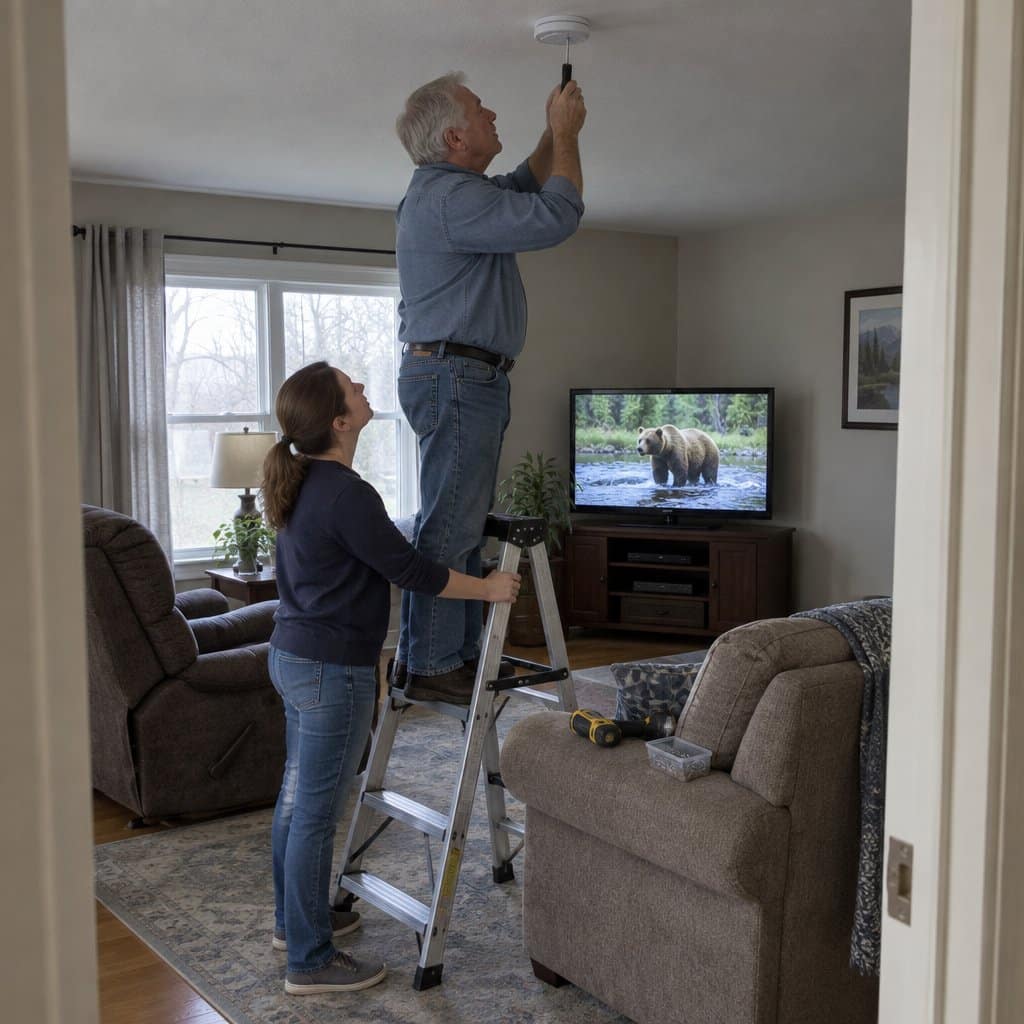
If you are handy, putting alarms up yourself can save you some cash. Follow the manufacturer’s instructions closely, and look for models that need minimal tools and effort so you or a loved one can set them up quickly.
Doing it yourself is satisfying, but it takes some technical skill. A professional costs more, though you get the assurance that everything is set up correctly.
Remember that safety comes first, and a fire extinguisher you can use easily is part of it. If you don’t feel confident on a ladder or with the wiring, hiring someone is a sound choice.
Either way, plan the job so it doesn’t upset your week. Choose a low-activity day, like a free weekend or an afternoon when you don’t expect visitors.
You are proud of your home, and a bulky detector can stand out like a sore thumb. Look for sleek designs that blend in with your decor.
For a modern home, monochrome colors and streamlined shapes fit well. For a traditional one, look for subtle curves and neutral tones.
You don’t have to put an alarm front and center. Out of direct sight lines works, as long as it is still in a spot that detects smoke or gas.
One trade-off: a hidden or stylish alarm still has to be in the right place and easy to reach for testing. If looks and placement pull in different directions, placement wins.
Free Alarm Programs and Ways to Spend Less
Before you pay full price for anything, make a phone call. Some local fire departments give free smoke detectors to seniors, and seniors may also qualify for free ones through local programs.
If you live by yourself, a free alarm is one less worry. My list of must-have products for elderly people living alone has more ideas for staying safe at home.
If you are helping a loved one, look into whether they qualify for one of these programs.
Buying alarms in a pack can give you more value for your money. Kidde is one brand that sells smoke and CO detector packs.
Insurance companies sometimes give a discount on your home insurance when you install approved smoke and CO detectors. Check with yours before you buy.
If you want a plug-in carbon monoxide alarm with no frills, a basic model like the First Alert CO605 does the job. For smoke and CO together, a First Alert combination unit with visual alerts is easy to see if you have hearing loss.
One trade-off: a plain, low-cost alarm may leave out features like voice alerts or a phone connection. Decide which features matter most for you before you shop.
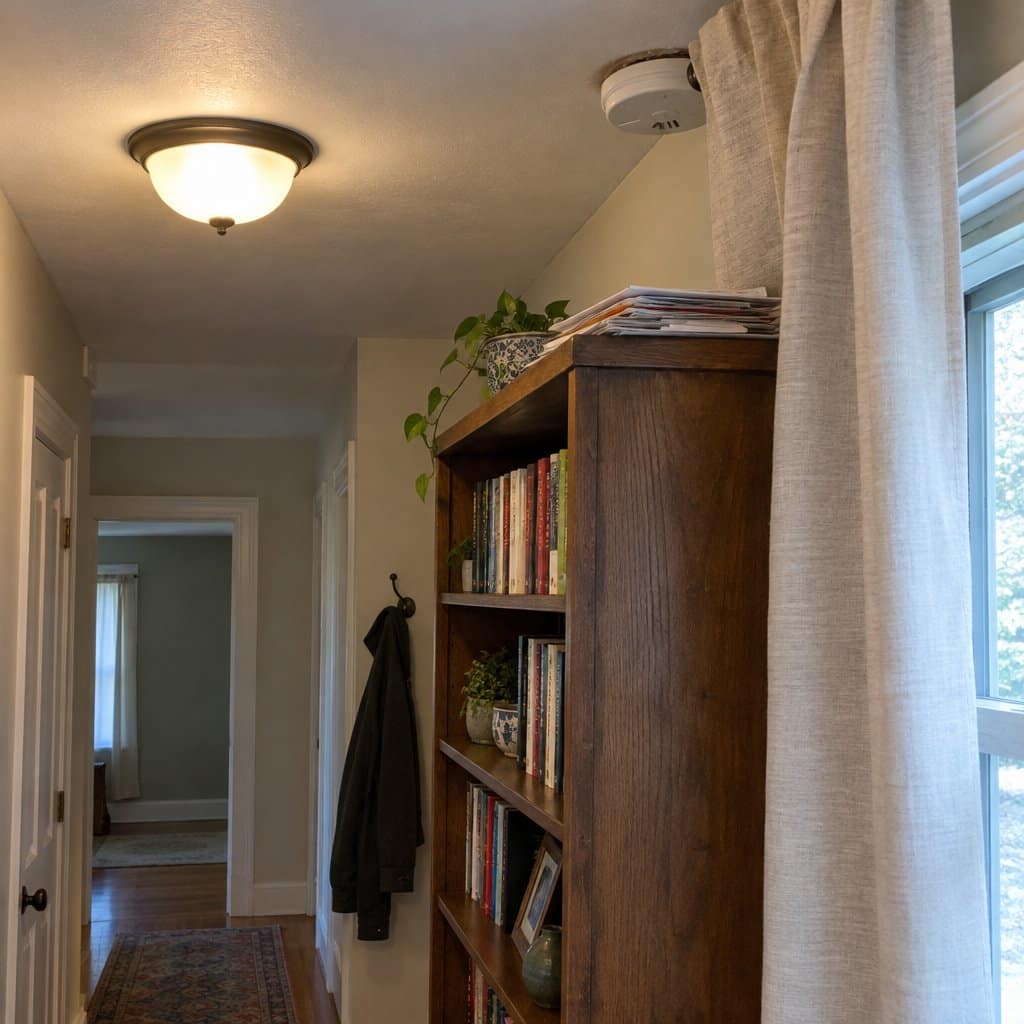
Walk Through Your Home and Check What You Already Have
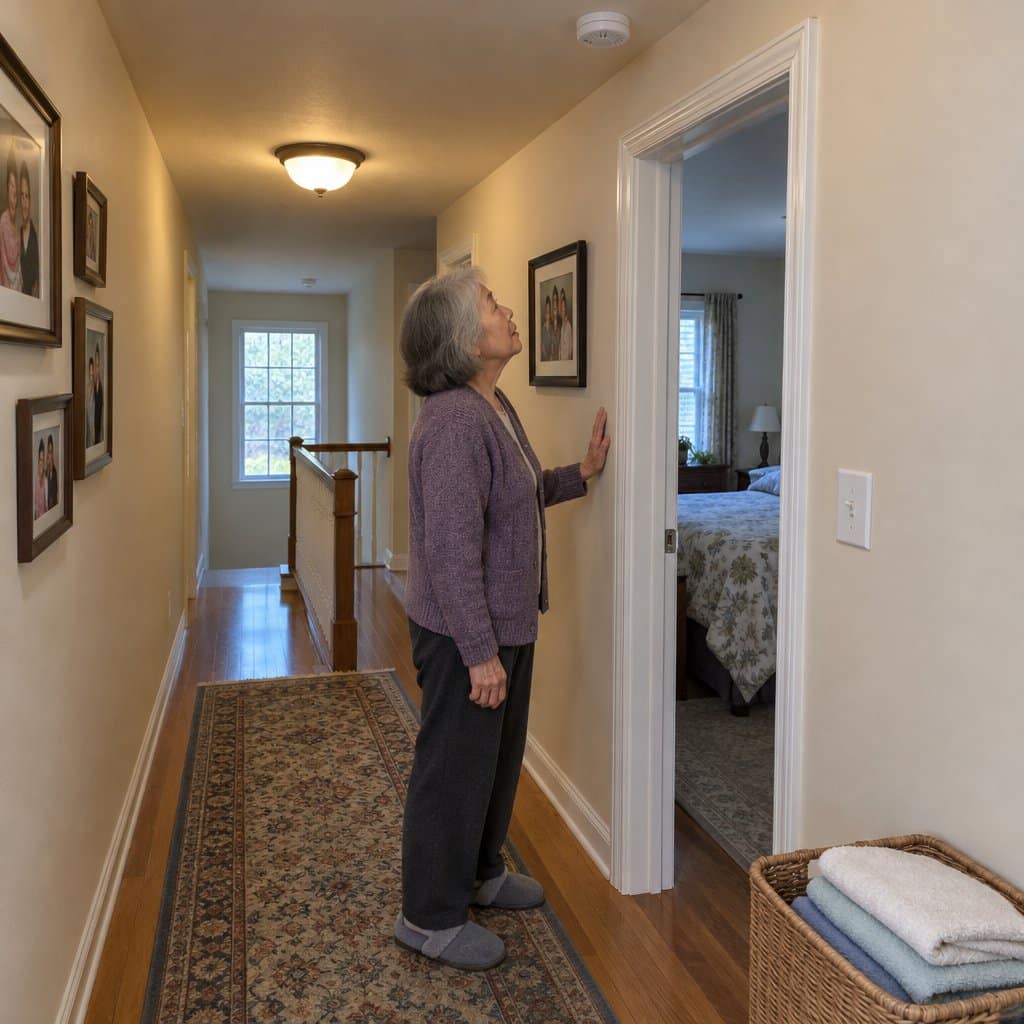
Before you buy anything new, go room by room and see how your current alarms are doing. Checking alarms is Day 1 of my 30 day home safety challenge, so it is a good place to start.
Make sure there is an alarm on every level of the home, including the sleeping areas. That gives you the earliest possible warning.
Look at where each alarm sits. Confirm that nothing has been moved in front of it, and that furniture or curtains are not blocking it.
If an alarm chirps or acts up, replace the battery if it takes one. If it is sealed or more than 10 years old, replace the whole alarm.
Alarms work best alongside other habits, such as avoiding loose clothing when cooking. My article on enhanced fire safety goes through more of them.
If you are a caregiver or family member, hold regular drills so everyone knows what to do in an emergency. Drills can also ease worry and give some peace of mind.
If you aren’t confident doing any of this yourself, safety comes first, and a professional can help.
One trade-off: a full walk-through takes some time. Pick a low-activity day, like a free weekend or an afternoon without visitors.
Carbon Monoxide Alarms and Combination Smoke Detectors
Smoke is not the only danger a detector can warn you about. Carbon monoxide (CO) comes from gas leaks and fuel-burning appliances. You can’t count on your sense of smell or on noticing it yourself, so an alarm does that job for you.
Put CO alarms outside each sleeping area and on every level of your home, so you hear them if they go off at night. Follow the instructions that came with your model for exact placement. Drafty spots and areas near open windows can disrupt how they work.
Smoke alarms go on every floor too, especially near sleeping areas. Keep the kitchen and bedroom covered, and check now and then that each alarm is still firmly in place and not blocked by furniture or curtains.
Why a Combination Unit Can Help
A combination smoke and CO detector does both jobs in one device, so you buy and maintain fewer of them. Pick one with voice alerts. Some voice alarms say what kind of emergency it is and where it is, which gives you clear instructions when you need them.
Many combination units have a pause button that silences false alarms from something like burnt toast. Look for large, clearly labeled buttons that are easy to press.
Testing and Replacing
Press the test button on each detector once a month. If you can’t hear the alarm well, look for a model with a louder tone or flashing lights.
Smoke and CO detectors wear out, and should be replaced every 7 to 10 years. Check the date on each unit. Replace batteries yearly unless the device has a long-life battery, and look over each alarm for damage or dust buildup.
Installation is usually simple. Many units mount with adhesive pads or need very little drilling, and some are wired into your home’s electricity. Follow the manufacturer’s instructions. If you aren’t confident doing it yourself, a professional can make sure everything is set up correctly.
One trade-off: a combination unit puts both alarms in one place, so it has to sit where both smoke and CO coverage make sense. In some homes, you may need separate alarms to follow the placement rules above.
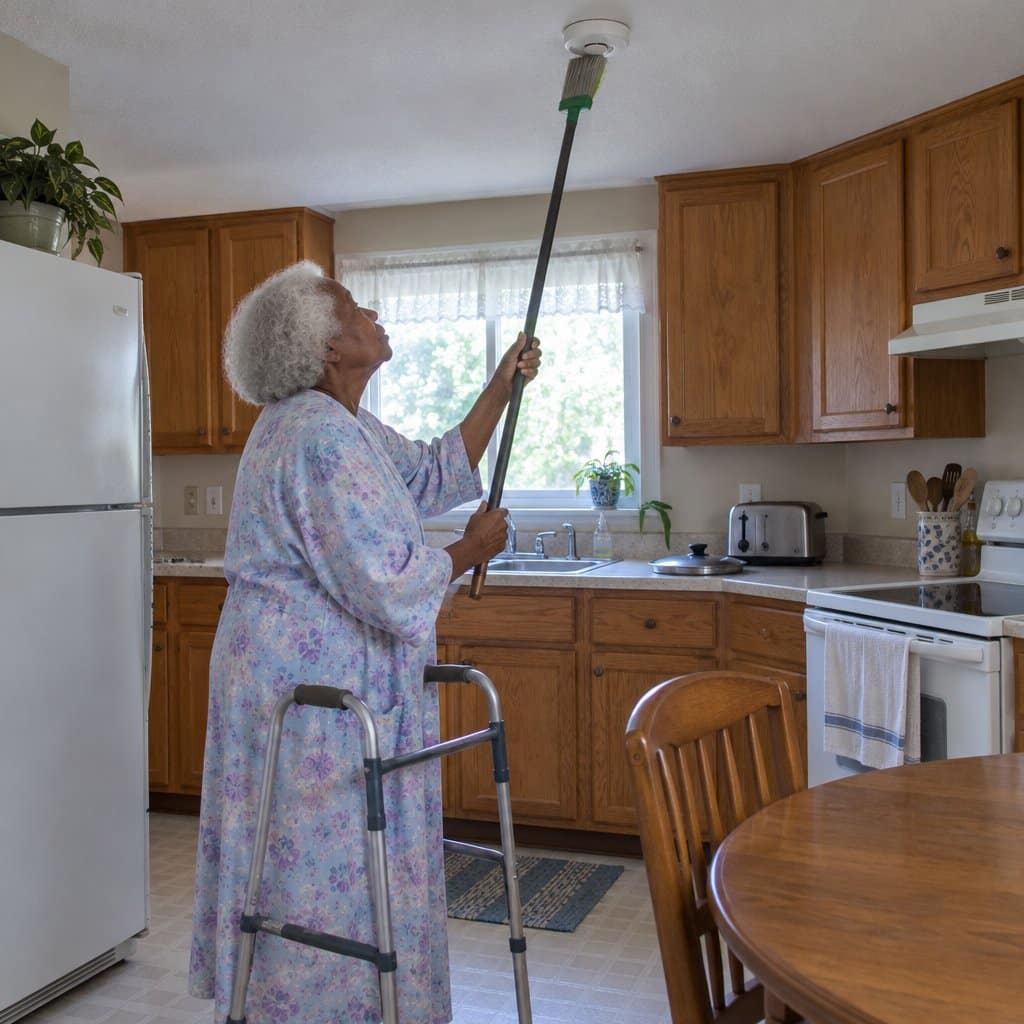
Overcoming Smoke Alarm Challenges
- Having trouble hearing your smoke detector alarms? Choose a model with bright strobe lights that will visually alert you to danger.
- Can’t easily reach your ceiling-mounted detector? Ask someone to test it for you, or use the manufacturer’s remote test feature if your model has one. No one should climb a ladder alone.
- Worried about forgetting to check your smoke detector? Opt for a long-life lithium battery model with a low battery warning.
- Concerned about false alarms? Properly position your smoke detector to avoid cooking fumes and keep it clean.
How Caregivers and Family Can Help
If you look after a parent or loved one, start by making sure every alarm is easy to reach. That way you or they can do the routine checks without a struggle.
Test the alarms monthly. If an alarm chirps or acts up, replace the battery if it takes one. If it is sealed or more than 10 years old, replace the whole alarm. The 30 day plan in my home safety challenge for seniors has this as a first step.
Pick models with loud alarms and bright flashing lights. These help people who have trouble with hearing or vision.
Some detectors come with a remote control or connect to a smartphone app. That makes them easier to test and silence when needed.
Put detectors on every level of the home, including the sleeping areas. Keep them clear of anything that blocks them, and my article on furniture safety covers how to arrange a room.
Hold regular drills so everyone knows what to do in an emergency. Drills can also ease worry and give some peace of mind.
Alarms are one part of a bigger plan, and my guide to fire safety tips for seniors covers the rest. An easy-to-use fire extinguisher belongs in that plan too.
Reassure your family member that these steps are for their safety. Explain that firefighters and safety officers are allies.
If worry over the alarms shows up, offer some reassurance. An extra tool like the Alexa Guard skill can add support and monitoring.
One trade-off: phone apps and extra tools mean more technology to set up and keep running. Choose only what your loved one will actually be comfortable using.
Wrapping Up
Fire is a serious risk for older adults. Many people have limited mobility, and many smoke alarms on the market aren’t designed with that in mind.
People with hearing loss can have a harder time hearing the high-pitched noise a typical alarm makes. It’s important to look for smoke alarms designed for hearing loss.
Alarm systems that provide more than one type of alert can also be helpful. If the sound of an alarm system isn’t enough to alert someone, flashing lights or vibrations might be enough to catch their attention.
Fires pose a major risk to seniors, so having the right alarm system as a part of their fire safety plan is so important.
Having an easy to use fire extinguisher is another important part. All these smoke alarms can ensure that seniors are notified immediately in an emergency.
Don’t cut any corners when it comes to alarms. It’s essential that homes are equipped with the right kind of smoke alarms.









Not a mention of mounting positions, usually high off the floor and only reached by ladder which few senior citizens are not willing to attempt. When the battery runs down and the chirping begins it would be nice to replace the battery without climbing a ladder. Of course, alarms on the market today are designed by young people….
It’s important to know the difference between pathway lit smoke detectors and stobe (also known as ADA Compliant) smoke detectors. I generally advise look on-line for ADA smoke detectors when shopping DIY home improvement stores.