You reach for the couch or the wall to steady yourself, and you start to wonder if a cane would help. This guide to quad canes, the four-footed canes that stand on their own, is here to help you sort that out.
We cover my top quad cane picks for stability and balance problems, how standard, offset, and folding canes differ, the pros and cons of four-prong canes, canes with lights, and two questions to ask before you buy, whether it’s for you or a parent.


Quad Cane / 4 Prong Cane Reviews
Here are the quad canes I would look at, and why.
Vive Health Quad Cane
This Vive Health quad cane is a plain, basic option. It has four feet for support, and it’s built to be set up once and then left alone.
The base reverses, so it works in either hand. It adjusts for left or right-handed use without getting in the way of your stride. Keep the narrower side of the base closest to your body.
The nonslip rubber tips are made for tile and hardwood floors, and also for grass, gravel and plush carpeting. That covers most of the places you’d walk in a day, indoors or out.
The handle is ergonomically designed to reduce hand and wrist fatigue. The frame is anodized aluminum, which resists corrosion and is lightweight.
Height adjusts from 28 to 37 inches with a brass locking pin. Make sure the pin clicks fully into place before you put weight on it. It also comes with a lifetime guarantee.
One trade-off: a quad cane’s four-footed base is wider than a standard cane’s. It can feel clumsy on stairs and in tight spaces, and it works best when you set it down flat each step. If you need more support than a cane can give, a walker may suit you better.
HONEYBULL Foldable Walking Cane


This one is the HONEYBULL foldable walking cane. It is not a true four-prong cane. It has a three-tip base that lets it stand up on its own, which solves the everyday annoyance of a cane sliding off a wall or table and landing on the floor.
That matters more than it sounds. Bending down to chase a fallen cane is exactly the kind of moment when balance gets tested.
The cane is made of aluminum and folds into sections. That makes it easy to tuck into a bag, the back seat of a car, or a closet in a small apartment.
The height adjusts without tools. You can change the fit yourself, and a caregiver can do it quickly too. A good rule is that the handle should sit about level with the crease of your wrist when your arm hangs at your side.
There are a few things to know before you buy. The listing gives no weight capacity, so check with HONEYBULL directly if that matters for you. A wrist strap is not confirmed as included, so you may need to buy one separately.
Also, a three-tip base is steadier than a regular single-tip cane, but it does not give the wide support of a full quad cane. If you need a lot of help staying upright, a four-prong base is the better choice. If you want a cane that stands by itself and folds away, this is worth a look.
Rehand Quad Cane
If you want a quad cane that folds down for a suitcase or a closet, the Rehand Quad Cane is worth a look. It has an aluminum frame and a collapsible design that wraps up to about 16 inches in seconds.
The four-pronged base is molded as one piece, not welded together like many traditional quad canes. The rubber foot pad is also larger than the usual kind, so more of it touches the floor. That extra contact is what gives a quad cane its steadiness.
The handle is made of two materials. A hard PP material gives your hand something firm to push against, and a soft TPR material on top keeps it comfortable. It is longer and wider than a typical foam-padded handle, so it spreads the pressure across more of your palm.
It is made for right- or left-handed use and the height adjusts. The aluminum frame keeps it light to carry.
One thing to know: a folding cane has joints, and a cane that does not fold has none. If you plan to lean on your cane heavily every day and never travel with it, a solid, non-folding quad cane may suit you better. This one is also shown here in red, which is a bright choice if you wanted something plain.
HurryCane Freedom Edition Folding Cane
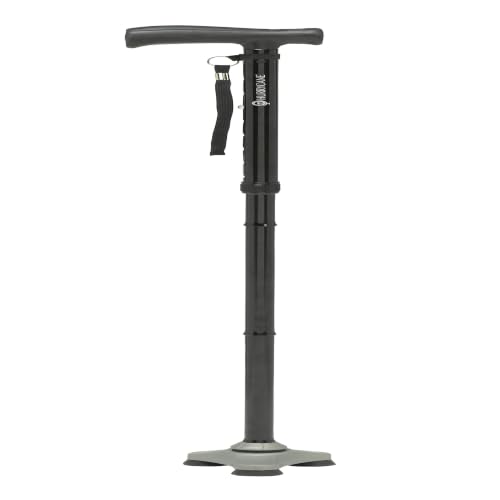
Finally, the HurryCane is a popular choice for people looking for stable canes. Even though it only has 3 prongs, it still provides a lot of traction and balance both indoors and outdoors.
What makes this cane unique is that the staff of the cane pivots around the bottom base, adding mobility and security simultaneously.
The HurryCane’s other claim to fame is its quick folding function. It can go from full size to completely compact in seconds, which is very handy for seniors on the move.
You can adjust this cane from 30.5 inches to 37.5 inches, and it has a weight capacity of about 350 pounds. It has a very comfortable ergonomic handle as a plus.
The HurryCane comes in 4 colors: red, purple, black, and blue.
Medline Offset Folding Cane
If you want a four-point cane that also travels well, the Medline Offset Folding Cane is worth a look. The four-point tip is strong and flexible, and it adds stability while you walk.
The four-point base also lets the cane stand up on its own. That means no hanging it on doorknobs, leaning it in a corner where it slides down, or bending over to pick it up.
The handle is offset, which centers your weight over the strongest part of the cane. It has a gel grip with cushioning for comfort and security.
It folds, so it fits in a suitcase or carry-on bag. It is made of aluminum and weighs 1.15 pounds, yet it supports up to 350 pounds.
To set the height, push the button. It adjusts from 32 to 36 inches in 1-inch steps.
The trade-off is that range is fairly narrow. If you are very tall or quite short, check your measurement first. And the four-point tip is on the smaller side of what a quad cane can be, so if you need the widest base for maximum support, a larger-footed quad cane is the better choice. It comes in black.
Vive Quad Cane Tip Replacement
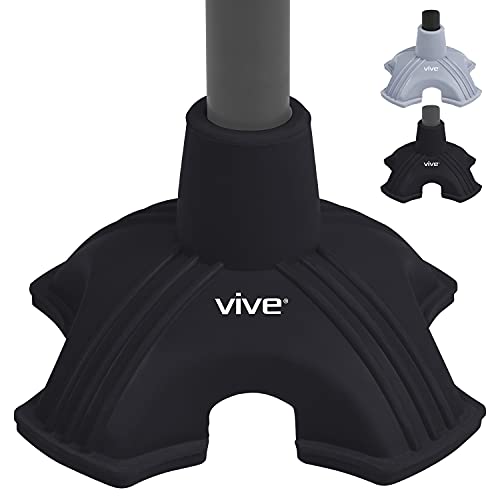
If you already have a cane you like but want the steadiness of a quad cane, an add-on base is worth a look. It replaces the tip on the cane you own, so you keep the handle and height you are used to.
The Vive quad cane tip fits any standard 3/4-inch cane, including folding canes. You remove the old tip, set the bottom of the cane into the new rubber base, then push down on a flat surface and twist until it is fully inserted. Take that last step seriously. A base that is not seated all the way can wobble.
It has four contact points with the floor, so the cane stands up on its own instead of falling over when you let go of it. That is a small thing until you have bent down to pick up a cane for the fifth time in a day.
The base is non-skid rubber, made for grip on uneven or loose ground like grass, gravel or sand. It also flexes as you walk, which absorbs some of the shock of each step and can ease the strain on your hand and wrist. The design is compact enough to work on stairs.
The trade-off: it only fits a 3/4-inch cane, so measure yours first. A base like this also adds some steadiness, but it is not as wide as a full quad cane. If you need a lot of support while leaning, a full quad cane may suit you better.

How Standard, Offset, Folding and Specialty Canes Differ
Canes come in more types than most people realize, and knowing the differences between walking canes and walking sticks is part of sorting them out. Here is how the main types compare to the quad cane.
A standard cane is a support rod of wood or steel with a curved or straight handle. Many doctors and therapists prefer a straight handle because it matches the angle of your hand while walking. Wooden ones are usually not adjustable in height.
An offset handle cane bends like a swan’s neck before the handle. That puts your weight directly over the cane tip for better balance. Both standard and offset canes come in plenty of styles, but they are meant for mild balance problems.
A folding cane is made of several segments held together by an elastic cord, a bit like tent poles. Push the pieces together to use it, and pull them apart to fold it into a purse or bag. It is light and easy to carry, though you need good hand control to fold and reassemble it. Folding canes are not usually provided under Medicare benefits.
Specialty canes add improvements to support and function, and some add extras like lights and alarms. Some are styled and marketed specifically for men or for women.
A quad base cane has a wider base with four tips on the ground, so it is steadier than all of these and stands on its own. The trade-off is that a quad cane is a little heavier and has fewer style choices.
Other Good Canes Beyond the Quad Cane
A quad cane is not the only choice, and a few other general-purpose canes are worth knowing about. Before you compare them, it helps to understand the differences between walking canes and walking sticks.
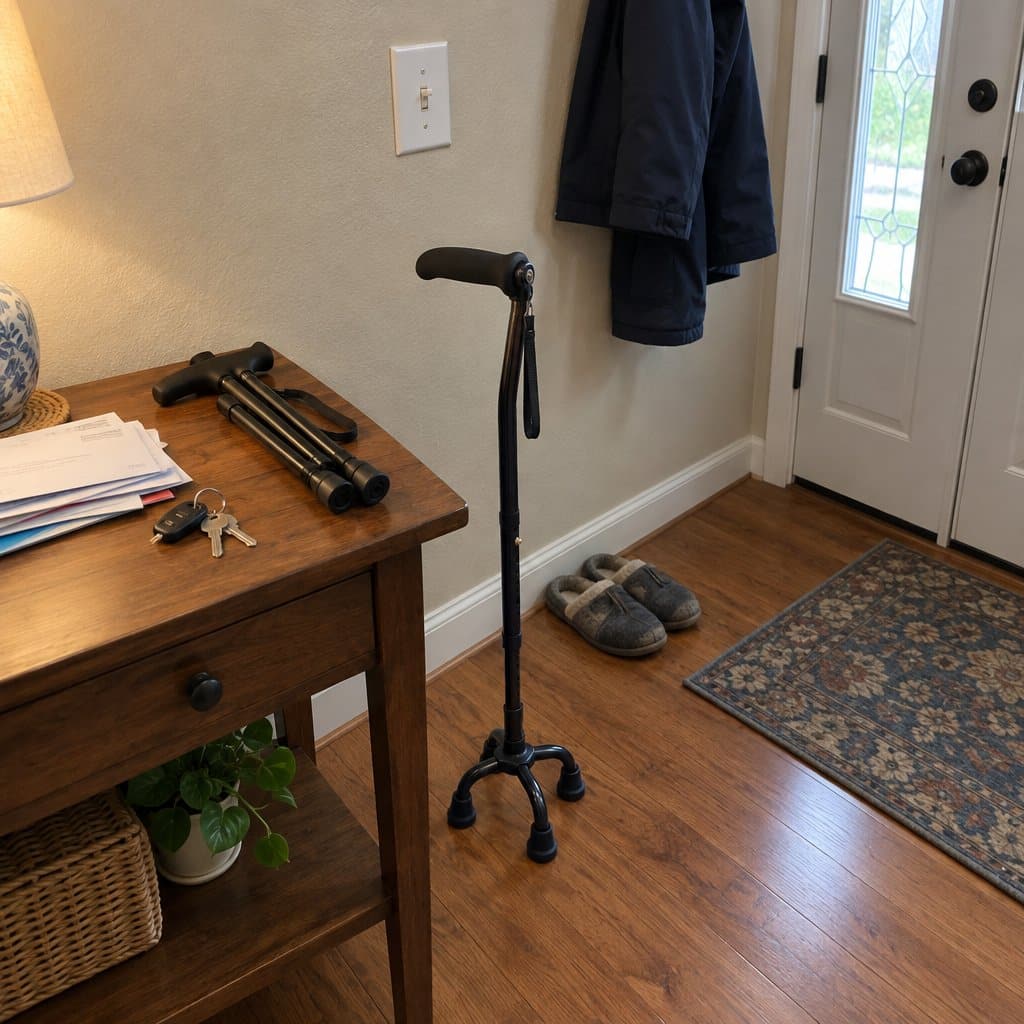
The HurryCane has a tripod-shaped base with a flexible joint where it meets the cane. The joint lets the cane pivot on the base, which keeps it on the ground longer through each step.
That gives better balance support through the full stride, so it suits people who walk outdoors. It also stands on its own, has a hand strap to keep it from being dropped, and folds up for travel and storage.
A basic offset handle cane is another option for someone who just wants the job done. The offset handle keeps your weight over the cane tip so you stay centered. Look for a soft grip, a wrist strap, and a push button to adjust the height quickly.
If you sit and rest while out walking, a cane that converts into a small seat is worth a look. In walking mode it is a regular cane, and it folds out into a tripod with a flip-down seat when you need a break. Larger people can find heavy-duty canes rated for higher weight, with wide height adjustment.
The trade-off is that none of these gives the wide, steady footing of a four-prong base. If your balance trouble is more than mild, a quad cane is still the safer pick.
Quad Canes: Advantages and Disadvantages of 4 Prong Canes
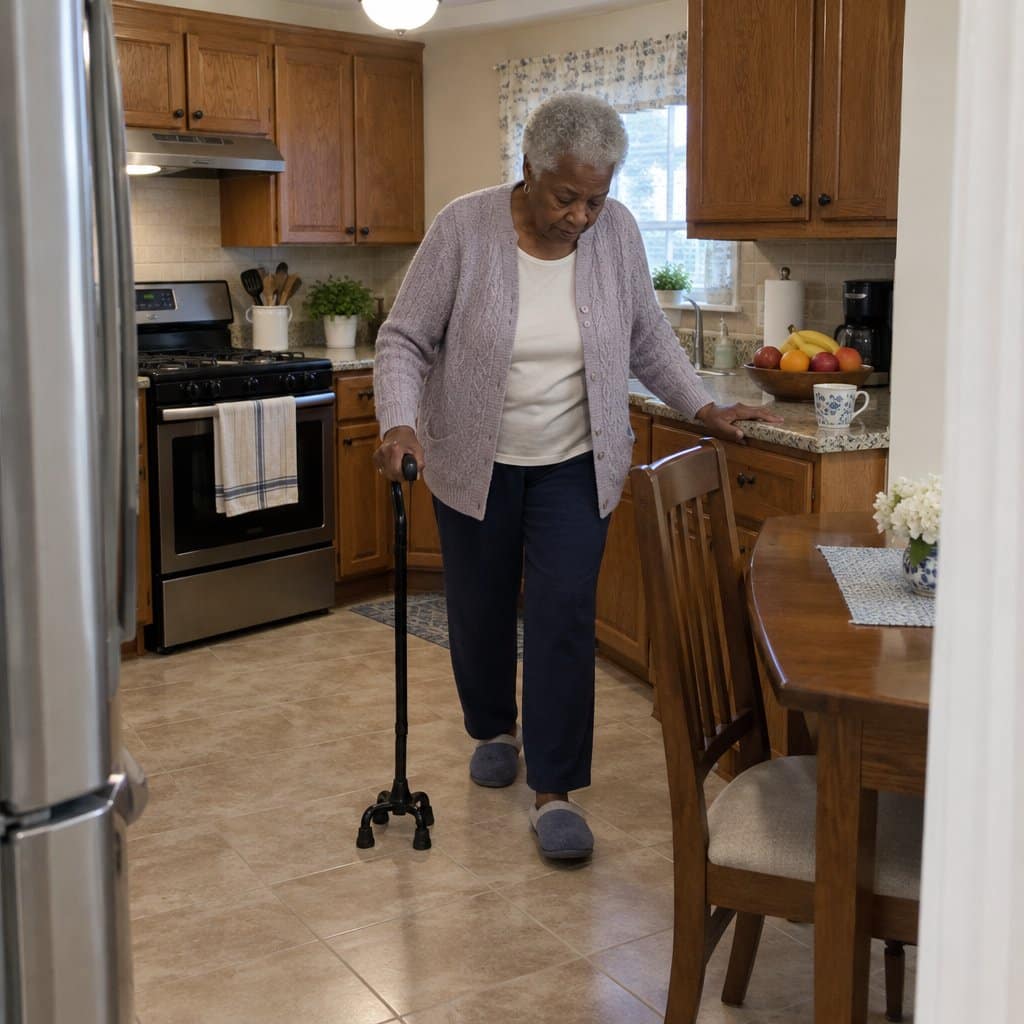
As with any piece of medical equipment, it is important to know the advantages and disadvantages so that you can make a good decision.
Advantages:
Disadvantages:
Best Walking Canes for Seniors: Picks by Style and Purpose
A cane is the most basic walking aid, and most people picture the wooden hook-shaped one their grandfather had. There are many more shapes, bases, and features than that. The best pick comes down to how much balance support you need and what suits your style.
Here are the kinds of general-purpose canes worth a look, and who each one suits.
A tripod-base cane with a flexible joint lets the cane pivot and stay on the ground longer through each step. It stands on its own, has a hand strap, and folds for travel. It suits people who walk outdoors.
A fun folding cane is for people who want to express themselves a little. Some come in a wide range of colors and patterns, with a wood handle to match. A hand strap helps prevent drops, and a latex band keeps it folded while carried. If you have to use a cane, it might as well be one you like.
A basic offset handle cane is for someone who wants the job done. Look for a soft grip, a wrist strap, and a push button to set the height. A locking ring keeps the lower part from rattling while you walk.
A cane that turns into a seat helps if you need to rest while out. Seat canes are usually heavier than standard ones, but a lightweight aluminum model can stay quite light. It folds out into a tripod with a flip-down seat.
For larger people, heavy-duty canes are rated for much higher weight and have wide height adjustment. Check the weight rating and the height range before you buy.
Style options are wider with standard and offset canes. Some canes are made specifically for men or for women. Learning the differences between walking canes and walking sticks helps you shop, and it is worth checking whether Medicare pays for walking canes before you buy. Special folding canes are usually not covered.
The trade-off is that the most stylish canes are usually meant for mild balance problems. If you need more support, a quad cane is steadier, even with fewer style choices.
DMI Designer Folding Cane

The DMI Designer Folding Cane is a single-tip cane that folds down into 4 sections. A storage sleeve is included to keep it folded, and it fits in a purse or bag when you are not using it.
It has a smooth wood derby handle that works in either the right or left hand. The shaft is anodized aluminum, weighs 9.6 ounces, and supports up to 250 pounds. The height adjusts from 33 to 37 inches in 1 inch steps. To set it, have someone measure from your wrist joint to the floor. That number is where the cane should be set.
It suits someone who needs a little steadying on walks and wants a cane that travels easily, such as to restaurants, church, or on a trip.
The trade-off is that this is a one-point cane. If your balance problems are bigger and you need a wide base that stands up by itself and takes more weight through the cane, a quad cane is the better fit. Folding canes also have joints, so check that the sections click firmly together each time you open it.
Drive Medical Folding Cane With Seat
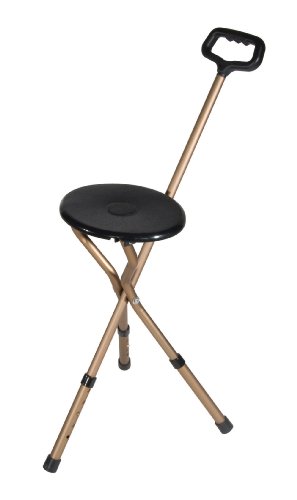
This is a walking cane that turns into a small seat. Closed, it works as a support cane. Open it up, and you have a place to sit down when you need a rest.
It suits someone who can walk fine for a while but needs to stop and catch their breath now and then. Think of a trip to the store, a doctor’s office with a long hallway, or a line that won’t move. The seat is 9 inches across and sits 19 to 22 inches off the ground. The cane height runs 34 to 38 inches, and the weight capacity is 250 pounds.
It is made of extruded aluminum tubing, with vinyl-tipped legs and a tripod design meant to keep the seat steady.
The trade-off is that a 9-inch seat is a perch, not a chair. It won’t suit someone who needs a wide, cushioned seat or who has trouble getting up and down from a low spot. It also has a tripod base, not four prongs, so it isn’t the pick if you need the wide, flat support of a quad cane while you walk.
NOVA Heavy Duty Walking Cane

This is a single-tip walking cane made for people who need a higher weight limit. It is rated for 500 pounds and weighs about 1 pound, which is an unusual pairing. The frame is aluminum with a chip and fade resistant finish.
The handle is offset, meaning the grip sits slightly forward of the shaft. That puts your weight more directly over the cane and is meant to be comfortable on the arm and wrist. The plastic grip comes with a carrying strap, and the rubber tip is slip resistant.
It adjusts from 30 to 39 inches with a push button, which fits users from about 4’11” to 6’4″. An anti-rattle lock holds the setting so the cane doesn’t wobble or clatter. Set the height so your elbow bends slightly when you stand upright.
The trade-off: it has one tip, not four. It works well for steadying a step, but if you need the cane to stand on its own or to take real weight when you lean, a quad cane is the better choice for this article’s topic.

Walking Canes with Lights for Night Walking
A cane with a built-in light is a useful option if you walk after dark. Plenty of cane users still work, go to church, or head to social events that run into the evening, and those are the hours when a fall is more likely.
The light helps you see cracks in the sidewalk and other trip hazards. Indoors, it helps if you get up during the night, because you can spot rugs and cords on the floor. (Those hazards should be removed. My fall prevention checklist covers how.)
It also helps you find a light switch in a dark room and shine the light on a door lock. When you cross the street, it makes you easier for cars and other people to see. Daytime has its uses too, such as dark hallways and stairs, or a heavily shaded sidewalk.
One thing to know up front: you will not get this kind of cane through Medicare benefits.
The cane comes first and the light second. Make sure it is safe and steady to walk with before you think about the extras. Lighted canes come with a standard single tip or a quad base, so you can get the support you need.
Here is what to look at:
- Type of light. LED lights are brighter, more stable, and last longer than incandescent bulbs, which are more likely to blow from movement. LEDs can be harder to change out.
- Adjustable angle. You can point the light at the ground for walking, then bend it toward a lock or switch.
- Power source. AA or AAA batteries are easier to change. Small button batteries are often too small for arthritic fingers.
- Folding. A folding model is handy if you do not need a cane all the time, and it fits in a purse or bag.
- Alarms and extras. Some have a panic alarm, a loud bell, or flashing lights, which suit people who want extra security. One model even has a built-in stun gun, so check that it is legal where you live before buying.
The trade-off is that extras add weight and bulk. A model with a fold-out seat weighs about 3 pounds and is clunkier to store, and some lights do not adjust in angle, so choose the features you will actually use.
BigAlex LED Folding Cane

The BigAlex Folding Walking Cane is a quad cane with an LED light built into the handle. The handle is curved to fit the palm, and the light is there for walking at night or getting up in a dark house.
The base has four tips made of rubber, and it pivots 360 degrees. That lets the cane sit flat on the ground even when you hold it at a slight angle. The cane is adjustable in height and folds down to about 6 by 12 inches, so it goes into the carrying bag that comes with it. That suits someone who travels, rides in cars a lot, or wants the cane tucked away at a restaurant table.
The trade-off is the folding joint. A cane that folds has a place where it can loosen over time, so check that it is locked firmly each time before you put weight on it. If you lean hard on your cane for balance, a one-piece cane with no joint is the steadier choice.
Vive Health LED Folding Cane

The Vive Health LED Folding Cane is a quad cane with a light built into the handle. The light is movable, so you can aim it where you need to see, whether that’s a dark parking lot, a driveway, or a dim hallway.
The base has four feet and stands up on its own, so you can set the cane down without it clattering to the floor. The base also pivots, which helps it grip on uneven ground.
It’s made of anodized aluminum and supports up to 250 pounds. The height adjusts and locks in place, and the cane folds, which is handy for the car or a restaurant. Vive backs it with a lifetime guarantee.
The trade-off is that a four-footed base is wider than a single tip, so it takes more room on a crowded sidewalk or a narrow stair. If you only need a cane now and then in good light, the light may be more than you need.

Two Questions to Ask Before You Choose a Cane
Picking a cane comes down to two questions. How much balance support do you need, and what style suits you?
The first one is the easier of the two. If you hold onto furniture or walls to steady yourself, that tells you a good deal. A standard or offset handle cane is meant for mild balance problems, and a quad cane is meant for people who need a little more support than those give.
The second question is more a matter of taste. Some people want a cane that simply does the job. Others want one that looks good and lets them show a bit of personality. If you have to use a cane, it may as well be one you like.
Before you shop, it also helps to know the differences between walking canes and walking sticks, since the two are not the same thing.
Keep in mind that quad canes have fewer style choices than standard canes. If looks matter a lot to you, you may have to decide how much of that you are willing to give up for the extra stability.
Frequently Asked Questions (FAQ)
Do Canes Help with Balance?
Yes, canes do help with balance. That is the primary reason for using a cane. Most people hold the cane in the hand opposite the weak side, but ask your doctor or physical therapist to check the fit and which hand is right for you.
For example, if your right side is weak and that is causing you to lose balance, hold the cane in the left hand.
How Do You Use a Quad Cane for Stability?
Hold the cane on your stronger side. Move the cane and your weaker leg forward together, then step through with the stronger leg. This gives you more support through your stride. A physical therapist can show you the right way for your situation.
Keep your stronger leg moving forward while the cane stays beside you, not behind. Here is a demonstration by the Mayo Clinic.
What is the Advantage of an Offset Handle?
The offset handle, which can be J or Z-shaped, is easier to grip because it is wider and distributes your weight better throughout the cane.
Where Should a Cane Come to on Your Body?
The handle of a properly fit cane should come up to the crease of your wrist when your arm is relaxed and dangling at your side.
Which is Better: a Cane or a Walker?
It depends because a cane and a walker serve two different purposes. A cane is a better choice for people who have weakness or pain on one side of their body.
Walkers are best for people who have pain or weakness on both sides of their body therefore requiring more support.
What’s the Difference Between a Single Point Cane and a Quad Cane?
Standard canes have a single point of contact with the ground. Because the cane tip touches the ground at only one single point, it must bear all the weight and balance of the user.
Four-pronged quad canes, however, have a wider base at the bottom. The wider base and multiple points of contact mean the cane is in contact with the ground longer throughout the stride.
Quad canes also come in two different sizes: a narrow base and a wide base for people who need even more stability.
Should You Use a Narrow Base or a Small Base Quad Cane?
Large bases tend to be used more with men because they have larger strides and the cane needs to offer more support.
Women who use canes tend to prefer the smaller base version because they take smaller steps, tend to prefer smaller framed equipment, and they typically weigh less than men, so they don’t need the cane to support as much weight as men do.
Are Canes Right or Left Handed?
Yes, it is important to know that some quad canes are “handed.” This means they can only be used in either the right hand or the left hand only.
Why would it matter? Because the base is narrower on the side nearest to the user to keep the cane from hitting the user’s feet and causing them to trip or even fall.
My recommendations above though work with both right and left-handed seniors. But, I wanted you to know that in case you shop elsewhere.
Conclusions and Summary
The larger base of a quad cane offers more support by maintaining contact with the ground better. That’s why they are the best cane for balance problems.
Prices vary, so check the current price. Medicare may cover some basic canes with a doctor’s order, but folding and lighted canes usually are not covered. Check with Medicare or your supplier.
However, if you feel unsteady using only one hand for balance, a walker, a rollator with a seat or even a wheelchair should be considered. Check with your doctor or therapist.
The goal here is better safety. Reducing the chance of a fall is an important part of this.
Do you have any experience picking out a quad cane for you or a loved one? Which one do you recommend? Feel free to share in the comments below. Questions are always welcome too!