Buttons that won’t line up and pants that fight back are a real frustration when dressing gets harder. This guide covers adaptive clothing for Parkinson’s dressing challenges, in plain words.
You’ll find pants, shirts, a button helper tool and easy-fasten belts, each with the downsides named, plus tips for keeping your own style.
If ALS or recovery from a stroke is the concern, you’ll also find clothing that still works as limb strength declines.


- To address tremors and limited mobility, look for shirts with magnets instead of buttons, pants with pull-on elastic waists, and shoes with velcro closures. Brands like Joe&Bella, Silverts, and Ovidis offer these. Dressing aids like button hooks can also assist.
- To maintain your style, focus on solid colors and quality fabrics with minimalist detailing in classic cuts. Darker shades hide stains or spills. Stretchy fabrics make it easier to pull clothing over the head.
- Most importantly, stay true to your personal tastes. With some adaptive adjustments, you can achieve a functional and fashionable wardrobe. The key is prioritizing comfort and versatility as your symptoms change.
Examples of Helpful Adaptive Clothing for Parkinsons
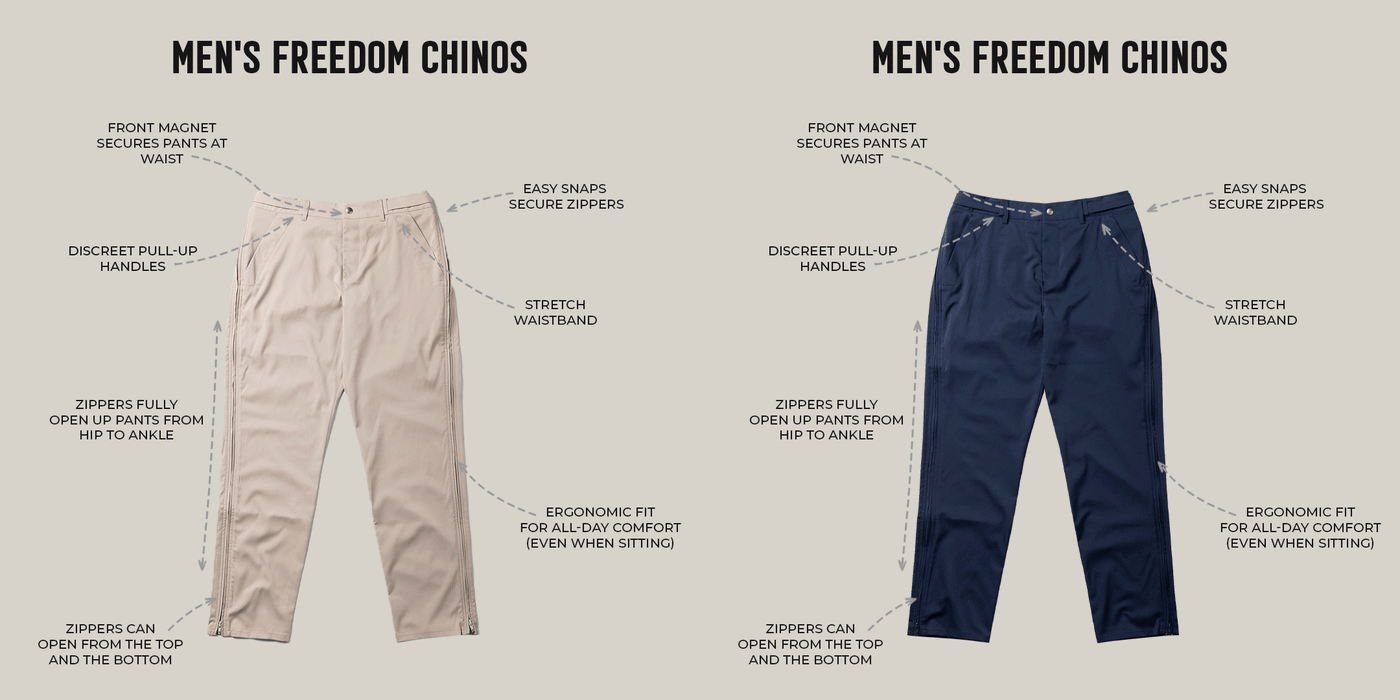
The Joe and Bella Freedom Chinos are thoughtfully designed pants that help address many of the dressing challenges faced by those with Parkinson’s disease. The discreet adaptive features allow for increased independence and dignity when getting dressed.

- The stretchable waistband and side zippers assist with getting the pants on and off. Those with Parkinson’s often struggle with the fine motor skills needed for buttons and traditional zipper flies. The magnetic closure replaces this, while the zippers allow the pants to be slid easily.
- The pull-up handles hidden in the waistband provide leverage for pulling the pants up, reducing the strain for the wearer and caregiver assisting them. Lack of strength and flexibility makes pulling up pants difficult, so the handles are an invaluable aid.
- The fabric itself offers benefits too. The slight stretch provides comfort, while the slick finish helps the pants glide over the legs and hips. For those with joint stiffness and mobility limitations, these features help pants go on smoothly.
- The spill-resistant fabric also means stains and dribbles aren’t easily visible, helping reduce laundry while protecting dignity. This is useful since Parkinson’s can make eating messy.
Overall, the Joe and Bella Freedom Chinos allow people with Parkinson’s to dress stylishly and comfortably while maintaining their independence thanks to discreet yet functional adaptive features.
They reduce frustration and effort for the wearer and caregivers during dressing. These pants are an excellent option for those seeking an adaptive aid that doesn’t sacrifice appearance.
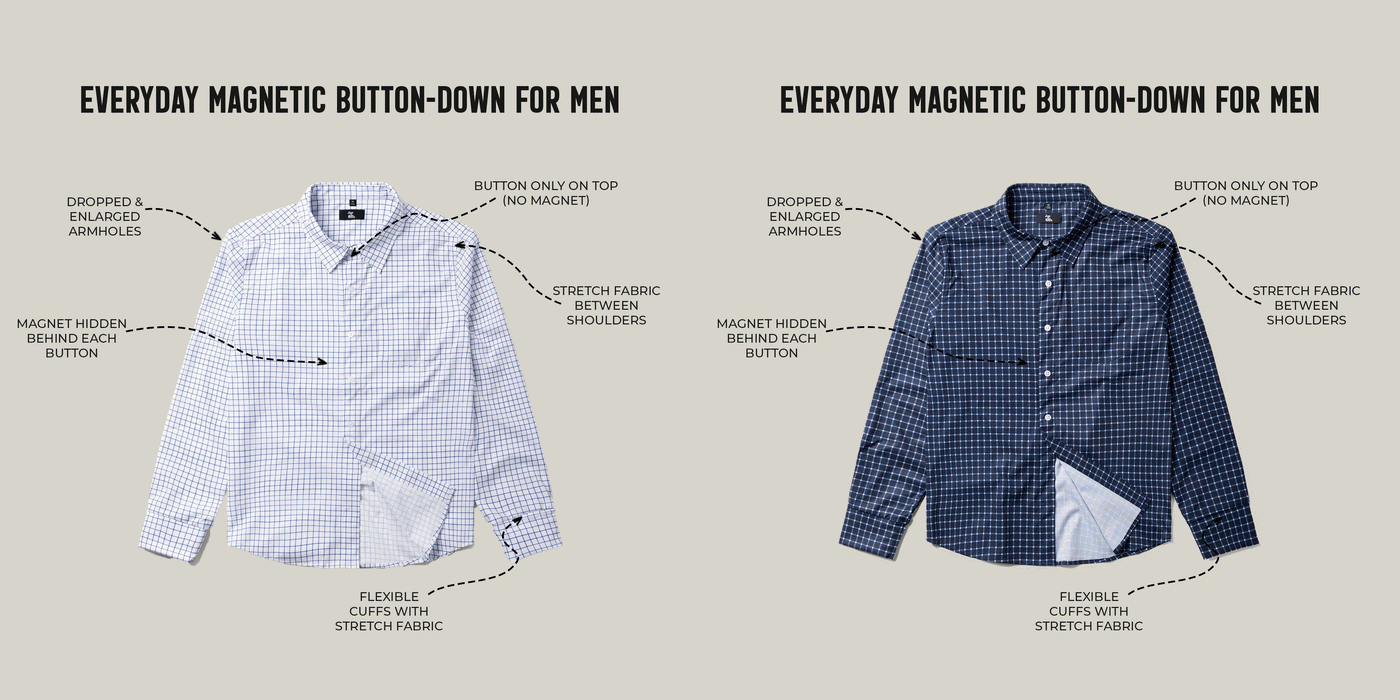
The Joe & Bella Magnetic Button-Up Shirt is an innovative dress shirt specially designed to address the dressing challenges faced by those with Parkinson’s disease. The adaptive features provide increased independence and dignity when getting dressed.

- The magnetic closures replace difficult-to-manipulate buttons, allowing one-handed fastening. Those with Parkinson’s often struggle with the fine motor skills needed for buttons.
- The stretch shoulder fabric and generous arm holes make sliding arms in easy, reducing the effort and frustration of dressing. Lack of flexibility makes traditional sleeves difficult to get arms through.
- The elasticized cuffs allow hands to slide through sleeves smoothly without unbuttoning. This aids those who lack the dexterity to manipulate closures.
- The flexible fabric provides comfort, while the classic tailored style offers a smart, dignified appearance suitable for any occasion. This allows people with Parkinson’s to dress stylishly while maintaining their independence.
Overall, the magnetic closures, stretch fabrics and adaptive details in the Joe & Bella Magnetic Button-Up Shirt help restore freedom and flexibility for dressing. It’s a thoughtful solution that allows people with Parkinson’s to look sharp while dressing with ease.
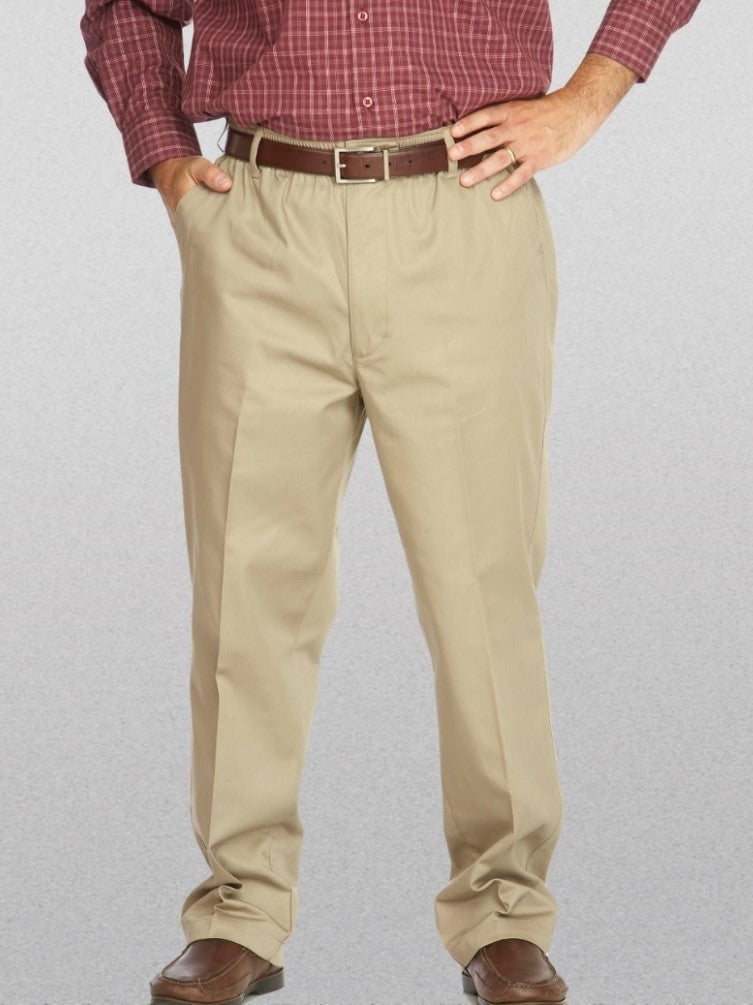
For individuals with Parkinson’s disease who are self-conscious about wearing obviously adaptive clothing, the Resident Essentials Elastic Waist Twill Pants offer a discreet solution.

- The elastic waistband provides effortless pull-on ease. Accommodates limited early-stage dexterity needs.
- The stretchy waist glides smoothly over hips. Aids getting dressed alone, reducing caregiver assistance.
- The pants maintain a dignified, trouser-like style. The structured fabric and details like pockets retain a polished look.
- Easy-on pants reduce physical exertion and strain of dressing. Helpful for early mobility and stiffness issues.
- For caregivers, the elastic waist simplifies getting Parkinson’s patients dressed. Pants easily slide into place with less repositioning.
Overall, the Resident Essentials Twill Pants allow people with Parkinson’s to retain their style and dignity while benefiting from subtle adaptations. For those in the early stages or wanting low-profile aids, these pants offer an ideal solution.
Stan Adaptive Pants

The Stan pants from Ovidis are knit trousers made for men who have a hard time with regular pants. That includes men living with Parkinson’s, arthritis, or dementia, or anyone with reduced mobility.
- Adjustable Velcro side openings: The pants open along the sides, so you are not fighting to get a foot through a narrow leg. Velcro lets you set the fit without working a button or zipper, which helps when stiffness or tremors make small fasteners hard.
- Front fold-down panel: This gives you an easy slip-on way to dress. Many people find it simpler to get pants on while seated, which also means less standing on one leg.
- Elastic waistband and knit fabric: The waist stretches, so there is no belt buckle or hook to manage. The knit pants are easy access and made of 80% cotton and 20% polyester.
- Looks like regular pants: There is a fake front fly with contrast stitching and a snap closure, plus side pockets. Nobody needs to know they are adaptive.
- Easy care: Machine wash and dry, which saves a caregiver some effort.
The trade-off is that Velcro takes a little hand strength and aim to line up, so a person with very limited hand use may still need help. Velcro also needs to be kept clear of lint so it keeps gripping.
On sizing, if you are between sizes, the maker suggests going up to the larger one for easier dressing and comfort. Measure over light clothing with the tape held flat.
For more ideas, see our guide to adaptive clothing needs.
Deyeek Tear Away Adaptive Pants

The Deyeek Men’s Tear Away Pants are loose-fitting grey sweatpants that open all the way down both sides. Each side fastens with hook and loop tape (the kind often sold as Velcro) from the waist to the bottom hem.
That matters with Parkinson’s. Tremors and stiffness can make pulling pants over the feet a struggle. With these, the pants come completely apart, so you can lay them around the person and fasten them instead of working them up the legs. That can be easier whether you are dressing yourself or helping someone else.
The fabric is a cotton and polyester blend, described as soft and breathable. The waist is elastic with no drawstring, and the side tapes let you adjust the fit so the pants stay up when you move. There are also two deep side pockets for a phone, glasses or keys.
The open bottom and loose fit leave room to get them on over shoes or a brace. They were also made with recovery after surgery in mind.
One thing to watch: hook and loop tape needs fingers that can press it closed, and it can come loose if it isn’t lined up well. If hand tremors make that step hard, a caregiver may need to do the fastening. These are also casual sweatpants, so they suit home and relaxed days better than dressier occasions.
You can find more options in our guide to adaptive clothing needs.
Indigo Adaptive Pants

The Ovidis Poppy pants allow women with Parkinson’s disease to dress and undress with ease and dignity thanks to thoughtful adaptive features.
- Side openings with adjustable closures make slipping pants on and off simple. Accommodates limited mobility and dexterity issues.
- Soft, stretchy knit fabric comfortably conforms to body shape. Moves with stiff, rigid limbs during dressing.
- Loose, relaxed fit provides room to layer clothing as needed. Accommodates fluctuating Parkinson’s symptoms.
- Lightweight material stays cool. Ideal for Parkinson’s patients with heat sensitivity.
- Elasticized waistband with adjustable tabs offers a custom, secure fit. Adapts as symptoms progress.
- Wrinkle-resistant fabric requires minimal laundering and ironing, saving time and energy.
The Ovidis Poppy pants provide struggle-free, dignified dressing for women with Parkinson’s. The side openings and stretch fabric solve multiple dressing challenges.
Tear Away Adaptive Pants for Men

These tear away pants have a zipper down each side, so they open from the waist all the way to the bottom of the leg. That lets you get them on or off without pulling them over your feet, which can be a real help when stiff or shaky movement makes standard pants a struggle.
The zippers are plastic and described as smooth to pull. If you want the top closed more securely, you can pin the top of the zipper in place.
The fabric is soft, breathable and skin friendly. The wide leg and sweatpants style also make it easier to fit over a brace, cast or leg immobilizer, and the open sides give a caregiver or nurse quick access when needed. That is why they are often used after surgery or with a Foley catheter.
The maker’s size guidance is a Medium for a man 5’8″ tall, 176 pounds, with a 30 inch waist. Check that against your own measurements before ordering.
One thing to know: these are made as sweatpants, with a casual athletic look. If you want something dressier, or pants with a fastener that holds the zipper top closed on its own, they may not suit you. Also, zippers can be fiddly for hands with tremor, so try the pull tabs before relying on them.
For Parkinson’s, they work best as a simple, easy-access option for home, rest days and recovery periods. If you are comparing styles, elastic waist pants are another easy way to dress without fighting a button.
MagnaReady Magnetic Button Down Shirt
The MagnaReady Button Down Dress Shirt swaps the usual buttons for magnetic closures. For many people with Parkinson’s, buttons are the hardest part of getting dressed, and this shirt takes them out of the picture.
- Magnetic closures snap together and guide themselves into place. You can fasten the shirt with one hand.
- Hidden magnets in the placket and cuffs keep the shirt looking like a regular button-down. It works for church, dinner out, or a family photo.
- Breathable cotton is soft and lightweight, so it is comfortable from morning to night.
- Traditional fit with a back box pleat leaves room to move your arms and shoulders.
One thing to keep in mind: this shirt solves the button problem, not everything else. You still have to get your arms into the sleeves and pull the shirt over your shoulders, and that can be hard on a stiff day. A helper may still be useful for that part.
It is also a classic cut in a cotton fabric, so check the care label before you wash it, and go by your usual shirt size when you pick one. If buttons are what slow your mornings down, this is a sensible place to start.
Silverts Adaptive Magnetic Closure Top
The Silverts Women’s Adaptive Magnetic Closure Top is a shirt for women who find small buttons a struggle. Parkinson’s tremor and stiffness can make fine finger work the hardest part of getting dressed.
- Hidden magnetic closures take the place of buttons. They fasten with very little effort, so you don’t have to line up and push a small button through a hole.
- Looks like a regular shirt. The magnets are out of sight, so it keeps the look of a traditional shirt.
- Works for independent or assisted dressing. If a spouse or aide helps you, the same easy closures save them time too.
- Lightweight, breathable material is comfortable through the day.
- Versatile. It suits everyday wear, casual outings, and care settings, and it also works as post-surgery or rehab clothing.
One thing to know: magnets fasten easily, but they only solve the buttons. You still have to get the shirt on over your arms and shoulders, so it won’t help much if that is your main difficulty. Anyone with a pacemaker or similar implanted device should ask their doctor about magnets worn near the chest.
For many women with Parkinson’s, the buttons are the daily frustration, and this top takes that away without looking like adaptive clothing.
Button Helper Tool
The Vive Health Button Helper is a hand tool for fastening and unfastening buttons. It is made for people whose hands make small buttons a struggle, including those living with Parkinson’s, cerebral palsy, severe arthritis, or recovery from a stroke.
What stands out is that it works on the clothes you already own. You don’t need to replace your shirts or blouses to get some of the independence back in your morning and evening routines.
The trade-off is that you still have to guide the tool and the button yourself. If tremors are strong, or your hands can’t hold a tool steadily, magnetic or hook-and-loop adaptive clothing may suit you better.
Easy-Fasten Belts for Parkinson's Dressing
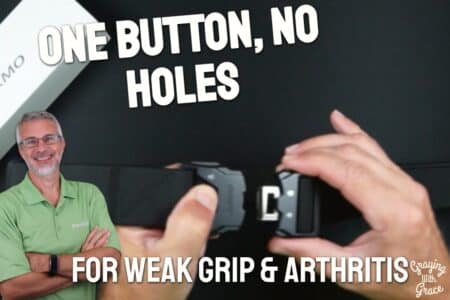
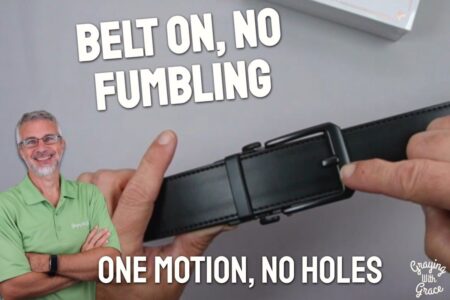
Shirts and jackets get most of the attention, but pants are where a lot of people get stuck. A regular belt means threading a strap through loops, pushing a prong into a hole, and holding it all steady while you do it. With Parkinson’s tremor or stiff fingers, that can turn a two-second job into a real wrestling match.
An easy-fasten belt takes that step out. The kind to look at is a stretchy belt with no buckle or clasp, so there is nothing small to line up or squeeze shut. Check three things before you buy. First, make sure the width fits your belt loops, because a belt that is too wide for the loops will bunch up or not go through. Second, look for elastic that is soft and does not dig in when you sit. Third, know that most of these still need to be threaded through the loops once, so it helps to put the belt on while the pants are still on a chair or bed, or to leave it in the loops and just step into the pants. Stretchy belts also tend to look more casual than leather, so they suit everyday pants better than a suit.
WERFORU No Buckle Elastic Belt


The WERFORU No Buckle Elastic Belt is a simple fix for one of the small daily struggles with Parkinson’s: fastening a belt. There is no buckle or clasp. The elastic belt threads between two loops and holds your pants up without any hardware to work.
That makes it a good fit for anyone with tremor, arthritis, or limited grip. The elastic flexes as you move, and nothing presses against your stomach, so it stays comfortable through a long day. It comes as a two-pack, so you can use one belt on most pants or both for a looser fit.
There are two things to know. It is made for 1.5-inch belt loops, so it may not sit cleanly in narrower dress pant loops. And it has to be threaded through the loops when you first set it up, which takes a bit of dexterity. A helper can do that once, and after that it stays in place.
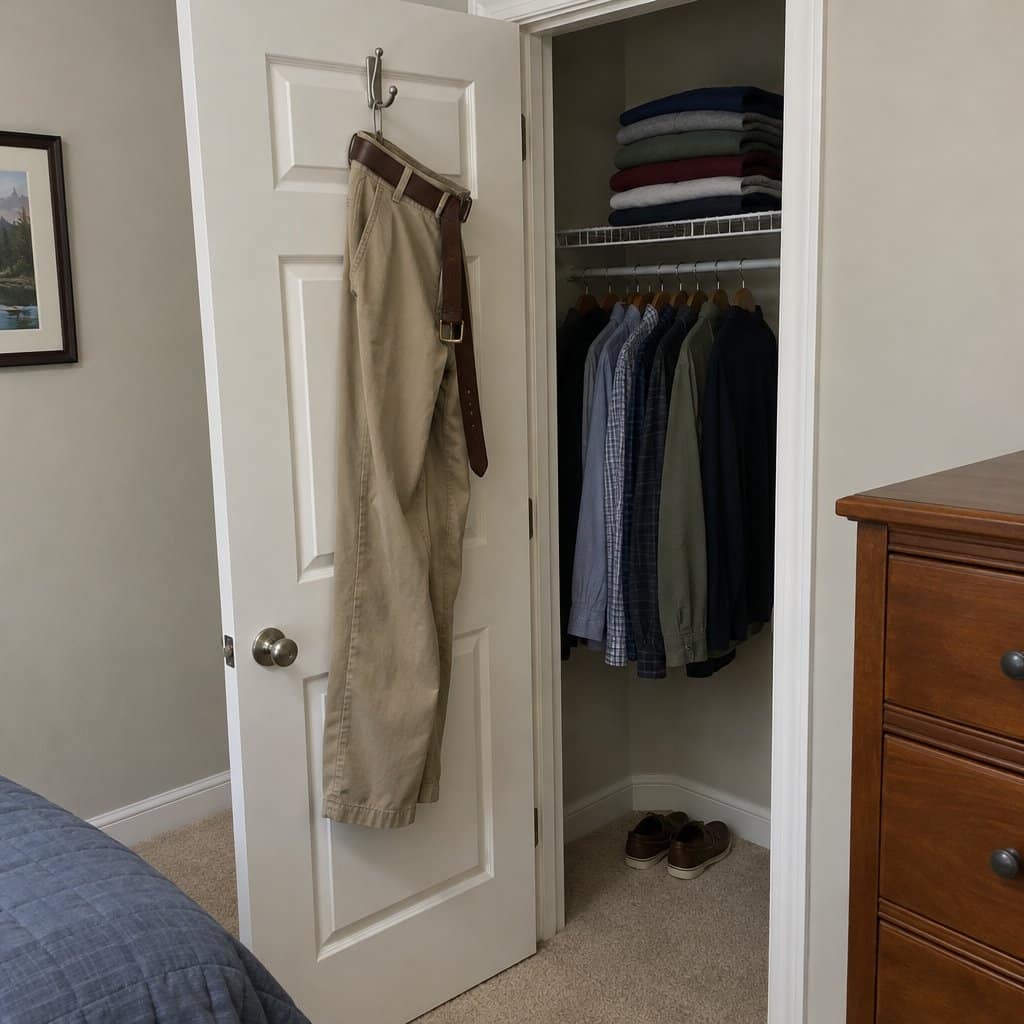
What Challenges Do People with Parkinson’s Disease Have Getting Dressed?
Here are some of the common struggles that people with Parkinson’s disease face when dressing independently:
- Bradykinesia (slow movement) makes performing sequential tasks like buttoning shirts or pulling on pants difficult. Their movements become very slow, and tasks take much longer.
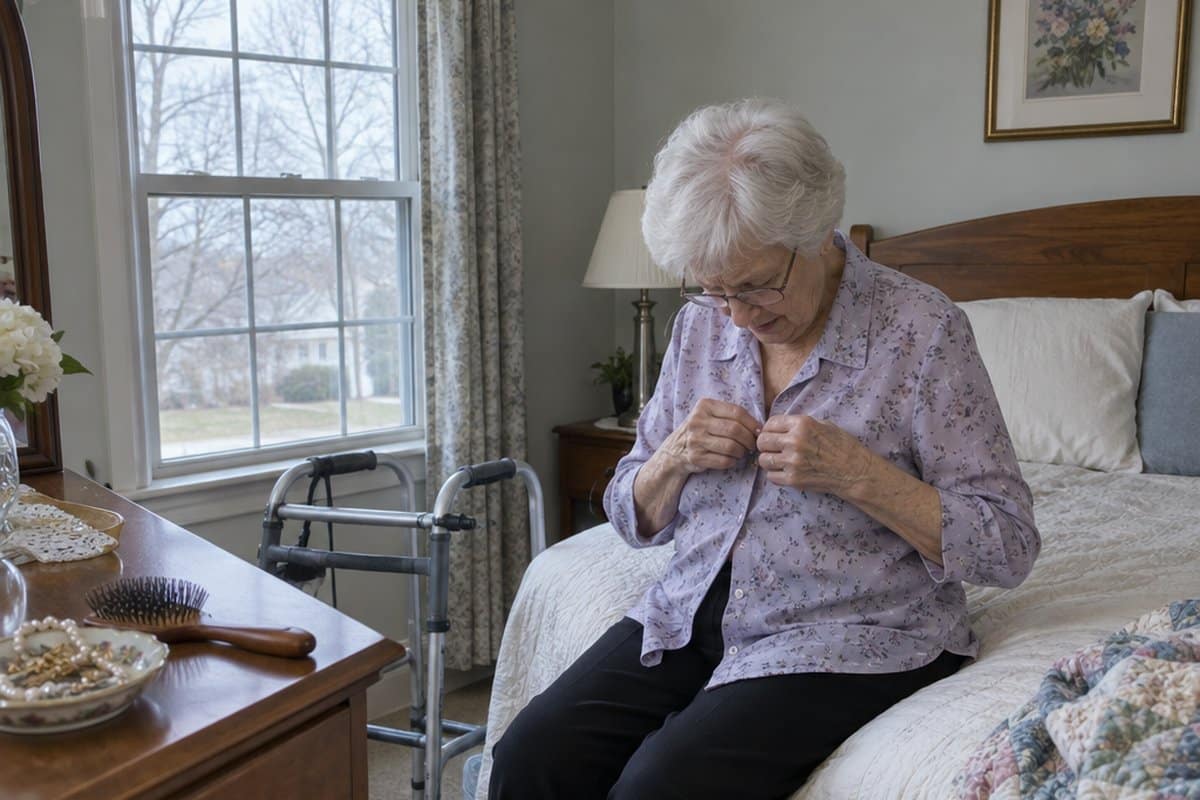
- Tremors in the hands make it hard to grasp buttons, zippers or shoelaces. The trembling makes fine motor tasks requiring dexterity challenging.
- Rigidity or stiffness in the muscles makes bending and reaching to put on clothes hard. Movements may be reduced in range and fluidity.
- Impaired balance and coordination make standing on pants or skirts difficult without support. They are at risk of falling over while dressing.
- Cognitive issues like impaired executive functioning can make it hard to plan and sequence the dressing order. They may get confused part way through.
- Fatigue means they must frequently rest while dressing due to the required exertion.
- Poor proprioception (body awareness) makes it hard to orient clothes and get body parts in the right places without looking.
- Medications can cause motor fluctuations, with “off” periods preventing them from moving well.
So dressing aids like button hooks, zipper pulls, long-handled shoe horns, and seated dressing sticks can assist with independence.
Occupational therapy helps find strategies to simplify dressing step-by-step. Caregiver assistance is often needed for safety and reducing frustration.
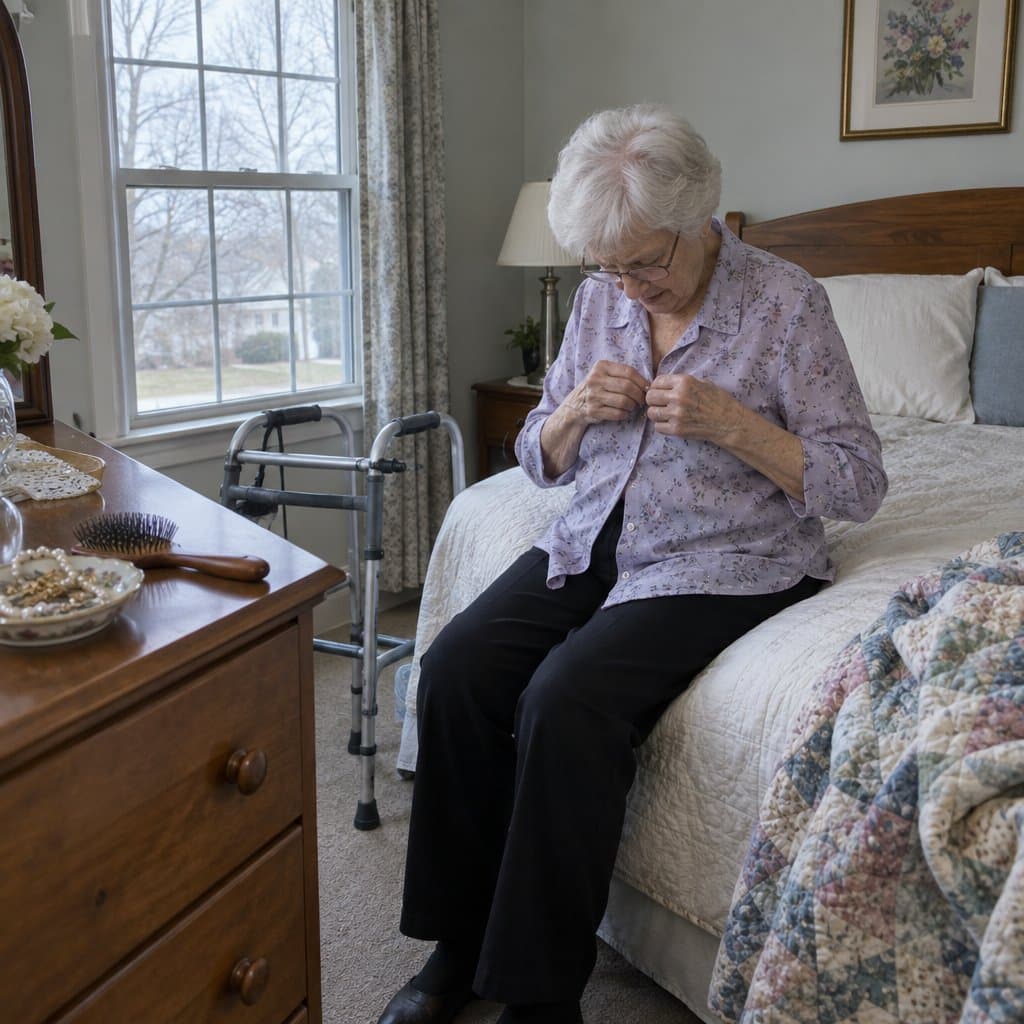
How Can Adaptive Clothing Help People with Parkinson’s Dress Easier?
When your loved one struggles with getting dressed, changing over to adaptive designs can offer more comfort and an easier way to get dressed. Adaptive clothing for disabled adults generally includes easy-to-reach zippers and snaps along the sides.
When your loved one needs help getting dressed, you can make it easier on their caregiver by investing in adaptive clothing.
What Types of Adaptive Clothing Are Recommended for Parkinson’s Patients?
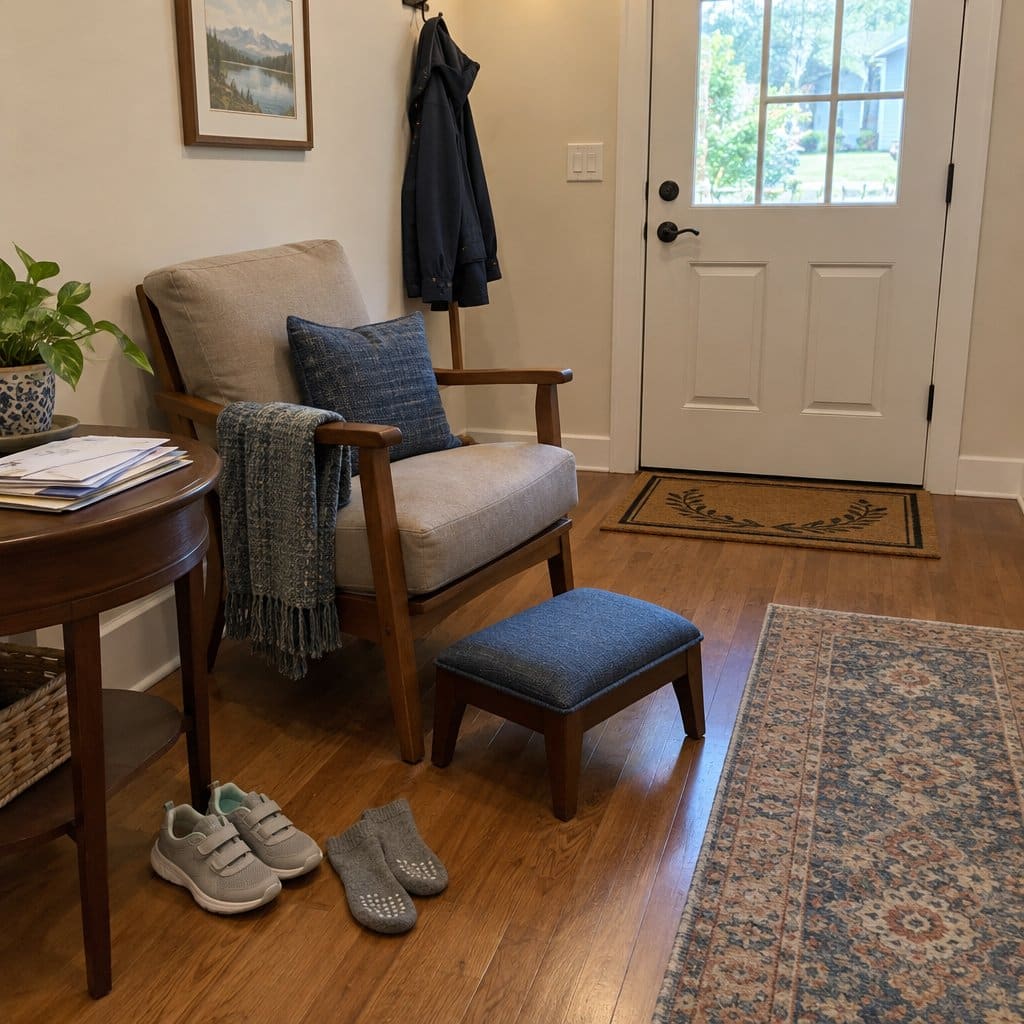
Some of the most common types of adaptive clothing suggested for Parkinson’s patients include:
- Lightweight shoes
- Clothing with magnetic or Velcro closures
- Non-slip socks with a lot of stretches
- Elastic waist pants
Adaptive Clothing for ALS as Limb Strength Declines
ALS affects the nerve cells in the brain and spinal cord, so dressing and undressing get harder over time. Many people with ALS end up in a wheelchair and may not be able to move their limbs to dress. Regular clothing often stops working, and adaptive clothing for disabled adults is usually the better choice. That includes pieces made for wheelchair users.
Some people struggle with buttons and zippers. Others have trouble getting arms through armholes or legs through leg holes. Clothes that are easy to put on and take off spare you aggravation and fatigue.
Here is what to look for, from the types of adaptive clothing that suit ALS:
- Pants with elastic waistbands or drawstrings.
- Boxer-style underpants with wide leg openings.
- Garments that open in the front, with roomy armholes.
- Buttons sewn on with elastic thread, which are easier to manage.
- Fabric loops sewn inside pants and underwear, which make pulling them on and off much easier.
- Shoes without laces.
- Magnetic closures in place of buttons, as described in this piece on magnetic closure clothing.
Many people with ALS are sensitive to certain fabrics, so choose comfortable ones. Soft cotton and fleece feel gentle on sensitive skin.
For wheelchair users, ponchos, short jackets, or capes are more convenient than long coats. Skirts and dresses can be cut fuller in the hips so they do not ride up when sitting. Calf-high leg warmers or knee-high fashion boots can hide leg braces under a skirt.
For sleepwear, gowns with open backs and Velcro closures combine comfort with easy access.
If you are caring for someone with ALS, adaptive clothing makes dressing them quicker for you. You can also change what they already own. Velcro can replace hard-to-handle clasps, and a magnetic zipper can replace a zipper that is hard to close. Extend the openings, and give sweaters, T-shirts, and blouses roomy arm openings, sleeves, and a large neckline.
One thing to know: Medicare and Medicaid do not pay for adaptive clothing for ALS, so plan on paying out of your own pocket.
Balancing Your Adaptive Clothing Needs and Personal Style with Parkinson’s
As someone with Parkinson’s, you may feel your clothing options are limited or unfashionable. But with some considerations, you can find pieces that are both adaptive and reflective of your tastes.
- Prioritize soft, lightweight fabrics that move with your body. Stretchy knits, smooth jerseys, and breathable cottons complement stiffness or tremors.
- Focus on simple, minimalist styles without complicated details. Clean silhouettes, pullover tops, and wrap dresses adapt well as Parkinson’s progresses.
- Look for versatile solid colors or small prints. They disguise stains or spills related to Parkinson’s tremors. Darker shades can also hide dyskinesia-related sweat.
- Details like magnetic closures, shoulder snaps, and pull-on elastic waists allow ease while maintaining a streamlined appearance.
- Maintain your sense of color and fun with accessories like scarves, jewelry and shoes. They complement adaptive basics.
- Work with an occupational therapist to identify range of motion needs and attractive adaptive styles for your body type.
The right adaptations don’t have to look clinical. With some consideration to fabric, design and color, you can craft a functional and stylish wardrobe. Focus on quality, comfort and versatility as Parkinson’s progresses.
Tips to Make Dressing Easier for People with Parkinson’s
Here are a few tips for getting dressed with Parkinson’s. They also help caregivers and family members looking after a loved one with Parkinson’s:
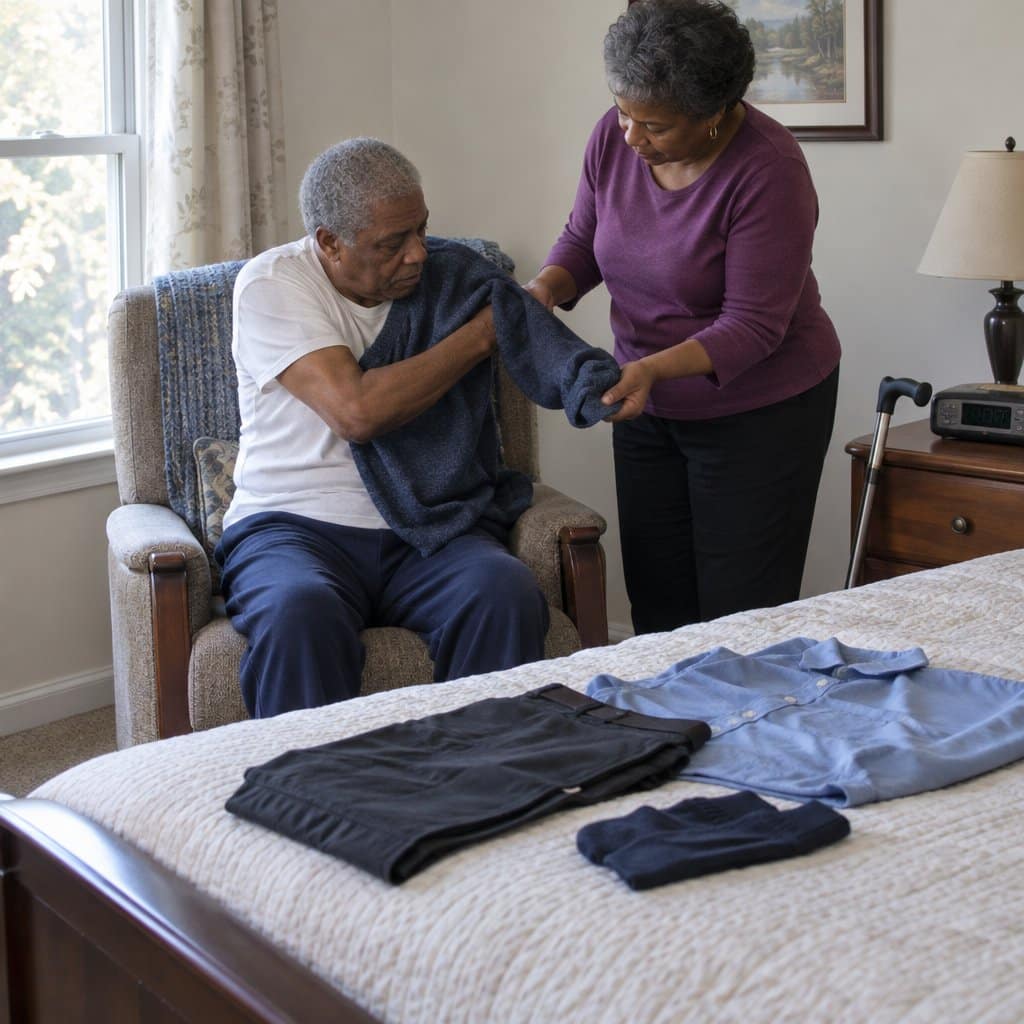
- Allow for extra time before getting dressed for the day since rushing will increase stress and panic and could make your Parkinson’s symptoms worse.
- Gather all the clothes you plan to wear at one time, rather than making several trips to your wardrobe or closet.
- Allow your medication to start working before you try getting dressed.
- A couple of gentle and slow stretches can help to warm up and loosen your muscles. This can make the task of getting dressed or undressed a bit easier.
- If one of your legs or arms is stiffer than the other one, put your stiff limbs into your clothing items first.
- When possible, remain in a seated position while you get dressed. Use a chair that has armrests and a supportive back.
- Avoid sitting close to the edge of your bed while you are getting dressed since this could result in a loss of balance, and you could fall forwards.
- A footstool can help to put on shoes or socks.
- Fabrics such as nylon, velvet, or velour can create friction when they rub together, which can also hinder getting dressed.
- Avoid wearing tight socks that are not easy to put on.
- Non-skid socks are a better option than slippers since they will stay on your feet and help to prevent tripping hazards.
- Choose lightweight shoes that come with elasticized shoelaces or Velcro closures.
- Replace awkward buttons and fasteners with magnetic buttons or Velcro for an easy way to undo your clothes or shoes.
- Replace traditional shoelaces with lace locks or elastic laces.
- Choose simple loose-fitting clothes with as few buttons and fastenings as possible.
- Elastic waistbands are a preferable choice to buttons or fly zippers.
- Choose stretchy and soft fabrics for added comfort.
- Oversized pullovers, sweaters, and coats are much easier to take off or put on.
- Ask for help when you cannot help yourself.