If you want the short list, these are my top bed pad picks for incontinence, and you’ll find the details on each one further down.


Waking up at 3 a.m. to wet sheets is no fun for anyone. If you are looking for the best bed pads for incontinence, this guide is for you.
It covers disposable and washable options, plus the size, absorbency, and materials to look for, so you can keep the mattress dry and get a better night’s sleep.
If the bed stays dry but you or your loved one still needs help inside their underwear, I demoed a pad insert for overnight leaks.

Incontinence Bed Pad Quick Facts:
- The best bed pads use soft, quiet materials that don’t crinkle or bunch up.
- Breathable cotton layers draw moisture away from your skin while inner absorbent layers handle large volumes of liquid.
- Some pads have grippy backing to prevent shifting as you sleep.
- Reusable pads create a leakproof, absorbent barrier to protect bedding long-term when laundered properly.
- Disposable pads allow one-time use convenience but may cost more over time.
In this guide, you’ll find my recommended washable and disposable bed pads for both heavy and light incontinence. Sizing, absorbency, and ease of use are covered to help you choose the right solution.
With the right pad, you can wake up dry and rested!
Best Washable Bed Pads for Incontinence
If you prefer a reusable and washable bed pad because of their cost effectiveness, absorbency, and better visual appeal, here are my recommended products:
Reusable Bed Pads With Handles

This one is a bed pad with four built-in handles, made for caregivers who reposition someone in bed every day. It comes as a pack of 2, and the pads are reusable, waterproof, and washable.
The handles are reinforced, so you have something solid to grip when you turn or shift the person in bed. That takes some of the strain off your back and joints. They help with repositioning and partial transfers. They are not rated for lifting someone’s full weight, so if that is what you need, use a mechanical lift.
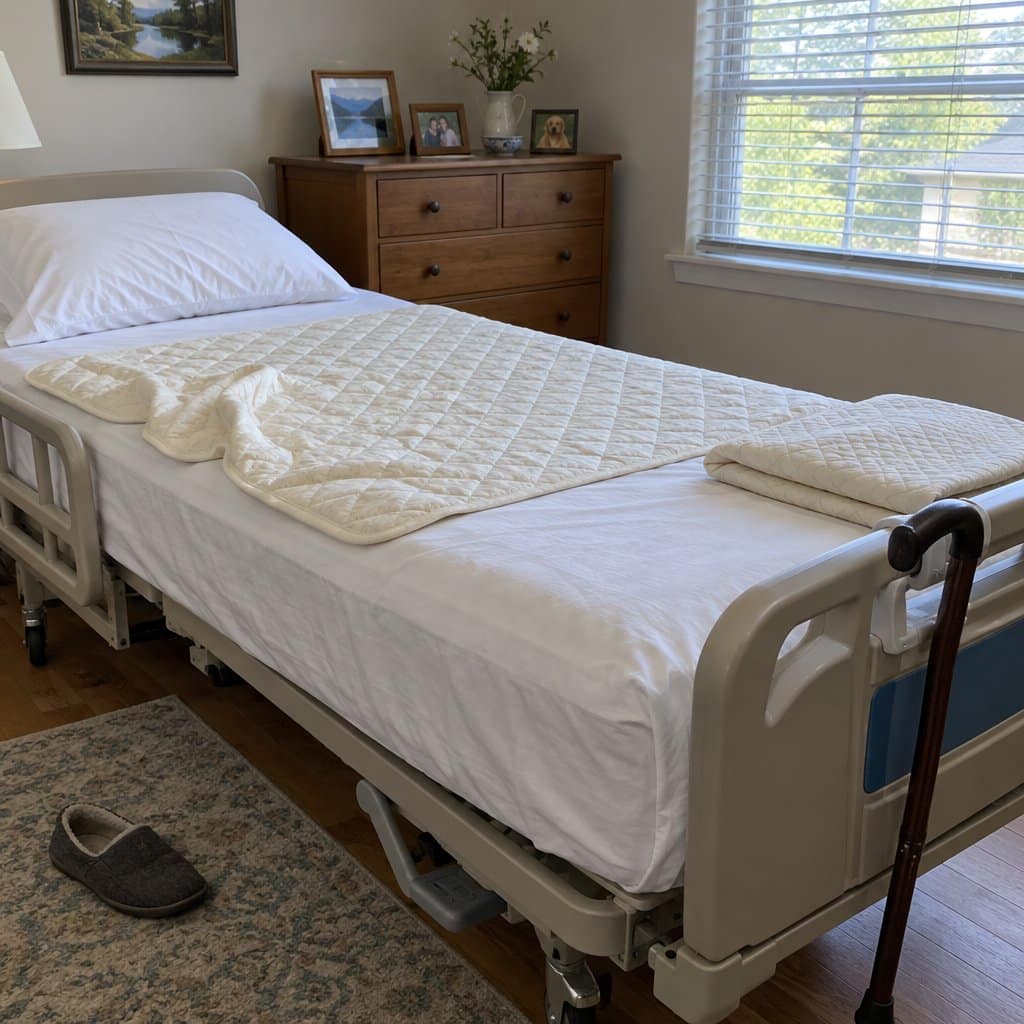
The top is soft and quilted, and it is quiet. There is no crinkly plastic sound to give away that a pad is in use, which matters for a lot of people’s dignity.
Two pads means one can be in use while the other is washing and drying. That keeps the bed covered without a scramble over laundry.
The pad measures 36 by 34 inches. That covers the main sleeping area, but it is not a full-bed cover. On a king-size bed you may need to lay both pads side by side to get full coverage, which leaves you with no spare while one is in the wash.
It suits a caregiver who moves someone in bed often and wants a pad that doubles as a repositioning aid. If you only need a pad that tucks under the mattress and soaks up a lot overnight, a longer pad may fit better.
PeapodMats Waterproof Bed Mat

Absorbs up to 1 liter
Two sizes: 3’ X 3’ and 3’ X 5’
300 to 500 washes
Non-slip, grippy bottom
The PeapodMats Waterproof Bed Mat can provide you with maximum protection against accidents and leaks. This reusable pad can hold an impressive 6 cups of liquid, keeping your bedding and mattress completely dry.
The soft, breathable cotton top layer ensures your comfort all night long. There’s no annoying plastic crinkling sound or vinyl feel. The pad stays securely in place without any flaps, straps or Velcro. No more bunching or shifting as you sleep!
Since there are no special wash instructions, taking care of this mat is hassle-free for you. Just throw it in the wash and dryer like normal. You can tumble dry it!
The PeapodMats bed mat is made with a TPU waterproof coating that has been lab tested and certified free of harmful chemicals. It’s an eco-friendly choice you can feel good about.
With its extreme absorbency, breathability, and easy care, this reusable incontinence pad simplifies your life. No more changing sheets every morning! The PeapodMats Waterproof Bed Mat lets you sleep undisturbed.
Vive Health Chair Incontinence Pads

The Vive Health Chair Incontinence Pads are made for seats rather than beds. They fit chairs, sofas, recliners, wheelchairs and car seats, so one pad can follow you from the living room to the car.
The top is soft, absorbent polyester, and it is made to be comfortable and quiet to sit on. Inside are absorbent layers that hold up to two cups of liquid.
The base is waterproof and leakproof, with a non-slip lining to help the pad stay where you put it. That keeps spills and accidents from reaching the cushion underneath.
The pads are reusable and machine washable, so you are not buying a new pack every week.
The trade-off is capacity. Two cups is plenty for a small leak or a spill, but it is not meant for heavy overnight use. If you need something for the mattress, a larger bed pad is the better pick.
Sures Waterproof Chair Pads


The Sures Waterproof Chair Pad is meant for the seat, not the mattress. It measures 22″ x 21″, which covers a full chair seat, a wheelchair cushion, or a recliner seat.
It has four layers. A waterproof barrier sits underneath, and a nonslip base helps keep the pad from sliding around when someone sits down or gets up. I have handled this one, and the water pour test left the underside dry.
It is machine washable and reusable, so you aren’t buying a fresh box of disposables every few weeks. It comes in gray, which hides wear better than white.
Two things to know. The packaging gives no absorbency rating, so you can’t tell how much it holds. For a heavy leak, plan on a pad with a stated capacity. Also, one pad covers the seat only. It won’t cover the footrest section of a recliner.
It suits someone who has occasional leaks and wants to protect a favorite chair or wheelchair cushion. Keeping a second pad on hand means one can be in the wash while the other is in use.
GORILLA GRIP Washable Underpads
Absorbs up to 11 cups
6 sizes: from 21” X 21” to 74” X 34”
4 layer cotton/poly construction
Grippy non-slip waterproof backing
3 color choices: white, pink, blue
Comes in a pack of 4
You might be familiar with the Gorilla Grip brand of adhesive products which are known to provide strong bonds that last.
These underpads share the Gorilla Grip brand name and are specifically designed to stay in place and not move while they are being used, without using their glue of course!
Don’t let the toddler information in the description fool you. I chose these pads for my list because of their super absorbency. The standard bed size holds up to 8 cups of liquid while the largest size can hold up to 11 cups.
The human bladder doesn’t hold that much liquid, but the more absorbency there is the better it will spread through the pad. This prevents liquid and bleed through onto the bedding below.
These pads use a 4 layer design. The facing material is a soft quilted cotton blend that is soft to the touch without being thick and bulky.
The absorbent layer is multiple layers of polyester. These pads last up to 300 washes with testing to back them up.
Also, these pads offer the widest range of sizes of any of my recommendations. You can get a pad as small as 21”x21” for chairs and furniture up to 76”x34” for a large bed. There are even three color choices too: white, blue, and pink.
Medline Washable Bed Pads
Multiple sizes: 18″ x 24″ to 34″ X 38″
4 layer cotton/poly blend
Knitted waterproof vinyl backing
One color: pink
Packs of 1, 4, and 12
Medline makes these pads for nursing homes and care facilities, so they are built for heavy, repeated use.
These pads typically come in the 34” x 36” size only which is large enough for full-width coverage of a home hospital bed or twin.
They are large enough too for use by one person in a co-sleeping arrangement but they will not cover the full width of any bed larger than a twin.
The backing is a waterproof vinyl barrier with textured knitting that keeps it from scooting around when the user is lying on it. The facing material is a 55% cotton/45% poly blend twill with several absorbent layers between them.
When it comes to washing and durability, remember that these bed pads were designed for processing in commercial laundries of healthcare facilities. They are designed to last at least 300 washes even in that harsh environment.
They only come in pink which might be a turn-off for some folks though.
Epica Washable Bed Pads
One size: 34” x 52”
3 layer cotton/poly blend
Polyester backed vinyl prevents shifting and bunching
One color: green
Single or 2 packs
Here is one more option if you want an oversized bed pad for incontinence that is well-rated and has a great reputation.
The Epica pads are 34” X 52” to cross the width of most beds and protect the mattress and linen underneath. The facing fabric is a soft 50/50 blend and will wick moisture away from the skin quickly.
These pads are only 3 layers though vs the 4 layers of many of my other recommendations. However, the reviews for this product are outstanding and many users comment on how soft the facing material is.
They are available in a single or 2 pack.
Best Disposable Bed Pads for Incontinence
Maybe you prefer the convenience and ease of use of a disposable bed pad. Here are my recommended disposable underpads for protecting your bed:
Inspire XL Super Absorbent Bed Pads
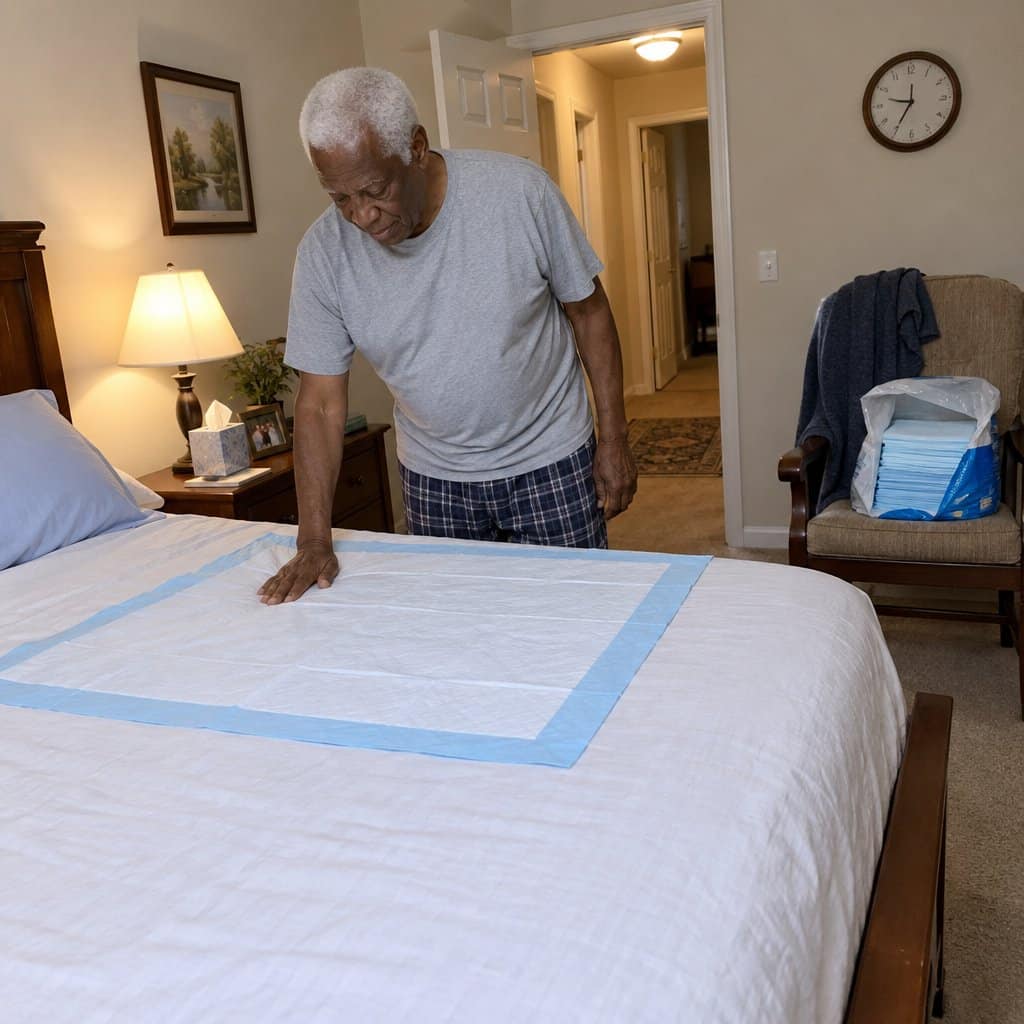
The Inspire XL is a disposable bed pad made for chronic incontinence, meaning leaks that happen every day or every night. It measures 30 x 36 inches, which is larger than a standard underpad. That extra size helps cover more of the mattress and leaves fewer gaps at the edges.
The core is a gelling polymer, which turns liquid into a gel and holds it. It pulls moisture away from the skin and locks in odor, which matters most overnight or when a pad stays in place for a long stretch.
It comes in a 50-count pack, and there is a 25-count pack if you would like to try it before buying more.
There are two things to know. It is disposable only, so there is nothing to wash and reuse, and the cost adds up if you go through pads every day. Also, nothing mentions adhesive strips or tabs, so the pad can slide around on the mattress. You may need to straighten it now and then.
It suits someone who wants one dependable pad for the night and doesn’t want laundry. If you would rather wash and reuse, a washable pad is the better fit.
LivDry High Absorbency Pad Insert


The LivDry High Absorbency Pad Insert (Hyper 2800, 16 count) is a bit different from the other items here. It is not a bed pad. It is a pad that slips inside an overnight pull-on to add absorbency, for women and men.
The part I like for caregivers is the swap. In the middle of the night you change just the pad and leave the pull-on in place, which is quicker and less disruptive than a full change. The plastic backing keeps wetness inside the pad, so the pull-on itself often stays dry. The pad has its own leak cuffs too, which add a second barrier alongside the cuffs on the underwear.
The trade-off is bulk. It is fine for nights, but it will likely show under fitted daytime clothing. Once the pad is full, the underwear has to catch any overflow at the edges, so it is not the right pick for someone who wets heavily and needs a lot of backup.
Medline Super Absorbent Underpad
Sizes: 20” x 36” to 27” X 72”
Multiple absorbency levels
Multiple color choices
Case pack depends on size chosen
Medline is another brand that is well-known for providing quality products to nursing homes and long term care facilities. Their Protection Plus line of incontinence products is one of their best sellers too, because they work. Medline makes these pads for nursing homes and care facilities, so they are built for heavy, repeated use.
I am recommending them here because they come in lots of options in both size and absorbency. If the user is a heavy wetter, go for the ultra for the best protection. If not, the standard ones are fine (and less expensive!).
Plus, the range of sizes is sufficient for covering a small chair to a full sized bed.
McKesson Super Underpads

Sizes: 30” x 36”
Super absorbency level
Color: Green
Case pack: 100 ea.
My final recommended disposable bed pad for incontinence is the McKesson Super Underpads which are a great choice for moderate wetters.
These McKesson pads use a polymer that not only absorbs the liquid, but it also neutralizes the pH and reduces the acidity of the urine.
It also helps control odors if you can’t change it right away. Also, the edges are heat sealed and covered with soft polypropylene so that they are gentle on skin too.
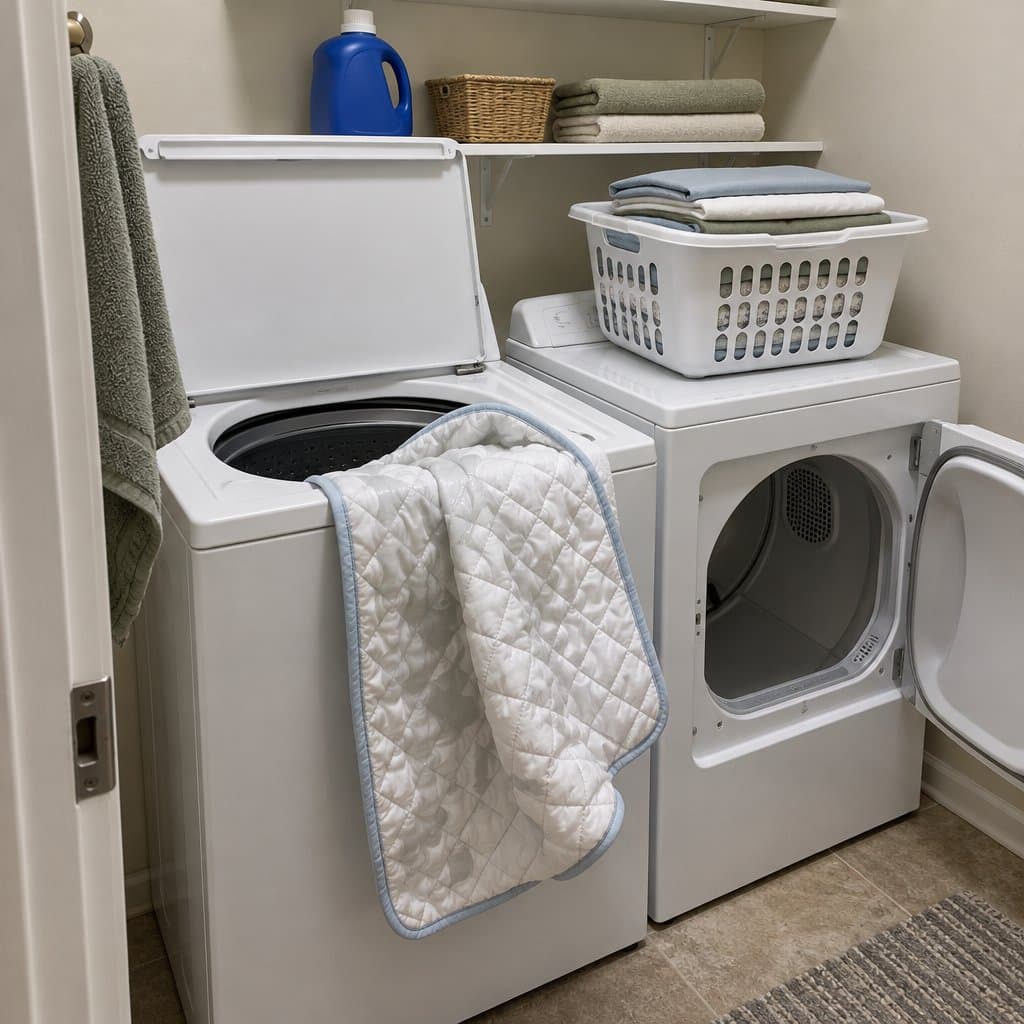
Important Features to Look for in Waterproof Bed Pads for Seniors
Here are the options you should consider when shopping for a bed pad for yourself or an incontinent loved one.
Size
The size of the bed pad is an important consideration. You want to make sure you have the area that needs protection completely covered. Sizes range as small as 18”x18″ and as large as 34”x72”.
For example, if you need protection for a queen-sized bed you may want the 34″x52″ size. If you just need to cover a chair cushion, the 18″x24″ size is probably sufficient.
Absorbency
You want your incontinence pad to absorb quickly and completely. Heavy wetters need the most absorbency you can get.
The package and description of any quality bed pad will tell you in ounces or milliliters how much liquid they absorb in tests. Disposable pads have multiple layers of protection.
Facing Materials
Choose a pad with a soft-facing material because, in most cases, the pad will be next to the user’s skin. Look for cotton or cotton blend in washable pads and non-woven polypropylene materials in disposable pads.
This layer is designed to wick away moisture from the surface quickly and move it down to the absorbent layer keeping the patient dry.
Backing Material
The main function of the backing is to serve as a waterproof barrier and prevent fluids from penetrating the pad. Choose a pad that has a backing material that holds it in place. You don’t want the pad shift, wrinkling, or bunching up while it is being used.
Often, these are textured vinyl or have stitching on them that helps. A reusable underpad tends to stay in place better than a disposable underpad.
Odor Control
The best bed pads for incontinence also address the odor by using odor-controlling polymers and other treatments. This prevents embarrassment for the user and caregiver both.
Cost
Most bed pads are sold in multipacks, so make sure you know how many are in a pack when comparing prices. In general, reusable bed pads that are washable are more cost effective (per use) than disposable options over the long term.
You might be wondering if you should use bed pads or a full mattress protector. Well, bed pads are designed to lay between you and your bottom sheet and come in disposable and reusable options. They are smaller in size and are removed and replaced when soiled. Bed pads are probably the best option for frequent wetters.
Mattress protectors slip over and cover the entire mattress. They are removed and washed (like a fitted sheet) when soiled and are used for people with night sweats in addition to incontinence. They are generally thicker than a bed pad and can add some comfort and softness too. Waterproof mattress protectors are probably best for occasional protection. Learn more about waterproof mattress protectors here.
Disposable and Reusable Bed Pads
Bed pads are designed to protect the mattress from any mishaps due to night sweats, bedwetting, or incontinence problems.
The pad is designed to absorb liquids such as sweat and urine that leak overnight. It helps protect your mattress or other surfaces and guarantees a comfortable sleep at night.
Some seniors use bed pads on car seats and wheelchairs as well. Bed pads come in different sizes and can be either washable or disposable.
If you’d prefer to use a bed pad instead of covering up your mattress, here are the best bed pads for incontinence.
Disposable vs. Washable Bed Pads: Which Is Best for You?
If you are new to using underpads for bed and mattress protection, the first decision to make is whether you want to use washable incontinence pads or disposable ones. Here is a quick comparison of the two:
Appearance
Most people think that washable bed pads look better because they come in a wide range of colors and designs. The top layer is almost always off-white but they do have a quilted design in them.
Disposables are generally blue, green, or pink plastic-backed and have a more “medical” appearance.
Absorbency
Generally, a reusable pad is more absorbent and will hold more liquid than a disposable pad. Most washable pads use cotton/poly blends as the absorbent layer compared to disposables which use chemical polymers.
Comfort
Because reusable underpads stay in place better, they are also more comfortable because they don’t wrinkle and bunch up under sensitive skin. Disposable pads can be noisy and make a crinkling noise when the user moves in bed.

Disposal
Disposable underpads are simply thrown away once soiled. Reusable options however are machine washable and can be cleaned. Simply shake off any “physical matter” on the pad into the toilet and wash the pad.
Some caregivers, however, aren’t going to want to deal with this.
Cost
Disposable pads are more expensive on a per-use basis because they are single-use. Washable pads can be used multiple times before needing to be thrown away and are cheaper per use.
Travel
Disposable pads are easier to travel with because they don’t require access to a washing machine. But you will have to carry a larger quantity of them than reusable pads.
Disposable vs. Washable Bed Pads: The Bottom Line
Washable pads are generally more absorbent, have a nicer appearance, cost less per use, and better for the environment. Disposable incontinence bed pads are more convenient and easier to use but can be noisy and have to be thrown away after each use.
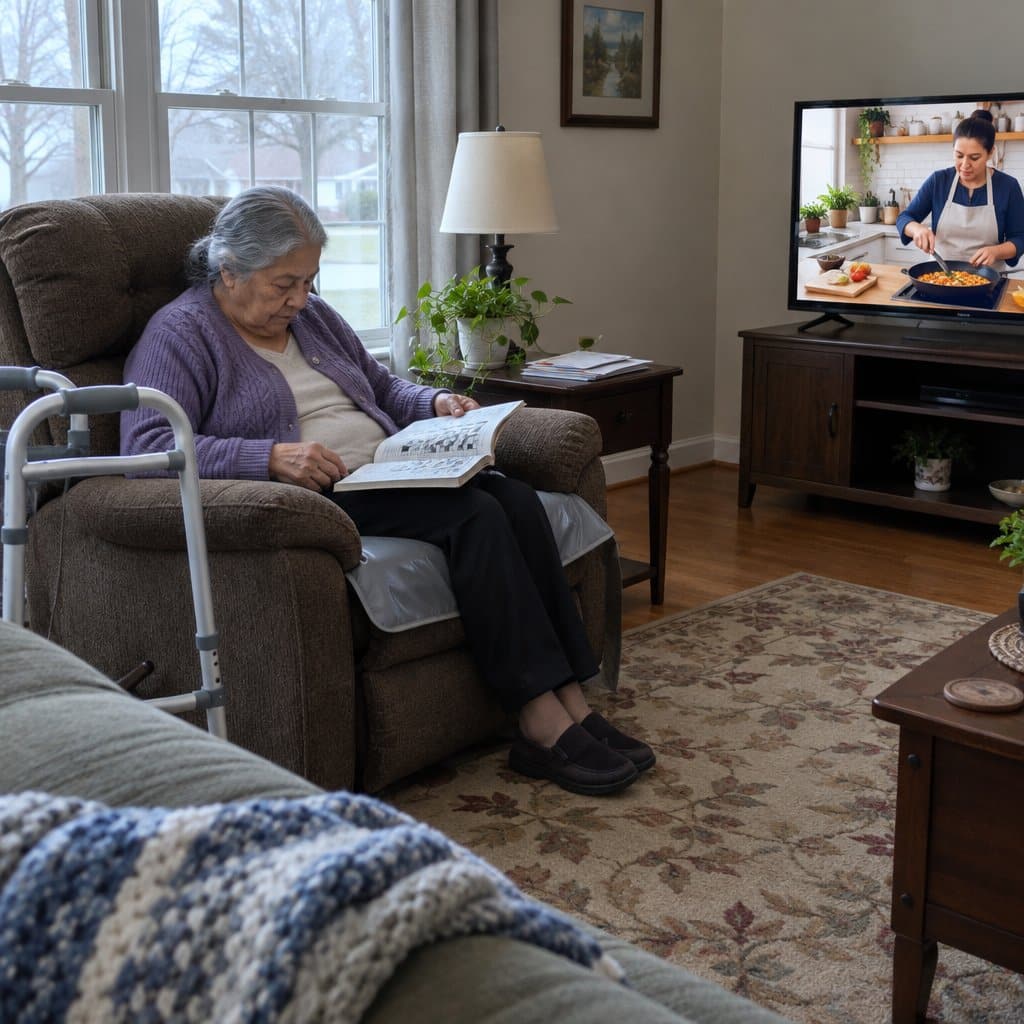
Frequently Asked Questions About Waterproof Bed Pads
How do bed pads work?
Bed pads work by using multiple layers of materials to move and absorb liquid.
The outer facing layer is a quilted material that is designed to wick moisture away from the skin quickly and move it deeper into the pad where it can be absorbed by the absorbent layers.
The bottom layer is waterproof and stops the fluid from penetrating through the pad onto the bed mattress or bedding.
Where should you put a bed pad on a bed?
Pads can be placed in several areas and still remain effective. For people who are self-conscious or want to be more discreet, put the pad between the fitted sheet and the mattress pad.
The drawback here is that the fitted sheet will get wet which could make the person uncomfortable.
Another most common place to put bed pads is to put it on top of the fitted sheet so that the bed linens stay (mostly) dry and there is no moisture against the person’s skin or bed clothes.
Of course, make sure they are right side up and the absorbent layer is towards the user and the waterproof backing is against the bed. The longer side of the bed pad should go across the bed, not head to toe.
What size incontinence pad do you need for your bed?
For a home hospital bed, you are going to want a bed pad that is at least 24” X 30” with 30” x 36” being optimal.
For regular or adjustable beds, you could get away with a 36” wide pad if you are only placing it under one person but I recommend the 52” wide pads for regular beds to prevent runoff or leak around.
How is a bed pad supposed to feel?
The top of the bed pad should be soft and dry next to the skin. Between the top and bottom layers you should feel some puffy absorbent layers of material.
How long do washable bed pads last?
Washable bed pads last a long time, often for many washes, unless they get stained or damaged. Check the package for what the maker says.
How do you clean reusable incontinence pads?
First, shake off any solid matter into a toilet. Then carefully fold the pad and place it in a sealed compartment until you are able to clean it fully.
When you are ready to launder it, place it in the washing machine and use cold water with standard laundry detergent.
Do not use fabric softener because it will make the pad repel liquid instead of absorbing it. Do not use bleach because it can damage the absorbent fibers in the pad.
Dry the pad in your dryer on low. Note that you will probably have an extended dry time because the spin cycle won’t be able to get all the water out of the absorbent fabric.
You should always wash reusable underpads before using them the first time.
How often should I change washable incontinence pads?
Usually, you only need to change a washable incontinence pad when it has been used or soiled. If used overnight, you should always change it first thing in the morning.
How do you protect furniture from incontinence?
To protect furniture many of the recommended bed pads above can be used on furniture and chairs including recliners, lift chairs, dining chairs, etc.
You’ll probably want a smaller size like 18” X 24” or 24” x 24” for most chairs. I have a guide to the best waterproof chair pads for elderly people if you’d like more info.
Which incontinence pads are the best for fecal incontinence?
NO bed pads by themselves are a great option for fecal incontinence. But if you must use them, change them as soon as they are soiled. Disposable pads tend to be a better choice because they can be balled up and thrown away.
Washable pads may need extra cleaning care (scrubbing, stain treatment) if used with fecal incontinence. The best choice for fecal incontinence is briefs or pads that are made to be inserted into underwear.