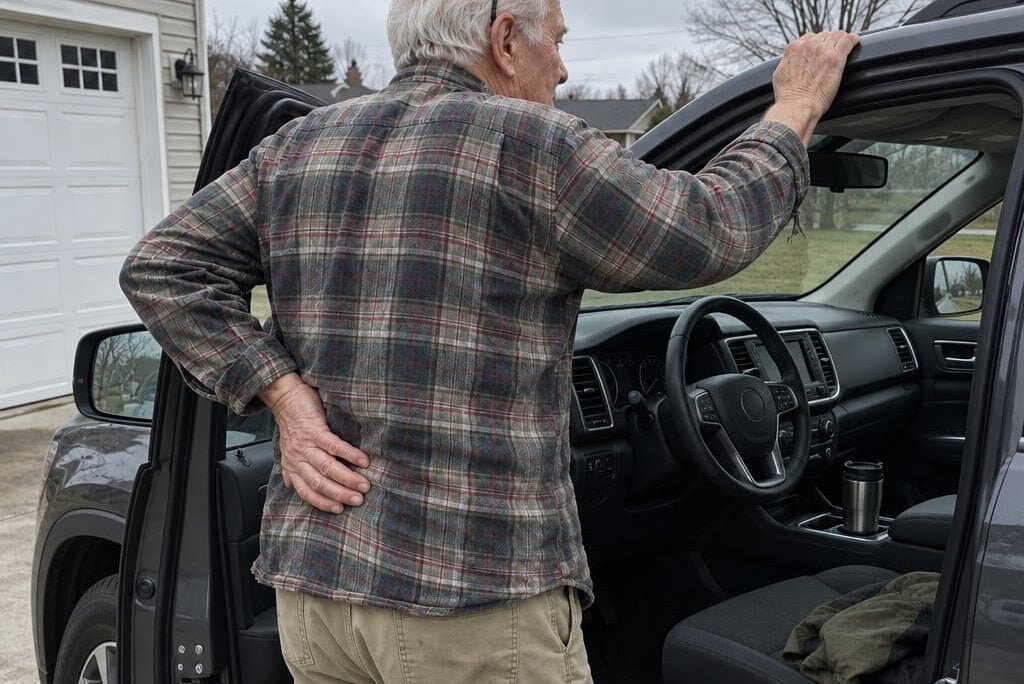
If you finish a long drive with a sore tailbone or an aching lower back, the right car seat cushion for long drives can help.
The mistake most people make is shopping by price or thickness.
The real question is where your pain lives, because a cushion that fixes one problem can make another worse.
This guide covers five types and who each one suits.
Car Seat Cushion Shopping Guide
Download this practical shopping guide and eliminate the guesswork—find the exact car seat cushion that solves your specific pain point with a simple measurement and a clear checklist you can take to the store or use while shopping online.
What to Look For in a Car Seat Cushion for Long Drives
Start with pain location. Notice where the discomfort begins and where it peaks after 60 minutes of driving. Lower back fatigue and tailbone pressure are different problems, and a lumbar pillow will not help a compressed tailbone.
Then check these specifications:
- Height: Most cushions run 2 to 4 inches uncompressed. Anything over 3 inches can crowd a shorter driver’s head toward the headliner, so measure your headroom first. Getting in and out of the car comfortably matters too.
- Attachment: A cushion that slides is a distraction at 65 mph. Straps are the minimum. A lumbar piece held only by the seat cushion beneath it will usually drop within the first hour.
- Heat: Memory foam holds body heat. Gel and open-cell foam release it faster, which matters when the cabin regularly passes 80 degrees Fahrenheit.
- Cover: A zip-off, machine-washable cover is worth having. Velour feels soft but is hard to clean. Mesh breathes better but feels less padded.
- Weight rating: Most cushions are rated to 250 to 300 pounds. Go beyond the rating and the foam flattens within weeks.
- Seat fit: Compare the cushion’s dimensions to the flat part of your seat, not the overall width. A wide cushion can rock on a contoured bucket seat.
- Foam density: Memory foam of about 3 to 5 pounds per cubic foot lasts longer under daily use.
Seat and Lumbar Support Sets
For drivers whose seat has lost its support and whose lower back tires too, a matched cushion and lumbar piece solve both problems in one purchase.

A set pairs a seat cushion with a lumbar piece sized to work together. It suits you if your seat has lost its support and your lower back aches after 30 to 60 minutes. You solve both problems in one purchase.
It is the wrong choice for tailbone pain alone, where a cutout cushion serves you better. It is also more than you need if only your lower back tires. Many sets are sized for desk chairs, so confirm the straps are meant for a car seat.
Stepxi Car Seat Cushion with Lumbar Support

I demoed this one on video. It is a single L-shaped memory foam piece, so the lumbar section cannot slide down mid-drive. It also has an open tailbone cutout and adds about three inches of seat height.
That height can help you get out of a low car. It can also cut into head clearance, so adjust your seat and mirrors before you drive. The lumbar height is fixed, so very short or very tall drivers may find it sits in the wrong spot.
WENNFOUR Car Seat Cushion with Lumbar Support

This is a firm two-piece set, so the seat and lumbar pieces are separate. That gives you some freedom to position each one. Firm foam suits drivers who feel a soft seat bottoming out.
The trade-off is that a firm cushion is less forgiving on tender sit bones. Check how the lumbar piece attaches, since a two-piece set is only as steady as its strap.
LARROUS Car Seat Cushion with Integrated Lumbar Support

Like the Stepxi, this is built as an integrated memory foam design. That means fewer parts to shift on the seat. It suits you if you want a single piece and no pairing guesswork.
The limitation is fit. An integrated cushion leaves you no way to raise or lower the lumbar area, so compare its shape with your seat before buying.
Ready to discover more innovative strategies for healthy, comfortable aging? Subscribe to our newsletter for expert-tested tips and product recommendations designed specifically for older adults.
Memory Foam Seat Cushions
For drivers whose worn factory seat bottoms out after an hour, contouring foam spreads weight evenly across the sit bones.


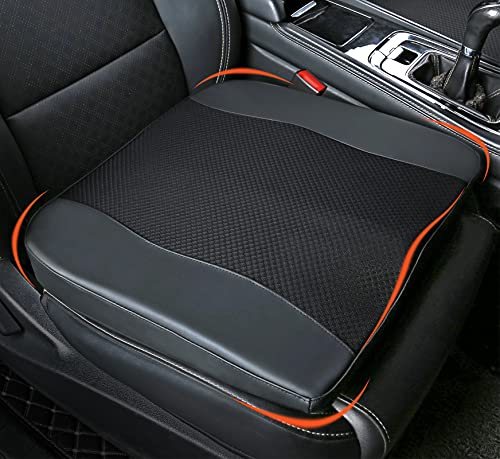


A memory foam car seat cushion conforms to your shape and spreads weight across the sit bones. It suits you if your factory seat has worn flat and you can feel the frame after an hour.
It is the wrong choice for tailbone pain, where the bone needs open air rather than padding. It also runs warm. If summer driving already leaves you overheated, a gel cushion is the better trade.
kingphenix Memory Foam Car Seat Cushion
This one is listed for both driver seats and office chairs. That makes it a plain, flexible option if you want simple contouring without extras. It suits drivers whose main complaint is general seat fatigue.
Because it is a dual-use design, check that it has a non-slip base for your car’s upholstery. Leather seats are the hardest surface to grip.
Everlasting Comfort Orthopedic Car Seat Cushion
This is sold as an orthopedic cushion for driving, office and travel. It suits you if you want a shaped, supportive cushion rather than a flat pad. Look at the listed height and weight rating before you buy.
Like all memory foam, it will hold body heat. Expect it to feel warm on a hot day.
MYFAMIREA Car Seat Cushion Pad
At 1.2 inches thick, this is the low-profile choice. It suits shorter drivers who cannot spare headroom, or anyone who wants a light layer of comfort.
The limitation is the same as its strength. If your seat is truly bottoming out, a thin pad will not give meaningful relief.
Tailbone Cutout Cushions
For drivers with tailbone, coccyx or sciatica pain when sitting, a cutout keeps pressure off the bone and onto the sit bones.


A tailbone cushion for driving has a U-shaped or oval opening at the rear. It holds the coccyx in open air while the surrounding foam carries your weight on the sit bones. It is the one design that removes tailbone pressure entirely.
It is the wrong choice if you only have general seat fatigue, because the cutout reduces total support. If you have wide sit bones, make sure you are not sitting partly over the opening. For related reading, see my guide to seat cushions for sciatica.
Rivquvi Gel Wheelchair Seat Cushion

I demoed this one on video. It is a gel and memory foam cushion with a T-shaped cutout that keeps the tailbone off the seat surface. The zip-off washable cover and non-slip base are useful, especially if you help a loved one with laundry.
It gains about three inches in height, so you may need to adjust your footrests, armrests or wheelchair setup. Reviews are mixed, which tells me relief depends on your pain source. It will not help every kind of pain.
Dreamer Car Seat Cushion for Tailbone and Sciatica
This cushion is made for car seats and aimed at tailbone and sciatica pain. It suits drivers whose pain flares specifically when sitting. It is a good match if you want a cutout cushion built around driving.
The limitation is coverage. Less contact surface means less all-over support on a very long day.
Kölbs Truck Driver Cushion
This is a wedge-shaped cushion with a coccyx cutout, designed for long hours behind the wheel. The wedge tilts your hips, which some drivers like for posture.
That tilt changes your seating angle and your height. Try it with your mirrors and pedals before a long trip.
Cooling Gel Seat Cushions
For drivers who overheat on summer trips or in warm climates, gel moves heat away faster than solid foam.


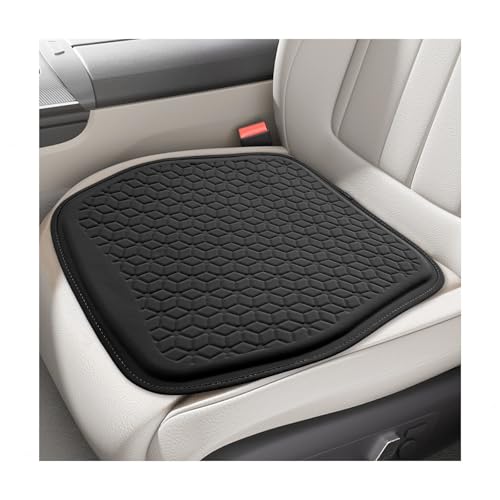
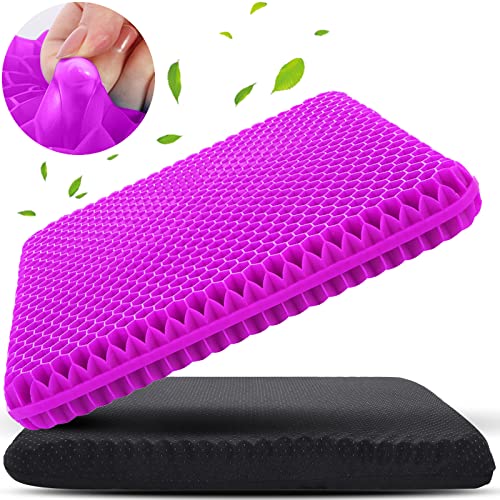
A cooling gel seat cushion for the car moves heat away faster than solid foam. It suits you if you drive in hot climates, take summer road trips, or overheat easily. The effect is clearest when temperatures pass 75 to 80 degrees Fahrenheit.
It is the wrong choice for tailbone or bone tenderness, because gel sits firmer at first contact. In a cool climate, you may not notice the benefit. Pure gel can also weigh 4 to 6 pounds, which is awkward to carry in and out daily.
OMCOZY Gel Seat Cushion
This one uses a honeycomb gel design that suits drivers who want airflow through the cushion. It is listed for office chairs, cars and wheelchairs. That makes it easy to move between uses.
The limitation is firmness. If your sit bones need soft contouring, it may feel too firm.
KYSMOTIC Gel Seat Cushion, Large and Thick
The listing describes this as large and thick. That suits bigger frames or drivers who want more padding under the whole seat. Size is the main benefit here.
Thickness is also the catch. Measure your headroom first, since a thick gel cushion can push you toward the roof.
Fkewp Gel Car Seat Cushion
This is a non-slip front seat bottom pad, so it is a lower-profile gel option. It suits drivers who want some cooling and a cushion that stays put.
Because it is a pad, it will not rescue a seat that has bottomed out completely.
Subscribe to our newsletter for more tips: Join here
Lumbar Support Pillows for the Car
For drivers whose seat feels fine but whose lower back tightens on long drives, a strapped lumbar pillow restores the natural curve.


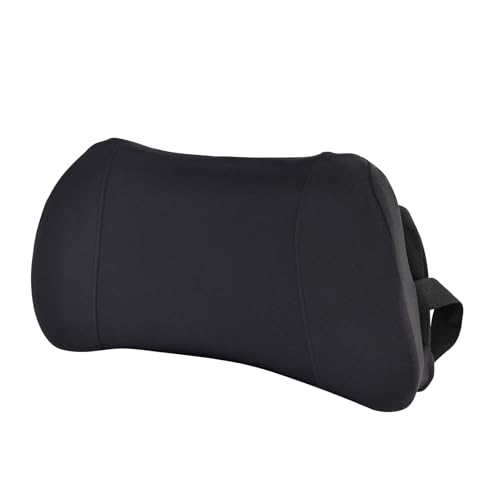
A lumbar support cushion for a car seat fills the gap between your lower back and the seat back. Most car seats flatten that curve over time, which loads your back muscles unevenly. It suits you if your seat feels fine but your lower back tightens after 45 to 60 minutes. I demoed one long-drive option, the Stepxi car seat cushion with lumbar support, made to ease lower back and tailbone pain. If you are not sure which style will stay put, I compared how L-shaped versus separate lumbar pads hold up on long drives.
It does nothing for seat base or tailbone pain. Look for projection of about 3 to 5 inches, with more for a pronounced lumbar curve. The strap matters more than anything else on this list.
SendyFeather Lumbar Support Pillow for Car

I demoed this memory foam lumbar cushion on video. Its two-point strap system held it in place without constant readjusting. The cover unzips for washing, and it moves easily between car and desk in one hand.
The memory foam may feel firmer than you expect at first. The strap length is not published, so confirm the fit on wider seats like recliners before you order.
Lofty Aim Lumbar Support Pillow for Car
This one is designed specifically for car seats and driving. That usually means strap geometry suited to a car seat back. It suits you if you want a simple, dedicated car pillow.
The limitation is that the fit varies by seat shape. Confirm the pillow’s depth suits your lumbar curve.
QUTOOL Patented Lumbar Support Pillow for Car
This is a memory foam back cushion made for cars and trucks. It suits drivers who want a firm, shaped support that travels well.
Firm memory foam can feel too assertive for a flatter back. Try it for a short drive before a long one.
Frequently Asked Questions
Do I need a seat cushion, a lumbar pillow, or both? If your lower back aches and your seat feels comfortable, a lumbar pillow is enough. If the seat base feels hard or you have tailbone pain, you need a seat cushion, or a set. If tailbone pain is your main trouble, take a look at this donut seat cushion for tailbone pain for recovery.
Will a seat cushion make me sit too high? A cushion adding more than 3 inches can be a problem for shorter drivers. Compare the listed height to your headroom before buying.
How long does a cushion last before it flattens? Daily-use memory foam and gel usually hold their shape for one to three years, depending on density and your weight. Going over the weight rating shortens that.
Can I use an office lumbar pillow in my car? You can, but the strap is often too short to wrap a car seat back, so it slips within the first hour. A pillow made for cars has a longer adjustable strap.
Hacks and Advice
- Find your pain first: Sit in your car for 30 minutes and note where discomfort starts. Lower back points to lumbar support, tailbone or sit bones to a seat cushion, and both to a set.
- Check for bottoming out: After a drive, press your hand flat on the seat. If you feel the hard frame, thickness will help. If it still feels padded, thickness is probably not your problem.
- Never use an unstrapped lumbar pillow: It will shift at the first turn. Choose a different one.
- Bring it inside in summer: A foam or gel cushion in a closed car holds heat long after you return. Store it indoors.
- Replace a flattened cushion: If you sit as low as before, or the pain is back, the foam has compressed even if it looks intact.
Car Seat Cushion Shopping Guide
Download this practical shopping guide and eliminate the guesswork—find the exact car seat cushion that solves your specific pain point with a simple measurement and a clear checklist you can take to the store or use while shopping online.
Choose by Pain Location
Where your pain lives is the one thing worth knowing before you spend anything. Find the type above that matches your complaint, and half the options disappear. Buying the wrong type helps neither problem.
If comfort in the car is part of a bigger question about staying independent, try my Home Safety and Independent Living Assessment. It walks you through other everyday areas the same way. My fall prevention checklist is a good companion, and if you are driving with a parent, read about long car trips with a parent with dementia.
Where does your pain show up first on a long drive? Share it in the comments, and it may help someone choose.



![Older woman wheelchair riverside walkway[3]](https://www.grayingwithgrace.com/wp-content/uploads/2026/06/older_woman_wheelchair_riverside_walkway3-e1780477605210-450x300.jpg)