Top 3 Knee Walker Recommendations
Best Overall

Shock Absorbing

Maybe you have a leg injury and the crutches are wearing you out, but you still want to get outside for some fresh air.
This guide to the best knee walkers for outdoors, also called knee scooters, is meant to help.
We will cover what a knee walker is and how it compares to crutches and a wheelchair, what to look for in an outdoor model, how to adjust it and use it safely, and nine models worth a look.
What a Knee Walker Is and Why It Beats Crutches
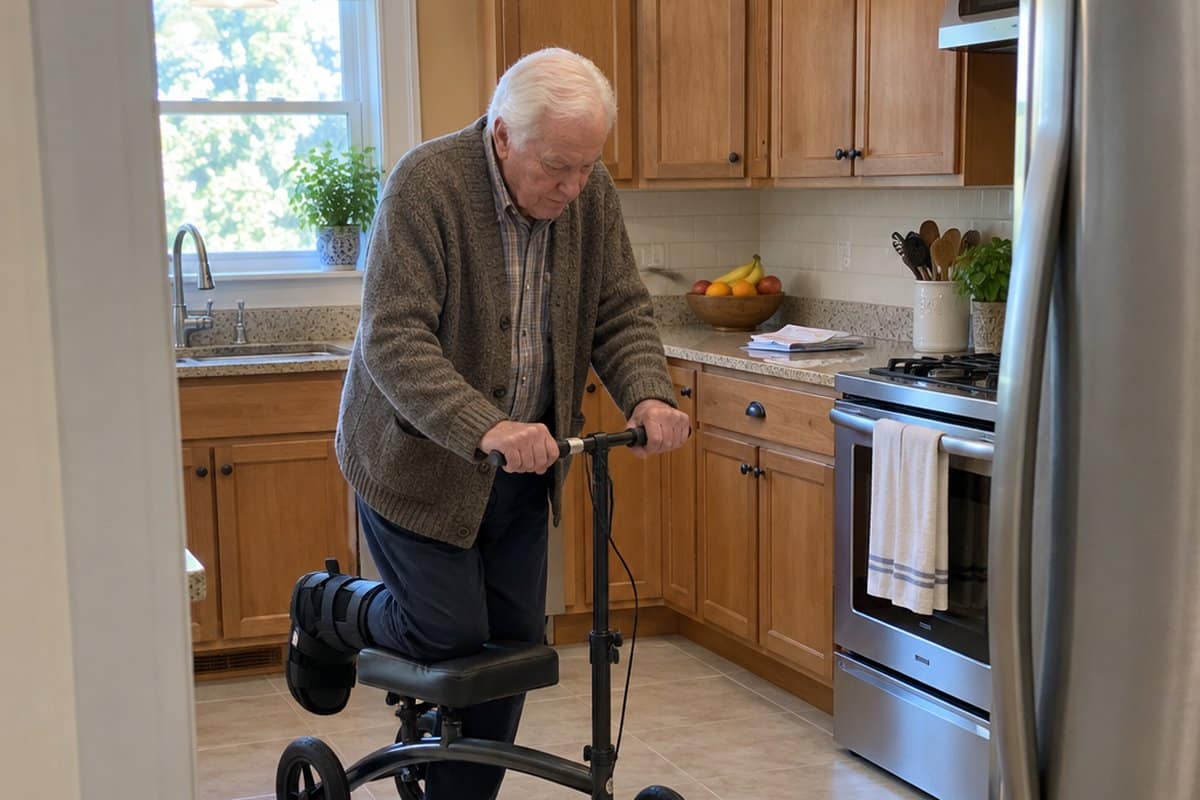
A knee walker, also called a knee scooter, is basically a rolling, padded stool that acts as a knee rest while you move. Most have handlebars, brakes, and a large padded flat surface to support your knee. Some also come with a basket for carrying your things.
Most knee walkers have four wheels, which gives you a stable base to lean on while you steer.
The idea is much like a toy scooter. You rest the injured leg on the pad, push off the ground with your other foot, and glide forward or backward.
Some people find crutches tiring, and a knee walker can give you more freedom of movement. It is not right for everyone, though. Ask your doctor or therapist whether a knee walker is safe for your injury.
If you are recovering from a foot injury, or caring for someone who is, this is worth knowing before you shop for an outdoor model.
One trade-off is that a knee walker takes some getting used to. Expect a little practice before it feels natural.
Choosing a Knee Walker for Outdoor Use
- Knee scooters with large treaded tires will handle grass, gravel, and uneven terrain easily.
- Opt for a stable 4-wheel design and hand brakes to prevent falls on bumpy ground.
- Look for models that fold up for portability, so you can take it wherever you go.
- Prioritize comfort with padded knee rests and ergonomic handles for all-day outdoor adventures.
In this article, I’ll go through knee walkers that fit these needs.
With the right pick, you’ll be zipping along neighborhood sidewalks and park trails again in no time. Don’t let mobility issues stop you from enjoying fresh air and independence.
Why a Knee Walker Beats a Wheelchair for Staying Active
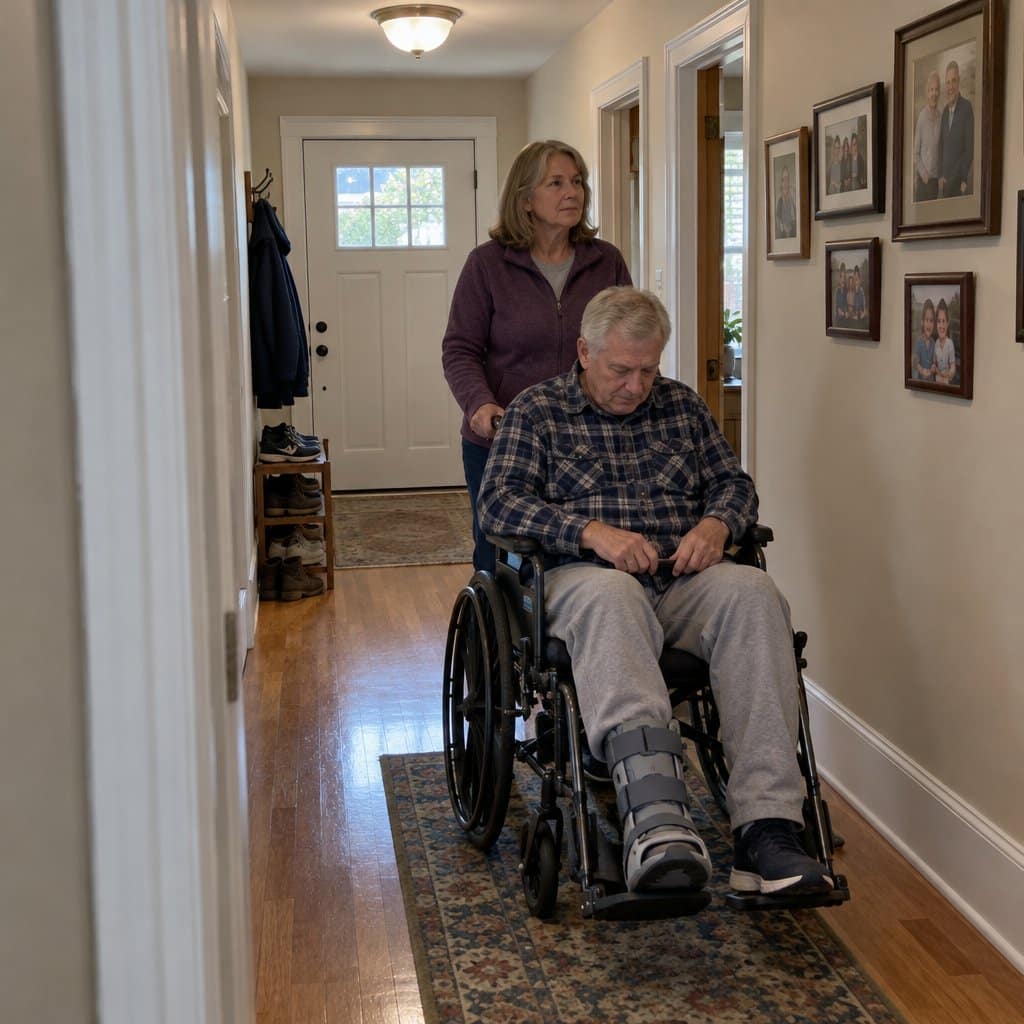
When you are laid up with a foot or ankle injury, a wheelchair can look like the easy answer. I would think twice before choosing one.
Wheelchairs are bulky and hard to use. Most of the time they need another person to push you around, and nobody wants to feel like a burden while they recover.
Wheelchairs also tend to keep you sitting instead of getting up and moving. A knee walker lets you keep moving easily while taking the pressure off the injured foot or ankle.
The same goes for getting around the house. Crutches can wear you out just going from room to room, which makes simple chores nearly impossible. With a knee walker you save that energy for the things you need to do.
If you are recovering from a foot injury or caring for someone who is, talk to your doctor about whether a knee scooter is a good fit for you or your loved one.
The trade-off is that a knee walker is a medical device, not a ride for fun. It keeps you active, but it works best when you follow the safety habits above and use it for what it was built for.
Adjusting and Maintaining Your Knee Walker
One of the biggest complaints about knee walkers is pain in the “good” leg from bumping into the frame. Another is a sore back from hunching over the handlebars.
Please don’t accept either one as part of the deal. Most of that pain comes from a knee walker that has not been adjusted properly.
Almost all medical supply stores have staff who will help you set it up. If you bought yours online or from a general store, ask your doctor or physical therapist. Most are glad to help you get the most out of it and speed up your recovery.
Once it fits, keep it in good working order. Every few days, check that the nuts and bolts are still in place. It takes only a few minutes, and it saves you a bigger headache later.
The trade-off is a little time. Getting the fit right means a visit or a call, and the bolt check has to become a habit.
How to Use a Knee Walker Safely
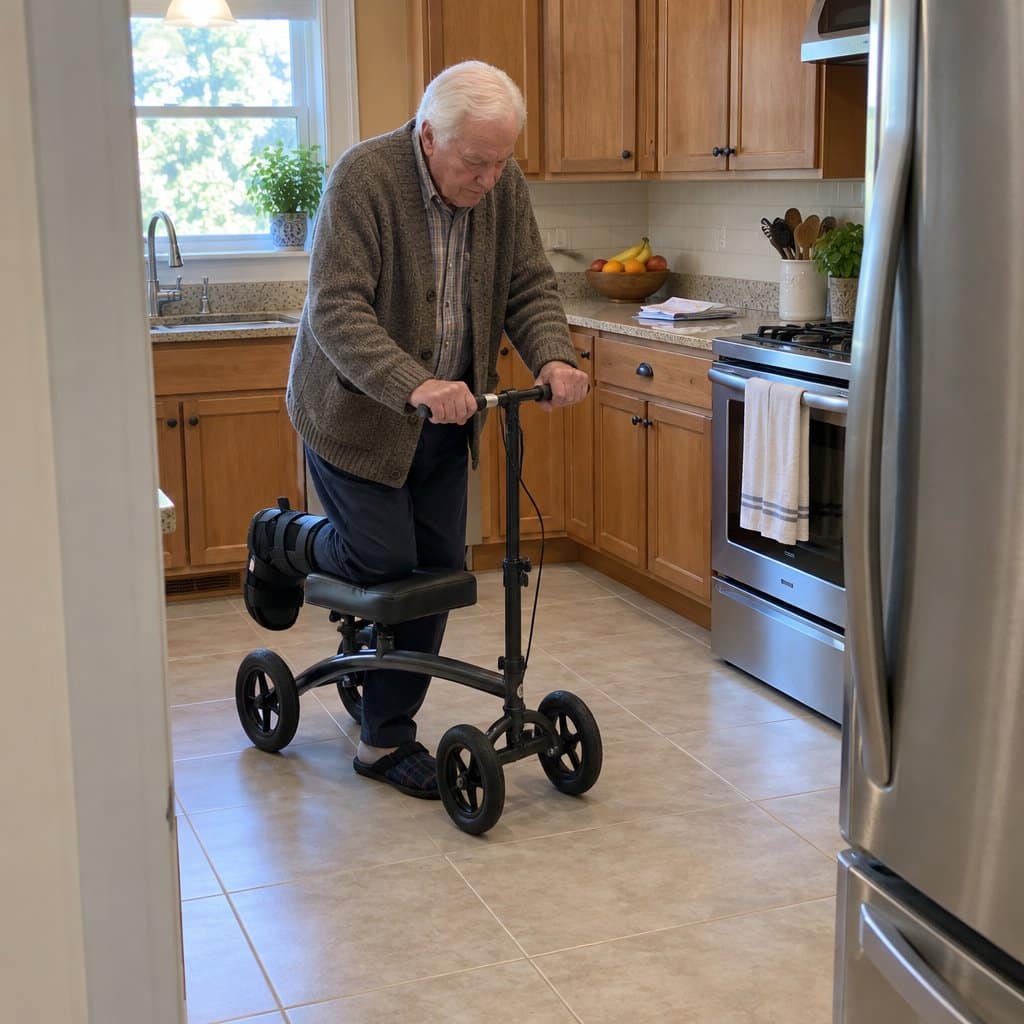
Balance is the part that matters most. Keep your weight over the center of the knee walker.
Keep your knee on the pad the whole time. It sounds obvious, but you may be tempted to lift it as you move around.
A knee walker is a medical device meant to replace crutches. It is not built for speed, so skip the races with friends and the cruising down the street.
Never sit on it, not even for a moment. Knee walkers can tip over easily because their center of gravity is high, and one can roll away as you sit down.
Start at home before you head outside. Moving from room to room keeps your foot and ankle protected from bumps, and it saves energy compared to crutches.
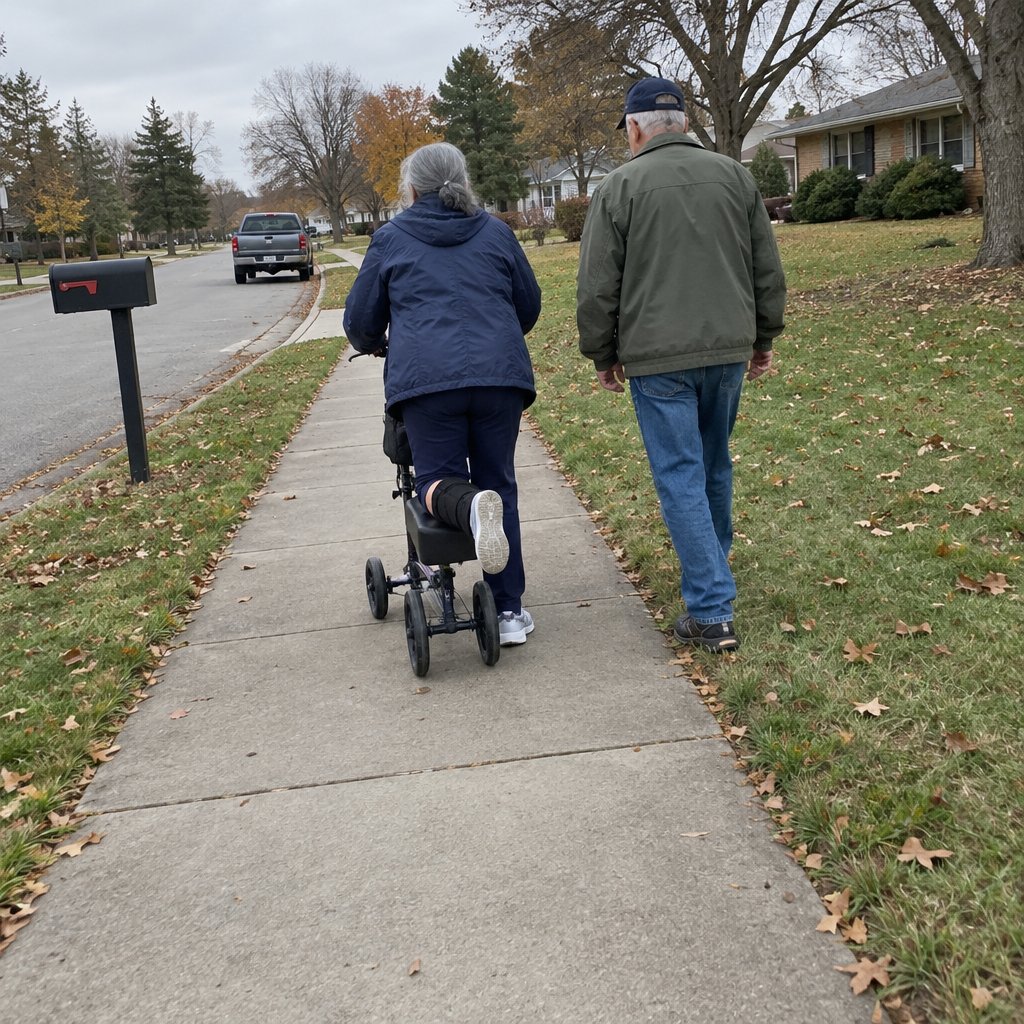
When you feel ready to go out, begin with short trips. A friend’s house or the corner drugstore makes a good first stop, long before the busy supermarket or the crowded mall.
The trade-off is patience. Learning these habits on smooth indoor floors takes time, and rough outdoor ground will be easier once you have done it.
Best Knee Scooters for Outdoor Use
Here are the knee walkers I recommend for people who want to get out and about. Most of these have large wheels with tread, are easily portable, and are adjustable to fit you better.
Vive Health All Terrain Knee Scooter
All Terrain Knee Walker
The All Terrain Knee Walker from Vive Health stands out for those looking for a knee scooter for outdoor, off-the-beaten-path, use. it is the perfect combination of durability, comfort, and usability.
First, it has beefy, treaded 12-inch pneumatic tires to handle off-road terrain well (even dirt, grass, and gravel) while providing shock absorption and easy control. The handle is steerable as well, which makes navigating this terrain simpler and safer.
For comfort, this one features a padded and contoured knee pad to reduce pressure on the injured leg. It is also highly adjustable to get a better fit: Both the knee platform and the handlebars are independently adjustable.
Finally, it is easy to transport because it only weighs 25 pounds and folds up. A travel bag is also part of the package.
KneeRover PRO All Terrain Knee Scooter
For those who are dedicated to the outdoor experience, this is a knee scooter/walker that has what it takes to cope with everything that even the most rugged outdoor terrain can throw at it.
The air-filled 12-inch tires are great for absorbing the shocks that can accompany off-road use, and the extra padding on the knee support makes use even more comfortable.
It can also be folded easily for transport to that perfect outdoor destination. It has a detachable storage basket for your outdoor supplies too.
However, those with limited mobility need to be aware that this is a three-wheel model, so take extra care when venturing into rocky terrain.
This sort of design is inherently less stable than the four-wheel options on the market.
VitaSophy All Terrain Knee Scooter

The VitaSophy All Terrain Knee Scooter is built for people who want to use a knee walker outside as well as indoors. It comes in pink.
It has 8-inch wide-body wheels, front and back, that are pneumatic-free. That means no air inside, so there is nothing to go flat. The wheels are described as silent, which you may notice on a quiet sidewalk.
Braking is a disc brake plus a locking hand brake. The locking brake is handy when you stop to talk to a neighbor or step off. The maker recommends keeping your speed under 3 mph, which is about a brisk walk.
The knee pad is soft and springy, and the frame has a curved bottom for support. There is also a shock absorption feature to take some of the bump out of rougher ground.
The maker also points out that crutches take a lot of upper body strength and can rub under the armpits. A knee walker lets you keep your hands free of that work.
One thing to weigh: 8-inch wheels are smaller than the 12-inch ones on some outdoor models. If your route is mostly grass, gravel or steep ground, think about whether that suits you. Like any knee walker, it also needs a leg that can safely kneel on the pad, so check with your doctor first.
BodyMed Steerable Knee Walker

If you want a knee walker that works indoors and out, the BodyMed Knee Walker is worth a look. It is a four-wheel, steerable scooter meant for foot or ankle injuries, as an alternative to crutches during recovery.
You rest the injured leg on the cushioned pad and push along with the other foot. That keeps your weight off the injury and your hands free of crutch handles.
It has easy-grip handlebars and a dual rear braking system. You squeeze the hand brakes at the handlebars to stop and stay in control, which matters when you are rolling outside.
It also comes with a detachable metal basket, handy for carrying a few things without juggling them. The walker collapses, so it is easier to take in the car.
The trade-off is that a knee walker only suits an injury below the knee, and you need decent balance to steer it. If you are unsteady on your feet, a walker with a seat or a frame to lean on may be safer. It is also worth checking with your doctor before you switch from crutches.
KneeRover Hybrid All Terrain Knee Scooter

The name ‘KneeRover’ comes up again and again when people are looking for products with careful design and top-class materials suitable for heavy-duty use.
These are important considerations when choosing a knee walker that is suitable for the outdoors.
This knee walker has air-filled tires and a four-wheel system that is excellent if you want added stability outdoors. Drum brakes make handling easier, and the lockable handbrakes are a great feature.
This is also a good model for taller people. Even those who top out at around 6′ 6″ should find it comfortable.
The front axle can be removed to make transport easier. The removable basket is handy for carrying supplies on a day out or a shopping trip.
Aojin Foldable Knee Scooter

The Aojin Knee Scooter is a good fit if you want one knee walker for both indoors and outdoors. It has 8-inch wheels, which help it roll over more than a smooth floor.
The frame is carbon steel, and it holds up to 300 pounds. The chassis is widened and sits low to the ground, which is meant to make it harder to tip. That matters when you are rolling over an uneven sidewalk.
The knee pad is thickened and 13 inches long, so your leg has a soft place to rest. It is meant to take pressure off your hips, knees, and other leg. A dual brake system gives you a way to stop when you need to.
The height adjusts for people from 4’7″ to 6’1″, so it suits a wide range of builds. It also folds, and a storage bag is included, which helps with the car trunk or a closet.
One thing to know is that the 300-pound limit is lower than some heavier-duty knee walkers. If you are near that weight, look at a model rated higher. It is also meant for a foot, ankle, lower leg injury, or a below-knee amputation. It is not for anyone who cannot kneel on one leg or balance on a scooter.
KneeRover GO Compact Knee Scooter

The KneeRover GO Hybrid is built for getting around outdoors. It has 9 inch air-filled front tires, which let it handle a wider range of ground than a knee walker with small hard wheels.
It weighs 22.5 pounds and holds up to 300 pounds. The handlebars and knee platform both adjust, so you can set it to fit you.
It folds in seconds. That helps if you ride in a cab or bus, have a small car, or want to tuck it under a desk at home.
The trade-off: air-filled tires can go flat, so check them now and then. And at 22.5 pounds, it is still a lift if you have to carry it up steps. If you weigh more than 300 pounds, this one is not the right fit.
Wrapping Up
These walkers offer the most valuable of opportunities. The opportunity to enjoy the great outdoors and simply explore in comfort. This experience is especially valuable to those who may be enduring pain and limited mobility.
They are an option well worth exploring by those who want to simply get out and about. The fact that most of these devices will not break the bank is a welcome additional attraction.
However, it is the freedom and comfort that they offer that is in essence priceless that makes them attractive to those who want to enjoy the freedom of the outdoors.