You wake up in the dark, reach for the hallway, and wish you could see where your feet are going. Choosing the best lighting for the elderly can make nights safer and reading easier.
This guide covers night lights, reading lights, and automatic security lights for outdoors, with the trade-offs of each one named plainly.
You will also find simple tips on where light matters most, which bulbs and colors to choose, and how to keep fixtures clean and change bulbs safely.


Summary & Highlights
- Lighting is an important part of quality of life for many people, as some eyes need more light than others to see clearly.
- Different types of lighting, such as natural and artificial lighting, can provide the right amount of illumination for older adults.
- It is important to consider the amount and quality of light when choosing lighting fixtures, as well as the needs of the individual when selecting the best lighting for elderly individuals.
Best Night Lights for Seniors
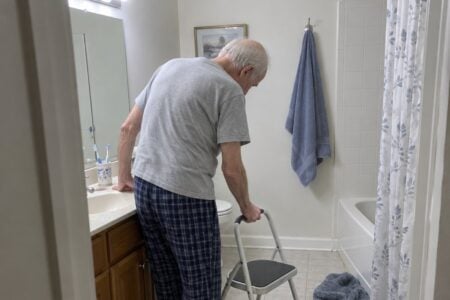
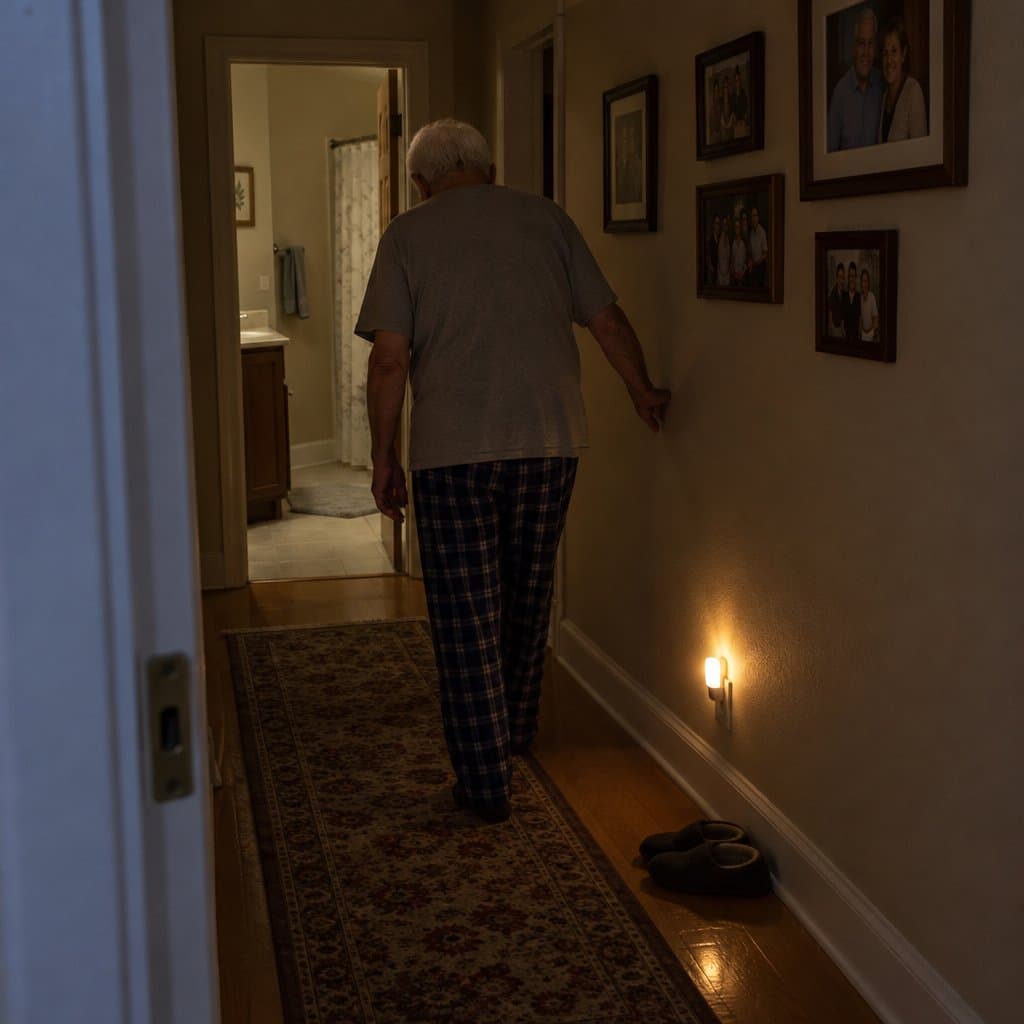
Stumbling around in the dark isn’t a great idea, regardless of your age. I’ve walked into a few doorways and random objects myself by not turning on a light when walking in the dark! For seniors, nighttime trips and falls can be downright dangerous!
AUVON Motion Sensor Night Light
These AUVON night lights plug into an outlet and light your way without any switch to flip. They come in a pack of four, so you can put one in the hallway, bathroom, kitchen and bedroom.
They have two modes. In Auto mode, a motion sensor notices movement within about 3 to 5 meters and a 120° angle. The light comes on in the dark, then goes off after 60 seconds with no motion.
In Night mode, the light works dusk to dawn. It turns on when the room gets dark and off when it gets bright again. That suits a hallway or bathroom where you want a steady glow all night.
The light is a soft warm white, and brightness is adjustable. The light is backlit, which means it bounces off the wall instead of shining straight at you. That is easier on anyone sensitive to bright light, or anyone who wakes in the night and does not want to be dazzled.
One trade-off: in Auto mode the light is off until it senses you, so it won’t leave a room softly lit all night. If you want that, use Night mode. And if you like a room pitch black to sleep, a motion light in the bedroom may be more light than you want.
For more information on nightlights for seniors, check out this guide.
YUNLEX Motion Sensor Night Light

The YUNLEX motion sensor night light runs on batteries and sticks on, so you don’t need an outlet nearby. It comes as a pack of two.
It lights up when it senses movement, up to 13 feet away, across a 120° wide angle. It only works in the dark and stays off during the day. About 15 seconds after you leave, it turns itself off.
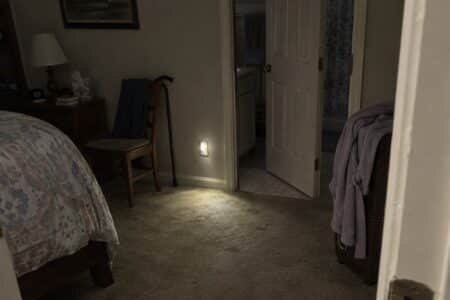
That suits anyone who likes to sleep in a dark room. When you get out of bed, the light comes on, which can save you a stubbed toe or a fall. Then it goes off again without you touching a switch.
It has three lighting modes, and you change them by short-pressing the top button. Backlight only gives a soft glow across the wall, which works well in a bedroom. Frontlight only gives a more direct beam, handy in a closet or cabinet. Both together give a fuller glow for a hallway or stairway.
The brightness is also dimmable. You hold the button to adjust it, with a range of 1 to 15 lumens.
Good spots include a baseboard, the stairs, a bathroom vanity, or beside the bed.
The trade-off is that it is a low-light helper, not a room light. At 15 lumens at most, it shows you the path but won’t brighten a space for reading. Since it runs on batteries, you will also need to change them from time to time.
Ailun Toilet Night Light Motion Sensor

Yeah, I know. It might seem silly, but hear me out.
These motion-activated LED lights turn on automatically when they sense movement. They are battery-powered and simply hang over the edge of the bowl. Plus, they are easy to clean!
The bathroom is a common place for falls, especially at night. A lit path to the toilet can help you avoid a slip or a “miss” when sitting down. It could just save some embarrassment.
These bright LED lights turn on automatically as you approach the toilet, and they stay lit for 2 minutes after they stop sensing movement. To install them, just add 3 AAA batteries and hang them over the edge of the bowl. The flexible bracket installs on nearly any toilet too.
If you prefer a little fun when you gotta go in the middle of the night, the light can display in 8 different colors and even rotate colors every time it activates. Just to keep you guessing!
Best Reading Light for Seniors
Another common lighting need for seniors is adequate light when reading.
Brighter light makes small print and detailed work easier to see with less strain. An eye doctor can tell you how much light suits your eyes. You can also look at these recommended reading aids.
Here are some reading lights worth a look.
Airlonv LED Desk Lamp with Clamp

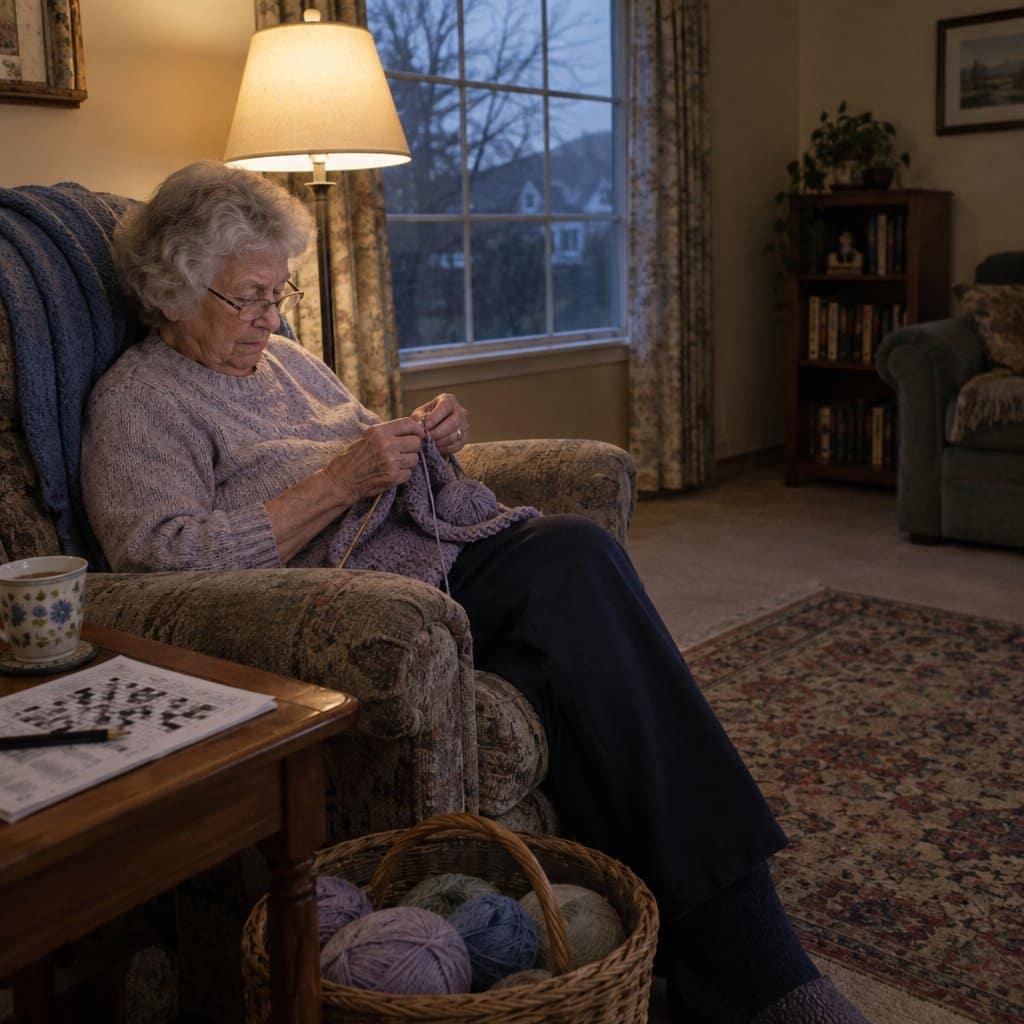
If you read, sew, knit, or do paperwork at a desk or table, a good task lamp makes a real difference. The Airlonv LED Desk Lamp is one that clamps to the edge of the surface you work at.
The clamp means it takes up no room on the desk itself. It fits up to 30″ monitors, so it works whether you have a computer there or just a stack of mail.
The gooseneck is long and flexible and turns a full 360°. You bend it where you want the light, and it stays put. That is handy for aiming light right onto a page or a piece of needlework.
You can set the brightness anywhere from 1% to 100%, with no fixed steps. So you can turn it down in a dim room to keep the glare out of your eyes, and turn it up when you need more. The color of the light also ranges from warm (2700K) to cool white (6500K). Warm is softer for the evening, and cool is crisper for detailed work.
It uses 100 LEDs, and the light is flicker-free. The lamp is made of aluminum and ABS plastic, and it is rated for up to 60,000 hours. It also has a built-in way to tuck the cord out of sight.
One thing to know: it needs a table or desk edge that a clamp can grip. If you want to set a lamp on a nightstand or an end table with no room to clamp, a lamp with its own base may suit you better.
Gritin Rechargeable Book Light
The Gritin book light clips on and has an amber mode (1800K) in place of harsh blue-white light. It also has a mixed light (3400K) and a white light (6000K), so you can pick what suits the book and the time of day.
Brightness is not locked into a few steps. You hold the brightness button down to dim or brighten it anywhere from 10% to 100%. A short press on the other button switches the color.
The 19 LEDs sit in a straight line in a wide, horizontal head, so the light spreads across the page. The lampshade is ABS plastic. The light is described as free of flicker, shadow and glare, which matters when you read for a long stretch.
It runs on a built-in 1200 mAh rechargeable battery, good for 12 to 90 hours depending on your settings. It also has a memory function.
There has been a lot of talk about blue light keeping people from sleeping, so give the amber mode a try in the evening.
One thing to know: the battery is built in, so you will need to recharge it and can’t swap in fresh ones. At the brightest setting, expect the shorter end of that runtime.
ROYFACC Touch Sensor Bedside Lamp

A neutral-colored light to match nearly any setting that turns on with a simple touch. Offers 360 degrees of supplemental light. It’s also rechargeable via USB and portable too.
Seniors must have a well-lit path before their feet ever hit the ground. This bedside lamp can be turned on quickly with a simple tap on the metal base.
This is extremely helpful for emergencies or when a senior has to get up in the middle of the night.
It also has three settings: a low setting that can act like a night light, a moderate option for evening use, and a brighter setting for reading or walking at night.
Feeling a little funky? There are four different color settings, too, if you prefer a pink glow in the bedroom!
If power outages are frequent in your area, it also comes in a version with a rechargeable battery to work at all times.
Automatic Security Lights for Seniors
Aootek Solar Motion Sensor Lights

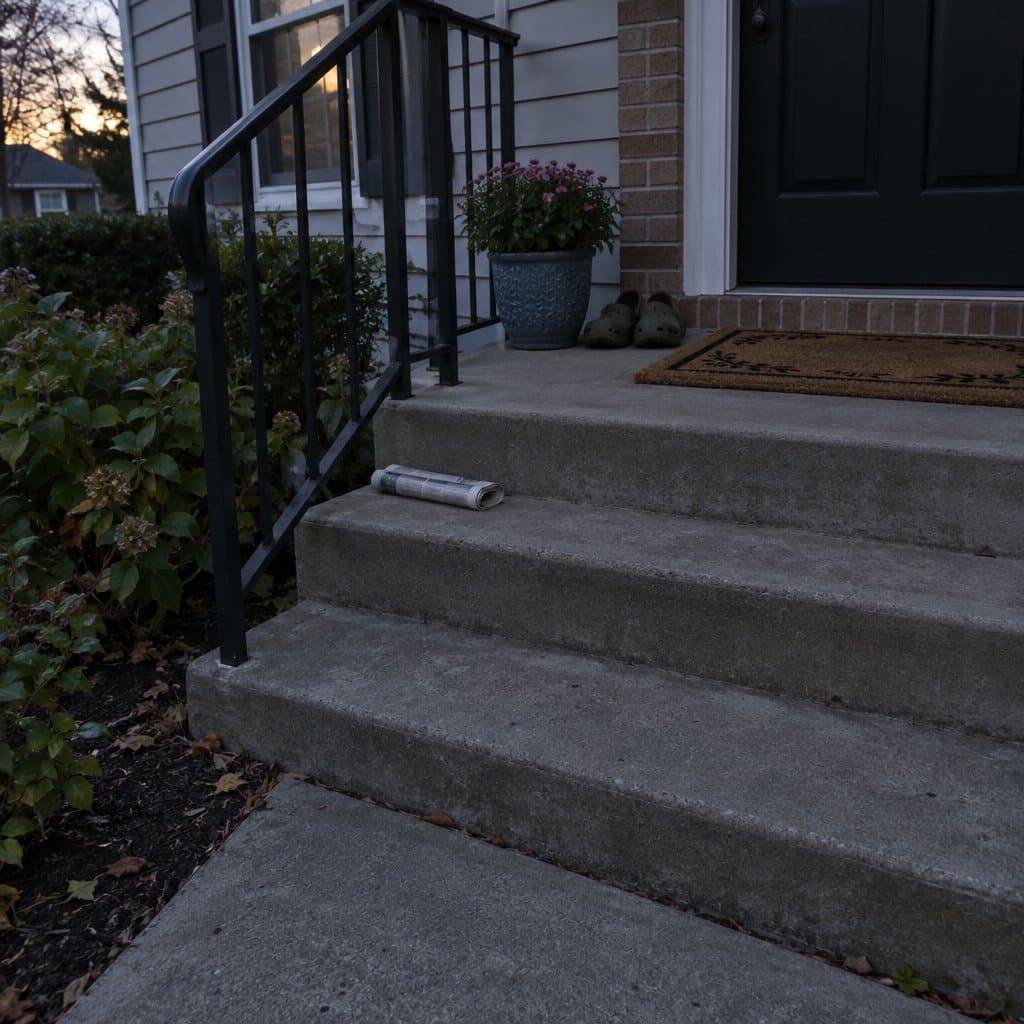
If you are out after dark, maybe walking the dog or coming home from an evening out, your outdoor lighting matters as much as what is inside. Steps, walkways and the front door are where a bad footing hurts most.
The Aootek Solar Motion Sensor Lights are a six pack of outdoor lights with 120 LEDs. They run on a solar panel and a rechargeable lithium-ion battery, so there is no wiring and no outlet needed. They are rated IP65 waterproof and meant for spots like a front door, yard, garage or deck.
The motion sensor picks up people up to 26 feet away, across a 120 degree angle. The light is a wide-angle one, so it spreads over the area instead of making one bright spot.
You can pick from three modes:
Motion Sensor Mode: The light stays off until it senses movement, then runs at high brightness for 15 seconds and shuts off.
Permanent On Mode: The light comes on by itself at night and stays on at 10% brightness for 8 hours.
Smart Brightness Control Mode: The light stays slightly bright all night, goes to high for 15 seconds when it senses motion, then drops back down.
The third mode is the one I would reach for on a path or steps you use at night. You are never walking into total darkness, and you still get a bright light when you need it.
One thing to know: 15 seconds is not long if you are moving slowly or standing at the door looking for your keys. A solar light also depends on daytime sun, so a shady spot may leave it dim after a few cloudy days. Place the panel where it gets light.
Why is Lighting so Important for Seniors?
Safety
The top reason to think about lighting for seniors is safety.
This comes in a few different forms. Inside the house, adequate lighting can prevent dangerous falls and reduce the chance of slipping or injury. It also helps seniors perform important tasks like taking the proper doses of their medication.
Security lights can keep their homes safe from intruders outside the house, and proper lighting on their doorstep and driveway can also prevent dangerous falls.
Eyesight
Proper lighting also contributes to better eyesight and safer daily life. Conditions such as cataracts or glaucoma can make some people need more light. Ask an eye doctor what suits you.
Other common eye problems include floaters and hardening or yellowing of the lens. An eye doctor can tell you how much light suits your eyes.
Lighting Tips for Seniors
Now that we know why lighting is important, here are a few tips for making the most of the lighting situation in an elderly person’s home.
Accessibility
Seniors should have as much control over their lighting situations as possible. This means that light switches should be placed all around the home in easily accessible locations.
Lamps and other smaller lights should also suit their needs and should not be too complicated to operate. In terms of safety and lifestyle, accessibility is an imperative factor.
Adjustability
The lighting in the senior’s home should also be fully adjustable, along with their control over their lighting conditions. Tools like dimmers and timers allow seniors to make their lighting work for their lifestyle.
Some people’s eyes are more sensitive to light level, intensity, and brightness, so giving them control over this factor will greatly help.
Color
The color tone of the lighting matters too. A yellowing lens can make it harder to tell colors apart, especially on the cooler end of the spectrum (blues, purples, etc.).
Cooler bulbs, such as halogen or fluorescent, may help colors look clearer. Check with an eye doctor if color is a problem for you.
Keeping Lights Clean and Changing Bulbs Safely
Have you noticed how much brighter a room looks after you wipe down a light fixture? Dust and grime cut down on the light that gets through.
Regular cleaning gives you better light. It also keeps dust from building up on fixtures, and that dust can burn.
Here is a quick routine:
- Dust lamp shades and bulbs with a soft, dry cloth.
- Wipe fixtures with a mild cleaning solution.
- Check cords and fixtures for damage or wear.
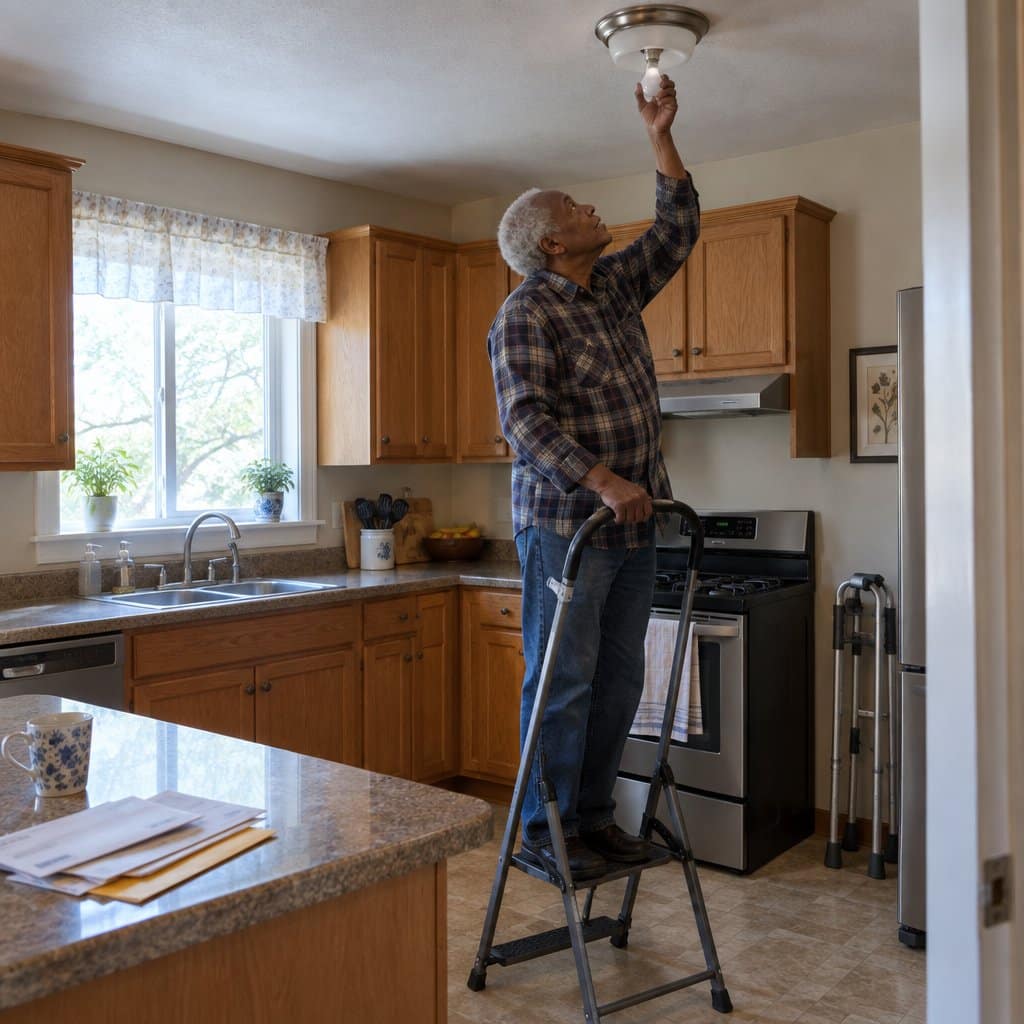
Changing a bulb sounds simple, but it calls for focused attention, especially if balance is a concern.
If the fixture is out of easy reach, use a stable step stool with handles. Even better, ask someone to do it for you.
Change bulbs during the day, so natural light helps you see what you are doing. For lights that are hard to reach, a bulb changer on an extension pole is worth considering.
LED bulbs help here too. They last a very long time, which means far less time on a stool or ladder and a lower risk of a fall.
They also use less electricity than traditional bulbs and reduce your carbon footprint.
One trade-off: a long-lasting bulb does not clean itself. Even with LEDs, the fixtures and cords still need a look now and then.
Making Lighting Changes Gradually, With Family Helping
You do not have to redo every light in the house at once. Changing everything in one go can leave a home feeling unfamiliar, and a gradual approach lets you adjust.
Start with the places where brighter light helps prevent falls most: the stairways, the bathroom, and the kitchen. Those come first.
Then try one room at a time. Live with the new lighting for a bit, and see whether it feels comfortable before you move on. Good lighting, including lights built into a walking cane, is a key part of preventing falls, but it works best when it fits how you live.
Keep the home feeling like yours. New lighting should complement your style, so look for fixtures that blend with your decor. Think about how different light levels change the mood of a room.
Dimmers are a good fit here. Lighting that dims or brightens with the time of day or what you are doing keeps you safe and keeps the home cozy.
Bring family and caregivers into the plan. Talk through what changes you are considering and ask for their input, since they may have suggestions you have not thought of. They care about your safety and comfort too.
Walk visitors through the new setup as well. It helps when they can get around the home safely, especially if the layout of the lights has changed. This matters for the rest of the home and staying in it safely, too.
One trade-off: going one room at a time means the rest of the house stays dim for a while longer. That is why the stairs, bathroom, and kitchen go first.
Night Lights for Safer Nighttime Trips
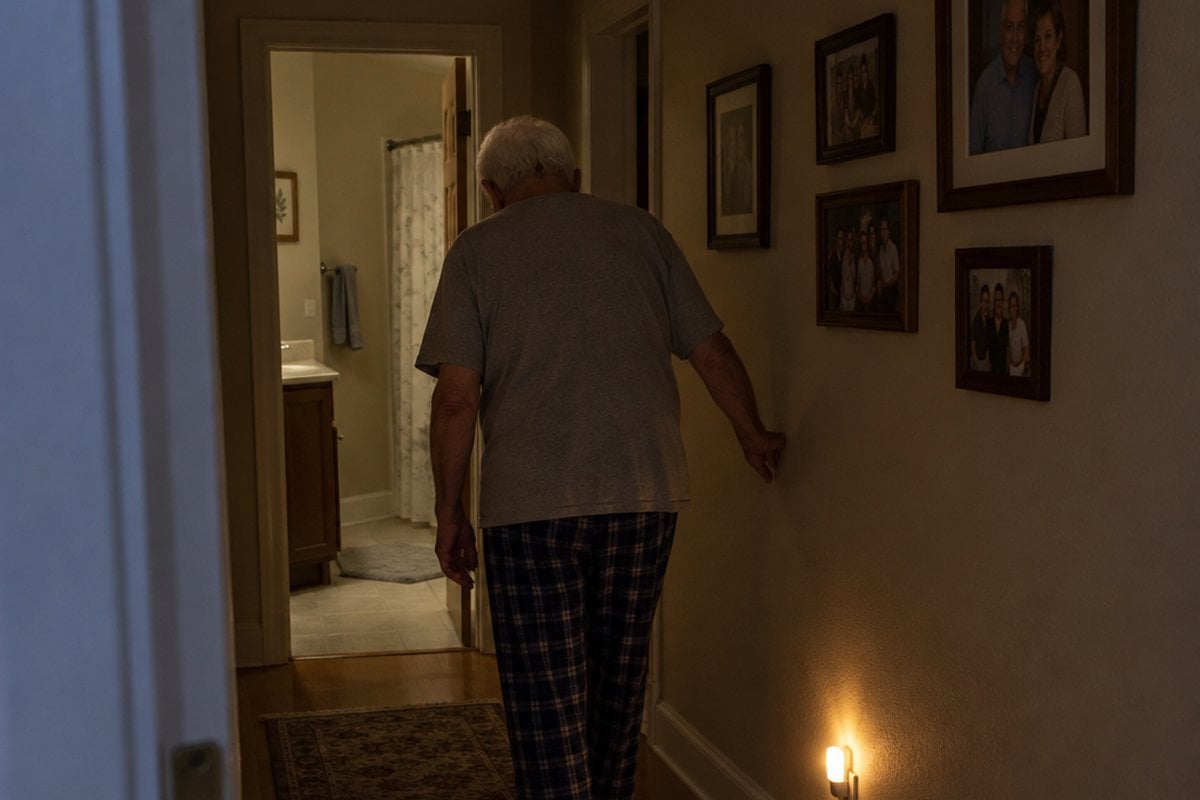
A dark hallway at midnight makes it easy to trip over something you cannot see. Conditions like cataracts or glaucoma can make night vision harder, and arthritis or balance problems add to the challenge. If you want a bigger picture of the risk of accidents after dark, that is a good place to start.
Three features matter most in a night light. Motion activation lights up only when you move, so there is no switch to fumble for. Automatic shut-off turns the light off after a set time or at dawn. Adjustable brightness lets you avoid glare while still seeing where you step.
LED night lights last longer and use less energy, so you will not be replacing them often. Lights that run only when needed also help with the heat that comes from being on all day.
Here is where I would put them:
- Bedroom: near the bed.
- Hallway: at intervals, along the path to the bathroom or kitchen.
- Kitchen: under the cabinets, for late-night snacks or taking medication.
- Bathroom: near the toilet and bathtub.
Also place lights near stairs, furniture edges, and throw rugs. A motion-activated light is especially handy for bathroom trips, since it comes on as soon as you step out of bed. If a light is not automatic, put it where you can reach the switch easily.
Make sure there is enough light by each night light to see grab bars and non-slip mats. Choose battery-operated or plug-in lights so there are no loose cables, and keep them away from curtains and bedding.
Worried about sleep? Red or amber lights are less likely to interfere with it than blue or white light, which can suppress melatonin. A low color temperature gives a warm glow, and keeping the brightness low is gentler on sleep. A soft, warm look also keeps the room homey.
One trade-off: lights that go off on their own are great for saving energy, but battery-powered ones need fresh batteries now and then. Check each light once in a while for cracked casings or exposed wiring, and use one light per outlet.
L LOHAS LED Night Light

This is a two-pack of plug-in night lights that go straight into a wall outlet. A built-in light sensor turns them on when the room gets dim and off again when it is bright, so there is no switch to remember.
The part I like for a hallway or bathroom is the sliding brightness control, which runs from 0 to 250 lumens. You can set it bright enough to see each step without the glare of an overhead light. The glow is soft white (3000K), which is a warm tone rather than a harsh blue-white.
Two lights cover a common path, such as the bedroom to the bathroom, or the top and bottom of a stairway.
The trade-off: the lights plug into an outlet, so they only help where you have one at a good spot. They are also not a replacement for a proper light on the stairs. If you need steady, bright light all the way down a long staircase, you will want something more than a night light.
CREWEEL Motion Sensor Night Light
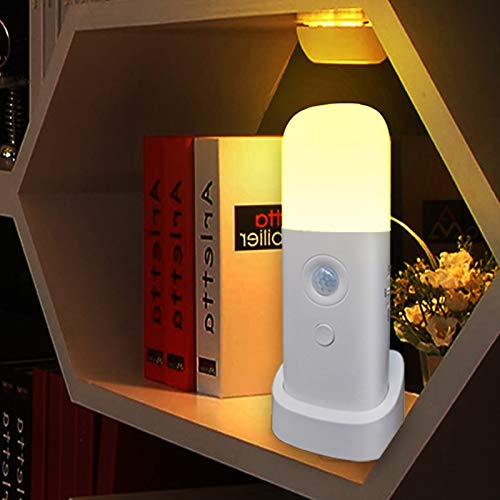
The CREWEEL Motion Sensor Night Light turns on by itself when it is dark and it senses movement. It picks up motion from up to 16 feet away, then shuts off after 25 seconds of no motion. That means no switch to hunt for on the way to the bathroom at night.
It runs on a built-in rechargeable battery, so you don’t need an outlet or have to buy batteries. A full charge takes about 4 hours. At the lowest brightness it can give up to 80 hours of light, and in motion-sensing mode it can last up to 1000 hours, depending on use. That is a real plus if changing batteries is a chore.
It has five brightness levels, so you can choose enough light to see the floor without lighting up the whole room. It is portable, which makes it easy to move from a bedroom to a hallway as you need.
The trade-off is that it is rechargeable, so you will need to plug it in now and then. If you would rather never think about charging, a plug-in light may suit you better. A light that shuts off after 25 seconds also won’t stay on if you are sitting still in a room.
Blue Dusk to Dawn Night Light

This is a two-pack of plug-in night lights that give off a soft blue glow. A built-in sensor turns them on as the room gets dark and dims them as it gets bright, so there is no switch to remember.
They plug straight into a wall outlet and take up just one socket. That makes them an easy fit for a bathroom, hallway, stairway or kitchen, the places you walk through half asleep. The two-pack lets you cover the path from the bedroom to the bathroom without moving one around. They are also described as fine for travel, which helps in a hotel room or a relative’s guest room where you do not know the layout.
The trade-off is that this is a glow, not a working light. It shows you the way and the outline of things, but it will not light up a step well enough to read a label or check a medicine bottle. Blue light also looks different from the warm yellow most people are used to, so try one in the bedroom first to see whether you like it. For reading a medicine bottle, one of these lighted magnifiers for medicine bottle labels will do the job a night light can’t.
Solatec Plug-in Night Light

The Solatec plug-in night light comes in a 6 pack, so you can cover a bathroom, hallway, bedroom, kitchen and stairway without hunting for outlets to spare. Each one plugs straight into the wall and has a sensor that turns it on when the room gets dark and off again when daylight returns.
Brightness and color are adjustable, with warm white or cool white to choose from. The light is a 1 watt LED, and the listing says it lasts a very long time, so you should not be changing bulbs. The housing is ABS plastic.
This suits someone who wants a lit path from the bedroom to the bathroom without reaching for a switch in the dark. Because it turns itself on, there is nothing to remember or fumble with.
The trade-off: a night light gives a soft glow, not real task lighting. It will help you see the floor and the doorway, but it will not be enough for reading or for working in the kitchen. It also needs a free wall outlet at each spot, so it will not help in a hallway with no outlets.
AUVON Motion Sensor Night Light

This is a plug-in night light that comes in a pack of four, so you can cover a bedroom, bathroom, hallway and kitchen in one go. It has a dusk to dawn sensor that turns it on when the room gets dark, and a motion sensor that lights it up when someone walks by.
The brightness is adjustable, from a soft glow up to 50 lumens. A short press steps through five levels, and a long press lets you fine-tune it. If the power stays connected, it remembers your last setting, so you only set it once. The light is warm white, which is gentler in a bedroom at night than a harsh bulb.
The motion sensor picks up movement over about 3 to 5 meters and a 120 degree angle. That means the path from bed to bathroom can light up on its own, with no switch to hunt for in the dark. It uses very little electricity too, so you can leave it running all night.
One trade-off: it is a night light, not a task light. It will show you the way and help you spot a rug edge or a shoe, but it will not be bright enough for reading or for tasks like pill sorting. You also need an open outlet at each spot, which can be tricky in a hallway with few of them.
L LOHAS LED Night Light

This is a plug-in night light that comes as a pack of two. It has a black cylindrical frame with a simple, vintage look, and it gives off a soft white light (3000K).
A built-in sensor turns it on at dusk and off at dawn, so there is no switch to remember. You can also adjust the brightness from 0 to 100 lumens with a button on the light. That helps if a bedroom needs just a glow while a hallway or stairway needs a bit more.
It suits bathrooms, hallways, kitchens, and stairways, anywhere you might walk in the dark. The light is described as soft and glare-free, which is what you want at 2 a.m. when you have just woken up.
One trade-off: it is a night light, not a reading lamp. It is meant to show you the path, not light up a page, and it needs a wall outlet near where you want the light. If an outlet is behind furniture, it won’t help much.
Choosing Fixtures, Bulbs, and Color Temperature
Overhead lights give broad light, which suits living rooms and kitchens. Pick fixtures that spread light wide and even, so you can see everything without strain.
Table and floor lamps add light where you need it, like beside your favorite chair for reading. Look for a sturdy base that will not tip and a shade that softens the light.
Wall sconces work well in hallways and the bathroom. Clear or frosted glass gives plenty of light without glare.
Keep controls simple. Touch lamps or fixtures with large switches are easy to use, and metal or hard plastic finishes hold up well.
For bulbs, incandescent ones have a warm glow but use more energy and burn out sooner. They are fine in a closet, where the light is rarely on for long.
CFLs (compact fluorescent bulbs) last longer and use less energy, but they need a moment to reach full brightness. They suit a spot where the light stays on, like a home office.
LEDs last the longest and use the least energy. They come on at full brightness right away and stay cool to the touch, so they suit every room.
Color temperature is measured in Kelvins. Lower numbers give warm, yellowish light and higher numbers give cooler, bluer light.
Around 2700K feels cozy in living rooms and bedrooms. Around 5000K is cooler and helps with focus and clarity in kitchens and studies.
For brightness, a rule of thumb is about 20 lumens per square foot in living rooms and 50 to 75 in task areas. Dimmer switches let you adjust to the time of day.
One trade-off: cooler bulbs help with yellowing lenses, but they can feel harsh in a room meant for relaxing. Keep them to the task areas and use warmer bulbs elsewhere, so each place in the home gets the light that suits it.
Check Each Room for Lighting Problems
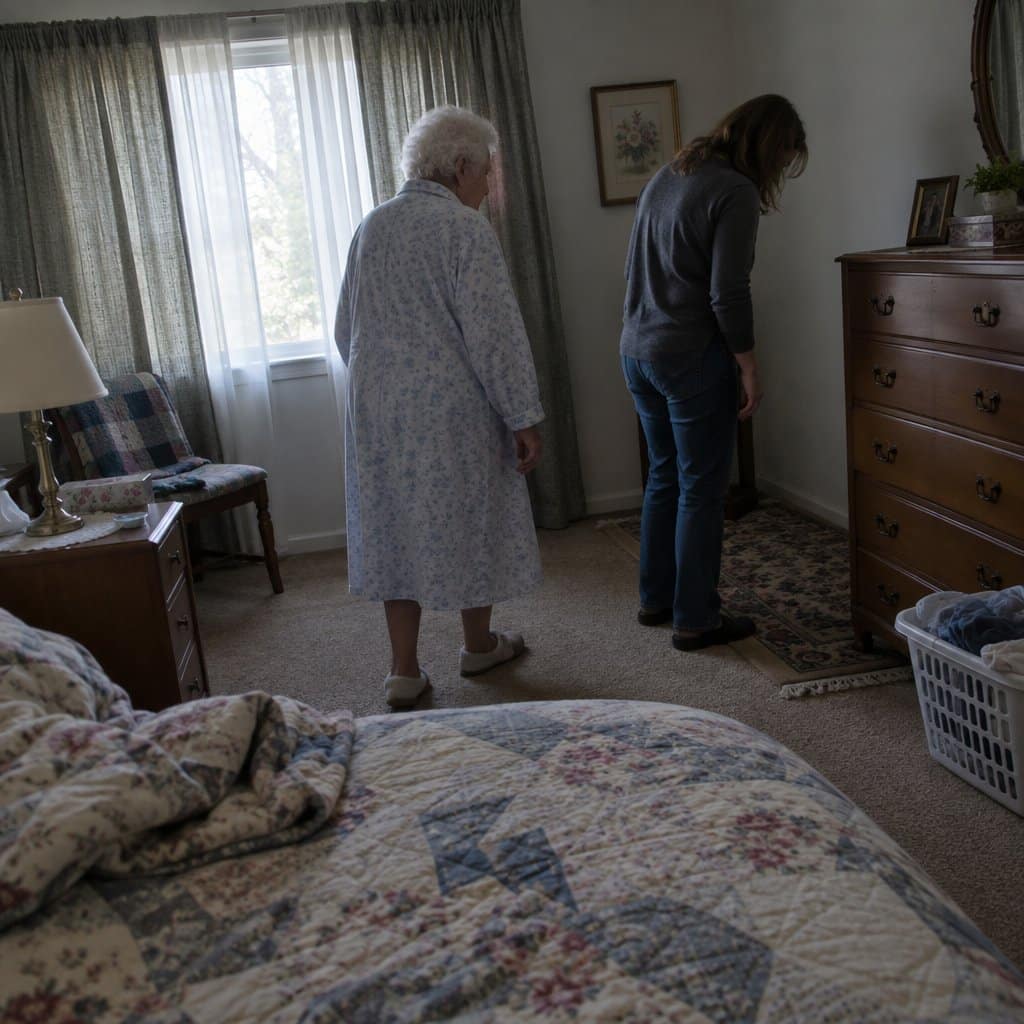
Before you buy anything, walk through the home at different times of the day. Morning, afternoon, and evening light can look very different, and a room that is fine at noon may be dim at dusk.
If you are helping a parent or a friend, ask them to walk through with you. Look for underlit spots and places where the glare is too harsh.
A few questions help. Is the light too dim to read the newspaper in the living room? Can you see into the corners of the bedroom, or could shadows hide something to trip over?
A light meter or a smartphone app can measure how bright a room is, if you want a number to go by.
Here is what to check in each room:
- Brightness: Rooms should be bright enough to move around in safely.
- Glare: Fixtures should not cause harsh glare, which can be uncomfortable.
- Shadows: Look for shadowy areas that make it hard to see and could lead to a trip, and adjust the lighting there.
Then match the light to the job being done. In the kitchen, under-cabinet lights brighten the counters for preparing meals.
In the bathroom, overhead lights plus lights around the mirror give shadow-free light for grooming. On stairs, motion-sensor night lights or stair tread lights make each step easier to see.
One trade-off: a thorough walk-through can turn up a lot of dim spots at once. Start with the stairs and the bathroom, then work on the rest.
Best Lighting for Elderly Homes
Generally, the more light, the better. Brighter light makes small print and detailed work easier to see with less strain. The best combination is overhead lights with accessible, adjustable switches and smaller area lighting.
Ample lighting around typically dangerous areas like staircases or narrow hallways is also necessary.
Try to make the lighting as even and soft as possible, since some people have a harder time adjusting to changes in contrast. Conditions such as cataracts or glaucoma can make some people need more light. Ask an eye doctor what suits you.
Make sure to consider the lifestyle of the person who lives there as well.
- For instance, they may need more lighting in the bathroom where they take their medication.
- Extra overhead light may be useful if they pay their bills at the dining room table.
- If they read in bed at night, a nightlight or reading light within a safe reachable distance will allow them to do so without getting up, turning off the overhead light, and potentially falling in the dark trying to get back to bed.
- Do they do a lot of cooking? They may also need a reading light in the kitchen for their recipe books.
Summary
The lighting in our homes is something many of us take for granted.
But it is an important consideration. Proper lighting contributes to safety, quality of life, and accessibility.
It can help you live the independent yet safe lifestyle that everyone wants. Above, you can read how lighting affects a home, along with some important factors and products to consider.
Lighting solutions like the ones outlined above can help you live a comfortable, safe, independent life.
With the right setup, you can do your daily tasks with less strain and worry.
Think about what would work best for your lifestyle, and try some of the solutions mentioned above.
If you found it helpful, share this article with friends and family on social media and leave any questions or comments below!