

You pick up a pair of scissors, squeeze once, and your hand lets you know about it. If that sounds familiar, you are in the right place.
These are the best scissors for arthritic hands, picked to cut with less pain.
Below you will find five easy-to-squeeze pairs, with the downsides named. We also cover the handle features that help, scissors for thumbs, sewing and the kitchen, and tools that replace scissors, like rotary cutters and paper trimmers.


Best Scissors for Arthritic Hands
Here are the best scissors for arthritis that get the job done with less pain:
American Educational Products Self-Opening Scissors
The American Educational Products P-124 looks like a regular pair of scissors, but it has a spring fitted inside. When you release pressure, the scissors open back up on their own.
That means you only have to do the squeezing. You don’t have to pull the handles apart again for every cut, which is a real help when your fingers are stiff or sore from arthritis.
The handles have a wide area for your fingers to rest on, so the pressure spreads out instead of pressing on one spot. The stainless steel blades are fixed securely to the handles.
A blade guard comes with them for when they are not in use. Keep it on in a drawer or craft bin so the spring and blades stay protected.
This pair is made for the right hand, and the handles are blue so it is easy to tell. The left-hand version has green handles, so check you are getting the right one.
The trade-off is the blade. It is a 45 mm round-ended blade, so it suits paper, crafts and light cutting. It is not the pair for tough jobs like opening heavy packaging or cutting through thick material, and the rounded tip is not meant for fine, pointed work.
Fiskars Premier Easy Action Scissors
Fiskars No.8 Premier Easy Action Bent Scissors have earned the Arthritis Foundation® Ease-of-Use Commendation for their easy operation. The Easy Action Scissors let people with arthritis or limited hand strength cut without strain.
It has a Softgrip® handle, ergonomically designed to provide added comfort, and is designed for both right-handers and left-handers.
The spring-loaded mechanism opens the blades after each cut and drastically reduces the effort required for cutting. The stainless-steel blades have a precision-ground edge and stay sharp longer, making them ideal for cutting fabric.
They are a bit bulky compared to others, and the lock may be a bit hard for some people to slide. Other than that, it is a great product.
Special Supplies Loop Scissors
The Special Supplies Loop Scissors are 8-inch scissors with soft, looped handles that you squeeze to cut. They suit people with low hand strength or coordination, including those with arthritis.
The loop works as one wide handle, so you don’t have to fit fingers into tight holes. A gentle squeeze closes the blades, and you don’t have to pinch or twist.
The blades also open on their own. They have a bit of spring, so they pop back open after each cut. That means one less motion for a sore hand, and it helps you keep the paper steady.
They cut paper, cardstock, and fabric, and they work for right-handed and left-handed users.
It comes as a 6-pack in yellow, blue, green, purple, pink, and orange. That’s handy if you want a pair in the kitchen, the craft room, and the sewing basket. It’s more than one person needs if you only want a single pair, though.
These are made with children and classrooms in mind, so the bright colors may not be to everyone’s taste. The blades are meant for general paper and fabric cutting, so they aren’t the pick for heavy-duty jobs.
Westcott Micro-Tip Fabric Scissors

These Westcott scissors feature titanium bonded blades that resist corrosion and are lightweight enough to cut through any material, making them a great choice for a craftsperson with arthritis.
They are designed to be safe and comfortable, including for people with severe arthritis.
Finer materials can be cut more easily, so you do not have to worry about precision. The micro-tip enhances the cut’s precision and allows for small cuts that might otherwise be difficult with longer scissors.
The scissor has one drawback in addition to its many advantages: the finger pads wear out and keep falling out after prolonged use.
Scotch Precision Ultra Edge Scissors
Scotch Precision Ultra Edge Non-Stick Scissors feature a non-stick blade and are easy to use with a smooth cutting action designed to meet the needs of arthritic hands.
These scissors feature large, comfortable handles and titanium-fused blades that stay sharp, and they can be used for cutting fabrics, crafts, and card stocks.
They are also designed for left-handed and right-handed use. These scissors are known for their toughness and sharpness, as they can cut through multiple layers of fabric without breaking. Also, they are convenient for cutting hair or threading fishing lines.
On the negative side, it seems that they tend to loosen very quickly, so it is recommended to tighten them regularly. Also, even non-stick blades should be cleaned and maintained properly.
What Types of Arthritis Scissors Are There?
Arthritis scissors are specially designed for people with arthritis and often feature ergonomic handle designs. These handles help reduce hand and thumb pressure, which is the most common place that arthritis pain occurs.
An ergonomic design also eliminates twisting or awkward wrist movements, which can cause pain for some people with arthritis or other conditions.
In today’s marketplace, arthritis scissors come in several varieties. Still, they all have one thing in common: an ergonomic handle that helps reduce fatigue and discomfort in the hands and wrists.

What is an “Ergonomically Designed” Scissor?
The term describes scissors with a handle shaped and contoured differently from the blades, allowing you to hold the scissors comfortably. With a properly designed ergonomic grip, serrated scissors can reduce pain and fatigue associated with commonly painful grip areas.
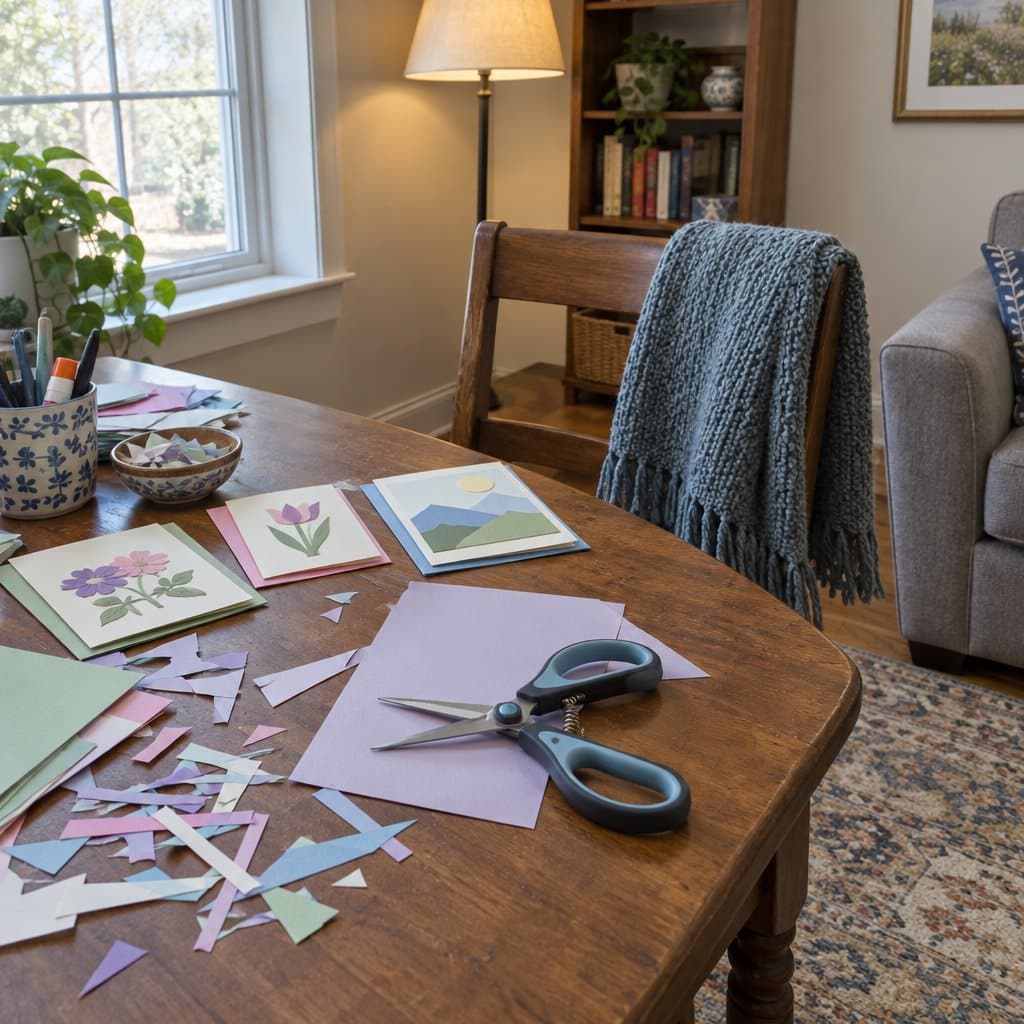
What Features Make Some Scissors Easier for People with Arthritis?
Ergonomic designs typically have several features that make them easier to use. The most common are:
Curved Handled Scissors
This scissor design puts the blades in the right position in the hand, allowing easy grip and control of the blades.
Some people feel that these arthritis scissors also reduce pain by eliminating twisting or awkward wrist movements, which can cause pain for some people with arthritis or other conditions. They still move naturally in your hand.
Large Handled Scissors
If your hands are swollen or you have limited dexterity, it may be easier to use large-handled scissors specially designed for people with arthritis.
The blades are positioned closer to the handle, making them easier to grab and maneuver. They also take less energy because they require less tension in the hand grip area.
Scissors With Comfort Grip Handles
If you have limited dexterity in your hands, consider a scissor with a comfortable grip handle. These types of handles are designed to help reduce the strain on the thumb and wrist muscles.
They are designed to fit comfortably in the palm of your hand when you hold them, giving you more control, precision, and ease of use.
Spring-Loaded Scissors
These scissors have a spring near the scissor joint that does half the work for you. After you give a squeeze to engage the blades, the spring pushes the handle back open once you release some of the pressure.
That’s why these are also commonly called self-opening scissors. Other designs use loops or straps to accomplish the same effect.

Choosing Scissors for Special Situations
If you use scissors for very specific purposes besides general cutting, you may need other features or types of scissors. The following are examples of common situations where people with arthritis need to use the right pair of scissors to reduce their arthritic hand pain.
Scissors for Arthritic Thumbs
Most scissors have a separate “thumb hole” into which you place your thumb. You then have to use the thumb to squeeze the blades together to make the cutting motion.
This stress and pressure on the base of the thumb can cause significant pain for people with arthritis in their thumb and hand joints.
So, the best scissors for arthritic thumbs are scissors that don’t engage the thumbs to work. The Friskars Easy Action Scissors or these Self-Opening Scissors are a great choice for this because the fingers and palm perform the cutting motion, and the thumb isn’t engaged at all.
Sewing Scissors for Arthritis
The most common hand tool used by a seamstress or dressmaker is a pair of scissors. Often, a person who does a lot of sewing will have special scissors for snipping thread, cutting fabric, and detail work.
People who sew and have arthritis have many of the same complaints of pain in the same joints as others. So, they, too, need scissors that are easier to operate and squeeze without putting unnecessary pressure on the joints. The same goes for trimming your nails, and there are nail clippers for arthritic hands that take much less squeezing.
For cutting fabric, these self-opening scissors from Arthritis Supplies are one of the best scissors for arthritic hands. You can easily use these for trimming thread and general cutting as well.
If you’d also like to have a smaller pair for more detailed cutting, give the Easi-Grip Loop Scissors a try.
Kitchen Scissors for Arthritic Hands
Using scissors over knives in the kitchen can make quick work of mincing herbs, chopping small vegetables, and cubing chicken. A major concern is having scissors that you can keep clean and are easier to use.
The Peta Self-Opening Kitchen Shears are a good pick for kitchen use because they are spring-loaded and don’t engage the thumbs or individual joints. Plus, they are easy to clean with a quick rinse and wipe down without any nooks or crannies for food to become lodged.

Alternatives for Those Who Cannot Use Scissors At All
Some people find it difficult to use scissors at all because of arthritis, and there are other cutting tools that can help make daily tasks and hobbies more manageable.
Let’s explore some effective scissor replacements that can be used to cut various materials and reduce frustration.
Rotary Cutters
Fiskars Rotary Cutter

A rotary cutter works like a pizza cutter for fabric. A round blade rolls along as you push the handle, so you are not squeezing scissors open and shut over and over. For many people with sore or stiff hands, that is a real difference.
The Fiskars 45mm Stick Rotary Cutter has a stick-style handle that is symmetrical, so it works the same in a right hand or a left hand. The blade is precision-ground, high-grade steel, and it can cut through several layers of fabric, felt, vinyl and quilting material at once.
A sliding button pushes the blade out, locks it in place while you cut, and pulls it back in for storage. That keeps the exposed edge covered when you set it down.
The trade-off is that a rotary cutter needs a self-healing cutting mat underneath, or the blade will mark your table. Fiskars makes one that pairs with it. It also needs a bit of downward pressure and a steady hand, and it suits flat materials like fabric and craft sheets. It is not a good fit for trimming things like thread, string or food packaging, where scissors still do the job.
Creative Grids Rotary Cutter

A rotary cutter can be a good alternative to scissors if squeezing a pair of handles hurts. It has a round blade on a handle, and you roll it along the material in a straight or curved line instead of opening and closing your hand.
The Creative Grids 45mm Rotary Cutter with Case is made with fabric in mind. The red metal body has some weight to it, so less pressure is needed when you cut. The cushioned comfort grip is designed to fit your hand and reduce slips and muscle fatigue.
The blade guard is controlled by a button. With the button in the center, the guard fully covers the blade when you are not using it. Turn it a quarter circle to the left or right to expose the blade, so it works for both right-handed and left-handed users.
It comes in a zippered protective case with room for extra blades and other sewing notions, which keeps everything in one place.
One thing to know: the blade is designed to extend past the guard so it works with Creative Grids slotted rulers. That suits quilters and sewers who cut along a ruler. It is not the right pick if you mostly want to snip paper or open packages, since a rotary cutter needs a flat surface and a cutting mat underneath.
Ergonomic Rotary Cutter

A rotary cutter is a good alternative to scissors if squeezing a pair of blades hurts your hands. It has a round blade on a handle. You press it down and roll it along a straight or curved line, so there is no repeated opening and closing.
The 45mm Rotary Cutter with 5 extra blades has a soft-grip handle that is made to reduce joint fatigue and keep your hand from slipping. The blade can be installed on either side, so it works for right-handed and left-handed users.
The blade is SKS7 stainless steel. It is meant to cut several layers of fabric, mesh, paper, felt and vinyl cleanly, without loose threads. The five spare blades mean you can swap in a fresh one when it dulls. It also takes wavy blades.
A safety button locks the blade, and the trigger handle will not work while it is set. That is a good habit for anyone, and it helps if children or grandchildren are around the craft table.
The trade-off is that a rotary cutter does not replace scissors for everything. You need a flat surface, and it is normally used with a cutting mat underneath. It also still takes some downward pressure, so it suits sewing, quilting and crafts better than snipping a coupon out of the newspaper.
Paper Trimmers
Swingline Paper Cutter
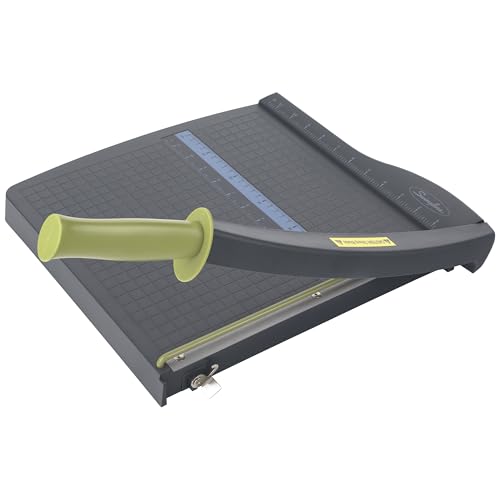
For straight cuts on paper, a trimmer can stand in for scissors. The Swingline ClassicCut Lite (9312) is a guillotine-style trimmer with a 12″ cut length. You lay the paper down, bring the arm across, and the blade does the cutting.
It has an alignment grid and a dual scale ruler marked in inches and centimeters, so you can line up a photo or a coupon without measuring separately. It cuts up to 10 sheets of 20-pound paper at once, which means one pass can replace a lot of snipping.
A guard rail keeps fingers away from the blade while you cut. A blade latch hook locks the arm down when you are finished.
The base is sturdy plastic and light enough to carry from room to room. Because it is light, it helps to rest one hand flat on the base while the other brings the arm down.
Who it is not for: if you need to cut fabric, thick cardboard, or curves, this will not do it. It is built for paper and photos, and for straight lines only. Pressing the arm down still takes some grip and wrist movement, so try it with your own hands in mind.
Fiskars SureCut Paper Cutter

For straight cuts, a paper trimmer can stand in for scissors. The Fiskars SureCut Deluxe Paper Cutter is one example. The blade rides along a rail on a flat base, so you slide it down the page instead of squeezing a pair of handles.
It has a 12″ cut length. A swing-out arm extends that to 15.25″, which helps with longer sheets. The base has a scale and a grid, so you can line up paper without a separate ruler.
A wire cut-line shows where the blade will land before you cut. A TripleTrack system locks the blade to the rail to keep the cut straight and steady.
It suits photos, cardstock, vinyl, and other lightweight to medium weight materials. It is described as lightweight and portable, so it is easy to move and store.
The trade-off is that it only cuts straight lines. If you need curves, corners, or to snip thread or fabric, you will still want a good pair of scissors. It is also meant for paper-type materials, not thick cardboard.
Firbon Paper Cutter

For straight cuts on paper, a paper trimmer can stand in for scissors. The Firbon A4 Paper Cutter is a 12 inch trimmer that works like a guillotine: you press the blade down and cut along the printed line, rather than squeezing a pair of scissors over and over.
It cuts up to 10 sheets of standard paper at once, and it also handles photos, cards, and thin laminated material (up to 1.5 mm). That makes it useful for coupons, labels, greeting cards, and craft projects.
The ruler has both centimeter and inch markings, plus an angle plate for 45 to 90 degree cuts. You can line up your work and trim it to the length you want without drawing a line first.
The blade is spring-loaded and only cuts when you press it down. The blade can also be replaced when it gets dull.
The trade-off: a trimmer still asks you to press down, so it won’t suit anyone who can’t push a lever or press a blade with their hand or palm. It also cuts only straight lines, so it can’t trim around a shape or open a package. Cutting fewer sheets at a time helps the blade last longer.
Ultrasonic Cutters
Phrozen Sonic Saber Ultrasonic Cutter

Scissors are not the only way to cut. An ultrasonic cutter uses very fast vibration to do the cutting, so you guide the tool instead of squeezing a pair of handles over and over.
The Phrozen Sonic Saber is one of these. It vibrates 35,000 times per second, and it is made for trimming and scraping. It was built for cleaning up 3D resin prints, so that is where it shines. It is not a general kitchen or sewing tool.
It plugs into the wall, which means the power stays steady through a long task. The trade-off is the cord. You have to work near an outlet, and it won’t suit you if you want to carry a cutter around the house.
The handpiece has a pencil-grip shape, which some people with sore hands find easier to hold than something that needs a hard squeeze. It comes as a starter kit with the handpiece and a storage case.
Who is it for? Someone with arthritis who enjoys model making or 3D printing and wants to cut fine details without gripping hard. If you just need to open packages or snip thread, a good pair of easy-grip scissors is the simpler choice.
Bonvoisin Ultrasonic Cutter Knife

If scissors are a struggle even with a good grip, an ultrasonic cutter is a different way to go. The Bonvoisin Ultrasonic Cutter Knife vibrates up to 40,000 times per second, so the blade does the work and you don’t have to squeeze or press hard.
That matters for sore wrists and fingers. It is built for materials like plastic, acrylic, carbon fiber sheets, thin wood, thin circuit boards and 3D printed models, so it suits hobby and craft work more than everyday kitchen or mail-opening jobs.
It has two modes. The green light is for thin materials and gives you better control. The yellow light is for slightly thicker materials and cuts faster.
It weighs 120 grams and needs no stand. It comes with 40 replacement blades, a charger and a carrying case. You can plug it in, or run it from a power bank rated above 30W.
The trade-off is that this is a power tool with a vibrating blade, not a pair of scissors. It takes some care and has a learning curve, and it is overkill if all you need is to open packages or trim string. If your hands have trouble with fine control, try the green mode first.
Huanyu Electric Hot Knife Cutter
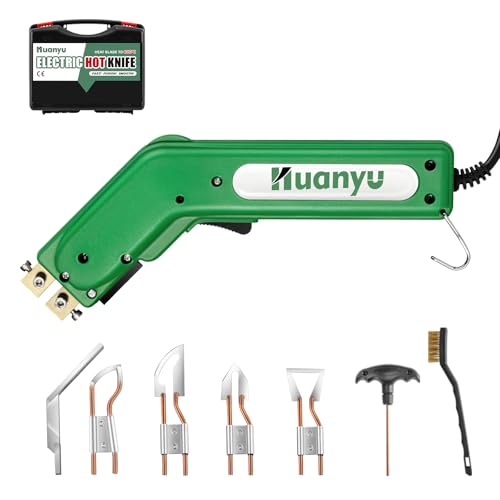
For cutting jobs that scissors handle poorly, an electric hot knife is a different approach. The Huanyu Electric Hot Knife kit uses heat instead of squeezing, so the blade does the work while you guide it.
It is a 100W tool that gets extremely hot very quickly. You can adjust the temperature steplessly, and it can work continuously. The heat also fuses the edge of fabric as it cuts, which helps keep the edges from fraying. Melting fabric and plastic can give off fumes, so only use it in a well-ventilated room.
The kit comes with four nickel-chromium alloy blades. One is for cloth and leather, one for thicker flat cloth, one for plastic pipes, and a shovel blade for scraping off glue and dirt. The copper knife holder carries heat to the blade, and a metal tail hook lets you hang it up.
Now the downsides. This is an industrial-style tool, and the blade gets extremely hot. For most readers with arthritis, I would skip it. If you are still curious, check with your doctor or therapist first. Use it only on a heat-safe surface with good ventilation, and never leave it unattended. It needs a steady hand and real care about where you set it down. It is not a good fit if you have tremors or reduced feeling in your fingers, or if you just want something for opening mail and snipping thread.
Adaptive Crafting Tools
DIYSELF Craft Hobby Knife
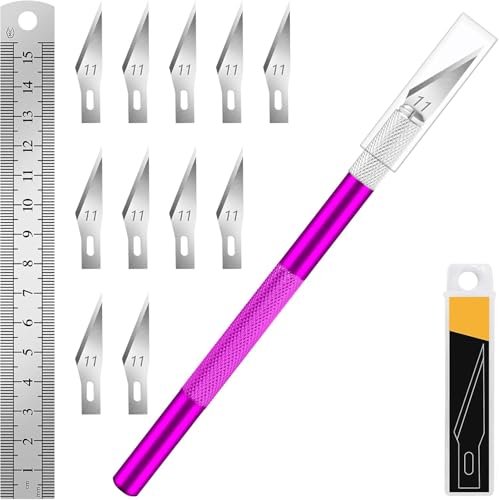
If you love crafting but standard scissors are hard on your hands, a hobby knife is one more tool worth knowing about. The DIYSELF Craft Hobby Knife Set comes with one craft knife, 10 extra #11 blades and a 6-inch steel ruler.
It is made for paper, cardstock, vinyl, foam, thin plastic and rubber stamps. That covers scrapbooking, stencils and most small projects around the kitchen table.
The #11 blades are sharp and made for clean, detailed cuts. A sharp blade does the work for you, so you are guiding the knife along a line instead of squeezing a pair of handles over and over.
The ruler gives you a straight edge to cut against. With 10 spare blades, you can swap in a fresh one when the edge dulls. A dull blade is the one that tugs and takes more effort.
Now the downsides. A hobby knife is a pen-style tool, so you still need to hold it steady and control it with your fingers. If gripping a pen is painful, this may not be the right fit for you.
The blades are also very sharp. Cut on a mat or a board, keep your free hand clear of the line, and change blades carefully. It suits light craft materials, not thick or heavy ones.
Sizzix Sidekick Die Cutting Machine

If scissors hurt your hands but you still love paper crafts, a manual die-cutting machine can do the cutting for you. The Sizzix Sidekick Starter Kit is one of these. You place a cutting die and your paper in the machine, turn the handle, and the shape comes out cut.
That means no gripping, no squeezing and no steering a blade along a line. The turning motion is the only effort involved, and it is a different kind of motion than opening and closing scissors.
The Sidekick has a vacuum seal that holds it to any smooth work surface, so it stays put while you turn the handle. It is portable, measures about 7 3/4″ x 4 3/4″ x 3 1/2″ and weighs 0.7 kg, so you can move it from the craft room to the kitchen table. It comes as a starter kit, and the product description lists what is in the box.
It works with Sizzix Thinlits dies, Framelits dies and embossing folders up to 6.35 cm (2.5″) wide. It cuts a single sheet of lightweight cardstock or paper, which suits scrapbooking, card making and home décor projects.
Here is the trade-off. It cuts shapes from dies, so it will not cut a freehand line or trim a large sheet down to size. The opening is only 2.5″ wide, so bigger designs will not fit. You will also need to buy dies for the shapes you want, and it is built for light paper, not thick materials. If you need an everyday pair of scissors for the kitchen or the sewing basket, this is not the tool for that.
Mini Die Cutting Machine

If you enjoy paper crafts but scissors hurt your hands, a die cutting machine can do the cutting for you. You place the paper and a metal shape (called a die) in the machine, turn the handle, and the shape comes out cut.
One example is the 3” Opening Mini Die Cutting and Embossing Machine. It has a 3.5″ feed slot that takes 3″ paper and other materials, and it cuts and embosses (presses a raised pattern into the paper).
The kit comes with the machine, 3 mini embossing folders, a set of dies with clear stamps, and assorted cardstock. You can start without buying anything extra. It is also foldable and described as ultra-lightweight, so it is easy to tuck into a tote bag for a class or a trip.
Now the downsides. Turning a crank still takes some effort, so it may not suit you if your grip is very weak or painful. The cut size is small, since the slot is only 3″ wide, so it won’t handle large sheets.
Detailed dies sometimes don’t cut all the way through. If that happens, add a piece of cardstock to the stack to make it thicker, and try again.
Ergonomic Crochet Hooks
If you crochet or knit as well as cut, you already know a thin metal hook can be hard on sore hands. It asks you to pinch tightly and hold that grip for a long time. A hook with a wider, soft handle spreads the pressure out, so your fingers do less of the squeezing.
When you shop for one, look at the handle first. It should be thick enough to hold without a tight grip, and soft enough not to dig in. Check that it comes in the hook sizes you actually use, because a handle you love is no good if it doesn’t come in your size. Some sets let you swap different hook heads onto one handle, which saves buying a whole drawer of hooks. Others add a built-in light or a stitch counter. Those are handy, but they use batteries, and one more thing can break. Plain and comfortable is a fine choice too.
Upgraded Counting Crochet Hook Set


If crafting is what you miss most, this crochet hook set is worth a look. It is not a scissors replacement, but it helps with the same problem: hands that get sore during long sessions.
It has one wide, soft-grip handle that holds 24 interchangeable hook heads, from 2mm to 14mm. That covers fine thread up to chunky yarn. The wider handle means less finger pinching, which matters when your joints are sore.
It also has a built-in LED light and a digital stitch and row counter. The light helps if low vision makes stitches hard to see. The counter means no tally marks and no losing your place mid-row.
The trade-off is that the counter does not count for you. You press a button for each stitch or row, so you still have to remember to do it. The button placement may also not suit every grip, so it is worth seeing whether it feels comfortable in your hand.
Wrapping Up
I hope this guide helped you sort through the many choices of scissors for people with arthritis. Do not settle for just any set of scissors. Choose ones designed to help you handle even the smaller tasks of your daily life with ease.
As long as you select the right scissors for your situation, you can rely on them to provide you with less painful results.
You may not be able to completely eliminate arthritis pain, but these arthritis-friendly scissors will help you go about your daily routine and hobbies without any interruptions!








I have neuropathy in my hands which affects my pincher grasp (for picking up items I’ve dropped, opening food bags, bandage packets, peeling open foil seals on cottage cheese or yogurt containers, etc) and the ability to use eating utensils, scissors (especially with small finger/thumb holes), knives or cutting tools for meats and other food items on my plate during meals.