
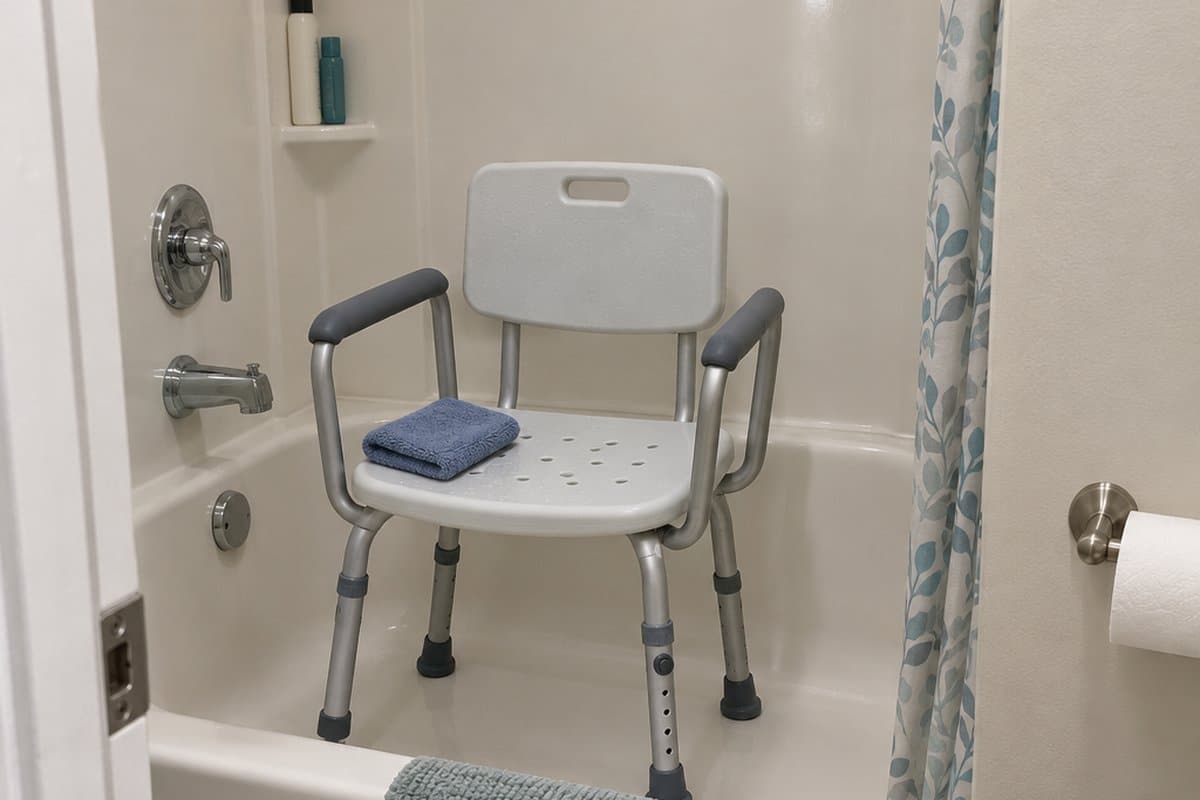
Standing in a slippery shower and wondering if your legs will hold is a worry plenty of us know. The best shower chairs for seniors give you a steady place to sit while you wash.
Below you’ll find my top picks, with the downsides of each. I also cover the features to look for, weight limits, wheels and commode seats, who should skip a chair, and how to set one up and use it safely.


Look for these key features in a quality shower chair:
- Adjustable height legs to get the perfect seat height for easy transfers in and out of the tub
- A supportive backrest and padded armrests for comfort and security
- A rotating seat to swing towards you for simple sideways transfers if stepping over the tub edge is difficult
- Rubber feet for grip and plastic/aluminum construction that won’t rust
- A built-in place to hang your showerhead for convenient reach
Getting the right shower chair allows you to bathe comfortably and safely. No more struggling to stand or risking slips and falls.
Read on for my top shower chair picks and recommendations for your unique needs and mobility challenges. I’ll also explain exactly how to use a shower chair properly.
Best Shower Chairs for Seniors and the Elderly
Here are my recommended bath chairs for older adults. I picked these based on their features, weight limits, and the downsides I list for each.
Vive Health Swivel Shower Chair
Swivel Shower Chair

- Height adjustable from 16 to 19 inches
- Seat size is 16 by 13 inches
- Width between the handles is 19 inches
- 300 lb weight capacity

Pros:
- Rotating seat for easier transfers
- Adjustable height legs
- Tall, padded armrests
- High, comfortable back
- Wide, stable feet
Cons:
- More expensive than a traditional shower chair
I like the Vive Health Swivel Shower Chair for people who need help with transfers, but it costs more than a basic chair.
The unique rotating seat is a standout feature. Simply pull the lever to swing the chair towards you, allowing safe sideways transfers without stepping over the tub wall. Users can transfer from wheelchairs easily. Caregivers will find this chair invaluable for assisting with transfers.
The adjustable height legs let you set the seat height for transfers. I recommend adjusting it to be level with or slightly higher than your tub edge. The backrest and padded armrests provide support and security. The armrests give you something to push against when you stand up.
Rubber feet grip tightly, while the plastic and aluminum construction resists rust and mildew. The seat swings toward you, so transfers are simple.
The higher price pays for the swiveling seat and the extra support features. Whether that is worth it depends on how hard transfers are for you right now.
Once you have a good chair, a seated shower head and handheld combo can make sitting through a shower feel much more like the real thing.
Drive Medical Shower Chair
This Drive Medical shower chair gives you a contoured backrest and padded armrests, which is a combination that matters when you are sitting in a wet tub and want something steady to hold on to.
The padded arms give you something to push against when you sit down and stand up. The backrest and arms can both be removed, so you can set it up the way that suits you. It supports up to 350 pounds.
The legs adjust in 1-inch steps, and you do not need any tools to change them. That makes it easier to find the height where your feet sit flat and your knees are comfortable. Assembly is tool-free as well.
Rubber feet help it grip the tub floor, and drainage holes in the seat keep water from pooling. The frame is aluminum and weighs 10 pounds, so it is easy to lift out of the tub and put away.
One thing to keep in mind: a chair this light is something you will want to set up carefully. Make sure all four feet are sitting flat on the tub floor before you put your weight on it. If you need a lot of side support or want a chair that stays put permanently, a bath bench with a built-in grab bar may suit you better. Once the chair is set up and safe, you may also want to read about which bath soap for seniors is gentle on older skin and which to avoid.
Vive Health Shower Chair

The Vive Health Shower Chair is built for people who have balance issues, limited mobility, or difficulty standing and want to keep showering on their own.
The seat is 15.75″ by 13″, lightly textured so you are less likely to slide, and it has multiple drainage holes so water does not pool under you. The leg caps are nonslip, which matters on a wet tub floor.
The seat height adjusts, so you can set it to fit you. The frame is corrosion-resistant and supports up to 300 pounds. It also comes with a lifetime guarantee.
The base is 17.75″ wide, which helps it fit in most showers. That also means the seat is not especially roomy. If you want a wider seat or need more than 300 pounds of capacity, look at a different chair.
Vaunn Medical Swivel Shower Stool
Do you need a smaller option that is easy to move around? This swivel shower stool from Vaunn Medical is worth a look.
The seat turns a full 360 degrees. That helps when you are getting in and out of a bathtub, because you can sit down facing one way and swing around to face the water without twisting your body or lifting your feet over and over.
The base is round, which suits smaller tubs and shower stalls where a larger chair would not fit well.
The legs adjust in height from 13.75 inches to 20.5 inches, so you can set the seat to fit you. Once it is set, make sure the stool sits level before you sit down.
The legs end in anti-slip rubber feet for extra grip on a wet floor. The frame is anodized aluminum, which resists rust, and it supports up to 250 pounds. It is also light, so it is easy to carry from place to place.
Now the downsides. This is a stool, so there is no back support. If you need something to lean against, a chair with a back is a better fit.
The 250 pound limit is also lower than many shower chairs, so check that number against your own needs. And a seat that swivels is not for everyone. If you feel unsteady getting on and off, a fixed seat may feel more secure.
You will still want a good hand-held shower head to go with any shower seat. That way you can rinse off without standing up or reaching.
Vive Health Shower Stool

Do you need a simpler option for a tub or a small stall? The Vive Health Shower Stool is worth a look.
It is a stool with no back, built for sitting through a shower instead of standing the whole time. The seat is round, 12.5 inches across, and textured so it stays grippy when wet.
The frame is corrosion-resistant aluminum and holds up to 250 pounds. The legs are angled, and each one has a nonslip cap.
The seat adjusts from 13.7 inches to 20.7 inches high. Assembly and height changes need no tools, which is handy if you don’t keep a toolbox nearby. Vive also backs it with a lifetime guarantee.
Whatever stool you choose, pair it with a good hand-held shower head. That way you can rinse while seated and not reach or stand to do it.
The trade-offs are simple. There is no back support, so it is not the right pick if you need to lean back or feel unsteady sitting upright.
The 250-pound limit is also lower than some sturdier chairs. If you need more weight capacity or more support, look at the chairs with backs and arms elsewhere in this article.
Drive Medical Swivel Shower Stool
- Height adjustable from 16 to 22 inches
- Seat size is 14 inches by 14 inches
- 300 lb weight capacity
Bath stools have their place, but they aren’t for everyone. They are highly portable and small enough to fit almost everywhere, but they don’t have the support some older people need.
If you have a small tub or shower, this shower stool is a good one.
First, the shower stool itself is only 15″ wide. But, it still fits a wide range of people because the seat height adjusts from 16″ to 22″ high. The weight capacity of 300 pounds is enough for most people too.
The Drive Medical shower bench also has the rotating seat option that I like on the Vive chair at the top of my list. It is padded too, although I wouldn’t describe it as plush. But it is better than a hard plastic seat.
But, I do have a few words of caution with this one.
It does not offer any support for the back, trunk, or arms. And the seating area is small because the overall dimensions are small.
So, you should consider this one only if you have good balance and can easily maintain an upright seated position. If not, you are at risk of falling off of the seat.
Pros:
- Small, lightweight, and portable
- Rotating padded seat
- High seat adjustment range
Cons:
- Lacks back and arm support
Drive Medical Bariatric Bathroom Bench
- Height adjustable from 14 to 19 inches
- Seat size is 20 inches by 12 inches
- 500 lb maximum weight capacity
Never risk using a shower chair whose weight capacity isn’t more than your weight. Thankfully, this bariatric shower chair holds up to 500 pounds safely.
This shower chair from Drive Medical is the best choice for heavier or larger people.
It has a very high weight capacity of 500 pounds! But, the chair itself only weighs 7.5 lb because of its lightweight aluminum and plastic construction.
The cross brace underneath it is riveted and reinforced. The seat is 20 inches wide, which is 2 to 5 inches wider than the others. So, even larger people will be comfortable sitting on it.
DMI Rolling Shower Chair
DMI Rolling Shower Chair
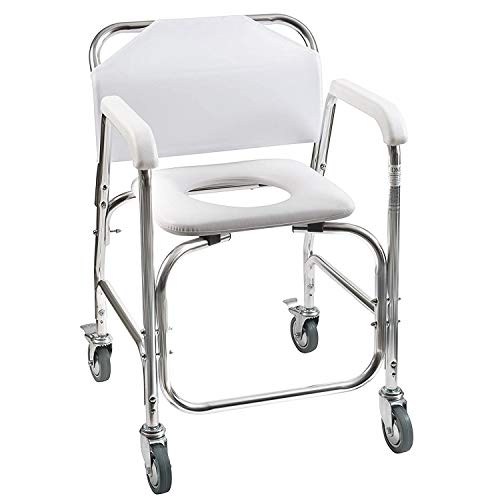
- Seat height is 21 inches
- Seat size is 16 inches by 16 inches
- 250 pound weight capacity
If you want a basic rolling shower chair, I like this one from DMI because it has a long track record of safety.
Shower chairs with wheels, like this one, have several advantages.
They are mainly used by people who use a wheelchair. That way, you can be moved from outside to inside the shower by pushing the chair.
Of course, you would need a roll-in type of shower to use this type of shower chair. So if you have a shower with a lipped edge or a bathtub, this won’t work for you.
This model also doubles as a commode chair too. It can be wheeled over the toilet to make the seat taller or used outside the shower as well. The commode seat is padded for comfort.
This shower chair also offers a lot of support by having back and armrests. If you have had a stroke or a severe neurological disorder, you would benefit greatly from this style of shower chair.

Vive Health Shower Commode Transport Chair

The Vive Shower Commode Transport Chair does three jobs in one: it works as a shower chair, a commode, and a transport chair. If getting to the bathroom, using the toilet, and bathing all take real effort, one chair can cover all three.
It has lockable wheels, so it can roll from the bedroom to the bathroom and then stay put once you are there. That helps a caregiver too, since the person doesn’t have to stand and shift between several pieces of equipment.
Vive backs it with a 1-year guarantee on the frame, 6 months on the footrests, armrests, and wheels, and 90 days on the cushions.
The trade-off is that a chair built to do everything is a bigger piece of equipment than a plain shower stool. If you only need something to sit on in the shower and your bathroom is tight, a simpler seat may suit you better.
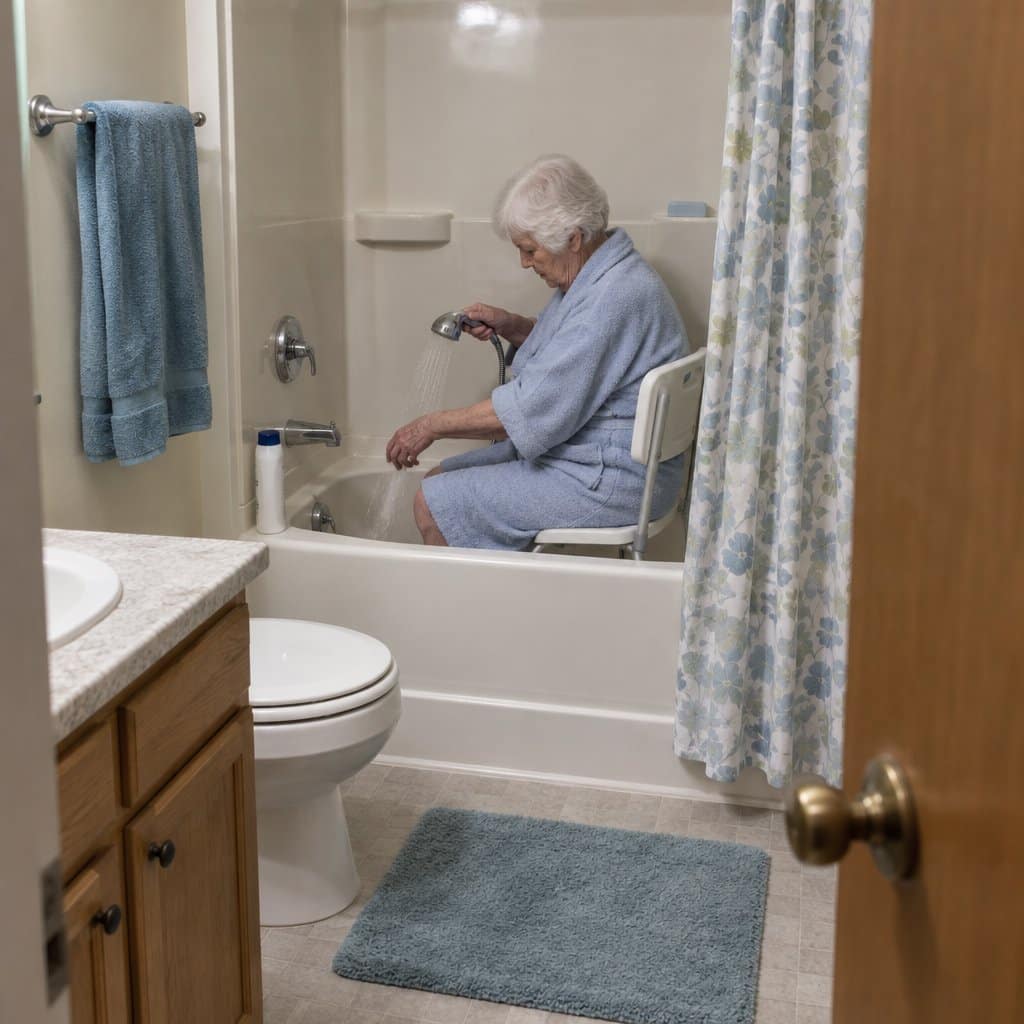
Why a Shower Chair Is Worth Having
Falls are the biggest reason to get a shower chair. The bathroom is a common place for them because wet surfaces are slippery.
A chair gives you a steady, sturdy place to sit while you wash. That cuts the chance of slipping on a wet floor or losing your balance.
Sitting also takes pressure off the feet, ankles, and legs. If standing for a long time is hard, a shower becomes more comfortable. Washing your hair and body is easier when you are not working to stay upright.
Getting in and out of the tub is simpler too. You sit down when you are ready and stand up when you are ready to leave. That helps if you have trouble lifting your legs or have arthritis. If stepping over the tub wall is the hard part, see how a shower chair differs from a tub transfer bench.
The benefits go past safety. Feeling secure around water can mean less worry and anxiety, and it may help with sleep too. That is a relief for the person showering and for the family who worries about them.
Showers that feel like a hardship tend to get skipped or done less often. A chair that makes showering easier helps someone look forward to it, and that supports good hygiene.
Taking a shower without help also builds a sense of self-sufficiency and worth. Independence matters for good mental health. When someone feels safer, less stressed, clean, and independent, their overall well-being often improves.
Lightweight chairs are portable, so you can bring one when you travel or visit family. Chairs also come in many styles and colors, so you can find one that suits your bathroom.
There are a few drawbacks to know about. Medicare does not cover shower chairs or most bathroom equipment, so you may have to pay for one yourself. Most chairs will not fit every tub or shower, especially small ones. Quality varies a lot from one chair to the next, so some are less stable than others.
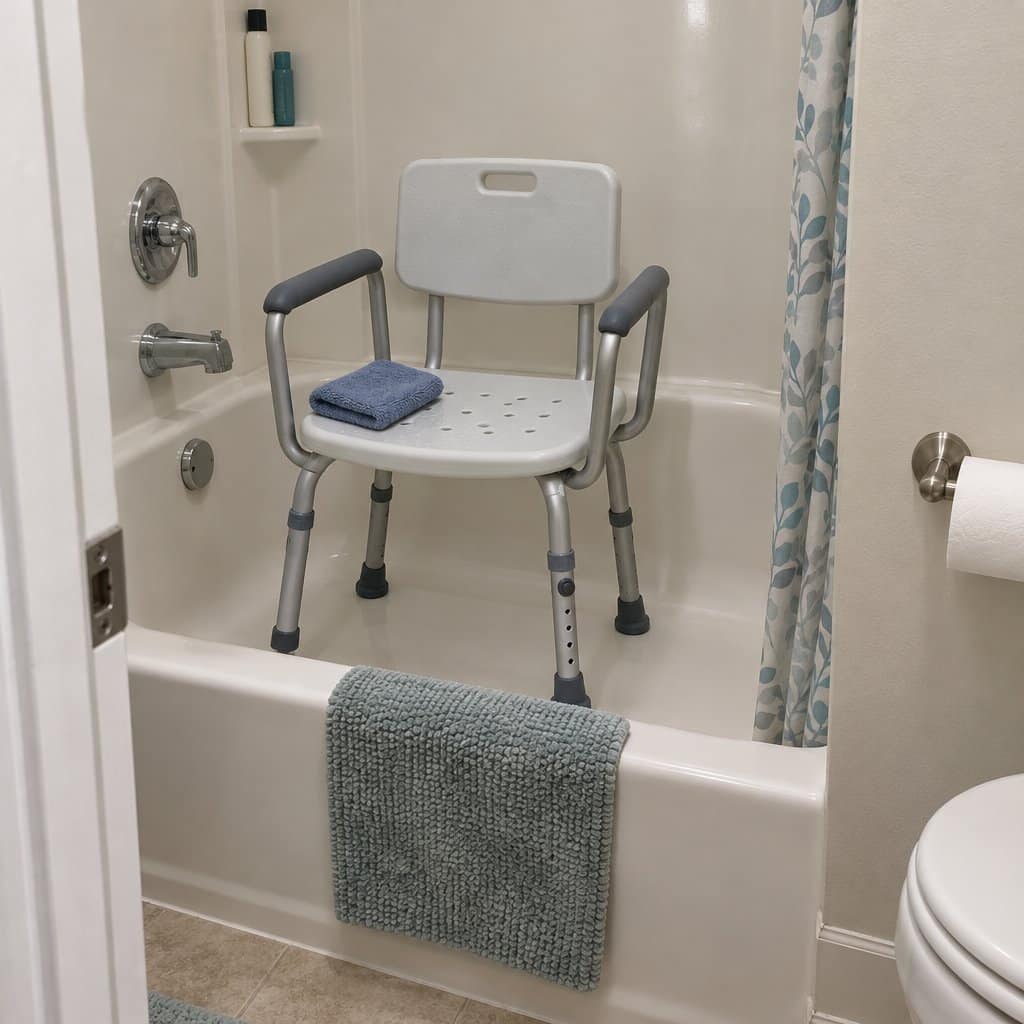
Buying Guide: What Shower Chair Features Do You Need?
When shopping for a bath seat or shower chair, it helps to know all your options. Here are the essential features and options worth looking at.
Material Choices
Shower chairs are made from all kinds of materials: wood, plastic, steel, and aluminum.
- Plastic is the most common option you will find. Plastic shower chairs are lightweight, inexpensive, and very durable. Plus, they also are waterproof and won’t rust or degrade. You can easily clean a plastic shower chair by wiping it down or rinsing it off after using it.
- Wood is becoming more popular lately. Many stylish wooden shower chairs are made of natural wood like teak and bamboo, which are water and rot-resistant. You will pay a little more for wooden shower chairs, though.
- Aluminum has decreased in popularity over the years as cheaper and better materials have evolved. Aluminum is water resistant and will not rust but takes more effort to clean. Soap scum may stick to it and require occasional cleaning with a spray cleaner and a rag.
- Steel was the first material used in shower chairs, but it is virtually non-existent today. Steel shower chairs are heavy and can damage tub and shower surfaces.
Adjustable Height Legs / Seat
To use a shower chair safely, you need to get on and off it easily. Adjustable shower chair legs are crucial because they raise and lower the seat based on your leg length. So, you can keep your feet on the floor while using it, which is always more stable and secure. Plus, the right seat height makes standing easier too!
While on the subject of legs, most of them have rubber tips, so you don’t have to worry about damaging your tub surface. Some even have suction cups on their feet to help them grip better.
Comfortable, Rounded Back
Shower chairs with backs are a good idea because a back offers both support and protection from falling backward. Look for a back that is curved for comfort. Most shower chairs also have a handle built into the back to use when moving them.
Padded Armrests
Getting a shower chair with arms can help in a few different ways. First, armrests give you a place to hold on to when sitting down and standing up. Second, they also allow you to rest your arms while using the chair. Also, the arms reduce your chance of falling off the side.
Arms can cause problems if you need to get on the chair from its side. In this case, the arm would be in your way. I like the Vive Health Swivel Chair for people who need help with transfers, but it costs more than a basic chair.
Look for arms that are adjustable or high enough to support your arms. Padded armrests are a nice bonus too!

What About a Padded Seat?
You can probably guess the benefit of a padded seat! These are primarily for comfort, of course. Think about the materials of a shower chair: plastic, wood, aluminum, etc. Do any of these sound particularly comfortable? Nope!
If you choose a padded shower chair seat, the best ones allow water to drain out easily.
Drainage Holes
It is important that shower seats have a way for all the water to drain off. Standing water causes mold and mildew. So look for seats with drain holes, channels, or a sloped surface to ensure water drains away. This reduces the amount of cleaning needed too.
Know The Weight Limit
Many of these shower chairs are made of plastic, so paying attention to the weight limit is extremely important. Exceeding the weight capacity could result in a fall or accident.
Lightweight
It is important to know how much the shower chair itself weighs. This is especially true if the seat will be moved in and out of the tub because others share the bathroom, or you need a portable shower chair.
Wheels
Shower chairs with wheels are just that. Think of them as waterproof wheelchairs, maybe.
Most of these have an aluminum frame with a plastic or mesh seat and back. The seats and backs are usually larger, too, so they offer more support for people who cannot sit up straight by themselves. They are often used after strokes or with neurological diseases like Parkinson’s or ALS, so check with a doctor or therapist first.
They also have casters on each leg or even large wheelchair wheels on the back that allow them to roll around. They are mainly used by people who use a wheelchair. With this type of shower chair, you can be wheeled in and out of showers like a wheelchair. Of course, you do need a roll-in type of shower with no tub or edge on it.
Commode Openings
This type of shower chair is wonderful for people with severe disabilities who also need toileting help. Most look like a shower chair on wheels with a toilet seat on top and a middle hole.
They come with a removable toilet bucket mounted underneath. The advantage here is the user can take care of their toileting needs. Then, the bucket is removed and disposed of, and the person can be cleaned while right in the shower.
Another use for the commode opening is that it gives easy access to the perineum for complete cleaning.

Accessories That Make Showering With a Chair Safer
A chair does a lot, but a few add-ons make a seated shower safer and easier. Here are the ones worth a look.
Sitting changes where the water hits you. A handheld shower head brings the water to you, so you control where and when it touches your skin.
Soap dispensers that attach or suction to the shower wall at seated level keep you from leaning forward or bending at the hips. They also save you from reaching for bottles or bars that drop to the floor. Sensory-based dispensers are handy if you have arthritis or other hand limitations that make pushing or pulling a lever hard.
Long-handled bath brushes, scrubbers, and loofahs are a good fit if you have low back pain, a recent hip replacement, or a tendency to fall forward when bent over.
Put non-slip mats both inside and outside the tub. Feet can slide on dry skin as well as wet skin.
Armrests help with balance, but they stay put in one place. If your walk-in shower is not up to code, have shower grab bars professionally installed inside and outside the shower for easier, safer transfers. A grab bar also gives you support when lowering yourself onto the chair and standing back up.
If you have a history of falls in the bathroom, consider a fall alert system next to the shower. It can have a pull cord or an easy-to-reach button that signals loved ones or caregivers after a fall or medical episode.
Small shelves outside the shower can hold your phone and glasses, so they are ready when you finish drying off. A shower corner bench is another option if the chair is out of reach of your bathroom items.
The trade-off is that each add-on is one more thing to buy and set up, and some need a professional to install.

Who Should Not Use a Shower Chair
A shower chair is the wrong tool for some people, and it can raise the risk of a fall instead of lowering it. The main concern is severely limited strength in the torso.
Someone with weak core strength can slide out of the seat or fall sideways onto the shower floor. That can happen even with a chair that has a back.
A chair may not be appropriate for people living with:
- Stroke with hemiplegia, especially when it affects the torso
- Spinal cord injury
- Multiple sclerosis
- Traumatic brain injury
- Parkinson’s disease
- Amyotrophic lateral sclerosis (ALS)
- Muscular dystrophy
- Cerebral palsy
Severe cognitive impairment is another case. Someone with Alzheimer’s disease or a severe mental illness may not understand what the chair is for or how it works, and may use it unsafely. A chair only works for them with a lot of hands-on help from others.
If a chair is not right, there are other choices: shower wheelchairs, reclinable shower chairs, 3-in-1 commodes, or a walk-in tub with close supervision.
For someone who is a good candidate, a handheld shower head and professionally installed shower grab bars can make the chair safer still.
Talk with your doctor or a rehabilitation specialist before you buy. A chair gives you a place to sit, but it cannot make up for a trunk that will not hold you upright.
How to Set Up and Use a Shower Chair Safely
A shower chair is easy to use, but there are still ways to use one wrong. Setup takes a few minutes and is worth doing carefully.
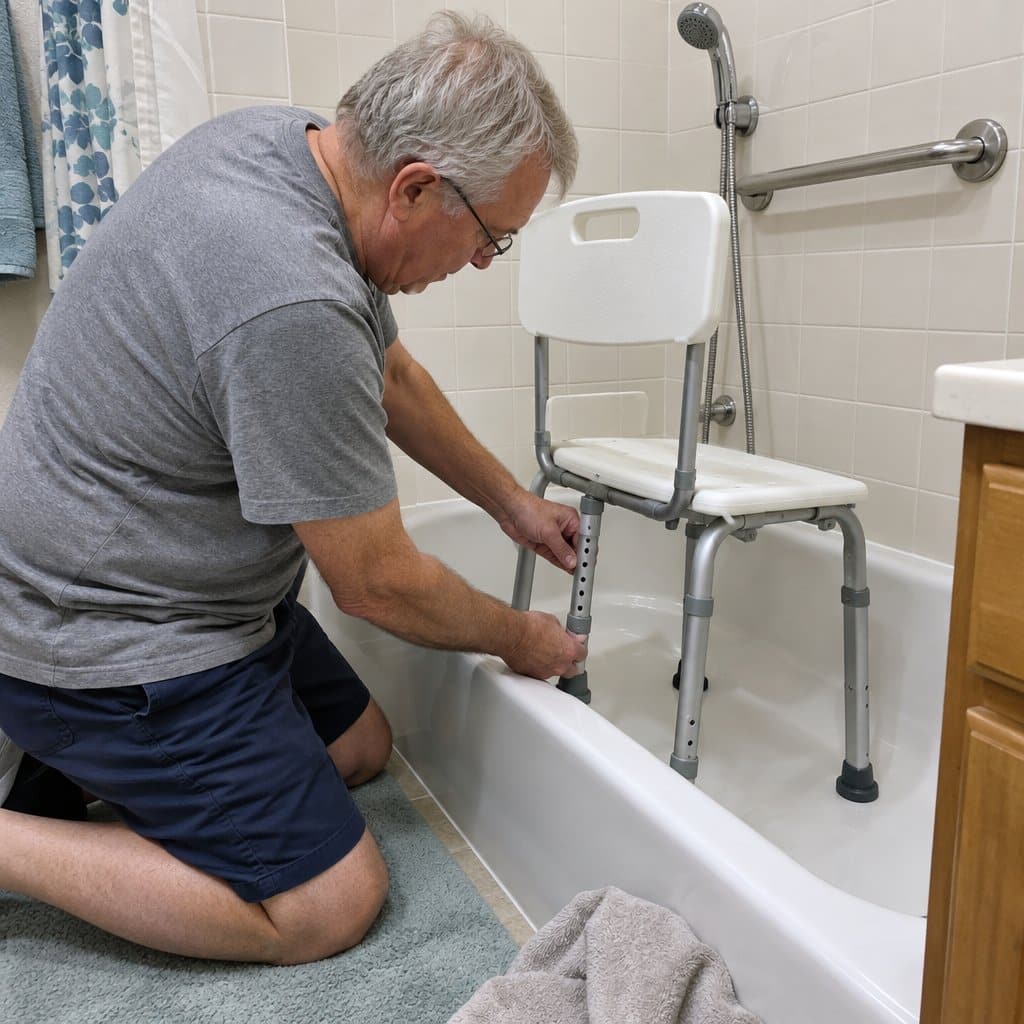
Place the chair in the shower and press the suction cups to the floor, if your chair has them. Then set every adjustable part to fit the person using it.
Height matters most. The seat should be tall enough that you do not feel stranded, and low enough that you do not feel like you are sitting on top of Mount Everest. You should be able to plant both feet firmly on the floor while seated.
If your stamina is low, a higher seat makes transfers a little easier. If you have just had a hip or knee replacement and your doctor has cleared you to shower, keep the seat raised so you do not risk popping out the new joint.
Sit down slowly. If the chair has armrests, guide yourself back with one hand on one arm, then the other hand on the other arm. That keeps you from plopping into the seat and knocking the chair off its suction cups.
Sit squarely in the center of the seat. A grab bar can help you line up. Putting all your weight on the edge can topple the chair.
A few other points help. If you have weak core strength or get dizzy, choose a chair with a back. Do not let grandchildren play on it, because small parts loosen and wear shows sooner. If small children share the shower, take the chair out before they get in.
Chairs are made for walk-in showers. In a tub, a chair that rubs the edges is more likely to tip, so a tub transfer bench is usually the better choice.
A few extras make a chair safer. Sitting changes where the water hits you, so a handheld shower head lets you aim it. Professionally installed shower grab bars inside and outside the shower make transfers easier, since armrests do not move. A soap dispenser mounted at seated height saves you from bending for dropped bottles. A long-handled bath brush helps if you have low back pain. Non-slip mats go both inside and outside the tub.
A chair is not right for everyone. If you have very limited strength in your torso, you can slide out or fall sideways, even with a back. That includes people with conditions such as stroke with hemiplegia, spinal cord injury, multiple sclerosis, Parkinson’s, or ALS. Someone with severe cognitive impairment may need a lot of help too. Alternatives include shower wheelchairs, reclinable shower chairs, and 3-in-1 commodes.
Before you buy, talk with a rehabilitation specialist about which model suits you. Ask your doctor whether there is any reason you should not use one.
Shower Chair Alternatives Worth Considering
A shower chair is not the only way to make bathing safer. Some people find a chair bulky, hard to clean, or just not the right fit. Here are the other options and what each one does well.
Grab bars mount on the wall beside the shower and give you something to hold when you stand, sit, or step in. They fit in tight spaces. They do not help much if you cannot stand for long, and they can be hard on the wrists if you have arthritis.
A bath lift lowers and raises you into the tub, which helps if balance, back pain, or an injury makes getting in dangerous. Some models double as a transfer bench for getting in and out of a bath.
A shower stool has three or four legs, rubber tips, and a backless waterproof seat. It is light and fits small showers. The hard plastic can be uncomfortable, and with no backrest it is tougher on the back.
A built-in shower seat mounts to the wall and is a sturdy, permanent choice. It takes up space and cannot be added on later. A wall-mounted flip-down bench folds up when not in use, but it has no side edges to keep you in place, and too much weight can strain the hinges.
A corner bench tucks into a corner and often has storage underneath. It is light and good for small bathrooms. Most hold only about 200 pounds, and sitting between two walls may feel cramped.
A lawn or plastic chair is the one I would skip. It has no anti-slip features, may not handle shifting weight, and is unsafe in a wet shower.
If stepping over the tub wall is the problem, a tub transfer bench lets you sit and slide into the tub. It is more secure than rails and grab bars and can double as a shower chair. If you are weighing the two, I compare them in shower chairs versus tub transfer benches.
A walk-in hot tub with handrails is another idea, but it is hard to get in and out of, and people with diabetes, a heart condition, or a weak immune system should not use one.
You can also take a bath instead, wash your hair standing and then sit to bathe, or bathe less often with a sponge bath in between.
Each of these gives up something, usually space, comfort, or support, so match the choice to your bathroom and your balance.
Drawbacks: Insurance, Fit and Stability
A shower chair is a good tool, but a few things can trip up a buyer. Knowing them ahead of time saves you a return trip to the store.
Medicare does not cover shower chairs, and it does not cover most bathroom equipment either. Plan on paying for the chair yourself.
Size is the next thing to check. Most shower chairs will not fit every tub or shower, and small ones are the hardest to fit. The measuring tip in the FAQ below helps here.
Quality also varies a great deal from one chair to the next. Some are much less stable than others, so the features listed above matter more than the look of the chair.
If the tub wall is what makes bathing hard, a chair may not be the right fit at all. I wrote a separate piece on how a shower chair differs from a tub transfer bench, and it is worth a read before you buy.
The trade-off is simple: a chair costs you out of pocket and takes some care to match to your tub, but a sturdy one that fits is worth that effort.
Frequently Asked Questions (FAQ): Shower Chairs and Benches
How Do I Use A Shower Chair Safely?
There is a little bit more to using a shower chair than you think. Especially if safety is your concern.
Here is a video from a qualified therapist who walks you through using a shower chair.

Here are the key steps:
- Adjust the legs so that the seat is level
- Place the seat in the tub or shower
- Step over the tub edge, holding a securely installed grab bar (never a towel bar).
- Back up towards the shower seat until you feel it on the back of your legs
- Sit slowly onto the shower seat.
NOTE: if you cannot safely step over the tub’s edge, you may want to consider a product like a tub transfer bench instead. A transfer bench allows you to get in and out of the tub without stepping over the edge. You can see my list of the best tub transfer benches here.
How Do I Make Sure a Bath Chair Will Fit In My Tub or Shower?
Measure the width of the tub at the bottom, not across the top.
Many tubs narrow towards the bottom to encourage water flow. So, ensuring the shower chair’s width is less than the width of the bottom of the tub will ensure it fits when you get it.
How Can I Make a Shower Chair More Comfortable While Taking a Shower?
Here is a great hack if your seat is not padded: place a few washcloths, a hand towel, or even a folded bath towel on the seat. This will add some cushioning without being concerned about it getting wet!
What’s the Difference Between a Shower Chair and a Transfer Bench?
The basic difference between a shower chair and a tub transfer bench is that a shower chair sits fully in the tub while a transfer bench straddles the tub wall. It sits both inside and outside the tub.
You need to step over the tub wall with a shower chair before sitting. But, with a tub transfer bench, you can sit outside the tub and then slide over into the tub area.
RELATED: Best Shower Grab Bars
Conclusions and Recommendations
Not everyone can afford to remodel or install a walk-in tub in their bathroom.
This makes shower chairs an important bathroom accessory, along with shower heads and non-slip bath mats. They help you shower safely while maintaining your independence.
I hope I have given you all the information you need to choose the best shower chair for an elderly loved one in your life or for yourself.
If you have any questions for me or other suggestions to offer, please leave them in the comments below! Have you ever used any of the products above? Please share this article with your friends and family on your social channels with your comments! I’m sure they (and I) would love to hear your perspective.








Thank you for sharing some of the best shower chairs that we could choose from.
Hey Brenton – You are very welcome. Using the right shower chair is an important part of making bathing safer for our senior and elderly loved ones. Glad you found the article helpful! –Scott