
Maybe a bad step on the stairs has you wondering if you need some help staying steady. If so, you are in the right place to learn about walking canes and walking sticks, and how they differ.
This article explains what sets them apart, how to choose the right height, tip, material and handle, and how to use one properly. It also covers sturdy canes for taller or larger men, and folding, colorful and petite-handle styles for women.


- Canes are designed for full-time support and stability with features like adjustable height, supportive handles, and lights. They are held at your side and bear weight.
- Walking sticks are for occasional balance assistance, like when hiking over uneven ground. They have fewer features, are held in front, and don’t bear full weight.
The key is choosing the right one for your needs and getting the proper fit and hand positioning to prevent falls. I’ll explain how to do this based on factors like your height, health issues, and budget.
My goal is to help you walk safely and securely so you can stay active and independent. You don’t need to feel self-conscious. Using a cane or walking stick is smart self-care.
If you want something that doesn’t look like a medical device, there is even a walking stick that turns into a seat for resting when you need a break.
Comparing Walking Canes and Walking Sticks
| Feature | Walking Canes | Walking Sticks |
|---|---|---|
| Purpose | Medical support used daily | Recreational balance help |
| Weight Bearing | Designed to bear user's weight | Do not bear weight |
| Materials | Metal, carbon fiber | Wood, aluminum |
| Usage | Used daily, held at side | Used occasionally, held in front |
| Features | More accessories like lights | More basic |
| Cost | May be covered by insurance | Out-of-pocket |
| Orthopedic Support | Better for robust assistance | Basic stability help |
| Custom Fitting | Often fitted by medical pro | Self-adjusted |
| Grip | Variety of orthopedic grips | Basic wrist strap or handle |
The Basics of Walking Canes and Walking Sticks
The words “walking cane” and “walking stick” mean the same to most people.
In some ways, they are right. But, the truth is that there are subtle differences between the two. Most of these differences are based on their functionality.
Canes are designed primarily for support and are generally built to take on more body weight. However, walking sticks are mainly used for maintaining a good balance while walking or hiking which is why they are sometimes called hiking or trekking poles.
Some people use these words to mean two different things. Some believe they mean the same thing. But, it is more important that you know different types of canes and sticks are available on the market. You also need to know which is the right type for you, should you need one.
The Purpose of Using a Cane (or a Stick…)
The cane is the simplest walking aid and, if used correctly, can significantly reduce pain and discomfort while walking.
The main purpose for using any walking aid is to ensure that the injured or the elderly become as independent as possible, in the shortest amount of time. A walking cane or a walking stick assists with any one or more of the following functions:
- Restoring confidence if you feel frustrated about losing the ability to walk unassisted.
- Reducing pain in the back, joints, muscles, and ligaments by improving body posture and redistributing body weight correctly.
- Reducing the risk of falls and slips by providing a wider support base, acting as a third leg, and offering better stability.
Types of Canes & Sticks Available
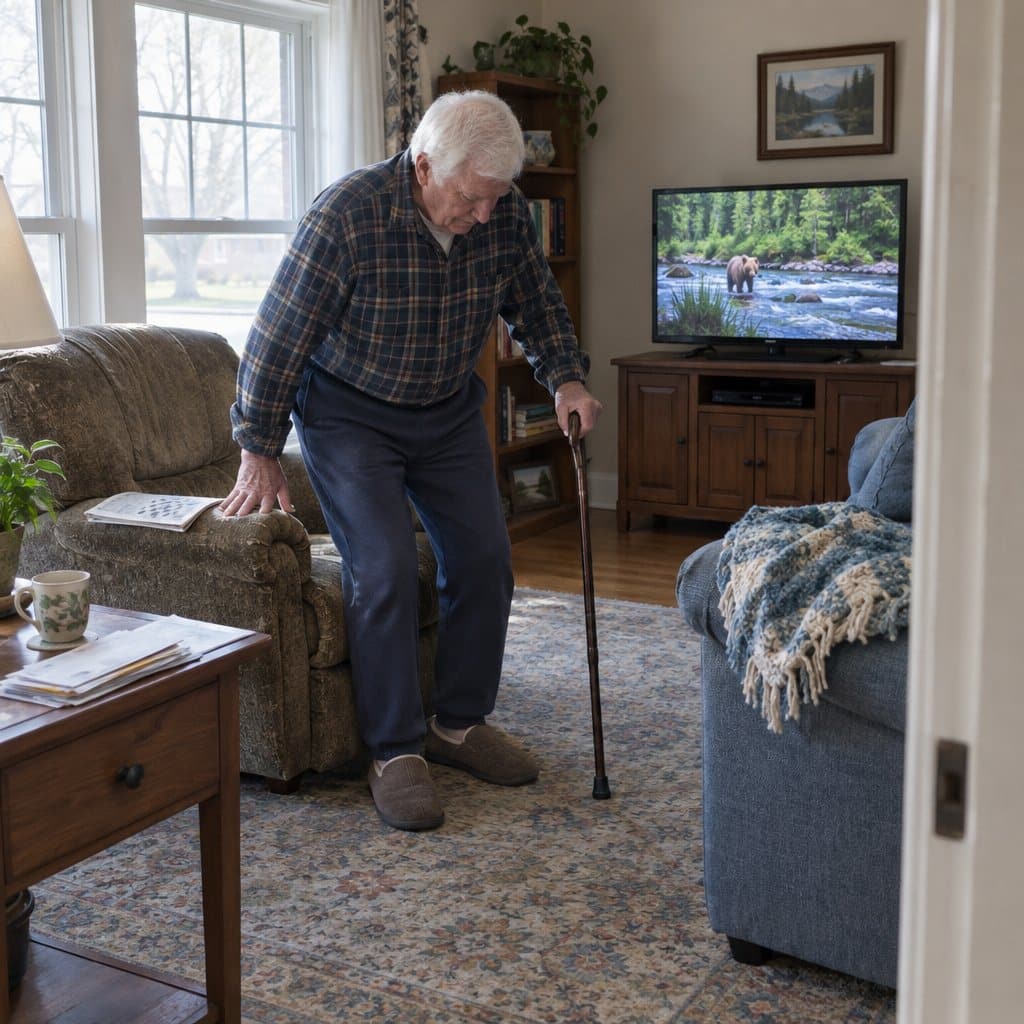
Walking canes or sticks come in many types with many different options. It is easy for a first-time user to be completely confused as to which type of walking cane best suits his or her needs.
It is important to learn as much about them as possible before choosing the best walking cane for your needs.
I have broken down the different types of canes available by their main features to make finding the right cane easier. Consider these features and how they will affect you before you decide which is best for you and your needs.
The Tip
The tip at the end of the cane is generally made of rubber and will see the maximum wear and tear over the years. A good tip grips the flooring very well and absorbs the user’s weight, without losing its shape.
For use on rough terrain, look for tips made from reinforced plastic. The two most popular tips available are:
- Standard Tip: The most commonly found tip on most canes/sticks, the single tip is perfect for those who only need slight help with balance while walking. It is quite easy to use in most narrow places and even on stairs.
- Quad Cane Tip: The Quad Cane comes with four tips at the end of the cane, allowing it to bear more weight while offering greater stability than the standard tip. They are usually more expensive and heavier to handle than standard canes but are worth the extra weight (pardon the pun) for elderly users with severe joint pain who may need to put more body weight on their cane due to limited mobility. You can learn more about quad canes and stability here.
Some tips flex and swivel for additional stability, while others use sand and water vents to stabilize the tip, making walking easier on sand or gravel.
Height
The cane’s height is also a critical aspect of choosing the ideal cane. A cane set at the wrong height can cause accidental falls, aches, and pains from bad posture.
Look for a cane that is adjustable in height.
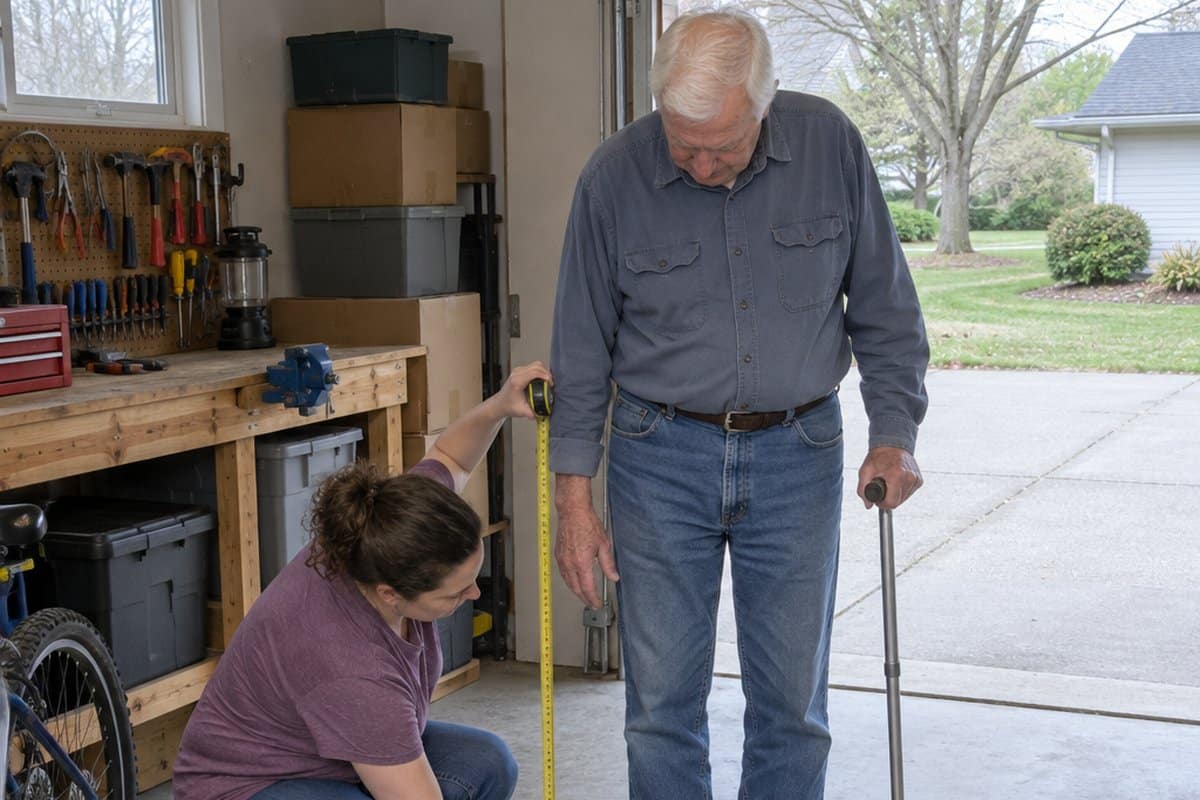
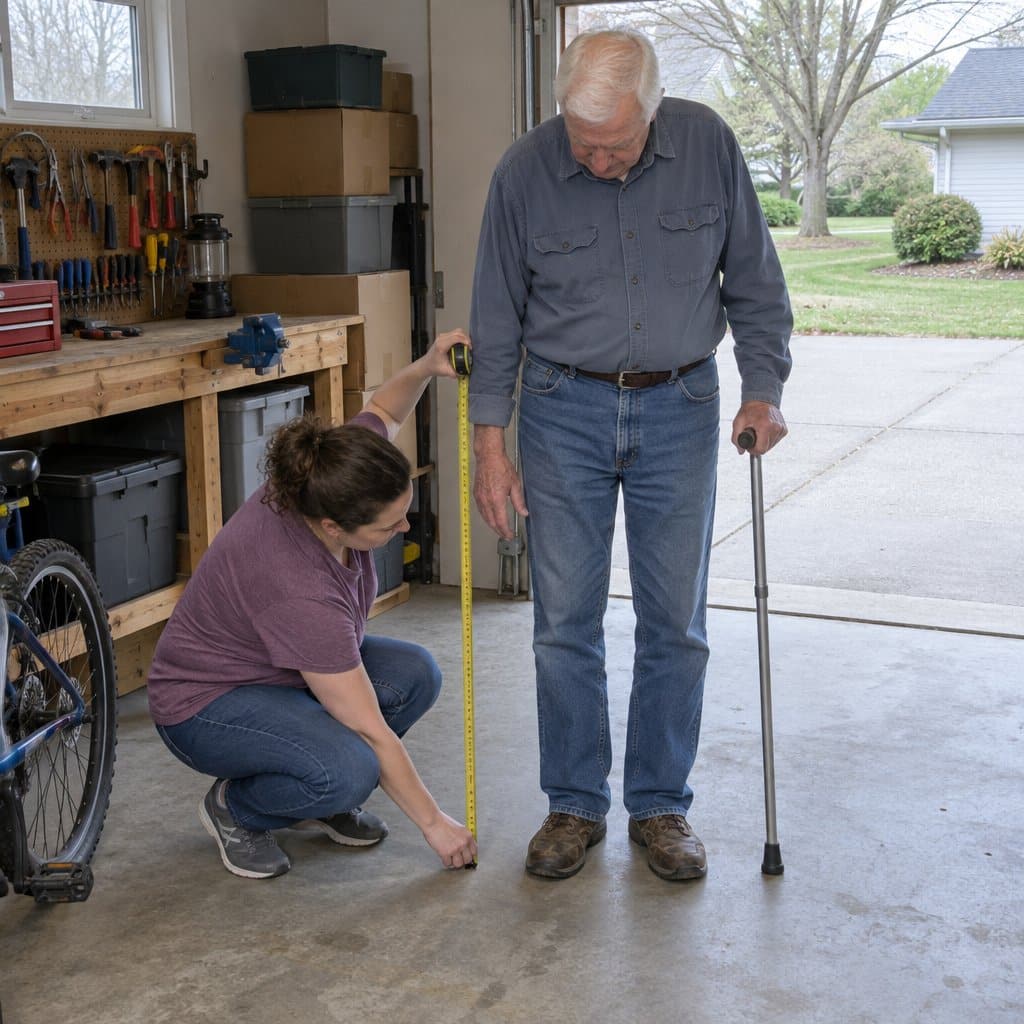
To find the right height for the user, have the user stand straight, and measure the distance from the wrist to the ground, in a straight line.
Then set the cane to match that height. Often, women will need a cane that is a little shorter.
Material
The most common options are wooden, metal, and carbon fiber.
- Generally, wooden canes are the most affordable but are more likely to splinter over time and will not last as long. These are good for maintaining balance but not for supporting a lot of weight.
- Carbon fiber canes are probably the lightest and the sturdiest but are also the most expensive.
- Metal canes are usually made of aluminum. In most cases, they are the perfect combination of being lightweight, adjustable to fit the user’s height, and providing the right support.
Carbon fiber or metal are the best options for canes that need to support the user’s body weight while walking. Men usually need heavier duty canes that support more weight.
Handles
Normally, the handle or grip choice is based on user preference. People suffering from arthritis or joint pains in their fingers may find choosing a bigger handle easier to use. Some of the most common handle styles are listed below:
- The round curved handle is commonly found on most walking sticks. But, it is not suitable for all seniors because holding it for a long time is uncomfortable.
- The knob handle canes look elegant but offer little support and grip for the elderly. This style is used frequently with walking sticks that are used more for style or hiking.
- Palm-shaped handles are quite comfortable for the elderly. These handles are wider and designed to fit the space of a closed hand. They basically conform to the natural shape of the hand.
- Canes with the Derby handles have thick handles with a slight wave that fits the natural shape of the palm. This makes them easier to handle and is a favorite of people with arthritis. The Fritz handle is similar to a Derby but slightly thinner.
- The offset handle curves back around to the shaft and more evenly distributes the user’s weight along the cane’s length. This helps reduce strain on the wrists and improves balance.
- Unique, more custom handles are also an option. Handles that look like animal heads or have intricate metal carvings are available at online specialty cane stores.
Canes with ergonomic handles are designed for prolonged usage, without causing pain or stress on the finger, and joints of the hands. People with carpal tunnel syndrome will find these most useful.
Caring for a Wooden Cane
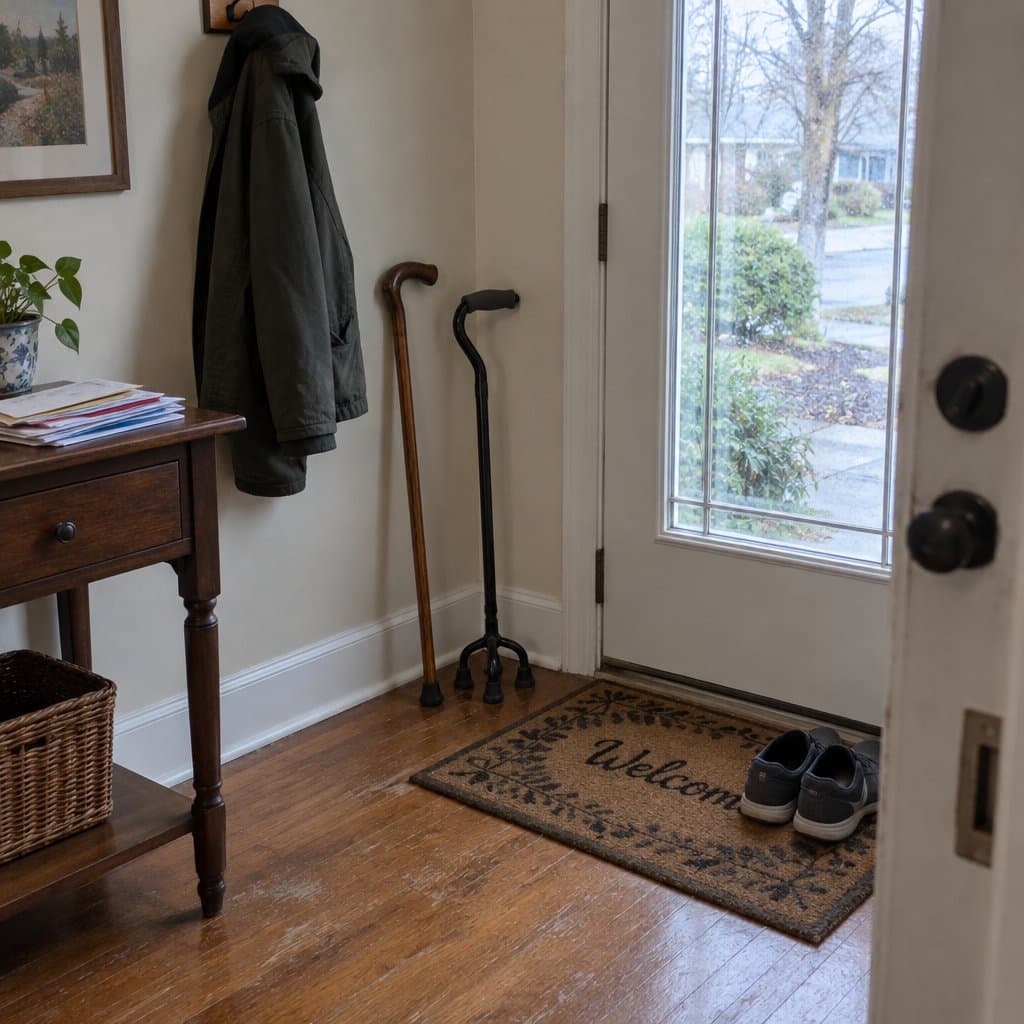
A wooden cane lasts longer when you give it a little attention. The habits are simple.
The most important one is to dry the cane thoroughly after every use in the rain or other wet conditions.
Keep it out of direct sunlight, and do not store it near heat, such as next to a stove or oven.
Cleaning and polishing depend on the wood. If the cane has a varnish finish, polish it now and then with neutral color shoe polish. If it is unvarnished, wipe it with a damp cloth every so often.
For ebony, rosewood or another dark wood, find a shoe polish close to the color of the cane and use it when the cane needs a touch-up. A little polish goes a long way, so do not use too much at once.
The handle needs its own care. A silver handle, which is fairly popular, can be cleaned with a gentle silver cleaner.
A rubber coating or soft grip may call for a special cleaner, but gentle soap and water usually does the job.
Replace any worn part at the first sign of damage or wear. That is one of the best ways to give a cane a long life.
The trade-off is that a wooden cane asks for more upkeep than other kinds, so it suits you best if you do not mind a little routine care.

Choosing a Comfortable Cane Handle
The handle is the part of the cane your hand touches the whole time. Your hand presses down on it with every step.
A handle that hurts can give you blisters or sore spots. It can even make you reluctant to use the cane at all.
A good handle is large enough to spread out the pressure, yet still easy to grip. It should also keep your hand in a neutral position, without bending your fingers in painful ways.
The best handle depends on your physical condition, how much weight you put on the cane, and how strong and resilient your hand and skin are. The surest way to find out is to try a few and see which gives you the right mix of support and ease.
- Derby: an open-ended design that is easy to grip, with a hook on one end to hang over your arm or a coat rack.
- Fritz: a wide, open-ended handle that suits people with arthritis.
- Palm-grip: shaped to fit your palm. It comes in right-hand and left-hand versions, so order for your dominant hand.
- Offset: padded for comfort, and worth a look if a normal handle hurts.
Handles are made from wood, plastic, and leather. Comfort matters most. Your hand should not slip, and the handle should not rub or chafe your palm.
If it does, send it back or pick another cane. If most canes hurt your hand, choose a padded handle. My guide to choosing a cane goes into more options, and there are also canes with built-in lights if you walk after dark.
One trade-off: canes that are not the basic type may not be covered under Medicare benefits.
Walking Canes for Women: Folding, Colorful and Petite Handles
Women’s canes tend to differ from men’s in two ways. They come in more colors and patterns, and they are sized for smaller hands.
Picking a cane that fits your style makes you more likely to carry it and use it. That matters, because a cane in the closet does nothing for your balance.
A smaller handle is easier to grip without spreading your fingers in an awkward way. A handle that is too wide can make every step uncomfortable, since it takes your weight each time you put the cane down.
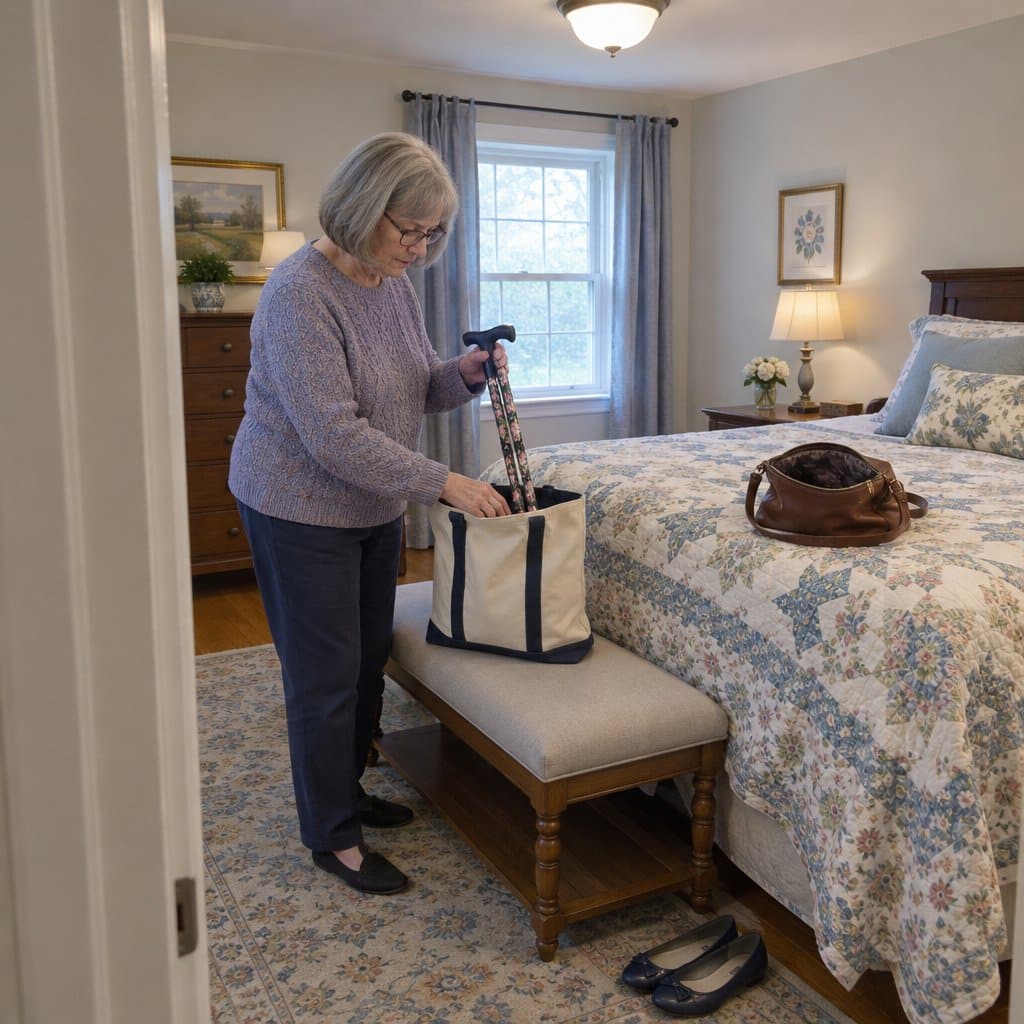
A folding cane is a good fit if you only need support now and then. It folds small enough to go in a purse, backpack or small bag, and it is out of the way when you do not need it. Folding canes come in many colors, from florals to camo, and some come with a carrying bag.
Look at the handle itself. A contoured handle with a soft foam grip is gentler on your hand than bare wood, and it is a good choice if you have arthritis. A wooden Derby handle is comfortable for many people because it matches the natural curve of the hand. It has no padding, though, so it can bother someone with severe wrist or hand arthritis.
Check the height range on an adjustable cane. Some fit women from about 4’10” to 6′ tall, and others cover a narrower range. Standing straight, the cane should reach your wrist joint.
A carbon fiber cane is strong and lightweight, and it can look stylish. Some are a fixed length instead of adjustable. If you are shorter, choose an adjustable one, or ask a medical supply store or your therapist to shorten a fixed one. Do not cut carbon fiber at home, because cutting can weaken it.
If bright patterns are not your taste, plain black is available in nearly every style. The material matters less than sturdiness, so choose one that is rated for your weight and that you like to look at.
The tip matters too. A rubber tip grips most surfaces, while a plastic or wooden tip can slide on smooth floors. If balance is your main concern, a quad cane with four tips gives more stability.
One trade-off: the prettiest folding canes often have wooden handles with no padding, so you may have to choose between that look and comfort for sore hands.
Harvy Adjustable Mini Folding Cane
The Harvy Purple BlackBerry is a folding cane with a purple blackberry print. It has an aluminum shaft and a contour handle made of wood, with a wrist strap and a rubber tip.
It adjusts from 32 to 36 inches in 1-inch steps, and it is recommended for users up to 250 pounds. It folds into an 11 by 6 inch travel bag, so it fits in a suitcase or under a seat. That makes it a good fit if you travel or want a cane that goes away when you sit down at a restaurant.
The trade-off is the height range. It only covers 4 inches, so if you are shorter or taller than most, check your measurement first. A folding cane also has a joint in the shaft, and some people prefer the feel of a solid one for everyday walking.
KMINA Adjustable Folding Walking Cane
The KMINA Folding Walking Cane comes in a blue floral pattern and is made of aluminum. It folds down for storage and comes with a fabric cover, so it fits in a bag or a car seat pocket without much fuss.
It has a soft grip and a nylon strap, which lets you free your hand for a moment to open a door or dig out your keys. The height adjusts from 32.2 to 37.4 inches, which suits people from 5’1″ to 6’1″.
It holds up to 220 pounds. That makes it a good fit for someone who wants a cane for outings and travel, and who likes a pattern with some personality.
The trade-off is that a folding cane has a joint in the middle, and that joint is one more part to check. If you lean on your cane heavily every day, or need a lot of support, a solid one-piece cane is the steadier choice. Anyone over 220 pounds should skip this one.
Harvy Adjustable Walking Cane
The HARVY Light Pink Adjustable Walking Cane is a women’s cane with a metallic light pink aluminum shaft and a matching pink rubber grip. It adjusts from 32 to 36 inches, so it can be set to your height.
The grip is contoured and meant to reduce strain on the wrist while giving a firm, non-slip hold. An aluminum locking nut keeps the height from slipping once you set it. It also comes with a matching strap and a rubber tip.
This one suits someone who wants a cane that looks good and does the basics well. The trade-off is the height range. If you are shorter or taller than that 32 to 36 inch range allows, it will not fit properly, so measure from your wrist crease to the floor first.
Ladies Fashionable Derby Cane

This is a derby cane, which means it has the classic curved handle shaped like an upside-down J. The shaft is black carbon fiber, and the handle is described as soft touch.
It is marketed to women, and it suits someone who wants a plain, dressy-looking cane for everyday walks or as a gift. Carbon fiber is a material known for being strong without adding much bulk, which matters if you carry your cane a lot or lift it in and out of a car.
The trade-off is that a derby handle is not the easiest to grip for long. If you have arthritis or weak hands, a wider handle or a palm-style grip may be more comfortable. A fixed black cane also leaves you with fewer color choices than some other styles.
Choosing a Cane for a Larger or Taller Man
Men’s canes are often heavier and stronger, because men are often larger and need more support. The handles are usually thicker too, since larger hands need more surface to hold comfortably.
A man with a slight frame or small hands can use a woman’s cane if he likes the design or color.
Start with the weight limit, which is usually listed in the product description. Some canes have a fairly low limit, so larger men should check this first. Your weight should sit under the limit with several pounds to spare, because a cane that is not strong enough could break mid-step.
Carbon fiber is a good pick if you want a cane that is very light but strong, with a soft Derby handle for a comfortable fit. For a heavy duty cane, look for a metal one with a much higher weight capacity (500 pounds exists) that is adjustable in height and folds into pieces for travel. It will weigh a bit more than other canes, and that weight is what makes it sturdy.
Height matters just as much. Stand straight and have a friend, family member or caregiver measure from your wrist joint to the floor. That number is your cane height.
Most adjustable canes use small steel push pins that pop into holes, and no tools are needed. If a cane is too long, choose an adjustable one, or ask a medical supply store or therapist to shorten it. Do not cut a cane down at home, especially carbon fiber, which can weaken and fail. Men over 6 feet can find extra long canes, and some of those fold up for carrying.
If style matters most, a knob handled cane has a classic gentleman’s look. It gives only basic support, and the knob is not good for arthritic hands. It suits a man who needs just a little help with balance.
Wooden canes come down mostly to personal taste. Dry a wood cane thoroughly after it gets wet, and keep it away from direct sunlight and heat such as a stove. Polish a varnished cane now and then with shoe polish, and wipe an unvarnished one with a damp cloth. Replace worn parts at the first sign of wear.
Take your time when choosing a cane, and think about function first and looks second. If you will be out after dark, there are canes with built-in lights.
One trade-off: these heavier duty and fancier canes may not be covered under Medicare benefits.
Men Soft Touch Derby Cane

This is a walking cane with a derby handle, the classic curved hook shape. The name says it is made of triple wound carbon fiber and has a soft touch grip.
The hook handle is a good fit if you want to hang the cane over your arm or a chair back while you open a door or reach for something. Carbon fiber is a material known for being strong without adding much bulk, which matters if you carry the cane a lot.
The trade-off is the handle itself. A derby handle puts your weight on a narrower part of the hand than a wider, flatter grip does, so if you lean hard on your cane or have sore joints in your hands, a different handle shape may be more comfortable.
Harvy Extra Long Folding Cane
The Harvy Extra Long Folding Cane is made for taller people. It adjusts from 39 to 43 inches in 1 inch steps, which is longer than many standard canes reach.
That matters because a cane that is too short makes you stoop to use it. If you are tall, a cane in this range lets you stand upright with your arm slightly bent, which is how a cane is meant to be used.
It also folds, so it can go in a bag, a car seat or under a restaurant table when you are not using it.
The trade-off is the height range. If you are of average height or shorter, 39 inches may be too long even at its lowest setting, and you would do better with a cane that adjusts lower. A folding cane also has a joint in the middle that a solid one does not, so it suits light to moderate support better than leaning on it heavily.
Drive Medical Heavy-Duty Folding Cane
The Drive Medical Heavy-Duty Folding Cane has a T handle, the classic straight-across shape many people find easy to grip. It’s made of heavy duty steel tubing and has a weight capacity of 500 lbs. That makes it a fit for larger frames or anyone who wants a lot of margin built in.
The cane folds into 4 parts, and a plastic clip lets you hang it up once it’s folded. That helps if you ride in cars a lot, eat out, or want it tucked into a bag instead of leaning against a wall. The handle has a brass collar, and the height adjusts from 33″ to 37″.
The trade-off is that a folding cane has joints, and a solid one-piece cane has none. If you lean on your cane hard every step, you may prefer a non-folding model. The height range also tops out at 37″, so very tall users should check that number first.
Bubba Stik Walking Cane

The Bubba Stik is a walking stick made of mahogany stained Tennessee hardwood. The top is a brass hame handle, which is the piece taken from a real horse collar harness. It is made in Texas.
It suits someone who wants a cane with some character, the kind that gets a comment at church or the feed store. A hame handle is a different shape from the usual curved crook, so it is worth thinking about how your hand likes to grip.
The trade-off is that this is a style piece first. A solid hardwood stick with a brass top is a traditional build, and it may not offer the extras some people need, like an adjustable height or a cushioned grip. If you need to set the length to fit you, look at a different cane.
Walking Canes vs. Walking Sticks: The Differences
While walking canes and sticks have all of the above in common, there are a few differences to know as well:
- Walking canes are more medical, and walking sticks are more recreational or fashionable.
- Walking canes are more supportive on a full-time basis, and walking sticks are used part-time to prevent tripping in uneven terrain like hiking.
- Walking canes are usually held in the hand to the side of the body, but walking sticks are usually held in front of the person using them.
- Walking canes are often covered by insurance like Medicare, while walking sticks are not.
- Walking canes have extra features like lights and replaceable handles, but walking sticks do not have as many extras.
How Men’s and Women’s Canes Differ
Shop for a cane and you will notice that many are made for either men or women. The differences come down to strength, handle size and looks.
Men’s canes are often heavier and stronger, since men are often larger and need more support. Their handles tend to be thicker too, because larger hands need more surface for a comfortable hold.
Women’s canes are often decorative as well as useful. You will see plenty of colors, materials, floral prints and wild patterns.
Men’s canes tend to be plainer, in basic solid colors. Many still have decorative handles and tips, so they can look good too.
These labels are only a guide. A man with a slight frame or small hands can use a woman’s cane if he likes the design or color.
Your gender is no real barrier to a cane that looks good and works well. Think about function first and design second, and see my guide to choosing a cane for more.
If you will be walking after dark, there are canes with built-in lights.
One trade-off: canes that are not the basic type may not be covered under Medicare benefits.
Infographic: Walking Canes vs. Walking Sticks

Share on Your Site With This Code:
<a href="https://grayingwithgrace.com/walking-canes-vs-walking-sticks-differences/"><img style="width:100%;" src="https://grayingwithgrace.com/wp-content/uploads/2023/08/Walking-Canes-vs.-Walking-Sticks-infographic.png"></a><br>Design by: <a href="https://grayingwithgrace.com">Graying With Grace</a>
Summary and Conclusions
Canes should be considered “a third leg” because they provide the user additional support. Using any walking aid aims to increase independence and improve mobility without compromising safety and stability.
One should choose between walking canes and sticks only after determining their specific needs with the help of a medical care provider.
Are there other differences between walking canes and walking sticks that you would like to point out? Share them in the comments below!






Thanks!
You are very welcome Joyce!
I have been using a cane for two years and find I am walking more bent over than I would prefer and have been considering a walking stick (more like a ski pole). My question is, will I have the same stability with a pole that I have with a cane? I think the fact that standing and walking upright have advantages by aiding posture. I hate being hunched over a cane.
Hello Rick – I don’t think you will have the same stability with a walking stick compared to a cane. One other thing jumps out at me: you shouldn’t be bent over much at all with a cane if it is properly sized. The cane handle should be at the level of your wrist with a slight bend in your elbow. If this isn’t the case, it may need adjusted. Most canes have little push pins at the bottom that you can use to adjust the height. If you need help with this, ask a therapist or doctor you have worked with. A local home medical equipment company may be able to help you with this too. If you are above average height (6’0″ +), you may need to get a taller cane. Hope this helps you out.
I have used sticks for years. I have a vestibular problem (dizzy, off balance) and canes made me feel like I was going to topple over and I found like you, that I became hunched over. My walking sticks are 60″ tall (I am 5’8″) and I find they give me much more support than a cane ever did. They are much more useful too for going up and down stairs and if, for instance you need to step down a big step. The main reason I use them is for stability, and I found a stick much better. You also don’t have to get down the tripod rhythm of walking cane to opposite leg or however that is suppose to go, just swing it naturally and walk more naturally and more upright. I would go for a stick over a cane anyday. I find hand carved wood ones and get comments on them all the time.
Hey Jen!
Thanks for adding your real world experience to the discussion! –Scott
“The round curved handle is commonly found on most walking sticks. But, it is suitable for all seniors because it is uncomfortable to hold for a long time.”
suitable because uncomfortable? Please explain.
Thank you.
Thanks for pointing out the typo – I want to make sure I am always giving out correct information. The sentence has been corrected. The curved handles are NOT the best choice of cane handle for most seniors. They are hard and not properly curved to match the natural curve of a hand. So, they are uncomfortable for many seniors. I hope this helps.
I have drop foot and a walking stick helps perfectly, except people just think I am cosplaying.
Great information. Confirmed my thought on the cane my husband uses. He leans into it and is bending over much more. Going to do as you suggest and have him adjust his other cane which is adjustable and has a better hand form. I am asking about the walking stick, as my feet are my problem. Painful from arracnoiditis. What I feel I need when I am out for a brisk walk is just a balance crutch as I walk along and go to the left or right favoring my feet. Not a lot but feel I may benefit from a stick. Thanks
I have occasional problems with balance and also with arthritic pain in my left knee. I have tried both cane-style stick and taller walking-style sticks. I adjust the cane to wrist high (using the 20 degree angle rule for the lower arm at the elbow). I adjust the walking stick using the right angle rule for the arm bent at the elbow. I find the walking stick easier to use and less tiring. It provides more stability and keeps me more upright than the cane. I’ve found you can get the same grips and materials for either style of walking aid. The major difference is in the height of the stick and the angle at which the arm is bent. The taller stick and the right angle bend wins hands down for me. The one disadvantage of the taller stick is that people seem to notice it more in places like the supermarket or the doctor’s office. That makes me uncomfortable. Sometimes I will use the cane in very public places like that simply because people don’t give it a second look. Maybe that would change if more elderly people like me tried the taller walking sticks and started using them more.
I have bouts of vertigo (BPPV) and dizziness, for which I find walking sticks or trekking poles advantageous. I do not know if a single cane would provide the stability that two walking sticks provide. I would agree with the post above, however, that the poles are more “obvious” and garner more of a reaction when in public.