Most people have never had to shop for a wheelchair, so if you are searching for the best lightweight manual wheelchair for a loved one or yourself, you are in good company. It can feel like a lot of choices at once.
This article walks you through choosing a manual wheelchair: what makes one comfortable, how transport chairs compare, and what to look for in a travel chair that folds easily. You will find my top picks, the downsides of each, and plain advice on sizing.

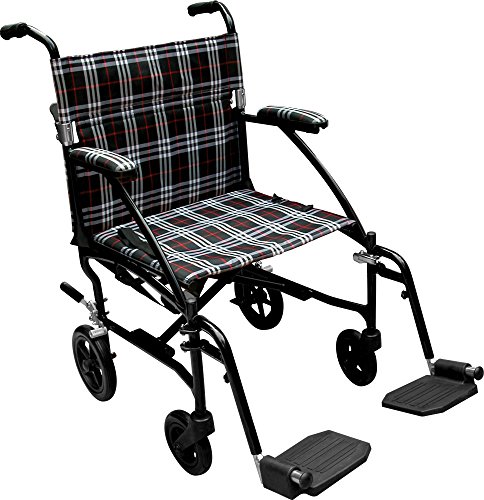

The Best Wheelchairs: An Expert’s Opinion
I work at a home medical equipment company as a custom wheelchair specialist and eat, sleep, and breathe wheelchairs! So, based on my daily experience with them, here are my top recommendations.
LIGHTEST WHEELCHAIR IN THE WORLD

Key Stats: Seat Width: 18″ | Seat Depth: 16″ | Weight: 13.5 lbs (without wheels) | Weight Capacity: 220 lbs
- Nearly anyone can lift and load it into the trunk of the car
- Fold down backrest makes it easy to transport
- Wheels have a quick release pop off function
- Integrated hand brakes on the back for caregivers
- Includes seat and back cushions
- Because of the lighter weight construction, the weight cap is limited to 220 lbs
The Featherweight Wheelchair from 1-800-Wheeelchair is one of the lightest chairs I found in my research. Here is what it offers and where it falls short.
I believe the perfect wheelchair is one that is comfortable enough to sit in for long periods of time, is easy to lift and load for portability, and is quality built with the user in mind. Oh! It should look good too, right?
The maker says it designed this chair for both wheelchair users and their caregivers, with usability, comfort, quality, and portability in mind.
Here’s a quick video of him detailing the chair:

The only problem really with this chair is the limited sizing. While it’s designed to fit average people if you are larger, taller, or weigh more than 220 lbs, this isn’t the wheelchair for you.
But, don’t be upset. A heavier-duty version of this chair is coming out at the end of May. Learn more about it or pre-order it by clicking here.
What Else Should You Know About the Featherweight Wheelchair?
- Strength/Durability: Made of lightweight but durable materials
- Size Options: Limited, designed to fit average-sized people
- Armrests: Full-length padded armrests with built-on clothing guards
- Legrests: Comes with swing-away leg rests that are removable and some adjustment in length
- Upholstery: Includes 1″ thick back and seat cushions in several color choices
- Weight: One of the lightest weight wheelchairs on the planet: 13.5 lbs without the wheels and 19 lbs with
- Transportation: Collapses into a very small, extremely easy-to-load package with an optional carry bag
- Usability: Best used on flat indoor and outdoor surfaces
BEST OF BOTH WORLDS

Widths Available:
- Seat Width: 16″ | Overall Width: 22-3/8″
- Seat Width: 18″ | Overall Width: 23-5/8″
- Seat Width: 20″ | Overall Width: 26-1/4″
Seat Depth: 18″ | Product Weight (with 24″ wheels): 33 to 36 lbs | Weight (without 24″ wheels): 22 to 24 lbs | Weight Capacity: 250 lbs
I like the Drive Medical Poly Fly for people who aren’t sure what’s the best wheelchair for their needs. Why is that? Because it has the best features of both standard wheelchairs and transport wheelchairs.
Here’s how it works.
The large wheels on the back of the chair pop on and off via a quick release lever. So, you can push yourself with the bigger rear wheels when you need to.
But, if you need to lighten the chair for transportation, pop them right off and you are left with a lightweight transport chair! These options give you lots of flexibility!

What Else Should You Know About the Poly Fly?
- Strength/Durability: High-strength lightweight aluminum frame
- Size Options: Fits most adults well with a variety of seat widths. Taller and larger users may find it too short.
- Armrests: Only available in desk-length arms that are nicely padded
- Legrests: Comes with swing-away leg rests that are removable but not adjustable in length
- Upholstery: Black nylon
- Weight: Very light and easy to manage
- Transportation: Easy to fold mechanism and back folds down to collapse into a small package for easy loading even in small cars.
- Usability: Best used on flat indoor and outdoor surfaces
Super Lightweight Standard Manual Wheelchair

- Seat Width: 18″
- Seat Depth: 16″
- Product Weight (without leg rests): 24 lbs
- Weight Capacity: 250 lbs
This standard-sized manual wheelchair is the best choice for people who need to propel the chair by themselves but also want a chair that is easy to transport.
Some people could even load this chair in their car by themselves. There are few standard chairs on the market anywhere near a total weight of 24 lbs.
But, this reduced weight does come with a few trade-offs. First, the chair only comes in one seat size. Also, to reduce the overall weight, the rear wheels are only 22″ while most wheelchairs have 24″ wheels.
So, what does all that mean? If you are smaller or average sized, say up to 5’9″ tall or so, this chair will work just fine. But if you are taller than that, have wider hips, or are heavier overall, this chair probably won’t fit too well.
Here’s a quick video demonstration of the LT-980.

What You Need to Know About the LT-980?
- Strength/Durability: All-aluminum high-strength frame
- Size Options: Single seat size option (18″x16″) while popular won’t fit taller or heavier people very well
- Armrests: Full-length armrests with upgraded ergonomic arm pads
- Legrests: Swing-away, removable footrests that are adjustable in length to fit a wider range of leg lengths
- Upholstery: Low-maintenance black nylon upholstery
- Weight: One of the lightest standard wheelchairs on the market (only 24 lbs)
- Transportation: Some people can lift and load this one by themselves because of the light weight
- Usability: Smooth ride on both indoor and outdoor surfaces with treaded rear wheels for better traction
Ergonomic and Comfortable Wheelchair

- Seat Widths: 16″, 18″ & 20″
- Seat Depth: 17″
- Product Weight (without leg rests): 25 lbs
- Weight Capacity: 250 lbs
If you use your wheelchair a lot and comfort is your main concern, there aren’t many wheelchairs more comfortable than the Ergo series from Karman Healthcare.
Karman’s “out of the box” designs have made improvements to wheelchairs that have been largely the same for a long time.
The main improvement is their S-Shape Seating System. You see, most wheelchair seat frames are straight metal tubes. But, your seating surface is curved! So, Karma designesd a curved seating rail that matches the natural curves of wheelchair users.
The result? Better pressure distribution, better posture, and less sliding forward while seated. How does this help? It makes the wheelchair much more comfortable to sit in for long periods of time.
An additional feature of the Ergo 115 that I like is the AEIGIS anti-microbial coated seating system. What’s so great about it?
- It’s attached with hook and loop fasteners and can be removed easily
- It’s machine washable
- It’s cushioned with a labor of microfiber foam
- It’s breathable and allows better air flow
- Finally, it is treated with an anti-microbial coating for fewer stains and less odor
All of this mean more comfort for you.

What Else Do You Need to Know About the S-ERGO 115?
- Strength/Durability: High-strength aluminum frame
- Size Options: A variety of seat sizes all come in a 17″ seat depth, which will fit everyone but the shortest users well
- Armrests: Armrests are fixed but have extremely comfortable arm pads that are wider with an ergonomic curve at the wrist
- Legrests: Swing away and removable footrests with flip-up footplates that do adjust in length
- Upholstery: Washable and anti-microbial fabric will keep the chair looking good (and smelling better) for a long time
- Weight: One of the lightest wheelchairs on my review list
- Transportation: Extremely lightweight makes it easy to transport for most people and/or their caregivers and travel companions
- Usability: Best used indoors or on level surfaces like sidewalks or parking lots
Best Wheelchair for People Who Want Options

- Seat Widths: 16″, 18″, 20″
- Seat Depth: 16″, 18″, 20″
- Product Weight: 35 to 38 lbs
- Weight Capacity: 300 to 350 pounds
Do you like having choices? Love to get exactly what you want? If you like to choose from a menu of options, then the Drive Medical Crusier III is the best wheelchair for you. All my recommendations can be met in this wheelchair.
First, you can choose from various styles and sizes of armrests. Want longer arms for better support? Or do you prefer shorter arms to get under a table easier? All of these are options on this chair.
Arms in the way? You can get arms that flip back out of the way and come off the chair completely by pushing a button. Plus, adjustable height arms are available too, so you can set them right where you want them without needing any tools!
Second, choose the leg rest style you need or prefer. Both swing away foot rests and elevating leg rests are options. Plus, both styles are adjustable in length to better fit the user’s leg length which improves comfort and reduces pain. Again, no tools needed!
Finally, there is a wide range of seat size options so that you can get the best fit possible. Seat widths are available in the standard range of 16″, 18″, and 20″.
But the seat depth is easily adjusted too. If the 16″ seat depth is too short, the chair has built-in extenders. You just pull those out, lock them in place, and readjust the upholstery which is held in place with velcro.
This video show you that feature plus some others:

What Else Do You Need to Know About The Cruiser III?
- Strength/Durability: Powder coated carbon steel frame
- Size Options: Wide range of seat size option to fit most people. Seat depth is easily adjusted. 20″ wide model has 350 lb weight capacity
- Armrests: Tons of armrest options detailed above for comfort and support
- Legrests: Both swing away and elevating are options and both styles are adjustable without needing tools.
- Upholstery: Low-maintenance padded, adjustable nylon upholstery
- Weight: Considered a lightweight wheelchair but it is a bit heavier than some of the others here.
- Transportation: Easy to fold wheelchair but weaker caregivers may have some trouble lifting it into a trunk.
- Usability: Most suitable for use in homes or flat paved or concrete surfaces
Drive Cruiser X4 Wheelchair

The Drive Cruiser X4 is a manual wheelchair with a frame made from a blend of aluminum and carbon steel. It is described as ultra-lightweight yet strong, and it is made to be easy to push and easy to transport.
It comes with push-to-lock wheel locks. You can choose swing-away footrests, which move out of the way for getting in and out of the chair, or elevating leg rests. Both have riggings you can adjust in length without any tools. That helps if the chair is shared between people of different heights, or if the fit needs a small change.
The rear wheels can also be moved between three separate axle positions, and this can be done quickly. That is useful for fine-tuning how the chair handles.
The trade-off: this is a self-propelled or attendant-pushed manual chair, so it asks for some arm strength from whoever is doing the pushing. If you or the person you care for can’t manage that, a power chair or a scooter may suit better.
Best Full Featured Wheelchair for Heavy Use

- Seat Width: 16″ | Overall Width: 23.5″
- Seat Width: 18″ | Overall Width: 25.5″
- Seat Width: 20″ | Overall Width: 27.5″
- Seat Width: 22″ | Overall Width: 29.5″
Seat Depth: 16″, 18″ (20″ width only) | Product Weight (without legrests): 33.5 lbs | Weight Capacity: 300 pounds
This full featured wheelchair from Medline is a great choice for full-time wheelchair user who spend a lot of time in their wheelchair. Many of the features were added to make the wheelchair more comfortable and more functional too.
Here are a few of these features:
- Flip Back Armrests: with the flip of a latch, the arms on this chair will flip backward towards the backrest. This moves them out of the way completely so that you can get up to a desk or transfer off the chair sideways if necessary.
- Elevating Leg Rests: the legs on this chair lift and lock in place so that you can raise your legs up to reduce swelling pressure and pain. This adds to the support and comfort of a chair because it gives you a change in leg position.
- Durable Carbon Steel Frame: the frame is solid and durable with strong welds that will provide years of use yet it is lightweight too.
- Quick Release Rear Wheels: the wheels pop off and on quickly and easily. How does this help? The ability to remove the wheels makes the chair easier to load into your vehicle.
What Else Do You Need to Know About The Medline K4 Wheelchair?
- Size Options: Lots of size options with heavier weight capacity to fit more people
- Armrests: Desk length and flip back out of the way. Pads are ok but not great
- Legrests: Comes standard with elevating legrests
- Upholstery: Durable black nylon
- Weight: The heavier weight is a trade-off for the additional features
- Transportation: Easy to use and lift because the leg rests and rear wheels come off
- Usability: Casters are larger but chair is best used indoors or on level surfaces like sidewalks or parking lots
Best Lightweight Transport Chair for Outdoor Use

Seat Width: 18 inches | Seat Depth: 16 inches | Product Weight: 23.5 lbs | Weight Capacity: 300 pounds
- Larger real wheels give a smoother ride outdoors
- Brakes are easier for caregivers to use
- The back folds down for easier transportation
- Includes a seat belt
- Only one seat size option
If you need a wheelchair that does better outdoors on rougher terrain like gravel driveways, I recommend this one from Medline.
Why does it give a smoother ride on varied terrain?
Take a look at the rear wheels and you’ll notice that they are larger than the front. As a matter of fact, they are larger than many of the competing chairs.
Larger wheels won’t get stuck as easily and they help spread out the bumping and shifting of rougher travel over gravel and sidewalk cracks. (Learn more about the best wheelchairs for travel here.)
This chair also has several features to make life easier for the caregiver too.
- Rear-Mounted Hand Brakes: the chair is always in full control of the caregiver because they can quickly apply the hand brakes while pushing. No need to stop and bend over to apply the brakes at the bottom. This improves safety for the user and makes the chair easy to use for the caregiver.
- Easy to Fold and Transport: The footrests are removable plus the seat and back fold up too, which leaves a light and easy-to-manage package for loading and unloading in the car. This helps save strain on their back!
- A seat belt is included for safer rides and less worry.
What Else Do You Need to Know About The Medline Lightweight Transport Chair?
- Strength/Durability: Powder-coated ultralight aluminum frame
- Size Options: Single seat width option of 18 inches will fit average-sized people only
- Armrests: Armrests are fixed with just basic arm pads
- Legrests: Removable footrests with flip-up footplates but not adjustable
- Upholstery: Low-maintenance padded nylon upholstery
- Weight: Lightweight, easy to load, and easy to use
- Transportation: Small and light enough so that most any caregiver can handle it
- Usability: Smooth ride on varied terrain including yards or gravel
Best Heavy Duty Bariatric Wheelchair
Vive Health Heavy Duty Wheelchair

- Seat Widths: 22″ & 24″
- Seat Depth: 18″
- Product Weight (without leg rests): 60 lbs
- Weight Capacity: 500 pounds
For larger or heavier users, I recommend the Medline Excel Extra -Wide wheelchairs. Their chrome-plated solid carbon steel frames safely support users weighing up to 500 lbs.
This chair has many of the usual wheelchair features I have described above: adjustable, swing-away footrests, solid flat-free tires, large casters, and swing-away adjustable length footrests.
It even folds up for transportation. A storage pocket on the back is standard also. Plus, it is adjustable height to fit a range of user heights.
But, there are trade-offs for these heavy-duty features:
- The chair is heavy (about 60 lbs) due to the double steel frame.
- Upholstery is vinyl because it is stronger but it is hotter against the skin too.
- The chair is wide (nearly 34″) because the seat width is greater.
These drawbacks cannot be helped really if you need a wider wheelchair width and heavier weight capacity.

Who Should Use a Manual Wheelchair?
Anyone with mobility issues can benefit from using a manual wheelchair. But, the usual wheelchair user is unable to walk (or walk very far) and also has the arm strength to push themselves in the wheelchair.
There are other options for people who need help pushing the chair for them because they are unable to do so.
You should choose a manual wheelchair if you:
- are having difficulty walking,
- can’t get around the home to take care of yourself,
- have the strength to move yourself (or a caregiver to help),
- need a mobility aid that you can easily take with you.

What Are the Benefits of a Manual Wheelchair?
The benefits of a manual wheelchair are:
- you can propel them by yourself or a caregiver can help,
- they fold up so they are very portable,
- you can get lightweight models that are easy to lift,
- you can easily add accessories to make them more comfortable,
- and, they are relatively inexpensive compared to power chairs or scooters.

How Do I Choose and Buy a Manual Wheelchair?
Chances are you have never bought a wheelchair before! If you or your doctor has decided it’s time for one, here are the steps to take to choose and buy a manual wheelchair.
First, Take Some Basic Measurements:
Follow these steps to determine the wheelchair size you need:
- Get your accurate height and weight.
- While seated on a firm surface, have someone measure your hip width. This tells you how wide (aka the seat width) the seat of your chair should be.
- Next. measure from the back of your bottom to the inside of your knee. This tells you long (aka the seat depth) the seat of your chair should be.
- Finally, measure from the back of your knee, down to the bottom of the foot. This tells you how high (aka the seat height) your seat should be.
It is very important that the wheelchair fits you properly. The most common seat sizes are 16″, 18″, or 20″. These sizes are readily available. Heavy Duty chairs come in 22″ and 24″ seat widths.
Quick Note on Wheelchair Sizes

There is a specific way that wheelchair seat sizes are stated:
- The first number is the seat width
- The second number is the seat depth
Next, Answer a Few Questions:
- How long will you be in the chair each day? If you will be in the chair for short periods of time, nearly any wheelchair will do as long as it fits. But, if you will use the wheelchair most of the day, you want a chair that fits and is very comfortable.
- Do you need to take the chair with you? If not, standard manual chairs are heavier but cheaper. But, if you or a caregiver need to lift and load the chair, choose a lightweight manual chair to save your back.
- Can you move the chair by yourself or do you need help? If can push yourself in the wheelchair, get a standard chair with the larger wheels in the back. But, if a caregiver will be pushing you, a transport chair is a better option especially if you are just using the chair for short periods of time.
- What is your overall medical condition? Think about your strength, endurance, and posture. If you have good upper body strength and endurance, an ultra-lightweight manual wheelchair is the usual choice and worth the additional cost. Weaker people with some upper body strength need a lighter-weight wheelchair to make them much easier to push.
- Do you need to travel with your wheelchair? If so, you will want a durable wheelchair that is also easy to manage.
Choosing a Wheelchair for Travel: What to Look For
You may not realize until you already own a chair that the hard part is moving it. Some wheelchairs are heavy and hard to lift and load, which is a real problem when the person lifting is a caregiver or spouse. Others are too bulky to fit in the trunk of a small car.
A good travel wheelchair is small and light, and tough enough to handle constant folding, unfolding, and stowing. It is also a good idea for someone who walks fine at home but needs a chair for longer distances.
Here is a checklist to go through:
- Lightweight: it has to move in and out of cars and buses all trip long, and fold quickly. Weight varies a lot from chair to chair depending on features, so check the number before you buy.
- Durable: it needs to be sturdy enough for the road.
- Simple: it should be easy to set up and collapse. Test it before your trip, while you are still within a return period.
- Comfortable: if the chair is used every day of the trip, seat width, depth, and back support matter. Otherwise the vacation can be spoiled.
- Cushioning: preventative cushions suit long use, positioning cushions help posture, and gel cushions add comfort.
- Chair height: the height of the whole chair affects how easily it stores in a vehicle and folds down.
- Armrests: flip-up or removable ones make transfers and transport easier.
- Leg rests: look for ones that swing away or adjust.
Next, power or manual. A manual chair is typically easy to transport, simple to use, needs little maintenance, and fits through tight spaces. The downsides: the rider may need help, it takes physical strength, and shoulders can suffer repetitive strain. Inclines and long distances are hard going.
A power chair does the work for you, handles longer distances and many surfaces, and suits someone without much strength. But it is expensive, much heavier, harder to transport, needs charging and routine maintenance, and the controls take some learning. If you lean toward power, see these lightweight folding power wheelchairs.
The trade-off is that the lightest chairs often come in limited sizes, so check the seat width and weight capacity before you buy.
Karman S Lightweight Wheelchair

The Karman S-115 is a manual wheelchair built around an S-shaped seat that follows the shape of the body. The idea is to spread weight more evenly and keep the person from sliding forward, which also helps lower the risk of pressure sores.
It weighs 25 lbs without the footrests, which makes lifting it into a car easier on a spouse or caregiver. The footrests swing away, so getting in and out of the chair is simpler. The upholstery comes off and is washable, and it uses AEGIS antimicrobial treatment, which is handy for a chair that gets daily use.
Quick-release rear wheels are available as an option. If you plan to load the chair in a trunk often, they are worth asking about.
The trade-off: the armrests are fixed, so they do not flip up or come off. If you or the person you care for slides sideways from bed to chair, a chair with removable armrests may suit better.
Important Features and Options of Manual Wheelchairs
Here is a quick rundown of the features and options you’ll see when researching and purchasing manual wheelchairs.
- Frame: the frame is the metal part of the wheelchair that supports the seat and back and where the wheels attach. Most wheelchairs have an X frame that folds easily for transportation. Most frames are steel (which is stronger but heavier) and aluminum (which is strong but lighter).
- Armrests: Armrests come in two sizes. Full-length armrests are 14″ and offer more support. Desk-length armrests are 10″ and fit better under desks and tables. Adjustable height armrests that raise and lower are also an option to make the wheelchair more comfortable and fit better overall.
- Footrests: Wheelchair footrests usually swing out of the way or come off completely to make it easier to get in and out of the chair. Look for footrests that also adjust in length for the best fit. If you have swelling in your legs, look for wheelchairs with leg lifts, called elevating leg rests, so that you can raise your feet.
- Upholstery: There are two basic choices here: vinyl and nylon. Vinyl is super easy to clean and is fluid-proof. But, it is hot and sweaty against the skin. It also tends to sag with time. Nylon though is more durable and can be cleaned and machine washed if needed. It lets the skin breathe too and isn’t as hot.
Cushions and Back Supports for a Chair You Already Own
If you already have a wheelchair, the quickest way to make it more comfortable is the seating surface. A cushion on the seat softens the sling and eases pain and pressure right away.
One note first. These suggestions are for comfort only, not clinical pressure relief. If you have a history of pressure sores or skin problems, or you are at risk for them, talk with your healthcare professional and a RESNA-certified Assistive Technology Professional. They may also not suit people with severe deformities or progressive neurological disorders.
A gel cushion has a gel core that spreads pressure across the surface. A resilient foam around it keeps it from flattening, and the cover is washable with a non-slip base. Gel hardens in the cold, so if the cushion rides in a cold car or trunk, choose air or foam instead.
An air cushion, like the ROHO Mosaic style, uses connected air cells so the air shifts as you sit. It is very light and you add air with a small hand pump. Don’t overfill it. You want it squishy, so you sink in slightly without hitting the bottom of the seat.
A memory foam cushion gives and then keeps its shape, and many are gel-infused for a cooler feel. Some covers are not waterproof, which matters if incontinence is a concern.
A basic high-resiliency foam cushion is fine for short periods. If you sit most of the day, one of the cushions above supports you better and for longer.
For the back, look for a memory foam support for the lower back with straps that wrap around the back canes. The straps keep it from slipping out of place. You will have to take it off to fold the chair, just as you would the seat cushion.
If your doorways are tight, a wider cushion and chair can make things harder, so see these wheelchairs for narrow doorways before you buy. The trade-off with any cushion is fit: pick one that matches your seat width, and expect to remove it when you fold the chair.

Why Wheelchairs Are Uncomfortable and How to Choose a Comfortable One
A standard manual wheelchair is a metal frame with a piece of vinyl or nylon stretched across it. Your seat and back are basically a sling, and a sling gets uncomfortable fast.
Over time the upholstery stretches and sags in the middle. Wheelchair people call that the “hammock effect,” and you end up sitting lower and lower in a hole.
Posture suffers too. Arms that sit too low make you hunch forward to reach them. Legs that don’t elevate can lead to swelling, leg pain, and lower back pain. Stretched upholstery rounds the shoulders and leans you to one side.
Sizing is another common culprit. The seat should be no more than 1″ to 2″ wider than your hips. The seat depth should be no less than 1″ shorter than the distance from the back of your bottom to the inside of your knee.
If the chair is too wide, you may lean and struggle to reach the wheels, which causes pain. If the seat is too short, your legs spread apart, which hurts too. Footrests should generally be set so your thighs are parallel to the floor.
Insurance usually won’t pay for comfort, only for a chair that is medically necessary. The one exception is “general use” foam seat and back cushions, which Medicare and Medicaid will cover. Many plans also let you upgrade and pay the difference, so ask your medical equipment provider.
Comfort Features Checklist
- Nylon upholstery: it holds its shape longer than vinyl and breathes better, so it isn’t as hot.
- Adjustable angle back: lets you sit at a slight recline instead of a straight 90 degrees. If you need more recline than that, look at wheelchairs that recline for comfort.
- Elevating leg rests: raise your legs to ease pain and swelling.
- Seat cushion: gives a softer sitting surface.
- Back cushion: supports the lower back. Make sure it folds with the chair or comes off easily.
- Cushion rigidizer: a plastic or wood insert under the cushion for more support.
- Lightweight frame: easier and more comfortable to push.
These comfort recommendations are not for clinical pressure relief. If you have a history of pressure sores or skin problems, talk with your healthcare professional first. The trade-off is that you will have to balance these features against your needs, your insurance rules, and your budget.
ROHO MOSAIC Air Wheelchair Cushion
The Roho Mosaic is an air cushion for your wheelchair seat. It is made of interconnected 3-inch air cells that shift to fit your shape, so the weight is spread out instead of sitting on one spot.
You set the firmness yourself with the included hand pump. The kit also has a removable cover and a patch kit, and the bottom is non-slip so the cushion stays put. It measures 20 x 18 inches, which fits most wheelchairs, and it supports up to 315 pounds.
It suits someone who sits for long stretches and finds a plain sling seat or flat foam uncomfortable. It can also go in an office chair or a car seat.
The trade-off is that an air cushion needs a little attention. You will want to check the air now and then and adjust it, and a puncture means using the patch kit. If you want a cushion you can set down and forget about, a plain foam one is simpler.
Everlasting Comfort Ventilated Wheelchair Cushion

If the sling seat on a standard wheelchair is the problem, a cushion is the simplest fix. The Everlasting Comfort Ventilated Wheelchair Cushion is a gel and memory foam pad that sits on top of your existing seat.
The memory foam contours to your body and is meant to hold its shape over time. It is made to ease pressure on the tailbone, hips, and lower back, which matters if you spend long stretches sitting. It has a soft non-slip cover, so it should stay put instead of sliding around. The materials are certified OEKO-TEX Standard 100, and it is FSA/HSA eligible.
It can also go on a recliner or a desk chair, so it is not tied to the wheelchair.
The trade-off: a cushion like this adds comfort, but it is not a medical pressure-relief system. If you or someone you care for has skin breakdown or a high risk of bed sores, talk to a doctor or therapist about the right cushion before relying on one.
Vive Health Gel Wheelchair Cushion

This is a seat cushion, not a wheelchair. It goes on top of the sling seat you already have. Vive Health makes it with a liquid gel core under supportive foam, and it is 3 inches thick.
The idea is to move your weight off the tailbone and coccyx, the spots that take the most pressure during long stretches of sitting. It is aimed at back pain, tailbone pain, and the kind of aching that comes with sciatica. It comes in small, standard, and large, so you can pick the one that matches your chair.
It suits anyone who spends hours a day in a wheelchair and wants a more forgiving seat. A cushion this thick will raise you up a bit, so check that you still fit comfortably at tables and under any armrests or footrests. It also helps with pressure, but it does not replace changing position regularly or talking to a doctor if you are prone to pressure sores.
DMI Relax-A Back Support

The DMI Relax-A-Bac is a lumbar cushion, which is a support for the curve of your lower back. It’s made for the sling-style back on a standard wheelchair, where the lower back gets little help.
It’s made of contoured foam, with a sturdy composite board insert behind it for extra support. An elastic strap holds it in place, so it stays put instead of slipping down. The polyester and cotton cover comes off and can go in the washing machine, which helps if you use it every day.
The trade-off: this is a back cushion only. It does nothing for the seat, so if sitting is what hurts, you’ll want a seat cushion too. Also, all sales on it are final. There are no returns, refunds or exchanges, so be sure it’s the right one before you order.
Drive Foam Wheelchair Cushion Bundle

This is a two-piece set from Drive: a molded foam seat cushion (1 3/4 inches thick) and a back cushion with lumbar support. Together they replace the stretched sling that comes on most manual wheelchairs.
The seat is made of high resilient molded foam. It is meant to hold you steady, keep your posture better, and ease pressure while you sit. The back cushion adds support for the lower back, which is where a sling seat tends to let you slump.
It suits someone who sits in the chair for part of the day and wants a more comfortable, supported seat. It also suits someone whose skin is at low risk of breaking down.
That is also the limit. The seat cushion is designed for low risk, so if you have had pressure sores, or sit for many hours at a time, ask your doctor or therapist whether you need a different kind of cushion. Foam also won’t be the right match for everyone, so it helps to have someone check your fit.
ROHO MOSAIC Air Wheelchair Cushion

The ROHO MOSAIC is an air cushion. It is made of interconnected air cells that spread your weight out evenly, which helps protect the skin where you sit.
It is meant for people at low to moderate risk of skin breakdown, who have partial or full feeling and fair to good balance while seated. A hand pump and a patch kit come in the box, so you can adjust the air and fix a small leak yourself.
The trade-off is that an air cushion needs some attention. It has to be inflated to the right level, and it is only a basic level of protection. If you have little feeling in your lower body, a high risk of pressure sores, or trouble staying upright, ask a doctor or therapist whether you need something more.
Rivquvi Gel Wheelchair Seat Cushion


This is a seat cushion you set on top of your wheelchair’s sling seat. It’s made of memory foam with a layer of gel, and it has a T-shaped cutout so your tailbone doesn’t touch the seat at all.
That cutout is the main point. If you have tailbone pain, sciatica, or sore spots from long hours sitting, taking pressure off that one area can make a real difference. The foam and gel layers are also meant to keep heat from building up when you sit for a long stretch.
It’s easy to look after. The cover unzips for washing, and the base is non-slip, so the cushion stays put. A caregiver will appreciate both.
The trade-off: the cushion adds about 3 inches of height. You may need to adjust the footrests or armrests, and a table or desk may feel too low. Reviews are mixed too. It helps when the pain comes from pressure on the tailbone, and it won’t fix every kind of pain.
What Are the Different Types of Manual Wheelchairs?
There are different types of manual wheelchairs to meet the varying needs of wheelchair users. Here are the most common types:
Standard Manual Wheelchair
When you think of a wheelchair, this is probably the type you see in your head. These wheelchairs have large wheels in the back with smaller front wheels and footrests on the front.
They can be propelled by the user using the large wheels in the back or pushed by a caregiver from the back with the push handles. Because they have more parts, they are heavier than transport wheelchairs but there are specially designed lightweight wheelchair options available too.
Transport Wheelchairs
Transport chairs are smaller than standard wheelchairs and have smaller wheels in the back and front. They are designed to be pushed by someone other than the user.
Because they have fewer parts and are smaller overall, transport wheelchairs weigh less than most other chairs. They are much easier to lift and load into a car too.
Lightweight Manual Wheelchairs
Generally, the lightest chair that does the job is the best choice. These chairs use lighter-weight materials to reduce their overall weight. This makes them easier for the user to propel themselves. Plus they are easier to transport because they weigh less.
Ultra Lightweight Manual Wheelchairs
To qualify as an ultra-lightweight chair, the chair must weigh less than 30 lbs. Many of these chairs are 20 lbs or less.
There are a handful of manual wheelchairs in this group now that are available to the public and don’t need to be custom made.
Transport Chairs: Who They Suit, Pros and Cons
A transport chair is a small wheelchair with four small wheels that someone else pushes. It suits a person who has a caregiver and only needs mobility help now and then.
Maybe you use a walker most days and just need a seat for longer outings. Or maybe limited strength in your arms, hands, or wrists means you can’t push the big rear wheels of a regular wheelchair.
The biggest advantage is weight. Many are lightweight aluminum and weigh 19 pounds or less, so they are easy to lift into a trunk or pickup bed, and they are often used for trips away from the home.
That helps when the caregiver is a spouse with health problems of their own. They fold flatter than regular wheelchairs, with no parts to remove: flip up the footplates and pull up on the seat. Models with a fold-down back leave an even smaller package to load into the vehicle.
They are also generally inexpensive, which makes one a thoughtful gift for someone who needs it.
Now the drawbacks. With no hand rims, the rider can’t reach the wheels to push, so someone must always be available. That is why these chairs usually serve short needs like doctor visits and quick store trips.
Comfort is limited too. The basic nylon upholstery is stretched tight, which makes folding easy but can make a long sit uncomfortable.
Sizes are limited as well. Most come in 17″ or 18″ seat widths, and a larger rider may find them a tight fit or no fit at all.
When you compare lightweight models, these are the features worth looking for:
- A seat belt, which adds safety and security.
- Rear wheels slightly larger than the front, for more stability and control for the person pushing. Some have 12-inch rear wheels for uneven outdoor surfaces.
- Hand brakes that are easy to reach, which matter for safe transfers in and out of the chair.
- Footrests that detach, and ideally adjust in height for longer legs.
- Flip-up desk arms, so the rider can sit comfortably at a table.
Weights in the models I researched ran from 17 to 27.5 pounds, with seat widths from 17″ to 19″ and capacities up to about 300 pounds. If your home has narrow doorways or hallways, a slightly narrower steel model may fit better. See these wheelchairs for tight spaces. Add a cushion, since the nylon seat is firm.
If you want to walk some and ride some, look at a rollator that converts to a transport chair. Because a transport chair is a medical product, check with your doctor before using one.
Drive Medical Fly-Lite Transport Wheelchair
The Drive Medical Fly-Lite is a folding transport chair. That means someone else pushes it, since it has no big wheels for you to turn yourself. It suits a person who has a family member or caregiver along for outings and appointments.
What stands out is the weight. It is listed at 16.2 pounds without the footrests and 18.9 pounds with them, which makes it easier to lift into a trunk or back seat. It folds flat for storage, and the footrests swing away, which helps when getting in and out of the chair. The footrests also adjust in height without tools. The frame is aluminum and supports up to 300 pounds. It has a safety belt, padded armrests and rear wheel locks to keep it still when parked.
The trade-off is that you cannot propel it yourself. If you want to move around on your own, a self-propelled chair with large rear wheels is the better fit. This one works best when a helper is always there.
Drive Medical Folding Transport Wheelchair
The Drive Medical Folding Transport Wheelchair is a transport chair, which means someone else does the pushing. It has 8-inch wheels and a steel frame, and it folds for storage or for the trunk of a car.
It suits a person who has a caregiver and needs a chair for appointments, errands, or trips. The swing-away footrests move out of the way, which makes getting in and out of the seat simpler. The armrests are padded, the backrest folds flat, and the 17-inch nylon seat is padded and wipes clean.
The trade-off is that you can’t move this chair yourself. A transport chair is built for a helper to push, so if you want to roll yourself around, a self-propelled manual wheelchair is the better fit.
Fly Lightweight Transport Chair

The Drive Fly-Lite Transport Chair is a transport chair that weighs 14.5 pounds and folds down to 22″ x 9″. It has an aluminum frame, and the back folds down for storage. It suits someone who has a caregiver and wants a chair that goes in a car trunk, on a bus, or on a plane without a struggle.
The padded desk-length armrests are fixed, and the footrests swing away to make getting in and out easier. It also has rear wheel locks and a carry pocket on the backrest for a few small things.
The trade-off is the same one every transport chair has. It has 8″ rear wheels, and someone else has to push it. If you want to roll yourself around, a self-propelled manual chair is the better pick. Also, the armrests don’t flip up or come off, so side transfers will take more care.
Excel Aluminum Transport Chair

The Excel Aluminum Transport Chair from Medline is a transport chair with 12″ rear wheels. Someone else pushes it, and the handbrakes sit on top of the handles so the person pushing can slow or stop it.
The larger rear wheels are meant to handle uneven outdoor surfaces better, which helps if you are heading over sidewalks, paths, or a bumpy driveway. The frame is powder coated aluminum, described as lightweight and durable. The back folds down, so it stores and travels easily in a car.
It also has a seat belt, nylon upholstery, a full length permanent armrest, and detachable footrests.
The trade-off: you cannot propel it yourself from the seat. It suits someone who has a helper nearby, and it is not the right choice for a person who wants to wheel themselves around the house or neighborhood.
Nova Transport Chair

The Nova Transport Chair is a folding wheelchair with an aluminum frame, meant to be pushed by someone else. It has 12-inch rear wheels with hand brakes that the caregiver can lock, plus a seat belt and swing-away footrests.
It suits a person who has a caregiver and needs help getting around for appointments, errands, or trips. The arms are padded for the full length of the seat, and the upholstery is padded too. The back folds down with a quick release, which makes it easier to fit in a car trunk. It is rated for up to 300 pounds and comes in 2 colors.
The trade-off is that you can’t move it yourself. Because the rear wheels are only 12 inches and the brakes are on the caregiver’s side, someone else has to do the pushing. If you want to roll yourself around the house or down the block, look at a self-propelled chair instead. The arms are also fixed, so they don’t lift out of the way for side transfers.
Drive Lightweight Transport Wheelchair

The Drive Lightweight Steel Transport Wheelchair is a folding transport chair with 8″ wheels front and back. Someone else pushes it, so it suits a person who has a caregiver and needs help getting around now and then, like trips to appointments or the store.
It has a painted carbon steel frame, padded full-length fixed armrests, and a seat belt. The seat comes in 17″ or 19″ widths. It folds in half, the back folds down, and the handles fold down too, which makes it easier to store and carry in a car.
The trade-off is that you can’t wheel yourself in it. The small wheels are made for a pusher, so it isn’t a good fit for someone who wants to move around on their own. The fixed armrests also don’t swing away, so getting in and out means going over the side or using the front.
Karman S Lightweight Wheelchair
The Karman S-Ergo Lite is an ultralight transport chair. It weighs 18 lbs without the footrests, which makes it easy to lift into a car trunk. A travel bag is sold separately if you want one.
The seat is S-shaped, and the fixed armrests have wider, concave pads. It comes in 16 and 18 inch seat widths. The upholstery is AEGIS antimicrobial, and a leg strap comes standard.
It suits someone who has a caregiver to push and needs help for outings and appointments. The weight capacity is 220 lbs.
The trade-off is that a transport chair is made to be pushed by someone else. If you want to wheel yourself around, a standard self-propelled chair is the better fit. The fixed armrests also mean they do not swing out of the way for side transfers.
Frequently Asked Questions FAQ
What is a manual wheelchair?
A manual wheelchair is a wheelchair that must be pushed by the user or a caregiver manually. There are no motors or mechanics that move the chair for you.
Who uses manual wheelchairs?
Manual wheelchairs are used by people who have difficulty walking or standing. They usually cannot use a cane or a walker safely and need to stay seated when mobile.
How long does a manual wheelchair last?
Several manufacturers offer lifetime warranties on their frame components. With proper care and maintenance, a manual chair can last for many years.
How do I use a manual wheelchair?
To use a manual wheelchair, you push on the back wheels to make it move. From a seated position, extend your arms out and down and hold onto the hand rim.
Then using the entire arm, push forward to move the chair. Here is a great video that demonstrates how to properly use a manual wheelchair.
How much do manual wheelchairs weigh?
Wheelchair weights vary from as little as 13 pounds to 60 pounds or more. Here are some weight ranges for several types of manual wheelchairs:
- Heavy Duty Wheelchairs: 50 to 100 lbs
- Standard Manual Wheelchairs: 40 to 55 lbs
- Lightweight Manual Wheelchairs: 34 to 40 lbs
- Ultra Lightweight Manual Wheelchairs: 25 to 30 lbs
- Transport Wheelchairs: 14 to 25 lbs
Does Medicare cover manual wheelchairs?
Yes, Medicare, Medicaid, and many insurance plans do cover manual wheelchairs if you meet medical necessity. Each plan has its own definition of medical necessity.
But, generally, you must have a mobility deficit that affects your ability to care for yourself at home, cannot use a walker or cane safely, can safely use a wheelchair, the wheelchair must fit in your home, have had a face-to-face appointment with your physician.
Note that most insurances won’t pay for a manual chair for outdoor or community use only. You must need the chair for use in your home primarily. Call your doctor to schedule a face-to-face appointment to start this process.
Which wheelchairs does Medicare cover?
Medicare uses a classification system to determine which wheelchairs they cover. It is important to note though that when your insurance purchases a wheelchair for you, you may not have a choice.
Most medical equipment companies have certain brands and models that they work with. They are limited by Medicare coding and by the cost of products compared to insurance reimbursements.
Summary and Final Recommendations
I hope this list of the best wheelchairs for seniors was helpful. My goal was to explain the features of wheelchairs and show you some of the options I found while researching. These picks come from researching specs and reading reviews, not from using the chairs myself. Hopefully, this will give you confidence when buying a wheelchair online.
Here is how to easily get the best wheelchair for you or a senior you love:
- Find your size. Use my measurement guide above to help.
- Read about the options. Us the feature guide above to decide what’s important.
- Read reviews of wheelchairs. I have reviewed and detailed my favorites above.
- Choose your favorite and order with confidence.
So, if you pinned me down and asked me to name the very best wheelchair in general, I would have to choose the Featherweight Wheelchair from 1800wheelchair.com. It is one of the lightest chairs I found in my research, and it was designed with wheelchair users in mind.