Check out the entire challenge here.
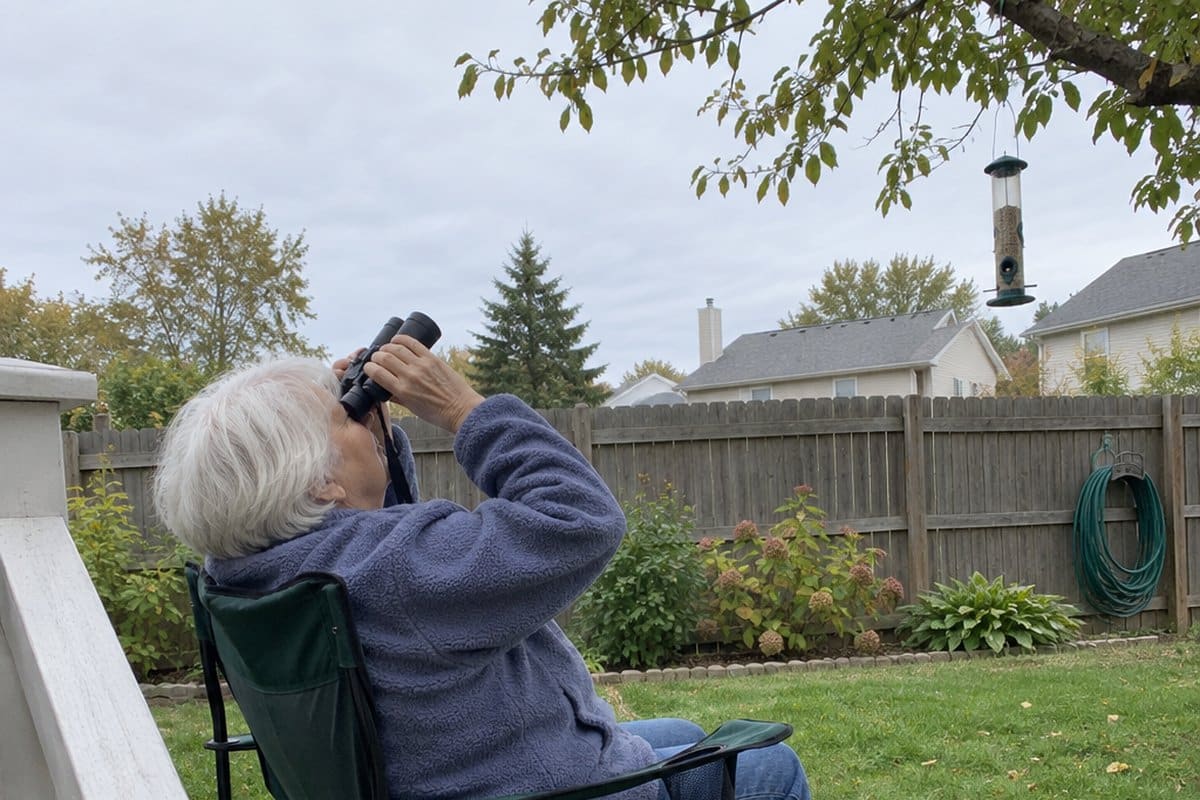
Some days feel long and quiet, and it helps to have something gentle to look forward to. Bird-watching is that kind of hobby, and it asks very little of you to get started.
This article covers what bird-watching can do for your body and mind, the gear you need, how to begin, and how to watch birds from a window if getting outside is hard. It also covers a couple of field guides and ways to handle common challenges.
- It can be done alone or with others, and it does not take strenuous effort.
- Plus, bird-watching gets you outdoors to soak in some vitamin D and breathe fresh air, which can lift your mood for many people. If mobility is a concern, check with your doctor or therapist about what is safe.
- By regularly setting aside time to watch the different kinds of birds in your local park or even from your backyard, you give your mind something pleasant to focus on.
The simplicity of starting is part of the charm. You only need a pair of binoculars and a bird identification book or app to embark on this rewarding journey.
Over time, you might find that bird-watching not only deepens your appreciation for nature’s rhythms but also enriches your social life through bird-watching groups or clubs.
Why Bird-Watching Matters
Bird watching can be more than just a pastime; it’s a way to stay engaged with nature and maintain a healthy lifestyle.
Engaging in bird watching gives you the chance to stay active and enjoy the calming influence of nature. Here’s why incorporating it into your routine is beneficial:
- Cognitive Health: Identifying birds stimulates your memory and attention to detail.
- Physical Mobility: Moving around to spot birds provides gentle exercise.
- Social Interaction: Joining a bird-watching group connects you with others with similar interests.
Bird watching keeps your mind and body active. Attending local or community bird-watching events is a great opportunity to meet new friends. You can enjoy it at your own pace, whether from your backyard or in a community park.
Accessible and low-impact, bird watching doesn’t demand much, making it perfect for your daily activity. Grab your binoculars, and you’re ready to start.
Even from your window, you can observe the local bird life. It’s a delightful way to stay in touch with the rhythms of the seasons and the simple joys of life.
So, why not give bird watching a try? It’s a wonderful way to watch the day unfold, surrounded by the beauty of winged creatures. It’s your time to embrace the day and the delights of the avian world.
Getting Started
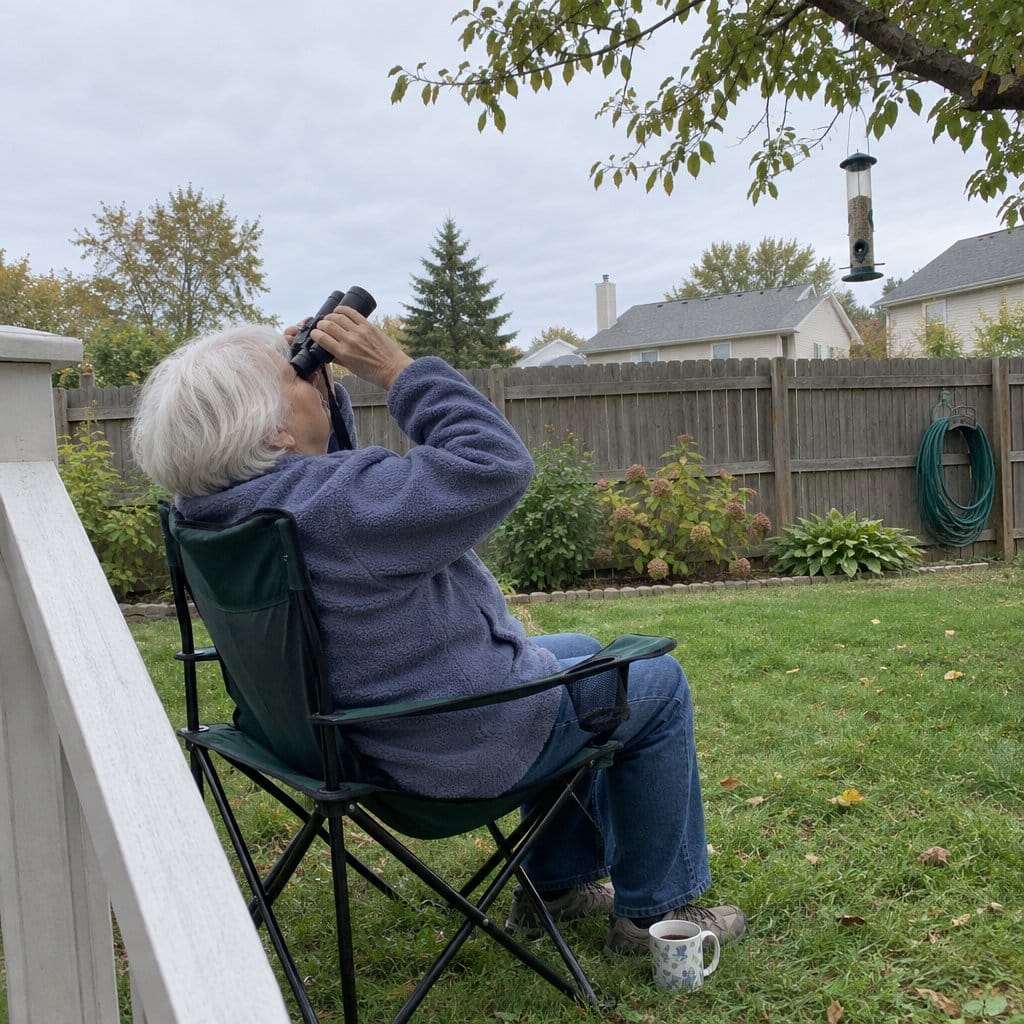
Bird watching is a delightful hobby you can enjoy at your own pace. It’s simple to start and doesn’t require strenuous effort. You might find it’s a fantastic way to connect with nature and peers.
Firstly, pick a comfortable spot in your garden or a nearby park. You don’t need to go far; birds are everywhere! Just find a quiet place where you can sit and observe. If mobility is a concern, even a bright window overlooking a feeder can be your gateway to birding.
Gather some basic gear: binoculars for a closer look and a field guide to identify your feathered friends. Don’t worry about getting high-end equipment; affordable options are available that will serve you well.
| Gear | Features and Options |
|---|---|
| Binoculars | Look for lightweight binoculars with a comfortable grip and adjustable focus. Larger lenses can help gather more light, which can be beneficial for older adults with less acute vision. |
| Field Guide | Choose a guide with clear, large images and easy-to-read text. Some guides also include range maps and detailed descriptions, which can be helpful for identification. |
| Comfortable Seating | Portable, lightweight, and sturdy chairs or stools can make birdwatching more comfortable, especially for longer periods. |
| Walking Stick | A walking stick with a built-in seat can provide support while walking and a place to rest when needed. |
| Wide-Brimmed Hat | A hat can provide shade and protect from the elements. |
| Sunscreen | Older adults have thinner skin that’s more susceptible to sun damage. A sunscreen with high SPF is recommended. |
| Water Bottle | Staying hydrated is important, especially during outdoor activities. Look for a lightweight, insulated bottle that keeps drinks cool. |
| Notebook and Pen | For jotting down notes or sketching birds. Choose a notebook with weather-resistant pages and a pen that writes in all conditions. |
| Birdwatching App | Consider a birdwatching app for your smartphone. These apps can help identify birds by appearance and song. Make sure the app has a simple, user-friendly interface. |
Joining a community can enrich your experience. Look for local bird-watching groups or online forums where you can share your observations and learn from others.
You might just find buddies for your next birding adventure. For guidance and bird-watching support, facilities often offer educational resources.
Remember, there’s no rush, so take your time and enjoy the process. Each bird spotted is a triumph and a reason to celebrate your commitment to this engaging pastime.

Gear You Need to Get Started
Birdwatching is easy to pick up right away, and the skill grows with time. If you want a fun outdoor hobby with others who share it, here is what you will need.
Binoculars come first. Look for a wide field of view, which means you can take in more of the scene at once. The magnification should help your eyesight, not strain it, and the eyepieces should rest comfortably against your glasses or eyes.
A scope lets you zoom in and see the smaller details of a bird. Scopes come in angled or straight models, and they usually do a better job than binoculars. If you want something smaller, a birdwatching monocular is another option.
A field guide helps you name what you see. Your state’s department of natural resources can recommend guides and other materials. As you get deeper into the hobby, you can move up to a more detailed guide.
A notebook is a personal choice. Write down what you saw each time, and use it to keep pictures, plant samples and other small keepsakes.
For outdoor gear, bring a good hat, sunscreen and bug spray. Wear comfortable clothing that is not brightly colored. Choose a walking shoe that fits well and breathes.
If you plan a longer hike, add light snacks, several water bottles, any medications and a cell phone.
The trade-off is that scopes are a bigger piece of gear than most beginners need. Binoculars and a guide are enough to start, and you can add a scope if the hobby takes hold.
Birdwatching From a Window If Getting Outside Is Hard
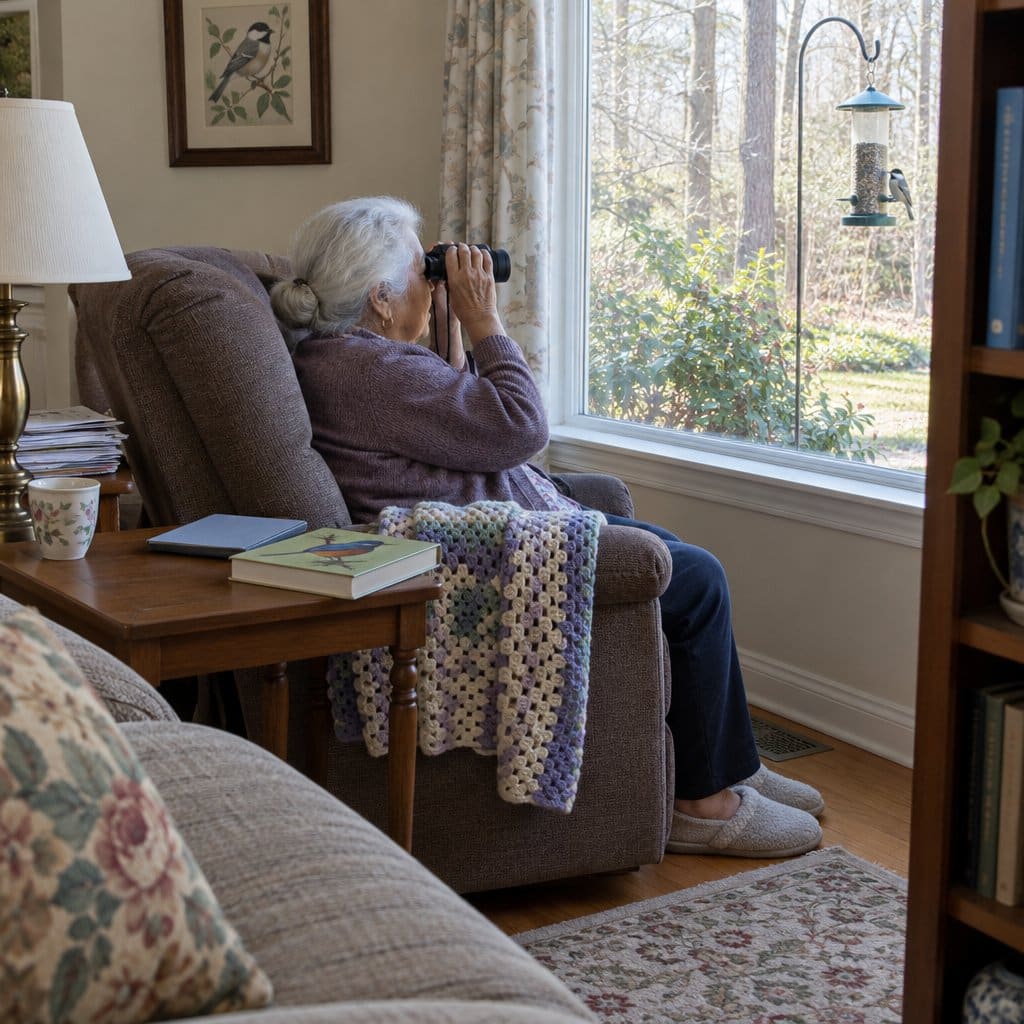
Birdwatching does not require leaving the house. If you are homebound, or you live far from the woods, a window can be your whole birding spot.
Here is how to set it up, one step at a time.
Start by finding out which birds live in your area, what they eat, and what kinds of feeders they use. Different birds eat different foods, so you want to offer something the local ones will come for.
Hang the feeders where you can see them from your chair. Hooks and chains or mounted posts let you adjust the height.
Add a bird bath, flowers, plants and a few small garden decorations for color and texture. You can change these with the seasons to keep the view interesting.
Arrange your furniture so you have a clear view of the window. That might mean moving a recliner in front of it, or angling it slightly so you do not have to strain your neck.
Keep the window clean, inside and out. Streaks, dirt, heavy window dressings and thick screens all take away from the view.
Last, set up a small birdwatching station next to your chair. A notebook, binoculars and a small field guide for local birds are enough, and they should be easy to reach from the recliner.
The trade-off is that your view is limited to whatever visits your feeders. It can take some patience before the birds find them, so give it time.
Golden Field Guide Birds Of North America

Birds of North America: A Guide To Field Identification is a Golden Field Guide from St. Martin’s Press. It is a printed book for working out which bird you are looking at, whether it is at the feeder or out the window.
It suits anyone who wants to put names to the birds they see and likes turning pages more than tapping a screen. A book never needs charging, never loses a signal, and you can leave it on the windowsill where you can reach it.
The trade-off is that a field guide covers birds across a whole continent. You will flip past a lot of species that never visit your yard, and it can take a little patience to find the right page. If you would rather have a bird’s call played back to you, a book will not do that.
National Geographic Birds Of North America Field Guide

The National Geographic Field Guide to the Birds of North America, 7th Edition, is a printed guide for identifying the birds you see in North America. It is a book you can keep by the window or carry outside.
It suits anyone who wants to put a name to the bird at the feeder. A guide like this works best when you look at the bird first, notice its size, color and any markings, and then page through to match it.
The trade-off is that a field guide covers the whole continent. That means plenty of pages for birds you will never see where you live, and it can take a little patience to find the right one. If you would rather have something that identifies a bird for you, a book is not that.
Overcoming Common Challenges
When you start bird-watching, you might face some hurdles. But don’t worry, let’s address these challenges together. To help you get started, here is how you can easily overcome common challenges associated with bird-watching:
- Accessibility: If mobility is an issue, choose spots that are easy to reach and have benches for resting. Many parks have accessible trails designed for you.
- Equipment: No need for fancy gear; a basic pair of binoculars and a local bird guide is enough. These items aren’t expensive and enhance your experience greatly.
- Stamina: If long outings are daunting, start with short sessions. Even a few minutes in your backyard or nearby park can be quite refreshing.
- Bird Identification: Are you unsure about identifying birds? Try a pocket-sized bird guide with clear images. Bird-watching apps can also identify bird songs for you.
- Weather Conditions: Always dress in layers and carry a hat and sunglasses. Being comfortable is important for enjoying the outdoors.
By starting slow and accommodating your individual needs, bird-watching becomes a joy, not a chore. Happy watching!
Making It Enjoyable And Sustainable
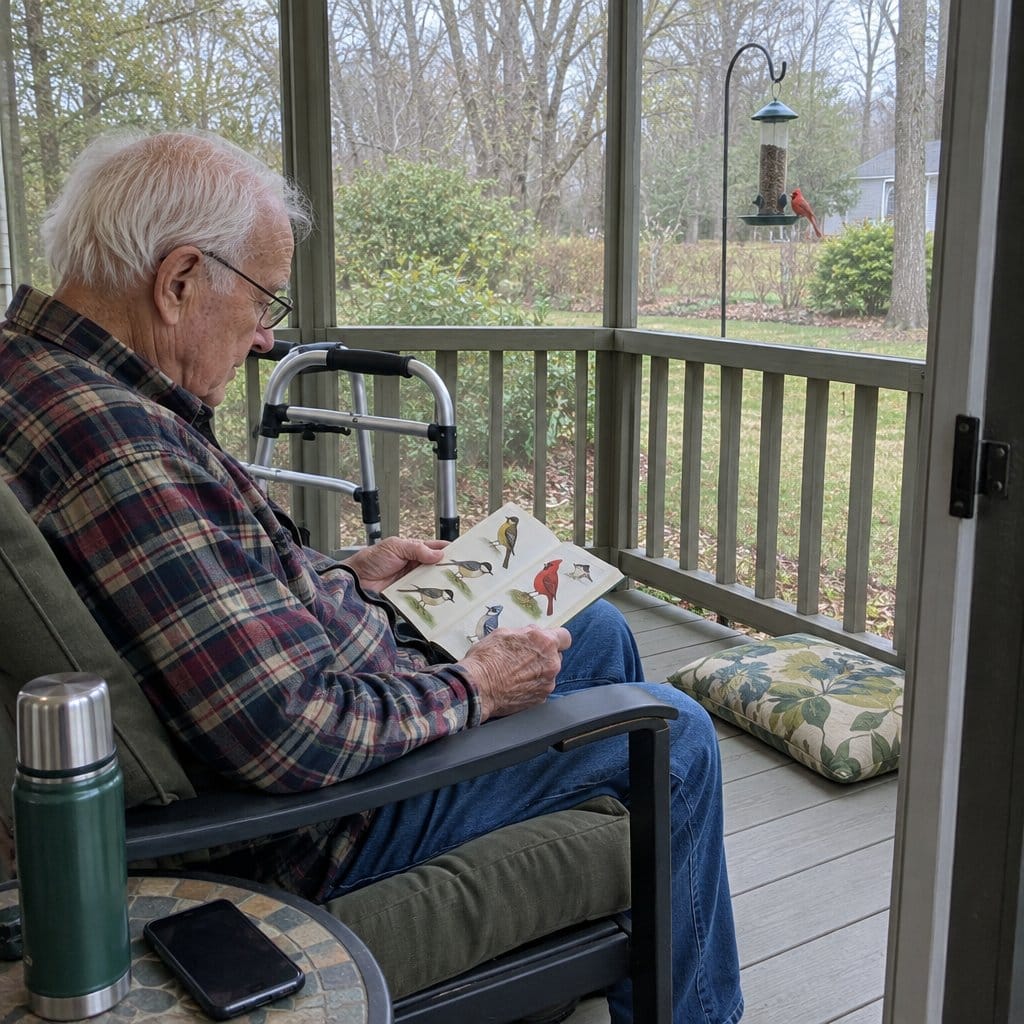
Bird-watching is an easygoing hobby. Choose comfortable gear like a sturdy chair and binoculars to make it more enjoyable. Pick spots that are easy to reach and have a rest area nearby.
Here are a few tips:
- Start Simple: Identify common birds in your backyard. It’s a gentle introduction to birding.
- Join a Group: Connect with fellow bird-watchers. Sharing observations can enrich your experience.
- Record Your Sightings: Keep a bird journal. It helps recall the special moments you’ve had.
To keep bird-watching sustainable, being mindful of the environment is key. Follow these practices:
- Respect Nature: Stay on marked trails and observe from a distance.
- Support Conservation: Visit local parks that contribute to wildlife preservation.
- Bird-friendly Gardens: Grow native plants that provide food and shelter for birds.
You can learn about the relationship between bird-watching and sustainability from research on bird-watchers’ preferences. Remember, every small step contributes to a better future for you and the birds you enjoy watching.
Infographic: Unleash the Joy of Bird-watching: Your Gateway to Nature & Wellbeing
Click to View Full Size

Share on Your Site With This Code:
<a href="https://grayingwithgrace.com/birdwatching-benefits-for-seniors/"><img style="width:100%;" src="https://grayingwithgrace.com/wp-content/uploads/2024/03/Joy-of-Bird-Watching-Infographic.png"></a><br>Design by: <a href="https://grayingwithgrace.com">Graying With Grace</a>
Time to Spread Your Wings
In conclusion, bird-watching is a simple, yet rewarding activity that can enhance your well-being. By reconnecting with nature, you’re not only enriching your own life but also contributing to the conservation of our shared environment.
Now, it’s time for you to take the first step. Grab a pair of binoculars, find a comfortable spot, and start exploring the beautiful world of birds right in your backyard. Remember, bird-watching is not a race. It’s a journey to be savored, one bird at a time.
Don’t forget to share your new hobby with others. Encourage your friends to join you on your bird-watching adventures and share your experiences on social media. You never know who you might inspire to embark on their own bird-watching journey.
Finally, feel free to ask any questions or share your bird-watching experiences in the comments below. We’re always eager to hear about your discoveries and the joy bird-watching has brought into your life.