

If you want the short list, these are my top house cleaning picks for seniors, and you’ll find the details on each one further down.


You look around the house, see everything that needs doing, and wonder where on earth to start. These house cleaning tips for seniors are meant to make that feeling smaller.
A clean home really does help you feel better. Here you’ll find ways to de-clutter and set a simple schedule, plus a vacuum you can manage and long-handled tools if arthritis makes bending and gripping hard.
I also cover food storage, dishes, and cleaning the bathroom and shower without the strain.
Tip #1: De-clutter, De-clutter, De-clutter
Many of us have gathered treasures over the years that are hard to give up. The more items you have in your home, the more you have to clean and the more difficult it is to clean. Get rid of items that are never used and put items that have sentimental value but no actual use in storage.
You can also choose to pass sentimental items on to loved ones. Other items can be given to charity or sold if they have financial value. Once you have de-cluttered, organization is key. Pack away as many items away in closets, cupboards, drawers or use other organizing solutions. If you are struggling to de-clutter and organize, hire a professional organizer or ask your home care assistant for help.

Tip #2: Make A Cleaning Schedule
Cleaning can be physically hard, and it is also easy to forget a task or two. Making a schedule and sticking to it will ensure that every area of the house is cleaned regularly and that you haven’t forgotten anything.
Prioritize rooms that are used the most like the bathroom and the kitchen that need regular cleaning. Take the time to create a well organized kitchen for seniors so they can work efficiently and safely.
Break-up the tasks as much as possible according to the day of the week and time of day. For example, washing dishes or loading the dishwasher can be done every night before bed while vacuuming can be scheduled weekly. Instead of having just one cleaning day, clean everyday and achieve one task at a time.
Tip #3: Vacuum Instead Of Sweeping
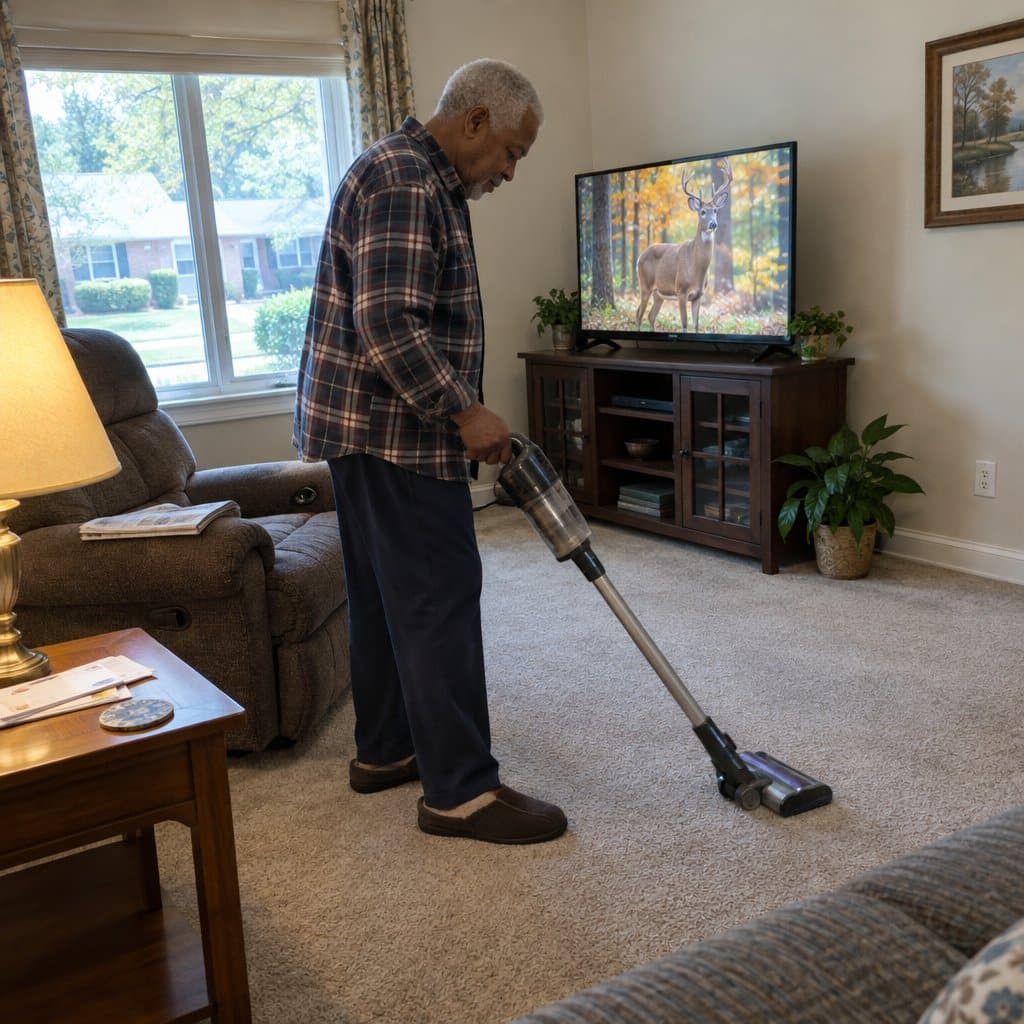
Vacuuming has many benefits over sweeping. It’s faster plus it sucks up the dust, dirt and debris far more effectively than sweeping. It also prevents dust from being swirled around into the air which happens when you sweep. This dust lands back on the floor and on other surfaces which means that more cleaning will be needed. A lightweight, upright vacuum is a good pick.
Choosing a Vacuum That Is Light Enough to Handle
A vacuum is meant to make life easier. It picks up dirt and debris from carpets and hard floors. It also works for dusting surfaces and objects, and for cleaning upholstery and drapes.
A heavy one works against you, though, because lugging it around makes cleaning harder. Plenty of very light vacuums clean as well as the heavy models and are much easier to handle.
A stick vacuum is a good choice. You can use it upright on floors, or detach the part you hold to clean smaller spots and places that are hard to reach. I have a guide to help you choose a lightweight vacuum cleaner if you want more detail.
A robot vacuum takes even more of the work off you. You program it, set it to work, and it does the floors. Look for one that is easy to use, because some of them seem to need a degree to operate.
The trade-off is upkeep. A robot vacuum has to be emptied and cleaned out every once in a while, the same as a regular vacuum.
Tip #4. Food Storage
Being organized in the way that you store food is extremely important. Perishables in the refrigerator can become a health hazard when they pass their expiration date and should be thrown out as soon as possible.
But, non-perishable items like dry and canned foods also expire. These should also not be consumed after their expiry date and should preferably be disposed of. Check your refrigerator at least twice a week for expired foods and dispose of them. Check the pantry or food cupboard once a month and throw out expired food.
Tip #5: Label and Clean Out Leftovers
A smaller appetite is common, and it can mean reduced appetite and lots of leftovers. You don’t have to waste these leftovers and can store them in the refrigerator to be eaten at a later date. It is best to consume cooked food items that have been refrigerated within a day or two.
However, it is important not to forget that you have leftovers in the refrigerator. Labeling the containers as to the contents and the date that they were refrigerated can help you avoid eating leftovers that may have gone bad. You should also dispose of leftovers in containers that are more than two days old during your bi-weekly refrigerator expired food check.

Tip #6: Don’t Put Off the Dishes
Washing dishes is one of those daily tasks that can quickly become overwhelming. Leaving dishes to be washed later can lead to a mountain of dirty dishes and a chore that is overwhelming. Washing dishes after every meal or even daily is not always possible.
The solution is however simple: invest in a dishwasher. It is far easier to rinse and stack dishes in a dishwasher after every meal than it is to wash them by hand. You only need to run the washer once it is full. Don’t have cabinet space? There are portable dishwashers that hook up to the kitchen sink without needing to be installed!
Tip #7: Keep Toilets Clean From the Inside
Toilets are germ-factories and need to be cleaned regularly. One way to cut down on scrubbing is to place a bottle of vinegar with small holes poked in it in the tank.
Vinegar is an effective cleaner and will keep the toilet clean for weeks. Remember that this solution only cleans the bowl of the toilet and you are still going to need to wipe down the seat and lid or other areas that the water doesn’t reach, preferably with bleach. If you use bleach, never mix it with vinegar or other cleaners, open a window, and wear gloves.
Tip #8: No Bending While Cleaning the Bathtub Or Shower
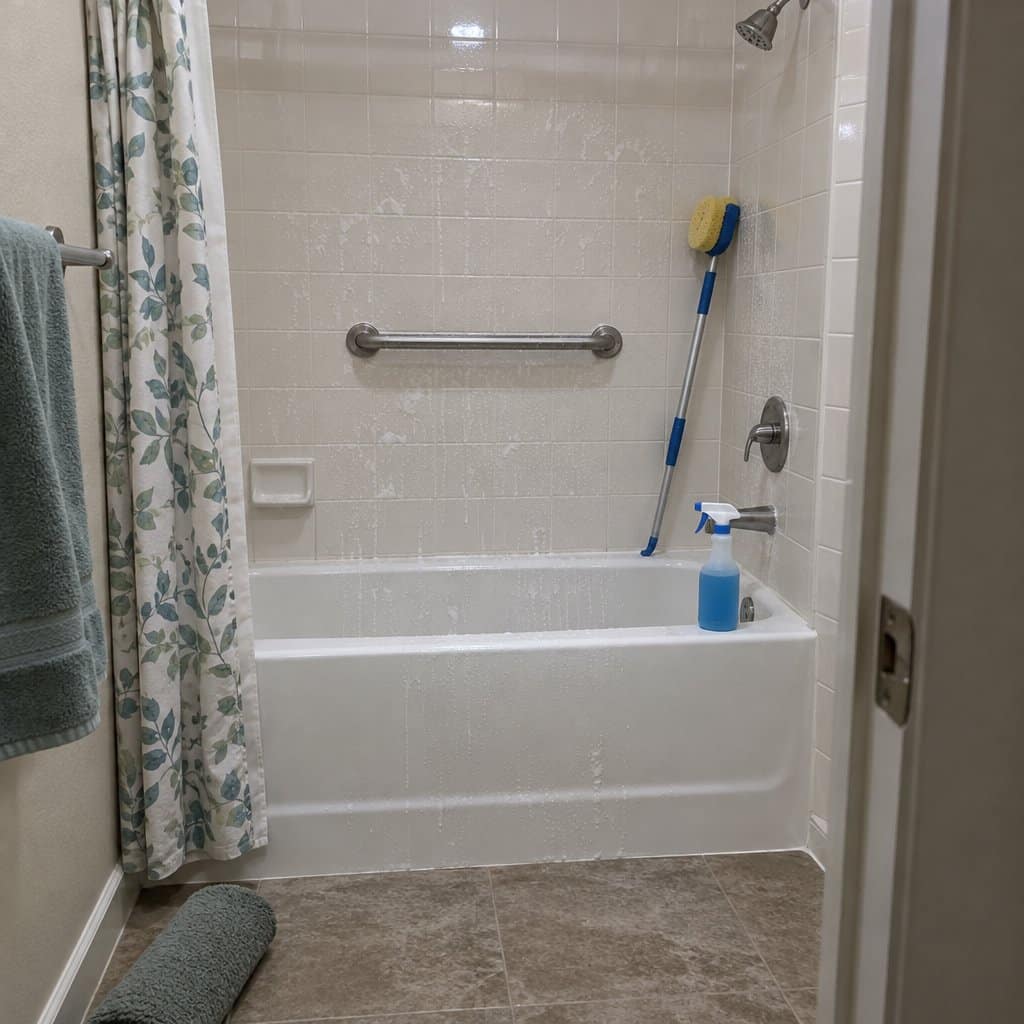
These are two of the most difficult house cleaning chores, especially if you have mobility issues or pain. Dilute dish washing liquid or vinegar with water and place in a spray bottle. Do this with the water off, a window open or the fan on, and a non-slip mat in place. Spray the bathtub or shower liberally and leave to work for 10 to 15 minutes. Use a sponge on an extendable handle to wipe the shower or tub and then rinse with a handheld shower head. This shouldn’t require any bending or stretching to get the job done quickly and effectively.
Bathroom Cleaning Tools and Staying Safe While You Use Them
The bathroom is hard on anyone with limited mobility or who can’t get down on hands and knees to scrub. The right tools let you get the same clean without that.
Look for three things: tools that are lightweight, tools that adjust or extend, and tools with a motor. Adjustable angles, extension arms and detachable heads let you reach the tub and the corners without bending. A lightweight tool means you aren’t spending all your energy just lifting it. A built-in motor does the scrubbing, which takes a lot of strength and energy by hand.
An electric spin scrubber is a good example. Look for one that is cordless, so you have no wire to trip over. It should have several brush heads for different surfaces, an arm that extends and retracts, and a head with adjustable angles. A lightweight aluminum build helps too.
A small handheld power scrubber is handy for grout, tile and tight spaces. For the tub and floor, you will want one with an extension pole.
A microfiber cloth belongs in your cleaning kit. It is soft, absorbent, reusable and won’t scratch surfaces, so you don’t need to worry about how hard you press. An extendable duster with a microfiber head and a rotating head can take care of cobwebs and high spots.
A robot vacuum and mop can handle the floor while you clean everything above it, if your space suits one. Keep it in another room while you work in the bathroom. I also have a guide to bathroom accessories for seniors that can make the room easier to use and clean.
A few safety habits matter just as much as the tools:
- Use extensions so you never stand on tiptoe or reach off balance.
- Clean the floor last, or let it dry completely before you clean anything else.
- Wear clean shoes with traction, since water will get on the floor.
- Take rugs out of the room while you clean, and wash them at the same time. When you put one back, choose one of the best non-slip bathroom rugs. Rugs are one of several bathroom hazards worth knowing about.
While you are in there, a faucet that is easier to turn makes rinsing less of a chore.
The trade-off is that lightweight tools are usually less effective than heavy, durable ones. If you have the strength to handle heavier tools, they will likely clean better.
High Reach Ceiling Duster
Dust and cobwebs collect up high, where a step stool is the only way to reach them. This kit is built to remove the need for one.
It comes with an all-aluminum telescoping pole that extends from 5 to 12 feet, and the listing says total reach goes up to 20 feet. The heads come off and swap out: a flexible ceiling fan duster, a cobweb duster, a microfiber feather duster, and a 2-in-1 window squeegee and cleaner. A universal joint helps with awkward angles, and a wall rack keeps the pieces in one place.
It suits anyone who wants to clean ceiling fans, corners, tall furniture and high windows from the floor. You keep both feet on the ground, which is the point.
The trade-off is that a long pole with a head on the end takes some arm strength to hold steady. If lifting your arms overhead is hard or tiring, it may not be the right fit. Start at the shorter lengths and extend it only as far as you need.
Amazon Basics Microfiber Cleaning Cloths
A good cloth does half the work for you. These Amazon Basics microfiber cloths come in a pack of 24, each 16 by 12 inches, so you can keep a few in every room instead of carrying one around.
They are soft and non-abrasive, so they won’t scratch glass, vinyl, painted surfaces or other finishes. You can use them dry for dusting or with a liquid cleaner for streak-free, lint-free results. They soak up spills and wet counters well.
They are reusable hundreds of times and machine washable. Wash them separately before first use, and wash them with like colors.
The trade-off is that 24 is a lot of cloths. If you only need a few, a pack this size will sit in a drawer. A cloth also only helps so much on stuck-on grime, where you may still need a scrubber or a little patience.
Tip #9: Use the Right Tools for Cleaning Floors
Sweeping and mopping floors is another regular cleaning task that can be difficult. Remember that you can vacuum hardwood floors simply by changing the setting on your lightweight vacuum. Use a spray bottle with diluted detergent instead of a heavy bucket of water and a microfiber mop to take the hard work out of washing floors. Rinse your mop and use a spray bottle with clean water to rinse floors. Always clean up spills as soon as possible.
Long Handles That Save You From Bending and Stretching
Nearly every cleaning tool comes in a version with a longer or extendable handle. Brooms, mops, scoops, sponges, window cleaners and brushes can all be bought this way.
A longer handle lets you reach high and low places without bending or stretching. The less you have to move, and the more you let the tool do the job, the easier the chore gets.
If you already own tools you like, you can buy an extendable handle that attaches to your cleaning equipment. That way you don’t have to replace everything.
A sponge on an extendable handle is a good example. It lets you wipe a tub or shower without getting down to it.
A lightweight vacuum helps here too. If you are shopping for one, I have a guide to the best lightweight vacuum cleaners for older adults. Many come with a hose attachment, which can handle dusting without any stretching on your part.
The trade-off is that a long handle puts the tool farther from your hand. You may need a little practice to get the same feel and pressure you had up close.
Copper Compression Half Finger Gloves

These are fingerless compression gloves with copper woven in. They give your hands gentle, steady pressure, which is meant to ease swelling, soothe aching joints and help circulation. The package holds one pair.
They are recommended for arthritis, carpal tunnel and tendonitis. That makes them a fit if wiping counters, wringing out a cloth or scrubbing a pot leaves your hands sore.
Because the fingers are left free, you can still grip a spray bottle, button a shirt or pick up a small item without taking the gloves off. They are listed as FSA/HSA approved, a Class 1 medical device and FDA registered.
The trade-off: these are not waterproof gloves. They are for support, not for wet work, so you will still want a pair of rubber gloves over them or off them for dishes and heavy scrubbing. Compression also should not feel tight or numb. If it does, or if you have circulation problems, ask your doctor first.
Cleaning Tools That Do the Hard Work for You
My grandfather always said, “Let the tool do the work,” and “Always use the right tool for the job.” Cleaning is a good place to follow that advice. If you want a lightweight vacuum to go with the tools below, I put together a guide to choosing a lightweight vacuum cleaner.
A combination sweeper and mop has a larger cleaning surface and uses disposable wet and dry pads. It is lighter than an old-fashioned broom or mop, and the wider handle is easier to grip. The handle also holds the detergent, so you don’t need a bucket of water to rinse the mop or carry around.
An electric floor mop works much the same way, with disposable pads, and needs no elbow grease on hard floors. It is cordless and rechargeable, and cleans for around 20 to 30 minutes before it needs charging. Pick a lightweight model, because it is easier to maneuver.
A dishwasher saves your hands and nails from the washing, gripping and pressing that dishes take. You rinse each dish, load it, and start the wash and dry cycle once the machine is full. A counter-top dishwasher suits anyone with back pain or arthritis, since there is no bending down to load and unload.
A sonic scrubber looks like an electric toothbrush and works much the same way. It has interchangeable brushes for different kinds of dirt on different surfaces, so tough grime takes far less scrubbing. Most are cordless and battery operated, and a rechargeable one is ready whenever you need it.
Extendable handles cut down on bending and reaching, and they get you into hard to reach places. A handle fits most traditional tools like brooms, mops, brushes and sponges. You can also buy tools that already have long or extendable handles, so you aren’t swapping one handle between tools.
Microfiber cloths and sponges replace most ordinary ones. The ultra-fine fibers pick up dirt and grime much more effectively. Used dry, they pick up the finest dust without swirling it into the air. They come in many shapes, sizes and colors, and some are extra absorbent.
The trade-off is upkeep. Sonic scrubber brushes wear out and need replacing from time to time, and the electric mop needs its battery charged between jobs.
Swiffer Sweeper Mop And Broom
The Swiffer Sweeper is a flat-head floor tool that uses a disposable cloth to pick up dirt, dust and hair. It works as a broom or a mop, depending on which cloth you snap on. The starter kit comes with the sweeper, 2 dry refills and 1 wet refill, so you can start right away.
The maker says it leaves floors cleaner than a broom on dirt, dust and hair. The dry cloths are thick and shape themselves to the floor and the grout lines, so they trap the dirt instead of pushing it around. Because the dirt stays in the cloth, you don’t have to bend down with a dustpan.
It suits anyone who wants a quick pass over hard floors without hauling out a bucket. The trade-off is that the cloths are single use, so you will be buying refills as you go. It also only cleans hard floors, so it won’t help with carpet.
MR.SIGA Microfiber Cleaning Cloths
These are microfiber cleaning cloths, sold as a 12 pack in color-coded sets. They are made of 85% polyester and 15% nylon, and they are meant to be used with water or without.
The cloths soak up spills on counters and tables, and they are described as lint free and streak free. That makes them handy for mirrors, windows, appliances and glasses. They are also non-abrasive, so they suit surfaces that scratch easily.
The color coding is handy for a household. You can keep one color for the bathroom, another for the kitchen, and a third for dusting, so nothing gets mixed up. They are reusable, so you can wash them and use them again instead of buying paper towels.
One trade-off: a cloth only cleans as well as the hand holding it. If wringing out or scrubbing is hard on your hands, a cloth alone will not fix that, and you may want a long-handled tool with it.
Floor Cleaning Tips That Go Easy on Your Back and Joints
Keeping dirt off the floor is the best way to have less floor to clean. Take your shoes off at the door and wear socks or soft slippers inside. Some socks and slippers are even made to pick up dust as you walk. Ask visitors to do the same, and don’t feel embarrassed about asking.
Draft excluders on your entrance doors keep dust and debris from blowing in underneath. Dirt-trapping doormats outside the doors help too, and they need a good shake or beating now and then. Inside, rubber-backed area rugs or runners protect your floors and carpets. The kind you can toss in the washing machine are best.
When something spills, clean it right away. A fresh mess is easy to wipe or sweep up. Left alone, a wet one turns sticky and spreads, and a dry one spreads too instead of getting picked up.
Microfiber sweepers and mops pick up dirt faster than a traditional mop or broom. If you have back or joint pain, choose long handles so you don’t have to bend.
Let the detergent do the scrubbing. Wet the floor with diluted detergent and leave it for 5 to 10 minutes. It loosens the dirt, so you don’t have to go over the same spot again and again or press hard.
Skip the bucket. Put the diluted detergent in a spray bottle, spray the floor, wait a few minutes, then mop. Rinse the same way with clean water in a spray bottle that is easy on the hands. Rinse the mop in the kitchen sink, so you aren’t lugging a heavy bucket or bending down to the floor.
For loose dust and debris, vacuum instead of sweeping. A vacuum works on hard floors too, not just carpet. A lightweight upright vacuum puts much less strain on your joints and back.
You don’t need to wash every floor every day. Clean one room a day instead. Kitchen, bathroom and hallway floors usually need attention every 2 to 3 days. A bedroom can wait a week between vacuuming. Schedule the bedroom and sitting room for the day after the kitchen or bathroom.
Let floors dry fully before you walk on them, to prevent falls. Using less water and detergent helps them dry faster, and the spray bottle method does just that. A wet floor also holds onto dirt, while a dry one stays clean longer.
The trade-off is patience. Waiting for the detergent to work and the floor to dry takes time, so plan the room for earlier in the day and do something else while you wait.
Tip #10: Ask For Help!
Some cleaning chores may be more than you can do on your own, and that is nothing to be embarrassed about. Ask friends and family for help. You can also hire a home care assistant to help with household chores and other tasks that have become harder to manage.
Do you have other tips to make cleaning easier? Please share in the comments below!







Thank you for sharing these important tips. They are quite useful and functional. I’m definitely going to try it. The way you explained it was excellent. It was useful. Post more thoughtful advice frequently.
Robots do help a lot with the cleaning.