

You reach for a spatula or a knife and it slips, or your hand aches before the meal is even on the table. The right kitchen utensils for seniors can make cooking feel easy and enjoyable again.
This article covers how to tell when your tools are working against you, the features worth looking for, and a few common challenges to plan around. It also covers eating utensils, clips and straps, knives, slicers, cutting boards, and tips for keeping cooking safe.


Understanding Your Needs

Signs It’s Time for Specialized Utensils
- Your current utensils feel too heavy or unwieldy
- You’re experiencing hand fatigue while cooking
- You’ve noticed increased dropping of utensils
- You’re concerned about burns or safety
- Your existing tools are hard to see or locate
Common Challenges in the Kitchen
Certain conditions can affect how you handle kitchen tools:
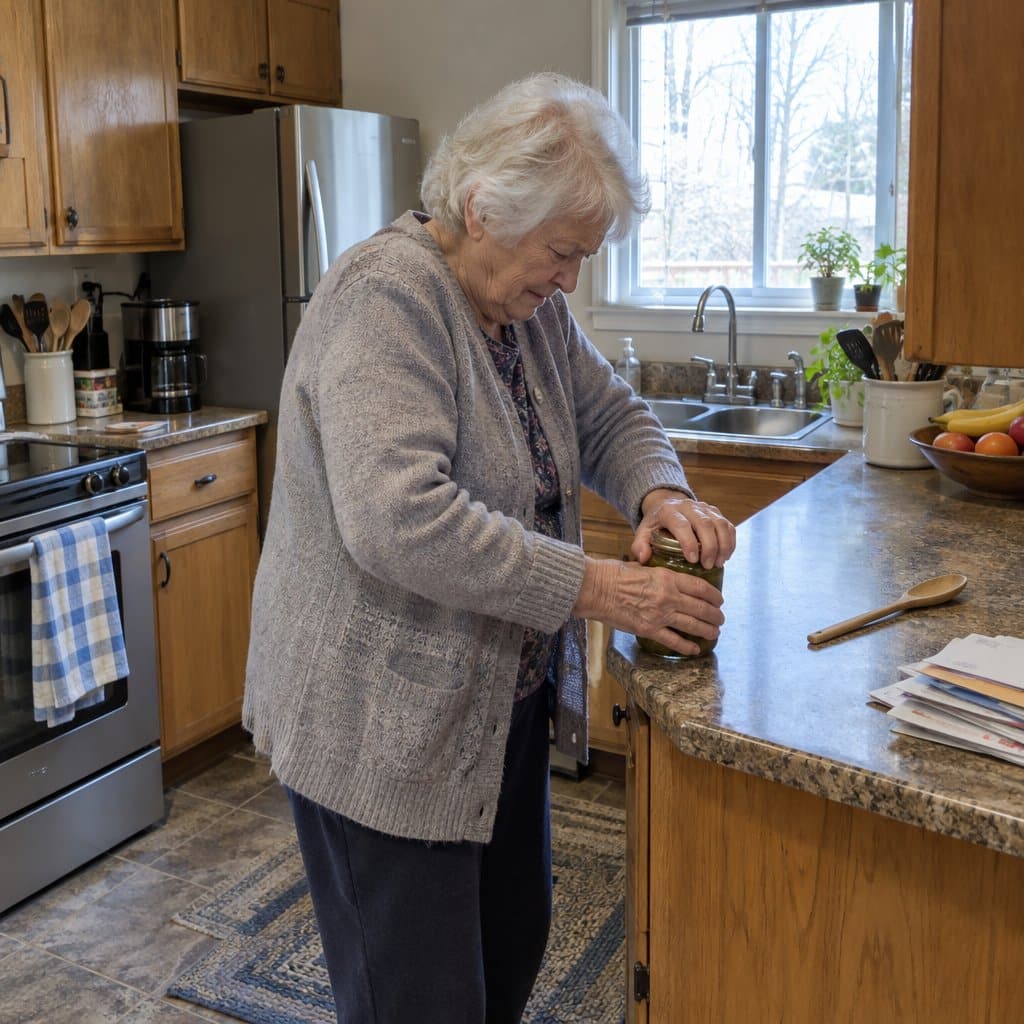
- Reduced grip strength making it harder to hold utensils securely
- Arthritis causing joint pain and stiffness
- Vision changes making it difficult to see tools clearly
- Balance and coordination changes requiring more stable tools
- Reduced sensation to heat increasing burn risk
Key Features to Look For
Safety Features
- Heat-resistant materials that prevent burns
- Non-slip grips that stay secure even with wet hands
- Appropriate handle length for safe distance from heat
- Rigid construction to prevent food dropping
Ergonomic Design
- Comfortable grip thickness for arthritic hands
- Thumb rests for better control
- Balanced weight distribution
- Easy-to-maneuver shapes and sizes
Material Considerations
- Silicone heads for scratch-free cooking
- Stainless steel cores for stability
- BPA-free materials for food safety
- Heat-resistant properties throughout
Practical Features
- Dishwasher-safe for easy cleaning
- Multiple storage options (drawer, hanging, countertop)
- High-contrast colors for visibility
- Versatile shapes for different cooking tasks
Product Recommendations
Here are the sets I looked at, based on their features and what buyers report:
HOTEC Silicone Spatula Turners

ChefAide Silicone Spatulas

Tongjude Silicone Spurtle Set


Silicone Kitchen Utensils Set

Finding the Right Tools for Different Needs
For Independent Seniors with Arthritis
Best Choice: Traditional silicone-head sets
- Key Features:
- Ergonomic handles with thumb rests
- Well-balanced weight distribution
- Non-slip grip surface
- Perfect For: Daily cooking with reduced hand strain
For Seniors with Cognitive Concerns
Best Choice: Full-length handled sets in bright colors
- Key Features:
- Longer handles for safety
- High visibility materials
- Heat-resistant throughout
- Perfect For: Maximum safety and peace of mind
For Active Cooks with Mild Limitations
Best Choice: Spurtle sets or premium silicone sets
- Key Features:
- Multiple tool options
- Versatile designs
- Modern, non-medical appearance
- Perfect For: Maintaining cooking enjoyment and style
For Those with Vision Difficulties
Best Choice: High-contrast colored sets
- Key Features:
- Bright colors (especially red)
- Clear handle definition
- Easy-to-distinguish shapes
- Perfect For: Easy location and confident use

Eating Utensils, Clips, and Straps for Arthritic Hands
Once the cooking is done, you still have to eat what you made. With arthritis, that can be hard, because regular cutlery is small and hard to grip.
Fingers slip and slide over metal handles. You may also lack the strength to press down and cut food into bite-sized pieces.
Cutlery with padded handles helps. The thick material is soft and non-slip, so it does not press painfully on your joints.
Handles that are angled mean you do not have to twist your wrist to hold on. Pairing these with scoop plates or bowls makes eating easier.
If one hand is more affected than the other, look at the all-in-one utensils. These have a fork on one end and a cutting edge on the other, which suits one-handed use. Some have a spoon on the other end instead of a fork.
Eating utensil clips and straps are another option. They are usually made of plastic, cotton, or leather. A little pocket holds the end of the fork or spoon, and the strap fastens around your hand so you can hold on more easily.
Some models hold the utensil completely if you cannot grip it yourself.
Spill-proof cups are worth a look too, if spills are common. Spill-proof cups are one more way to keep a meal from turning into a mess.
If you rely on a microwave for most meals, a simple microwave made for seniors can keep that part of your kitchen manageable too.
Clips and straps will not work for everyone. Some seniors say aiming the utensil is difficult, and there are occasional complaints about them pinching the hand. Try one style at a time to see what suits you.
If chewing is also a worry, these soft foods may help.
Sammons Preston Sure Grip Rocker Knife
A rocker knife cuts with a back and forth rocking motion instead of a sawing one. The Sammons Preston Sure Grip Rocker Knife is built this way, so you press down and rock the blade through the food.
The handle is thick, ribbed rubber, 4″ long and 1-1/2″ wide. That gives your hand something soft to hold onto, which helps if arthritis makes thin metal handles hard to grip. The knife is 8″ long overall, and it lets someone with one working hand cut food without help.
The blade is stainless steel and the knife is latex free. It goes in the dishwasher, as long as the water stays under 125º.
One trade-off: a rocker knife works best on soft to medium foods like meat, pancakes and cooked vegetables. If you need to cut something very tough or crusty, you may still want a regular knife and some help.
CraftyCrocodile Egg Slicer

Cutting a hard-boiled egg or a strawberry with a knife takes a steady grip and a firm hand. The CraftyCrocodile Egg Slicer swaps that for one press of your palm.
It has three cut modes: slices, wedges, and dice. It works on eggs, and also on strawberries, mushrooms, grapes, and cherry tomatoes. Pressing with your palm needs no grip and no fine hand control, which helps if arthritis or weak hands make a knife hard to manage. The body is stainless steel and it has a built-in container, so you can slice and store without dirtying another dish. Reviewers say it works well on eggs and strawberries.
The trade-off is that it takes a little fiddling with some foods. Extra-large eggs may need repositioning before you press. Small foods like grapes have to be seated carefully in the cradle to cut cleanly. If you mostly cut larger items, like a whole apple or an onion, this won’t replace your knife.
Knives, Slicers, and Cutting Boards for Sore Hands
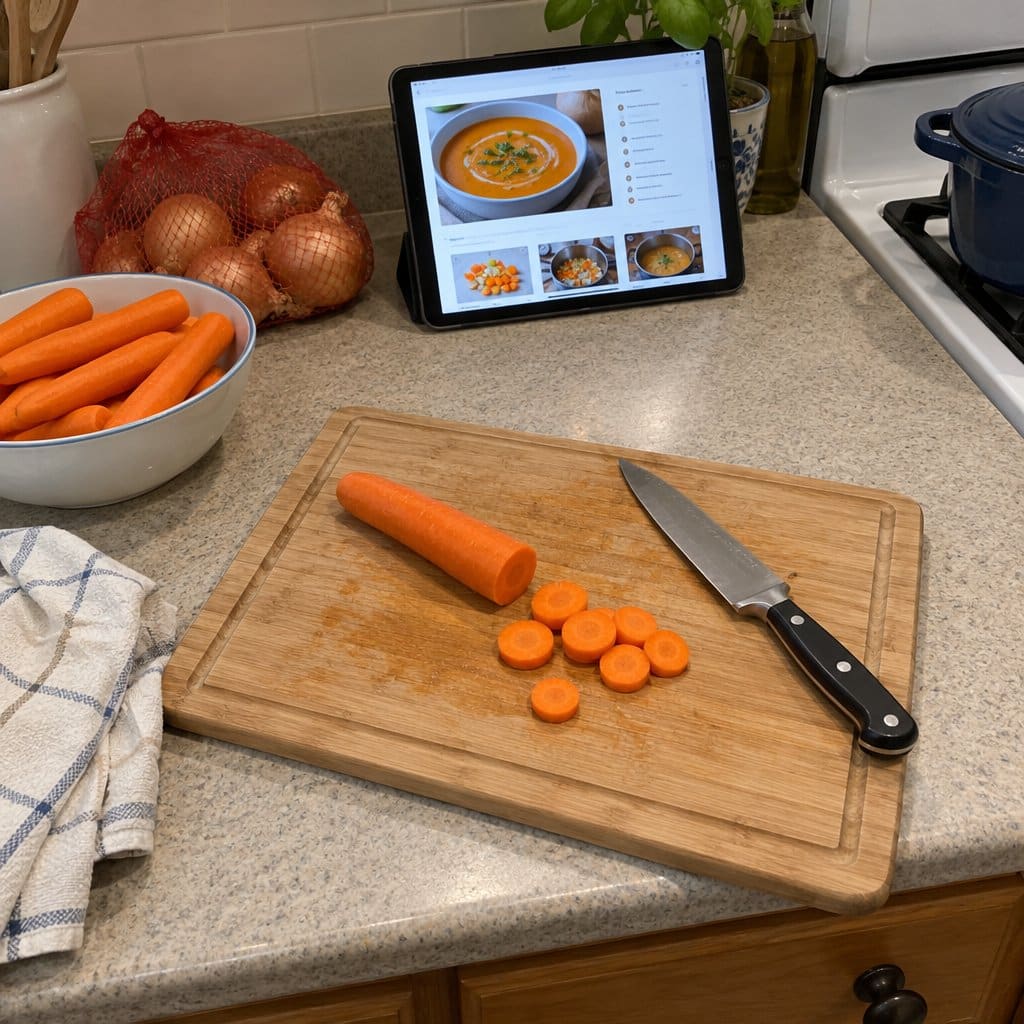
You are most likely to get hurt in the kitchen while prepping food to cook. That is when the sharper tools come out and when you need the most hand strength, so the pain is usually worse too.
If you still like using a knife, look for handles made for sore hands. Some are thicker than normal, and some are heavily padded.
Other knives have a handle twisted at a right angle to the blade, which is easier and safer to hold. A rocking knife cuts almost any food with much less strength and dexterity.
If cutting is still a struggle, a slicer may help. It takes only one hand, and a mandoline slicer can be easier than a knife for vegetables, fruits, and hard cheeses. Mind the blade, though, and use the hand guard that comes with it.
Handheld plastic slicers are a gentler choice if your hands are weak or unsteady.
Your cutting board matters too. If it slides on the counter, put a non-slip mat underneath.
Some boards have built-up sides or prongs that hold the food in place. That leaves both hands free for the knife. Others come with a grater built in.
What works varies from person to person, so try a few knife styles before settling on one. Think about how you use your cutting board and which features you would use often before you buy.
Sore hands affect more than cooking. Arthritis can make even using a computer mouse uncomfortable.
Even if you only use a microwave for meals, you still have to stir and prep food. Lightweight cookware is also worth a look.
If you are shopping for someone else, these kitchen gift ideas are a place to start.

Making the Transition
How to Introduce New Tools
- Start with one or two pieces you use most often
- Practice with new tools during low-stress cooking times
- Keep old favorites nearby while adjusting
- Focus on the enhanced safety and comfort features
Overcoming Resistance
Change can be challenging, but remember:
- These tools are about maintaining independence
- Modern designs don’t look “medical” or stigmatizing
- The right tools can bring back cooking enjoyment
- Safety features provide peace of mind for you and your loved ones
Building Confidence
- Start with simple, familiar recipes
- Notice how the new features make tasks easier
- Celebrate the reduced strain on your hands and joints
- Share your cooking successes with family and friends
Tips for Success

Proper Technique
- Keep elbows close to body when possible
- Use the thumb rest for better control
- Let the tool’s weight do the work when possible
- Choose the right size tool for each task
Safety Guidelines
- Always check handle temperature before gripping
- Use appropriate handle length for your needs
- Keep tools clean and dry for best grip
- Store tools where they’re easy to reach without stretching
Care & Maintenance
Cleaning & Storage
- Most silicone utensils are dishwasher-safe (top rack)
- Hand washing is fine with warm soapy water
- Store in drawers or use hanging holes for easy access
- Consider counter canisters for frequently used items
- Note that silicone can collect dust if left out, but a quick rinse solves this
When to Replace
Replace your utensils when you notice:
- Visible wear or damage
- Reduced rigidity in the tool
- Changes in grip comfort
- Any melting or deformation
- Loss of non-slip properties
Take Control of Your Kitchen Experience
Cooking can continue to be a safe, enjoyable, and fulfilling activity with the right tools by your side. By choosing utensils that prioritize comfort, safety, and ease of use, you can maintain your independence and confidence in the kitchen. Start by identifying the challenges you face, selecting one or two tools that address those needs, and practicing with them during your favorite recipes. Small changes can make a world of difference.
If you want help picking those one or two tools, this piece explains what makes kitchen tools work when grip strength is low.
Have you tried any senior-friendly kitchen utensils? Which features matter most to you? Share your thoughts or ask any questions in the comments below. And if you found this guide helpful, don’t forget to share it on social media to help others make their kitchens safer and more enjoyable.
Need more help choosing the right kitchen tools? Feel free to reach out with questions. Your independence in the kitchen matters, and I’m here to help you maintain it safely and comfortably.










Great tips! Ergonomic handles and non-slip grips are game-changers for safety and comfort in the kitchen.