If you want the short list, these are my top coloring book picks for seniors, and you’ll find the details on each one further down.


My Top Recommendation

A Few More Favorites:


You sit down with a cup of tea and want something calming to do with your hands. The best coloring books for seniors can be just that: relaxing, easy to see, and not at all childish.
This article covers my favorite picks, including ones for dementia. It also covers what to look for in a book, the pencils, grips and lap desks that help, and how to handle low vision, sore hands and fatigue. You will also find gentle ways to start a coloring routine.

My Recommended Coloring Books for Seniors
Here are my personally selected coloring books for seniors and elderly adults. Be sure to check out the video above for a walkthrough of each one.
For seniors seeking a stress-relieving floral coloring experience, I recommend the Simple Coloring Book for Seniors. Featuring 30 beautifully-crafted flower illustrations like orchids, roses, and tulips, this book’s well-spaced, single-sided pages are ideal for beginners.
The large print designs cater to the capabilities of seniors, with simpler motifs to color that are relaxing yet still spark creativity.
Coloring the gorgeous flowers fosters mindfulness as you focus on the details of each botanical drawing. The floral themes deliver a peaceful, meditative coloring experience for older adults.
With its combination of easier illustrations and lovely nature imagery bound in a convenient book, the Simple Coloring Book for Seniors makes a wonderful gift to help introduce a senior in your life to the stress-relieving benefits of coloring as an enjoyable hobby.
Senior Coloring Book For Dementia
If you are looking for a coloring book for someone living with dementia, Alzheimer’s or Parkinson’s, this one is made with that in mind. It is called Senior Coloring Books Dementia, and the pictures are birds, flowers, butterflies and similar nature scenes.
It is a large print book, which here means big, open designs instead of tiny, crowded spaces. That makes it easier to stay inside the lines, or to not worry about the lines at all.
Simple pictures like these suit a quiet afternoon. There is no pattern to follow and no wrong way to do it, so a person can color as much or as little as they like.
The trade-off is that the designs are plain on purpose. If you or your loved one enjoys detailed, intricate work, this will probably feel too simple. It is also a book of pictures only, so it will not teach technique.
It fits best for someone who wants an easy, calm activity, or for a family member looking for something to sit down and do together.
QUOKKA Water Painting Dementia Activities
If you are looking for a calm activity for someone living with dementia, the QUOKKA Water Painting kit (Farm Memories) is worth a look. It skips the usual coloring book and uses water instead.
You wet the brush and paint over the page. The picture appears as the paper gets wet. There is no paint, no color choices, no scissors and no glue. All you need is the brush and some water.
That makes it a good fit for early- to mid-stage dementia and Alzheimer’s. With fewer decisions to make, there is less room for frustration and no wrong answer. It is also mess-free, which caregivers tend to appreciate.
The sheets are reusable. The image disappears as the page dries, and water brings it back. So one kit can last through many sessions.
There are two things to know first. Because the images fade, there is no finished picture to hang on the refrigerator. A caregiver expecting a keepsake may be a little disappointed, or the person painting may be confused when the picture disappears.
Only one brush comes in the kit, and the handle may be too thin for someone with arthritis or a weak grip. A thicker brush could solve that. If the person tends to put things in their mouth, skip foam grips and other small items, or stay beside them while they paint.
If the person you care for enjoys making a lasting piece of art, a traditional coloring book will suit them better. If the goal is a quiet, easy activity, this one is a good choice.
For seniors who fondly remember 1950s cars, the Classic Cars of the Fifties Coloring Book offers a nostalgic experience. It features accurately detailed illustrations of 30 postwar automobiles.
While enthusiasts will appreciate revisiting classic brands like Cadillac and Corvette, note this book has a staple binding and double-sided pages. The binding can make it difficult to lay pages flat for coloring, and the two-sided pages limit medium options to avoid bleed-through.
However, the superior vintage car illustrations still provide engaging nostalgia. If you appreciate mid-century automotive designs and don’t mind the table-use format, this quality coloring book will thrill as you color your way through iconic models from your youth.
The limitations just require a bit of adaptation to fully enjoy the retro styling.

The Psalms in Color is an inspirational adult coloring book featuring Scripture verses from Psalms.
With 128 perforated pages and 62 beautifully-illustrated designs to color based on uplifting Psalms, it provides a relaxing way to reflect on motivational verses.
The paperback book has a lavish cover with foil accents and includes bonus cards and bookmarks to color and share.
However, it’s important to note many of the detailed designs feature small, intricate spaces that may prove challenging for some seniors.
But the book is also available in a spiral bound format, which allows pages to lay flat for easier coloring access.
For seniors who find small details manageable and will appreciate the encouraging Biblical focus, The Psalms in Color makes a thoughtful gift or personal item to enhance time with Scripture.
Just preview the motifs first or opt for the spiral version to ensure the charming designs suit your abilities.

The Zen Garden Adult Coloring Book offers 31 detailed Eastern-inspired motifs to help you find calm and creativity. Pages feature tranquil scenes of birds, butterflies, pagodas, pools, and more.
However, it’s important to note many designs are quite intricate, with smaller spaces not suitable for those with vision impairments or conditions like dementia that affect fine details.
But the superior paper thickness prevents bleed-through, and the micro-perforated pages allow for easy removal to display artwork when finished.
For seniors who enjoy complex designs and find the tiny details meditative rather than frustrating, the Zen Garden book provides a relaxing coloring experience.
But preview the pages first or select a different book if the ornate illustrations seem potentially stressful. While beautiful, the complexity won’t suit every senior’s therapeutic needs.
Large Print Stress Free Coloring Book
Large Print Easy Color & Frame: Calm is a stress-free coloring book made with large print in mind. The “Calm” in the title tells you the idea: relaxed coloring, not a test of your patience.
The large print format means the designs are meant to be easy to see and easy to work on. That helps if you have low vision or find tiny, crowded patterns frustrating.
It suits someone who wants to sit down, pick up a pencil or marker, and enjoy coloring without squinting or fussing over fine detail.
The trade-off is that if you love intricate, elaborate patterns with hundreds of small spaces, this probably won’t hold your interest. It is built for ease, not for a challenge.
Key Features to Look for in Senior Adult Coloring Books
Choosing an adult coloring book that is easy to see and easy to color makes for a more enjoyable experience. As you compare books, here are the top features to look for:
Thicker, Bolder Lines
I recommend looking for bold, thick lines. Thicker lines are easier to see and define better than thin, intricate designs. They are also more forgiving if you are the type of colorer who seeks perfection.
Seeking designs with high contrast between the lines and background colors also improves clarity. Dark lines printed on white or light paper give that bold definition.
Larger Spaces to Color
Aim for coloring books that have generous spacing between lines and components. Books with tiny, crowded details can become frustrating for unsteady hands.
Wider blank areas let you apply color comfortably without going out of bounds, and they make coloring mishaps less likely.
Softer, Light Paper
Flipping through sample pages, look for smooth, lighter paper. It gives just enough texture for coloring without heavy resistance.
Heavier cardstock strains your hands by requiring more pressure and control. Softer paper allows you to smoothly glide pencils and markers over the surface.
Be careful with coloring books that have thin pages which are more likely to lead to paper cuts.
Simple, Repetitive Designs
I suggest focusing on books with repeating patterns and less intricate details. The simpler the graphics, the less complex the coloring process becomes.
Intricate designs with lots of varied elements can feel overwhelming. Straightforward, repetitive motifs and shapes make for relaxing, meditative coloring.
Large Print Wording
If the coloring book includes any text on pages, look for large, clear lettering. Small lettering is hard to read.
Also look for adequate spacing between words rather than cramped lines. This keeps letters from blurring together.
Matte Paper
I recommend selecting books printed on matte rather than glossy paper. Glossy pages create annoying glare in light that strains the eyes.
Matte provides a glare-free surface, keeping the focus on the coloring rather than reflected light.
By considering these senior-friendly features, you can find books tailored to provide relaxing, achievable coloring sessions.
One-Sided Page Designs
I suggest selecting books printed on one side of each page whenever possible. Coloring on only the front prevents work from bleeding through to the next image.
This avoids the need to place extra sheets behind pages to block bleed-through, which can be difficult for arthritic hands to manage.
Sturdy Bindings
Spiral bound books allow pages to lay completely flat for the easiest coloring access. Avoid staple-bound books, as staples can be sharp and prone to cause injury to hands when smoothing or turning pages.
Perforated Pages
Some books feature perforated pages, so finished pieces can be easily removed. This allows displaying select pages or sharing pages with others without giving away the whole book.
It is easier to maneuver and color on a page that has been removed from the book first.
Themes and Images
Choose books with mature themes like nature, architecture, animals, and mandalas rather than juvenile images. Senior-focused coloring books cater to grown-up sensibilities and hobbies. Coloring books with nostalgic topics and scenes are excellent for reminiscing.

Choosing the Right Art Supplies and Assistive Products for Seniors
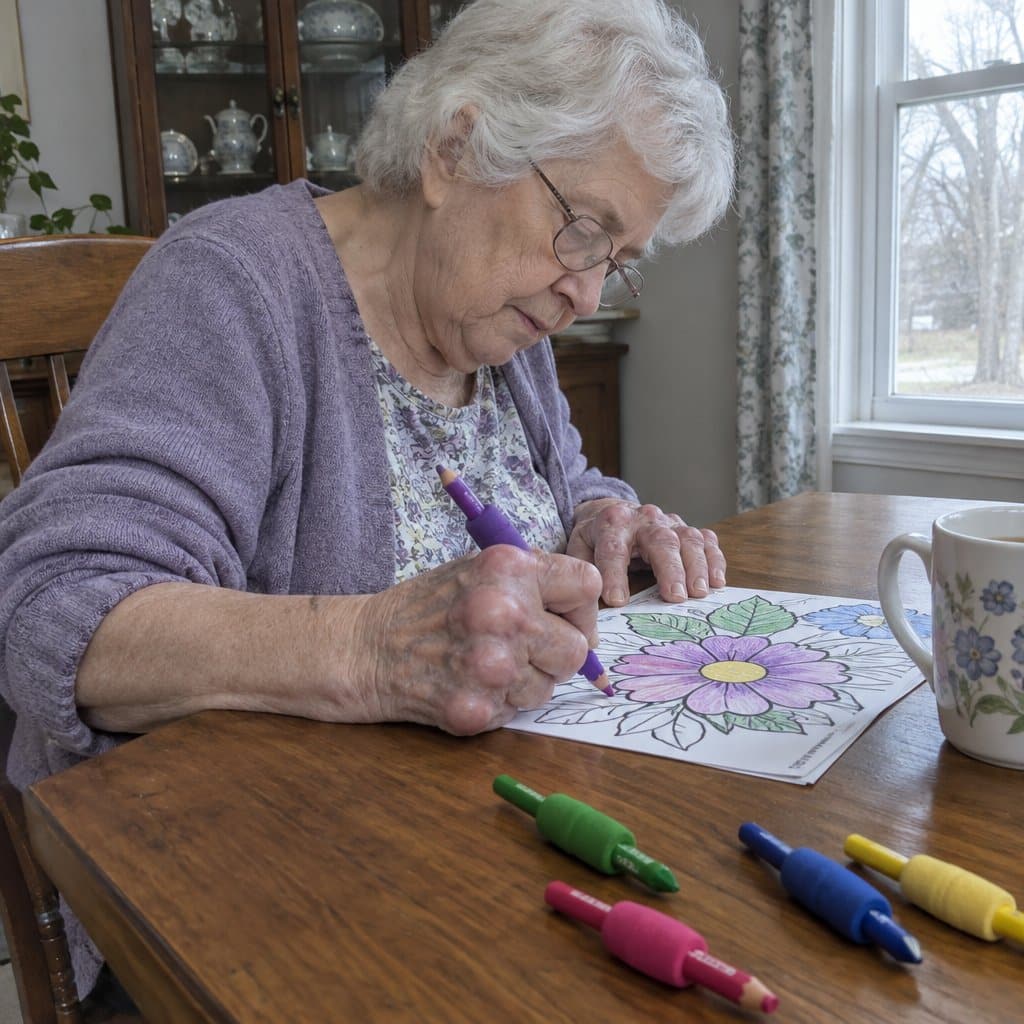
Selecting coloring tools designed for easy gripping and easy viewing can make sessions more comfortable and enjoyable.
Click here to see my specific recommended adaptive coloring supplies.
Colored Pencils and Grips
Standard pencils often cause hand cramps. Try large diameter pencils designed for easier grasping. Soft foam grips can cushion and improve grip on existing pencils, but they can tear or slip off if pulled hard, and they are a choking hazard. For someone who puts things in their mouth, skip them or stay beside them while they color.
Look for soft pencil leads, which give rich color without pressing hard.
Sharpen often with portable sharpeners.
Markers
Bold, vivid markers clearly show color placement on lighter paper. Prioritize lightfast markers so colors won’t fade over time.
Chisel tips allow coloring both large and small spaces. Securely cap markers when not in use.
I find that markers with differently shaped bodies, such as triangular or square ones, are easier to hold and control.
Crayons
Once only the playthings of children, crayons are becoming the medium of choice for some artists. Soft grips can be mounted on crayons.
Also, give teardrop-shaped crayons a try. These are held in the palm rather than the fingers, which might be easier for you to control.
Lap Desks
Lap desks prevent hunching that strains necks and backs. The angled platform provides support while seated. Some feature supply storage.
Securing paper to the clip prevents shifting for those with arthritis or hand tremors.
Book Stands
Book stands give you a secure place to color; many have clips to hold your pages in place. Make sure you get one at least 11 inches tall to fully support your coloring book. You’ll also want to get one with an adjustable angle to get the best angle for you.
Book Magnifiers
Optical magnifiers illuminate pages and enlarge details for those with low vision. Models that clip directly to books are most convenient.
Magnifiers also highlight small spaces and fine lines to keep coloring neatly within the boundaries.
Adapting Supplies
Use sticker dots to mark off sections as a guide for those with cognitive decline. Frequent breaks during short sessions accommodate motor impairment.
Color Theory Basics and Choosing Your Palette
Color theory is the study of how hues, tints and shades work together. A little of it helps you pick colors that look the way you pictured them, and it can build your confidence at the coloring table.
The color wheel is the main tool. It shows primary, secondary and tertiary colors. Complementary colors sit across from each other, analogous colors sit side by side, and triadic colors are spaced evenly around the wheel. Try each and see which looks harmonious and which gives contrast.
A few simple ways to put it to use:
- Play with hue (the pure color) and saturation (how intense it is).
- For a quiet, polished look, use a monochromatic scheme, which is variations of one color.
- For something livelier but still pleasing, use analogous colors.
- Set light shades against dark ones to give a page depth.
- Test your combinations on a scrap and look at the results.
Colors may also affect mood. Blue is calming, and people tend to feel more relaxed in blue rooms. Green is linked to nature and healing. Yellow is tied to happiness and may encourage memory and conversation. Red is energetic, so a softer shade or a small amount keeps alertness up without stress. Pastels such as soft pink, light blue, mint and lavender are soothing.
Color preference is personal, though, and shaped by your experiences and background. Notice how each color feels while you color.
To build your own palette, start with the colors you enjoy working with, then try shading and complementary pairings. Pencils give control and are good for layering, but blend less smoothly. Markers are bold, and layering them gives a blended look. Watercolors blend best but take practice to control. Oil pastels are rich and layer well. Crayons give a textured result, and digital tools let you undo mistakes instantly.
Once coloring becomes a habit, it can grow into a hobby you share with others. The trade-off is that the more blendable mediums take more practice than a simple pencil or marker.

Coloring as Meditation: Mindful Coloring Tips and Exercises
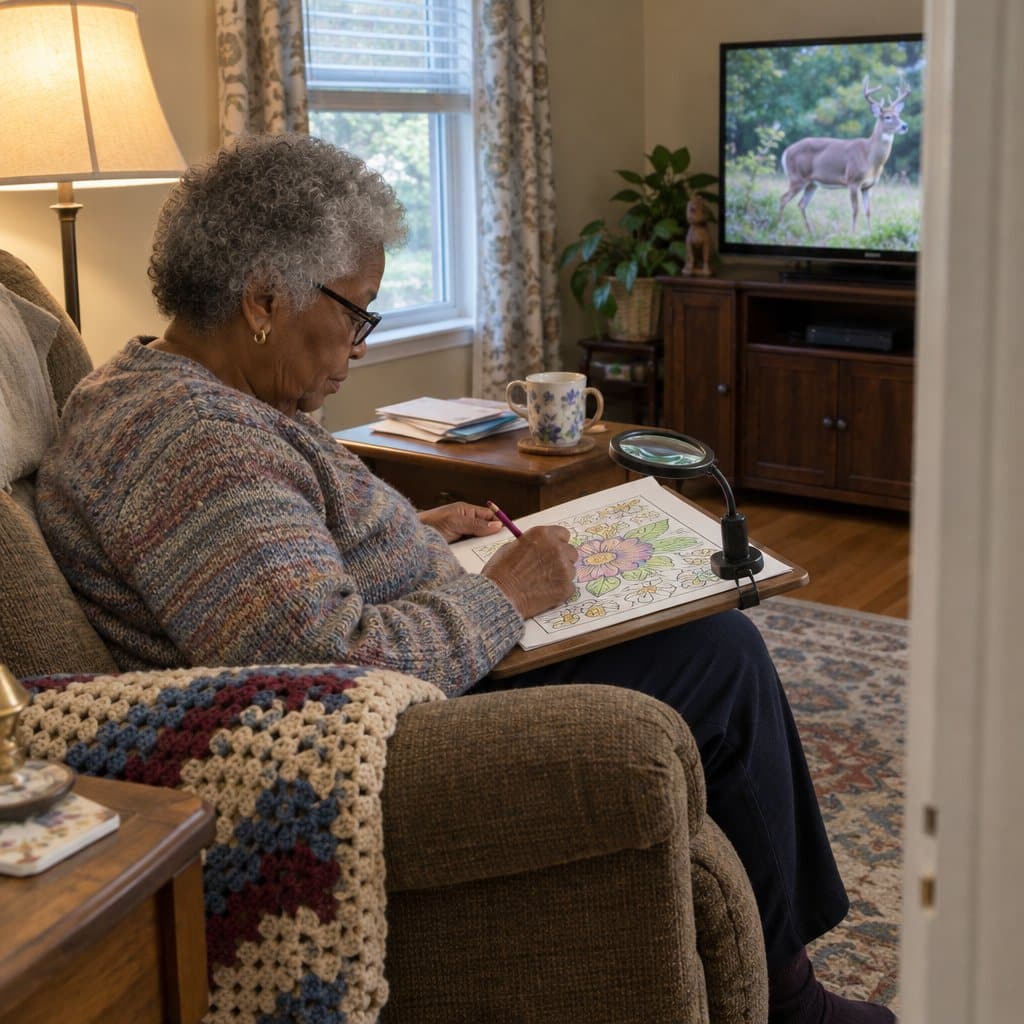
Meditative coloring is simply coloring while giving the page your full attention. You focus on the present moment as you fill in a design, and the concentration helps ease stress and anxiety. It also works for people with limited mobility, since you can do it from a chair.
To turn a coloring session into meditation, choose colors and a spot that feel relaxing. Put on some calm music, and focus on your breath while you color. Books with mandalas, zentangles or other repetitive patterns work well for this.
Tips for Coloring Mindfully
Start with a session of 10 to 15 minutes and build up as you get comfortable. Pick a regular time each day, such as the morning with a cup of coffee or the evening to wind down.
Set up a well-lit spot with a comfortable seat, and lay out your supplies ahead of time. If arthritis makes gripping hard, larger pencils or markers can be easier to hold. Look for books with larger, less intricate designs.
Pace yourself, because there is no race to finish a picture. You can begin with a few minutes of quiet music or guided meditation, as in an art therapy session. Coloring with a friend or joining a coloring group is nice if you enjoy company.
Four Meditative Coloring Exercises
Mandalas are circular designs, and their symmetry can feel calming and grounding.
Zentangles are abstract, patterned drawings that do not picture anything in particular. They are good for relaxation.
Affirmation pages pair a positive quote with a design to color.
Labyrinth pages let you follow the path to the center, pause, and follow it back out, much like walking a labyrinth.
If you would rather not use a printed design, you can doodle. Set a block of time, find a comfortable spot, and choose colors that make you feel calm or remind you of something joyful.
How Long Should You Color?
Color for as long as it takes you to relax. There is no set time limit, but pay attention to your body, and take a break when you need one. Don’t aim for a masterpiece, and don’t be hard on yourself if the routine takes a while to stick.
Coloring and meditation can reduce stress, but keep track of the time and take breaks if you feel unsettled. The trade-off is that intricate patterns suit this practice best, and they can be harder to color if your hands or vision make small spaces difficult.
What Coloring Does for the Mind, Mood and Body
Coloring asks you to pick colors and fill in shapes, so it uses both logic and creativity. Think of it as a gentle workout for your brain that may help keep your memory and focus sharp.
The repetitive, creative nature of coloring can ease stress and anxiety. Recent studies point the same way. Focusing on filling in a design can feel a lot like meditating, and the mind can quiet down enough to let your worries drift.
Your hands get something out of it too. Holding the pencil and steering it inside the lines works your fine motor skills and hand-eye coordination. Regular use of coloring tools may also help your grip and hand strength.
Coloring may help with sleep. A calm activity before bed can ease the move into sleep, and I would keep the lighting soft in the evening so bright light does not wake your brain back up.
For people who live with chronic illness, coloring might also take the mind off pain and discomfort for a while.
Paper books are not the only way to do it. Coloring apps on a phone or tablet give you the same activity without any mess, though they suit someone who is already comfortable with technology.
Tips for Adapting Coloring to Physical and Memory Challenges
Conditions like arthritis or low vision can make coloring challenging.
Here are tips for adapting sessions for different limitations:
Low Vision
Bold markers in contrasting colors make it easier to tell one space from another. Use an optical magnifier clipped on the book to spotlight details.
Make sure plenty of light falls right on the page so the intricate designs are easy to see. If your vision changes, increase the magnification and light.
Arthritic Hand Pain
Take regular short breaks to rest painful hands, every 10 to 15 minutes, before resuming coloring. Stretch fingers gently before and during sessions.
Ask your doctor or pharmacist whether a topical pain cream is right for you, and follow the label. Use page holder clips to secure books rather than holding pages.
Cognitive Decline and Dementia
Choose simple designs with repetitive patterns rather than highly complex illustrations. Use sticker guides to mark sections as you finish coloring them.
Focus on enjoyment rather than meticulous precision. Completing low-pressure, familiar shapes boosts confidence.
Limited Dexterity
Wider blank spaces accommodate shaky hands best. Details that are too minute lead to accidental coloring outside lines.
Repetitive patterning allows a manageable back-and-forth motion. Choose wide coloring tools or palm crayons. For someone who puts things in their mouth, skip foam grips and other small items, or stay beside them while they color.
Fatigue
Work in shorter increments with scheduled breaks to combat mental exhaustion. Proper table posture prevents strain. Or use a lap desk with back support.
Starting a Coloring Routine, and Gently Introducing It to Someone Who Hesitates
Coloring fits into a day more easily than you might expect. Pick a quiet time, such as an afternoon, or the evening as part of winding down before bed.
You can also pair it with something you already enjoy. Color while a favorite radio show or an audiobook plays, or during commercial breaks while watching TV.
A weekly family or community coloring session gives the habit some structure and some company. Beyond coloring books, coloring apps are an option for someone comfortable with technology.
Other ways to color include printable pages, pre-outlined canvases, color-by-number, and watercolor books. Coloring posters, wall murals, and crafts like greeting cards or wooden ornaments work too. Color-by-number tells you which colors to use, so it suits someone who likes following directions or does not feel artistic.
Introducing Coloring to a Senior Who Is Unsure
Start with materials that are easy to hold, like chunky pencils or crayons, especially if arthritis is a concern. Choose books or pages that match the person’s interests and skill level.
Begin with short sessions and let them grow as the person starts to enjoy it. Let them choose the colors, and help only when they ask.
Some people hesitate because they think coloring is for children. Point out the calming and thinking benefits, and show them coloring books made for adults.
Keep it relaxed. There is no need to color inside the lines or pick the “right” colors, because every finished piece is one of a kind.
Show real interest in the finished pages. Framing or displaying them can build confidence, and some families hold a small online art sale and give the proceeds to charity.
One trade-off: a routine takes a little time to settle in, so go easy on yourself or your loved one while it does.
Coloring With Dementia: Books, Tools and Safety
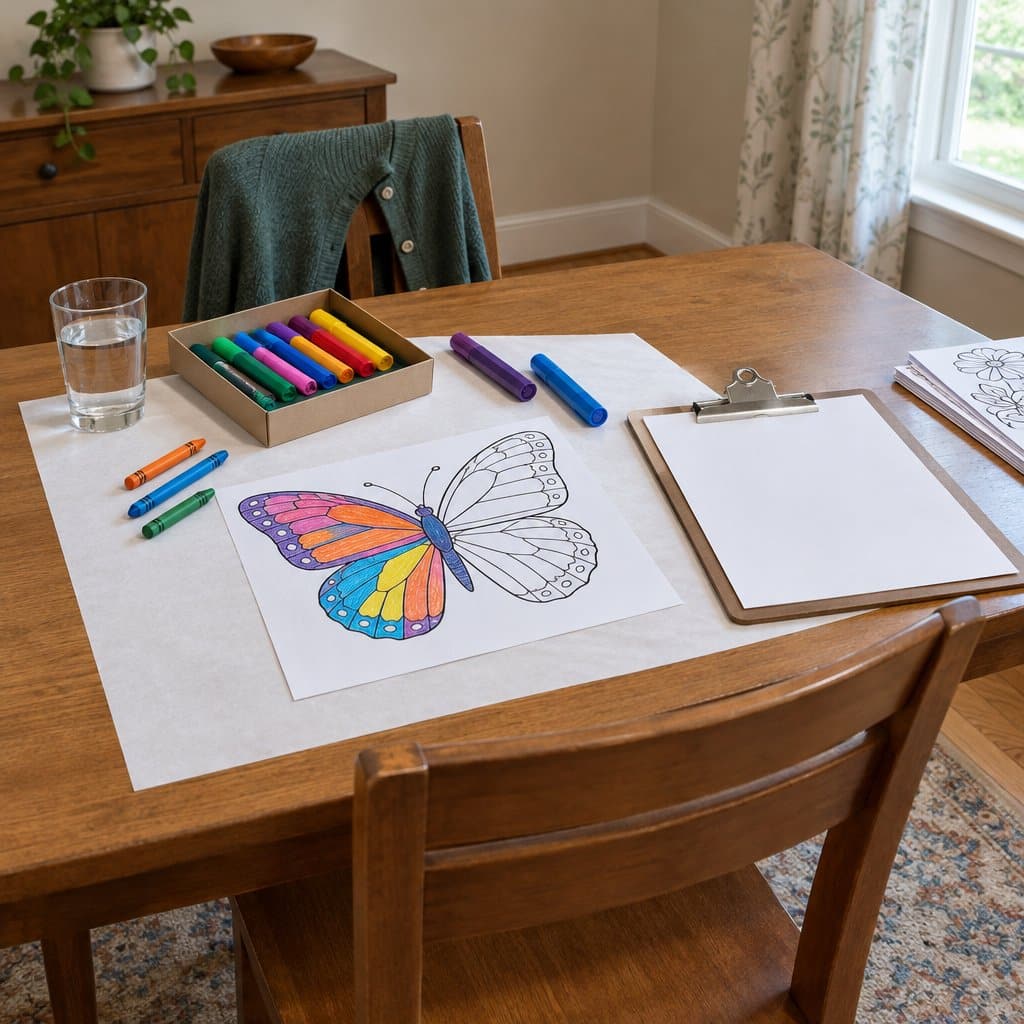
Coloring can lift mood, support thinking and give a person with dementia a way to express themselves. The right book and the right tools decide whether it feels good or frustrating.
For books, look for bold lines, simple images, thick pages and familiar, nostalgic themes. Skip intricate details and complex, surreal designs, since those tend to cause frustration. Easy-to-see outlines and subjects the person recognizes can bring back happy memories while they color.
For tools, chunky crayons and thick hexagonal markers are easier to hold. Pencils with foam grips can help too, but see the safety note below if the person puts things in their mouth. Bright colors are easier to see. Washable, non-toxic supplies cut down on worry about mess. Dual-tip markers let the person switch between thick and thin lines.
Each tool has a downside. Foam grips can tear or slip off if pulled hard, and they are a choking hazard. If the person puts things in their mouth, skip the foam grips and other small items, or stay beside them while they color. Chunky crayons break if dropped. Markers dry out quickly, can bleed through paper and have lids that are a choking hazard.
To set your loved one up for success, try these:
- Remind them coloring does not have to be perfect.
- Focus on the process, not the finished page, and praise the effort.
- Let them go at their own pace, with breaks to avoid hand cramps.
- Stop if they become frustrated or agitated.
- Store unfinished work so they can pick it up later.
- Offer a lap desk or clipboard if they color from a chair.
- Put paper down on the table to make cleanup easier.
For safety, check supplies for damage before each session. Store them in a sealed container, and stay close if the person tends to put non-food items in their mouth. Redirect them gently if that happens.
Choose spiral or thermal-bound books without sharp staples, and thicker paper to lower the chance of paper cuts. Set up the coloring spot away from windows, electrical cords and clutter. Afterward, check the skin for ink marks or marks from gripping too hard.
If coloring is not a fit for the day, there are other hands-on activities for people with dementia. A word game such as a bubble word search game is another option for engagement. The trade-off with all of it is supervision. Coloring is gentle, but someone needs to be nearby.
GORGECRAFT Pencil Grips
These are soft foam sleeves that slide onto a pencil, pen or crayon to make it thicker and cushier to hold. The pack has 60 grips in 10 colors, six of each, so you can put one on every pencil in the coloring kit.
They suit anyone whose hand gets sore or tired after coloring, including people with arthritis. A thicker, softer barrel means you don’t have to pinch as hard. The foam is anti-slip and also absorbs sweat, and the grips are meant to stay put on the pencil instead of sliding off.
They fit most pens, pencils and crayons, which makes them a simple add-on to tools you already own.
The trade-off: each grip is only about 1.5 inches long, with a hole about 0.3 inch wide. Very thick crayons or markers may not fit through it. If you only color with one or two pencils, 60 is far more than you need, so share the extras.
Jolly Jumbo Colored Pencils

These are very thick colored pencils, with a 6.4 mm core and a hexagonal body 11 mm across. That extra width gives you more to hold onto, which helps if arthritis or a tremor makes a regular pencil hard to grip.
The set has 12 colors: light yellow, orange, cherry red, crimson red, pink, cyclamen, light blue, dark blue, light green, dark green, medium brown and black. The cores are soft and cover well, so you don’t have to press hard. They are glued the full length of the pencil, which helps keep the lead from breaking inside the wood. They are made in Austria.
The trade-off is that they are sold for children, and the thick tip can’t do fine detail. In a book with tiny patterns, you will color outside the lines more often. They suit large, simple designs best. And 12 colors is a small box if you like to blend shades.
Four Candies Easy-Grip Crayons

These are chunky, water-drop-shaped crayons sold as a toddler set. The set has 24 colors, and they are made from natural wax and described as non-toxic and washable.
The shape is what makes them worth a look. Each crayon is 2×1 inches, so there is something solid to hold, and the triangular shape keeps them from rolling off the table. That can help someone whose grip is weak or stiff, including a person with arthritis. They are also made to resist breaking, which matters if they get dropped.
The trade-off is that they are made for small children. The box is bright and the packaging is aimed at kids, which some adults may find a bit childish. A short, thick crayon also covers large areas well but is not good for fine detail, so it will frustrate you in a book with tiny patterns. It suits big, open designs best.
AIHAO Washable Markers

These are 24 dual tip markers with a brush tip on one end and a fine tip on the other. The brush tip can make thin, medium or bold strokes depending on how hard you press. The fine tip is there for small spaces and detail.
The ink is water based, washable and non-toxic. That is a practical bonus if coloring happens at the kitchen table, where a stray mark on a sleeve or tablecloth is a small problem instead of a big one.
The carrying case holds the markers in order and can stand at different angles. That makes it easy to pick a color and put it back, which helps when you want your colors in view while you work.
The trade-off: these are sold as markers for kids and adults, and water-based ink can soak through thin paper. Put a sheet of cardstock behind the page, or choose a coloring book with heavier pages. The brush tip also takes a lighter hand than a plain felt tip, so it may need some practice if you have a tremor or limited grip.
Making Coloring a Social Activity
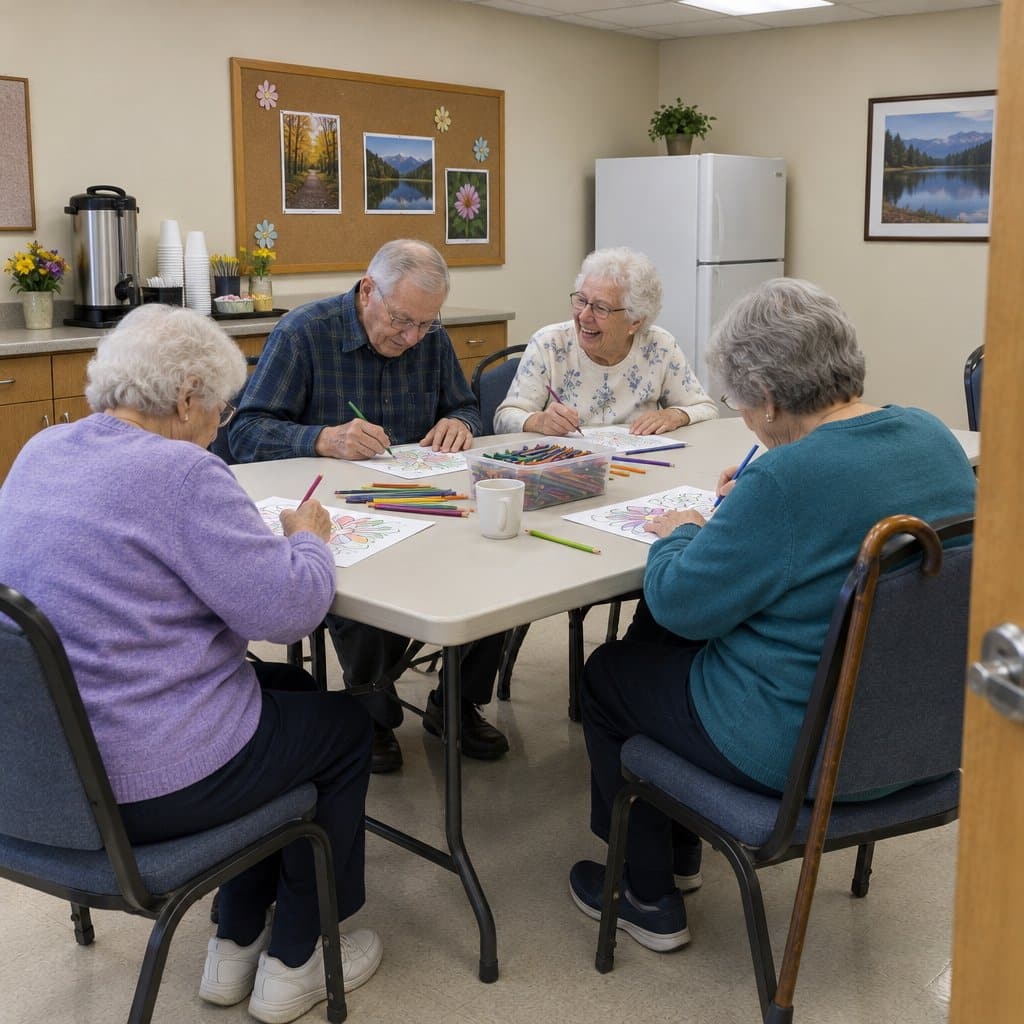
Coloring alongside others provides cognitive stimulation and companionship. Here are tips:
- Join a coloring club at your local senior center to meet weekly and color with peers. Check out my article on coloring clubs for seniors for more tips.
- Ask your caregiver to color alongside you. Chat about the designs and your lives while you color. Make it a regular shared activity time.
- Pick a coloring book designed for pairs. Take turns choosing pages to accommodate different tastes. Focus on the joy of coloring together.
- Schedule group coloring times during peak energy hours when you’re most alert and focused. Coloring with others helps motivation.
Coloring Clubs: Finding One or Starting Your Own
A coloring club gives you a place to meet people who enjoy the same hobby. It can be a good way to build social connections and friendships, and it can ease loneliness.
Weekly get-togethers bring regular chances to chat, turn acquaintances into closer friends, and replace quiet hours at home with good company.
Coloring also keeps the mind busy, since you use both logic and creativity to pick colors and patterns. It can help you relax, too. Caregivers get something out of it as well: a regular activity to plan around, a safe place for their loved one, and some time to rest. If you are looking for more ideas, fun activities to share are worth a look.
Where to Find a Club
Start at your local library or community center. A quick visit and a few questions will usually point you to a group.
You can also search online for “coloring groups for older adults” plus your town. Look for clubs with a website that lists when and where they meet, and ask the organizers anything you like.
On Facebook, use the “Groups” feature and search “coloring club for seniors.” Meetup lists local groups too. If you need help getting comfortable, see the guide to social media apps for older adults.
Starting Your Own
If nothing is nearby, start your own. It is a good way to make new friends.
You will need coloring books with different designs, pencils, crayons or markers, and comfortable seats and tables. Pick a spot everyone can reach, such as a library, community center, senior center or your living room. An online club works too.
Meet weekly or every two weeks, and leave time to talk. Spread the word to friends, family and neighbors, and on community boards and social media.
Keep it lively with theme days (seasons, holidays or a single color), a friendly contest, small prizes, and members sharing their work and the stories behind it. Tea and cookies help, too.
Make the space welcoming to everyone. That means wheelchair access and large-print books for members with sight problems.
A club does not suit everyone. Colored pencils can be hard with arthritis or major vision trouble, and complex patterns can stress people with memory issues, so keep simpler options on hand. If you prefer quiet, regular meetings may feel tiring, and not every host’s home is wheelchair-friendly, so think about how you would get there.
Budget-Friendly Coloring Tips
Coloring can fit any budget with these low-cost ideas:
- Get Free Books. Borrow from libraries or print free pages online to color.
- Use Coloring Apps. Use of the many free coloring apps for seniors on mobile phones and tablets.
- Buy Used. Shop at thrift stores, yard sales, and swap meets for inexpensive books and supplies.
- Use Household Items. Repurpose Q-tips, sponges, and more as coloring tools.
- Make Your Own. Create homemade stamps, custom books, and stained pages.
- Buy Supplies in Bulk. Take advantage of bulk pricing on books and art supplies, especially for groups.
- Substitute Cheaper Products. Use craft paint instead of expensive markers. Buy store brands over name brands.
- Get Creative with Coupons & Sales. Seek out coupons, discounts, clearance deals to maximize savings.
- Swap and Exchange. Trade books and supplies with friends and at community events.
Infographic: Coloring Books for Seniors

Share on Your Site With This Code:
<a href="https://grayingwithgrace.com/large-print-coloring-books-for-seniors/"><img style="width:100%;" src="https://grayingwithgrace.com/wp-content/uploads/2023/07/Benefits-of-Coloring-Books-infographic.png"></a><br>Design by: <a href="https://grayingwithgrace.com">Graying With Grace</a>
Grab a Coloring Book Today to Rediscover this Relaxing Hobby
This article covers adult coloring books and tips to make this enjoyable hobby accessible for seniors.
Here’s a quick recap of the key points:
- Use coloring books designed for seniors with bold lines, large text, and age-appropriate themes.
- Adapt tools like large crayons, grips, and lap desks to ease arthritis symptoms and hand tremors.
- Employ techniques like magnifiers, page holders, and breaks to aid with vision loss and fatigue.
- Make it social by coloring with caregivers, family, or groups at local centers.
- Follow budget tips like using libraries, swaps, household items, and sales.
With the right materials and adaptive techniques, you may find coloring relaxing and enjoyable.
It is a screen-free activity that many people find calming, and it gives you a way to express your artistic side.
Try a simple coloring book and pencil set today. Let the childlike wonder and relaxation color bring wash over you. Recapture this timeless hobby with designs made just for the young at heart.