

You look at Mom’s mail or her bank statement and something feels off, and the person handling her money is your own brother or sister.
If you are wondering what to do about a sibling taking advantage of an elderly parent, you are in the right place. This is more common than most families like to admit.
This guide covers the warning signs, who is most likely to steal, and what changes when a parent has dementia. It also explains who to call, including Adult Protective Services (APS) and the police, how to talk with your parent without shame, and what records to gather first.

Different Signs That Could Signal Elderly Abuse:
Here are some “red flags” that might indicate a sibling is taking advantage of an elderly parent.
1. A Family Member Is Living With The Parent
This is one of the major signs that abuse may be more likely to occur. If a son or daughter that is supposedly financially dependent is living with the at-risk parent, it could be very easy for them to take advantage of the situation.
The son or daughter often uses his parent’s finances to fund their lifestyle. After all, they are always around and likely manage the parent’s money.
Therefore, anyone that is in this type of situation should be extra careful to ensure the son or daughter isn’t taking advantage of the situation to steal from the vulnerable parent.
2. The Family Member Is Secretive About Finances
If one child has total and complete access to the parent’s finances, it will put the senior at a much greater risk of being taken advantage of.
By having all of the kids auditing the finances of their parent, it can greatly reduce the risk of having one take advantage of the parent. However, if you notice that some of the account’s passwords have changed or they have been moving money to different banks or accounts that no one has access to, it is a clear flag that they are looking to hide something.
Therefore, if you have a sibling that is suddenly taking complete control over your parent’s finances, you may want to look even closer at the finances to ensure nothing bad is going on.
3. The Sibling Insists on Being with the Parent When Others Are Visiting
This one is a major red flag because it shows potentially controlling and overbearing behavior. The family member is likely looking to stay close to the aging parent to avoid getting their scam exposed.
If the family member is taking steps to avoid allowing the aging parent to go out on their own with other family members or to invite people over without them being present, they are likely threatening them for exposing what is really going on.
4. The Elderly Person Doesn’t Know Their Current Financial Situation
This is a major red flag, especially if the elderly person doesn’t have dementia or other related illnesses that could influence them knowing about their own finances.
If they are in-the-dark about their own finances, it could be a clear sign that they are being taken advantage of by someone in their family. Many parents will give their adult children the ability to control their finances, but it doesn’t mean they should be left in the dark. If the adult child (your sibling) leaves your parent out of the loop, it could indicate they are up to no good.
5. Major Withdrawals
If you are looking at your parent’s bank accounts and you notice they have substantial cash withdrawals, you should ask them about it. If they are unable to tell you why a significant sum of money was withdrawn from their account, it’s a major issue that needs to be looked into.
Family members’ financial exploitation can be tracked by looking at bank statements, credit card bills, and more. You can spot irregular spending patterns and withdrawals to identify the abuse by looking closely.
6. A Lot Of Unpaid Bills
If you notice that your elderly parent suddenly has all kinds of unpaid bills, it could mean their primary caretaker (your sibling) is neglecting them. Whether they are doing this because they are using the money for their own needs or they are simply not getting the bills paid on time, it could be detrimental to your parent.
Keep tabs on your elderly parent’s mail to see whether or not they have a lot of unpaid bills or notices as it could be a warning sign they are a victim of financial abuse.


Who Is Most Likely to Steal, and Why It Changes Who You Report To
Financial elder abuse rarely announces itself. It creeps in quietly, often through someone your parent trusts, and who is doing it decides which authorities can step in fastest.
Before you make your first call, work out which of these five groups fits your situation.
Family members are the most common. That includes adult children, grandchildren and in-laws. They are also the hardest to report, because a parent often does not want to believe a loved one would steal from them.
Paid caregivers and home health aides come under specific regulatory oversight. The state agencies that license them can investigate in ways regular police departments cannot.
New romantic partners or “friends” who appear suddenly often isolate your parent. They limit contact with family while gaining access to the money. If a new “helpful friend” is the problem, a thief stealing your parent’s independence can look like kindness at first.
Financial advisors, accountants or attorneys with power of attorney are a different level of threat. They have legal access to accounts and know how to hide transactions. State attorney general offices handle these cases.
Contractors, repairmen and service providers earn trust through repeated visits. They may start with small requests that grow into check-writing authority or an ATM card.
Here is how that plays out. If a grandson is forging checks, you call Adult Protective Services and the police. If a licensed caregiver is stealing cash, you also contact the state agency that issued the credential. If an advisor is misusing power of attorney, the attorney general’s office has authority the police do not.
Naming the category is not about blame. It tells you where to start. If the person is a relative, standing firm with pushy adult children may help, and so can conversations that actually connect across generations when you talk with your parent.
One trade-off: you may not be certain who is responsible at first. Picking the closest category still gives you a starting point, and you can add agencies as you learn more.
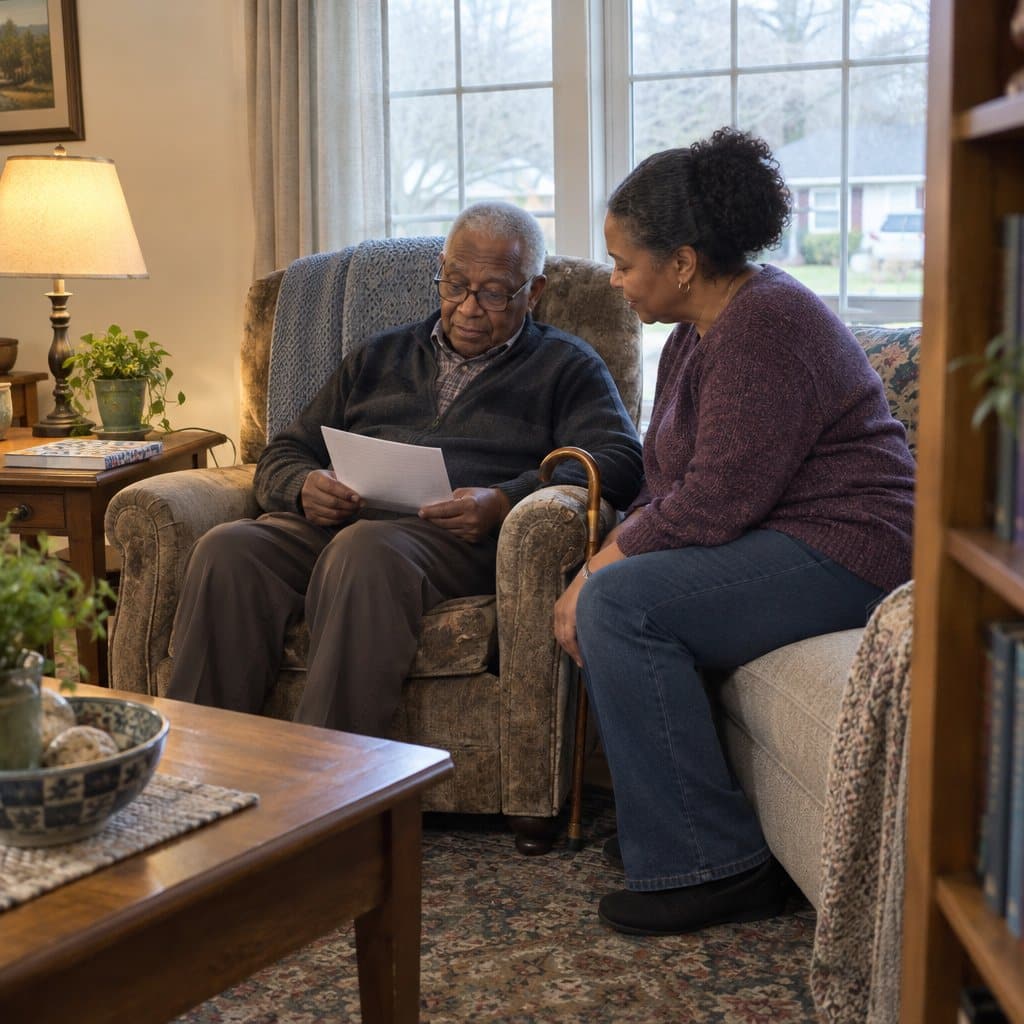
When Your Parent Has Dementia
Dementia raises the risk of financial exploitation. A person living with dementia or Alzheimer’s may not understand the full meaning of handing money to someone, so it is easier for a trusted relative or caregiver to trick or manipulate them. Exploitation can look like theft, deceit, or coercive control.
It often goes unnoticed because it lacks the obvious signs of other kinds of abuse. These are some of the signs the National Adult Protective Services Association lists:
- Utilities cut off when your parent used to be able to pay them
- Unpaid debts despite a regular pension, income or savings
- A third party taking over the finances without consent or explanation
- Checks written to “cash”
- Your parent being unable to explain their finances in a reasonable way
- Cash or valuables missing from the home
- Financial statements missing or hidden
- Sudden heavy spending or giving away of money
- Property liens or foreclosure notices
Start by talking to your parent to understand their position and let them know help is available. Gather more information from them or from other family members before you voice any suspicions.
Then contact the bank. It may not be able to share details with you, but the Senior Safe Act of 2018 allows banks to block transactions to prevent fraud or abuse of seniors.
If your parent lives in an assisted living facility and you suspect a staff member, complain to the facility’s management first. If that goes nowhere, you can file a complaint with your local Long Term Care Ombudsman. Agencies may not be able to tell you what they are doing because of privacy rules, but they must take complaints seriously and investigate.
To protect a parent with dementia, talk with them about their finances and encourage them to name a trusted person as power of attorney. Make sure that person knows every financial institution your parent uses. Have a second trusted person receive copies of all statements to watch for unusual activity. With two people watching, fraud becomes harder to pull off. Hiring a professional to manage bills and assets may also be a good idea.
One trade-off: banks may not be able to tell you what they find, so you may be left waiting without answers.
Steps To Take To Address The Abuse
If you suspect your sibling is taking advantage of your elderly parent, here are some steps you should consider to address the issue.
1. Call Adult Protective Services
This is one of the best ways to begin helping your aging parent.
If you believe your parent is a victim of financial abuse from your sibling, this is one of the first steps you should take. That way, you will be able to supply them with all of the information you were able to gather. Doing this will allow you to put it into the hands of professionals who can sniff out the abuse.
2. Contact The Local Police
If you suspect your sibling is financially abusing your parent, consider contacting the local authorities.
Gather as much evidence as possible to give them something to work with. Supply them with the name(s) of the suspected abusers, what activity you found suspicious, and anything else that you can gather than would help them with the investigation.
3. Speak With Your Parent
Speak with the parent who you suspect is being taken advantage of. This way, you can ask them whether or not they are aware of anything your sibling may have done to take advantage of them.
It is entirely possible that your elderly parent is completely aware of it and afraid to tell. Likewise, it is just as possible that they are unaware of it, and they would be able to provide you with information that could verify your suspicions.
Having open communication is one of the best things you can do to curb the abuse. By making your parent aware of your suspicions and the situation, you should be able to put things in motion to stop it.
4. Get Together With Other Siblings
If you suspect one of your siblings is taking advantage of your parent or parents, discuss your suspicions with your other siblings. This will allow you to handle the situation with others who care about your parent(s) and what happens to them.
They may be able to help you identify whether or not it is actually happening. Likewise, the more people you have on your side, the better the possibilities of a positive outcome.
Have everyone get together to take over the finances of the parent. Having everything completely open to all siblings increases the transparency and makes it much less likely anyone is bold enough to steal from or financially abuse the parent.

Talking With Your Parent Without Shame
Many seniors are proud. Finding out that someone close to them has taken advantage of them can leave them embarrassed, and that can make them hold back.
So go into the conversation carefully and with compassion. Let your parent know you are there to help, not to judge, and that support is available if they want it.
It may take them a while to feel comfortable. That is normal, so do not push for answers in one sitting.
Taking the shame out of talking about money can go a long way. A parent who does not feel foolish is more likely to open up about what has been happening.
It also helps to talk to your parent to understand where they stand before you take any other step. Reassure them that help exists. If you plan to speak with other family members, gather as much information as you can first, so you are not voicing suspicions without facts.
One trade-off: a gentle, patient approach is slower than confronting the problem head on. But a parent who feels safe with you is more likely to tell you the truth.

What Records to Gather Before You Report
Good records make every report stronger and help investigators move faster. Start gathering them now, even if you are only watching for the moment.
Here is what to collect:
- The last six months of bank statements, with the suspicious transactions highlighted
- Copies of checks, front and back, if you can get them
- ATM withdrawal records
- Credit card statements showing unusual purchases
- Any written agreements, powers of attorney or contracts
- A timeline of when you first noticed changes, with dates
- Names, phone numbers and addresses of anyone with access to the accounts
- Notes from any conversations about money
- Photos of missing valuables, if that applies
Keep notes on talks with your parent too. If you are not sure how to start those talks, this guide to conversations that connect across generations may help.
Make one folder, paper or digital, just for this, and label it clearly. When an investigator asks whether you have records, you want to say yes and hand them over in minutes, not days.
Picture two families. One brings a timeline, highlighted statements and specific transactions. The other says something seems wrong but cannot recall when it started. Investigators can work much faster with the first.
You are not being paranoid by writing things down. One trade-off: it takes time and some uncomfortable digging through your parent’s paperwork, but it is what lets the authorities act quickly.
How to Freeze Your Parent's Credit With All Three Bureaus
A credit freeze stops anyone from opening new accounts in your parent’s name. You can do it today, even if you have not confirmed any theft yet.
You contact all three major credit bureaus: Equifax at 1-800-349-9960, Experian at 1-888-397-3742, and TransUnion at 1-888-909-8872. Freezes are free, and you can do them online or by phone.
You will need your parent’s Social Security number, date of birth and current address. If your parent cannot consent, you may need power of attorney paperwork. Each bureau handles this differently, so call first and ask what it requires.
Each bureau gives you a PIN. Keep those PINs somewhere secure, because you will need them to lift the freeze if your parent wants to open a legitimate account.
Putting a freeze in place for a parent is a sensible step to take even before fraud turns up.
One trade-off: a freeze does not stop someone from taking money out of accounts that already exist. That is why the calls to APS, the police and the bank still matter. And if you need to stand firm with a sibling about it, a short phrase that stops pushy adult children may help.

Reporting to the Bank, the Attorney General and the CFPB
After APS and the police, call every bank, credit union and investment firm where your parent has an account. Banks are required to have protocols for elder financial exploitation. They must investigate suspicious activity involving seniors, and they can refuse to process a transaction that looks like exploitation.
If you simply tell a teller the account seems wrong, nothing much happens. Say this instead: “I am reporting suspected financial exploitation of a vulnerable adult. I need to speak with someone trained in your elder protection protocols. I need documentation of this conversation.”
Ask for a branch manager, not a teller, and ask for the vulnerable customer or senior protection department by name. Managers can set up transaction alerts, withdrawal limits and a second authorization for large transfers. Don’t accept “I’ll make a note” as an answer.
Knowing how to advocate firmly for your parent helps here, because you are speaking as someone with a documented case.
Write down every name, title and direct phone number from these calls.
If your sibling holds power of attorney or a professional license, file a complaint online with your state attorney general’s office. Most have elder fraud units, and they have authority local police do not. Save your confirmation number.
If the bank is unresponsive, or the fraud involved credit cards, loans or debt collection, file a complaint at consumerfinance.gov/complaint with the Consumer Financial Protection Bureau (CFPB). Banks must respond to CFPB complaints, and your notes from the bank calls go into that complaint.
One trade-off: attorney general investigations take longer than a police report. They can end in license revocation and criminal charges, but you will need patience.
What to Say and Write Down When You Call APS and the Police
Call Adult Protective Services first. Every state has one, and it investigates abuse of vulnerable adults. The national hotline is 1-800-677-1116.
When you call, you will speak with an intake specialist who documents your report and assigns a caseworker. Write down your report number and the caseworker’s name, because you will give them to every other agency you contact.
APS can do welfare checks and interview your parent privately. It can also decide whether immediate intervention is needed. In some states, it can freeze accounts temporarily while it investigates.
Next, file a formal police report for theft or fraud. That creates an official criminal record. Ask for the report number right away, since banks and credit bureaus require it.
Ask whether the department has an officer experienced in elder fraud. Some places have detectives who specialize in financial crimes against seniors. If yours does, ask for that person by name.
Bring copies of the suspicious transactions, not the originals. Highlight the activity of concern so the officers can see patterns quickly.
One trade-off: this takes some organizing on your part. Gathering statements and keeping report numbers straight is work, but it is what lets you answer “have you reported this elsewhere?” with proof.
Conclusion
Anyone can be targeted for financial exploitation, and some conditions make it easier for others to take advantage. A person with dementia may have trouble keeping track of money, which others can exploit. A person who relies on a family member for daily help can also be at greater risk of financial abuse from that relative.
Family members are often the ones behind elder financial exploitation.2 If you suspect a sibling is taking advantage of your parent, look for the easier-to-spot warning signs so you can stop it. Try to gather as much evidence as possible and report it to the authorities. With enough evidence, they can often freeze your parent’s bank accounts and assets so no further exploitation happens once it is reported.
Sources:






I’d like to give some insight in regards to differing family dynamics which can affect the way in which these situations are assessed. In order of mention:
1. Some families share the parents home long before they are widowed or fall ill.
2. There are times it is best to select a non-immediate family member for financial accountability. Protecting the finances from needy family members is necessary.
3. When family members show unreasonable anger and frustration toward the parent in front of others, it is best to be present with the parent.
4. I suggest displaying the parent’s bank statement and balances on a large screen, if possible, to give a clear view for the parent to see.
5. Ensure the parent has set up necessary protections and alerts with their bank.
6. Assist the parent with Auto-bill pay which often comes with discounts. The bills should be looked over regardless in case of billing errors. Also, look into any discounts or bundling to lower monthly costs.
Side Note: If all family members are involved with the parent’s finances, involve an outside party for financial advice like an organization or extended family who has their finances in order.
My siblings took advantage of my mother before she passed away quickly my father’s name my father property where his will say sell everything and split it between the six kids my mother illness they took advantage of it with their name on all the property with her had her signed legal paper that don’t have her signature on it notarized letters from their dirty attorney my mother passed away September 24th and the siblings moved in the property the other properties quickly they name on them my brothers are Junior and he took the SR off my dad’s name in when you pull up the deed for the property in Detroit and have junior’s name on it how can I get help they took advantage of my mother ran all the family and friends members away my mother died sad and lonely one of the siblings was living with the parents taking care of them they threw her out the house illegally to keep her from knowing what was going on returning her mail to send her ordered me to change my legal address from the property they moved into I’m trying to get her license to prove that that’s not her signature on the all that paperwork quick deed authorization to be a guardian over her how can I get help to prove they took advantage of the mothers illness??