Maybe you lie awake at night, or you worry about a parent who can’t settle down. Weighted blankets for seniors are one thing people try, and they are not right for everyone.
This article covers what they can do, the risks to know about, and how to pick the right weight. It also looks at joint pain, osteoarthritis, Alzheimer’s and dementia, Parkinson’s, and stroke recovery, with a few blankets worth a look.


Summary & Highlights
1. Weighted blankets should be used with caution and under the supervision of a healthcare professional. Weighted blankets should not be used by people with certain medical conditions, such as respiratory issues or who cannot move independently.
2. Weighted blankets can be beneficial for people with insomnia, anxiety, and sensory processing disorders, as the added weight helps to stimulate the body’s production of serotonin and melatonin, resulting in improved mood and better sleep.
3. Weighted blankets can be too heavy for some people, so match the weight to the person’s size and strength. Additionally, weighted blankets should be washed regularly to prevent the accumulation of dirt and dust, which could irritate skin or worsen allergies.
If sleep, anxiety, or restlessness is wearing on you or someone you care for, a weighted blanket may be worth a look. Some people use one as a non-drug way to feel calmer, including with Alzheimer’s and dementia.
The research is still thin, and doctors don’t fully agree on how to use these blankets.[1] This article covers what they can do, the risks to know about, and how to choose one.
Examples of the Best Weighted Blankets for Seniors
Bearaby Cotton Napper Weighted Throw
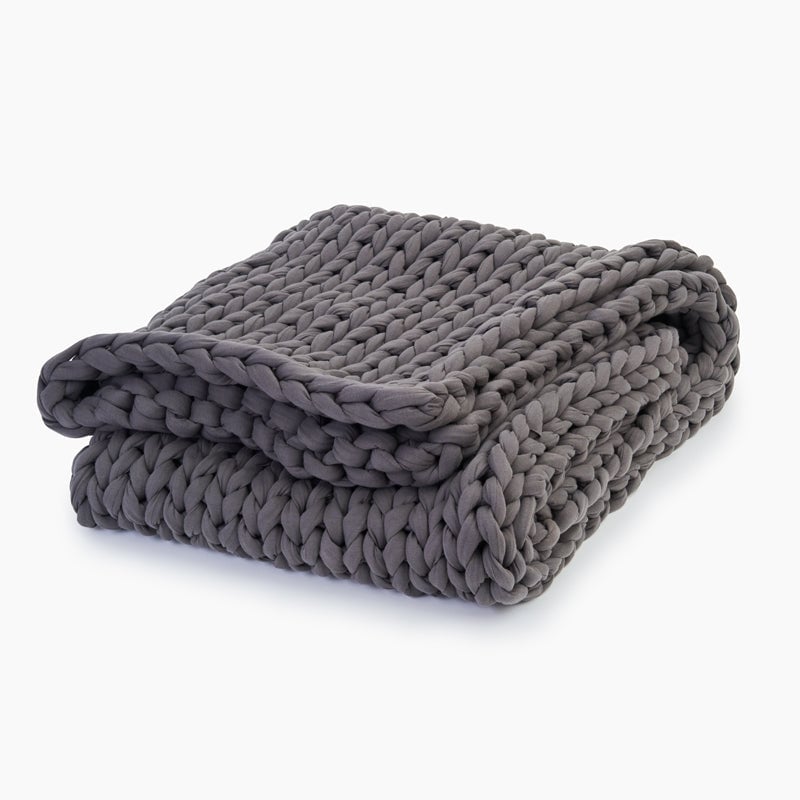
The Bearaby Cotton Napper is a knitted weighted blanket made of 100% organic cotton, inside and out. It is meant to help you fall asleep faster and feel calmer.
Most weighted blankets get their heft from glass beads sewn into pockets. The Napper doesn’t use them. It is a chunky knotted blanket, and the weight comes from the knit itself. That means no beads to shift and bunch up, and nothing hard against your skin.
The open knit also leaves small gaps in the fabric. Air can move through them, so heat and moisture have less chance to build up under it. That helps if you tend to sleep warm.
For sizing, Bearaby says the blanket should be about 10% of your body weight. Go by that number when you choose, because a blanket that is too heavy is harder to move under.
One trade-off to know about is that the chunky knit is bulkier than a flat, quilted blanket. It also has open spaces by design, so it won’t feel as snug and enclosed as a beaded one. If you want a tucked-in, cocoon feel, that may not suit you.
Bare Home Cotton Weighted Blanket
The Bare Home Cotton Weighted Blanket is a straightforward choice if you want a classic weighted blanket made from natural materials. The cover is 100% cotton, and the filling is nontoxic glass beads.
The listing describes the filling as irritant-free and the fabric as gentle on the skin. That can matter if you have sensitive skin.
The version here is light grey, 48″x72″ and 15 pounds. Bare Home’s general rule is to pick a blanket that is about 10% of your body weight. So a 150 pound adult would look at 15 pounds. Their sizing advice also says the blanket should not be longer than the top of your mattress or hang over the sides of the bed. That keeps it from sliding off in the night.
Now the trade-offs. Glass beads can make a blanket feel firmer and more uneven than a knit style, and a 15 pound blanket is a lot of weight to lift. If you have trouble moving it on your own, or you are under 150 pounds, this particular weight is probably not the right one for you. Cotton breathes well, but a blanket this thick can still feel warm on hot nights.
It suits someone who wants the gentle, steady pressure of a weighted blanket in a plain, natural-fabric cover.
Give Hugz Weighted Plush Monkey


Coco the Monkey from Give Hugz is a weighted plush toy, not a blanket. It has extra-long arms that wrap around you, so it feels like being hugged.
Coco weighs 3.8 pounds and stands 10 inches tall. The filling is 70% glass beads and 30% polyester. The beads are SGS and FDA certified, and the plush is CE and OEKO certified. It has no scent.
Some people like a gentle, steady weight in their lap or across the shoulders while they sit. Coco can do that. The maker says it is meant to help with anxiety, stress and depression, and with sensory needs tied to conditions like autism and ADHD.
You can pair it with soft sleepwear for a calmer evening routine. It can be microwaved to warm it or cooled for the opposite effect. Follow the maker’s heating directions closely, and be extra careful if the person using it can’t tell when something is too hot.
The trade-off is coverage. At 3.8 pounds, Coco won’t cover your body the way a blanket does, so it isn’t a stand-in if you want weight across your whole body in bed. It also looks like a stuffed toy. For some people that is comforting, and for others it may feel odd, so think about who will be holding it.
The maker offers a 30-day return window with free returns and a 60-day warranty.
L'AGRATY Weighted Blanket
The L’AGRATY Weighted Blanket is a 15-pound throw in dark grey, 48 by 72 inches. It is made of soft, breathable microfiber and filled with non-toxic, hypo-allergenic glass beads.
It is meant to cover you rather than the whole bed, so one size works on Twin, Full, and Queen beds. You can use it in bed, or in a chair while reading or relaxing. The maker describes it as cooling in summer and warm in winter, and it is washable.
The general rule for weight is 7% to 12% of body weight. At 15 pounds, this one fits someone of roughly 125 to 215 pounds. If you are lighter than that, a different weight is the better pick.
One thing to know: it is built for one person. The maker advises against two people sharing a single blanket.
It also may not suit someone who cannot easily lift it off or slide out from under it. For a person with dementia or limited strength, make sure they can move it aside on their own before using it unsupervised. A soft pair of pajamas underneath makes it more comfortable.
Weighted Blanket
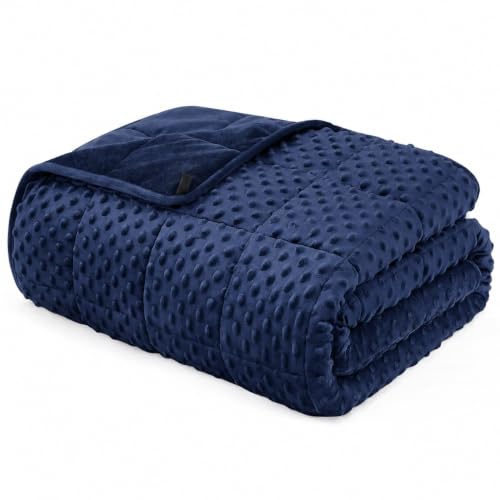
This one is a 48″x72″ weighted blanket that weighs 15 pounds. It is made of soft, breathable minky fabric with raised bubble dots, so it has a bit of texture under your hands.
Inside, it is filled with 0.8 to 1 mm glass beads described as non-toxic and hypo-allergenic. The maker says a special filling tool keeps the beads from drifting, so the weight stays even across the blanket.
The size is meant for a twin bed. It also works as a throw for reading, relaxing, or meditating on the couch.
The maker suggests a blanket that is 7% to 12% of your body weight. At 15 pounds, that points to someone somewhere around 125 to 215 pounds. If you are outside that range, a different weight will suit you better.
One thing to watch: this size will not cover a queen or king bed. The maker lists 60″x80″ for a queen, so a larger bed needs a different size. Also, 15 pounds is a real load. If it is hard for you to move or push a blanket off, start with a lighter one.
OMYSTYLE Warming & Cooling Weighted Blanket

The OMYSTYLE Warming & Cooling Weighted Blanket is reversible, so one blanket can work in more than one season. It weighs 25 pounds and measures 60 by 80 inches, which is a twin size.
One side is Tencel, made from eucalyptus fiber, and it feels silky and cool. The other side is soft microfiber that feels warmer. You flip it over depending on the weather or how you run at night.
Inside, there are seven layers, including two breathable cotton layers under the outer fabric. The padding is polyester with no glue. The glass beads sit in small pockets held by double stitching, so they stay spread out and don’t leak or bunch up.
It comes with a carry bag, which is handy for storing it or taking it along on a trip.
One thing to know: 25 pounds is a lot to lift and move. If you have trouble getting a heavy blanket on and off, or can’t easily push it away on your own, a lighter one is a safer choice. The twin size also hangs over a twin bed but only sits on top of a queen, so it suits one sleeper best.
Baloo Weighted Blanket
Baloo’s range of soft weighted blankets is designed with a traditional sense of styling. Baloo uses 100% quality cotton and uses advanced manufacturing techniques to ensure their products are breathable, comfortable, and functional.
The quilted pattern is used to keep to secure the weighted filling in place, preventing bunching and/or pooling.
Additionally, by using cotton and superfine micro-bead weight fillings instead of bulky beads or poly pellets, Baloo blankets can better follow the contours of your body.
The beads are distributed at the center of the blanket, where it counts.
Baloo blankets are excellent for seniors looking for a weighted blanket that feels more like a standard blanket. From afar, the blanket looks normal in every bit.
Uses Of Weighted Blankets For Older Adults
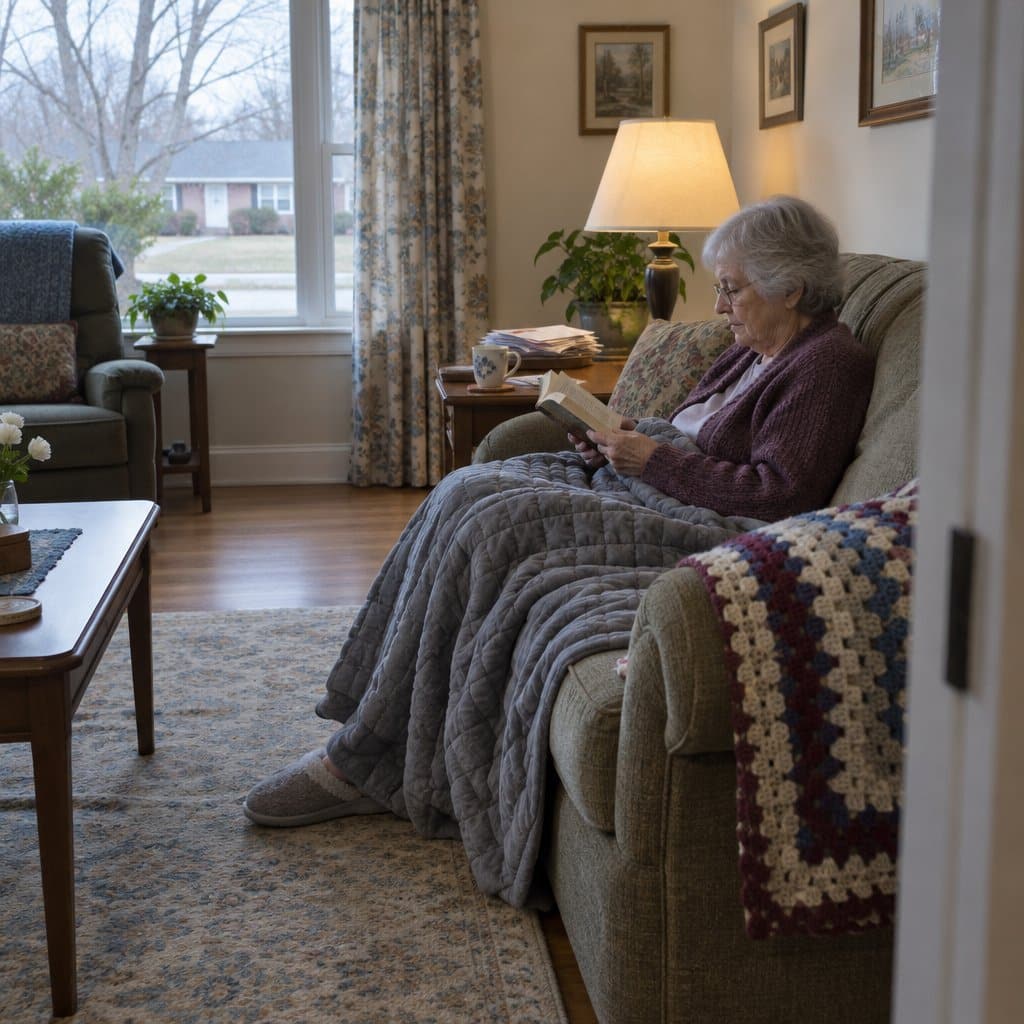
While weighted blankets were first used to treat Attention Deficit Hyperactive Disorder (ADHD)[2] and Sensory Processing Disorder (SPD)[3], this type of blanket has gained popularity for dealing with other conditions and ailments, including joint pain [4], Osteoarthritis [5], dementia, Alzheimer’s, insomnia [6], depression, anxiety [1], and even loneliness.

Weighted Blankets for Joint Pain and Osteoarthritis
Joint pain is one of the reasons people look at weighted blankets, so it helps to know what is and is not known. No studies have looked directly at weighted blankets for joint pain. A related study compared light-pressure and deep-pressure massage, and it found that deep pressure can help relieve knee pain caused by osteoarthritis.
The idea behind a weighted blanket is to copy that deep pressure. Most are filled with glass beads, metal chains, or poly pellets, and they usually weigh 10 to 25 pounds.
The weight works a bit like a bear hug, which many people find relaxing. The thinking is that the pressure helps the body release serotonin. Serotonin in turn helps release melatonin, which helps with sleep, and oxytocin, which lowers how strongly you feel pain.
Picking a weight
A common starting point is a blanket that is about 10% of your body weight. If you have health conditions, go lighter and ask your doctor or therapist.
What to look for
Pick the style to match your situation. Here are the kinds of blankets that suit joint pain:
- A knotted, open-weave blanket with air channels. It stays cooler, but it makes a poor warming blanket in the middle of winter, so it is really a summer choice.
- A blanket with small quilted squares or gridded stitching. It keeps the beads evenly spread instead of bunching in one corner.
- A blanket with a removable, machine-washable cover. It is easier to keep clean.
- A cotton blanket with a cooling cover. It can be used in summer or winter.
- A custom blanket where you choose the weight and size. That makes it easier to land near 10% of your body weight.
- A throw-size blanket with three weight choices. It works on the bed or the couch.
Some makers say their blankets help with leg and joint pain and restless leg syndrome. Treat that as a maker’s claim, since the research is thin.
The main drawback is heat. A weighted blanket warms up fast and holds that heat, and some people feel too hot or closed in on summer nights. The weight also takes a while to get used to after regular blankets.
Degrees of Comfort Weighted Blanket

This Degrees of Comfort blanket is 20 pounds, queen size (60×80 inches), in grey. It is filled with glass beads sewn into small pockets, which keeps the weight spread evenly and cuts down on bunching and shifting.
It comes with a removable minky plush cover that zips shut. Leave the cover on for cold weather. Take it off in warmer weather or if you sleep hot. The cover is washable, which makes upkeep easy.
The maker suggests choosing a weight of about 10% of your body weight. At 20 pounds, this one suits someone around 200 pounds. For a smaller person it would be too heavy.
That weight is also the trade-off. A queen-size blanket this heavy can be hard to push off or lift, so it is not a good fit if you have limited strength or trouble moving in bed. Talk with your doctor first if you have breathing or circulation problems.
Using Weighted Blankets For Adults With Alzheimer’s & Dementia
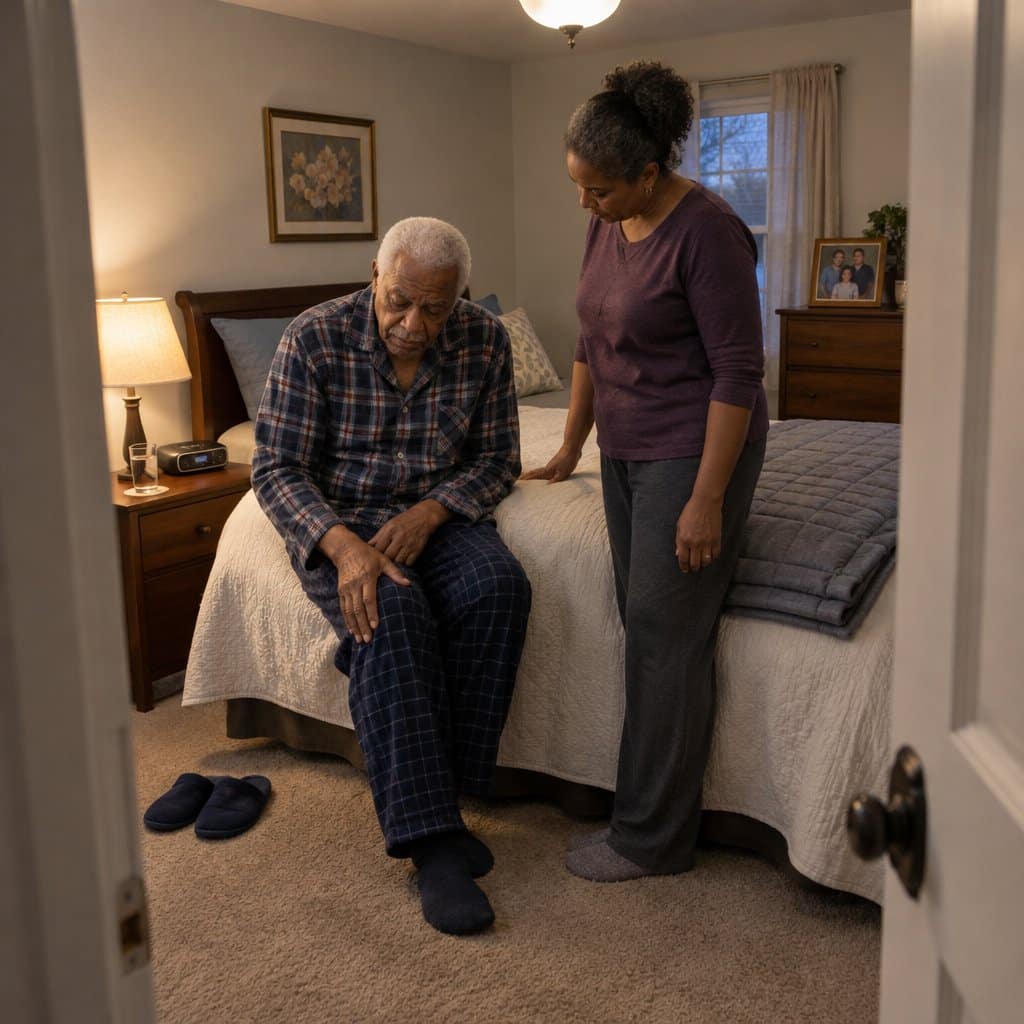
Some caregivers report that a weighted blanket calms a person with dementia or Alzheimer’s, but research is limited. [7]
Any benefit seems to come from Deep Pressure Touch (DPT), which is firm, steady pressure on the body.
Some people find deep, steady pressure calming. It is not a treatment for dementia, so check with the doctor. Common signs of dementia and Alzheimer’s include anxiety, agitation, and disturbed sleep.
Some people say a weighted blanket feels a bit like firm, steady pressure. Research is limited, so ask your doctor or therapist.
The thinking is that this pressure helps the body make serotonin, which helps produce melatonin, the sleep hormone, and oxytocin, a hormone tied to pain perception [9]. That may help with relaxation and sleep.
Some describe the feeling as being gently pressed down and settled. The idea is that it may lower cortisol, a hormone associated with stress [10] and anxiety [11]. Research is limited.
Weighted Blankets for Parkinson's Disease
Sleep trouble is one of the most common symptoms of Parkinson’s disease. Anxiety, tremors, joint stiffness and sensory processing difficulties can pile on, so the night can feel like twisting and turning with no real rest.
A weighted blanket uses deep pressure that may help calm anxiety and settle the senses. The hope is that you move around less in bed. Research is limited, so ask your doctor or therapist.
The deep pressure is meant to calm the nerves and relax the central nervous system with a body-hugging feeling. Anxiety and stress from Parkinson’s can also strain the breathing, heart, immune and digestive systems, so calmer nights may matter beyond sleep alone.
What to look for
Choose a blanket with glass beads sewn into small pockets or quilted squares. That keeps the weight even instead of bunched in one spot.
Look for a removable cover that you can wash separately.
Ties that hold the blanket to the cover or bed help it stay put when you turn on your side.
If you wake up sweating, pick a thinner blanket with fewer layers and breathable fabric. Cotton, microfiber and bamboo are the cooler choices. A bamboo blanket with cool glass beads can work in both winter and summer. If heat is your main problem, see these cooling blankets for sweaty sleepers.
A hypoallergenic blanket made without harmful chemicals is a good idea if your skin is sensitive.
If the weight bothers you, look for a lighter blanket that still spreads the weight well. Some blankets also double as a couch throw, so you can use them in the evening.
Check the return policy and the range of sizes, weights and colors. Some blankets come in only one color and one size, which limits your choices.
Dressing can be another daily struggle with Parkinson’s, and these adaptive clothing ideas for Parkinson’s may help.
The main drawback is that results vary. A blanket that feels like a calming hug to one person can feel too heavy or too warm to another, so a generous return policy is worth having.
Weighted Idea Weighted Blanket
This is a 15-pound weighted blanket in dark grey, 48″ by 72″. It is filled with glass beads, and the cover is a breathable microfiber that is meant to work in both summer and winter.
The size is made to sit on top of the mattress without hanging over the sides. That puts the weight on your body instead of the whole bed, and it means one size works on any bed. It also keeps the blanket from pulling off the edge.
The maker suggests choosing a weight of 7 to 12 percent of your body weight. If you have never used a weighted blanket, start on the lighter side and let yourself get used to it. The stitching is meant to keep the beads from shifting or leaking.
One trade-off: 15 pounds is a lot to move if you shift around at night. It may not suit someone who has trouble pushing a blanket off by themselves. Washing takes a little planning too. It can go in the machine on a gentle cycle, but hand washing and hanging to dry is recommended, and a duvet cover makes the cleaning easier.
Uttermara Weighted Blankets

This is a 20-pound weighted blanket in queen size (60 by 80 inches). One side is smooth fleece and the other is a wool-like Sherpa, so it is soft and warm. The weight comes from glass beads, which are sewn into small squares so they stay put and don’t rustle.
The maker suggests a blanket that is about 8% to 12% of your body weight. This one is meant for someone who weighs roughly 190 to 240 pounds. If you weigh a good deal less, a lighter blanket is the better fit.
It is machine washable, which matters for a blanket you will use every night. Sherpa and fleece do hold heat, though. If you tend to sleep warm, this may be too much blanket.
Twenty pounds is also a lot to push off. Anyone who has trouble moving or sitting up in bed should be sure they can lift it away on their own before using it.
Weighted Blankets for Stroke Patients
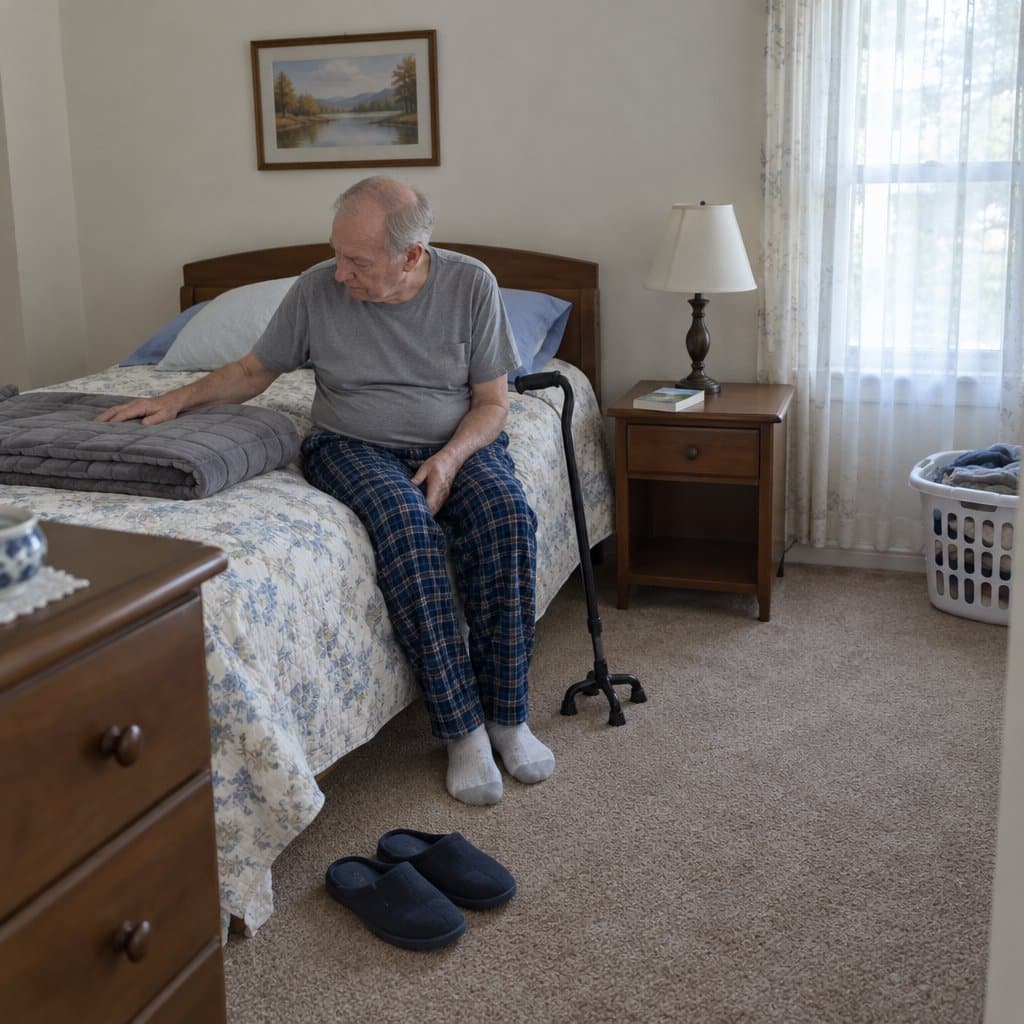
Stress and poor sleep are common after a stroke. A weighted blanket is one thing you can try alongside medicine, and it should be used under the care of a healthcare professional, along with other treatments such as physical therapy.
The deep-touch pressure feels a bit like a hug, which can calm the body and help with sleep. Choose carefully, though. A blanket that is too heavy can add discomfort and may raise the chance of a fall, so read up on the common causes of falls too.
Go lighter on the weight
The general rule is 5 to 10% of body weight. After a stroke, aim for the 5 to 8% range, because a heavier blanket can feel suffocating when the nervous system has been damaged.
Say you weigh 150 pounds. You would look for a blanket between 8 and 12 pounds.
Think about sensory changes
A stroke can change how fabric and weight feel. Ask whether some fabrics itch or make the skin tingle, and whether softer, silkier ones feel more soothing. Also think about how the person “feels” the weight of an ordinary blanket.
What to look for
- A chunky knit blanket that gets its weight from the fabric itself, with no beads or pellets.
- Small stitched squares that hold glass beads in place, with a soft bamboo cover to prevent overheating.
- A thinner blanket with even weight, for people who feel smothered or wake up sweating under thick ones.
- A custom blanket, which helps if you weigh under 100 pounds and have trouble finding the right weight.
- A bamboo blanket with a cooling effect that works all year.
- A starter blanket with organic cotton and a multi-layer design, though it comes in only a couple of colors.
Match the blanket to your bed. A king-size blanket on a single bed can slide off as you move. If your partner does not use a weighted blanket, get a smaller one just for you.
For more comfort ideas, see these pillows for stroke patients and this adaptive clothing for stroke patients.
Blankets made specifically for stroke patients are hard to find, so compare features closely. The main drawback is that even a well-chosen one can feel heavy to someone whose nervous system has changed.
Baloo Weighted Blanket Throw
The Baloo Weighted Blanket is a 12 lb throw measuring 42 by 72 inches. It is made of 100% cotton inside and out, with no polyester or synthetic liner, and filled with mini glass beads. The cotton is meant to stay cool and breathable, which matters if you tend to get warm under a heavy blanket.
The size suits a sofa or a chair, or use on top of a single bed. Because the weight is spread over a smaller area, it feels denser than 12 pounds might suggest. It also carries an OEKO-TEX Standard 100 certification for textiles.
Care is simple. Wash it on the gentle cycle in cold water with whites only, then dry on low heat. That is a real plus if spills or accidents are a worry.
The trade-off is the size. A throw this length will not cover a full bed, and the concentrated weight may feel like too much for someone who is sensitive to pressure or has trouble moving a blanket off. If that is you, check with your doctor or therapist first.
Zonli Breathable Weighted Mattress

Zonli makes floor-living bedding, and the details here describe a tatami-style mattress set on a raised frame. The frame lifts the mattress off the floor so air can move underneath, which helps keep moisture and dust from building up.
The top is a grass surface that wicks away moisture and heat. It has the traditional firm-yet-cushioned feel of a futon, and it is meant to support the spine in a natural line.
This suits someone who sleeps hot and likes a firm bed. If you want to try a weighted blanket for calming, a cooler, firmer surface underneath is a sensible match.
The trade-off is that a firm futon-style bed is not for everyone. If you have sore hips or shoulders and need a soft surface, or you want a bed that is easy to sit on the edge of and stand up from, check how it feels before you commit.
Weighted Blankets: Pros & Cons
Pros
- A drug-free option some people try for anxiety linked to dementia and Alzheimer’s. Research is limited, so ask the doctor.
- Some people find they sleep better and more deeply under a weighted blanket, including people with restless leg syndrome.
- Some people find the steady pressure calming, which may ease stress and anxiety.
- Weighted blankets reduce physical discomfort.
- As a one-time purchase, a weighted blanket costs less than many other things you might try.
Cons
- It takes some time to get used to the weight and tightness of a weighted blanket.
- There is no certainty about what works and does not with the inadequate research studies on weighted blankets.
- Some people get used to a weighted blanket and find sleeping without one difficult.
- The added weight of the blankets makes them difficult to travel with.
- Selecting one blanket can be difficult.

Risks & Side Effects Of Weighted Blankets
Weighted blankets are safe for many people, but not everyone. Check with your doctor or therapist first, especially if you have breathing, circulation, or movement problems.
However, sleeping with a weighted blanket can be risky under specific circumstances. For instance, for the elderly suffering from asthma and obstructive sleep apnea, there is a risk of a weighted blanket exacerbating the breathing problem, especially during the hot summer months. For seniors with claustrophobia, weighted blankets’ tightness and earthing effect might trigger panic episodes.
Do not use a weighted blanket over open wounds, burns, or fragile skin. Ask a doctor first. And like any other blanket, a weighted blanket can cause allergies.
Are Weighted Blankets Safe For Seniors?
As mentioned above, weighted blankets are safe for many people, but not everyone. Consult with your physician if you have any questions about whether one is safe for you or a loved one.
If a loved one has breathing, circulatory, or temperature regulation problems, a weighted blanket should only be used with a medical professional’s guidance. The added weight and extra heat insulation might affect their health negatively.
Caregivers should avoid covering seniors with an inability to remove the blanket. Additionally, seniors with severe bodily pain should refrain from using weighted blankets. The pressure could make the pain worse.
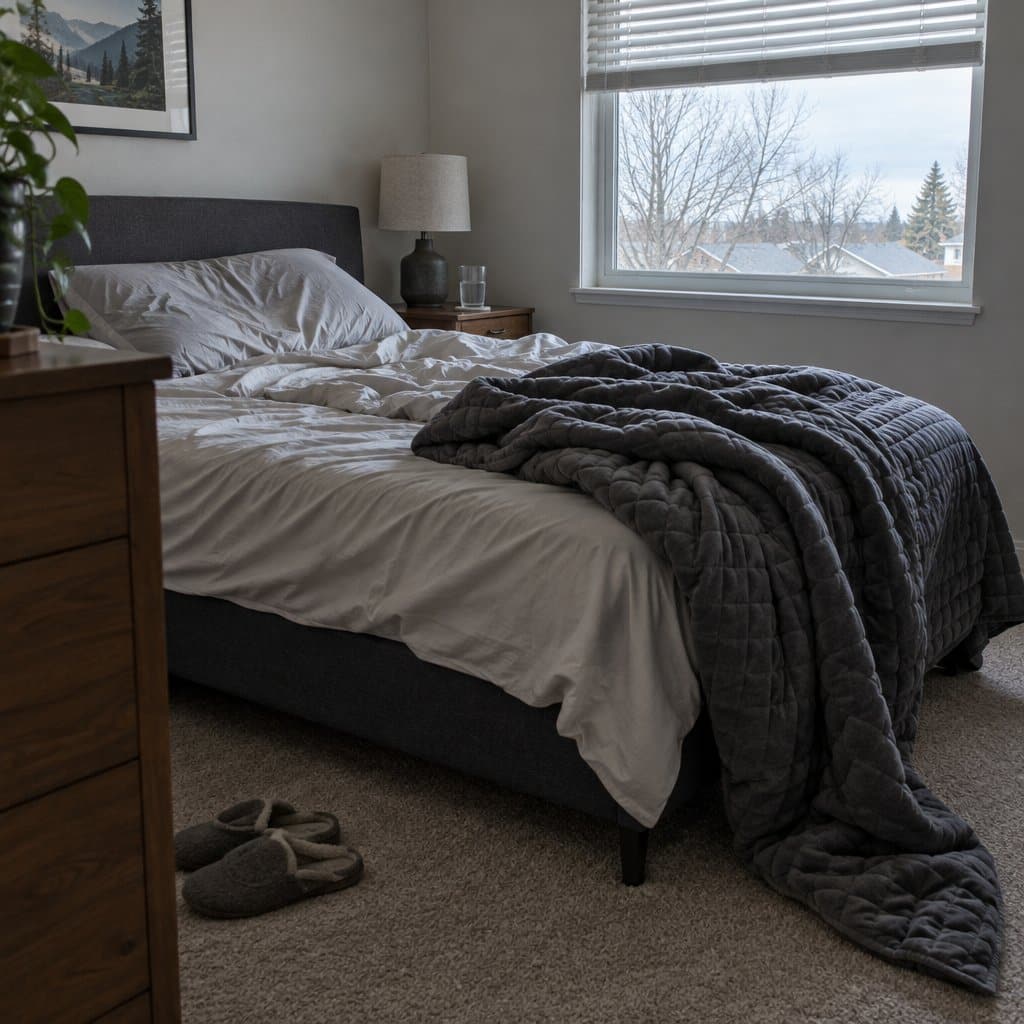
Can Weighted Blankets Cause Knee and Leg Pain?
Yes, they can. Some users report knee and leg pain, and there are reports of hip and back pain too. Research on this is still catching up, so it helps to know the likely causes.
The first is the weight of the blanket. A blanket that is too heavy can put too much pressure on the joints and muscles in your legs.
Many weighted blankets weigh 10 to 25 pounds, so check the weight against your own body weight. A common guideline is about 10% of body weight. Go lighter, and ask a doctor or therapist, if you have health conditions.
A blanket where you can add or remove weight lets you hit the right number. A homemade blanket works too.
The second cause is how long you use it. There is no set time limit, but if sleeping under it all night leaves your legs and knees sore, use it less. Try 2 to 3 hours at a time, and stop using it if you wake up with severe or lasting pain in your legs or knees.
The third cause is an existing condition. Even gentle pressure can hurt if you have an old injury or a chronic condition. Extra weight presses on the knee joints and can cause pain and swelling, and fibromyalgia and some cases of osteoarthritis can flare up the same way.
Poor circulation can also cause leg pain, tingling or numbness, and the weight of a blanket can make it worse. If you have diabetes or circulation problems, ask your doctor before using a weighted blanket.
The extra weight can also bruise the skin and strain the muscles and joints of frail seniors.
Talk with your doctor before you start. Also mention any leg or knee pain that shows up after using a blanket, because it can point to an underlying health problem.
Can it relieve the pain instead?
It might. No clinical trials have tested weighted blankets for joint and leg pain in osteoarthritis, but reports are promising. Many users say pain in their knees and legs from other conditions eased.
The reason may be higher serotonin and dopamine, which both play a part in natural pain relief. A better night’s rest may also play a part.
The main drawback is that the same weight that soothes one person’s legs can hurt another’s, so you may need some trial and error.
Guidelines for Using Weighted Blankets With Seniors
Many people take to a weighted blanket easily, but check with a doctor or therapist first, and start slowly.
Choose a blanket that is 10% of your body weight. You can always use a heavier (at most 12% of your body weight) or lighter (at least 5% of your body weight) blanket, depending on your comfort level and needs.
For first-time weighted blanket users, consider covering the lower half of your body with the blanket during the first one week. Easing your way into using weighted blankets will reduce the shock of the added weight your body experiences. Additionally, easing yourself into weighted blankets will negate feeling claustrophobic.
Concerning cleanliness, you want to purchase a weighted blanket with a removable cover. Due to the added weight of weighted blankets, washing these blankets can be a tad difficult. Caregivers will, therefore, find it difficult, if not impossible, to regularly wash the blanket as needed to maintain high hygiene standards. With a removable cover, you can wash the cover as often as needed without incurring the hassle of moving a heavy blanket around.

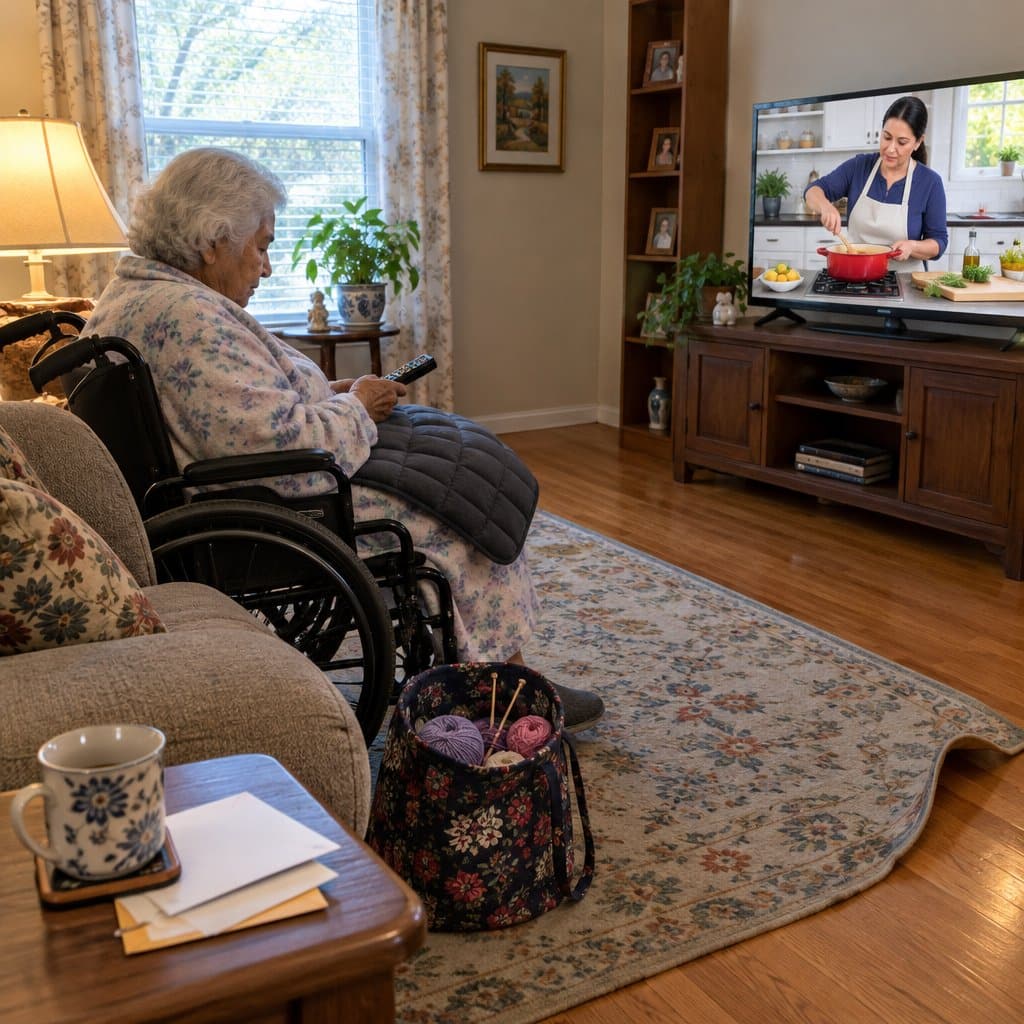
Weighted Lap Pads Vs. Weighted Blankets
The clue is the name; weighted lap pads are designed and optimized specifically for use while sitting down. Weighted lap pads are optimized to cover the laps and legs. Some lap pads are designed with features to secure the pads to wheelchairs. On the other hand, weighted blankets have a typical blanket design and shape.
They also have different prices. Generally, weighted lap pads are cheaper than weighted blankets. Finally, weighted lap pads tend to have limited uses compared to weighted blankets. Lap pads have limited uses, mainly to relieve joint pains, while weighted blankets are used for the range of applications mentioned above.
Weighted blankets and weighted lap pads are both used for pressure therapy.
How to Make a Weighted Blanket
While plenty of mass-produced weighted blankets are on the market, you can choose to go the DIY route. Making your own weighted blanket will ensure you have a blanket that suits your needs. From customizing the blanket’s weight to using filler materials that provide the right weight distribution, you can create a bespoke blanket and experience.
Many tutorials are available online on making weighted blankets on a budget, even with limited DIY skills. In fact, making your own weighted blankets makes for an interesting project for individuals looking to stay active.
Good examples of DIY weighted blankets can be found in this video:

Frequently Asked Questions/FAQ
Does Medicare Cover Weighted Blankets?
No, Medicare will not pay for a weighted blanket. There is a long list of qualifications before Medicare will pay for durable medical equipment for its beneficiaries. There has to be a proven clinical benefit of the product, and the product has to go through several committees and receive what is called an HCPCS code. And unfortunately, there is no HCPCS code for weighted blankets now.
Can Weighted Blankets Be Used in Nursing Homes?
Apart from people with conditions that prohibit using a weighted blanket, weighted blankets can be used in various places where stress and anxiety may arise. This includes nursing homes and long-term care facilities, where caregivers use them to help residents feel calm and grounded.
Efforts are underway to better understand weighted blankets’ effects through various clinical trials (source).
Are Weighted Blankets Considered a Restraint?
The Centers for Medicare and Medicaid Services (CMS) does not consider weighted blankets as restraints. However, when seniors use an inappropriately sized weighted blanket, the weight might restrain their range and variety of movements, thereby acting as a restraint. (source)
Can A Weighted Blanket Be Too Heavy?
Yes, a weighted blanket can be too heavy. A good rule is about 10% of your body weight. If you have health conditions, go lighter and ask your doctor or therapist first. The key is choosing a weight that lets you move freely and push the blanket off on your own.
Sources:
- https://www.healthline.com/health/anxiety/do-weighted-blankets-work
- https://www.healthline.com/health/adhd
- https://www.additudemag.com/weighted-blankets-as-therapy/
- https://www.ncbi.nlm.nih.gov/pmc/articles/PMC3088531/
- https://www.ncbi.nlm.nih.gov/pmc/articles/PMC6279287/
- https://pediatrics.aappublications.org/content/134/2/298.long
- https://www.health.harvard.edu/mind-and-mood/anxiety-and-stress-weighing-heavily-at-night-a-new-blanket-might-help
- http://www.tandfonline.com/doi/abs/10.1300/J004v24n01_05
- https://www.webmd.com/a-to-z-guides/news/20101114/oxytocin-more-than-mere-love-hormone#1
- https://www.ncbi.nlm.nih.gov/pubmed/15650465/
- https://www.ncbi.nlm.nih.gov/pmc/articles/PMC3424606/