
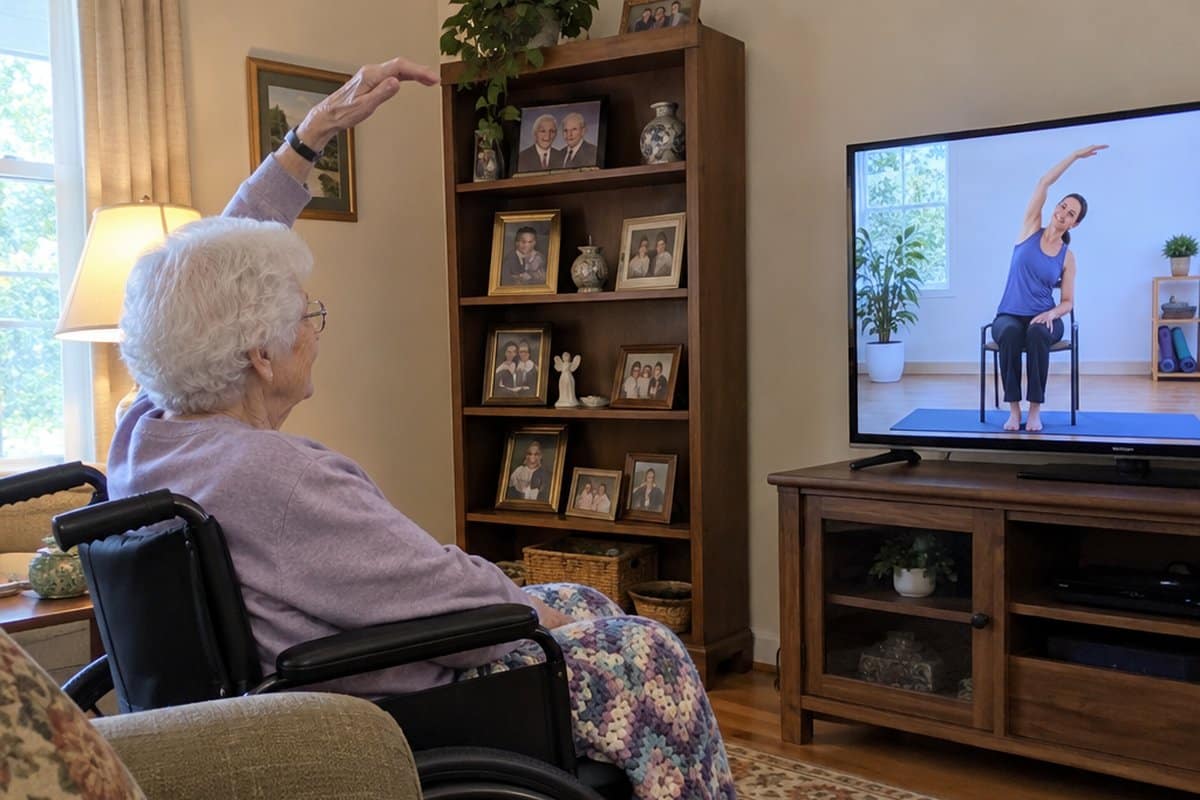
You have a mat on the floor and a free afternoon, but no idea where to begin. This guide to the best yoga apps for seniors, even for beginners, is meant to help with exactly that.
Yoga is for every age, and you can do it at home.
It covers free yoga apps, a gentle 10-minute morning routine, and seated wheelchair yoga for limited mobility, dementia or osteoporosis. You will also find guided videos and DVDs, plus the main types of yoga.
Most apps work best on an exercise app that is available for seniors, and the good ones show video so you learn the moves.
Free Yoga Apps For Seniors
1. Mighty Health
Mighty Health is one of the leading wellness and fitness programs that are specifically designed for individuals 50 and older. There are many programs to choose from that help users to improve their balance and mobility, lose weight, and to help them enjoy their daily lives.
Mighty Health is an health app that manages the overall health of older adults that allows people to start their health journey with a library that contains workouts dedicated to all levels. These workouts include anything from chair yoga to knee strengthening.
The best part about this app is that you get to consult with expert health coaches that will help you to track your goals and stay motivated with unlimited 1-on-1 support.
2. FitStar Yoga
This app was developed by Tara Stiles, a well-known yoga instructor. The app provides complete personalized experiences to help users achieve their set goals. Individualized routines that match up to the “predetermined” fitness ambitions of the user are also captured in the app.
When you download this app, you can enter specified information so that it matches your day-to-day routine. The app then provides specialized guides with each practice session.
3. Down Dog
Down Dog is a free app that allows users to choose from 7 yoga instructors. The diversity and flexibility that this application brings are highly impressive.
The app also includes a 3-day introductory course that covers how to practice yoga, which focuses on improving your back posture. The options you will be getting from each instructor will also give you a better feel when it comes to choosing the workout that you prefer.
4. Simply Yoga
With more than 30 yoga moves to choose from, this app provides a healthy range of choices. With periodic 20, 40, and 60-minute instructional videos, you will be receiving all the tips and guidance that you will need to successfully practice yoga.
The layout is designed for the best understandability and could be your missing key to your fitness journey. This app is also available on the Apple App Store and Google Play Store.
It is also very user-friendly, which means it is also easy for seniors to use. There are also fitness guides available for seniors that can help them to work toward a fit and healthy body.
This is an excellent app that caregivers can use to help the seniors under their care to achieve the maximum benefits that yoga has to offer.
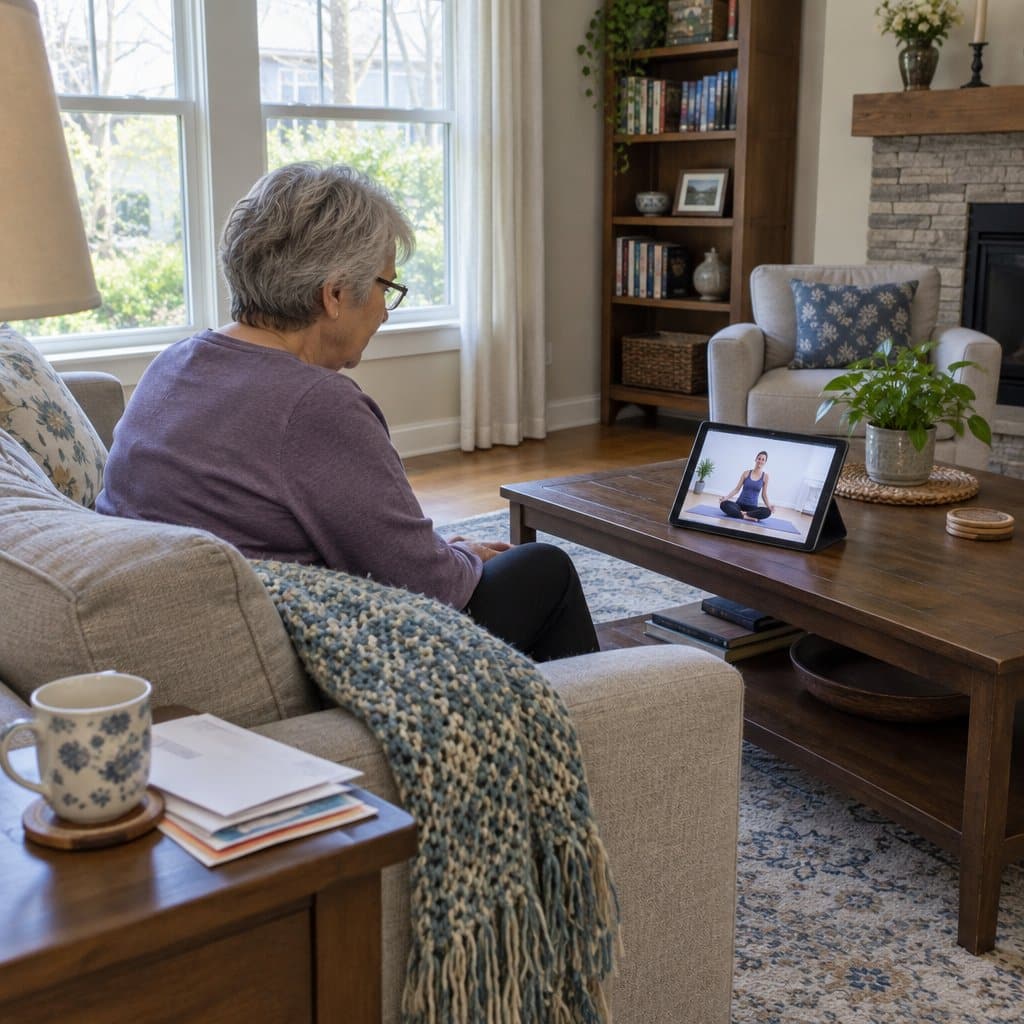
Making Yoga a Habit You Keep
An app only helps if you open it. A few small touches can make yoga something you look forward to.
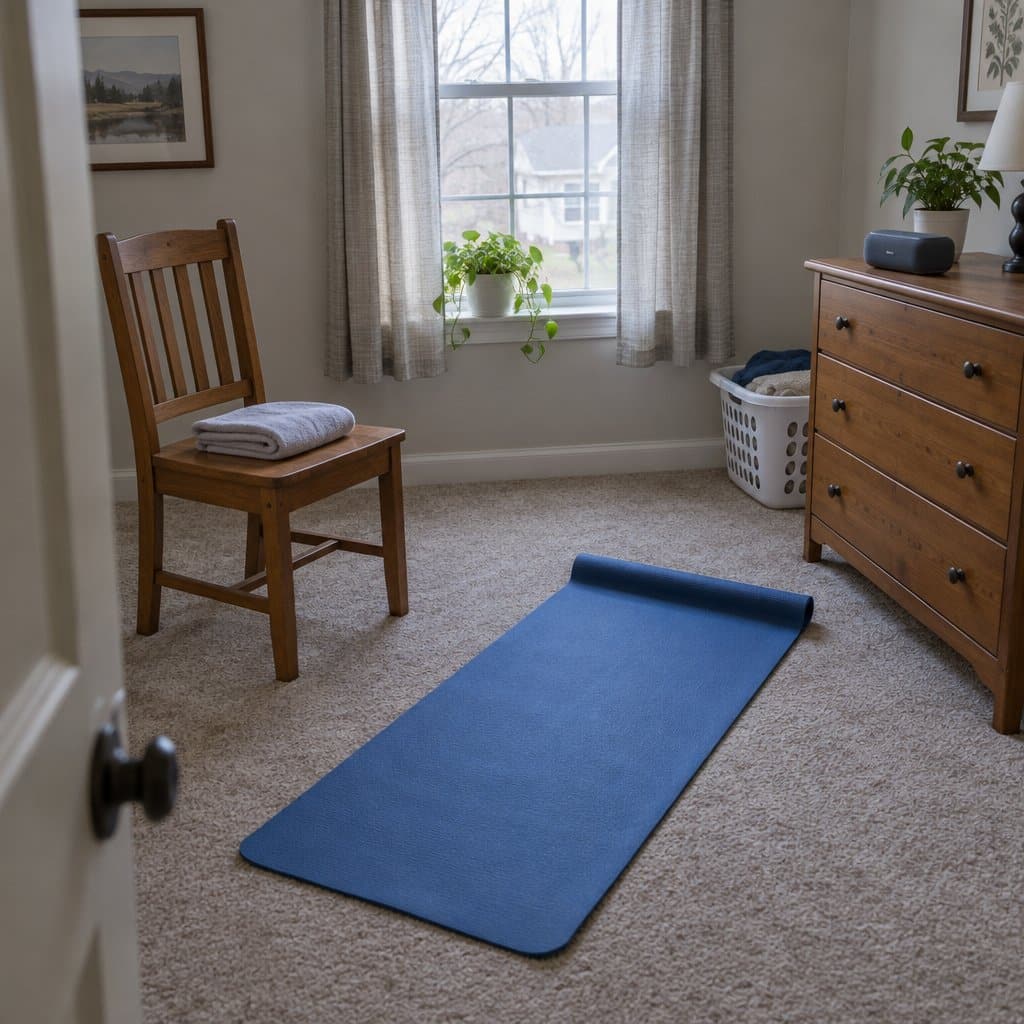
Start with a spot that feels like yours. Lay out a mat or a soft rug to mark the area, so it becomes your own little retreat.
Add music or nature sounds you love. Pick tunes that lift your spirits and play them softly in the background.
Invite a friend to join you. Practicing together gives you support and some laughter, and it is not about keeping pace with anyone else.
For the first week, keep the plan simple. On days 1 to 3, just learn the moves. On days 4 to 6, try flowing from one pose into the next. On day 7, stop and notice how you feel.
Ten minutes a day can grow into a routine that supports your physical and mental well-being. If you want more company along the way, the 31-day wellness challenge is a good place to look.
Try to be consistent, and be kind to yourself on harder days. Some days you may only sit and breathe deeply, and that is fine. Yoga will wait for you to come back.
The trade-off is that a habit takes patience, and the first week may feel slow while you learn the moves.
A 10-Minute Sun Salutation Routine for Circulation and Balance
Sun salutation is a set of simple yoga moves that helps with blood flow, breathing and staying steady. Ten minutes a day is enough, and you can adjust it to suit you.
The moves gently stretch your muscles and warm up your joints. Many people like it as a wake-up call to start the day.
Done regularly, it can strengthen your joints and improve balance, which matters because it helps reduce the risk of falls. You may also find that moderate-intensity yoga eases stress and helps with executive functioning, meaning how you organize thoughts, prioritize tasks, manage time and make decisions. Ten minutes daily can become a routine that supports your physical and mental well-being.
To get started, set yourself up with a few basics:
- Find a quiet spot where you feel calm and undisturbed.
- Wear loose, comfortable clothing.
- Use a yoga mat or a soft rug for support.
- Do only what feels good, with no pushing.
Pay attention to your breathing, since it makes the practice work better. A friend joining you can make it more fun, and you can help each other remember the steps.
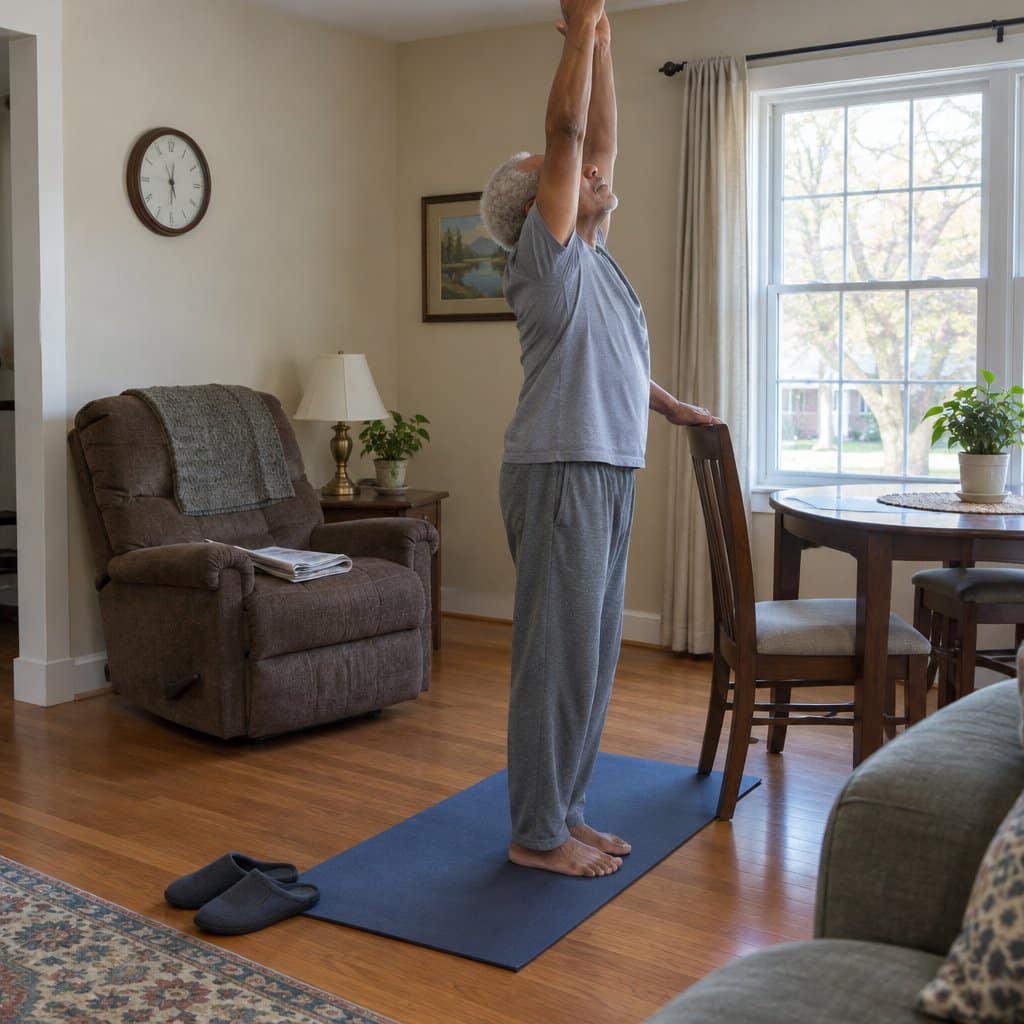
If a movement is hard, there are ways to adapt it. Rest your hands on a yoga block or a chair during a forward fold. If balance is tricky, practice near a wall or a sturdy chair. If standing for long is a challenge, try seated exercises instead.
With joint pain, stay within your comfort zone. If downward dog is too much, do it with your knees on the ground. Take breaks whenever you need them, because pausing to breathe is better than overdoing it.
To build the habit, spend days 1 to 3 learning the moves. On days 4 to 6, try flowing from one pose to the next. On day 7, notice how you feel. Music or nature sounds you enjoy can make the routine more inviting.
The trade-off is that a flow like this takes some patience at first, and some days you may only sit and breathe deeply. That still counts.
Guided Videos and DVDs for Wheelchair Yoga
If reading about poses is not enough, a guided session may suit you better. Following along shows you how to get into each pose and how long to hold it.
It also helps if you tend to rush through a workout on your own, since the instructor sets the pace. You get a bit of the feel of a yoga class too, including the relaxation tips, which you may find are the best part.
A few kinds of free online videos are worth knowing about:
- A short session of just over ten minutes, led by an accomplished yoga teacher. It is wheelchair friendly and easy to follow, with the focus on breathing and relaxation and gentle movements meant to refresh.
- A beginner set taught by a male instructor, which some people may find more relatable. It includes shoulder mobility exercises that traditional classes often overlook.
- A video for people with more severe physical limitations, where the exercises can be tailored to what the viewer is able to do.
If your internet is poor, or searching online is not something you or your loved one will do, DVDs are another route. Look for ones made for seniors and people with mobility problems, with poses done from a standard chair and adapted for wheelchairs. Some are part of a series of chair exercise videos for beginners.
Wheelchair yoga suits almost everyone, and people who are mobile can adapt some of the stretches too. If you would like a different kind of movement, the article on balance exercises to reduce falls is worth a read. The trade-off with videos and DVDs is that you have to pick one that matches your own abilities, so check that it is made for wheelchair users.
What Type Of Yoga Is Best For Seniors?
When performed in the correct manner, yoga is said to balance the energy points or “chakras” in the body. Yoga can be a good fit, but check with your doctor or therapist before trying any poses.
People with conditions like uterine prolapse, disk herniation, advanced arthritis, or glaucoma might have to avoid some of the yoga poses, so ask a doctor first. Below are four popular yoga types that can help you enjoy a range of benefits:


1. Standing Yoga Poses
Triangle Pose or Trikonasana
- Helps to stretch and strengthen the hip region
- Assists with regulating blood pressure
Standing Spinal Twist or Katichakrasana
- Helps to prevent slouching and to keep the spine straighter
- Helps to strengthen the leg and arm muscles which encourages stability
2. Sitting Yoga Poses
Butterfly Pose or Badhakonasana
- Helps to regulate digestion and clear the bowel movements
- Stretches the knees and thighs, reducing joint pain and stiffness
Child Pose or Shishuasana
- Helps relieve backache and keeps the back relaxed
Cat-stretch Pose or Marjariasana
- Reduces stiffness and can help make the spine more flexible
- Improves digestion
- Lowers back pain
- Relaxes the mind
- Promotes blood circulation
- Tones the stomach
3. Lying Down Yoga Poses
Cobra Pose or Bhujangasana
- Strengthen the shoulders and back
- Improves blood circulation
Locust Posture or Shalabhasana
- Tones the back and neck muscles, which helps to increase flexibility
- Improves digestion
Wind Relieving Pose or Pawanmuktasana
- Helps to relieve digestive problems and releases gas
- Increases blood circulation around the hip joints, which helps to release or relieve tension in these areas
4. Chair Yoga Poses
Also known as “desktop” yoga poses, these moves are more comfortable and convenient since you can perform the exercise while seated in a chair.
Neckroll, seated-forward bend, seated-spinal twist, temple run, and eagle arms are yoga poses in a chair that provide impressive health benefits such as:
- Relaxing the back and neck muscles
- Helps alleviate body fatigue, tension, and pain
- Improves balance
- Increases flexibility
- Increases muscle strength
RELATED: The Best Stretching Apps For Seniors
Wheelchair Yoga Poses, Step by Step
Here is a closer look at three seated poses, one step at a time.
For the side stretch, start by reaching your left arm above your head. Lean over to your right side. You should feel the stretch along your left side.
Then do the same in the opposite direction with the other arm. Keep your face forward the whole time, and lean rather than twist.
For eagle arms, put your arms out in front of you with your elbows bent at 90 degrees and your palms facing each other. Cross one arm over the other.
Next, wrap your forearms so they cross too, until your palms touch. Keep your arms lifted as much as you can, sit upright, and pinch your shoulder blades back.
The twist is as simple as it sounds. Sit tall and turn to look back over one shoulder.
Try to turn your whole body, so your shoulders turn too, and not just your head. If you need a hand, reach one arm over the frame of your wheelchair on the side you are turning to.
Eagle arms ask you to hold your arms up, which takes some effort, so go at a pace that suits you and rest when you need to.
Wheelchair Yoga: Seated Yoga for Limited Mobility, Dementia and Osteoporosis
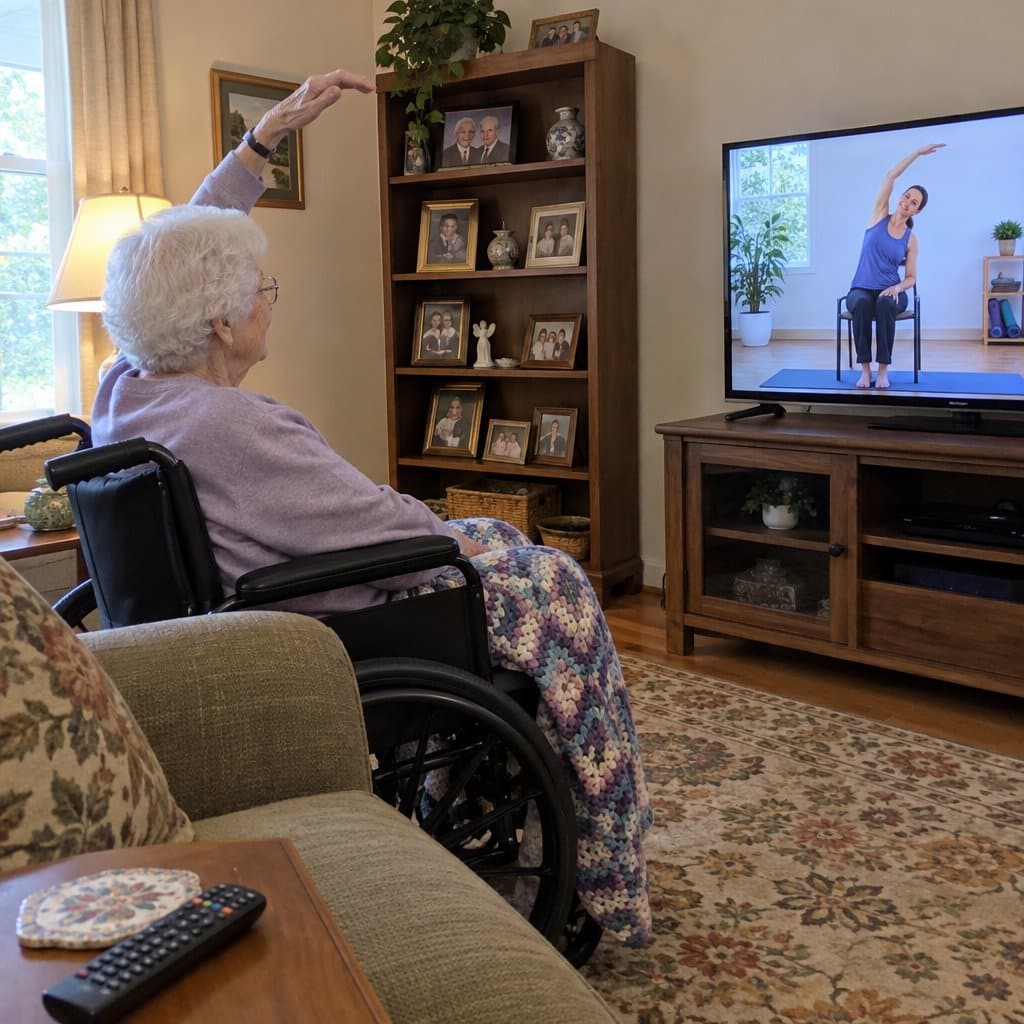
Yoga does not have to be done standing on a mat. Wheelchair yoga uses stretching, twisting, bending and gentle movement, along with breathing exercises and meditation, so you can stay limber within the limits you have.
It is easy to learn and can be done at home without any special equipment. It is also a good way for someone with limited mobility to join in with traditional yoga.
It may also help with osteoporosis. Resistance training is often recommended for osteoporosis, but it is not always possible from a wheelchair. Check with your doctor or therapist about whether seated yoga is a good fit for you.
Some adults use a wheelchair to get around but are not in it all the time. The pull may be to try a traditional exercise class. If falls or safety are a worry, seated yoga is a low-risk way to stay active.
Wheelchair yoga uses many of the same poses as traditional yoga. It also uses modified poses that make a standard position easier for people with limited mobility. A few examples:
- Side stretch: reach one arm over your head and lean to the opposite side, facing forward. Lean rather than twist, then repeat on the other side.
- Eagle arms: hold your arms out in front with elbows bent, cross one arm over the other, and wrap your forearms so your palms touch. Keep your posture upright and your shoulder blades pinched back.
- Seated twist: sit upright and turn to look back over one shoulder, turning your whole body and not just your head. If you need help, reach one arm over the frame of your wheelchair on the side you are turning to.
Modified versions of cat pose and cow pose also work well. You can add deep breathing and meditation too.
Watching a video or a DVD is often easier than reading about poses. You can see how to get into each pose and how long to hold it, and you get a little of the feel of a yoga class, including the relaxation. It also keeps you from rushing through.
Look for videos made for wheelchair users. Some suit people who are mostly mobile, while others allow for more limitations and let you tailor the exercises to what you can do. A DVD is a good choice if your internet is poor or searching online is not something you want to do.
The trade-off is that the seated version may not feel as energetic as a standing class. If you want more movement, balance exercises are worth a look too.
Yoga Vitality Chair Yoga
Yoga Vitality is a chair yoga program made for older adults and complete beginners. You do the movements seated, so there is no getting down on a mat and no worry about getting back up.
It is organized into 4 levels, so you can start with the easiest and move up when you feel ready. The program is built around joint health, mobility, balance, and easing pain.
The trade-off is that chair yoga is gentler than a standing class. If you want a workout that builds strength or gets your heart rate up, you may outgrow it. It also suits you best if you like following a structured program rather than picking random videos.
Chair Yoga Seated Exercises
Chair Yoga: Seated Exercises for Health and Wellbeing is built around exercises you do sitting down. That means no getting down on a mat and no worrying about getting back up.
It suits anyone who wants to stretch and move but finds standing poses uncomfortable or unsteady. It is also a sensible starting point if you have never done yoga and want to ease in.
The trade-off is that it is a seated program, so it will not give you the balance practice or leg work of standing yoga. If you want to move around the room, you may outgrow it.
Chair Yoga
Chair yoga does the stretching, breathing and gentle movement of regular yoga while you stay seated. That means no getting down on a mat and no worry about getting back up.
It suits anyone who finds standing poses hard on balance, or who wants a calm way to move a little each day. A sturdy chair is all you need to get started.
The trade-off is range. Seated poses will not stretch you the way floor or standing yoga does, so if you want a more athletic workout, this will feel mild. For staying limber and relaxed, that gentleness is the point.
Is Yoga Suitable For The Elderly?
Yoga is a good physical workout, and it also offers benefits for the mind. It is a popular activity because you are in control of the pace.
Some people are apprehensive about yoga, and some worry about injury. Go slowly and the risks stay low. If you have a health condition, check with your doctor or therapist first.
Taking it easy is the most important rule of yoga. It also applies to any other exercise you decide to do outdoors or at home.
If you classify yourself as a total beginner, then it would be best to begin with positions known as asanas and slowly ease into the practice. Over time, these exercises will help you to build strength, become fitter, and embrace and truly enjoy your increased or newfound flexibility.
You also get to choose the difficulty level, which ranges from demanding styles like Ashtanga Yoga to gentler ones like Yin Yoga.









just trying to get moving