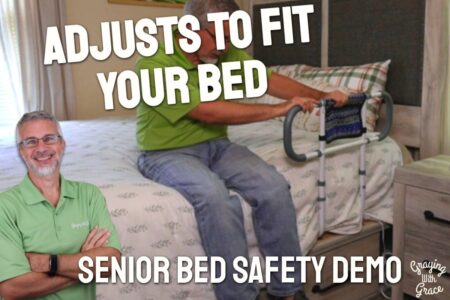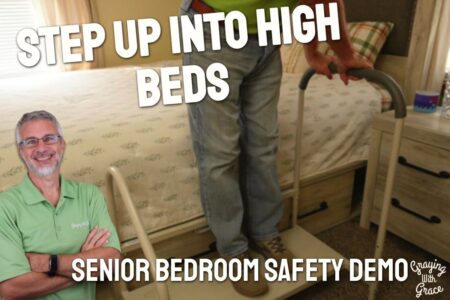
Getting out of bed at night shouldn’t feel like a gamble. If you are looking for the best bed rails for seniors, you are in the right place.
Below are my top picks, with the downsides named so you don’t waste your money. I also cover what a bed rail is, the different types, features to look for, and how to choose one.
Some rails can trap a person or be climbed over, so check with a doctor or therapist before using one as a barrier.

Safety Bed Rail for Elderly

The Bed Rails for Elderly Adults Safety, Tall Bed Rail for High Thick Mattress is a sturdy handle that mounts at the side of the bed. It gives you something solid to push up from when you sit up or stand.
It is a handle, not a full-length guard rail, so it avoids the entrapment risk that comes with a long rail a person can slip into.
The handle telescopes from 24.5 to 30 inches wide. You can grip it with both hands or find the spot that feels best. There are two height settings made for thick mattresses, so the handle sits near hip height when you are seated on the edge of the bed.
The grip is wrapped in foam, so you aren’t grabbing bare metal first thing in the morning.
Who it is not for: it is not a barrier and won’t stop anyone from rolling out of bed. If nighttime wandering or confusion is the worry, this is the wrong tool.
Also, if you have a platform bed with drawers or an adjustable base, make sure it will fit before you buy.
Vive Stand Assist Mobility Rail

The Vive Stand Assist is a little different from the other picks here. It is made for getting up from a couch, recliner or upholstered chair, not for getting out of bed.
It has two support handles, so you can push straight up to standing without twisting or turning. It fits snugly around the base of firm cushions, or sits beneath loose ones, so it works with plush sofas and recliners too.
The frame is aluminum and holds up to 300 pounds. It is adjustable, and the black finish blends in with most home decor. The handles have light foam padding for a comfortable grip.
The trade-off is that it won’t help you in bed. If getting out of bed is your main trouble, choose one of the bed handles instead. It also needs a cushioned seat to sit under or against, so it isn’t a fit for a hard bench or a bare wooden chair.
Stander Wonder Pivot Bed Rail

The Stander Wonder Pivot Bed Rail does two jobs. It works as a guard rail to help keep you from rolling out of bed, and as a handle to hold when you sit up, stand, or shift position.
It is one of the only adult bed rails to pass the ASTM F3186-17 safety standard for adult portable bed rails. It was independently tested to reduce the risk of falls and entrapment, which is a good thing to look for in any rail.
The rail pivots down 180 degrees and rests along the side of the bed when you don’t need it. That makes bed making, caregiving, and transfers easier than with a fixed rail.
It extends to 26, 32, or 38.5 inches and supports up to 300 pounds. A safety strap holds it to the bed, and it works with platform beds, box springs, and slat beds. It fits mattresses 8 to 12 inches thick.
The trade-off is the mattress thickness. If yours is thinner than 8 inches or thicker than 12, this rail won’t fit.
It also sits on one side of the bed only, so check which side you get in and out on before you order.
Falls and injuries are a real worry, so seniors and their caregivers often search for solutions that provide safety, stability, and independence.
Bed rails for seniors and the elderly are meant to offer support during nighttime hours. They also carry risks, including entrapment, and some people climb over them. Check with their doctor or therapist before using a rail that works as a barrier.
Bed rails aren’t a product many people know much about. So I’ll compare them for you based on safety, comfort, ease of use, and durability, using the maker’s listed details and safety features.
By The Numbers: Comparing Bed Rails
| Product Name | Safety | Comfort | Ease of Use | Durability | Aggregate Rating |
| Vive Health Bed Safety Rail | 9 | 9 | 9 | 8 | 8.8 |
| Drive Medical Home Bed Side Rail Helper | 9 | 9 | 8 | 8 | 8.5 |
| Stander Signature Life Confidence Home Bed Handle | 9 | 8 | 8 | 9 | 8.5 |
| Stander EZ Length Adjustable Bed Assist Rail | 9 | 8 | 8 | 8 | 8.25 |
| Medline Bed Assist Bar with Pocket | 9 | 7 | 8 | 9 | 8.25 |
| RMS Dual Bed Rail | 8 | 8 | 8 | 8 | 8.0 |
| Stander Bed Cane Assist Bar | 8 | 8 | 7 | 9 | 8.0 |
Reviews of My Recommended Bed Rails
Safety Bed Rail for Elderly
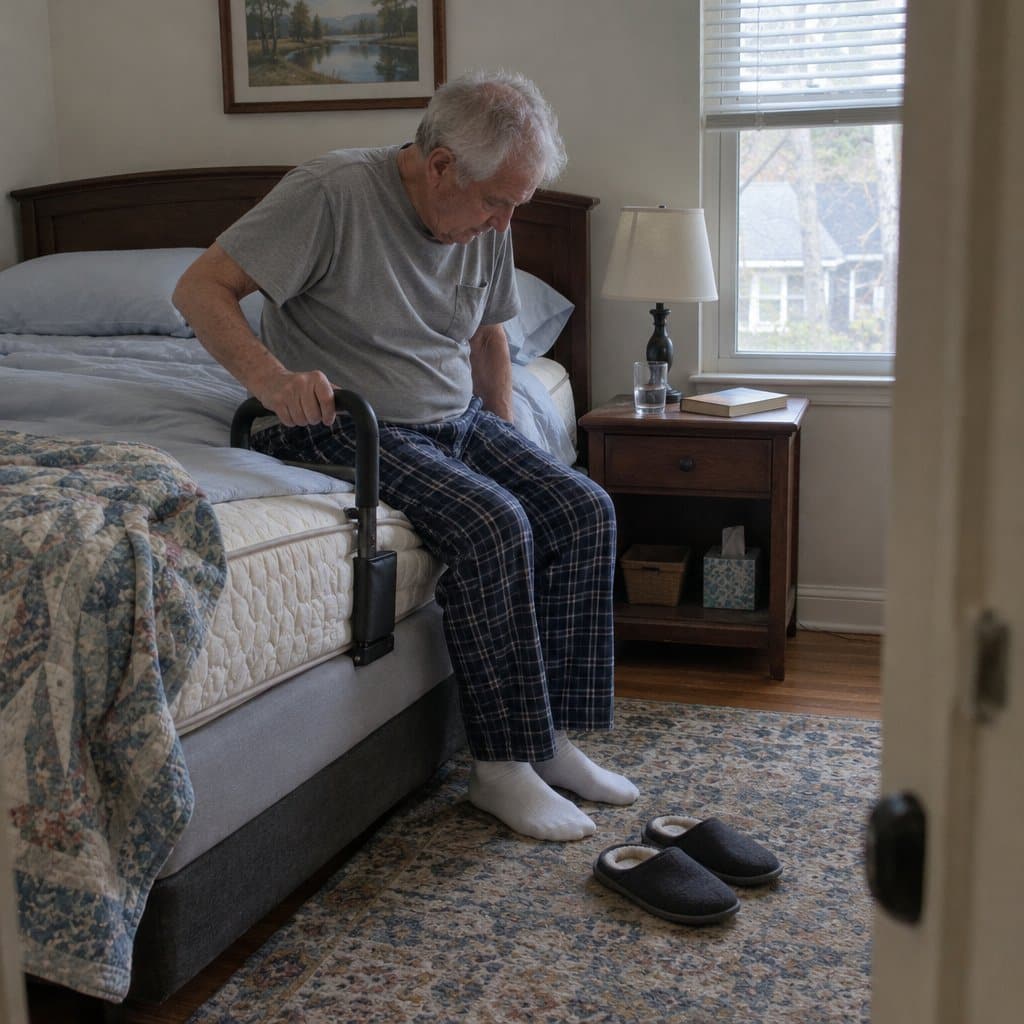
The Bed Rails for Elderly Adults Safety, a tall model made for high, thick mattresses, is really a bed handle more than a guard rail. It gives you something solid to push up from when you sit up, stand, or lower yourself back down.
The handle telescopes from 24.5 to 30 inches wide. You can grip it with both hands, or slide to whatever spot feels most comfortable.
It has two height settings built for thick mattresses. The handle lands near hip height when you are sitting on the edge of the bed, which is where you want a push-up point.
The grip is wrapped in foam. That means you are not grabbing cold bare metal first thing in the morning.
Because it is not a full-length barrier, it avoids the entrapment risk that comes with a long guard rail, where a person can slip into the gap.
Who it is not for: it will not stop you from rolling out of bed. If the worry is nighttime wandering or confusion, this is the wrong tool.
Also, check that it fits your bed before you buy. Platform beds with drawers and adjustable bases in particular need to be confirmed first.
If your goal is easier, steadier getting in and out of bed, this is a simple way to get there.
HONEYBULL Bed Rails for Elderly

The HONEYBULL Bed Rail is a steel-framed assist rail that slides between your mattress and bed frame. It gives you a steady bar to hold when you get in and out of bed on your own.
It sets up without tools. That means a family member or caregiver can put it in place, or move it to another bed, without any hardware.
The handle is padded and non-slip, so your hand has something secure to hold. The handle height adjusts too, which helps you match it to your bed and how far you can comfortably reach.
It comes with a storage bag and a safety strap. The bag is handy for keeping glasses or a phone within reach overnight. The listing says it fits King, Queen, Full, and Twin beds.
A few things to watch for. The width of the rail is fixed, so measure the space beside your bed before you order. If you have a platform bed, or need to know the weight limit, confirm both with the brand first.
This is a support bar for standing up and sitting down. It is not a full-length guard to keep someone from rolling out, so it is not the right pick if that is the main worry.
TerseFit Stand Assist Aid


The TerseFit Stand Assist Aid is a freestanding support that helps you rise from a chair, couch, or toilet. It needs no wall anchors and no permanent installation, so you can set it up and move it from room to room in seconds.
The shaft adjusts in height, up to 36 inches, and locks in place so you can set it to fit you. The manufacturer rates it for 350 pounds, and it weighs 5 pounds. It has a compact footprint that suits a tight bathroom.
The trade-off is that this is a handhold for standing up, not a bed rail. It won’t keep you from rolling out of bed, so it isn’t the right pick if that’s your main worry. Also, the minimum height and exact base size aren’t published, so measure your space before ordering. The 350 pound rating comes from the manufacturer alone, so if you need steady support at every step, a wall-mounted grab bar may suit you better.
Stander Wonder Pivot Bed Rail
The Stander Wonder Pivot Bed Rail does two jobs. It helps keep you from rolling out of bed, and it gives you something sturdy to hold when you sit up or stand.
The rail extends to three lengths: 26, 32, or 38.5 inches. You can set it to suit the bed and the person using it. It supports up to 300 lbs.
The part I like most is that it pivots down 180 degrees and rests along the side of the bed. That makes bed making, caregiving, and transfers easier, since the rail isn’t fixed in the way.
It is also one of the few adult bed rails to pass the ASTM F3186-17 safety standard for adult portable bed rails. It was independently tested to reduce the risk of falls and entrapment. Entrapment means a body getting caught in or against the rail, which is the main danger with bed rails, so that testing matters.
It attaches with the included safety strap. It works with traditional beds, including platform beds, box springs, and slat beds. It fits mattresses 8 to 12 inches thick.
Now the downsides. If your mattress is thinner than 8 inches or thicker than 12, this rail won’t fit properly. Measure first.
It is also a single rail, so it guards one side of the bed. If you need both sides covered, you would need a second one. And because it is a strap-on rail, it isn’t the right pick for anyone who needs a full-length barrier along the whole bed.
It suits someone who is mostly steady but wants help getting up and a bit of reassurance overnight. A caregiver will also appreciate that it swings out of the way.
Vive Stand Assist Mobility Rail
The Vive Stand Assist is a different kind of product from a bed rail, so it helps to know where it fits. It is made for getting up from a couch, a recliner or an upholstered chair, not from a bed.
It has two support handles. They give you something steady to push against as you rise, so you can stand straight up without twisting and turning. That twisting is where a lot of falls begin.
It fits snugly around the base of secure cushions, or sits beneath loose cushions. It works with any cushioned seat, including plush sofas, recliners and upholstered chairs.
The frame is aluminum and supports up to 300 pounds. It is adjustable, and the black finish blends in with most home decor. The handles have soft foam padding for a comfortable, secure grip.
Now the trade-offs. It will not help you get out of bed, so if the bedroom is where you struggle, you want a true bed rail or bed handle instead. It also works only with a cushioned seat, so a hard wooden chair is not a match.
It is also something you assemble and adjust yourself, so have a family member nearby for that part if tools or small parts are a hassle.
For someone who does fine in bed but has a hard time pushing up out of the favorite chair in the living room, this is a sensible addition to the room.
Stander EZ Adjust Bed Rail
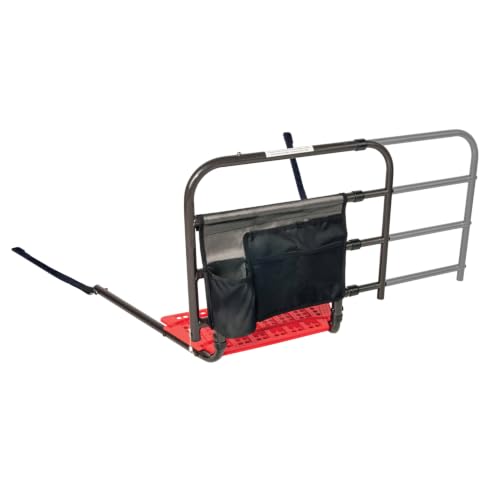
The Stander EZ Length Adjustable Bed Assist Rail is made for people who want help getting in and out of bed. Because it can work as a barrier, check with their doctor or therapist before using it, since rails can trap a person or be climbed over.
Pros:
- Adjustable length, including a longer setting (talk with a doctor or therapist first, since longer rails carry more entrapment risk)
- Can be used as a half-bed rail for easy access to and from bed
- Folds down and out of the way when not in use
- Comes with an organizer pouch to keep handy items close by
- Non-institutional design blends in with bedroom decor
Cons:
- May not fit all bed types or sizes
- Some users may find it difficult to install without assistance
- May be more expensive than other bed rail options
This bed rail adjusts in length, making it suitable for a wide range of bed types and sizes.
It easily folds down and out of the way when not in use, ensuring that it does not impede movement or cause any tripping hazards.
The included organizer pouch is also a great feature, allowing seniors to keep handy items close by, such as medications, books, or remote controls.
The non-institutional design of the bed rail ensures that it blends in with bedroom decor, making it feel like a natural part of the room rather than a medical device.
There are some drawbacks to consider, such as the bed rail not fitting all bed types or sizes, and the possible difficulty of installing it without help. If it will act as a barrier, check with a doctor or therapist first.
Overall, the Stander EZ Length Adjustable Bed Assist Rail is worth a look if you want help getting in and out of bed. Full-length coverage carries the highest entrapment risk, so talk with a doctor or therapist before using it.
The bed rail’s adjustable length, half-bed rail option, fold-down feature, organizer pouch, and non-institutional design make it a versatile and user-friendly product.
Medline Adjustable Bed Assist Bar

The Medline Bed Assist Bar with Pocket is made for people who want help getting in and out of bed, with a handy place to store small items.
Pros:
- Tool-free assembly for quick and easy setup
- Adjustable height can be set to multiple bed heights
- Soft grip prevents slipping and provides added comfort
- Pocket provides a quick access area for personal items
Cons:
- May not fit all bed types or sizes
- Weight capacity of 250 lbs. may not be suitable for all users
- May not provide full-fall protection like other bed rails
The Medline Bed Assist Bar with Pocket gives you a handhold for getting in and out of bed, plus a pocket for small items.
The bed assist bar features tool-free assembly for quick and easy setup, and adjustable height to accommodate multiple bed heights.
The soft grip on the bed assist bar prevents slipping and provides added comfort for users. The pocket provides a quick access area for personal items, such as medications, books, or remote controls.
While the product has many benefits, there are some potential drawbacks to consider. The bed assist bar may not fit all bed types or sizes, so users should ensure that the product is compatible with their specific bed before purchasing.
Additionally, the weight capacity of 250 lbs. may not be suitable for all users, and the product may not provide full-fall protection like other bed rails.
Overall, the Medline Bed Assist Bar with Pocket is a reasonable choice if you need help getting in and out of bed, and the pocket is handy for storage. It is a support handle, not a barrier, so if someone might roll out of bed, ask their doctor or therapist what fits.
The product’s tool-free assembly, adjustable height, soft grip, and pocket make it a versatile and user-friendly product.
Weighing the drawbacks against the benefits, it may suit people and caregivers who want a simple, lower-cost bed assist bar. Check the fit and weight limit first.
Vive Health Bed Ladder

The Vive Health Bed Ladder is not a rail at all. It is a strap ladder that loops around the foot of your bed frame, and you pull yourself up through the rungs, hand over hand, until you are sitting.
It is meant for people who need help sitting up in bed, not for keeping someone from rolling out. The strap adjusts from 48″ to 72″, so the top handle can sit at waist height when you are lying down. The rungs are wide, and the handles have foam grips. A buckle strap goes on any bed frame, including adjustable ones, with no tools. The webbing supports up to 300 pounds.
The trade-off is that it only helps with sitting up. It won’t stop a fall in the night, so if rolling out of bed is your worry, a rail is the better fit. It also asks you to pull with both arms, so it suits someone with decent grip and arm strength.
What is a Bed Rail and What is it Used for?
Definition and Purpose of Bed Rails
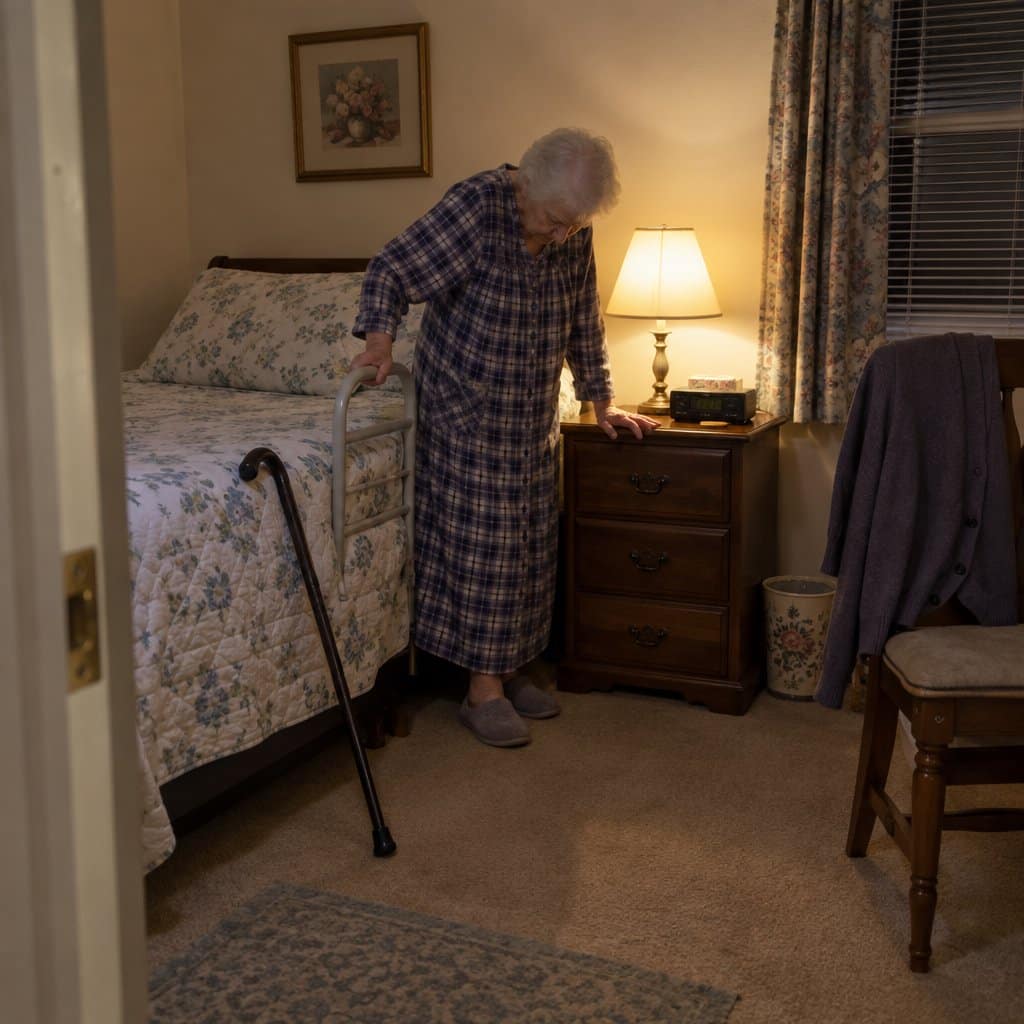
A bed rail is a rail that runs along the side of a bed, giving support and stability to people with mobility issues. Bed rails are commonly used to help people get in and out of bed. Some are also used to guard against falls during the night, but those carry more risk.
They can be attached to the sides of the bed or installed beneath the mattress, and come in various forms such as bedside rails, safety bed rails, and fall prevention guards (ConsumerAffairs).
Benefits of Bed Rails for Seniors and Caregivers
There are several benefits of using bed rails for seniors and caregivers alike. These include:
- Support: A rail can give you something to hold when you turn over or get in and out of bed. Rails also carry real risks, including entrapment (a body or limb getting caught) and people climbing over them. Check with their doctor or therapist before using a rail that works as a barrier.
- Improved mobility: Bed rails serve as a support to help seniors with mobility issues comfortably switch positions or get in and out of bed more easily (Forbes Health).
- Enhanced independence: With the assistance of bed rails, seniors can retain a level of independence, as they require less help from caregivers.
- Additional stability: Safety rails give seniors extra support during the night when changing sleeping positions (Healthline).
Used with care, bed rails can give support to the person in bed and some relief to caregivers.
By understanding the purpose and benefits of these devices, you can make an informed decision when choosing the right bed rail for your needs or the needs of a loved one.
Different Types of Bed Rails
In this section, you’ll learn about the various types of bed rails to help you make an informed decision on the best option for your needs.
The following sub-sections will discuss stand-assist bed rails, portable bed rails, adjustable bed rails, half-length bed rails, full-length bed rails, and hospital bed rails.
Stand-Assist Bed Rails
Stand-assist bed rails provide support for seniors to safely lift themselves out of bed. These rails often have bed handles that can be gripped for extra stability when standing.
Stand-assist bed rails are especially useful in guest bedrooms where seniors might not be familiar with the bed and surroundings.
Portable Bed Rails
Portable bed rails cater to seniors who require support when traveling or staying in a temporary location. These bed rails are typically lightweight and easy to install or remove. Many portable models feature fold-down bed rails for convenient storage and transport.
Adjustable Bed Rails
Adjustable bed rails offer versatility, as they can be extended or shortened to accommodate various mattress sizes and user preferences. These bed rails may include multiple rail handles, allowing seniors to choose the most comfortable grip position.
Half-Length Bed Rails
Half-length bed rails provide support along one side of the bed. Their floor support rails give extra stability to the rail structure. The following are some advantages of half-length bed rails:
- Easy to install and remove
- Convenient for seniors to climb into or out of bed
Full-Length Bed Rails
Full-length bed rails extend along the entire length of the bed. They carry the highest entrapment risk of any type, and some people try to climb over them. Talk with their doctor or therapist before using one.
However, full-length bed rails may be more challenging to install and can make getting in and out of bed less convenient for the elderly.
Hospital Bed Rails
Hospital bed rails, as the name suggests, are commonly found in healthcare settings. They afford additional safety and support for seniors with serious medical conditions or those recovering from surgery.
Hospital bed rails often have a more robust construction and can be adjusted to different heights for optimal user comfort.
Understanding the key features and advantages of each bed rail type, you can now make an informed decision on the most suitable option for your needs.
In the next section, we will delve into crucial aspects to consider when choosing the ideal bed rail for you, such as installation methods and weight capacity.
Features Available on Bed Rails: Safety and Convenience
Materials and Construction
Bed rails for seniors are typically made with sturdy materials such as steel or aluminum to ensure stability and durability. It’s essential to choose a well-constructed bed rail, with solid joints and no sharp edges, for the safety and comfort of the user.
Padding and Cushioning
Foam padding and foam bumpers can provide extra comfort and protection against potential injuries. These cushioning materials can also help prevent entrapment between the bed rail and mattress, increasing safety for seniors.
Height and Width Adjustability
Bed rails come in various sizes, and having the ability to adjust the rail length, height, and width can be essential for customized support. When choosing a bed rail, look for options that allow you to adjust these dimensions to fit your specific bed and individual needs.
Attachment Mechanisms
Bed rails should attach securely to the bed frame or side rails. Safety straps or anchor straps can be used to ensure a sturdy connection, reducing the risk of the rail coming loose and causing injuries.
Convenience Features
Convenience features on bed rails can include:
- Pockets for storing personal items
- Integrated night lights
- Swivel mechanisms for easy access
These features can enhance the user experience and make the bed rail more functional.
Weight Capacity
It’s crucial to consider the body weight of the senior when selecting a bed rail. Look for a product with a weight capacity that can adequately support the user, ensuring safety and stability.
Anti-Slip and Anti-Entrapment Features
Roll guards and other anti-slip features can prevent seniors from slipping or falling out of bed. Additionally, anti-entrapment features, such as gap guards, can help avoid accidents caused by a senior’s body or limbs becoming trapped between the bed rail and mattress.
Gap guards only help if the rail fits well, so it is worth reading about bed rail fit and entrapment risk before you buy.
Now that you have a better understanding of the different features available on bed rails, the next section will discuss how to choose the best bed rail for your specific needs and preferences.
Tips for Choosing the Best Bed Rails
When selecting bed rails to enhance the safety and comfort of seniors, there are several important factors to consider.
Assessing Individual Needs and Preferences
Every senior has unique health conditions and physical abilities. Consider the person’s flexibility, strength, and level of independence when choosing a bed rail. For example, adjustable bed rails might be better suited for individuals with varying needs.
Compatibility and Attachment to Bed Types and Mattresses
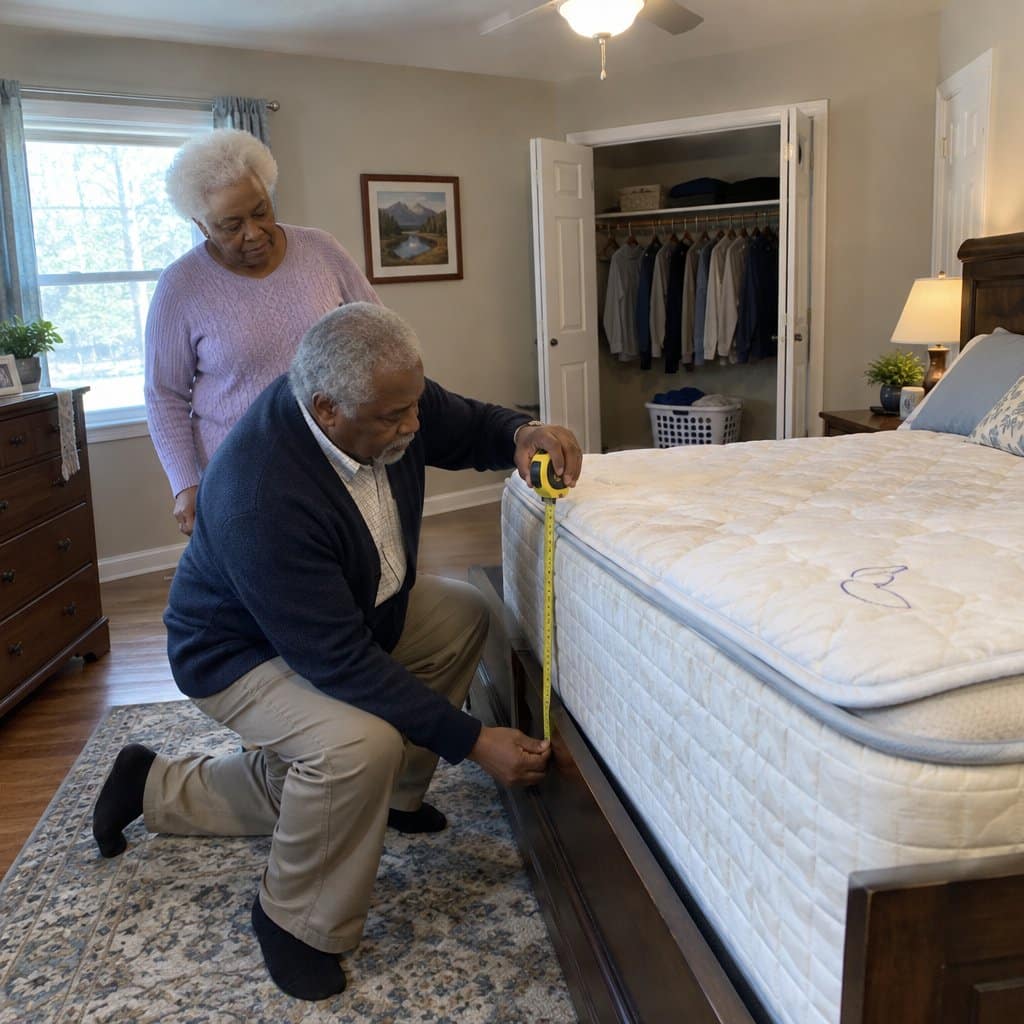
Compatibility with various bed types, such as platform beds, is essential when choosing a bed rail.
Additionally, consider the compatibility with different bed sizes and mattresses, particularly for those using box springs or other specific bed frames. Make a list of these factors to ensure you make the right choice:
- Bed frame type
- Bed size
- Mattress type and thickness
- Attachment method
Budget Considerations
Keeping your budget in mind, explore bed rails within a specific price range that offers the necessary features and quality for the senior’s safety and comfort.
Product Durability and Quality
Choose a bed rail made of high-quality materials, with durable construction to ensure lasting safety and support for the senior user. Pay attention to the product’s weight capacity as well to accommodate varying needs.
Aesthetics and Design
While safety and support are the primary concerns, consider the design of the bed rail too. Many people prefer a style that matches their bedroom décor.
Having evaluated these factors and made a careful selection, you can now move on to the next section, where we will discuss installation and safety tips for your chosen bed rail.
Infographic: Bed Rails for Seniors

Different Ways Bed Rails Can be Used to Help Seniors
Bed rails are a versatile addition to a senior’s bed setup. They can be used for various purposes, making them a valuable investment in safety and comfort.
This section covers the ways bed rails can help, including fall prevention, mobility support, stand-assist functions, comfort, and bed compatibility. It also covers the risks, so you can decide whether a rail is right for you.
Fall Prevention
Bed rails are meant to keep a person from rolling or slipping out of bed. They also come with real risks. A person can get trapped between the rail and the mattress, and some people try to climb over a rail, which can make a fall worse.
Trouble with balance or muscle strength can raise the chance of falling out of bed. A rail that works as a barrier is not right for everyone. Check with their doctor or therapist before using one.
Mobility and Accessibility Support
Smaller assist rails can help with moving around in bed. They give you something to hold when changing positions, such as going from lying down to sitting up.
Additionally, an assist rail can make getting in and out of bed easier by giving you something sturdy to hold onto.
Stand-Assist Functions
Some bed rails come with stand-assist features that make it even easier for seniors to safely stand up from a seated position on the bed. These bed rails often have additional support handles that can be grasped for added stability when standing.
Improving Comfort and Sleep Quality
Some people feel more secure with a rail beside the bed to hold. That said, a rail is not a guaranteed fix for sleep, so treat any comfort as a bonus.
Bed Compatibility
Before purchasing a bed rail, check bed compatibility. Some bed rails are designed for certain bed types, such as adjustable beds or hospital beds. Factors to consider when choosing a bed rail include:
- Bed height
- Mattress thickness
- Bed type (standard, adjustable, hospital, etc.)
- Weight capacity of the bed rail
Taking the time to evaluate these factors will ensure you select a bed rail that fits your bed setup and provides the support and functionality you need.
In the next section, we will discuss how to select the best bed rail for your specific needs and preferences, ensuring you make the right investment for your safety and comfort.
Advice on Using Bed Rails Properly and Safely
Proper Installation and Maintenance
Installing bed rails correctly is essential for safety. Follow the manufacturer’s instructions for installation and setup. Make sure the height setting gives good support and is easy to use, and that there is no gap where a body could get trapped.
Keep the bed rails well-maintained by periodically checking for wear and tear or any damage that could compromise their safety features.
Regular Safety Checks
Conduct regular safety checks on the bed rails to ensure they remain in good condition and function as intended. Inspect the rails for any signs of loosening, rust, or damage. Address any issues immediately to maintain a safe environment for the senior using the bed rail.
Educating Seniors and Caregivers on Safe Usage
Teach seniors and caregivers about safely using bed rails to prevent potential accidents or injuries. Some key pointers to emphasize include:
- Using the bed rails as a support for adjusting positions in bed and getting in or out of the bed
- Ensuring that the mattress is properly fitted and securely in place
- Keeping any other bedside items within easy reach to reduce the risk of falls when attempting to access them
In addition to these safety considerations, remind caregivers and seniors about the importance of bedside safety.
To create a customized bed safety program, bed safety rails can be combined with other bedroom safety products like fall prevention mattresses, bed alarm pads, and bed stools.
Ensure they understand the potential risks associated with improper use of bed rails and encourage them to communicate any concerns or difficulties they may encounter.
Using bed rails properly and checking them often makes them safer to use.
Alternatives to Bed Rails
For seniors who prefer not to use bed rails, there are several alternatives available that can provide safety and support.
In this section, we will discuss a few options, including bedside floor mats, low-height beds, body pillows and bolsters, and bedside commodes and chairs with support handles.
Bedside Floor Mats
Bedside floor mats are designed to provide a cushioned surface on the floor beside the bed. These mats can help reduce the risk of injury in case a senior falls out of bed during the night.
They are a practical solution for those who may not feel comfortable with the idea of bed rails. (Forbes Health)
Low-Height Beds
Another alternative to bed rails is opting for a low-height bed. Placing the mattress closer to the ground can minimize the risk of injury if a fall occurs. Consider adjusting the bed frame to lower the sleeping surface or replacing the bed with a lower-profile option.
Body Pillows and Bolsters
Body pillows and bolsters can be used as an alternative to bed rails by providing a barrier that prevents the senior from rolling out of bed.
These pillows can be placed on either side of the bed or even between the sleeper’s legs for additional support during the night. Some common types of body pillows and bolsters include:
- U-shaped body pillows
- C-shaped body pillows
- Wedge-shaped bolsters
Bedside Commodes and Chairs with Support Handles
People who have difficulty getting in and out of bed may benefit from bedside commodes and chairs with support handles.
These devices provide a stable, close-by support system that can be used for assistance when transitioning to and from the bed in addition to their primary purpose. Bedside commodes can be particularly helpful for those who need to use the restroom frequently during the night.
By exploring these alternatives to bed rails, you can find a solution that best suits your individual preferences and needs. In the next section, we will discuss additional safety precautions and recommendations to enhance seniors’ overall sleep quality and safety.
Share on Your Site With This Code:
<a href="https://grayingwithgrace.com/5-best-bed-rails-for-elderly/"><img style="width:100%;" src="https://grayingwithgrace.com/wp-content/uploads/2023/05/Bed-Rails-for-Seniors-infographic.jpeg"></a><br>Design by: <a href="https://grayingwithgrace.com">Graying With Grace</a>
Using Bed Rails with Dementia Patients
When caring for dementia patients, including those with Alzheimer’s or Parkinson’s disease, it is crucial to ensure their safety and comfort during sleep.
Bed rails are often not safe for people with dementia, who may climb over them or get trapped. Ask their doctor or an occupational therapist before using one.
In this section, we will discuss the special considerations for dementia patients, choosing bed rails with additional safety features, and strategies for reducing agitation and restlessness.
Special Considerations for Dementia Patients
When choosing bed rails for individuals with dementia, it’s essential to consider the unique needs and challenges they may face, such as:
- Confusion and disorientation, which can make it difficult for them to navigate their surroundings safely
- Increased risk of falls due to impaired balance and coordination
- Anxiety and agitation, which may lead to attempts to climb over bed rails, a serious fall risk
If a doctor or therapist approves a rail, choose one that balances safety and ease of use, without trapping the person or causing unnecessary frustration.
Choosing Bed Rails with Additional Safety Features
To support dementia patients more effectively, consider bed rails with additional safety features, such as:
- Non-slip handrail grips for better support and stability
- Dual-sided rails to provide protection on both sides of the bed
- Adjustable height and length to accommodate various mattress sizes and user needs
- Easy-release mechanism for quick and hassle-free rail adjustment or removal
These features can make a rail safer, but they do not remove the risk of climbing or entrapment. Check with their doctor or therapist first.
Strategies for Reducing Agitation and Restlessness
Reducing agitation and restlessness may help the person stay in bed, which can make bed rails more effective in preventing falls and help with sleep. Consider the following strategies:
- Establish a consistent bedtime routine to help patients feel secure and prepare for sleep
- Limit caffeine and sugar consumption, especially in the evening
- Create a calm and comfortable sleep environment, free from noise and distractions
- Offer reassurance and comfort to help reduce anxiety and promote relaxation
By addressing the causes of restlessness and creating a soothing sleep environment, the person may be more likely to stay in bed, which lowers the risk of falls.
In conclusion, rails are a decision to make with their doctor or therapist. Consider the person’s unique needs, prioritize safety features, and work on ways to ease agitation and restlessness.
In the next section, we will explore additional methods to enhance safety and promote better sleep for seniors.
Are Bed Rails Covered by Medicare or Other Insurance?
When considering the purchase of bed rails for seniors, it’s crucial to understand whether they are covered by insurance, especially Medicare. Medicare coverage comes in two primary forms: Original Medicare and Medicare Supplement Insurance.
Original Medicare typically does not cover the cost of bed rails since they aren’t classified as durable medical equipment (DME) prescribed by a doctor or healthcare provider (Forbes Health).
However, if deemed medically necessary, a hospital bed with bed rails may be covered under Medicare Part B (medical insurance) as DME (Caring.com).
On the other hand, Medicare Supplement Insurance, also known as Medigap, offers various policies that may help cover out-of-pocket costs for bed rails, depending on the specific plan’s terms and conditions.
It’s essential to check with individual insurers to clarify their coverage of bed rails for seniors. Here is a list of possible actions you can take to determine if your insurance covers bed rails:
- Contact your insurance provider directly and inquire about bed rails coverage.
- Review your insurance policy’s terms and conditions for information on medical equipment coverage.
- Consult with your healthcare provider to discuss whether a prescription for bed rails is necessary and if it may impact your insurance coverage.
Understanding your insurance coverage options before purchasing bed rails can help you make informed decisions and potentially save you money.
As you now have insights into the coverage of bed rails under Medicare and other insurance policies, the next section will discuss additional considerations for finding the best bed rails that meet your needs and preferences.