
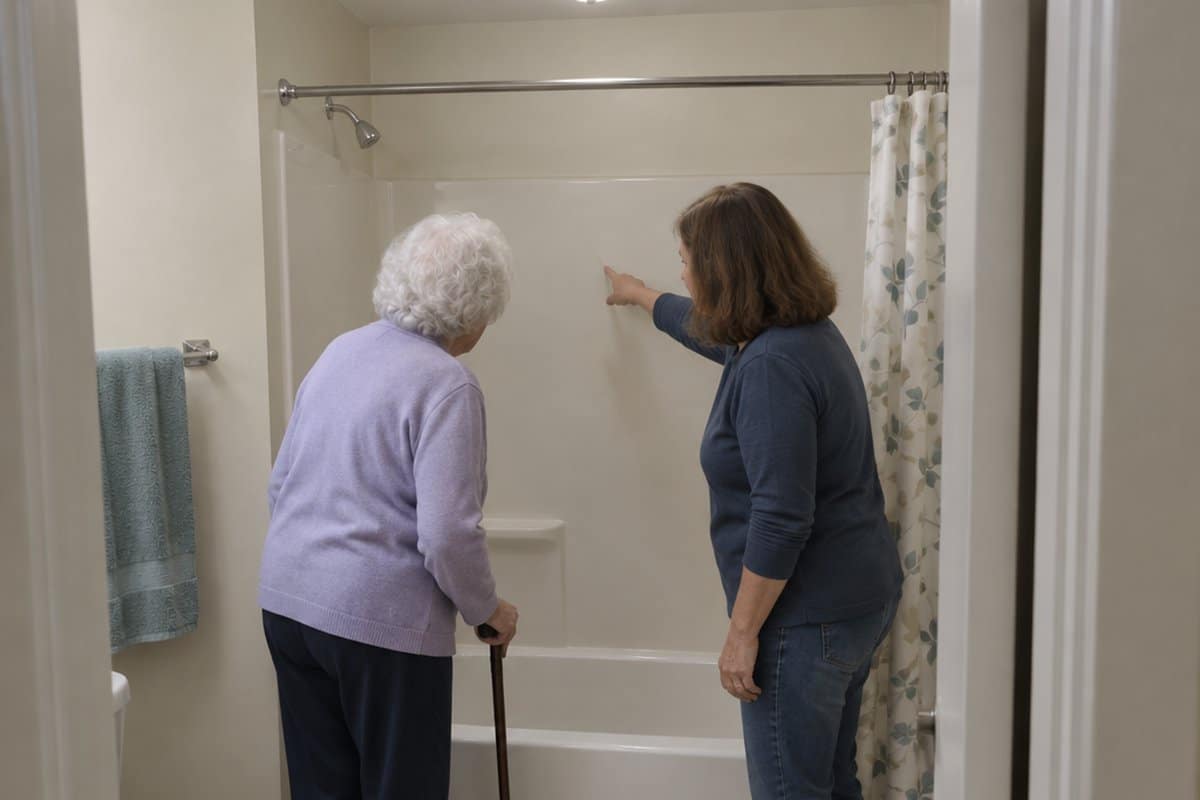
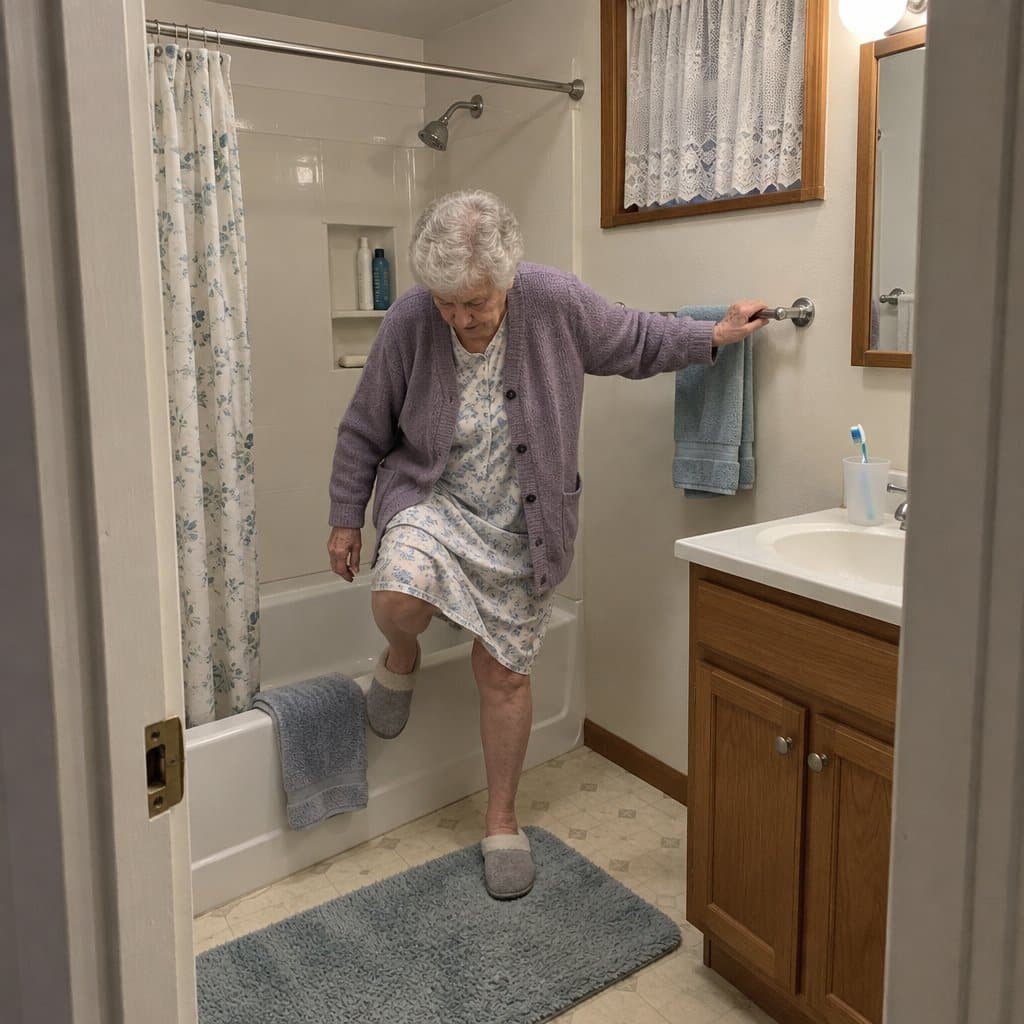
You reach for the edge of the tub and wonder if it would hold you. That worry is common, and the cost of fixing it is usually the next one. This guide to financing bathroom modifications covers grants for seniors, who qualifies, and how to apply.
It also explains why Medicare won’t pay for raised toilet seats, safety rails, or a shower chair, what Medicare Advantage, Medicaid, and private insurance may cover, and ways to pay when insurance won’t.
Overview of Bathroom Grants for Elderly
Getting around the bathroom can be challenging when balance, strength, or mobility are a problem. Bathroom grants for the elderly provide financial assistance for modifications that make bathrooms safer and more accessible. These adaptations help you maintain independence in your own home.
Types of Modifications:
- Grab Bars: Essential for stability
- Raised Toilets: Easier to use for those with mobility issues
- Walk-in Tubs: Minimizes the risk of falls
Eligibility often depends on income, needs assessment, and sometimes a diagnosis detailing mobility restrictions. Initiatives like the Disabled Facilities Grant (DFG) in the UK provide funding for bathroom adaptations. The process usually involves an application, an assessment of your needs, and sometimes a financial assessment.
In the US, while Medicaid may cover some costs, specific programs also exist, and non-profits may offer additional support. Finding the right grant can mean a safer bathroom space for you without a financial burden. You may even find that assistive devices in the bathroom make daily tasks easier and safer.
Remember, you’re not alone in this. There are professionals who can offer advice on the most suitable modifications based on your personal needs. It’s about creating a safe and functional space that suits you best and that you can enjoy for years to come.
Eligibility Criteria
Navigating bathroom grants can seem tricky, but focusing on the main criteria helps. Let’s break them down.
Age Requirements
Many programs set a minimum age, and it is often 65. Check the rules for each one.
Income and Financial Status
Your finances matter. Grants often look at your income to determine eligibility. They are designed to assist those with a limited budget.
Disability and Mobility Issues
Mobility challenges are a key focus. If you find daily tasks tough due to a disability, grants could be within reach.
Why Medicare Won't Pay for Bathroom Safety Equipment
Many people assume Medicare will pay for grab bars or toilet safety rails once a doctor or therapist suggests them. Unfortunately, the answer is usually no.
The reason comes down to how Medicare defines “medically necessary.” Medicare says an item must be needed for the diagnosis or treatment of a medical condition, and it can’t be mainly for the convenience of you or your doctor.
Bathroom equipment doesn’t diagnose or treat a condition. It helps you manage symptoms, so Medicare counts items like toilet safety frames and rails as convenience items and does not cover them.
There is one exception. Medicare does cover a bedside commode for someone confined to their bedroom, because toileting is a necessary function and a person confined to bed cannot do it otherwise.
So if you are weighing toilet safety rails, plan on the grants and other sources in this guide rather than base Medicare. If you end up buying them yourself, my guide on how to install toilet safety rails walks through attached and freestanding options.
The trade-off is that you may carry the cost yourself. Your coverage can differ from the basic rule, so ask a Medicare representative for your coverage criteria.
Types of Bathroom Grants
Bathroom grants can significantly reduce the financial burden of home modifications for the elderly. Here’s a breakdown of the different types that you might find helpful.
Federal and State Programs
You may be eligible for assistance through federal and state programs designed to help seniors modify their homes. For example, Medicaid’s Home and Community-Based Services (HCBS) often cover bathroom modifications to ensure safety and accessibility.
Some specific federal programs that provide grants for bathroom modifications for seniors include:
- The Home and Community-Based Services (HCBS) program under Medicaid often covers the cost of bathroom modifications to ensure safety and accessibility.
- The Community Development Block Grants (CDBG) program is administered by the U.S. Department of Housing and Urban Development (HUD). Cities and counties can use these grants for home improvement projects, including bathroom renovations for better accessibility for the elderly.
Non-Profit and Charitable Organizations
Organizations like Rebuilding Together offer programs nationwide that provide free home modifications, including bathroom upgrades, to those in need, especially the elderly.
Several other non-profit organizations and charities assist seniors with home modifications, including bathroom remodels. These include:
- The National Council on Aging offers a variety of services and programs to help seniors, including home repair and modification programs.
- Meals on Wheels America, which in some locations offers safety check and home repair services in addition to meal delivery.
- The National Association of Area Agencies on Aging, which has a network of Area Agencies on Aging (AAAs) that provide a variety of services to seniors, including home modification assistance.
Local Charities and Resources
Local charities and resources can sometimes provide grants or volunteer services for bathroom modifications. It’s worth reaching out to nearby senior centers or social services to see what’s available in your community.
To fund a bathroom remodel through local charities and resources, you can start by conducting an online search. Here are some key terms and phrases you might want to use:
- ‘Home modification grants for seniors in [your city]’
- ‘Local charities assisting seniors with home renovations’
- ‘Community assistance for elderly home improvements’
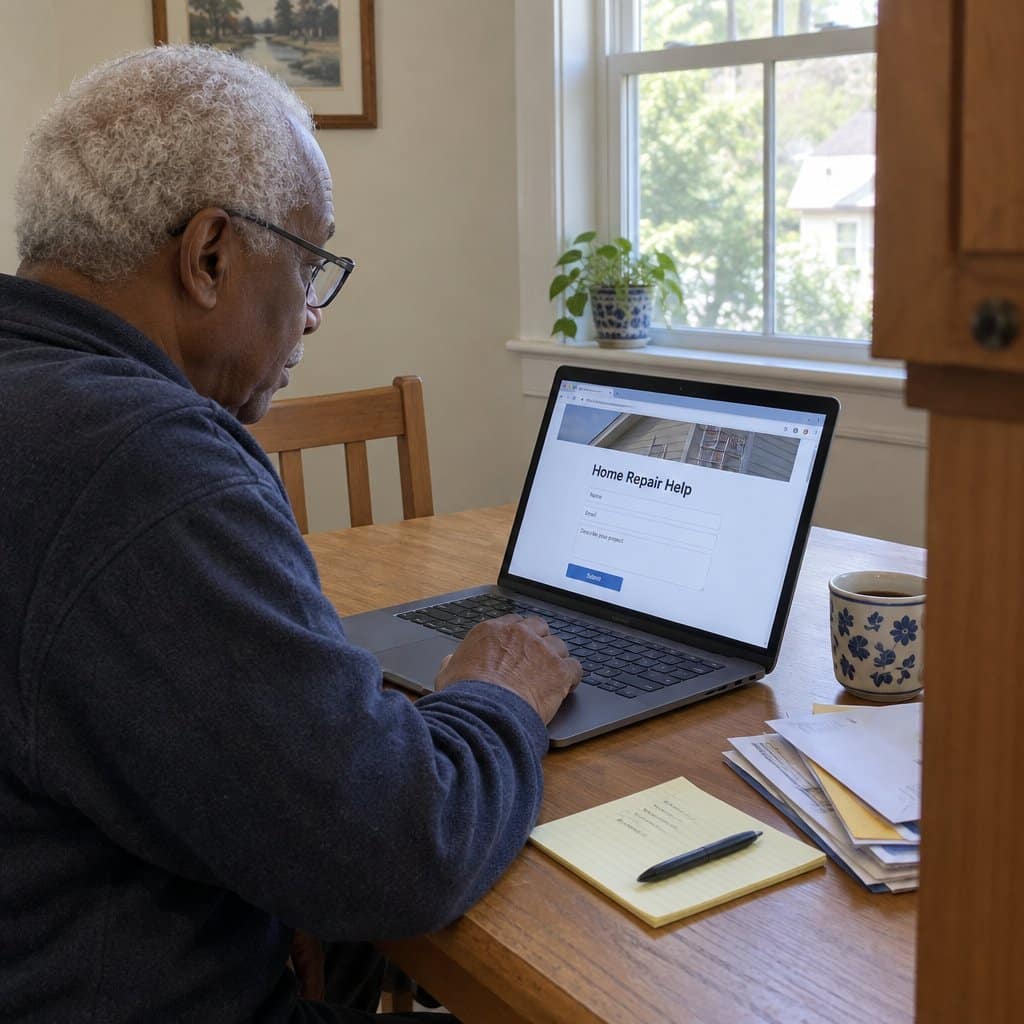
Once you find potential local charities and resources, visit their websites to learn about their application process. You can also directly contact them for more information. They can guide you on how to apply for funds, what documents are needed, and the overall timeline.
Always remember to verify the legitimacy of the charities and organizations you find. You can do this by checking if they have official websites, reading reviews or testimonials, or asking for references from trusted sources.
Private Sector Initiatives
Some companies and businesses offer grants or discounts on products and services for bathroom modifications for seniors. To discover any private sector support options, inquire with local home improvement stores or contractors.
Some examples of companies that offer grants or discounts for senior home modifications include:
- Home Depot: They have a Community Impact Grants program that provides gift cards for community projects, including senior home modifications.
- Lowes: The Lowes Charitable and Educational Foundation provides grants for community improvement projects, including home modifications for seniors.
- Safe Step Walk-In Tub Company: They have a grant program called Safe Step Cares that provides free walk-in tubs for needy individuals, including seniors.
- Local construction and renovation companies: Some local businesses may offer discounts or deferred payment options for seniors.
Community Services and Assistance
Don’t forget to look into community service programs that might provide labor or funding for bathroom modifications as part of broader initiatives to assist seniors living independently. This support could come from local volunteer groups or through city-sponsored programs.
- Habitat for Humanity: This non-profit organization offers a program called “Aging in Place,” which helps seniors modify their homes, including bathrooms.
- Local Rotary or Lions Clubs: These service organizations often have volunteer programs that assist with home modifications for seniors.
- City or County Home Rehabilitation Programs: Many local governments have programs that offer grants or low-interest loans for home repairs and modifications for qualifying low-income seniors.
Does Medicare Cover Raised Toilet Seats?
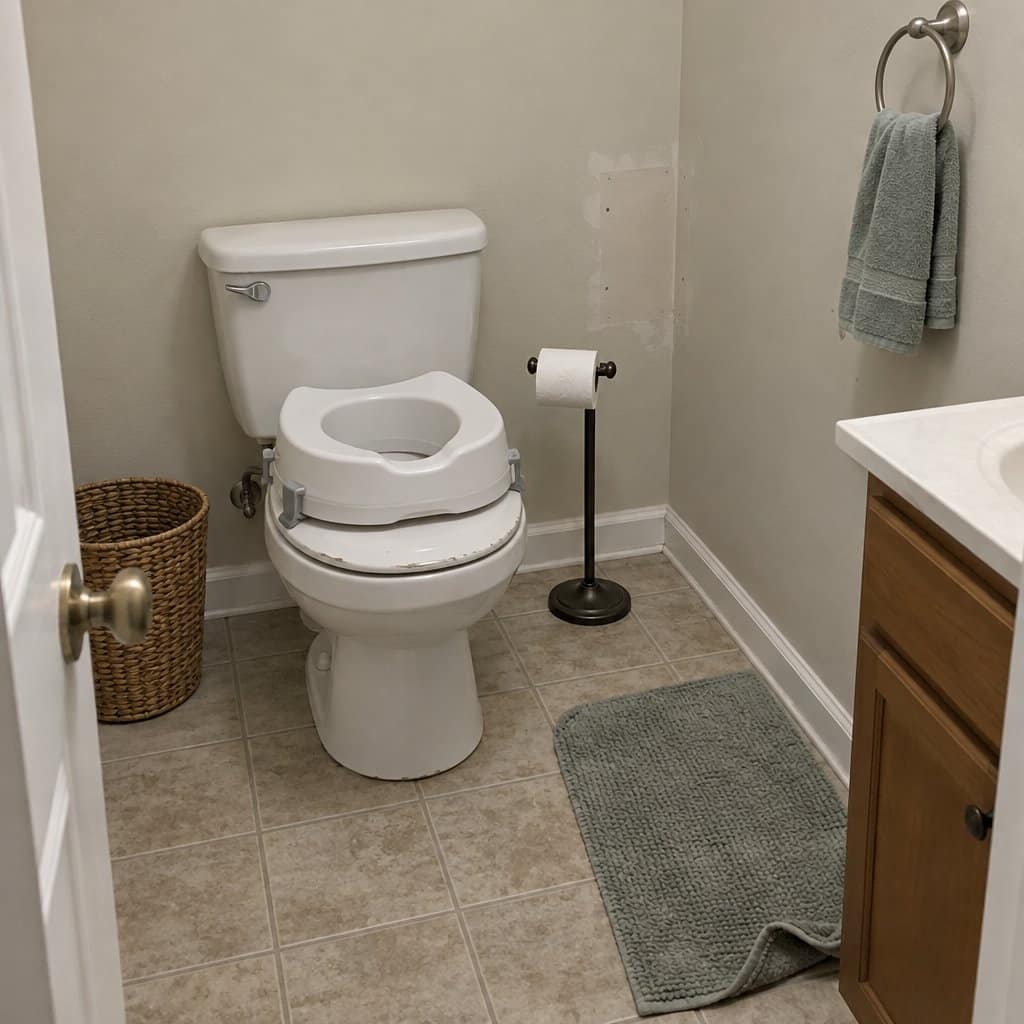
Medicare does not cover raised toilet seats. That holds even when your doctor recommends one.
Medicare treats toilet safety equipment, including safety frames, risers and elevated toilet seats, as items of personal convenience rather than medical necessity. Because of that label, base Medicare leaves them out.
If you have a Medicare Advantage plan, check your individual plan. Some include over-the-counter benefits that could cover part or all of the cost.
Medicare Part B covers durable medical equipment (DME) that is medically necessary. A raised toilet seat could count only if your doctor or healthcare professional prescribed it specifically for use at home.
The seat would also need to be FDA approved, used for a medical purpose, and ordered by your doctor or another healthcare provider. Even then, the full amount is probably not covered, and you likely need supplemental coverage.
With Part B, you usually pay 20% of the Medicare-approved amount, and the Part B deductible applies. Some states have programs that help people with limited incomes and resources pay their Medicare out-of-pocket costs. For many people at home, that is the best route to getting at least some of the cost covered.
Medical charities and outside organizations also fill gaps where Medicare falls short. They know the available options and can match you with funds, equipment or programs most likely to help.
Other bathroom items may fare better. Part B can cover medically necessary DME such as grab bars, shower chairs and commodes, depending on your situation. Coverage varies a lot, so look at your specific plan.
Raised seats are usually not expensive to buy yourself, and my guide to the best raised toilet seats can help you choose. A higher seat takes pressure off the knees and back, and it makes the bathroom easier to use. It is also a safe way to improve bathroom safety.
The trade-off is that most people on Medicare will pay for a raised seat themselves, even with a doctor’s recommendation. For many, it is still money well spent.
Medicare Advantage Plans That May Help
Some people with a Medicare Advantage plan, the kind sold through a private company, may have coverage for bathroom equipment. These plans often add benefits that base Medicare leaves out.
That could include something like toilet safety rails, which a plan may cover even though standard Medicare does not.
The only way to know for sure is to call the number on the back of your card and ask. Ask the representative to send you the coverage criteria in writing, by email or by mail, so you have it in hand.
The trade-off is that you pay a monthly premium for these plans, and the coverage may be subject to a deductible. Coverage for bathroom items is also not guaranteed, so check before you count on it.
Application Process
Navigating the application process for bathroom grants can make a big difference in ensuring safer home environments. It’s important for you to understand how to find grants, what’s required to apply, and when applications need to be submitted.
Finding Appropriate Grants
To start, you’ll want to identify grants specifically for bathroom adaptations for the elderly.
Look for local government programs or charities that offer financial assistance for home modifications.
For instance, grants for a toilet on the first floor could be a starting point.
Requirements for Application
Each grant has its own set of criteria.
Typically, you’ll need to provide evidence of age, income, and a formal diagnosis or assessment by a healthcare provider to prove the necessity of a bathroom adaptation.
Documentation proving your need for specific modifications, like a shower adaptation, is often crucial. It helps to explain how the modifications will make the senior independent and able to stay in their home.
Submission Deadlines
Grants have strict deadlines. Mark your calendar with these dates to avoid missing out.
It could take weeks or even months from approval to implementation, as seen in one case where a three-month wait occurred after grant approval before the new shower could be used.
So, it’s best to apply early!
Grant Utilization
Grants for bathroom modifications can significantly enhance your safety and accessibility at home. Here’s how you can leverage them effectively.
Safety Modifications
- Grab Bars: Installing grab bars is a common safety upgrade. They are more than a handle. They give you something solid to hold when you’re navigating slippery surfaces.
- Non-Slip Flooring: Non-slip flooring or a textured coating can lower the chance of slipping. It is a bigger job than it sounds, so get a quote from a licensed contractor.
- Taller toilets: Installing a taller toilet can make it easier to use the toilet independently and safely.
- Bathroom Lighting: Improving the lighting can prevent accidents and make the bathroom safer to navigate.
Accessibility Improvements
- Walk-In Tubs: Bath time can be stress-free with walk-in tubs. Step in without a struggle and enjoy a soak without worry.
- Roll-in Showers: These showers lack a threshold, making them easily accessible with a wheelchair or walker.
- Wheelchair-Accessible Sinks and Vanities: Lowered sinks with space underneath allow a wheelchair to roll up closer, making them easier to use.
General Upgrades and Repairs
- Leak Fixes: Don’t let a drip become a disaster. Small leaks can lead to big problems, but grant funds can help nip them in the bud.
- Energy Efficient Fixtures: Swap your old fixtures for energy-efficient ones. They’re kinder to your bills and the environment, giving you peace of mind with every use.
- Improved Ventilation: Upgrading to a more efficient ventilation system can prevent mold and mildew, improving air quality.
- New Plumbing: Old pipes can be a problem. Replacing them can prevent future leaks and water damage.
- Updated Lighting: Improved lighting fixtures can increase visibility and safety in the bathroom.
- Added Storage: Installing new cabinets or shelves can help keep the bathroom organized and clutter-free.
- Accessibility Enhancements: To make the bathroom more accessible, consider adding features like a raised toilet or a lower sink.
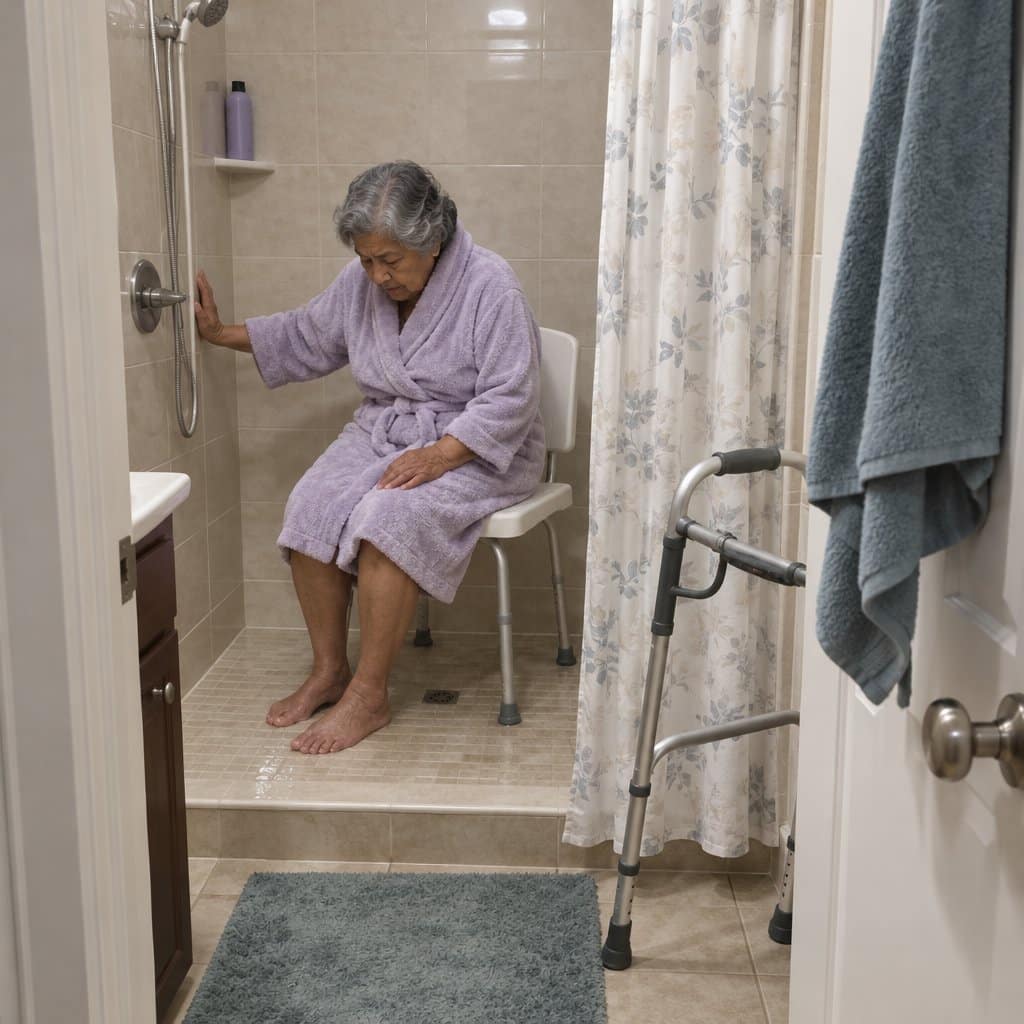
Is a Shower Chair Covered by Medicare or Other Insurance?
Medicare by itself generally does not pay for a shower chair. Medicare Advantage or Medicaid may help, so it is worth a call.
The reason is how Medicare defines durable medical equipment (DME). To count, an item has to meet four tests:
- It is used at home.
- It is reusable.
- It lasts at least three years.
- It serves a defined medical purpose.
A shower chair passes the first three. It fails the fourth, because Medicare does not see it as a specific medical necessity.
DME also needs a prescription from a physician who accepts Medicare, and an equipment supplier approved by Medicare. Shower chairs and many other bathroom conveniences, safety rails included, do not fall into this category.
Some Medicare Advantage plans add benefits that cover shower chairs. Call your plan representative and ask for a written explanation of your benefits.
If you also have Medicaid, it may cover bathroom equipment that Medicare does not, depending on your state’s program. A chair used strictly in the shower probably will not be covered. A chair with advanced features that also support toileting needs may qualify. Your state’s Medicaid office can give you a clear answer.
If insurance says no, shower chairs come in many designs, and you can compare options at large retailers. Buy a shower chair made for the purpose. Look for a weight rating, rubber-tipped legs and adjustable height. Ask an occupational therapist to check the fit.
The trade-off is that Advantage plans charge a monthly premium and may carry a deductible. Coverage is never certain, so check before you count on it.
Consider these additional sources:
- Crowdfunding Platforms: Websites like GoFundMe or Kickstarter can be used to raise funds for home modifications. You can share your campaign among your network and potentially reach a wider audience willing to contribute.
- Local Churches or Community Groups: Sometimes, local religious or community organizations have funds set aside to assist members in need. It’s worth reaching out to see if they can provide any financial aid.
- Senior Assistance Programs: Organizations like the National Council on Aging have programs to assist seniors, which may include funds for home modifications.
- Home Equity Loans or Reverse Mortgages: If you own your home, these options allow you to borrow against its value. This can be a significant source of funding for major modifications.
Toilet Safety Rails: Who Pays and Who to Call
Toilet safety rails and frames are a good example of how coverage splits by plan. Here is how each one tends to land, so you know where to start.
Standard Medicare will not pay for them. Some Medicare Advantage plans will, so that call is worth making.
With Medicaid, chances are pretty good that toileting aids are covered. Rules differ by state, so confirm with your local office.
With private insurance, think of it as a 50/50 chance. These plans differ wildly from company to company, and some are starting to follow Medicare’s criteria.
For Advantage, Medicaid and private plans, the call is the same: phone the number on the back of your card or your local Medicaid office. Ask the representative to send the coverage criteria in writing, by email or mail.
A local DME (durable medical equipment) store is a useful second stop. Staff there usually know what your local Medicaid office covers and what it turns down, which can save you a round of phone calls.
Most people end up buying this equipment themselves. If that is you, my list of the best toilet safety rails can help you choose, and my guide to installing toilet safety rails covers the setup.
The trade-off is that a plan’s answer can change what you do next. Since coverage varies so much, get it in writing before you buy, and have a plan for paying in case the answer is no.
Ways to Pay When Insurance Won't
If your insurance says no and you still need toilet safety rails, you will have to find a way to pay for them yourself. The good news is that they aren’t expensive, and most people can afford them.
If you or your loved one can’t buy a set outright, here are some options:
- Shop online and in local stores for discounts.
- Ask a family member to buy them.
- Buy a used set at yard sales, flea markets, or Goodwill stores.
- Use a credit card to purchase them.
- Call local senior services or charity groups.
- Ask your church or a local congregation for assistance.
Say your mom needs a set and her plan won’t cover it. A quick call to a senior services office or her church may be all it takes to get started.
The trade-off is that a credit card means you carry the balance until you pay it off. Charities and churches may also not be able to help in every case, so keep a second option ready.
Medicaid and Private Insurance for Toilet Safety Rails
Some Medicaid plans do cover bathroom equipment such as toilet safety items. Every state sets its own coverage rules, so the only way to know is to call your local Medicaid office and ask.
You can also contact a local durable medical equipment (DME) store. They usually know what your local Medicaid office will and won’t cover, so they can save you a few phone calls.
Private and employer-sponsored plans are more of a coin toss. Many cover bathroom safety equipment like toilet safety frames, but others are starting to follow Medicare’s criteria. Call the number on the back of your card and ask.
If you are still deciding what to buy, my list of the best toilet safety rails can help you compare. Once you have a set, my guide on how to install toilet safety rails covers both attached and freestanding types.
The trade-off is that none of this is guaranteed. Coverage differs from state to state and plan to plan, so check before you count on it, and have a backup plan for paying if the answer is no.
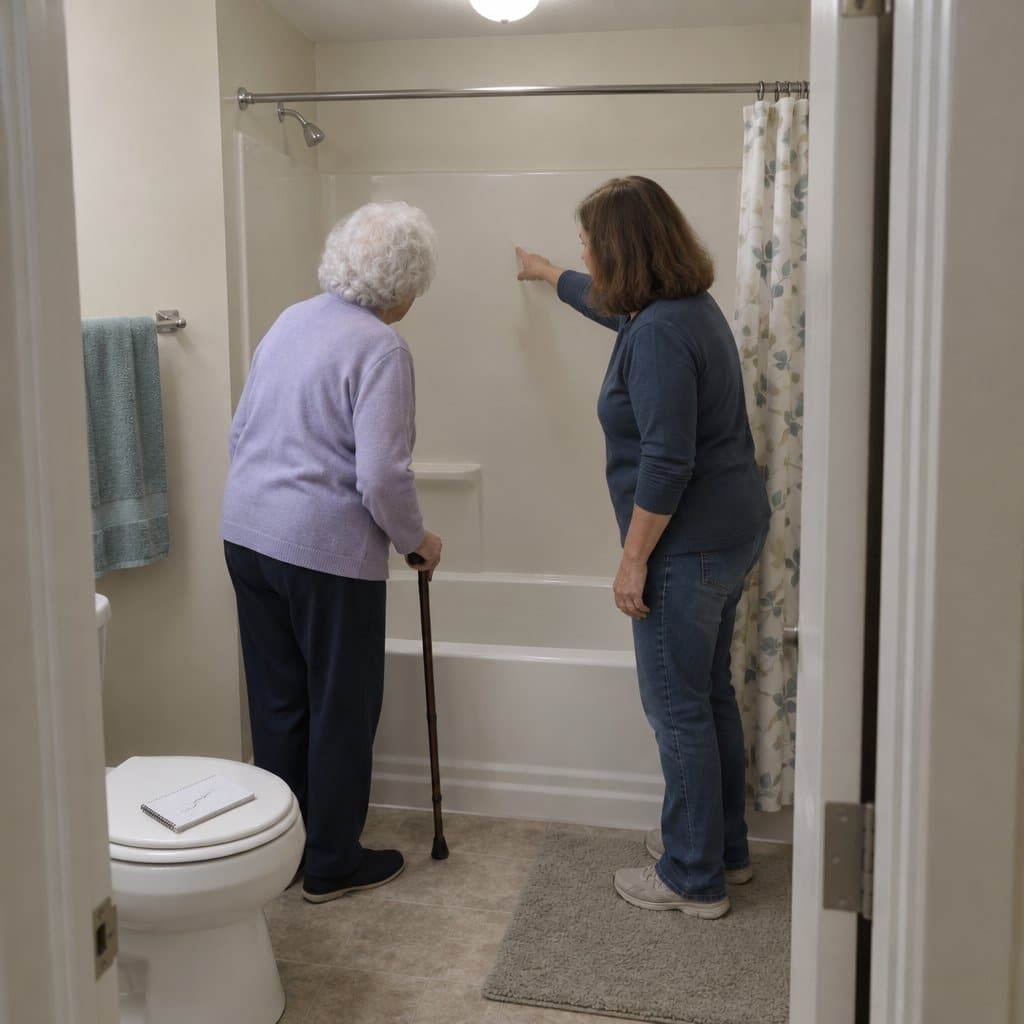
How to Get Started
Imagine you’re helping your 75-year-old mother feel safer in her bathroom, which currently has only a tub.
Here’s how you can make it a secure space for her.
Step 1: Consult an Occupational Therapist Assessment
Get an occupational therapist to assess her specific needs. They will suggest modifications that could benefit her most.
Step 2: Aging-in-Place Expert
Find a Certified Aging-in-Place Specialist (CAPS). Check the National Association of Home Builders for a professional near you who can suggest practical improvements.
Step 3: Contractor Search
Look for local contractors with senior remodel experience. Use platforms like HomeAdvisor to find well-rated professionals and don’t forget to ask for references.
Step 4: Seek Financial Aid
Remodeling isn’t cheap. Explore if your mom qualifies for grants or assistance programs for seniors. Your local Area Agency on Aging might have valuable information.
Step 5: Choose Upgrades Wisely
Consider installing a walk-in tub, non-slip flooring, and grab bars for stability. Upgrades should cater to her comfort and safety.
Step 6: Price Comparison
With a plan in place, get multiple quotes. This will help you evaluate options and find the best match for your mother’s requirements and budget.
By following these steps, you’ll ensure your mother’s bathroom is adapted to support her well-being and independence.
Legal Considerations
When investigating bathroom grants for the elderly, you need to pay close attention to legal details. These can significantly influence both eligibility and the implementation of any modifications.
Compliance with Building Codes
Any bathroom renovation must adhere strictly to local building codes to avoid legal hiccups. These regulations ensure that the changes are safe and appropriate. For instance, when installing grab bars in bathrooms, there are specifications for their placement and strength.
Grant Terms and Conditions
Each grant has its own rules. It would be best to understand these, as they dictate what you can and cannot do. For example, some grants may stipulate that only certain materials can be used or that renovations should be completed within a specific timeframe. Non-compliance could result in having to repay the grant.
Infographic: Bathroom Grants for Seniors and The Elderly
Click Image to Expand

Share on Your Site With This Code:
<a href="https://grayingwithgrace.com/bathroom-grants-for-elderly/"><img style="width:100%;" src="https://grayingwithgrace.com/wp-content/uploads/2024/03/Bathroom-Grants-Infographic.jpg"></a><br>Design by: <a href="https://grayingwithgrace.com">Graying With Grace</a>
Take the Next Steps Towards a Safer Bathroom
You now have the knowledge and resources to navigate the world of bathroom grants for the elderly. These grants, whether federal, state, non-profit, or local, can go a long way in making your bathroom (or the bathroom of a loved one) safer, more accessible, and more comfortable.
Don’t let the process intimidate you. Your first step is to identify the necessary modifications. Consult with an occupational therapist or a Certified Aging-in-Place Specialist for personalized advice. Then, explore the different grants and programs you might be eligible for. Remember, every bit of financial aid can help significantly.
Making a bathroom safe is not just about independence. It’s about dignity, comfort, and quality of life. Take the first step today.
And remember, you’re not alone in this journey. Feel free to drop any questions or experiences you’ve had in the comments below. We’re here to help. And if you found this article helpful, don’t forget to share it on your social media channels. You might provide the information someone else has been desperately searching for.


Very interesting topic. I am wondering where to go to find out if we can qualify for a grant.
I am 65 in my own home. I have a hole in one bathroom floor covered up with boards. I need to put in two walk-in shower and update bathrooms. I need to pith new windows in to keep my house warm in the winter. Thank you and God Bless.
My mom is 82 years old and really need her bathrooms remodeled.
Where in Des Moines Iowa can I apply for a grant? Our bathroom needs a new floor, toilet and a walk in shower would be nice.
My husband is 69 and I am 65…
We just want to feel safe when using our bathroom.
My Name is Ingrid Smith 62 years old, I have been in my home since 1994 and my bathroom has held up almost 30 years. I need help with a new shower. It has quit working. I turn it on and the water just dripping. The shower neck is in the wall and can’t be screwed off to replace. Please help me. Thank You..
My mother is 82 years old, and I would like to know who can we apply a grant for her a walkin in shower, it is very diffcult for her to get in and out of the bathtub. Also her toilet.
Hi Glenish! I just updated this post with additional resources for grants and other ways to finance these types of modifications. I’ve had a few people reach out recently and say local churches have been able to help with costs and labor!
How do I apply for a grant for a shower/tub replacement …….I have to sit for my showers and my tub is rusted almost out.
Also my zip code is 48382 I am on Medicare and still work a business in HVAC …….unfortunately my son was killed in a car accident who was supposed to take over the business.