
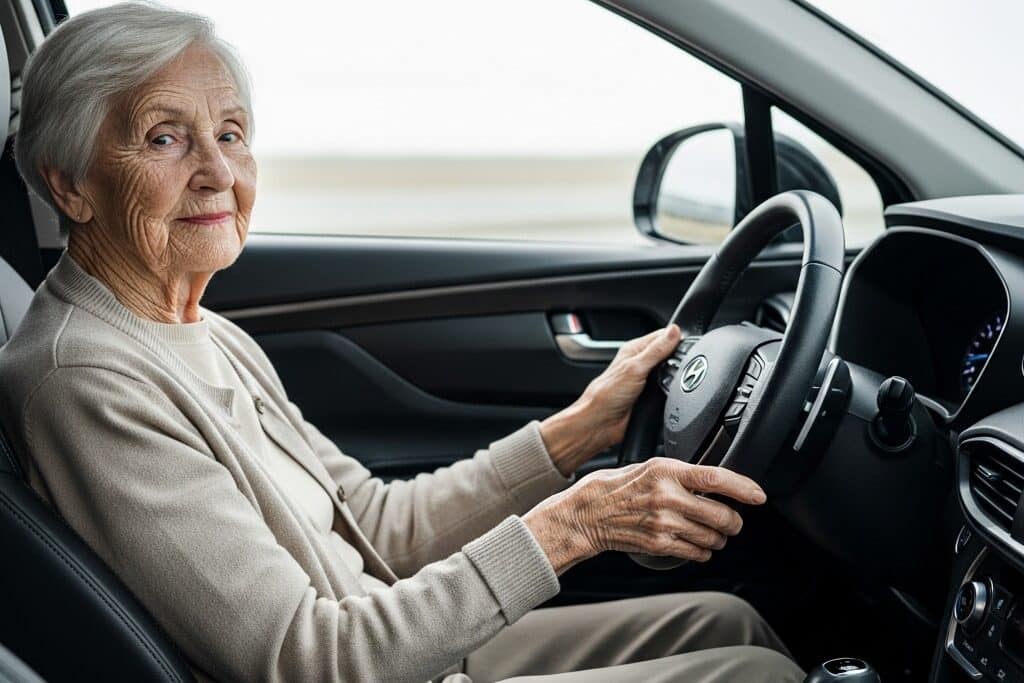
Getting in and out of a vehicle sounds simple until it isn’t. A low-slung sedan that was fine at 55 becomes a genuine obstacle at 72 — especially after a hip replacement, a knee surgery, or just the accumulated stiffness that comes with age. The wrong car doesn’t just cause discomfort; it creates a fall risk every single time you park.

The good news is that vehicle choice makes a real difference.
Seat height, door opening size, suspension softness, and interior layout all affect how physically demanding entry and exit actually are — and several manufacturers have gotten this right in ways that aren’t obvious from a spec sheet.
This guide covers the specific features to look for and the models worth putting on your test drive list.
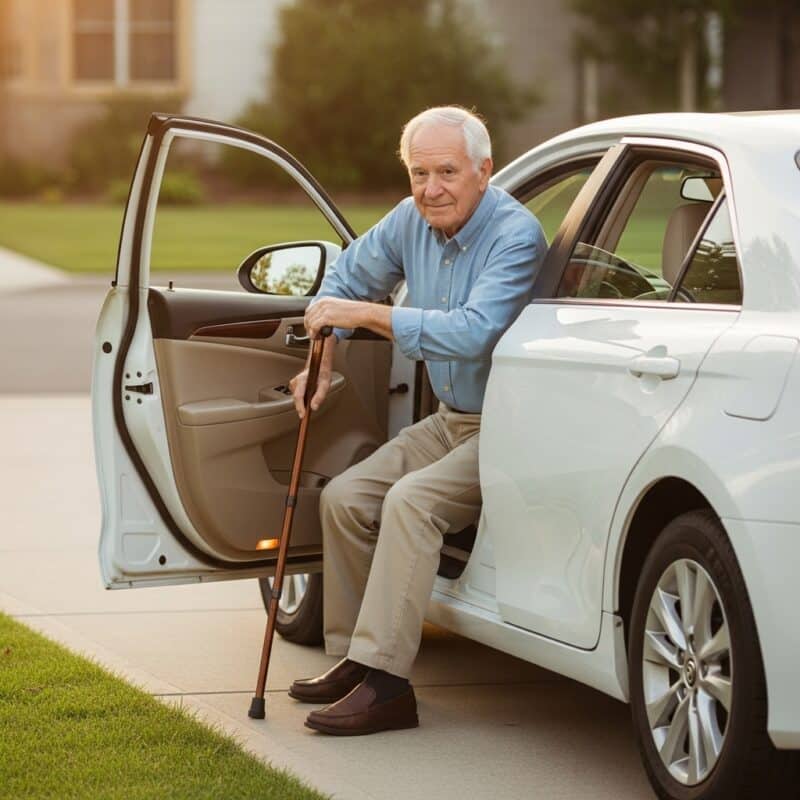
Top 5 Cars for Seniors That Are Easy To Get In and Out Of
These five vehicles earn their spots because they combine accessible entry, adjustable seating, and meaningful safety technology — not just because they’re popular. All five feature step-in heights that work for adults with joint pain or stiff hips, power-adjustable driver’s seats, and driver-assist systems that reduce the cognitive load of driving.
1. Honda Accord
The Honda Accord offers a roomy, well-proportioned interior with a seating position that doesn’t require seniors to fold themselves in or haul themselves up. The available power-adjustable driver’s seat lets you dial in the height and distance from the wheel without wrestling with a manual lever.
The Accord also delivers generous legroom and headroom front and rear, plus a solid suite of standard safety features: rearview camera, blind spot monitoring, and forward collision warning. See current Accord specs and trims on Honda’s site.
2. Toyota Camry
The Toyota Camry has a low door sill and generous door opening that make entry and exit straightforward — even for passengers with hip or knee limitations. The adjustable seat, steering wheel, and lumbar support help seniors find a position that’s comfortable for both driving and getting out at the end of a trip.
The Camry rides smoothly and quietly, with excellent outward visibility. The hybrid option delivers strong fuel economy without sacrificing the midsize comfort that makes it work for older drivers. See the Toyota Camry lineup.
3. Buick Encore GX
The Buick Encore GX sits in an interesting middle ground between a compact sedan and a small SUV — and that works in its favor for seniors. The seating position is higher than a typical sedan without the step-up climb of a larger SUV, and the doors open wide with a roofline tall enough to enter without ducking.
Buick has historically prioritized a quiet, smooth cabin — the Encore GX continues that tradition with noise insulation and suspension tuning aimed at comfort over sportiness. Controls are straightforward, the instrument cluster is legible, and the available power-adjustable driver’s seat gives seniors real flexibility in finding the right position.
Standard safety features include automatic emergency braking, forward collision alert, and a rear vision camera. Lane keep assist and blind zone alert are available on upper trims. See current Encore GX trims at Buick.
4. Nissan Altima
The Nissan Altima combines a low step-in height with a slightly elevated seating position — a pairing that makes entry and exit easier than most midsize sedans. Wide door openings reduce the need to contort, and the higher seating position improves forward visibility for older drivers who may have lost some neck range of motion.
The Altima’s driver-assist package is particularly strong: Blind Spot Warning, Rear Cross Traffic Alert, and an available Intelligent Around View Monitor that provides a 360-degree camera view. See Altima specs at Nissan USA.
5. Hyundai Sonata
The Hyundai Sonata stands out for its oversized doors and low step-in height — two features that consistently matter most for seniors with mobility limitations. The interior is genuinely roomy with above-average headroom and legroom, which means passengers aren’t cramped or struggling to reposition when exiting.
Standard safety tech includes blind spot monitoring, lane keeping assist, and adaptive cruise control. The Sonata’s trunk is large, and the cabin is well laid out for seniors who want intuitive controls without a steep learning curve. See the Hyundai Sonata lineup.
Finding this useful? Get more practical, credential-backed advice for older adults and caregivers — no hype, no fluff — delivered to your inbox. Join the Graying With Grace newsletter →

Top 5 SUVs for Seniors
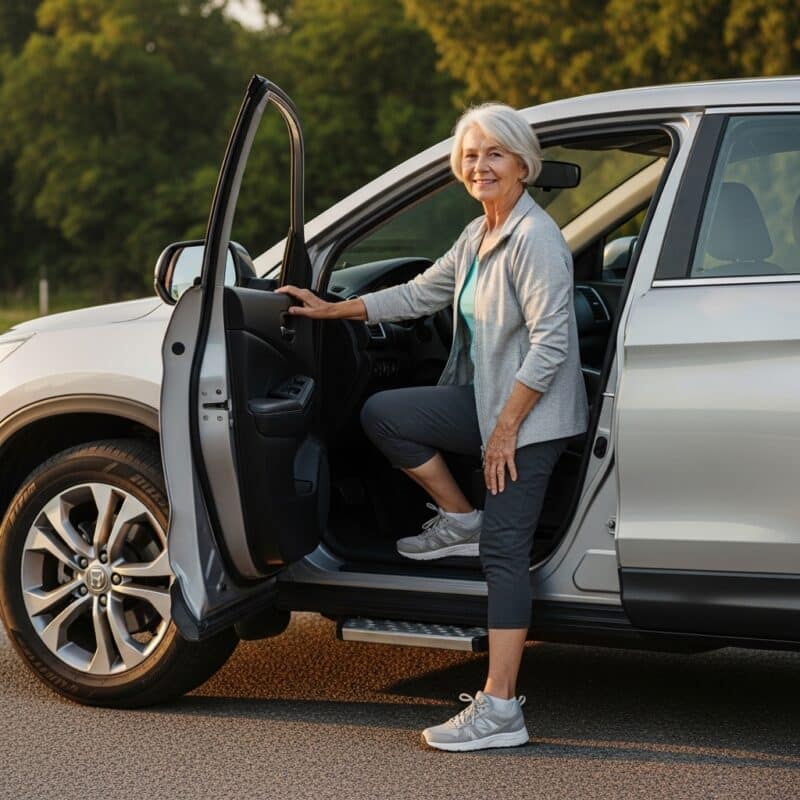
Small and midsize SUVs have a structural advantage for older drivers: the higher seating position puts you closer to a natural standing height, which reduces the effort needed to get in and out. The tradeoff is step-in height — look for SUVs with running boards or a lower rocker panel if that’s a concern.
1. Honda CR-V
The Honda CR-V offers a well-calibrated combination of low step-in height and wide-opening doors — a pairing that’s harder to find than it sounds in the compact SUV segment. The seating is ergonomic and supportive, which matters both for long drives and for getting out without the usual stiffness.
The CR-V consistently earns top safety ratings, delivers solid fuel economy, and has a roomy interior with good sightlines. See current CR-V trims at Honda.
2. Toyota RAV4
The Toyota RAV4 has wide-opening doors and a relatively low floor height for a compact SUV. Power-adjustable front seats and a power liftgate are available on most trims, which simplifies both seating adjustment and cargo access for seniors who don’t want to wrestle with manual controls.
The RAV4 rides quietly and smoothly — less fatiguing on longer trips — and Toyota Safety Sense is standard across all trims. See the Toyota RAV4 lineup.
3. Subaru Forester
The Subaru Forester is one of the better-designed SUVs for senior access, with a high seat position, large door openings, and a lower step-in height than most vehicles in its class. The headroom is exceptional — getting in and out doesn’t require ducking — and legroom front and rear is generous.
The Forester also has a large rear cargo area, which is practical for seniors who use mobility aids or transport medical equipment. EyeSight safety technology is standard. See the Subaru Forester specs.
4. Hyundai Santa Fe
The Hyundai Santa Fe sits slightly higher than a sedan, which makes the transition from standing to seated — and back — less physically demanding. The doors open wide, and there’s genuine headroom and legroom for taller seniors or those who need extra clearance when pivoting into the seat.
Blind spot warnings and rear cross-traffic alerts are standard. The Santa Fe’s interior is well-organized with controls that don’t require a manual to operate. See the Hyundai Santa Fe lineup.
5. Toyota Highlander
The Toyota Highlander earns its spot with a tall roofline and lower step-in height that combine to create an unusually generous door opening. Getting in doesn’t feel like a climb, and getting out doesn’t require the careful maneuvering that taller SUVs demand.
The adjustable driver’s seat accommodates a wide range of heights and body types. The Highlander rides smoothly and quietly, and the cabin is logically laid out for drivers who prefer intuitive controls. See the Toyota Highlander lineup.
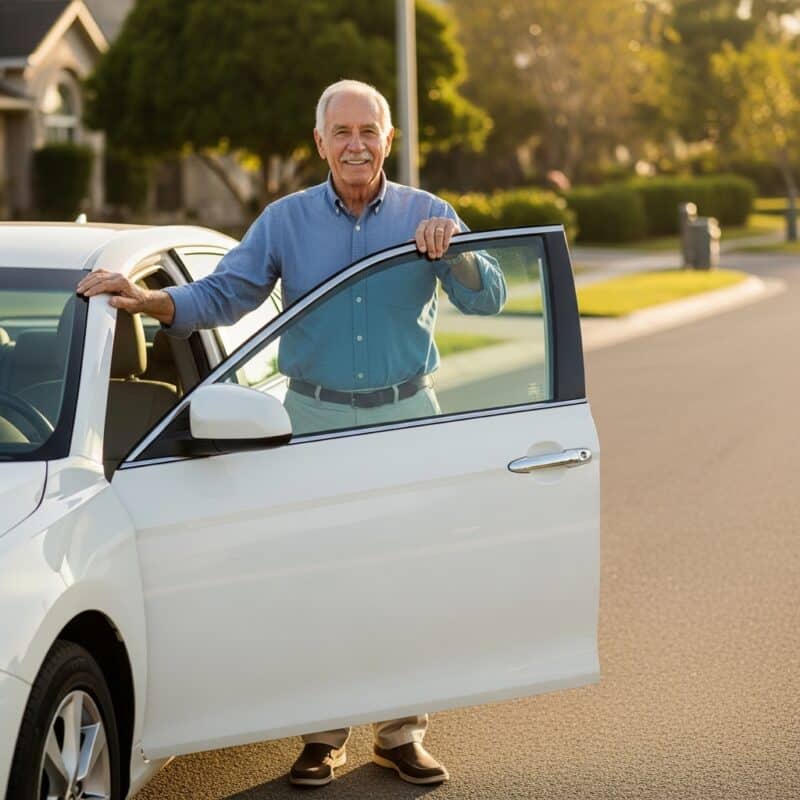
Types of Vehicles Best Suited for Seniors
Not every body style works equally well for older drivers. Here’s a quick rundown of what each type offers — and what to watch out for.
Sedans
Midsize four-door sedans hit the right balance for most seniors: accessible seat height, good sightlines, and manageable door openings. They’re easier to park than SUVs and generally more fuel-efficient. Avoid two-door sedans — the longer doors and lower roofline make entry and exit genuinely difficult.
SUVs
Small and midsize SUVs offer a higher seat position and wide-opening doors, which reduces the effort required to get in and out. The main variable is step-in height — compact crossovers tend to be lower than body-on-frame SUVs. Many come equipped with standard driver-assist technology that matters for older drivers.
Minivans
Minivans are underrated for seniors who travel with others or use mobility equipment. Sliding side doors open wide without requiring the passenger to step aside, and the floor height is well-suited for wheelchair transfers. If you’re helping a parent who uses a walker or wheelchair, a minivan is worth a serious look.
Hatchbacks
Hatchbacks combine a low step-in height with practical cargo access — the rear hatch eliminates bending into a deep trunk. Wide-opening doors and a relatively upright seating position make them more accessible than they look. Good option for seniors who want something smaller than a sedan without sacrificing practicality.
Wagons
Station wagons give you sedan-level floor height with SUV-sized cargo space and larger door openings. They’re less common than they used to be, but models like the Subaru Outback occupy this space and work well for seniors who want easy access without the step-up of a taller SUV.
Avoid sports cars, low-slung coupes, and full-size body-on-frame trucks — the entry/exit geometry on these body styles is actively difficult for adults with joint pain or balance concerns.

Vehicle Features That Affect Entry and Exit
When you’re test-driving vehicles, these are the specific things to pay attention to — not just overall “comfort.”
Step-In Height
The step-in height is the distance from the ground to the bottom of the door sill. Lower is generally better for adults with hip or knee limitations. Most compact crossovers land around 15–17 inches; sports cars can be as low as 9–10 inches, which sounds easier but actually requires more of a drop-and-pivot motion that’s hard on joints.
Door Openings
Width and height both matter. A tall, wide opening lets seniors enter and exit without bending their neck or turning sideways. Look for door handles positioned lower on the door — easier to grip when you’re partially in the seat.
Seating Position
Power-adjustable seats are worth prioritizing. The ability to raise the seat height and adjust the distance from the dashboard independently makes a meaningful difference — both for finding a comfortable driving position and for getting out without pushing against the wheel. Manual seats with limited range of adjustment are a friction point that compounds over time.
Seat Belts
Seat belts that require significant force to unbuckle — or that are positioned awkwardly relative to a shorter or heavier driver — are a real obstacle for seniors with hand strength limitations or arthritis. Test the buckle during your test drive. Some vehicles also offer seat belt extenders, which help passengers with larger frames reach the buckle without straining.
Interior Layout
Dashboard depth and center console placement affect how much room there is to pivot when entering or exiting. A wide, unobstructed pathway from the door to the seat is easier to navigate than a cabin with a large center console that intrudes into the footwell area.
Suspension
A softer suspension reduces jarring when pulling into driveways or navigating parking lots — which matters both for comfort and for stability during the entry/exit process. Stiff, sporty suspensions that feel engaging on the highway translate to a lot of small jolts during low-speed maneuvering.

Accessories That Make Vehicle Entry and Exit Easier
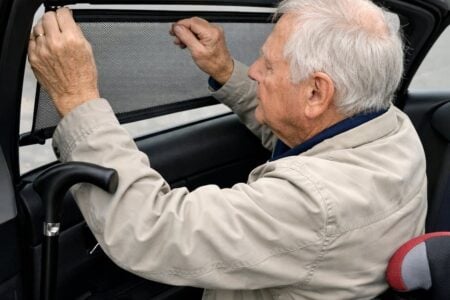
Car door assist handles attach to the door frame or window, giving seniors a stable grip point when lowering into or rising from the seat. They’re inexpensive and work in virtually any vehicle without modification.


Vehicle entry/exit ramps provide a sloped surface alongside the door opening — useful for seniors who have difficulty with the step up into taller vehicles and prefer a gradual incline over a single step.


Portable step stools are a practical solution for getting in and out of taller vehicles — trucks, full-size SUVs, and vans — without a permanent modification. Look for models with a non-slip surface and a weight rating appropriate for the user.


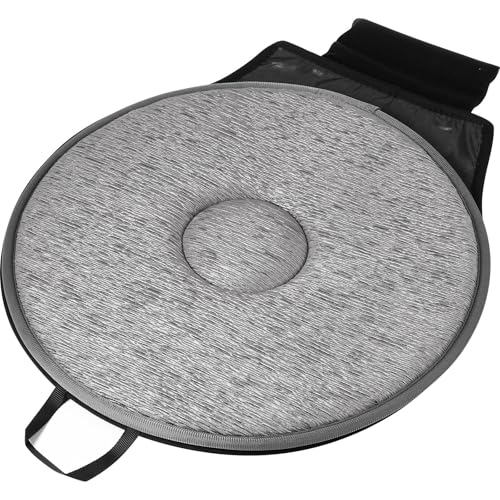
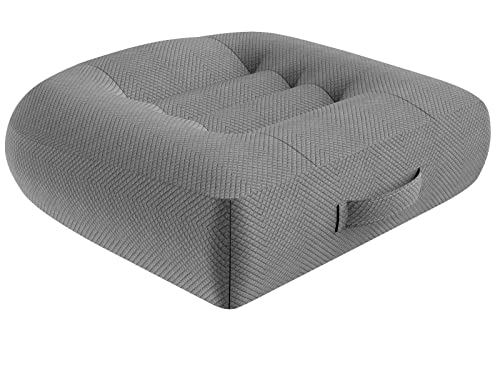
Car seat cushions raise the effective seat height in vehicles without power-adjustable seats, making it easier to get in and out without the full drop-and-lift motion. They also add lumbar support for longer trips. If back support is your main concern, here is how different styles of lumbar support for long drives stay in place.



Running boards and side steps attach to the vehicle’s rocker panel and provide a fixed intermediate step. These are a permanent modification that requires professional installation, but they’re worthwhile for seniors who regularly drive taller vehicles.
For more significant mobility challenges, consult a vehicle modification specialist about swivel seats, power-assisted doors, and transfer boards. The National Mobility Equipment Dealers Association (NMEDA) maintains a directory of certified dealers who can assess your situation and recommend appropriate modifications.
More guides like this — covering everything from adaptive equipment to caregiver logistics — go out regularly in the Graying With Grace newsletter. Sign up here if you’d like them in your inbox →
How to Safely Enter and Exit a Vehicle
- Park on a flat, level surface whenever possible — a slope adds instability to an already demanding motion.
- Before exiting, bring both feet together and shift toward the door. Don’t swing one leg out first.
- Place one hand on the door frame or assist handle — not the door itself, which can swing.
- Lean slightly forward and use your legs, not your back, to rise from the seat.
- When entering, sit first, then swing both legs in together. Don’t step in and then lower yourself — that puts significant stress on one knee.
- Take your time. Rushed entry and exit is when most vehicle-related falls happen.
- If you routinely need physical assistance getting in or out, that’s a signal worth discussing with a physical therapist — they can assess whether a different vehicle, a mobility aid, or targeted strength work would make the most difference.
How to Choose the Best Car for Your Needs
Once you’ve narrowed your list by body style and features, here’s how to make the final call:
- Confirm the vehicle has the safety features that matter most to you: backup camera, blind spot monitoring, forward collision warning, and automatic emergency braking are the four I’d consider non-negotiable.
- Check crash test ratings from the Insurance Institute for Highway Safety — particularly the side and front overlap tests, which are most relevant to real-world senior driver crashes.
- Test drive at least three vehicles. Entry and exit feel can vary dramatically between vehicles that look similar on paper. Bring whoever else will regularly ride in the vehicle — a passenger who struggles to get into the back seat is a problem that doesn’t show up on a spec sheet.
- Check that controls are legible and intuitive. Large text on the instrument cluster, physical buttons for climate control (vs. a touchscreen-only interface), and a straightforward gear selector all reduce cognitive load for older drivers.
- Calculate total cost of ownership — insurance, fuel, maintenance, and registration — not just the sticker price. A vehicle that’s $3,000 cheaper but gets 8 fewer mpg may cost more over three years.
- If you’re considering a used vehicle, have it inspected by an independent mechanic before purchase. Dealer-certified pre-owned programs vary significantly in what they actually cover.
- Don’t overlook asking for incentives — senior discounts, loyalty pricing, and manufacturer rebates are common and rarely offered proactively. AARP members often have access to additional negotiating resources.
The Bottom Line
The right vehicle won’t eliminate every physical challenge that comes with aging — but the wrong one will make every errand, every doctor’s appointment, and every trip to see family harder than it needs to be. That’s worth taking seriously when you’re shopping.
The good news is that the market has genuinely improved for older drivers. Nearly every major manufacturer now offers meaningful driver-assist technology at reasonable price points, and the compact crossover segment in particular has produced several vehicles that work well for seniors without requiring expensive modifications or compromises on comfort.
Start with a test drive — not a virtual walkthrough, not a spec comparison, but an actual in-person test where you get in and out of the vehicle several times, adjust the seat, buckle and unbuckle the belt, and sit for long enough to notice whether it feels right. Bring a family member or caregiver if they’ll regularly be riding along. What works for one person’s body doesn’t always work for another’s.
If you’re not sure where to start, the five sedans and five SUVs listed above are all solid, well-supported choices with proven track records. Any of them would be a reasonable place to begin your search.



![Older woman wheelchair riverside walkway[3]](https://www.grayingwithgrace.com/wp-content/uploads/2026/06/older_woman_wheelchair_riverside_walkway3-e1780477605210-450x300.jpg)




I just read this and it was common sense info ! Thank you. Getting older as my mother said. Is not for Sissies. So true. You must get a bit stronger and keep moving every day. Do not sit and wait. Get up and keep moving !!
Hi Ginny! Thanks for the comment. I try to use common sense when researching and writing these articles. Keeping active is awesome advice too! Scott
I just traded in my RAV4 for a Passat thinking that it would be easier for my 90 year old father and 83 year old mother to get in and out of (they could not get into the RAV4 without difficulty because of the height). They both have mobility issues and my mother cannot follow instructions for getting in/out due to dementia. Taking them on the first Dr.’s appointment in the car was horrible because the door is too short (father has to crouch down and cannot do this) and the seats do not go back far enough for him to avoid the dashboard (stiff legs). My father couldn’t get all the way into the passenger seat and once halfway in, could not get back out. We finally got it, but it was very uncomfortable for him. I thought I was doing the right thing by getting a midsize car for them but it ended up not a good choice.
Hi Alicia – thanks for taking the time to provide some real world feedback. Your comments are super helpful for my readers and is appreciated!
I’m so glad I found this page. Do you have any recommendations for a minivan for me? I am a paraplegic and have had cars all my life and successfully got in and out. My last car was an outback wagon, which I loved but the new ones were too high for me. My husband surprised me with my dream car, a BMW hard top convertible when I retired but I do find it difficult to get out of it because it does not have a handle on the roof and now use a transfer board. We’re talking about a minivan which I hate the idea of but here we are. Any thoughts?
I hope to use the information here to purchase our next car. I have a 2006 Jeep Liberty and a bad right knee. Before, I had a PT Cruiser.
I’d like to find an SUV that I can slide into and out of sideways or has an adjustable seat. I would also need an adjustable steering wheel and back seat access for an aging shepherd mix dog. I had hoped for 5 more years with my Jeep, but it’s on its last legs. God bless it for giving me 15 years!
Hi Helga – glad this information was helpful!
Regarding your article on the Top 5 Cars Seniors that are both Easy to Get in and Out of, no small cars are listed. On purpose? In particular, I was wondering about the Mazda 3, about the same dimensions as a Kia Forte.