
Name it is white, fluffy, rectangular, square, velvety, firm! Pillows come in all shapes, sizes, and kinds, and although they appear to be similar at face value, they differ significantly in comfort and body support.
Pillows help alleviate and even prevent many common types of back and neck pain, as well as shoulder, hip, and other types of joint pain, when used properly.
They also keep the upper body aligned while sleeping, alleviating pressure and harmonizing the body’s points.
Pillows can therefore be beneficial components of a senior’s bed. As we all know, growing older brings with it a slew of physical issues such as neck pain, weak spines, backaches, hip injuries, an unstable lower body, lower back pain, and so on.
So, as an older adult or caregiver of an elderly person, you must find the appropriate aids and remedies to manage sleep quality effectively. One of these remedies is the use of a good pillow.
Here are the pillows I’d point you to first, and further down the page you’ll find the details on each one, including the downsides.


Top 11 Best Pillows for Seniors & Elderly
Here are my recommended pillows to help older adults get a better night’s sleep. In the next sections, I’ll show you how to shop for a pillow that meets your individual needs.

SendyFeather Lumbar Support Pillow
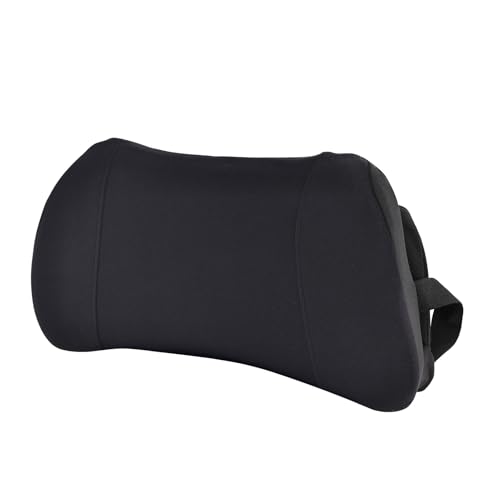

This one is a different kind of pillow for back support for the elderly. It’s a memory foam lumbar cushion made for car seats and office chairs, not for the bed.
A sore back at night often starts with a long day in a chair. If you spend hours driving or sitting at a desk, support behind the lower back can make a real difference by evening.
The main feature is a two-point strap system that holds the cushion in place. Anyone who has had a pillow slide down behind them every few minutes will see the point.
The cover unzips for washing, which matters for something used every day. It’s also easy to carry in one hand, so it can go from the car to the desk with you.
A couple of things to know. Memory foam can feel firmer than you expect at first. If your chair is a wide one, like a recliner or a wheelchair, make sure the straps will reach around it before you order.
And if you want a pillow to sleep with, between the knees or under the back, this isn’t the one. It’s for sitting.
Ultra Pain Relief Cooling Pillow
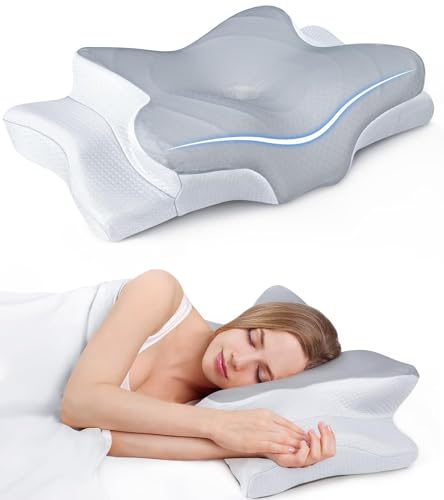
This is a memory foam contour pillow made for people who wake up with a sore neck. It’s sold for side, back and stomach sleepers.
The top has a hollow, curved dip in the middle, tilted at a 15-degree angle. The idea is that your head settles into the dip while the pillow keeps the natural curve of your neck and lines up your spine.
It has six contour zones shaped to fit the neck, shoulders and arms. These are meant to ease pressure points, which matters if you tend to shift between sleeping positions during the night.
It’s described as a cooling pillow with an odorless foam, and it’s adjustable. Some people notice a chemical smell when they unwrap a new foam pillow, so that’s a nice detail if you’re sensitive to it.
As for the downsides, a contour pillow feels very different from the soft, squishy pillow you’ve likely slept on for decades. Give yourself a week or two to get used to it. If you like to bunch your pillow up or fold it in half, this shape won’t let you.
myWoolly Natural Wool Pillow
The myWoolly Pillow in the Ivory King size (20″x36″) is filled with 100% natural wool puffs, and you can change how high it sits. A removable wool-fill core lets you take some filling out or put it back until the height feels right for your neck.
That matters because the right height depends on how you sleep. It suits side, back, and stomach sleepers, and it is meant to ease pressure on the neck and shoulders and help keep the spine lined up.
Wool is breathable, and the pillow is described as temperature-regulating. It is also washable, which is handy if allergies or night sweats are a concern.
The trade-off is that adjusting takes a little patience. You may need a few nights and a few tries to get the filling right. If you want a pillow you can pull out of the package and use as is, a fixed-shape pillow may be easier. And if you like a flat, firm pillow, remember this one is a high loft design.
HOMBYS Natural Wool Pillow
This pillow lets you change how high it sits, which makes it a good fit for side sleepers, combination sleepers, and even seniors who sleep on their backs.
You unzip it and add or take out the Australian wool fill that comes with it. A lower loft (that just means how tall the pillow sits) is usually easier on the neck for stomach sleepers. A fuller one tends to suit side sleepers, who need more height to fill the gap between shoulder and head.
The fill is 100% Australian wool, a natural fiber that breathes and helps manage moisture and temperature. The cover is cotton. Inside, a quilted cotton layer with carded wool sits over the loose wool, which is meant to give some softness and some support at once.
Now the downsides. If you are allergic to wool, skip this one, since it is all wool.
It also takes a little patience. You may need a few tries of adding and removing fill before the height feels right, so it is not the best pick if you want a pillow that is ready to go straight from the package.
YOUR MOON Natural Wool Pillow

The YOUR MOON Natural Soft Wool Pillow is filled with a mix of 51% Australian wool and 49% microfiber, in a ball-shaped fill. The wool is naturally breathable, and the microfiber adds some cushion and helps the pillow keep its loft instead of clumping.
It measures 20 x 30 inches (queen size) and has a 3.2-inch gusseted edge. That is a boxed side panel, and it helps the pillow hold its shape and resist going flat. The cover is 100% cotton.
This pillow is aimed at side sleepers, and the description says it also works for seniors who sleep on their backs. A fuller pillow fills the gap between the shoulder and the head, which is where a lot of neck strain starts.
The trade-off is the height. A high-loft pillow can push the head too far forward for stomach sleepers, and it may be more than you want if you like a flat, low pillow.
Unlike an adjustable pillow, you can’t add or remove fill to change it. If you know you like a fuller, springy pillow, that won’t matter. If you’re still figuring out what suits your neck, keep that in mind.
WOOLROOM Quilted Wool Pillow
This is a quilted pillow filled with pure British wool balls, inside a breathable 200 thread cotton cover. There are no synthetic materials in it. It’s listed as medium firm, in a standard size (26 by 20 inches).
Wool breathes and wicks moisture, which helps with the warm, damp pillow so many people wake up to. It’s meant for year-round use, so you aren’t swapping pillows when the seasons change.
It’s certified OEKO-TEX Standard 100, a textile safety standard, and carries the Allergy UK Seal of Approval. It’s naturally hypoallergenic, and the dry environment wool creates makes it harder for common bedroom allergens to settle in. That’s worth knowing if allergies or asthma keep you up.
Better sleep matters more than most people think, and elders can sleep more soundly when they aren’t fighting a hot or sweaty pillow.
The trade-off is the feel. Medium firm suits back and side sleepers who want steady support, but if you like a soft, sink-in pillow, this may feel too solid. It’s also a standard size only, so it won’t suit anyone who wants a queen or a very low profile.
GhostBed Faux Down Pillow

The GhostPillow – Faux Down is best suited to side and back sleepers with neck pain. It measures 7” thick and is stuffed with plush-down alternative fibers.
The fill cushions the head and neck for a cloud-like experience, while the pillow as a whole is fairly soft, yet many people won’t find sinkage to be an issue.
It also comes with a Ghost Ice fabric cover woven with phase-change technology, which improves heat regulation.
For added breathability, the down substitute fibers are infused with gel. When the pillow has to be cleaned, the entire pillow may be washed and dried in a home machine, saving you time and money.
Cheer Collection Organic Kapok Pillow
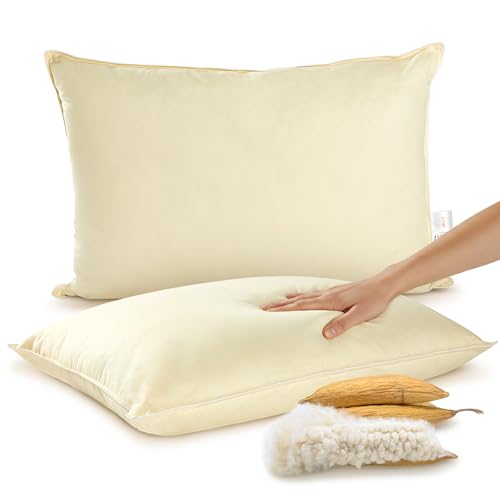
The Cheer Collection Organic Kapok Pillow is filled with 100% kapok, a soft, silky fiber that comes from the kapok tree. It comes in standard size and has a 100% cotton cover.
Kapok has a down-like softness with gentle firmness. It’s also described as more breathable than cotton or wool, so it suits you if you tend to wake up warm.
The cotton cover is gentle on skin, and the pillow is easy to wash. That’s a real plus for a pillow you use every night.
Now the trade-offs. This is a soft, plush pillow, so if you like a firm pillow or the shaped feel of memory foam, it may feel too airy for you. Natural fiber fill can also flatten a bit with use, so plan on fluffing it now and then.
Sealy Dreamlife Cooling Pillow
The Sealy Dreamlife is a memory foam pillow with a cooling gel layer, which SealyChill is the name for. Memory foam gently shapes itself to your head and neck, which spreads out the pressure instead of pushing back in one spot.
The gel layer is there to help with the main complaint people have about memory foam, which is feeling warm at night. The cover is a blend of 90% cooling nylon and 10% spandex, so it has some stretch to it.
It measures 24″ long, 16″ wide and 6″ high, so it fits most standard pillowcases. It’s made for back, side, and stomach sleepers.
The cover comes off and goes in the washing machine. It also has Surface-Guard antimicrobial technology, a plus if allergies bother you.
Now the trade-offs. Memory foam holds its shape and springs back slowly, so if you like a soft, bouncy pillow, this will feel different. It can also make shifting position a little slower, which matters if turning over in bed is already a chore.
A cooling gel helps, but it won’t turn any foam pillow into an ice pack. If you run very hot at night, keep that in mind.
Casper Sleep Essential Pillow
The Casper Sleep Essential Pillow is a down alternative pillow with a medium-soft feel. It’s meant to work for side, back, and stomach sleepers, which helps if you move around during the night or aren’t sure which position you favor.
Inside, it has three chambers that keep the fill from shifting around. The idea is that it stays fluffable and holds its shape through the night instead of flattening or clumping.
The cover is 100% cotton percale. That’s the crisp, cool-feeling weave you find on hotel sheets, and it’s breathable.
For older adults, the useful part is the balanced support. A pillow that keeps the head and neck lined up can make waking up a little easier on a stiff neck.
The trade-off: medium-soft doesn’t suit everyone. If you need a very firm pillow to prop your head up, or you like to sink deep into a plush one, this middle-of-the-road feel may not be what you’re after.
Percale also feels crisp rather than silky. If you prefer a soft, smooth cover, you may notice the difference.
Bedsore Rescue Pressure Relief Pillow

This Jewell pillow is a great option for seniors looking for support and pressure relief in a contoured bed wedge pillow.
For even pressure distribution, the cushion is composed of high-efficiency foam layers. It has a 30-degree tilt design that is recommended, as well as a moisture-proof cover.
The top side is made of a soft, antibacterial, water-resistant nylon, with a non-skid bottom to prevent slipping.
Its curved form relieves pressure on the spine and tailbone while equally dispersing weight, making it a perfect alternative for seniors with back problems.
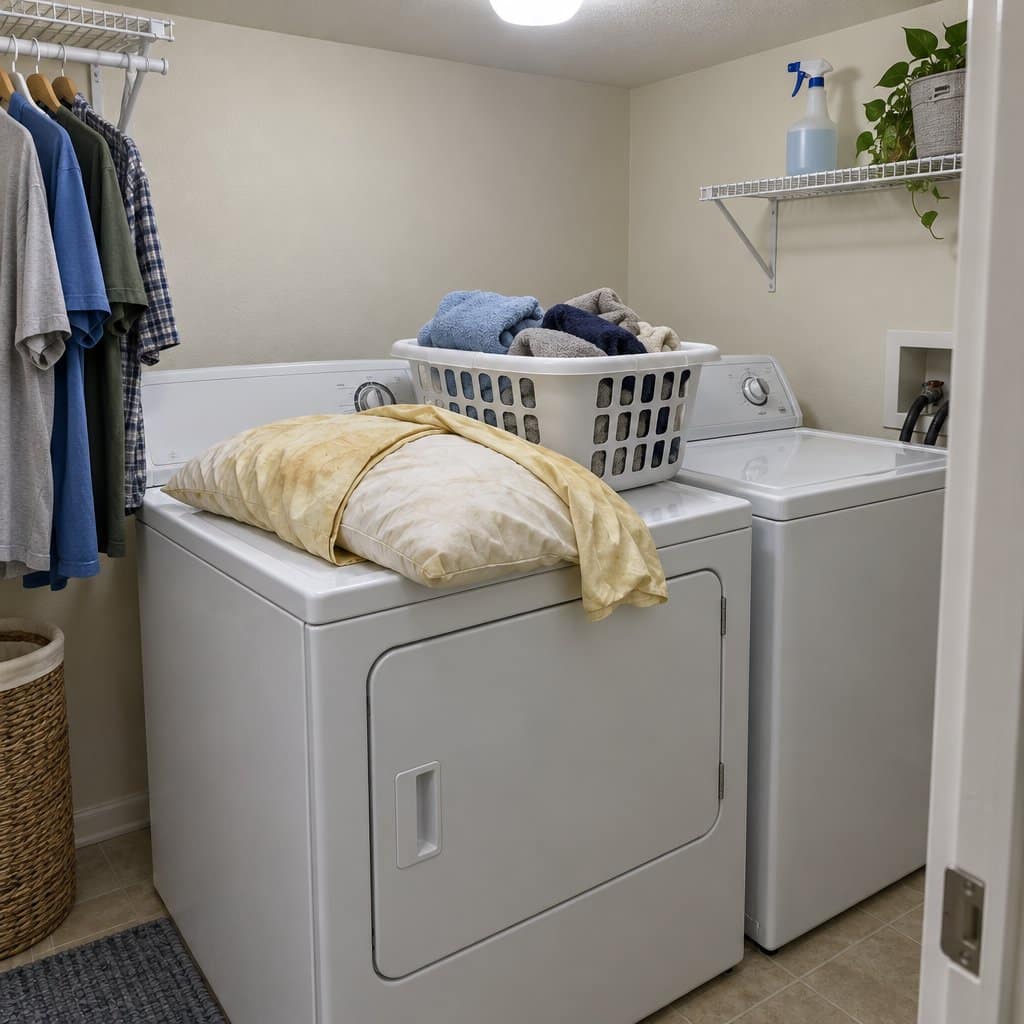
What’s In Your Pillow: Pros & Cons of Various Pillow Filling Options
The first feature to consider is the fill of your pillow. There are lots of options – each with its own unique pros and cons. To select the best pillow for yourself or a senior loved one, understanding pillow fill options is the best place to start.
1. Polyester
Polyester filling is the most popular and affordable pillow filler, making polyester pillows simple to repair.
While polyester pillows are soft and last longer than cotton pillows, over time they become lumpy and less supportive, so they may need to be replaced more often.
Pros:
- Readily available
- Inexpensive
- Have hypoallergenic stuffing
- Are machine washable
- Do not retain odors
Cons:
- Becoming lumpy over time
- Have a shorter lifespan
- Less supportive
2. Memory Foam
This is a type of firm, moldable foam that you may already be familiar with. It was originally designed for space flight safety but has since become a popular choice for pillows, mattresses, and other soft furnishings.
Pros:
- Denser than polyester or shredded foam pillows
- Tends to adhere to the shape of your head.
- Adapts quickly to provide the appropriate level of support.
Cons:
- Not as breathable as others so might make your head a little hot at night.
- Memory foam may contain chemicals that can irritate the skin and other body parts.
3. Latex Foam
Latex can be synthetic or natural, made from tree sap. Latex pillows are made from a single layer or chunks of latex. Latex responds to the body differently than memory foam.
It has more spring to the touch and recovers to its shape faster after being compressed.
Pros:
- Biodegradable
- Flame-resistant
- Extremely durable
- Mold and mildew resistant, as well as bed bug and dust mite resistant
Cons:
- Latex pillows are more expensive
4. Natural Wool Fibers
Wool fibers are a newer entry into the pillow filling world. They are completely natural, free from synthetic materials, and hypoallergenic.
Their popularity has increased with the organic, all-natural, and chemical-free movements. If you have trouble regulating your temperature when you sleep, they can be a great choice for you.
Pros:
- Hypoallergenic & natural
- Excellent temperature regulation
- Easy to care fo
- Has a great smell
Cons:
- Wool filling flattens out over time and needs more frequent fluffing
5. Down and Feathers
Down filling comes from the soft, delicate down feathers of ducks and geese. It has anti-allergic properties. Bacteria, fungi, and other organisms are also not attracted to it.
In comparison to any other fill material on the market, this makes it a significantly healthier option.
Unfortunately, many people find that the feathers become displaced beneath their head’s weight, compromising the support they provide.
Note that down-alternative pillow filling has the same feel as genuine down and is a hypoallergenic and cost-effective alternative to real down.
Pros:
- Soft and offer excellent conforming
- Often customizable, allowing owners to adjust the loft by taking out feathers or adding more
- Hypoallergenic
Cons:
- Feather pillows tend to lose their loft as the feathers get compressed over time.
6. Buckwheat
Buckwheat is a tiny, dry seed that is used as a pillow filling. Some people enjoy the way a buckwheat pillow molds to their head and neck, while others may find them excessively noisy (the seeds rustling as you move) or too rigid.
Pros:
- The hulls interlock naturally and keep their shape
- Excellent choice for head and neck support.
- Breathable, allergen-resistant, durable, and environmentally friendly.
Cons:
- High price tag
- Produce some noise when you shift positions
- May take some getting used to because they aren’t as soft as other standard pillows
What to Look For When Shopping for Pillows for Older Adults
Here are some important factors to consider when shopping for a bed pillow for yourself or a senior or elderly loved one.

Sleeping Position
Before thinking about your new pillow, you must first know your typical sleeping position. Your preferred sleeping position determines the type of pillow you need for maximum support and comfort.
Back sleepers require the least amount of head and neck support and should therefore opt for a low or medium density or a contour pillow. An excessively dense pillow may press their heads forward and cause the neck to overextend.
Side sleepers on the other hand should go for medium-density pillows for additional support. These maintain the neck and head aligned with the body.
Without the right kind of support, an elderly who sleeps on the side could easily suffer from shoulder soreness.
Lastly, stomach sleepers require soft, low-density pillows, which are simple to set up and prevent the neck from being overextended laterally.
You can read more about the best sleeping positions for seniors and the elderly here.
Pillow Filling
There are different types of pillow fillings available. Some include polyester, feathers, wool, memory foam, and many others. In the next section, I’ll go over these options in detail for you.
The type of filling affects durability as well as how comfortable and supportive it is. That said, pay close attention to the different materials to know which one is suitable for you.
Pillow Size
Most people think the bigger the pillow, the better it is. This criterion is often misplaced. To know the right size of a pillow for you, look at the size of your bed.
When the pillow matches the size of your bed, it not only looks wonderful but it also gives support regardless of how much you move while sleeping. From here, choose between the standard, queen, and king pillow sizes.
Breathability
It’s difficult to get a decent night’s sleep when you’re hot and sweating. Instead of trapping heat, you want a pillow that allows air to travel through. As a general rule, the denser the pillow filling, the less breathable it will be for your head and neck.
The pillows that stay coolest are usually constructed of polyester or shredded foam because they allow good air flow. Look for a cooling cover of bamboo or specialty cooling fabrics.
Firmness
Pillow firmness is divided into 4 categories: soft, medium soft, firm, and very firm. A feather pillow is the softest and has the most give. It is also flexible and collapsible enough to fit most sleeping habits.
On the other hand, memory foam pillows are the firmest and are a moldable alternative that is perfect for neck and shoulder support.
To know how firm a pillow is, press down on it. To get a feel for what you’re buying, shake, fluff, squeeze, and even lay on it if possible.
If your pillow is constructed of a loose filling rather than a slab of foam, see if it keeps its shape after you fluff it and if there are any bumpy places. You want a pillow with a consistent shape and thickness.
Pillow Loft
This refers to the angle of your head with respect to your spine when sleeping. A pillow that is too high or too low forces your neck to bend at an unnatural position.
This can cause strain and pain over time. So, opt for a pillow loft that aligns your head and neck with your spine. If you’re not sure what loft you want, a pillow with an adjustable loft can be a good option.
Specialty Pillows
As mentioned before, aging comes with its fair share of body pains. Fortunately, there are some unique pillows called specialty pillows.
They’re designed to ease pressure points and provide support for seniors with medical issues like strokes or to support specific sleeping positions.
If you have back or spine difficulties, these can be an excellent option because they are expressly developed to provide personalized support so you can sleep soundly even in unpleasant situations.

Conclusion: Finding The Best Pillows for Seniors & Elderly
Is your mom, dad, grandpa, friend, or any other loved one having trouble sleeping through the night? Take a close look at what’s on their bed!
The quality of their pillow could improve their sleeping patterns unbelievably.
As such, start by evaluating the factors discussed and then choose one of the recommended choices to make your search easier.
This way, you can find a pillow that is comfy, simple to use, and supportive to ensure that your senior doesn’t have any sleeping problems!
Sources