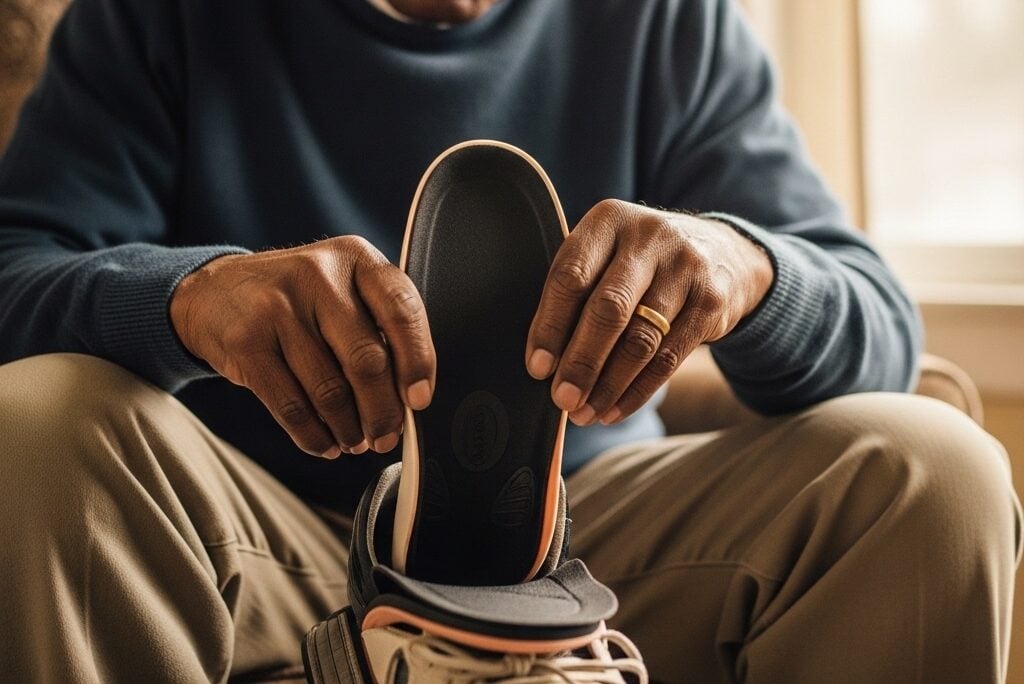
The right shoes are one of the most practical things an older adult, or their caregiver, can do to reduce fall risk. Shoes don’t prevent falls on their own, but poor footwear is a hazard you can control.
Worn-out soles, floppy slip-ons, and shoes that don’t stay on reliably are all documented contributors to the roughly 36 million falls that happen among older adults each year.
If you have weak ankles, I cover which shoes give them the support they need. If balance problems are the worry, you’ll find how footwear affects balance, including slip-ons and slippers.
I also cover which shoes to leave in the closet, and what to look for in the ones you keep, across different foot conditions, activity levels, and lifestyles.

10 Best Shoes for Elderly to Prevent Falls
Below are 10 picks across different categories — orthopedic/therapeutic, stability walkers, casual everyday, and performance options for more active older adults. Each is currently available, actively manufactured, and appropriate for the GWG audience. Men’s and women’s versions are listed separately where the models differ.
1. Orthofeet Sprint (Men’s) / Verve (Women’s)
Orthofeet makes shoes specifically for people dealing with foot pain — arthritis, neuropathy, plantar fasciitis, diabetes, bunions, flat feet. The Sprint (men’s) and Verve (women’s) are their flagship athletic models, and the defining feature is a tie-less lacing system that uses hidden tabs on each side of the shoe. You pull the tab to open, push it to close. No bending, no tying, no fussing.
The Ortho-Cushion system underneath provides multilayer cushioning with a mild rocker that helps propel the foot forward — useful for seniors who drag their feet or have a shuffling gait. An adjustable heel strap accommodates narrow heels, wide heels, and AFO braces. The removable insole means custom orthotics drop right in. Available narrow through extra-wide, and HSA/FSA eligible.

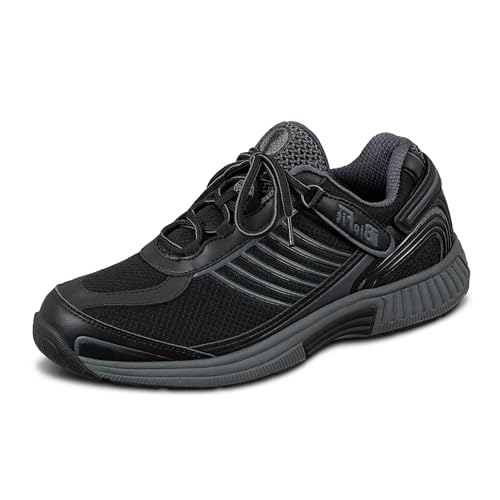
Orthofeet also offers a 60-day wear test — you can return them for a full refund if they don’t work for you. That’s a meaningful commitment for a therapeutic shoe brand. See all Orthofeet styles here.
2. Propet Tour Walker Strap (Women’s)
The Tour Walker Strap has been a Propet bestseller for years and it’s easy to see why. It’s a full-grain leather diabetic walking shoe with two adjustable velcro straps — one across the forefoot, one at the midfoot — that make getting in and out straightforward even with swollen or sensitive feet.
The outsole is herringbone-patterned rubber with solid traction, and the EVA midsole provides cushioning without being so soft it becomes unstable. The removable footbed accommodates custom orthotics. It’s Medicare A5500 approved, which means it may be eligible for reimbursement under the Therapeutic Shoe Bill for patients with diabetes. Available in five widths from narrow through extra-extra-wide.
The Tour Walker is not a fashion shoe. It looks like what it is — a serious therapeutic walking shoe. For women whose priority is function and fit over style, it’s one of the most reliable options on the market at this price point.

3. Dr. Comfort Endurance Plus (Men’s)
Dr. Comfort has been making therapeutic diabetic footwear since 2002, and the Endurance Plus is their workhorse men’s athletic model. It’s built for men who need a diabetic-friendly shoe that doesn’t look like one — the leather and mesh upper reads as a normal athletic shoe, not a medical device.
The insole is where it earns its keep: a removable polyurethane layer with gel pods in the forefoot and heel that absorb shock on impact. A firm heel counter adds lateral stability, and the roomy toe box gives toes space to spread without any pressure on bunions or hammer toes. The Endurance Plus is Medicare reimbursable, and the traditional lace closure (with elastic laces on some versions) allows for a snug, adjustable fit.
One honest note: the outsole durability has drawn some criticism from heavy daily walkers. If the wearer is logging serious mileage every day, plan to replace them within six months. For typical daily activity levels, they hold up well.

4. New Balance 928v3
The 928v3 is New Balance’s most stability-focused walking shoe, and it’s been a go-to recommendation in the orthopedic footwear community for a reason. The ROLLBAR stability post runs along the medial side of the midsole and actively resists overpronation — the inward rolling of the foot that contributes to ankle instability and falls. Most “stability” shoes use a denser foam to slow pronation; the ROLLBAR is a more mechanical intervention that works even when the foam compresses.
ABZORB cushioning in the heel handles shock absorption. The leather upper is durable and breaks in well. The removable footbed accommodates orthotics. Available in lace and hook-and-loop closure versions, and in widths up to 4E for men and 2E for women. Medicare A5500 approved.
It’s a heavier shoe than most athletic walkers — that’s the trade-off for the level of stability it provides. For seniors who overpronate, have had ankle injuries, or feel unsteady during walking, the extra weight is worth it.


More posts like this land in our newsletter every week — practical guidance on mobility, safety, and independence for older adults and the people who care for them. Subscribe to Graying With Grace →
5. Propet TravelActiv Mary Jane (Women’s)
This one is for women who want something more casual and put-together than a therapeutic athletic shoe, without giving up the features that matter for safety. The TravelActiv Mary Jane has an engineered mesh upper, a hook-and-loop strap across the instep for adjustable fit, and a TravelTek EVA/rubber outsole with deep tread that handles varied surfaces well.
It’s lighter than most shoes in this list — the TravelTek sole keeps weight down without sacrificing traction. The firm heel counter stabilizes the rear foot, and the removable footbed is orthotic-friendly. It’s available in narrow through extra-wide.
One limitation worth noting: women with significant foot swelling or edema may find the mesh upper doesn’t accommodate as much volume as a leather shoe with straps. For moderate swelling, the adjustable strap helps. For severe swelling, the Tour Walker Strap above is a better fit.

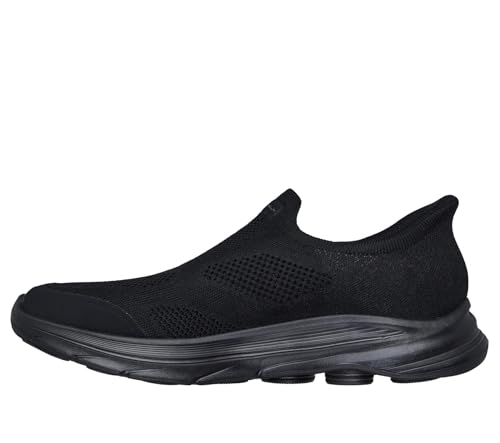
6. Skechers Go Walk 8 (Slip-ins)
The Go Walk line has been a staple recommendation for seniors who want an easy slip-on, and the Go Walk 8 is the current iteration with the Hands Free Slip-ins system. The Heel Pillow — a structured collar that cups the heel — holds the foot securely without any fastening required. You step in and go. No bending, no straps, no laces.
The Air-Cooled Goga Mat insole provides good cushioning and breathability for all-day wear. ULTRA GO midsole cushioning and Ultra Pillars give high-rebound support underfoot. The knit upper is machine washable, which matters for seniors who may be on their feet in varied environments.
One important caveat: the Go Walk 8 is best suited to seniors with relatively stable ankles and feet who don’t need significant motion control. The soft, flexible construction that makes it comfortable and easy to put on is exactly what makes it less appropriate for someone with significant overpronation or balance issues. For those cases, look at the NB 928v3 or the HOKA Bondi SR instead.

7. Vionic Walk Strider Knit
Vionic’s Walk Strider Knit is the updated version of their performance walking sneaker, and it brings a level of biomechanical engineering that you don’t usually see in a shoe that looks this much like a regular sneaker. The Vio-Beam technology is an anti-roll stability system built into the midsole that resists lateral foot movement — the kind of instability that leads to ankle rolls and falls on uneven surfaces. Six stability systems work together through the heel, arch, and forefoot.
The 1st Ray Technology promotes flexibility in the big toe joint, which matters for natural gait mechanics. The Renew Foam midsole provides high-rebound cushioning. The knit upper is breathable and comfortable. Tested by Heeluxe — the third-party lab that validates comfort and performance claims for the footwear industry — and carries the APMA Seal of Acceptance.
This is a good option for active seniors who want a walking shoe that looks contemporary but has serious stability engineering underneath. It’s not a therapeutic diabetic shoe, and it doesn’t have the motion control of the NB 928v3. But for seniors who are reasonably active and want a more versatile everyday shoe, it’s a strong pick.


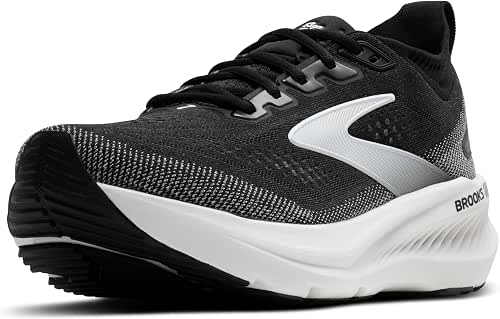
8. Brooks Glycerin GTS 23
The Glycerin GTS 23 is Brooks’ most cushioned stability shoe, and it’s the one I’d recommend to active older adults who are still walking meaningful distances — 30 minutes or more daily, fitness walking, or anyone who spends long stretches on their feet. The GTS stands for GuideRails Technology Support, which is Brooks’ holistic stability system. Unlike traditional stability shoes that use a rigid medial post to block pronation, GuideRails works by monitoring excess movement throughout the entire stride and correcting only when needed. It’s a more natural-feeling stability experience.
The DNA Tuned midsole is nitrogen-infused and zoned: larger cells in the heel absorb impact on landing, smaller cells in the forefoot provide a more responsive toe-off. The net result is a shoe that feels genuinely soft underfoot without the instability that usually comes with maximum cushioning. PDAC A5500 diabetic certified and APMA Seal of Acceptance.
Worth noting: the GTS 23 is a running shoe adapted for walking, not a purpose-built walking shoe. It runs true to size, fits a medium foot well, and is available in wide. It’s not available in extra-wide, which rules it out for seniors who need 2E or wider.

9. ASICS Gel-Kayano 32
The Kayano line has been ASICS’ flagship stability shoe for decades, and the 32 is the current generation. The FF BLAST PLUS midsole foam is lighter than previous versions while increasing the stack height — meaning more cushioning underfoot without the heavy, boat-like feel that older maximum-cushion shoes had. The 4D Guidance System is ASICS’ stability technology: a structure built into the lateral side of the midsole that resists the foot rolling inward and provides adaptive support through different phases of the stride.
A reinforced tongue wing wraps the arch and provides additional medial support — a specific design choice to help seniors and runners who need extra stability through the midfoot. The knit heel pull tab makes the shoe easier to put on without bending as far.
The Kayano 32 fits a standard to slightly narrow foot well. Seniors with wide or extra-wide feet should size up or look at another option. Like the Brooks GTS 23, this is a performance shoe worn by serious walkers and runners — for seniors who are still active enough to want that level of engineering, it’s an excellent choice.


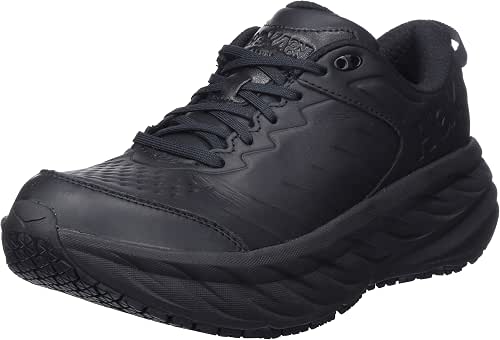
10. HOKA Bondi SR
The Bondi SR takes HOKA’s most cushioned road shoe and rebuilds it for all-day real-world use. The SR stands for slip-resistant: the rubber outsole is specifically tested on water, oil, and soapy surfaces — the kind of conditions found in kitchens, hospitals, and anywhere floors get wet. It’s a legitimate workplace safety shoe that happens to be one of the most comfortable things you can put on your feet.
The water-resistant full-grain leather upper is easy to clean and durable. The max-stack EVA midsole — HOKA’s signature feature — dramatically reduces the impact on knees, hips, and lower back for seniors who spend hours on their feet. The APMA Seal of Acceptance confirms it promotes good foot health. The low-profile, non-marking outsole makes it appropriate for healthcare environments, grocery stores, and similar settings.
It’s worth being direct about what this shoe is and isn’t: it’s primarily a work shoe designed for people on their feet all day on hard surfaces. For seniors who work part-time, volunteer regularly, or simply spend long hours on hard floors, it’s exceptional. For primarily outdoor use on uneven terrain, the lug-patterned outsoles of the NB 928v3 or Brooks GTS 23 are a better match. The Bondi SR also comes in wide — a meaningful option for seniors who struggle to find a comfortable wide-width shoe at this level of cushioning.

What Makes a Shoe Actually Safe for Seniors
No shoe is fall-proof. But several specific features make a meaningful difference in stability and ease of use. Here’s what matters most, according to the research and the occupational therapists I’ve worked with over the years.
Non-Slip, Shock-Absorbing Soles
This is the single most important feature. The sole needs to grip reliably on both dry and wet surfaces — not just tile floors at home, but parking lots, grocery store entrances, and anywhere else a senior actually walks. Look for a rugged rubber outsole with a visible tread pattern. Thin leather or smooth synthetic soles are a problem regardless of how comfortable the shoe feels otherwise.
Shock absorption matters too. Older feet have less natural padding, and a hard-landing sole transfers impact force up through the ankles, knees, and hips. An EVA or polyurethane midsole softens that landing significantly.
Secure, Adjustable Closure
Velcro straps are the gold standard for most seniors. They’re easy on arthritic hands, can be adjusted for swelling throughout the day, and — critically — they stay closed. A shoe that won’t stay fastened is a tripping hazard regardless of how good the sole is.
If you’re curious about sandals with adjustable straps, here is what a therapist says about whether Birkenstocks good for elderly people.
Hands-free slip-in designs (like the Skechers Heel Pillow system) are a reasonable alternative for seniors without significant swelling or stability issues. Traditional laces are generally the worst option: they require bending, they come undone, and retying them is itself a fall opportunity.

Comfortable, Well-Fitting Upper
The shoe should not require a break-in period. If it hurts out of the box, it’s the wrong shoe. Look for a wide toe box that lets the toes spread naturally — cramped toes affect balance. Seniors with diabetes, edema, or neuropathy need extra attention here, since tight shoes can cause pressure sores before the wearer even notices discomfort.
Breathable materials matter for long wear. Leather and mesh both work well. Avoid stiff synthetics that don’t give at all.
Low, Flat Heel
Heels over an inch thick destabilize the ankle. For most seniors, the closer to flat the better. A slight heel (under an inch) is fine and often helps with propulsion during walking. Anything higher shifts weight forward and narrows the base of support.
High Back and Firm Heel Counter
The shoe needs to grip the heel and ankle. Low-backed shoes and mules — even comfortable ones — can slip off mid-stride or cause the wearer to grip with their toes to keep the shoe on, which throws off gait. A firm internal heel counter adds stability without adding bulk.
Wide Toe Box and Roomy Opening
Getting into the shoe shouldn’t require a struggle. A wide opening makes donning easier, especially for seniors with limited hip flexion or swollen feet. Inside, the toe box should give toes room to sit flat and spread, which improves proprioception — the foot’s ability to sense the ground and self-correct balance.

Accommodates Orthotics
Many seniors use custom or over-the-counter orthotics. A removable footbed is essential if that’s the case. Shoes with extra depth allow the orthotic to sit properly without crowding the foot.
Tight vs. Loose — The Right Fit
According to occupational therapist Meredith Chandler, OTR/L, neither extreme works well. Tight shoes can restrict circulation and worsen neuropathy symptoms. Loose shoes create instability and are a tripping hazard, especially during sit-to-stand transfers. The goal is a snug-but-not-binding fit with room for the toes and space for any swelling that develops during the day.
Her practical recommendations: try shoes on later in the day when feet are at their largest, wear the socks you’ll actually use, and look for brands that offer a trial period so you can test the fit over several days of real use.
What About Smooth Soles?
Smooth-soled shoes are not appropriate for most seniors walking on mixed surfaces. They may be acceptable for very short distances on surfaces that already provide traction — but for anyone walking outdoors, on tile, or on wet floors, you want a textured rubber outsole with real grip. The trade-off isn’t worth it.
Found this useful? Get more practical, hype-free guidance for older adults and caregivers delivered to your inbox. Join the Graying With Grace newsletter →
When a Podiatrist Is Worth the Visit
A podiatrist is a doctor who looks after feet. If a medical condition means the feet need extra care, I’d talk to one before buying any new style of shoe.
The reason is that the best shoe depends on the person. It can turn on how someone walks, whether the arches are high or low, and whether the feet tend to roll inward (pronate). Weight matters too, and so do bad hips or knees.
Lists like the one above can give you a good idea of what to look for. But only someone who can examine the feet in person can say which shoe is best for them.
A podiatrist can also speak to the fashion question. Many fashionable shoes are bad for the feet, and even younger people with healthy feet do well to avoid pointed toes, high heels, and strapless backs.
The same goes for “barefoot” style shoes. They are not suitable for someone who needs arch support, and a podiatrist can tell you whether that is you.
The catch is that an appointment takes time, and you may not get a quick answer about a particular shoe. Still, it beats buying pair after pair and hoping one works.
A Quick Footwear Checklist for Preventing Falls
Before you buy anything new, look at the shoes already in the closet. A few minutes with a pair of shoes can tell you a lot.
Turn them over and check the tread. If it is worn down, the shoe has lost its grip, and a pair with intact tread is the better choice.
Next, try bending the sole. A shoe that folds too easily makes it more likely a person will twist an ankle or foot and fall. A stiffer, sturdier midsole gives more stability and tends to resist slipping better.
Then check how the shoe holds the foot. If it is loose enough for the foot to slip around, it is time for a different pair. Closed heels keep the foot from sliding inside the shoe.
Weight matters too. Lightweight shoes cut down on shuffling, which is one of the things that leads to falls, and they make getting around easier. This is especially true for someone who is weak on their feet.
The sole needs a middle ground. Too smooth and it is slippery. Too much tread and it can grab the floor and trip the wearer. You want a slip-resistant sole with some tread, but not a lot.
For walking, exercise, and time outdoors, an athletic sneaker or trail shoe is a good fit. Look for plenty of ankle support and shock absorption.
When it comes to fit, adjustable Velcro straps or laces help you get it right. A wide shoe gives more room and is more comfortable for feet that swell.
Sometimes nothing in the store works. Feet can change size with age or health problems, and a podiatrist may recommend custom-made shoes. Because a doctor prescribes them, they are made to the recommended specifications. Custom orthotics may also help with stability.
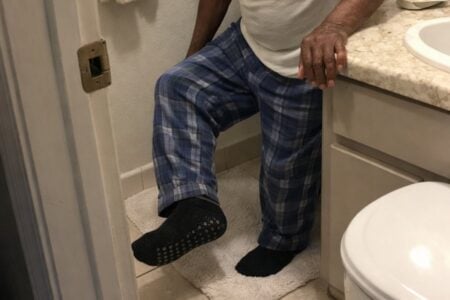
If shoes are not worn in the house, non-slip socks are an option. The PVC lining grips indoor floors and keeps feet from skidding.
The catch is that custom shoes and orthotics take a visit to a podiatrist, so they are not a quick fix. For most people, the checklist above is the place to start.
Putting On Shoes Safely When Balance Is Poor
For a lot of older adults, the risky moment is not the walk. It’s getting the shoes on in the first place.
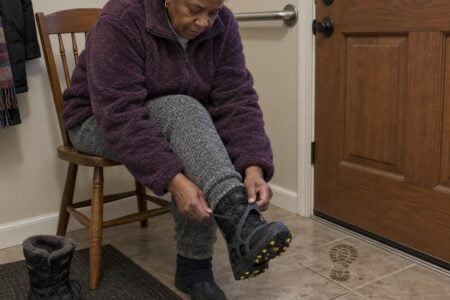
Always sit down to do it, rather than standing on one foot. A chair with back support is the better choice, because it gives you something to lean against.
A footstool helps too. Propping your foot up on it means you don’t have to bend over as far.
Hands-free sneakers or supportive slip-on shoes are worth considering, since there is nothing to fasten.
Adaptive equipment can do the bending for you. A shoe horn, a reacher, or a dressing stick all help get a shoe onto the foot.
And there is no shame in asking for a hand. A loved one or caregiver can help put your shoes on, which is a fine arrangement if bending is where the trouble starts.
The catch is that the easiest shoes to put on are not always the most adjustable. A shoe with Velcro still means bending to close it, so you may need help with the straps even when the shoe itself slides on easily.
Shoes for Balance Problems and How Footwear Affects Balance
Balance comes in two kinds. Static balance is standing still, like at the sink brushing your teeth or shaving. Dynamic balance is keeping steady while you move, whether that’s walking, side-stepping, or running.
Barefoot, the whole foot touches the ground and tells the body how to stay upright. Once a shoe goes on, the foot has to get used to material under it, and the heel-to-toe pattern of each step can change. That is why the wrong shoe can throw off both kinds of balance.
Here are the ways a shoe can cause trouble:
- Too much arch support locks the foot in place, so the lower leg muscles do less work. That can bring on hip and low back pain, and pain is distracting enough to cost a person their balance.
- No arch support makes the foot uncomfortable, and that can lead to loss of balance too.
- A high or narrow heel puts stress on the balls of the feet and shrinks the base of support.
- No heel strap, as with flip flops, sandals, and some slip-ons, leaves something loose to trip on with every step.
- A shoe that doesn’t suit how the foot sits (turning out or turning in) can compromise balance.
- Too much cushion means the lower leg muscles never get a chance to work, which can lead to balance problems later.
The good news is that if the shoes are part of the problem, a better pair can reverse it. Look for a wide heel on a flat shoe, a sole with medium traction, a firm but comfortable insole with decent arch support, and proper toe, heel, and ankle support. Good ventilation helps too.
Shoes aren’t the whole story, though. Vertigo, neurological conditions like MS or Parkinson’s, the effects of a stroke or brain injury, paralysis, and circulatory or lung disorders can all affect balance. A new pair of shoes won’t fix those.
Minimalist shoes are a topic where opinions differ. Less material and cushion make the lower leg muscles work harder and give the foot more feel for the floor, which can improve steadiness. But someone used to thick cushioning may get sore feet and legs, and long use may add to heel and lower back pain.
If you want to try them, go slowly, and they suit active older adults best. The catch is that the very thing that builds muscle is what makes the switch uncomfortable at first, so it is not a quick swap.
Shoes for Weak or Unsteady Ankles
If the ankles are the weak spot, the shoe has to do some of the holding up. The general idea is simple: the weaker the ankle, the higher the support needs to come.
Start with the back of the shoe. A high, padded backstrap supports the ankle and steadies it. Clogs, backless shoes, sandals and flip flops give the ankle nothing to lean on, and they make it hard to keep a steady stride.
For a truly weak ankle, a boot-style shoe is worth a look. Choose one with a padded heel and padded ankle area. Look for a shoe that comes up higher on the ankle and wraps around it.
The material matters too. Pick something flexible and breathable, so it doesn’t chafe and lets some air reach the foot. Soft spots under the heel that hold air or gel add some give and make the shoe more comfortable to wear.
Keep the heel low. Rocker-soled shoes and high heels are hard to walk in, especially for someone with stiff or damaged ankles or low muscle tone. A flat heel is a much better choice.
Velcro is the easiest closure for this. Many older adults struggle to pull laces tight, and buckles can be fiddly and may not adjust enough to give a snug hold. Velcro straps are easy to use and let the wearer fine-tune the support.
The fit still has to be right. Ankle support shoes should feel snug, not tight, and you should be able to flex your foot normally and feel balanced. A shoe that is too big causes as many problems as one that is too tight. It changes how a person walks and can lead to hip and back trouble.
Shoes should not need breaking in. Boot styles also come in designs for diabetics and for people with swelling who need a much wider fit. Propet and Orthofeet are two brands that make this kind of footwear.
If there is a medical condition behind the weak ankles, talk to a podiatrist first. Only someone who can examine the feet in person can say which shoe suits the gait. The trade-off with boot styles is that they ask more of the fit, so a snug shoe that doesn’t pinch takes some patience to find.
Shoes to Leave in the Closet
Some shoes cause trouble no matter how nice they look. Here are the ones I’d steer an older adult away from.
High heels top the list. They affect balance, posture, and the way a person walks, and those three together add up to a real risk of falling.
Open-heel shoes are next. The foot tends to slide around inside them, which makes a person less steady.
Heavy shoes are a problem for anyone who is weak on their feet. They make a person shuffle, and shuffling raises the chance of a fall. Thick heels add a lot of the weight, so keep an eye on that.
Ill-fitting shoes cut both ways. Oversized shoes let the foot move around inside, so a person can stumble or lose their balance. Extremely tight shoes hurt, and that makes every step miserable.
Slippery footwear belongs in the pile too. A slick sole puts a person at risk of rolling an ankle and falling.
The one catch is that the shoes on this list are often the ones a person loves most, so taking them away can be a hard conversation. A pair they already enjoy wearing is more likely to be worn, so it helps to offer a safer pair that they like just as well.
How to Choose the Right Shoe for Your Situation

The shoes above cover a wide range of needs. Here’s a quick way to narrow it down:
If the priority is foot pain relief or diabetes management: Orthofeet Sprint/Verve, Propet Tour Walker Strap, or Dr. Comfort Endurance Plus. All three are Medicare-reimbursable in relevant cases and built specifically for compromised feet.
If ankle stability or overpronation is the main concern: New Balance 928v3. The ROLLBAR is the most mechanically aggressive stability intervention on this list.
If ease of use is the top priority: Skechers Go Walk 8 for the easiest possible on/off experience, or Orthofeet Sprint/Verve if you need therapeutic features alongside that convenience.
If the senior is still active — walking for fitness, light hiking, extended time on feet: Brooks Glycerin GTS 23, ASICS Gel-Kayano 32, or Vionic Walk Strider Knit. These are performance-grade shoes that provide serious support without looking clinical.
If long hours on hard floors is the primary use case: HOKA Bondi SR. Nothing on this list — or off it — matches the combination of cushioning and slip resistance for that specific context.
A few universal recommendations regardless of which shoe you choose: have feet measured in the afternoon when they’re at their largest, replace shoes when the sole begins to compress and lose its rebound (usually every 6-12 months for daily wear), and consult a podiatrist if there are significant foot conditions like diabetes, severe edema, or structural deformities. The right shoe helps — but it’s one piece of a broader fall prevention strategy that includes balance training, home safety assessment, and medication review.
Related: Best Anti-Slip Socks for the Elderly | Safe Slippers for Elderly People | Best Shoes for a Shuffling Gait | Best Sandals for Seniors
Have a shoe that’s worked well for you or someone you care for? Share it in the comments — the most useful recommendations in this community come from real experience, not product pages.
Sources: