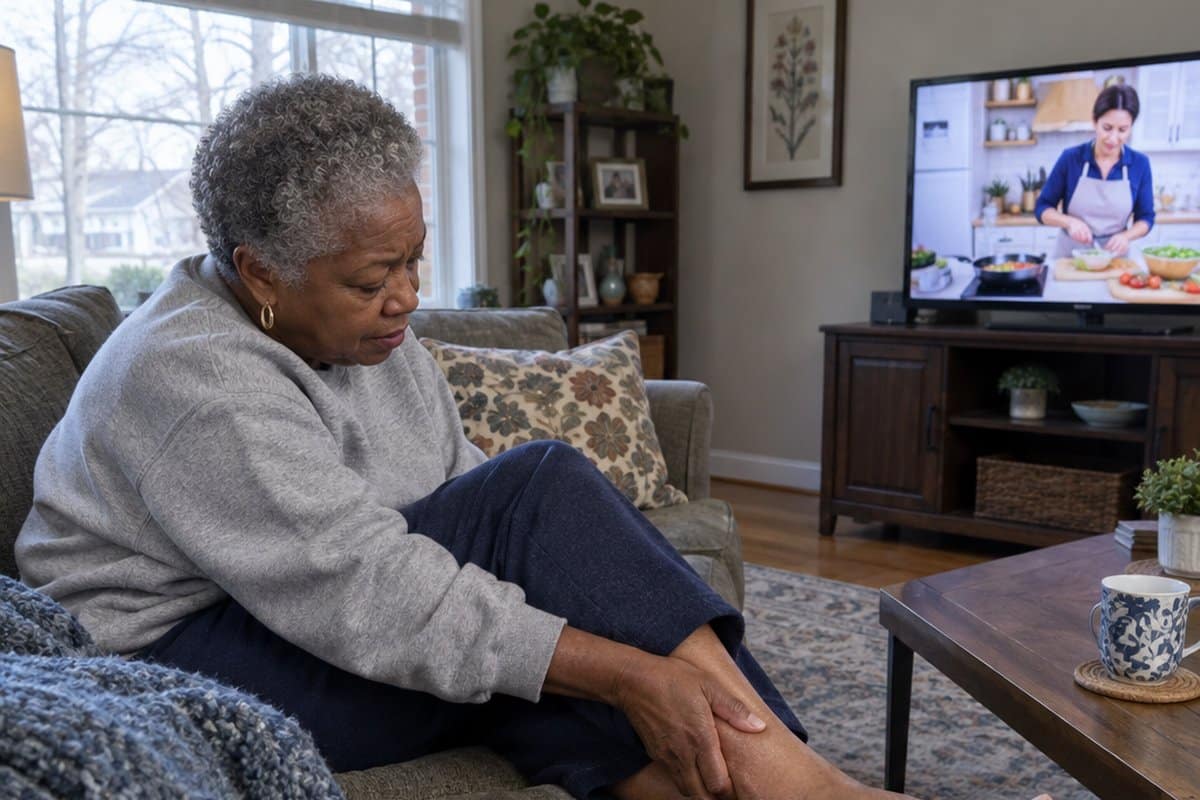
Pulling on a pair of socks shouldn’t feel like a workout, but when bending is hard, your hands are sore, or your feet swell, it can.
This guide to the best easy-on socks for seniors shares pairs with wide openings and pull tabs.
It also covers socks for foot pain, swollen feet and ankles, and fibromyalgia, plus non-slip grips and when foot pain needs a doctor, so you can find what suits you.


Look for socks with wide, stretchy openings to easily slide over feet without binding. Soft, smooth materials help them glide on too.
Pull tabs on the heels guide socks up your feet without excessive bending or pulling.
Padded, non-binding tops accommodate swollen ankles comfortably.
With the right socks, you can preserve independence and avoid pain or falls. Choose socks designed for seniors and find the morning chore of donning socks much easier.
Slip On Socks for the Elderly
Here are some socks that are safe and also easy to put on.

These Comfort-Fresh socks I demonstrate in the video above could be a great solution to your sock-donning troubles.
These socks are specifically designed to be easier to put on for those dealing with arthritis, back pain, mobility issues, and similar challenges.
The non-binding cuffs open up wide so you don’t have to struggle pulling them over your heels and feet.
And they have pull tabs woven on the back to help you guide each sock on smoothly without excessive bending or straining.
The material is also very soft and comfortable for sore feet.
These socks have a wide cuff and a pull tab, which should make them easier to get on.
Orthofeet Non-Binding Circulation Socks
The BioSoft socks from Orthofeet are a favorite of mine because they have so many features that comfort achy feet while being easy to manage too.
These socks are made of soft, stretchy bamboo fibers that are specially finished to reduce friction and rubbing while sliding them on which means less irritation.
The openings are super stretchy yet they maintain their shape without being binding or constricting. You can slide them right on without much effort or pain.
In addition to being easy to put on, they have a padded sole for comfort in every step and are naturally anti-bacterial/anti-odor to reduce foot odor. They are even naturally moisture-wicking too so your feet will remain dry and warm.
These socks come in 6 different colors and also in both men’s and women’s sizes. Maintenance is a snap too because they are machine washable.
Vive Health Non-Binding Socks
These non-binding socks are stretchy and looser fit around the calves so that they are easier to put on. This also keeps them from binding and squeezing the calves if you have large or swollen calves and ankles.
These socks are made of a soft cotton poly blend, thicker at the soles for extra cushioning, and breathable to keep your feet from getting too hot (and sweaty!). They are made for everyday wear too.
They come in two unisex sizes and in black and white. Six pairs per pack.
Simcan Leg Savers Socks

Click Here & Use Code GWG10 to Save 10%
The Simcan Socks from Ovidis are made for people with diabetes, edema, or neuropathy linked to circulation problems. The top has a loose fit, so it does not squeeze your leg and blood can flow freely.
The knit is loose too, which gives cushioning without constricting. They are made to stretch over very swollen feet, or even a cast, and still keep their shape. The mid-calf top is a wide stretch, and the socks are sag resistant, so they should stay up without a tight band.
Other comforts: a cushioned sole, a flat seam that won’t rub sore or sensitive feet, and moisture-wicking fabric. They slip on easily and are made for both men and women. If your feet hurt from fibromyalgia, you may also want to read about the best socks for fibromyalgia.
For anyone who cares about the environment, the fiber is a blend of plastic and eucalyptus.
One thing to know: a loose knit is not compression. If your doctor wants you in compression socks for swelling, these will not do that job.
Vive Health Non-Slip Socks

These are non-slip socks from Vive Health, and the main job is traction. The soles have rubber grip dots meant to help you stay steady on hardwood, vinyl, or tile floors.
That matters because smooth floors are where a lot of slips happen, whether at home or during a hospital stay. A sock with grip on the bottom is a simple way to lower that risk.
The inside is a soft terry cloth lining that is lightweight, breathable, and moisture wicking, so your feet stay comfortable. The ribbed cuffs are structured to keep the socks in place without slipping or rolling down.
You get 6 pairs in the package, and they are machine washable and made to hold up.
One thing to know: the cuffs are built to stay put, so they hold a bit more firmly than a loose-top sock. If you have leg or ankle swelling and need a very loose top, this may not be the right fit for you.
Secure Bariatric Non-Slip Socks

The non-slip socks from Secure are specially designed to be soft, stretchy, and easy to put on.
They are made of 80% acrylic with added spandex. This makes them much easier to stretch when putting them on. As a matter of fact, they will stretch out to 8″ wide to accommodate swollen feet, ankles, and calves.
Because they are stretchy, they also won’t squeeze your legs while wearing them but, at the same time, they will stay up.
The non-slip gripper treads go all the way around the socks so you’ll always have the tread against the floor to reduce the chance of a fall. They come in 2 colors, can be ordered by the pair, and are machine washable.
StopSocks Compression Socks

There is no better brand than StopSocks to provide easy-to-put-on socks for the elderly. Their grip socks not only prevent the risk of slipping and falling but also make you feel comfortable throughout the day.
If you usually feel cold throughout the day and want to wear a pair of socks, don’t even think of wearing your regular pair. Get StopSocks Non-Skid/slip Socks today because they provide maximum comfort at a very low price.
The stylish design sets the brand apart. Plus, you can use it for both men and women. They come with an added grippy bottom so that you don’t slip in the house. The stretchy fabric makes it easier for you to put the socks on.
Noble Health Care Diabetic Socks

If you can’t bend a lot because of chronic back pain, you may want a pair of Noble Health Care Non-Skid Socks. They are easy to put on because of the stretchy fabric, even with swollen feet.
Some socks reach to your knees, which may not suit your style. This pair is not that long. They cover your calf and have gripping treads at the bottom for added safety.
This pair doesn’t make you feel uncomfortable by being too tight. Although they sit tightly on your legs, they have a loose-knit design that offers appropriate cushioning without constricting or squeezing your legs.
Most importantly, the non-slip diabetic tread grippers prevent unforeseen accidents by not letting you slip and fall.
OLIKER Non-Slip Slipper Socks

The OLIKER slipper socks come in a pack of four pairs, in grey, white, black and pink. They are made for women.
The bottoms have small silicone dots that grip. That helps on hardwood and tile, where plain socks tend to slide, such as the walk to the kitchen first thing in the morning.
The inside is coral fleece, which is soft and keeps your feet warm on cold floors. It is described as breathable, so your feet should not overheat.
They are also sold as hospital-style socks, so they suit anyone recovering from surgery. They work for light home exercise too. Four pairs means you can rotate them through the wash, and they make an easy gift.
One thing to know: they are a fuzzy fleece sock, not a specially designed easy-on sock. If you struggle to get socks over your heel, a sock with a wide, loose top may suit you better. They are also made for women, so men should look at another pair in this list.
Backche Fluffy Non-Slip Slipper Socks

The Backche Fluffy Fuzzy Slipper Socks are a thick, fleece-lined pair made of polyester, meant for wearing around the house in cooler weather.
The fleece lining keeps your feet warm and cozy. The soles have rubber dots that grip, which helps on smooth indoor floors.
They are elastic, so they stretch to fit your foot. Sizing comes in four steps for men (US 3 to 13.5) and four for women (US 4.5 to 15), so it is worth matching your shoe size to the chart before you order.
One thing to know: thick socks like these take up more room in a shoe, so they are made for indoors, not for wearing under shoes. The grips are rubber dots, not a full non-slip sole, so you will want to watch your step on wet floors.
Debra Weitzner Diabetic Socks

When you pick out socks, fit is the first thing you check. Another thing worth checking is how easily you can put the socks on.
The Debra Weitzner Non-Slip Diabetic Socks come in a pack of 6 pairs. They have a loose, non-binding top, so nothing squeezes the leg. That also makes them easier to pull on.
The bottoms have skid-resistant grippers. They are meant to give you better traction on smooth indoor floors like tile and polished wood. The maker suggests them as slipper socks, rehab socks or hospital socks, as well as everyday wear.
The fabric is a soft, breathable, cotton-rich blend. The loose fit is recommended for people with diabetes, circulation concerns, edema, neuropathy or sensitive feet.
The pack mixes crew and ankle styles, and the sizes cover both men and women. Size 9 to 11 fits women’s 5 to 10, size 10 to 13 fits men’s 7 to 12 and women’s 10 to 12, and size 13 to 15 fits men’s 13 to 15.
One trade-off: the grippers are made for smooth indoor floors. If you want a snug, close-fitting sock, the loose top may not be your style.
Vive Health Sock Removal Aid

Most sock helpers are about getting socks on. The Vive Sock Remover is about getting them off, which can be just as hard when bending or twisting hurts.
It lets you take off socks, hosiery, or compression stockings without reaching down to your feet. Compression stockings are snug by design, so this is where a tool like this earns its keep.
It also doubles as a shoehorn, and it is described as lightweight and detachable, so it can go in a bag for a trip.
The trade-off: it only helps with removal. If putting socks on is your main struggle, you will want a separate sock aid alongside it.
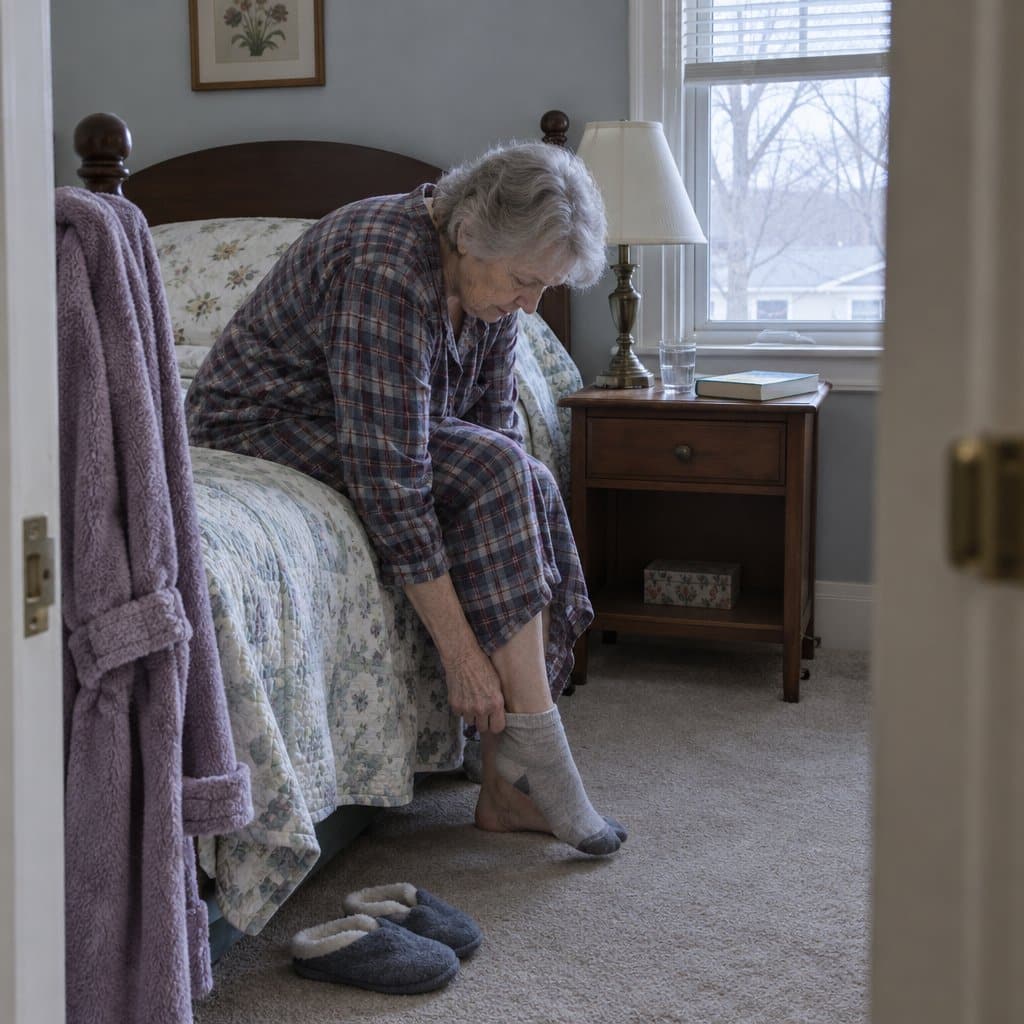
When Foot Pain Needs a Doctor
Socks can make sore feet feel better, but they cannot tell you why your feet hurt. Chronic foot pain can be a sign of a serious health problem.
Peripheral arterial disease, rheumatoid arthritis and diabetes are a few of the conditions linked to foot pain. If your feet hurt day after day, talk with your doctor about it.
Some people already live with arthritis and have tried many ways to manage the pain. If that is you, my list of gifts for people with arthritis may give you a few more ideas.
Swollen feet and ankles are another reason to bring up your pain at an appointment. My page on shoes for swollen feet covers comfort and support once you know what you are dealing with.
The right socks, and in warm weather sandals made for seniors, can help you stay comfortable. Compression socks are another option to ask your doctor about.
One trade-off: a more comfortable sock may ease the pain without addressing the cause, so do not let a good pair of socks stand in for a checkup.
Non-Slip Grip on the Sole to Help Prevent Falls
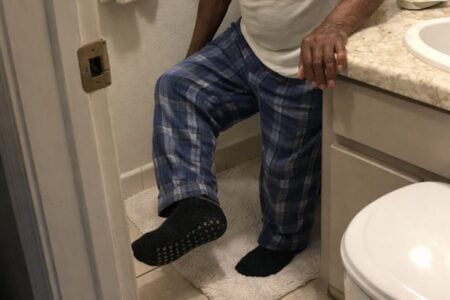
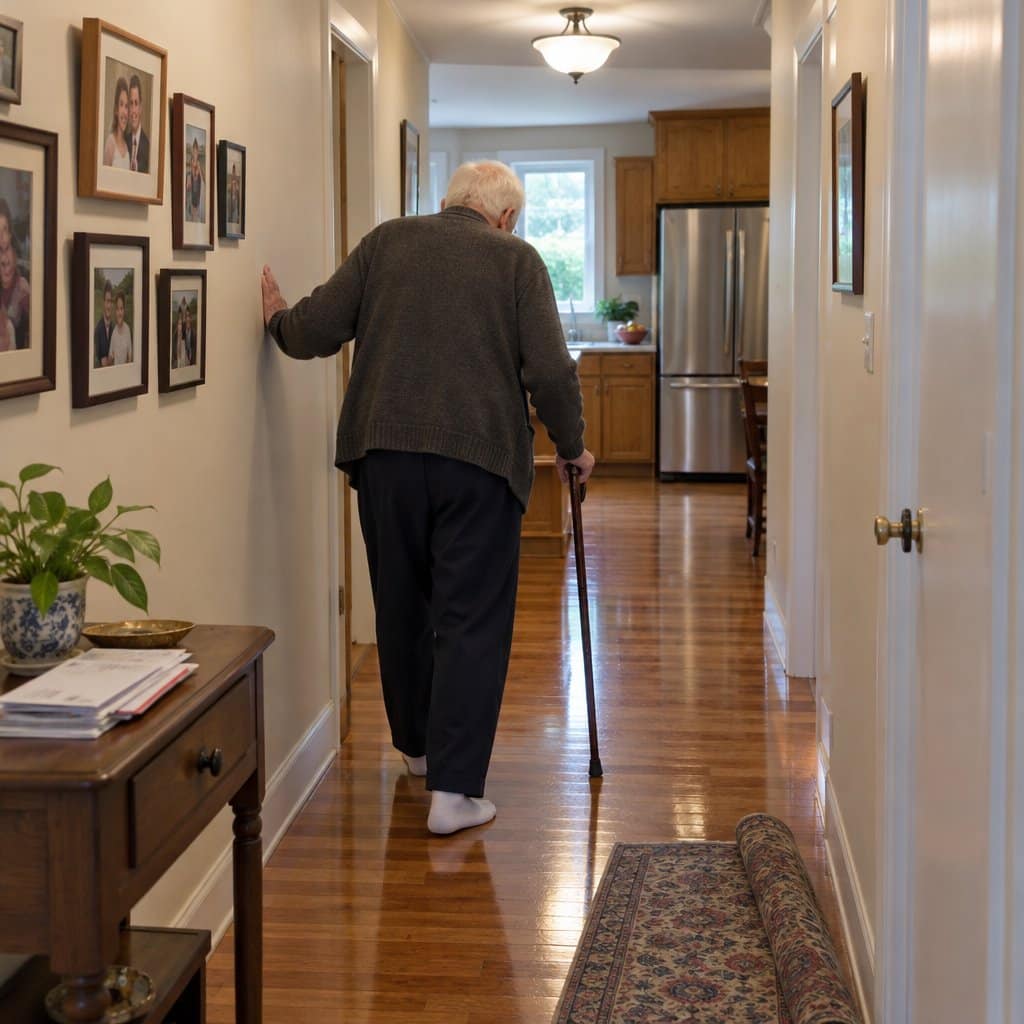
If you spend most of your day at home and do not wear shoes inside, look for socks with a non-slip grip on the bottom. Socks with a smooth sole can slide on smooth floors, and bare feet are not much better.
Falls are common for older adults. A grip on the sole gives your foot something to hold onto, which is why I point people toward socks that will keep them from slipping.
Some socks have rubber treads on the bottom. Others have a non-skid pattern, and some have grippers that go all the way around the sole so there is always tread against the floor.
Shoes matter too, for the times you are up and out. My page on shoes for swollen feet covers comfort and support.
One trade-off: socks without grips are best kept for wearing inside shoes. Wear a gripper pair around the house, and check that the cuff is not too tight.
Socks for Fibromyalgia
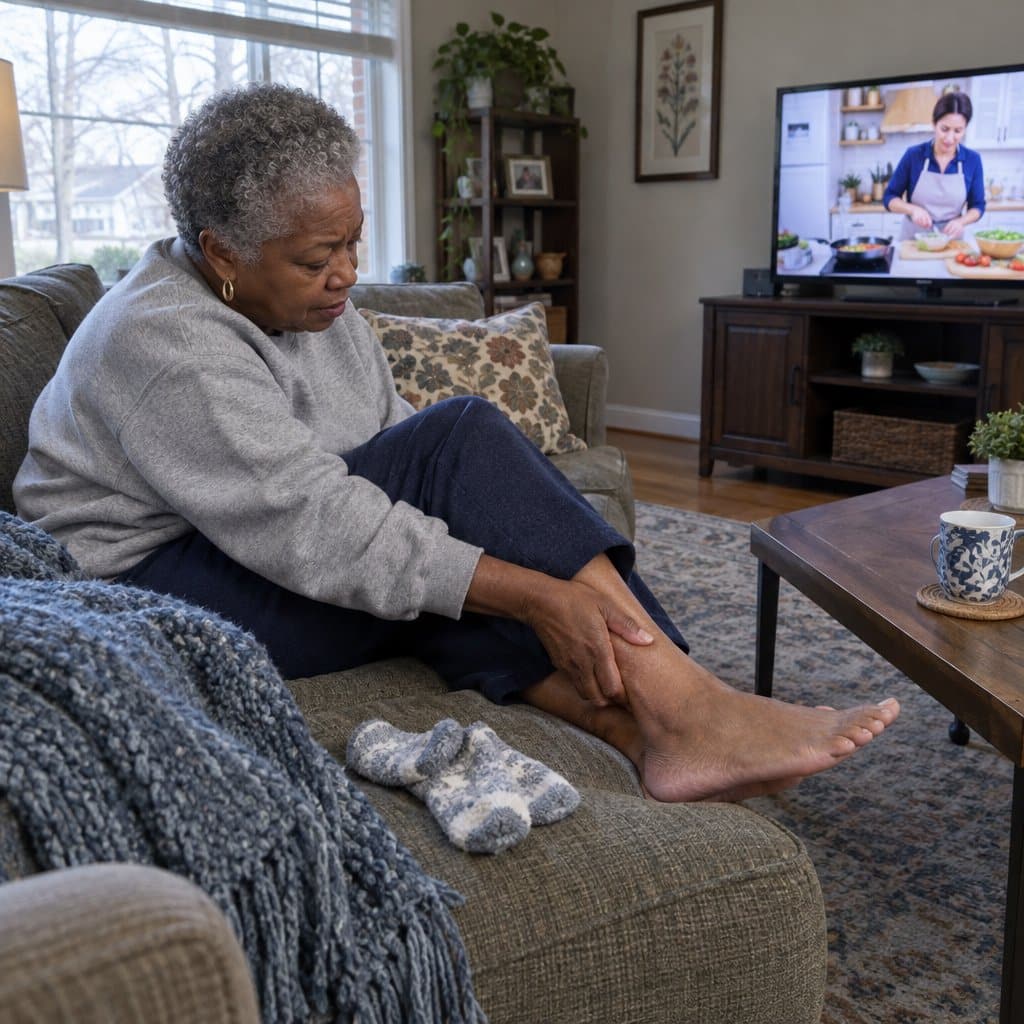
Fibromyalgia is a chronic illness with widespread musculoskeletal pain and ongoing fatigue. It shows up in the feet and ankles as joint pain, swelling, tenderness and burning. Some people also get numbness or tingling, like walking on “pins and needles.”
Those symptoms can make standing or walking for long stretches hard, and can affect balance. Some people start to fear movement because even a short walk hurts. The right socks will not cure any of that, but they can take some of the strain off.
Here is what to look for:
- Compression socks, which reduce swelling and pain in the lower legs and improve circulation. My page on compression socks and stockings goes into more detail.
- Cooling socks, made of breathable fabric with mesh panels or vents, to keep feet cool.
- Moisture-wicking socks, which move sweat away from the skin so there is less irritation.
- Cushioned, padded socks, for extra softness under sore feet and ankles.
- Seamless socks, which are less likely to irritate feet and ankles.
Cotton, bamboo and wool are good materials because they are breathable and comfortable.
Compression is measured in millimeters of mercury (mmHg). Compression socks should be snug but not too tight, with gentle pressure. If you have fibromyalgia or another condition, check with your doctor or therapist about which level is right for you.
If you have a lower pain tolerance, light to medium graduated compression gives support while you can still move. Check with your doctor or therapist before choosing.
A few habits help. Put compression socks on before you stand up and put on shoes. Make sure they are not rolled down or bunched up. If putting them on is a struggle, a sock aid can do the reaching for you.
One trade-off: compression that is too tight can add discomfort rather than relieve it, so snug and gentle is the goal.
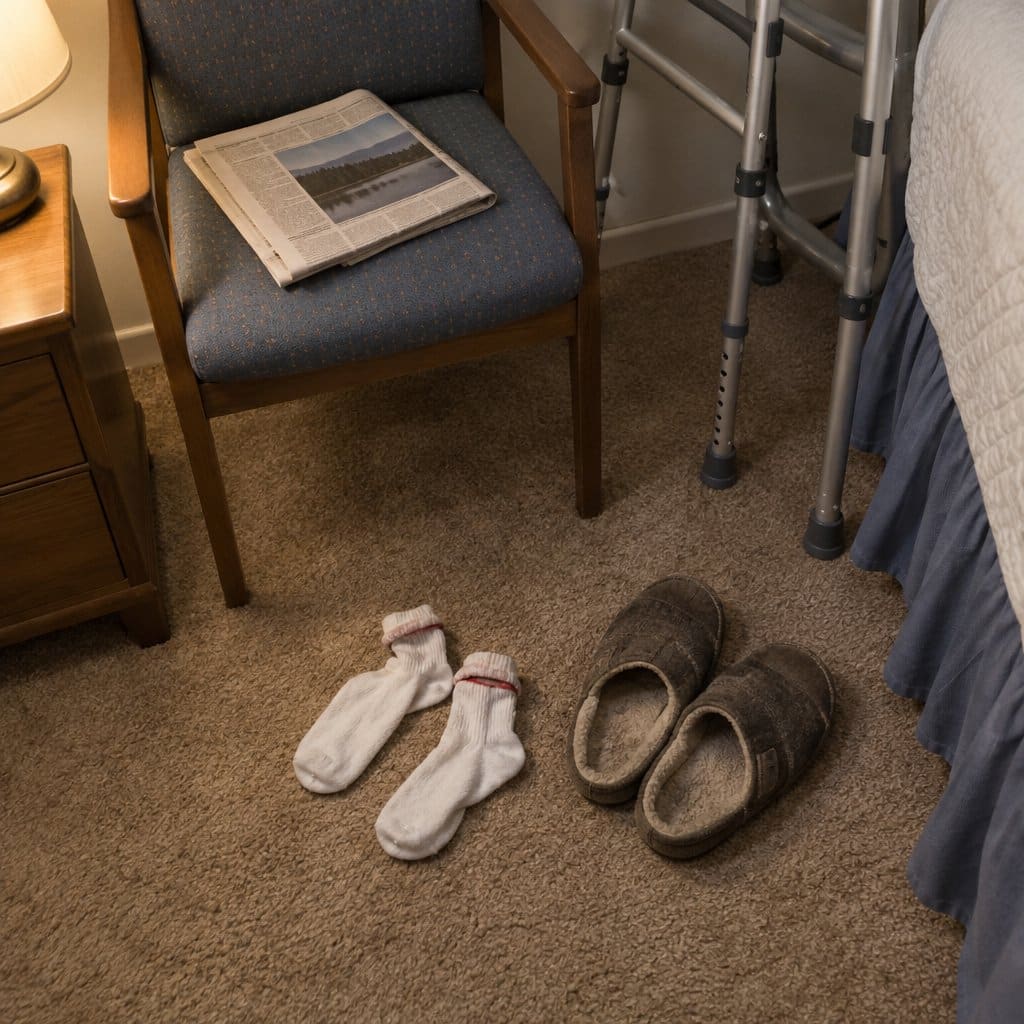
Socks for Swollen Feet and Ankles
Swollen feet make it hard to find socks that fit. The right pair is stretchy enough to go on even after the swelling starts.
Look for a stretchy, expandable cuff that does not squeeze or cut off circulation. A loose-fitting sock with a non-binding cuff is the easiest to get on and off.
The Comfort Fresh ankle socks are made for swollen feet. The cuff glides over swollen ankles without pinching, and a pull tab lets you use a sock aid to get them on yourself.
Soft, breathable fabrics like cotton and bamboo are gentler on sensitive skin. A cushioned sole helps with sore feet, and breathable material keeps feet cooler and drier, which cuts down on odor and fungus.
Some socks are made with extra stretch for bigger legs. Bariatric socks, for example, stretch extra wide and have a non-skid pattern. Others have a looser fit around the calves, so they do not squeeze large or swollen calves and ankles.
The right pair can also apply gentle pressure to the feet and ankles. If you have swelling, check with your doctor or therapist before using compression. Socks that are too tight can make swelling worse, so the cuff should hold the sock up without being restrictive.
Check the toe seam too. A thick seam can rub the toe and cause chafing and blisters, so look for smooth or seamless toes.
If you go without shoes at home, choose a non-skid sole. Socks without grip are best kept for wearing inside shoes.
If bending down is the hard part, a sock aid lets you slide your feet into socks without reaching. Many swollen-feet socks come with a pull tab that works well with one.
One trade-off: socks made with this much stretch and cushioning can cost more than everyday pairs, so check that the cuff and toe seam suit you before buying several.
Socks for Foot Pain: Cushioning, Arch Support and Seamless Toes
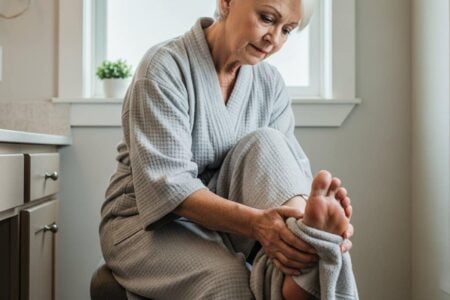
If chronic foot pain makes walking and standing hard, the right socks can help. Look for thick cushioning and padding along the sole, which takes pressure off sore, arthritic joints and heels.
Arch support and compression around the ankles and arches can ease the pain that comes with plantar fasciitis, which is inflammation of the tissue running from your heel bone to your toes.
A seamless toe matters if you have bunions or sore toes, because it cuts down on rubbing and irritation. Light, breathable fabrics like cotton or bamboo blends are gentler on sensitive skin and help keep swelling down.
If your feet run cold or your circulation is poor, copper-infused socks are worth considering for warmth. A loose, non-binding cuff with extra stretch is also worth looking for, since it pulls on easily without squeezing swollen ankles and calves. Stretchy cuffs like that also suit swollen feet.
The BioSoft socks from Orthofeet are a top pick for foot pain. They are made of soft, moisture-wicking bamboo fibers that are finished to reduce friction, and they have a padded sole for sore soles and achy arches.
They have no seams to bother bunions or painful toes, and they are anti-odor and anti-bacterial. They look like a standard casual sock, come in 6 colors, fit men and women, and are machine washable.
Other kinds of foot-pain socks are out there too. Knee-high compression socks give more coverage, and compression foot sleeves leave the toes open, so they work with sandals as well as dress shoes. For more on this kind of sock, see my page on compression socks.
Some people want relief for swelling. Cold therapy socks with gel packs are one option. If you are going through chemotherapy, check with your doctor before using them. My blankets for chemo patients may help too. For ankle pain, a snug compression sock gives the ankles support.
Foot pain can point to something more serious, such as peripheral arterial disease, rheumatoid arthritis or diabetes. Talk with your doctor if it keeps up. One trade-off: socks built for pain relief tend to cost more than everyday pairs.
Summary and Final Recommendations
So, now that you have multiple options in hand, make sure you buy an appropriate pair of socks that you can wear easily. The great news is that none of these pairs of socks are very expensive.
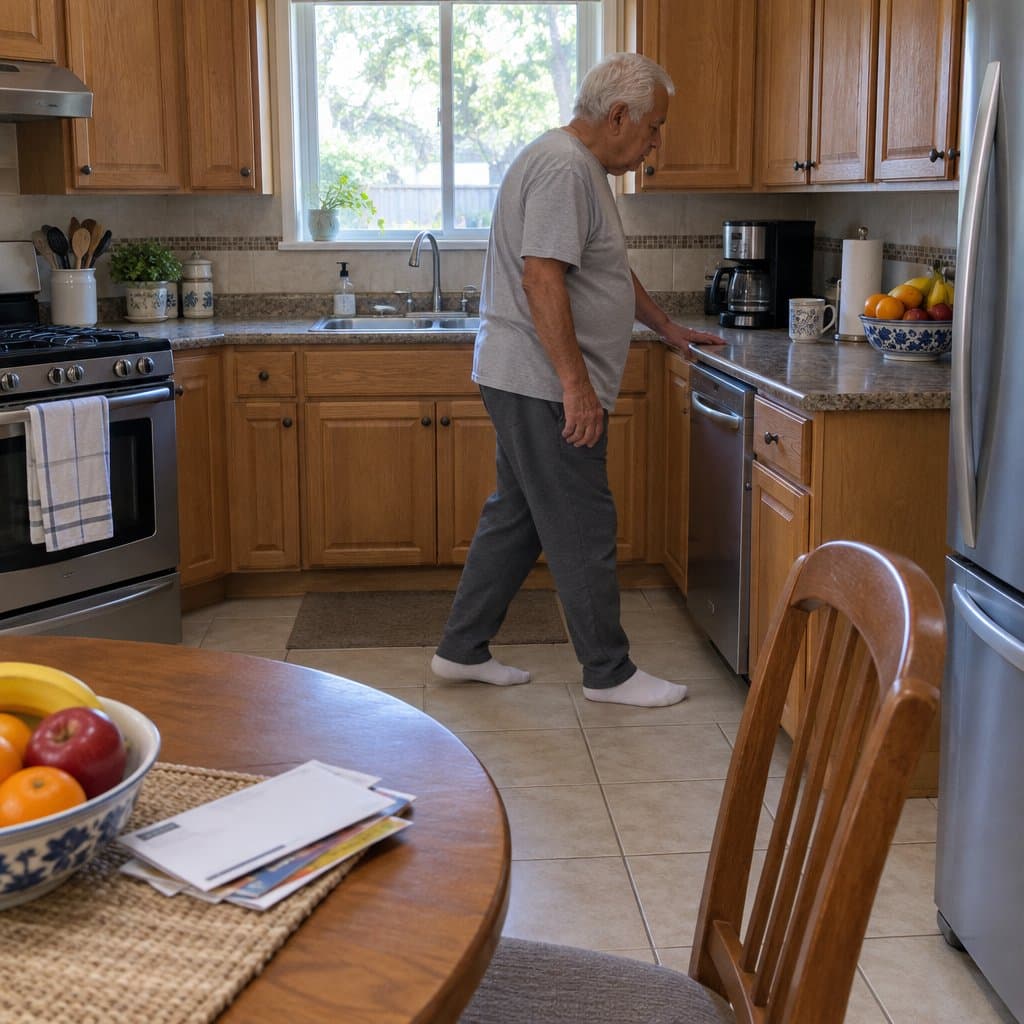
Walking barefoot increases your chances of slipping and falling. Instead of walking barefoot on polished floors, you should wear easy to put on socks that come with non-slip features.
In addition to being easy to put on, they are comfortable too and also help prevent slips and falls.