Growing old is a blessing unlike any other, but it comes with its fair share of challenges. Who would think putting on and taking off shoes would become one of them?
But, for many older adults, balance problems, weakness, and swelling can lead to difficulty with what was once a basic task.
So, I wrote this guide to teach you all you need to know about slip-on shoes for seniors and the elderly. I’ll show you some specific models that I recommend too.
If getting your shoes on has become a daily struggle, I explain why that happens and what makes it easier, including shoes that fasten with Velcro instead of laces.
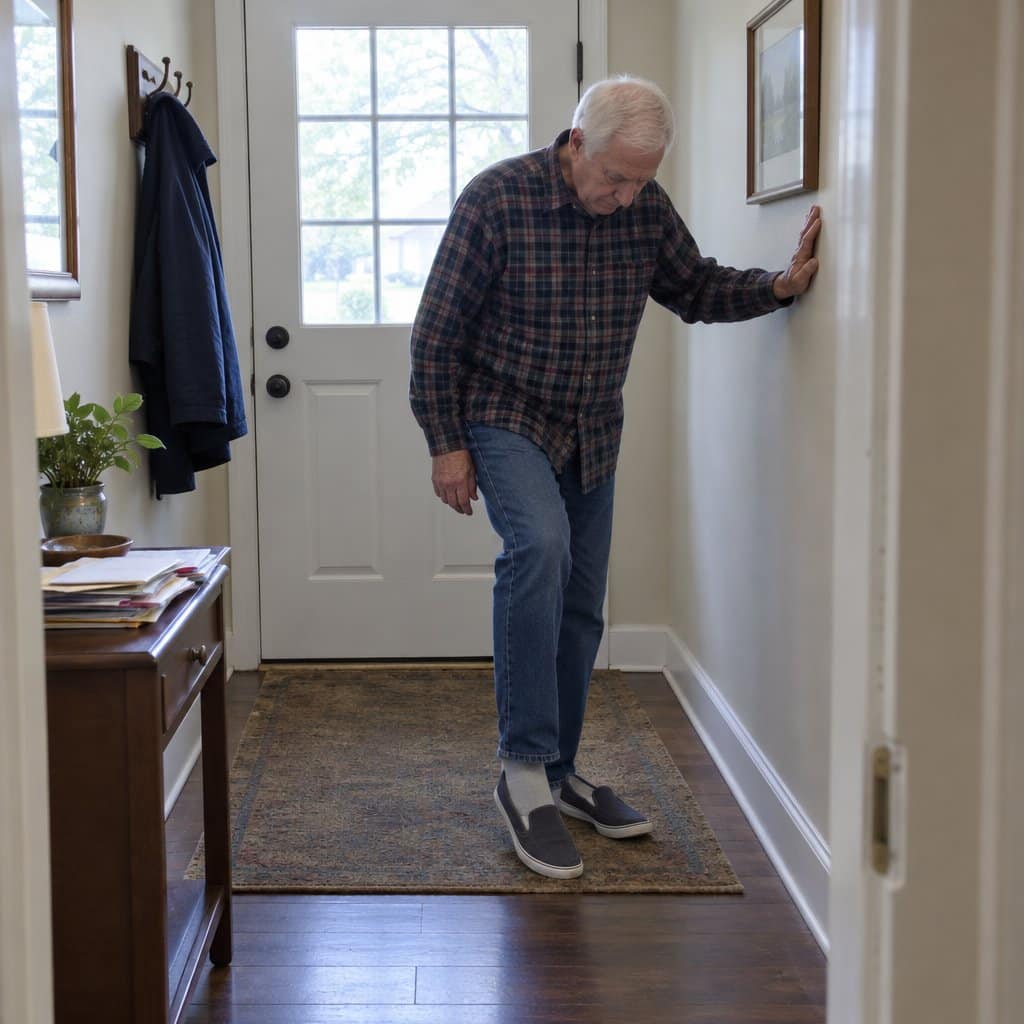
Top 8 Slip-On Shoes that Are Easy to Wear for Seniors
Here are some shoes that are very easy for seniors to slip on and off without having to deal with shoelaces or multiple hooks and loop straps.
Skechers Summits Hands-Free Slip-On Sneaker

The Skechers Women’s Summits Hands-Free Slip-Ins are made so you can step into them without bending down or using your hands. The laces are fixed stretch laces, so there is nothing to tie. A feature Skechers calls Heel Pillow helps hold your heel in place once your foot is in.
They look like regular athletic sneakers, which a lot of people care about. The upper is a soft heathered jersey knit that breathes, and the insole is Air-Cooled Memory Foam for cushioning.
The midsole is lightweight, flexible and shock-absorbing, and the outsole has traction for everyday walking. They are also machine washable, which is handy for shoes you wear daily.
These suit women who want a normal-looking walking shoe but have trouble with balance or bending over. Putting them on without reaching down can make getting dressed easier and a little safer.
One thing to know: this is a women’s style, so it won’t be right for everyone. Because the laces are fixed, you can’t loosen or tighten them as you would with ordinary laces. If your feet swell during the day or you need a very custom fit, try them on first.
Isotoner Men's Slippers

These lightweight slipper shoes are a great choice for everyday use. They are both soft and supportive and easy to care for – just throw them in the machine for a quick wash when needed!
The Zenz line of easy-to-put-on slipper shoes is from Isotoner – a brand that you probably already know and trust. The shoes have no laces or straps to mess with!
Instead, they use an elastic band that allows the mouth of the shoe to open up wider when you are putting them on.
Older folks will also love that these shoes are extremely lightweight too. This is an important feature for people who may have a shuffling gait or leg pain and weakness. These shoes will be much easier to walk in than a heavy pair of leather dress shoes.
Of course, shoes have to be comfortable or they will just stay in the back up of the closet. These shoes use a super soft foam covered by a plush fabric for the inside liner plus a “better than memory foam” insole. The outer sole is non-slip rubber for improved safety when walking too.
You can wear these slip-on shoes inside and out. If they get dirty, just throw them in the washing machine on cool and let them air dry. How’s that for low maintenance too?
These shoes do tend to run a bit small. So, if you have swelling and want them to be really easy to slip on, I’d go up a size!
Isotoner Zenz Women's Sport Knit Slip-On Slippers

The women’s Zenz has a stretchy, breathable knit upper with no laces or straps, so it slides on and stays on. The cushioned sole is soft underfoot on hard floors, and the whole shoe can go in the washing machine on cold.
Two things to know: Zenz run a little snug, so go up a size if she wears socks or her feet swell later in the day. And the knit is made for warm weather, so this is a house and summer shoe, not the pair for a wet or icy sidewalk.
Skechers Go Walk Joy Slip-On

The Skechers Go Walk Joy is a women’s slip-on walking shoe, and it suits older adults who like to get out for a daily stroll. You step in and go, with no laces or straps to fuss with.
The upper is an athletic engineered mesh, which lets air move through the shoe. That helps if your feet tend to run warm.
For cushioning, it uses Skechers’ 5GEN technology along with a Goga Max high rebound insole. In plain terms, the sole is meant to soften each step and give a little spring back, which is welcome when your feet tire easily.
It is also machine washable, so a muddy walk or a sweaty week does not mean scrubbing by hand. The materials are 100% vegan, if that matters to you.
One thing to know: this is a women’s shoe, so it is not the one for a man shopping for himself. And it is a mesh athletic shoe, so it is built for walking and everyday errands, not for a dressy occasion.
Propét TravelBound Slip-On Sneakers

The Propét TravelBound is a slip-on sneaker for women. The upper is a single piece of stretch knit, so there are no laces, straps or buckles to deal with. You step in and go.
The knit flexes and stretches with your foot. That can help if your feet swell during the day or you find stiffer shoes rub in the wrong places.
Inside, the footbed is made of open cell foam that supports the arch and lets air flow through, which keeps feet cooler. The footbed also removes, so if you use your own insole or orthotic, you have room to swap it in.
The rubber sole is built to give cushion with each step and to last.
One trade-off: knit is not leather, and it won’t hold up to a puddle or a muddy yard the way a more solid shoe would. If you want something you can toss in the washing machine, or you need a lot of firm side support, look elsewhere. Also, a stretchy upper gives less hold than laces, so it suits easy everyday walking better than a shoe you need to feel locked onto your foot.
Skechers Summits Louvin Loafer
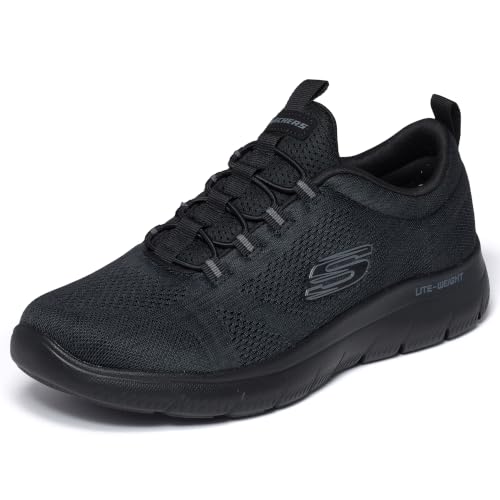
The Skechers Summits Louvin is a men’s slip-on with bungee lacing. That’s a stretchy cord in place of regular shoelaces, so there’s nothing to tie and nothing to bend down and fuss with.
The upper is engineered mesh, which gives a secure fit that still flexes with your foot. The insole is Memory Foam, a soft cushioning that gives a little under each step. That helps on a long walk and on a day spent mostly indoors.
The outsole is flexible rubber, made for reliable grip and durability. Good grip matters for older adults, since a slip on a smooth floor is the thing you most want to avoid.
You can also put these in the washing machine when they get dirty. That’s handy for the wearer and for any caregiver who would otherwise be scrubbing shoes by hand.
One trade-off: the upper is mesh, not leather. Mesh breathes and flexes well, but it won’t have the look or the sturdy feel of a leather shoe. If you want something dressier, this isn’t it. And since the bungee lacing is a fixed cord, it’s meant for people who just want to slip a foot in and go, not for anyone who likes to adjust the fit lace by lace.
HEYDUDE Wally Canvas Slip-On Loafer

The HEYDUDE Men’s Wally is a canvas slip-on loafer. It has a rounded toe and elastic laces, so there is nothing to tie and nothing to fasten. You step in and go.
The elastic material flexes with the foot, which helps the shoe fit evenly. Each shoe weighs 6 ounces or less, so there is not much weight to lift with every step.
The insole is removable memory foam, and it is made to reduce sweating and odors. If you wear a custom orthotic, you can take the insole out and put yours in its place. The upper is breathable cotton fabric, and the shoe is machine washable in cold water.
The trade-off is that this is a casual canvas shoe, not a dress shoe. It also has no strap to tighten during the day, so if your feet swell, a hook and loop closure gives you more control. The elastic laces give a looser, more forgiving fit than a strap does.
I’d suggest this for a man who wants a light, washable everyday shoe that goes on easily. Check the sizing tip on the product page before you order.
New Balance 608 V5 Cross Trainer

This one has laces, so it isn’t a true slip-on. I’m including it for the person who wants a classic walking-style shoe and can still manage a bow, or has someone nearby to tie it each morning.
The upside of laces is control. You can loosen them over swollen feet or tighten them for a snug, secure fit, which a slip-on can’t always do.
The heel has an ABZORB pad set into an IMEVA midsole, which is there to absorb impact with each step. A lightly cushioned footbed adds some softness underfoot for long days on your feet.
The upper is suede leather, with a supportive structure that molds to your foot over time. The outsole is built for traction and durability on gym floors, sidewalks, and everyday surfaces.
Who it’s not for: anyone with stiff fingers, arthritis, or trouble bending down. If tying shoes is the daily struggle, one of the other pairs here will serve you better.
Top 3 Reasons Why a Senior Needs a Shoe that is Easy to Slip-On
1. Health Complications
Most seniors cannot wear regular shoes due to chronic ailments. For example, the majority of seniors with diabetic problems experience foot swelling. This means that they have to wear flexible shoes that do not worsen the swelling.
I have a specific guide to shoes for elderly people with swollen feet you can read for more info.
2. Back Pain
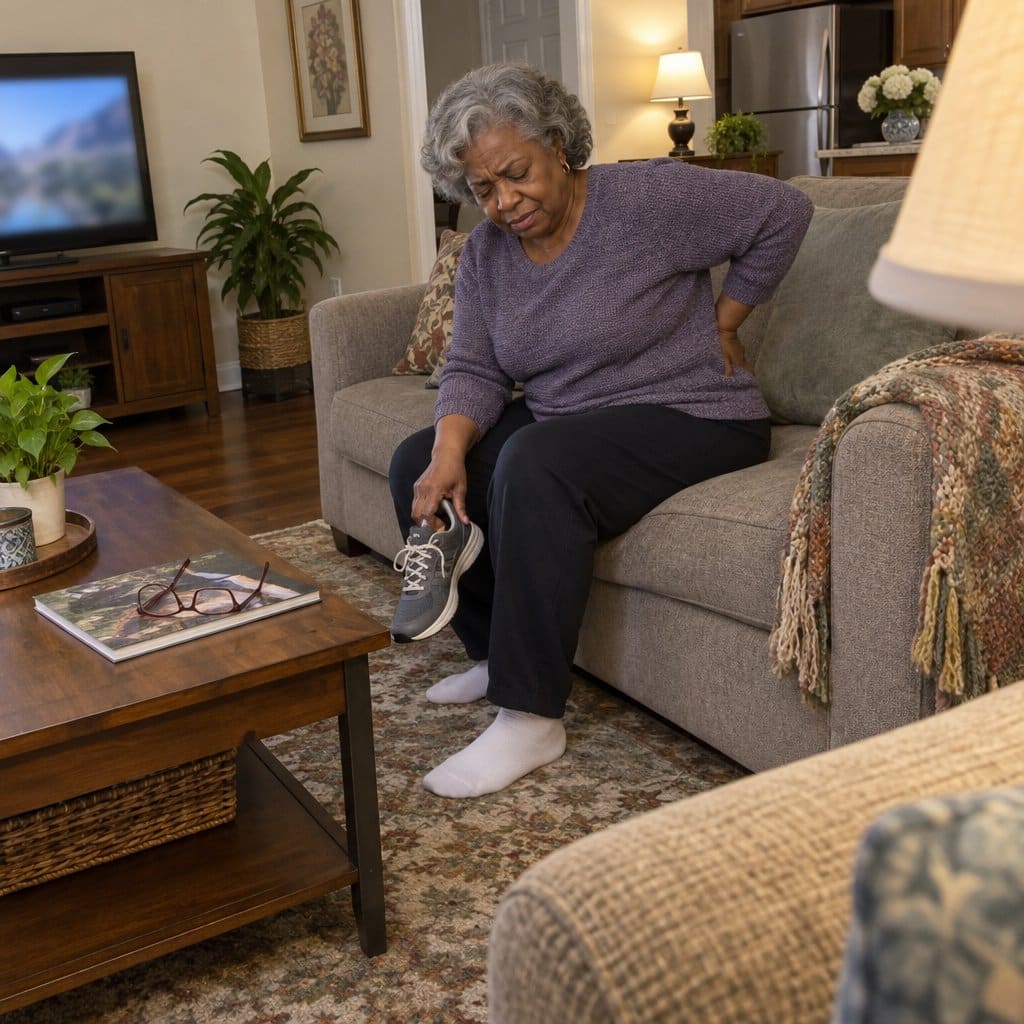
With constant back pain, it is imperative that the elderly wear shoes that are easy to slip on. These do not call for constant bending which saves seniors from back discomfort.
Bending for too long to tie a shoelace, only worsens back pain. Research has actually shown that 30-70% of all elderly people have back problems.
3. Callouses and Feet Deformations
These are hardened patches of skin on the feet. Such patches develop because of repeated friction over time. Other seniors also suffer from foot deformations.
Some of these include bony bumps protruding from the base of the big toe. Such issues necessitate shoes that are easy to slip on.
Why Putting On Shoes Gets Hard
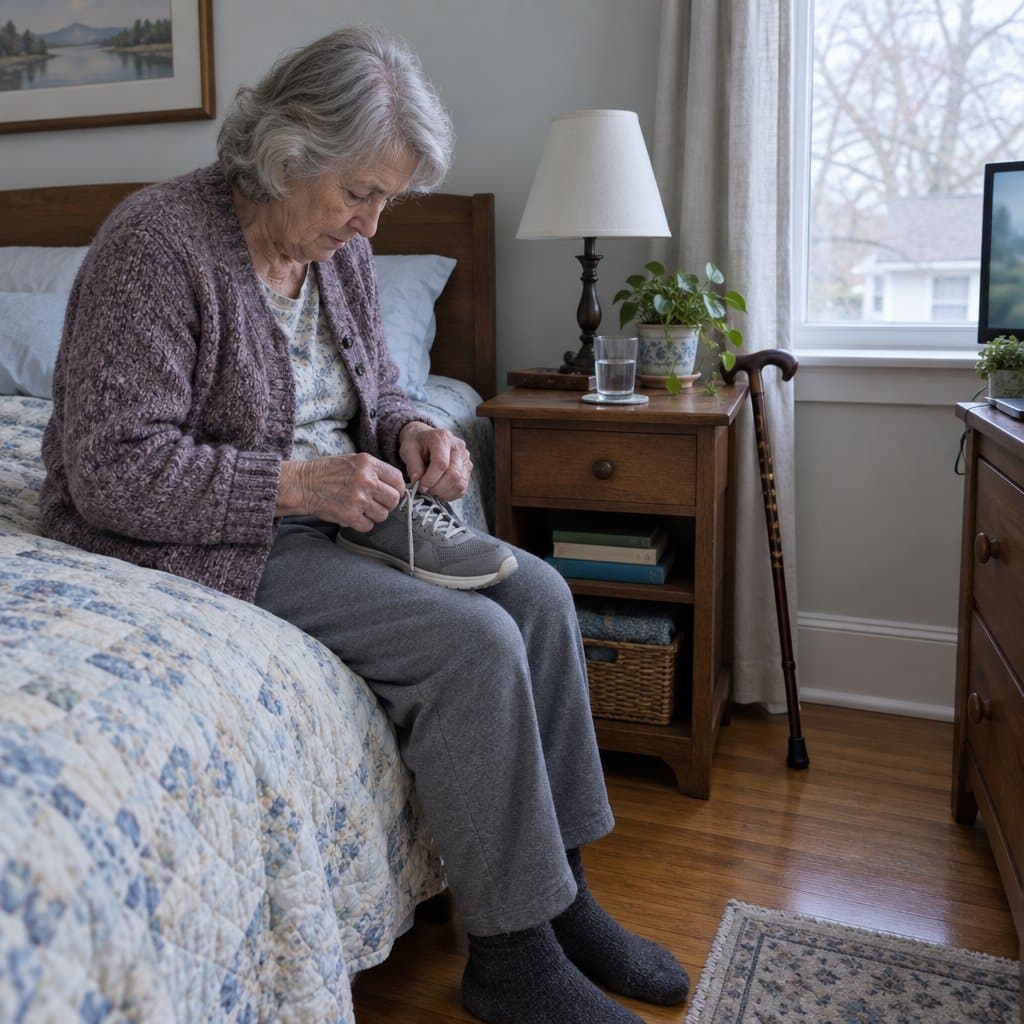
If shoes are a daily fight for you or someone you love, the shoes are not always the only thing to blame. The trouble usually comes from three things working together: the person, the home, and the shoes.
Say Lucinda is 71 and lives alone. She has low back pain from a breakdown in her spine, so bending forward to reach her feet is hard.
She also has arthritis in her hands, so lacing her tennis shoes is a real challenge. Her hardwood floors and her weekly walks with a neighbor mean she wants sturdy shoes with good traction.
After a recent fall, she is afraid of slip-on shoes and sandals. Her body, her floors and her shoes are all pulling in different directions.
On the person’s side, the list can include low back pain, arthritis in the spine, hips, fingers or hands, and poor balance when bending. It can also include limited motion after surgery such as a hip replacement, limited feeling or dexterity in the hands, weak fingers, swollen feet, and sweaty or sticky feet. Fear of falling counts too.
On the shoe’s side, the usual problems are a poor fit (too narrow, too short or too tight) and too much lacing. Laces that are too thin, too short or too slick make it worse.
Because the causes stack up, one fix rarely solves everything. Slip-ons help with the bending and the laces, but Lucinda’s fear of falling is a fair reason to be careful. Some slip-on shoes are safe and others are not, so choose with care.
General Features of Easy to Slip-On Shoes
Here are some important features for you to consider when shopping for footwear that is easy to put on and take off.
1. A Non-Slip Sole
For older adults, always insist on a shoe with a non-slip sole. Usually made of rubber, these soles grip surfaces better and reduces the chance of a slip and fall.
2. Lace-Free Closures
Shoes with laces are difficult for some older adults to put on. Most require bending over too! Seniors with balance problems should never risk bending over to tie their shoes.
Shoes with laces can also be annoying. Laces keep untying themselves, and that can cause an older loved one to slip and fall. This is something that must be avoided, especially by seniors. Therefore, a shoe without lace closures is the best choice for elderly folks.
Some existing shoes can be modified by adding no tie lace systems for shoes.
3. A Big Mouth!
When choosing a closed shoe for an elderly person, look for ones with wide, stretchy mouths. Not only are they easier to put on, but they are also more comfortable.
Shoes that have a wide mouth are also suitable for swelling legs. Seniors with arthritis and diabetes tend to prefer shoes with a wide mouth as well.
4. Made from Flexible Materials
For a shoe to be comfortable to slip on, the material it’s made from should be flexible – especially the uppers and around the mouth of the shoe.
Look for shoes that are made of mesh or nylon. Plus, most flexible materials are more comfortable and breathable for sweaty feet.
5. Low-Heeled Shoes
Even though high heels look good on many, they are not the ideal shoes for most seniors. They are also quite hard to put on, especially if the heels are too high. Low-heeled shoes are both easier to put on and more comfortable to wear. You will be less likely to fall too!
6. Easy Strap/Hook and Loop Closure
Another common feature is straps that are easy to close. Some seniors prefer shoes with straps. However, there are straps whose design is complicated and hard to open and close. An ideal shoe for seniors should have firm but straightforward straps making them easy to wear.
How to Put On Shoes More Easily: Tips, Tools and Lace Options
Start by figuring out what the real problem is. Is it a medical limitation, the shoe, or both? Then pick the tips below that fit your situation.
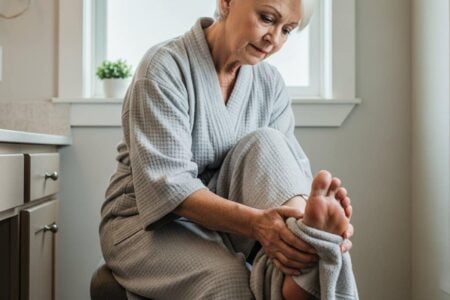
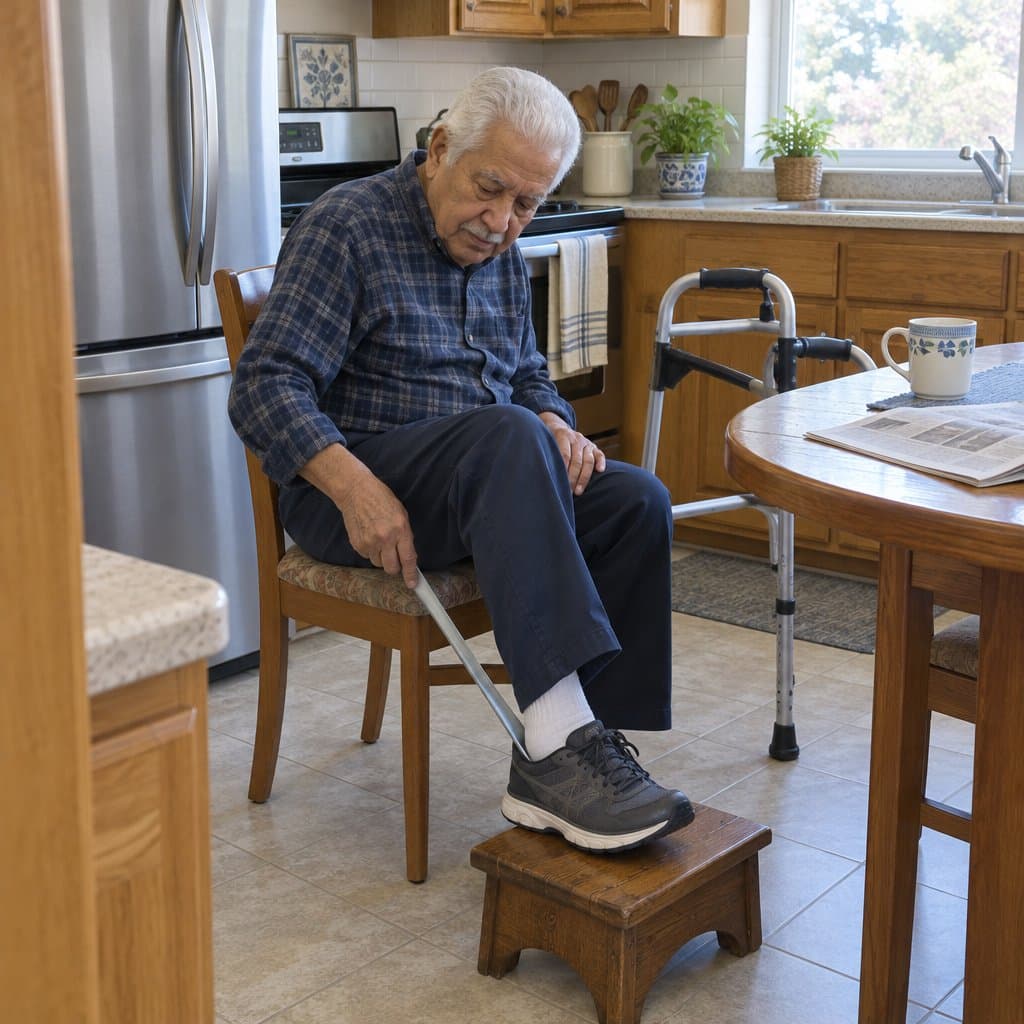
Sit down to put your shoes on. Skip the “slide and stomp” routine. If your hips allow it, bring your foot up to your opposite knee, criss-cross applesauce style. If not, prop your foot on a footstool or a sturdy box.
Keep your spine straight while you do it. Hunching forward is rough on your shoulders, neck and back muscles, and it can cause strain and injury.
Sprinkle a small amount of talc powder in the bottom of each shoe. It helps your foot slide in a little easier.
Also, shoes should never be too tight or too loose. A better fit, maybe even a pair customized to your foot, is easier to wear.
If bending forward is out of the question, or a fear of falling holds you back, adaptive tools can help:
- Shoe horn: Pick one with a long handle. The wide end slides into the heel of the shoe, and you slide your heel along it and push your foot in. That keeps you from crushing the heel of your sneakers or tennis shoes.
- Reacher: A reacher grabber steadies the shoe while you slip it on, so you don’t have to bend.
- Dressing stick: These are mostly used for pulling on pants and underwear. Paired with a shoe horn, one can also hold your shoe in place.
If laces are the main trouble, you have some choices:
- Wide laces: Easier to grip if your grip or dexterity is limited.
- No-tie laces: You skip the struggle of tying, and you don’t have to stop and re-tie to avoid a fall.
- Hook and loop fasteners: Often called Velcro. No tying, and no worry about tripping on untied laces.
- Slip-on shoes: These slide on without your hands touching them. Some are safe and others are not, so choose carefully.
- Hands-free sneakers: A good choice if severe arthritis or limited feeling in your hands makes tools and laces hard to handle.
The trade-off is that tools take some practice and one more thing to keep within reach. If you can’t manage them, hands-free shoes may be the simpler answer.
Should Seniors Wear Shoes in the House?
According to Meredith Chandler, OTR/L, there are several pros to wearing shoes indoors for seniors. They protect the feet from injury and infection and provide comfort, traction, and warmth.
However, there are also some potential cons, such as the increased risk of bringing mud and debris into the home, tripping on shoes with too much traction, swelling of the feet, and increased risk of fungal infections.
Regarding whether seniors should wear shoes indoors, her research suggests that wearing some form of footwear is beneficial to decrease the risk of falls, but specific criteria need to be met.
If seniors don’t want to wear shoes in their own homes, non-slip socks are available as an alternative.
When selecting shoes for indoor use, seniors and their loved ones should consider the types of surfaces they primarily walk over in their homes and match shoes to their needs and physical capacities.
Shoes should have a certain level of traction for slick floors, fit comfortably, provide arch support, have a wide heel, and have good ankle, heel, and toe support.
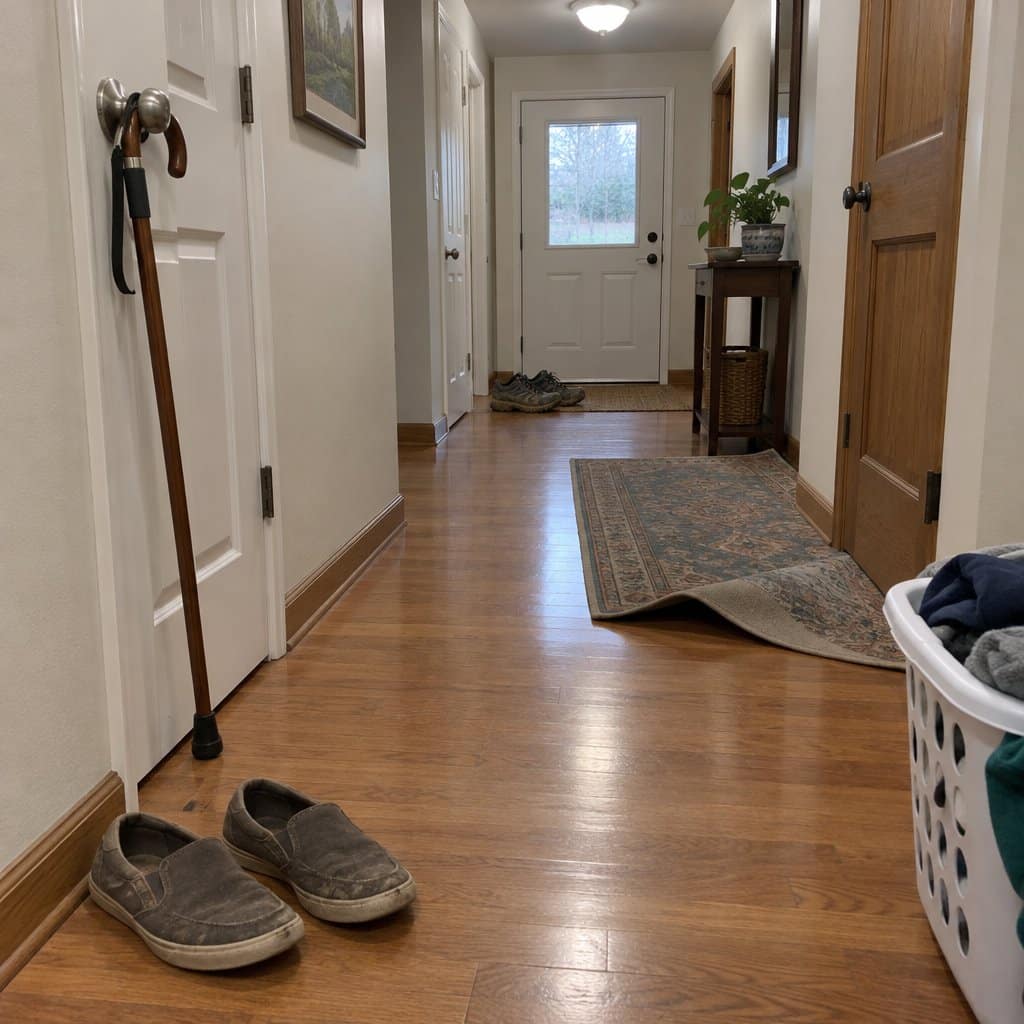
Tips for wearing shoes inside include selecting indoor footwear only and keeping outdoor/community-use shoes outside, being mindful of changes in flooring, taking breaks and elevating feet, and removing all throw rugs.
Final Verdict
Shoes that are easy to put on are important for seniors who want to remain as independent as long as possible. They can also critically affect a senior’s overall safety.
Falling over while putting on shoes or bending over to tie them is both dangerous and embarrassing. Of course, you’ll want to ensure that the slip-on shoes stay on and aren’t so loose that they fall off.
So, if you (or a senior you love) have trouble putting your shoes on or taking them off, I hope one of these choices will solve that problem for you!