
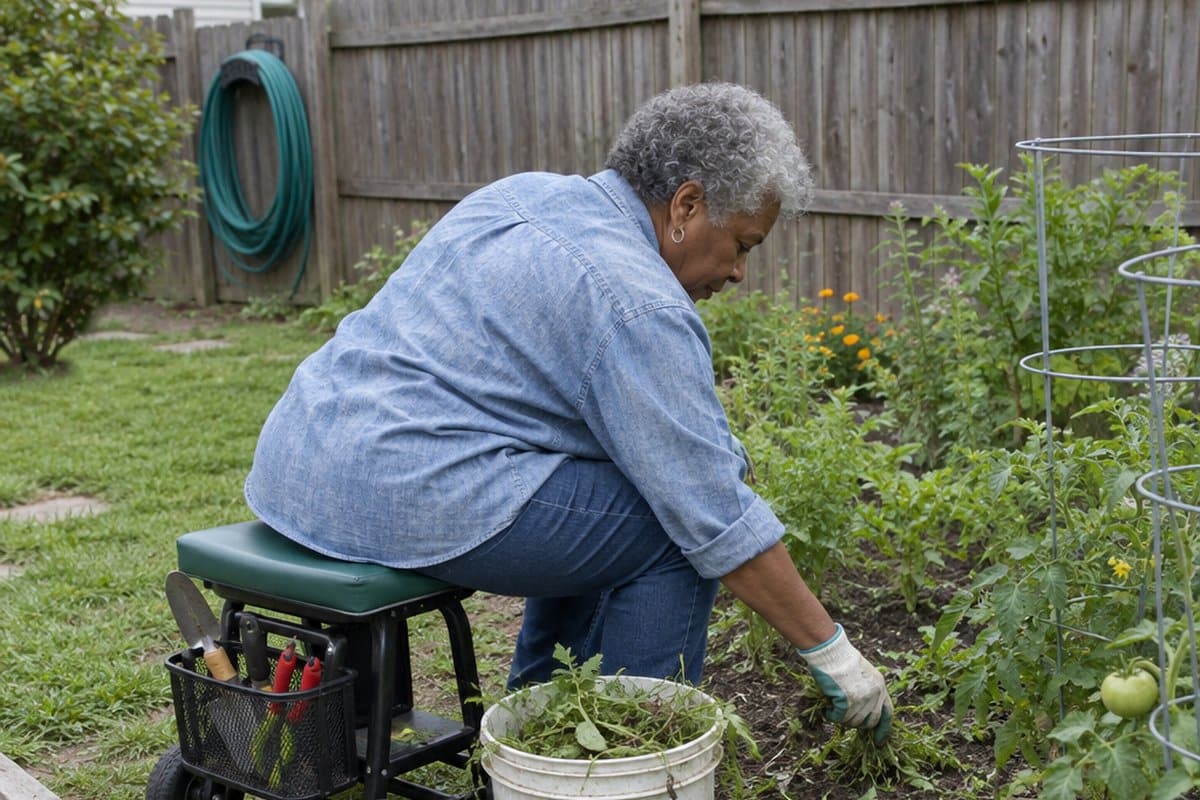
You bend down to pull a few weeds, and getting back up is a lot harder than the weeding was.
A good gardening stool for seniors can fix that. It lets you sit, or kneel with something solid to push on, so you can keep doing what you enjoy.
This guide covers the types of gardening stools, the features worth looking for, my top picks with their downsides, and the other tools and aids that make gardening easier.



Best Gardening Stools for Seniors and the Elderly
Ryansunoro Garden Cart with Seat
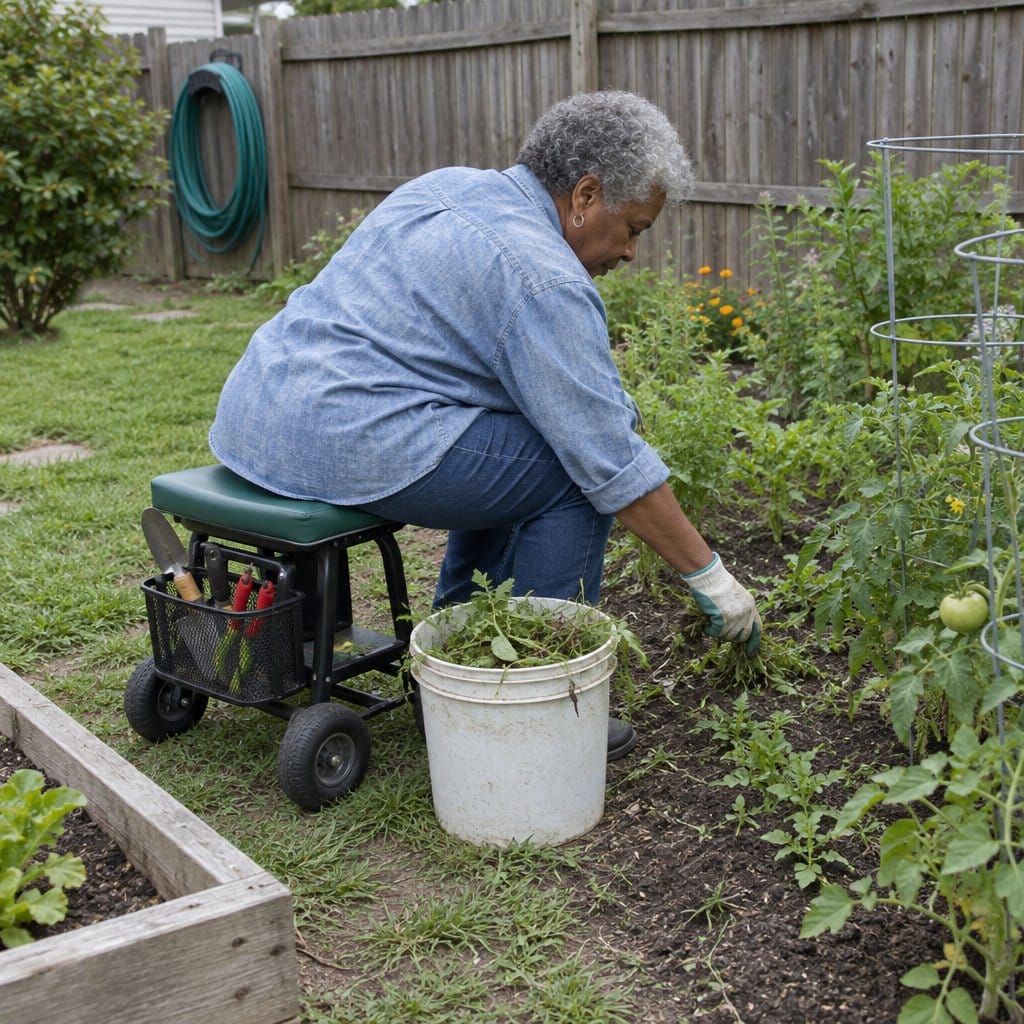
The Ryansunoro garden cart with seat is a rolling garden seat with a steel frame. It lets you work close to the ground without kneeling.
It has lockable rear brakes, so the cart stays put while you sit on it. That matters, because a seat that rolls away at the wrong moment is worse than no seat at all.
The foam grip handle is comfortable to push, and it also gives you something to press on when you stand back up. Getting up from a low seat is often the hardest part of gardening, so this is a real help.
A mesh basket holds your tools within arm’s reach, so you are not getting up and down every few minutes to fetch a trowel.
The downsides: it is bulkier than a basic garden stool, so think about where you will store it before you order. Also, if weight capacity matters to you, check the number on the frame label and not only the product page.
It suits someone who wants to move around a garden bed while seated, and who has room to park a cart in the shed or garage. If you only need a light seat to carry from spot to spot, a simple stool will be easier to handle.
TomCare Garden Kneeler and Seat
The TomCare Garden Kneeler and Seat does two jobs. Kneel on the pad while you weed, or flip it over and sit on it.
The EVA foam pad is 11.12 inches wide and 15.1 inches long. The metal frame is wider too, which helps keep it steady so it is less likely to tip.
It has raised handles. You can push down on them when you lower yourself to the ground and again when you stand back up. That helps if your knees or back make getting up the hard part of gardening.
It holds up to 450 pounds and folds flat for storage. It comes with 2 large tool pouches that hang on either side, so your trowel and gloves stay close.
One thing to know: it sits low to the ground. If you can’t comfortably get down to kneel in the first place, a taller raised garden seat may suit you better.
Pure Garden Rolling Garden Seat
The Pure Garden Garden Cart Rolling Scooter is a good choice if you want extra mobility and relief for your back and knees when gardening.
Featuring 3 wide and sturdy wheels and a 12 by 16 tool tray, this scooter sits higher off the ground than other models and is more affordable than other models.
TheXceptional Ergonomic Rocking Garden Seat

The ROCKr Ergonomic Rocking Garden Seat (model EX120) is a low stool with a rounded, convex base. It moves with you, tilting in any direction as you shift your weight to reach, bend, and turn.
The idea is to take strain off your lower back and knees while you weed, plant, pick, or prune close to the ground. Because the seat keeps moving with you, you aren’t locked into one position for long stretches. It holds up to 250 pounds, is made in the USA, and is meant to work on grass, soil, mulch, and similar surfaces.
Here is the trade-off. The seat sits 14 inches off the ground, and your own core and balance control the tilt. You need enough stability to sit down, steady the rocking, and stand back up without help.
If balance is a concern, or you rely on a stool with a back and arms to push up from, this is not the right fit. A fixed-seat stool with handles would be safer.
VEVOR Garden Kneeler and Seat
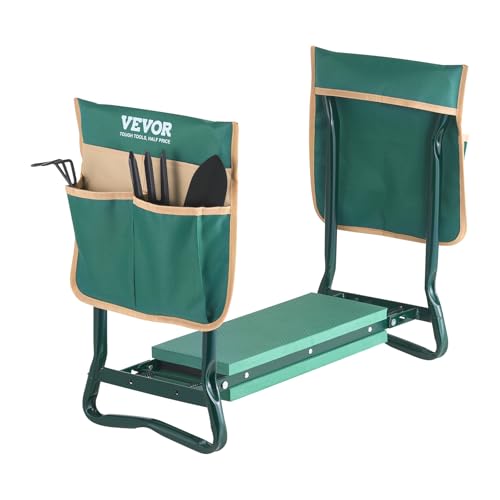
The VEVOR Garden Kneeler and Seat works two ways. Use it as a kneeling pad for weeding and planting, or as a seat for pruning and other jobs where you would rather sit.
The kneeling pad is 18mm thick EVA foam, which takes some of the pressure off your knees. The side handles give you something solid to push on when it is time to stand up, which is often the hardest part of working low to the ground.
The frame is high-strength A3 steel with a powder-coated finish, and it supports up to 330 lbs. It also comes with 2 tool bags, so your trowel and gloves stay within reach instead of out on the lawn.
One trade-off: a steel frame is sturdy, but it will likely be heavier to carry than an aluminum one. If you move your gear around the yard a lot, keep that in mind. It also suits someone who wants a firm seat and handles more than a soft, cushioned bench.
Pure Garden Rolling Garden Cart

The Pure Garden Rolling Garden Cart with Seat is a plastic gardening stool on wheels, with storage inside.
The lid is the seat. Sitting on it puts you closer to the ground for planting and weeding, so there is less crouching and stooping to strain your back and knees.
It rolls on 6-inch wheels, and there is a built-in handle on each side. That makes it easy to pull through tall grass, over rocks, and around the yard without carrying it.
The seat holds up to 275 pounds. The plastic construction also suits other jobs around the house, like painting or cleaning.
Inside, there is a roomy space for tools and supplies, plus a removable tool tray. That keeps everything within reach, so you are not getting up to fetch a trowel.
Worth knowing: the lid is a seat only. It does not flip over into a kneeling pad, so if you prefer to kneel at the flower bed, you would need to bring a separate kneeler. It also suits someone who can get down to a low seat and back up, since a seat this close to the ground can be hard to rise from with very weak legs.
3-in-1 Rolling Garden Seat
This one is a garden cart with a seat built into the lid. Under the lid is a metal storage basket for your tools, seeds, gloves, plants or soil, so everything rides along with you.
The lid has a 10.2 inch wide cushion pad made of EVA foam, meant to give you some comfort while you sit and work close to the ground. The pad also flips over and works as the handle, so you can pull the cart behind you.
It rolls on rubber tires 4.7 inches across, which helps it move over lawn, patio and other uneven ground. It supports up to 400 pounds.
One thing to know: the seat is a fixed height on a cart, and it does not swivel. If you want to sit higher or turn without shifting the whole cart, a stool with an adjustable seat may suit you better. Small wheels can also catch on soft soil or deep grass, so it works best on firmer paths.
It suits someone who wants to carry tools and sit down in one piece of equipment, and who has a few spots to move between in the yard.
Types of Gardening Stools for Seniors
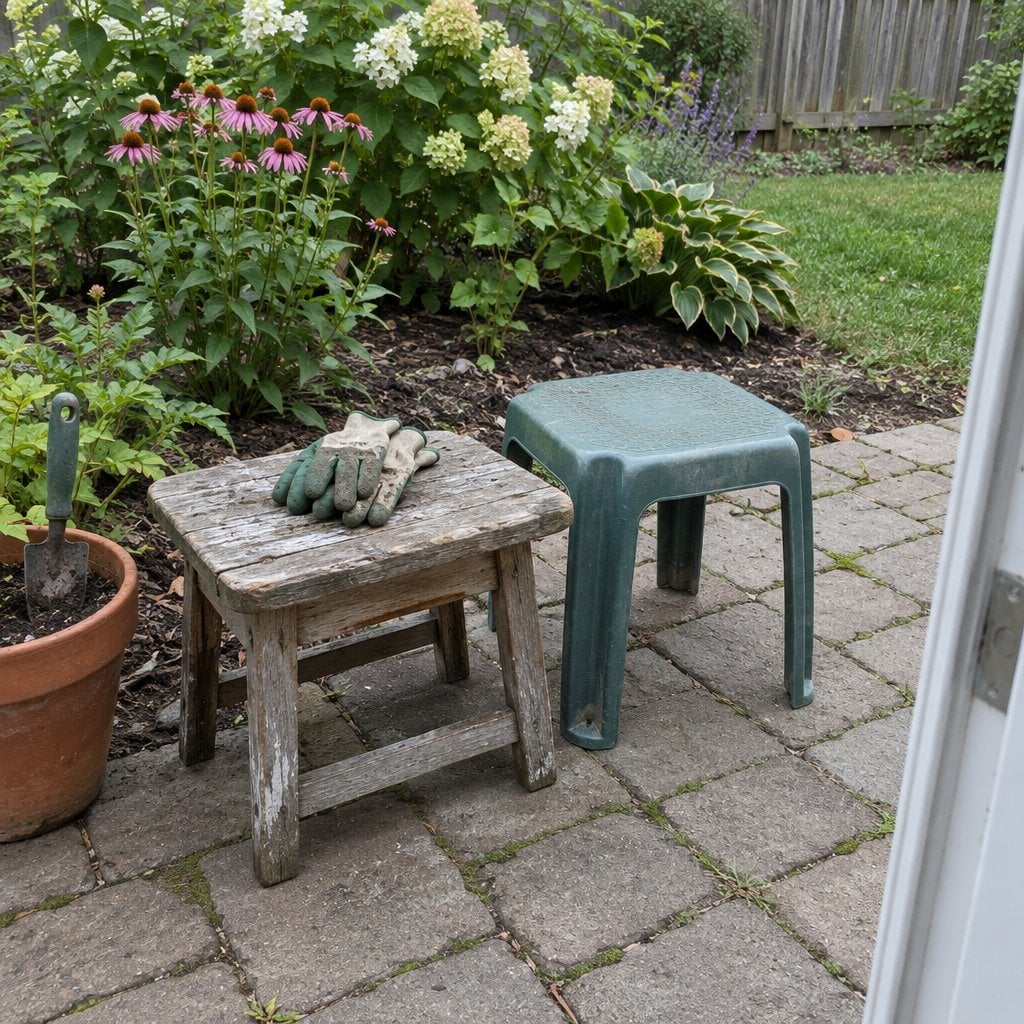
Traditional Wooden Stool
Traditional wooden stools are lightweight and easy to move around the garden. They also provide excellent stability and a comfortable seat. However, they splinter over time and must be treated with a weather-resistant sealant to keep them looking good.
Plastic Stool
Plastic stools are popular for seniors because they are lightweight, affordable, and have many attractive designs. They are also easy to clean and maintain but may not be as durable or comfortable as wooden stools.
Folding Stool
Folding stools are a superb option for seniors who must store their seats away when not in use. They are easily transported but may be less comfortable when sitting for long periods.
Step Stool
Step stools are not a good choice for gardening. They put you off the ground and raise the chance of a fall. Use a long-handled tool or a raised bed to reach instead. If you want to read more, here is my guide to step stools.
High-Back Stool
High-back stools provide extra back support and excellent stability and comfort but may be more expensive than other types of stools.
Rolling Stool
Rolling stools give seniors a convenient way to perform their gardening tasks. They easily roll around the garden and fold up for easy storage. They come in varying levels of comfort.
Regardless of the type of gardening stool seniors choose, they should ensure that it is comfortable and fits their needs.
Choosing the Right Features for Gardening Stools for Seniors
- Size and height that is adjustable and comfortable
- Wide, cushioned seat for comfort
- Contoured back rest for support
- Non-slip feet and anti-tip features for added safety
- Lightweight and easy to move around the garden
- High-back stools for those needing extra support and comfort
- Easy to clean and store when not in use
- Provides storage areas for tools and a senior-friendly water bottle
Complete Gardening Tools, Aids and Equipment List
A stool is one piece of a gardening setup. Here is the rest of the list, sorted by what each item does for you.
For cutting and digging, garden shears make it easier to cut plants and roots without bending over. Choose comfortable grips and a sharp blade. A spade digs up plants and turns soil, so look for a pointed tip and sturdy construction. Power tools such as electric pruners, hedge trimmers and lawnmowers are easier to handle when they are lightweight with adjustable speeds. Look for blade guards, anti-vibration handles and emergency stop buttons.
For protection, gloves guard your hands from scratches, blisters and dirt. Pick extra cushioning and a snug fit that won’t slip off when wet. A sun hat with a wide brim that breathes covers you from the sun. Water-resistant sunscreen with an SPF of at least 15 protects your skin. Garden shoes should be waterproof, with good traction and arch support.
For balance, canes and walking sticks help you stay steady in the garden. Look for lightweight, adjustable ones with a comfortable grip. My guide to the best walking sticks covers that kind in more detail.
For comfort, a garden seat should have a sturdy frame and a cushion, set to the right height. Kneelers protect your knees from the ground, so look for cushioning and adjustable height. Garden scooters let you move around the garden without standing. Pick a comfortable seat, sturdy build and large wheels. Kneepads suit you if you would rather kneel directly. Look for comfortable padding, adjustable straps and a secure fit.
For the garden itself, raised beds should be tall and deep, with sturdy construction and drainage. Elevated planting tables bring plants up to you, and they work best with an adjustable height and an easy-to-clean surface. Trellises and plant supports let plants grow upward.
Matching tool to task helps too. A hoe with a rocking motion breaks up soil for weeding, a hand trowel handles small weeds, and a fork uproots larger ones. For planting, use a shovel with two hands, a trowel for deep holes and a rake for leveling. For pruning, shears, hand pruners and loppers do the job, and the right size gives better cuts. A wheelbarrow moves soil and rocks, but steady it before loading.
The trade-off is that you do not need all of this. Pick the few items that match the jobs you do most.
QINGFANGLI Garden Tool Set
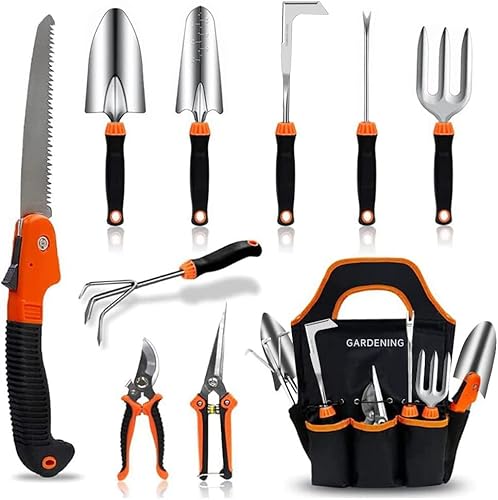
QINGFANGLI Garden Tool Set, 10 Piece. This is a set of hand tools that includes a saw, snips, trowels, a weeder, a rake and a fork. Between them they cover loosening soil, weeding, cutting small branches, digging and transplanting.
The tools are stainless steel, and each one has a soft rubberized handle that is non-slip. The handles are made to be comfortable to hold with or without gloves, which matters if you garden for an hour at a time and your grip gets tired.
Each handle has a hole for hanging, and the tools are rust-resistant, so cleanup is a rinse with water and a hang-up. A storage tote bag with pockets and an elastic loop holds the set together. The bag can be hand washed or machine washed.
The trade-off is that this is a full set of ten. If you already own a trowel you like, or only dig a few pots on the patio, you may use two or three of these and leave the rest in the bag. Hand tools also still ask you to bend or kneel, so pair them with a stool.
Suncast Garden Cart

The Suncast Garden Cart is a small two-wheeled resin cart that holds 15.5 gallons. It weighs 10 pounds, so you can move it around without much effort.
It saves you from carrying things. Mulch, plants, firewood, groceries and laundry can all ride in it, indoors or out. That means fewer trips with heavy loads, and your hands stay free to steady yourself.
The resin is weather-resistant, and the cart is made in the USA. It is small enough to store in a closet, shed or garage.
The trade-off is size. At 15.5 gallons it is a small cart, not a full wheelbarrow, so big jobs like hauling a lot of soil or stone will take many trips. It also has two wheels, so you still need to hold the handle and balance it, which may not suit you if you need something steadier.
TheXceptional Rolling Garden Stool Cart
The Wheelie Easy-Up EX530 is a rolling garden seat with 10-inch wheels, made in the USA by Vertex. The seat swivels a full 360 degrees, so you can turn to reach the next weed or tomato without getting up.
The feature that stands out is the pair of “Easy Up” handles, one on each side. They give you something steady to push on when you lower yourself down and when you stand back up, which is often the hardest part of gardening from a low seat.
The seat adjusts in height from 15 to 18 inches. It holds up to 240 pounds and is built from rust-proof, weather-resistant materials, so it can sit outdoors between jobs.
The trade-off is that wheels are made for scooting along, and a seat that rolls needs level, fairly firm ground. On soft soil or a slope, a stool with fixed legs may feel steadier. Also, 18 inches is the highest the seat goes, so if you want a taller perch, look elsewhere.
Corona Extended Reach Hoe Cultivator

The Corona GT 3244 is a long-handled tool that combines a hoe and a cultivator. One side has a blade for slicing weeds and cutting roots. The other has tines for loosening soil and mixing in compost.
The long handle lets you work standing up, which means less bending over the bed. That suits anyone with a sore back or knees who still wants to keep up a vegetable patch. The handle has a red grip meant to stay secure in your hands, and the head is steel, so it can take rocky or packed dirt.
The trade-off is that a long tool takes more room to swing and store. It is also not much help for close work, like planting seedlings or weeding between tight plants. For that, you will still want a hand tool and a stool.
COOLJOB Gardening Gloves

These are rubber-coated gardening gloves, sold as a set of six pairs in red and mint green. The listing is for women’s gloves in medium.
The base is a knit that is described as breathable, with a foamed latex coating on top for grip. That coating is meant to keep your hands cool and dry, and the grip helps with weeding, planting, digging and picking vegetables. A good grip means you squeeze less to hold a tool, which can be easier on your hands over a long afternoon.
The fingertips are thickened to protect your nails, and the long cuff helps keep dirt out. With six pairs, you can keep one by the stool, one in the shed and one in the car. The two colors make it simple to tell pairs apart, and they hose off easily.
The trade-off is that coated gloves are not made for heavy work like handling thorny roses or sharp branches. They also fit one size range, and a medium may not suit larger hands. If you only need one pair, six is more than you need.
HANDLANDY Thorn Proof Pruning Gloves
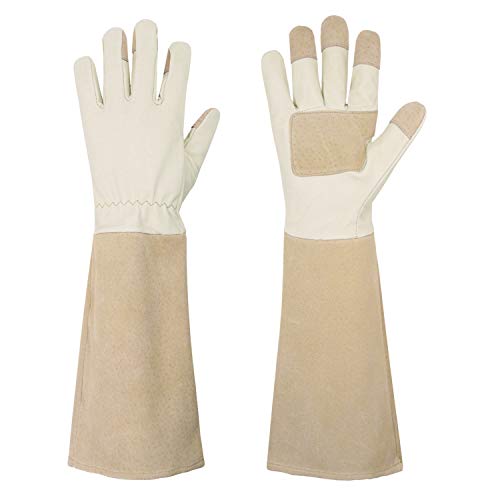
HANDLANDY Rose Pruning Gloves. These are long leather gloves made for thorny work like roses and brambles. The palm and back are pigskin, and the cuff is a synthetic leather gauntlet that reaches to just below the elbow, so your forearms are covered too.
The palm and fingertips are padded and puncture resistant. Pigskin is porous, so it breathes and stays soft after getting wet, which helps on a warm day. They suit anyone who prunes roses or clears prickly growth and ends up with scratched wrists and arms.
The trade-off is the long cuff. It gives you more coverage but also more material to pull on and off, and thick padding can make very fine jobs, like picking up seeds, harder. For light weeding and planting, a shorter, thinner glove will likely feel better. Check the size before you order, since this pair comes in Beige, size L.
Giraffe Tools Retractable Garden Hose Reel

Giraffe Tools Retractable Garden Hose Reel: This is a wall-mounted hose reel that rolls the hose back up for you. A slight tug starts the rewind, so there is no hand-cranking and no coiling a wet hose on the ground.
You pull out only as much hose as you need, and it locks at that length. That means less dragging and less hose underfoot, which matters if you are working from a stool or have trouble with uneven footing. The hose is 78 feet, with a 5 foot lead hose, so it can reach a good part of the yard.
It attaches to the wall with a two-point bracket that swivels 180 degrees, so you can pull the hose out at an angle instead of straight ahead. The hose is rated for all weather and for heat and cold.
The trade-off: it has to be mounted to a wall, so you need a solid spot near your spigot and either some comfort with a drill or someone who can hang it for you. It also won’t suit you if you want to carry a hose to different parts of the yard, since the reel stays fixed in one place.
Suncast Automatic Rewind Hose Reel

Winding a wet hose back onto a reel by hand is a chore that tires the shoulders and wrists. The Suncast Automatic Rewind Garden Hose Reel does the winding for you. You press a foot pedal and the motor pulls the hose back in.
It runs on a rechargeable 12 volt battery, so you don’t need an outlet nearby. A charger comes with it. A guide called Smart-Trak is meant to keep the hose winding smoothly without kinks, and it lets you steer the hose around obstacles.
There is also a tilt-out storage bin for small gardening supplies, so gloves and hand tools stay close. The reel measures 18″L x 20″W x 22″H and holds 100 feet of 5/8 inch vinyl hose.
The trade-off is the battery. It has to be kept charged, and a dead battery means you are back to rewinding by hand. If you only have a short hose or a small garden, a simple manual reel may be all you need.
Sloggers Waterproof Work Shoe

Sloggers Original Waterproof Restaurant Work Shoe is a slip-on clog for wet, muddy ground. It has a backless design, so you can step in and out at the back door without bending to deal with laces.
The shoe is built for wet conditions, whether that means mud, puddles, or a morning with the dogs. When it gets dirty, a rinse or a wipe-down cleans it. The insole is cushioned and wicks moisture, which helps if you spend long stretches on your feet in the garden.
The trade-off is the backless style. Your heel is not held in place, so if you have balance trouble or walk on uneven ground, a shoe that wraps the whole foot will be steadier. This one is listed as a men’s size, and it was made for restaurant kitchens as much as gardens, so it suits someone who wants an easy-on work shoe more than a hiking boot.
MUCK Women’s Muckster Boot

Garden work gets easier when your feet stay dry and comfortable. The MUCK Muckster II Mid Boot is a waterproof rubber boot made for yard and garden chores, and this listing is the women’s style in size 7 medium.
It has a 4mm neoprene bootie inside, which is the same stretchy material used in wetsuits. The footbed insert comes out, so you can swap in your own if you use a special insole. Some styles have a fleece lining for a slipper-like feel, so check that the one you pick has it if warmth matters to you.
The upper rolls down, which is handy on a warm day. The rubber sole is made to shed dirt, so mud does not pack into the tread as easily.
One trade-off: a pull-on rubber boot with no laces or straps is not adjustable. If you have swelling in your feet or need to fit a brace, try it on first, and check the size, since this listing is only for size 7.
MEPEREZ Pruning Shears

MEPEREZ Labor Saving Pruning Shears: These are hand pruners built for people whose grip gets tired quickly. The handles use a segmented lever design that multiplies your squeezing force, so a branch up to 1 inch thick takes less effort to cut.
The listing names arthritis and carpal tunnel syndrome as the reasons for that design. The handle is described as ergonomic and sized to suit both small and large hands. The blades have a wear-resistant coating meant to keep them sharp, and they are meant for shrubs, roses, hedges, flowers, and weeds.
The trade-off is that a lever design usually means more moving parts than a simple pair of pruners. It also cuts best on live, green growth, so a very thick or dead branch may still call for a saw or loppers. If your hands are in pain, it also helps to pair these with a stool so you are not reaching and twisting while you cut.
CobraHead Long Weeder Cultivator

The CobraHead Long Weeder & Cultivator is a stand-up weeding tool. It has a 54-inch handle made from North Carolina ash, so you work from a standing position instead of kneeling or bending down.
The head is a curved, tempered steel blade that is meant to plow through soil. The handle works for right or left-handed use, which is handy if you share the tool with a spouse or a neighbor.
It suits you if you can stand comfortably but would rather not get down to ground level to pull weeds. It is made in Cambridge, Wisconsin.
The trade-off is the length. A 54-inch handle is a lot of tool to store and to swing around in a small, crowded bed. If you tend pots, raised beds, or tight spaces, a short hand tool and a stool may serve you better.
Gonicc Professional Ratchet Pruning Shears
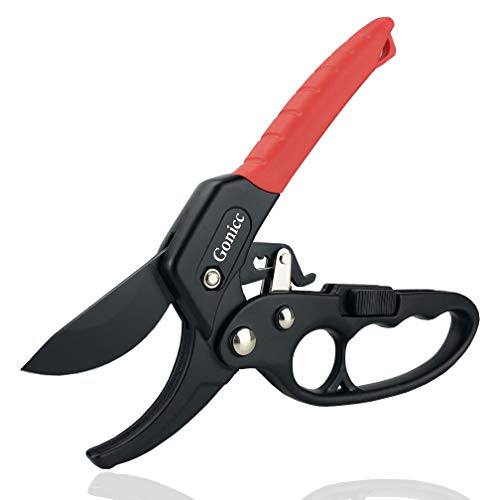
gonicc 8″ Ratchet Anvil Pruning Shears: These are hand pruners with a ratchet built in. The ratchet multiplies your hand force by up to 3X, so a thick stem takes several small squeezes instead of one hard one.
Each squeeze clicks and locks into the next position, and the pressure builds a little at a time. That helps if your grip gets sore or you deal with arthritis. The blades are SK-5 steel, and the handles are chrome vanadium steel with a non-slip cushioned grip. They work for either hand, so left-handed gardeners are covered.
They are meant for light tree branches, rose bushes, shrubs, and hedges. The trade-off is the pace. Ratcheting means more squeezes per cut, so it takes longer than a single snip, and it will feel slow if you have a lot of pruning to do. If your hands are strong and you mostly cut soft stems, ordinary pruners will do the job faster.
Stainless Steel Pruning Shears Set

This is a set of three handheld pruning shears with a pair of gardening gloves. The blades are stainless steel and described as rust-resistant, and the handles are anti-slip and shaped to be comfortable in the hand.
The part that matters most for sore or weak hands is the spring action. The handle opens on its own after each cut, so you only have to squeeze and not pull the blades open again. That cuts down on hand fatigue during a long session.
Each pair has a safety lock that keeps the blades closed when you set them down. That is useful if you keep tools in a bucket or a pocket. The lock is meant to stay out of the way while you work, so it shouldn’t catch by accident.
The gloves are soft cotton with a gripping latex coating, and they are one size that fits most. That is the trade-off: if your hands are small or large, or swollen from arthritis, one size may not fit well. Hand pruners also suit thin stems best. For thick branches you will want long-handled loppers.
Root Slayer Serrated Garden Shovel

The Root Slayer 22011 is a garden shovel with a serrated blade and a pointed tip shaped like an upside-down V. That tip is made to slice through roots and packed dirt, so you are not stuck hacking at them.
It is built to reduce strain on the hands and wrists, and the shape is meant to give you better leverage and control in tight soil. The blade is carbon steel with a powder-coated finish to help resist rust, and the shaft is steel encased in resin. It handles digging holes, planting shrubs and moving flowers.
If you garden from a stool or kneeler, a tool that does the cutting for you means less pushing and fewer awkward angles. It suits someone with tough, root-filled beds.
The trade-off: a serrated, sharpened blade is a tool to handle with care, and it is more than you need if your soil is loose and your plants are small. For light planting in raised beds, a simple hand trowel will do the job.
Kink-Free Lightweight Garden Hose

A stool gets you comfortable at the flower bed, but the hose is what you drag around once you’re there. This one is the Zero-G, 5/8″ x 50 feet, and it’s built to be lighter and kink-free.
The maker says it weighs 50% less than a standard garden hose. That matters if hauling a full-length hose across the yard wears out your hands, shoulders or back. It’s also easier to coil and put away when you’re done.
The trade-off is length. Fifty feet is plenty for many yards, but if your spigot sits far from the garden, you may need a longer one. A lighter hose also doesn’t fix the hauling itself, so keep it where you’ll use it instead of carrying it back and forth.
SPECILITE Heavy Duty Garden Hose

SPECILITE Garden Water Hose, 50 ft: A hose is easy to overlook, but dragging a stiff one around the yard is a chore. This one is made from a rubber and polymer blend that is described as 30% lighter than traditional rubber hoses. It is also flexible, so it bends around trees, walls and garden beds without fighting you.
The brass fittings on both ends are 3/4 inch and solid, which helps prevent rust and leaks. The handles rotate 360°, so you can connect it without twisting your wrist or the whole hose. It works in temperatures from about -18°F to 140°F.
It suits someone who waters a good-sized yard and wants less hauling and less wrestling with tangles. The trade-off is length: 50 feet is a lot of hose to coil and put away, and it is no use if you only have a few pots on a patio. Even a lighter hose gets heavy once it is full of water.
Giraffe Tools Retractable Hose Reel
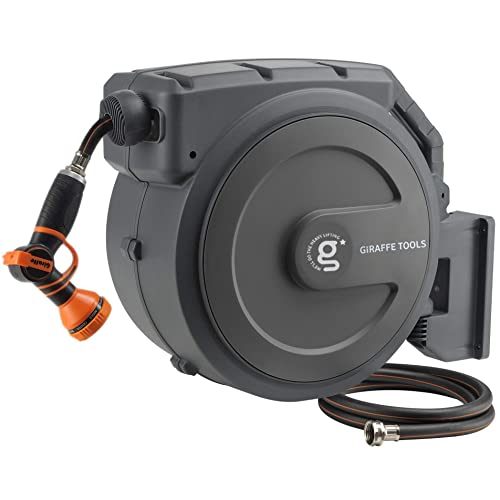
The Giraffe Tools Retractable Garden Hose Reel mounts on a wall and holds 130 feet of hose, plus a 5 foot lead hose. It suits a gardener who is tired of hauling a hose around and coiling it back up by hand.
You pull out only as much hose as you need, and it stays locked at that length. A slight tug sends it rewinding on its own, so there is no hand-cranking. The makers say the guide system winds it evenly to help prevent kinks and tangles, and that the hose is built for hot and cold weather.
The mount uses two anchor points, which is meant to keep the reel steady when you pull or rewind. That also means it has to go on a wall, ideally into solid material, so someone needs to be comfortable with a drill or have a handy person nearby.
It is not for you if you want to move the hose between different spots in the yard. Once it is up, it stays put.
MyLifeUNIT Watering Can

This is a half-gallon plastic watering can with a detachable shower head. You can water with a gentle shower or take the head off for a steady stream, depending on the plant.
The spout is long and narrow, which helps you reach plants at the back of a shelf or bed without leaning over them. The top has no cap, so it is easy to fill at the sink or from a rain barrel. The handle is designed to reduce hand fatigue, which matters if you water a lot of pots in one go.
It works for indoor and outdoor plants, and it comes in green, black, white and ivory. The plastic is described as durable and slow to warp.
The trade-off is size. A half gallon means fewer refills than a small cup, but if you have a large garden you will still be going back to the tap often. And a full can of water has some weight, so fill it partway if lifting is hard on your wrists or shoulders.
XXXFLOWER Outdoor Watering Can

XXXFLOWER 1.5 Gallon Green Watering Can. This is a plastic watering can made of thickened PP resin. The walls are thick, and the maker says it holds up to drops and pressure.
It has two handles. When the can is full, the top handle helps you lift and pour. The other handle is there for a comfortable grip.
The nozzle comes off. With it on, the water falls in a fine, even spray that suits delicate plants. With it off, you get a steady stream for bigger plants. The spout is removable and 16.1 inches long, so you can reach into a bed without bending as far.
The trade-off is the size. A 1.5 gallon can is a lot to carry once it is full, and water is heavy. If lifting is hard for you, fill it only part way or make a second trip. It also won’t suit someone who wants a small can for a few pots on a table.
Gorilla Carts Dump Cart

Gorilla Carts Poly Garden Dump Cart. This is a four-wheeled yard wagon for hauling soil, mulch, compost, gravel, plants or firewood. It holds 4 cubic feet and is rated for 600 pounds, so it takes the carrying off your arms and back.
The part I would point to is the quick-release dump. You unload the bed instead of shoveling or lifting everything out by hand. The 10-inch pneumatic tires are made for grass, dirt and gravel, and the straight pull handle lets you tow it behind you.
The bed is rust-resistant poly, so it hoses off easily, and the frame is powder-coated metal. It is hand-operated only, not towable behind a mower or tractor.
The trade-off: a cart can be loaded far heavier than you can comfortably pull, especially uphill or on soft ground. If you only move a bag of potting soil now and then, it may be more cart than you need. It also comes to you for assembly.
Biosp Heavy Duty Garden Cart

The biosp Garden Cart is a rolling caddy for your gardening supplies. It comes with an Oxford cloth bag with 8 pouches, a standard 5 gallon bucket, and a 3 gallon basket. Tools, gloves, and a bucket for weeds can all travel together in one trip.
That is the real draw. Instead of carrying tools back and forth or bending to pick them up from the ground, you roll everything along beside you. The handle sits 39.4 inches from the floor, so you can steer it while standing upright. The frame is stainless steel with a powder coating that resists sun and weather, and it can be taken apart.
It suits someone who wants supplies close at hand while moving around the yard. It pairs well with a gardening stool.
The trade-off is that this is a cart, not a seat. It won’t help you get closer to the ground or give you something to sit on. Two of the wheels are inflatable, which means they may need air from time to time.
DIGZ Rose Picker Garden Gloves

The DIGZ Rose Picker Garden Gloves are for the part of gardening that bites back: roses, brambles, and overgrown shrubs. The palm and fingertips are reinforced vegan leather, which helps guard against thorns, scrapes, and rubbing.
The long cuff is the feature I would look at first. It covers your forearm past the wrist, so reaching into a bush does not leave your arms scratched up. An adjustable strap and a shirred (gathered) wrist help the glove stay put and keep dirt out.
The fingertips also work on a touchscreen, so you can answer a call or look up a plant note without pulling the gloves off. This pair is a size Large in a red geometric pattern.
One trade-off: thick, reinforced gloves are made for protection, so they will not feel as nimble as a thin pair when you are handling tiny seeds or fine work. If your hands are on the small side, check the size before ordering, since this one is a Large.
COOLJOB Touchscreen Gardening Gloves
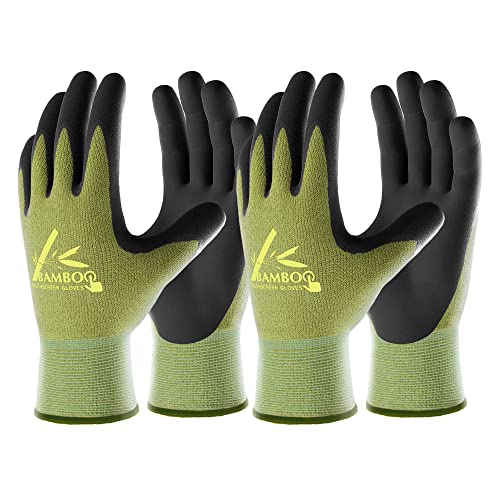
COOLJOB Gardening Gloves (2 pairs, nitrile coated, touchscreen)
These are a pair of everyday work gloves for the garden. The back is a stretchy knit made mostly from bamboo-based rayon, with some nylon and spandex. It’s meant to stay breathable and help with sweat, which matters if warm hands make you want to pull gloves off.
The palm has a foamed nitrile coating for grip on tools, so a trowel or pruners are less likely to slip. A longer cuff helps keep mud and dirt away from your wrists. The fingertips work on a phone screen, so you can answer a call without taking the gloves off.
The trade-off is fit. They’re sized snugly and come in four sizes, so measure your hand first. If you have swollen or stiff knuckles, a snug glove may be harder to pull on. They’re also a thin knit glove, not a heavy one for thorny roses or rough brush.
Home Prefer Men’s Sun Hat

Home Prefer Sun Hat with Neck Flap (UPF 50+). This is a wide-brim cotton-free hat made of polyester, with a flap that covers the back of the neck. That is the spot that gets forgotten when you spend an hour bent over a flower bed.
It is rated UPF 50+, which means it is made to block nearly all of the sun’s UVA and UVB rays. Mesh vents in the crown and the back flap let air move through, so it should not turn into a hot bucket by noon. The fabric is quick-drying, and a drawstring at the back lets you adjust the fit.
The chin strap is adjustable and can be removed. That helps on a windy day when you do not want to chase your hat across the yard.
The trade-off: the brim is 9.5 cm wide, which is about 3.7 inches. That is good shade for your face, but a wider brim would cover more. It is also listed for head sizes of 22 to 23.62 inches around, so measure before you order if you have a larger or smaller head.
Easy-to-Grow Plants That Keep the Work Down
The easiest garden chore is the one you never have to do. Picking plants that ask for little means more time sitting on your stool enjoying them.
Marigolds do well in sunny spots and don’t need frequent watering. Sunflowers need little care and bloom for a long stretch. Zinnias fill a bed with bright color all summer.
For vegetables, lettuce grows quickly across a wide range of temperatures. Tomatoes have a fussy reputation, but they are easy to grow and harvest. Peppers come in many colors, shapes and sizes. Radishes grow fast.
Herbs grow quickly in pots, and strawberries do well in containers. Both can sit within easy reach of a seat.
Some plants never need pruning or deadheading. Hostas, lavender, sage, pansies, snapdragons, daylilies, sedum, ornamental grasses and coreopsis are all on that list.
Drought-tolerant native plants suit your local climate and need less water. Grouping plants with similar water needs in one area means you don’t water each one separately. Label your plants, and keep the soil loose and well-draining.
If you garden from a seated position, raised garden beds built for wheelchair access put these plants where you can reach them.
When outdoor activities in the summertime are difficult or unsafe, many of these plants can also be grown indoors under grow lights.
The trade-off is that low-maintenance does not mean no maintenance. Carrots, for one, can be hard to start, though they need little once established. Seed tape can help.
Safety Considerations for Older Adults Who Use Garden Stools
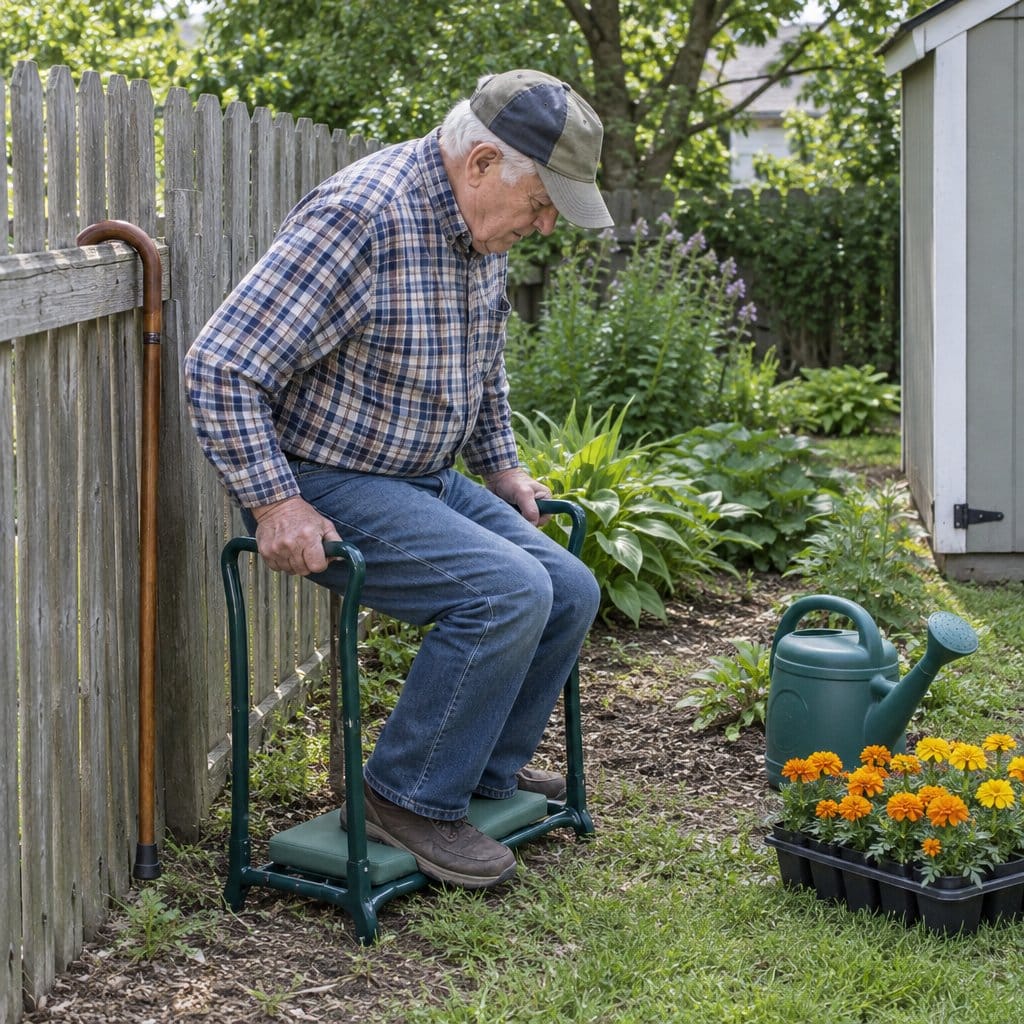
1. Make sure the stool is sturdy and stable before sitting on it or using it for any purpose. Avoid using a stool that wobbles, as this can cause it to tip over.
2. Ensure the stool has non-slip feet to prevent it from slipping on wet or slippery surfaces.
3. Avoid reaching too far while on the stool to prevent losing your balance.
4. Wear appropriate clothing and footwear when gardening, such as closed-toe shoes with good grip.
5. Never stand on a garden stool.
6. If you use a stool with wheels, take extra care to ensure it is steady and secure before sitting on it.
7. Make sure the stool is set at the correct height for you to use comfortably.
8. Consider using a stool with armrests for extra support and stability if needed.
9. Take regular breaks when gardening to avoid fatigue and exhaustion.
10. Keep the stool out of reach of children and pets.
Staying Safe in the Garden: Falls, Shoes and Sun
Falls outdoors can be especially troublesome, so a little preparation goes a long way.
Start with your feet. Look for shoes with a good grip, a low heel and a comfortable, supportive fit, which helps against slipping on wet grass and dirt.
Closed toes protect your feet from falling objects and tools. Arch support and cushioning help absorb shock and prevent fatigue. Garden boots can also help protect against falls.
Wear socks to avoid blisters and keep your feet dry. If swelling is a concern, these socks for swollen feet are worth a look.
For your skin, wear gloves, long sleeves and sturdy shoes to guard against cuts, bruises and slips. Sunscreen, comfortable clothes and a hat protect skin from the sun.
Choose lightweight, ergonomic hand tools with duller tips to lower the chance of injury. Pads or benches with handles help with planting and pruning.
Clear the garden of clutter, obstacles and purely decorative items that could cause a fall. Railings along paths and garden beds give you something to hold for balance.
Skip ladders and any equipment that lifts you off the ground, including step stools. Have someone with you when you garden, and hire out the harder jobs.
If you garden from a wheelchair, raised garden beds built for wheelchair access put the plants within reach from a seated position.
Take frequent breaks and drink water. The trade-off is that good boots, a hat and a helper add a bit of effort before you head out, but they are far easier than recovering from a fall.
Using a Garden Stool to Make Gardening Tasks Easier
Garden seats make gardening tasks more accessible by allowing you to work at a comfortable height while avoiding any back strain.
Bending over less often is especially helpful when gardening for extended periods for both indoor and outdoor gardening tasks.
Planting
One of the most common tasks that can be done using a garden stool is planting flowers. You can easily get close to the ground and plant bulbs or other flowers.
They are beneficial when planting tiny seeds because you can get close to the ground to ensure proper placement.
Weeding
Weeding with a garden stool is easier because you don’t have to bend down to pull out weeds, saving you both time and effort. Because you are closer to the ground, you can target weeds more accurately with a stool.
Pruning
Pruning smaller plants is easier with a garden stool because you can see the plants better and precisely trim any overgrown plants in all garden areas.
Harvesting
Some fruits and vegetables like to hide in their foliage. Using a garden stool lets you take your time and really search for the fruits of your labor without having to hold a squatting position.
Overall, a garden chair can make gardening tasks easier, allowing you to work comfortably while reaching all areas of your garden. You can plant flowers, pull out weeds, and prune plants more easily with a garden stool.
Gardening Without Bending or Kneeling
A stool brings you down to the garden. You can also do the opposite and bring the garden up to you. Here are the main ways to do that.
Vertical gardening means growing upward instead of outward. Wall-mounted planters can go at whatever height suits you. Trellises let cucumbers, beans and flowering vines climb, and stackable planters make a tower you can reach from all sides. Hanging baskets bring flowers down to eye level.
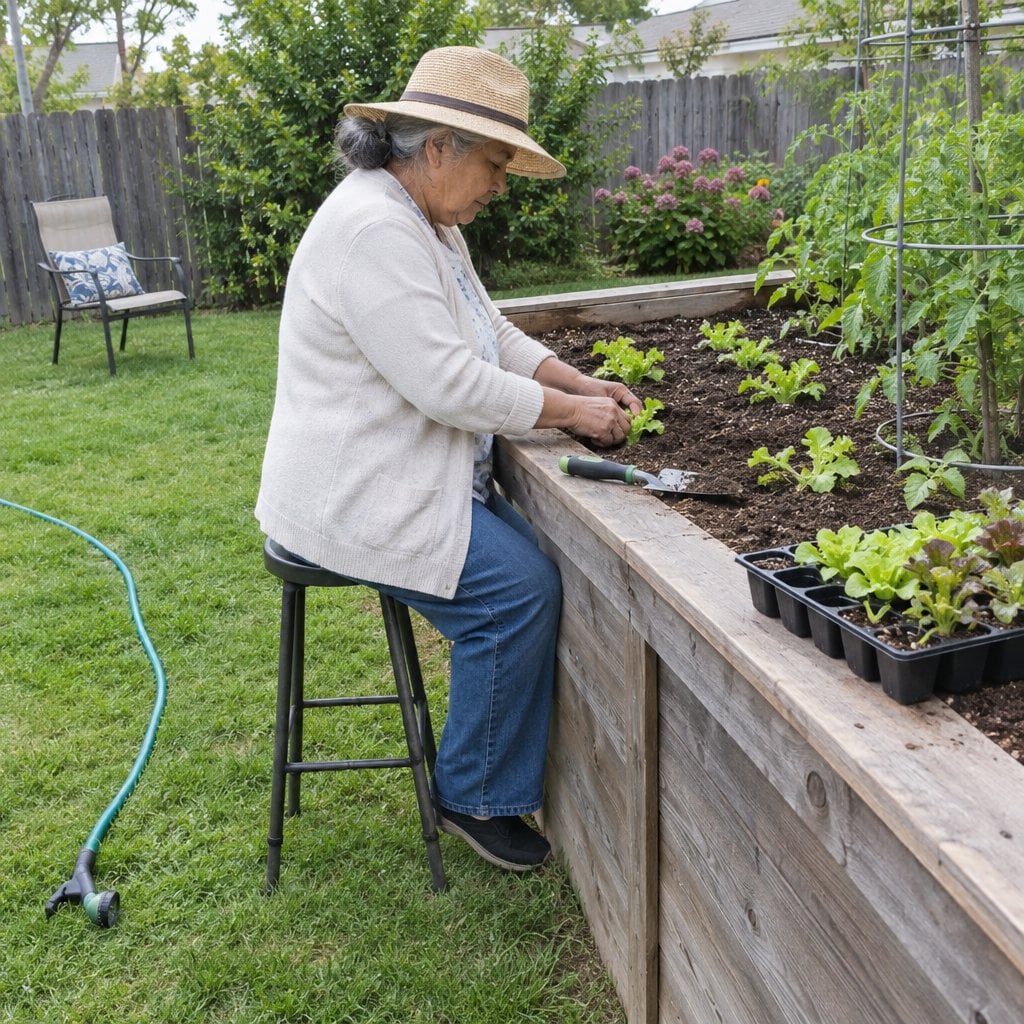
Tall raised beds can remove bending altogether. A bed between 24 and 36 inches tall is very different from a standard 8-inch one. Waist-high wooden beds are the most accessible, and metal beds resist rotting. Elevated garden boxes with legs give you the height without much construction, and keyhole designs let you reach every plant standing up. Keep any bed to 2 or 3 feet across from where you reach, so you can get to the center without stretching. If you garden from a wheelchair, read about properly designed raised beds.
Standing tools do the reaching for you. Long-handled cultivators and weeders work the soil without bending. A standing bulb planter digs holes with a foot pedal. Extendable pruners and fruit pickers reach high branches, and a watering wand spares you a heavy can. A grabber tool picks up debris or harvests without bending. Start with the tools you use most and add more over time.
Container gardening lets you set the height. Put containers on tables, benches or stands. Choose lightweight pots, or add wheels to larger ones. Group them near a water source, and use self-watering containers to cut down on upkeep. Arranged in half-circles around a seat, they are easy to reach.
Accepting help does not mean giving up your independence. Invite family to help with heavy seasonal work, or hire neighborhood teens to spread mulch or prepare beds. You can also swap skills with a neighbor, such as garden planning advice for help with lifting. Joining a group is another way, and my article on community gardening covers it. Even a short time in the garden each day can build strength, endurance and flexibility.
The trade-off is that tall beds and new tools take money and setup before they save you effort. Pick one method to try this season.
HISEA Waterproof Garden Shoes

Gardening often starts at the back door, so the shoes matter as much as the stool. The HISEA Unisex Garden Shoes are waterproof slip-on shoes made for quick trips to the yard, the mailbox, or the trash can.
There are no laces and no bending over. A pull-on tab lets you step in and out, and the stretchy top is curved to keep debris out. The body is 5mm neoprene with rubber overlays, so water stays outside and the rubber is meant to hold up without cracking.
These suit anyone who wants one pair by the door for wet grass and muddy beds. They come in a unisex design for men and women.
One trade-off: neoprene holds heat, so they may feel warm on a hot summer day. They are also ankle-height, so they won’t keep out water in deep puddles or tall wet grass the way a full rain boot would.
Why Gardening Is Good for You, and Ways to Make It Social
Gardening gives you physical activity and helps you keep moving. It can also lift your mood, with a sense of purpose, accomplishment and connection to other people. A stool is one way to keep doing something you enjoy.
Gardening can help reduce stress, loneliness and depression. It also keeps you connected to nature, which is good for overall well-being. You may even notice your memory and thinking feel sharper, and it can bring plain joy and satisfaction. If you are looking for ways to look after your mental health and well-being, a garden is a pleasant place to start.
Gardening does not have to be a solo hobby. Here are some ways to share it:
- Invite friends and family to join in. Introduce the grandchildren to your habit, I mean, your favorite hobby.
- Have a potluck or picnic in the garden and enjoy the fruits of your labor.
- Add outdoor seating or tables so there is a comfortable place to rest and enjoy the garden.
- Visit local garden centers or nurseries to get expert advice and tips.
- Join a community garden, a gardening club, or online blogs and groups to share ideas and learn new techniques.
- Keep a garden journal to record the garden’s progress and the memories you make.
If a friend or family member uses a wheelchair, wheelchair accessible raised garden beds let them join in from a seated position.
Flowers with bright colors and fragrance are nice to look at, and they attract pollinators. Bird baths and bird feeders bring in feathered visitors.
The trade-off is that a social garden means more setup, with seating, tables and guests to plan for. You can start small, with one friend and two comfortable seats.
Hand Tools, Hoses and Carts That Go Well With a Stool
Once you are seated, the tools in your hands matter as much as the seat. Ergonomic hand tools such as trowels, garden forks and cultivators have contoured handles that are easier to grip, even with arthritic hands.
Long-handled tools help you reach the ground without bending over. Look for lightweight ones with comfortable grips that are easy to maneuver. Aluminum and titanium are lighter materials, so you are not weighed down.
Non-slip grips give you more control. Shock-absorbing handles ease the strain on your joints and muscles.
For watering, a hose with an adjustable nozzle lets you change the width and pressure of the spray. An automatic rewinding hose reel winds the hose back up at the touch of a button. A watering can with a comfortable handle and a wide, extended spout pours more easily and spares you a heavy hose.
A wheeled garden cart carries plants, soil and supplies for you. Look for large, wide wheels and a lightweight frame that is easy to lift.
If you use a cane for balance in the garden, my article on walking canes and walking sticks explains how the two differ.
The trade-off is that a full set of new tools adds up to a lot of gear to store and keep track of. Starting with one or two that fit the jobs you do most is a sensible way in.
Setting Up a Garden for Limited Mobility
If bending, kneeling or walking the yard is hard for you or someone you love, the garden itself can be set up to help. A stool is one piece of that.
Container gardening works in a backyard or on a patio. Raised beds put the soil where you can reach it more easily. A trellis lets climbing plants grow upward, so you do less stretching, bending and reaching.
Long-handled tools extend your reach. Plants that need little pruning or deadheading (removing spent blooms) save you work too.
For anyone who uses walkers or wheelchairs, pathways should be wide and made of non-slip materials. Ramps help as well.
Benches, arbors and shady spots give you places to rest. A pergola takes the edge off the hot summer sun.
You can also build garden areas reachable from a seated position using concrete blocks or raised bricks. If a caregiver is available, ask for help with the harder parts.
Indoor gardening with grow lights is another option. Many indoor plants do well inside if outdoor activities in the summertime are difficult or unsafe.
The trade-off is that building raised beds, wide paths or ramps takes planning and work up front. Starting with a few containers and a good seat is a smaller first step.
Other Ways to Cut Down on Bending and Lifting in the Garden
A stool does a lot of the work, but a few changes to how you set up each job can take even more strain off your back and knees.
For planting, raised beds or elevated planters mean less bending. Growing plants vertically cuts down on kneeling later. Lightweight bags of soil or mulch are easier to handle than the heavy ones.
For weeding, a long-handled weeding tool saves you from bending over. Mulching heavily between plants and in the aisles blocks weed growth to begin with.
For pruning, you can skip much of it by choosing plants that don’t need it. For the pruning you do, lightweight, comfortable tools such as ergonomic garden shears are easier on your hands. Gloves protect you from nicks and cuts from thorns.
For watering, a drip irrigation or soaker hose system sends water straight to the roots. Mulch around plants helps hold soil moisture. A timer on a sprinkler system keeps watering consistent without you having to remember it.
For harvesting, pick plants that are easy to reach and harvest. A lightweight basket or container means fewer trips back and forth.
If you or a loved one use a walker or wheelchair, garden areas reachable from a seated position are worth a look. Concrete blocks or raised bricks can build them.
The trade-off is that some of these changes, like raised beds or a drip system, take setup before they save you any effort. A stool you can sit on today may be the simplest place to start.
Garden Stool Care and Maintenance Guide
Here are some tips on how to properly care for your garden stool:
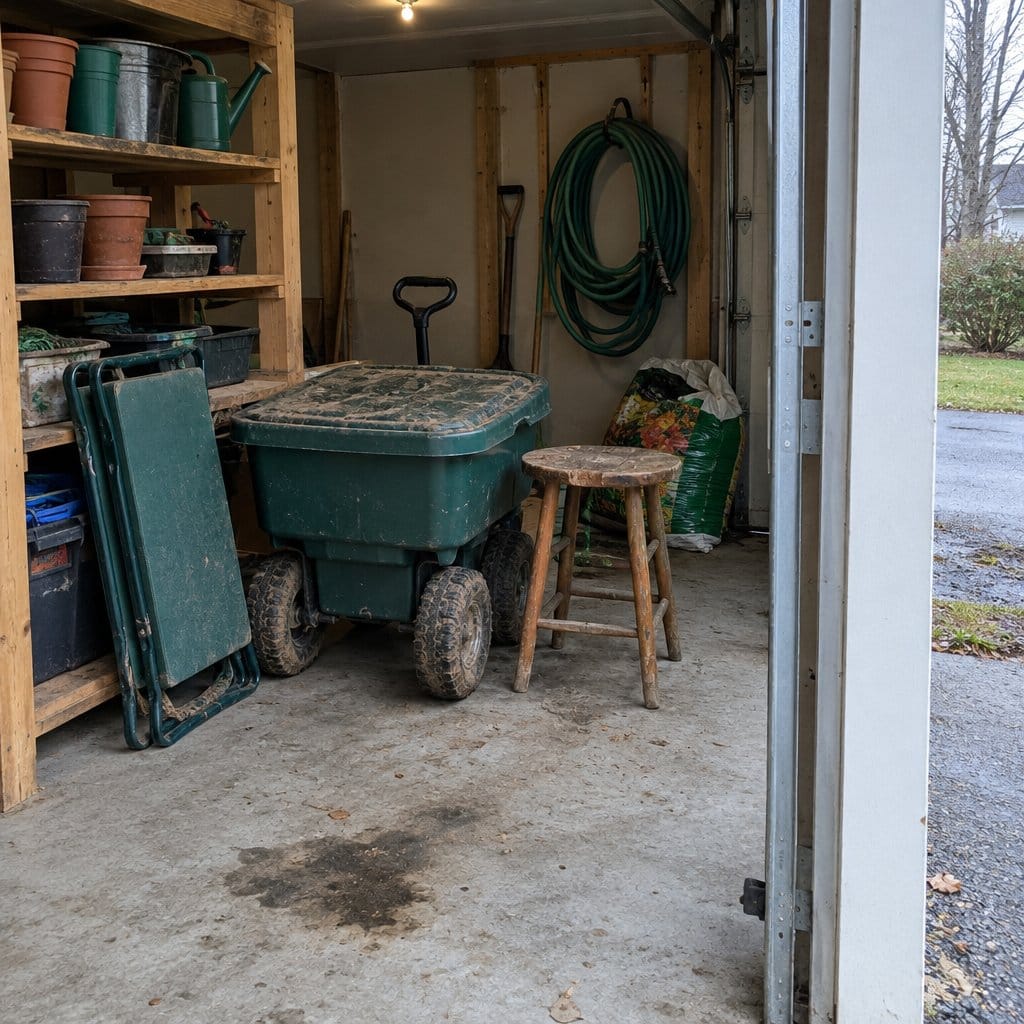
- Clean the seat with a damp cloth to remove dirt or debris on the stool after each use.
- If the stool is made of metal, make sure to cover it with a waterproof cover when not in use to protect it from rain and other elements.
- Store the stool upright when not in use. This will help prevent tripping over it and potentially injuring someone.
- Check the stool regularly for any signs of wear and tear. If any parts of the stool need to be replaced, make sure to do so as soon as possible to ensure it is safe to use.
- If the stool has a cushion, clean it regularly with a damp cloth.
By following these tips, you can ensure that your garden stool is in good condition and ready for use.
Video Guide

Infographic: Gardening Stools for Seniors

Share on Your Site With This Code:
<a href="https://grayingwithgrace.com/gardening-stools-seniors/"><img style="width:100%;" src="https://grayingwithgrace.com/wp-content/uploads/2023/03/Garden-stools-for-seniors-infographics.jpg"></a><br>Design by: <a href="https://grayingwithgrace.com">Graying With Grace</a>
Gardening Stools Help Adults Continue Their Love of Gardening
Gardening seats make gardening tasks easier and let you work comfortably with less strain on your back. This is especially helpful when you garden for long stretches, since you can work without bending over.
With a garden stool, you can also reach more areas of your garden, which makes it easier to care for flowers, vegetables, and other plants. Looking after your stool keeps it in good shape and ready to use.
Look for a stool made of durable materials, with a cushioned seat for comfort and a design that gives you support and stability. Taking regular breaks while you garden also helps you avoid getting worn out.
With these precautions and a little care for your stool, you can keep enjoying your garden with ease and comfort.




My 67 year old father has been working in the garden like crazy and these would help considerably for his age.
For sure! I am 48 and found myself using a garden stool this weekend while planting our garden with my daughter. Took me a few minutes to get back up!
Great article! I was looking for something for my mom for Mother’s Day and this was really helpful! I’ll have to check them out! Thank you!
Hi Kim – Glad the information was helpful!
This is a wonderful win for me! My knees are shot and can’t get up and down like I used too! I really miss gardening, this is an awesome suggestion!
Hello Becky! Thanks for the wonderful comment! I have reached the same point in my life. Getting up and down is a lot slower than it used to be!
I am 61 and love gardening. I have bad knees and this looks like it would be a real help to me!
Hi Candace – Getting up and down from a squat position is definitely rough on the knees. Hope one of these garden stools helps save your knees!
Wow! I wasn’t aware of the options for gardeners with physical limitations. These seats and other devices are great for getting seniors (like me!) and anyone who can’t get close to the earth, figuratively and literally, and who want and need to go gardening.
My space is small and split into tiny sections, and these aids will make the job easier.
Excellent Barrie!That is my goal here – to bring awareness to products that make our lives easier as we get older. No one should have to stop doing activities they love just because of age. Especially gardening! Just a simple change like adding a stool or knee pad can make all the difference!
What a great idea!
I have to do my gardening in pots on the deck table but this just might help me.
I love that it is a two-in-one, seat and kneeler. My knees and back would definitely benefit from me using this.
Great Robyn! Yep, the knees and the back are definitely the first body parts to start aching – especially after a day of planting and weeding!
My hubby and I are both seniors, so the Finnhomy Folding Garden Stool Seat with the compartment underneath the stool to house all of our tools sounds perfect for us!
Excellent Rosanne! I hope it helps make gardening make fun again. Thanks for stopping by!
Great article. Thank you.
No problem Tammy. Glad to help!
Great article, thank you
You are welcome Jamie!
My mom would use this daily.
I have a lot of work to do in the yard and these would help. I’ve been looking for something similar. I really miss being able to do all of these things with ease like I could in my younger days!
Wow. What great products these are for ones that has physical limitations.
I love these products! Such a great idea for seniors, or anyone with difficulties bending over, really. Thank you for sharing this! Happy Gardening 🙂
Gardening tip would just be to take frequent stretch breaks (which would be easier to start from a gardening stool than otherwise).
Thanks for the info. Amazing how age creeps up on you and looking for those little ways to make gardening easier is important.
Thanks My husband could use this
At age 80 I enjoy relatively good health but when it comes to gardening and having to get down a lot it has become more and more difficult therefore ,
the use of a stool would be a blessing….
I’m not a Senior, although some days I feel like one! But even I could really use one of these stools when gardening. My back gets really sore when bending over when I’m weeding or doing some deadheading.
Super for us oldies, but goodies! Us old people are gardening fools!!!!! We could all use this.
Old people are gardening fools!
We just need the right tools!
This is a great stool. I had one once and it was fantastic to quickly pick up and move to another gardening area.
Products like these are so necessary. Gardening is so relaxing and having these sitting tools is a bonus.
I love the Garden Rocker Kneeling Bench. My worst problem in my garden now is the fact that I can’t kneel down any more without some sort of help. This would be fantastic to own.
This will make life so much easier for my grandmother, who loves to work in her garden!
I recently turned 66, but love gardening. This seat would be a great help and it looks very comfortable. And there’s a great variety of tools! Fingers crossed!
These gardening seats are great!I’m 43 but have a lot of joint and knee pain,this would be perfect for me when I do my gardening!
This is perfect for when my Mom comes over and helps in the yard I would also love using it as I’m not as flexible as I use to be.
At 53, and having a bad knee in need of replacement I loved working in the garden but gave it up a few years ago as bending and stooping got too hard for me to do. I am glad that these stools exist so we can keep active and enjoy doing what we love at our own pace… which is much slower than when I was younger!