
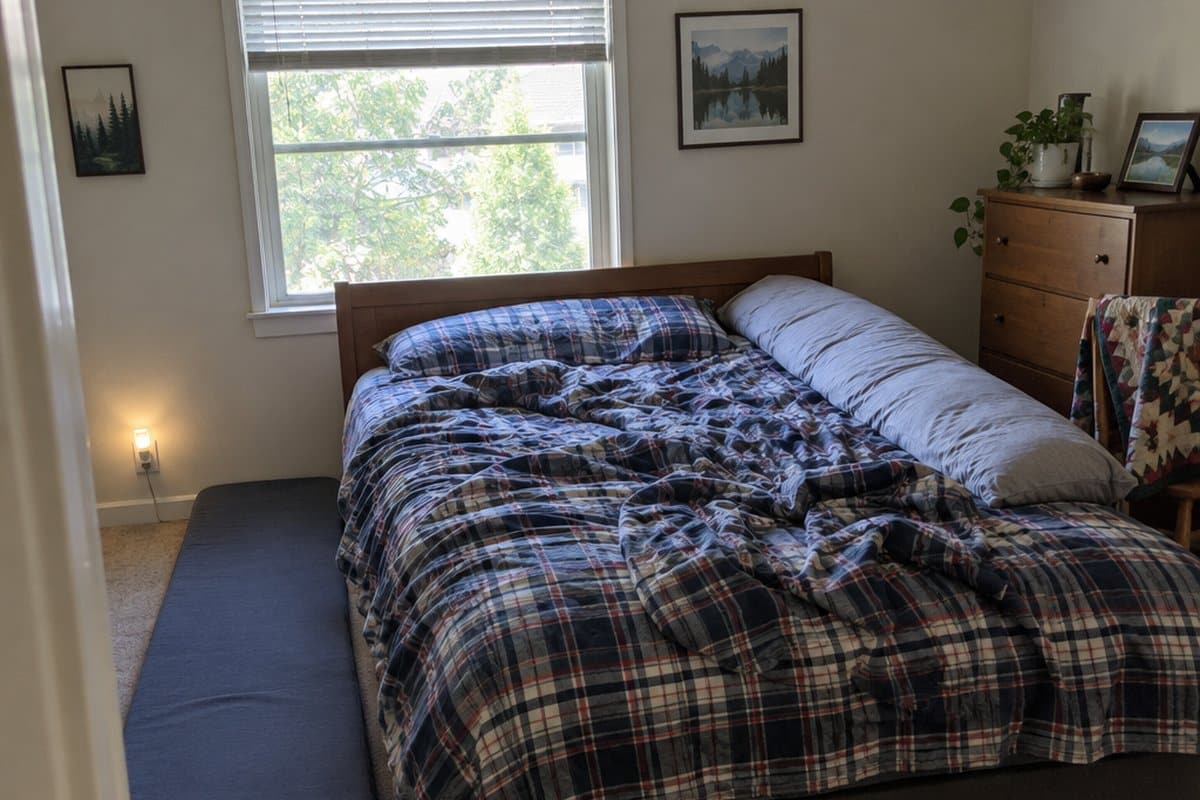
Falls can be dangerous for anyone, and especially devastating for older people. Falling is the leading cause of both fatal and non-fatal injuries among older adults [1].
These falls can happen in a variety of ways.
One of them is falling out of bed at night while sleeping, and various things can cause it. I go over some of those causes and how to keep an older adult from falling out of bed.
If your loved one has dementia, you’ll find how bed alarms can help. If your loved one lives in a nursing home and keeps ending up on the floor, I cover what to do about that too.
What Are The Causes Of Falling Out Of The Bed?
1. Changes In The Sleep Environment
One of the main causes that may contribute to a fall from the bed is any significant changes in the sleep environment. This can include changes to the height of the bed, pillows on the bed, or even the bed itself. It is best to limit the potential changes to the sleep environment because it can contribute to a heightened risk of falling out of bed.
After all, your body won’t be used to the new changes which can cause you to misjudge the size of the bed or other factors that can lead to a fall.
2. Problems Sleeping
Another factor that can contribute to a heightened risk of falling from the bed would be problems sleeping. If you or your loved one is experiencing problems sleeping, it could result in you twisting and turning trying to get comfortable throughout the night. This could lead to you twisting and turning your way off the bed itself.

3. Sleeping Too Close To The Edge
It is always recommended for people to sleep much closer to the center of the bed if they are sleeping in the bed themselves. After all, it is much more difficult to fall out of bed if you aren’t anywhere near the edge. If a senior is sleeping too close to the edge of the bed, it is much easier for them to roll off.
4. Medications
There are all kinds of medications that can cause disorientation and a lot of other issues that can cause dizziness and other things that will make it much more likely for one to fall out of bed. If you or your loved one is on new medication and it is causing them to lose balance or become dizzy, it could very well be the cause a fall out of bed.
5. Constant Need For Urination
The more the elderly person gets up throughout the night, the more likely they are to experience a fall. Whether they fall out of bed while waking up or while getting out of bed to go to the bathroom, it presents an increased risk. It can be very difficult for an older person with less balance to be able to get out of bed safely without falling.
6. Slippery Sheets
If you alter the sheets on the bed to a higher thread count or even satin, you may find them much more slippery. Slippery sheets can contribute to an increased risk factor of falling out of bed or falling while getting out of bed. After all, there is less friction between the elderly person and his or her sheets. Therefore, it could end up causing them to slip or lose balance while getting out of bed or even while rolling over during sleep.
The same thing goes for silky night gowns and satiny pajamas.
How To Keep The Elderly From Falling Out Of Bed
1. Bed Rails
Bed rails can help some people keep from falling out of bed at night, but gaps in a rail can trap a body. Ask the doctor or an occupational therapist whether rails are safe and which type fits. A lot of falls happen while the person is sleeping, and rails act as a bumper of sorts that can keep a person in bed rather than on the floor.
They work sort of like bumper rails at a bowling alley. What makes them even more beneficial for seniors is the fact that they can be multipurpose additions. Not only do rails keep yourself or your loved one safely in bed throughout the night, but they can make it much easier to get out of bed when needed.
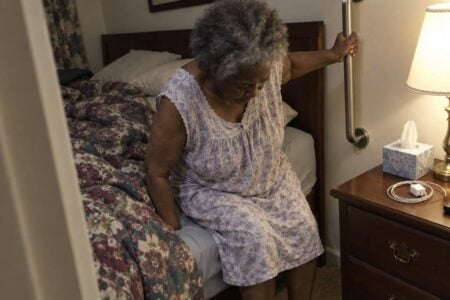
After all, the best bed rails for seniors can be used as a handhold, which can make it easier to get up out of bed. Because of the entrapment risk, check with the doctor or therapist before anyone leans on a rail to stand.
Pros:
- Multi-purpose use case
- Get to keep the same bed
Cons:
- Can be expensive
An alternative to bed rails are fall prevention mattresses and mattress covers that have a raised perimeter to reduce rolling falls from bed. If you are weighing rails against poles, canes and other bed rail alternatives, this explains the fit and entrapment concerns.
2. DIY Rails
If you or your loved one don’t need full-on rails, you may be able to get away with using a do-it-yourself solution.
Ask the doctor or an occupational therapist what is safe for your situation. Keep anything added to the bed soft and flat, and never use anything that leaves a gap a body could slip into.
This can help you consciously and subconsciously know that you are about to fall.
Pros:
- Less expensive
- Immediate assistance
Cons:
- Less reliable
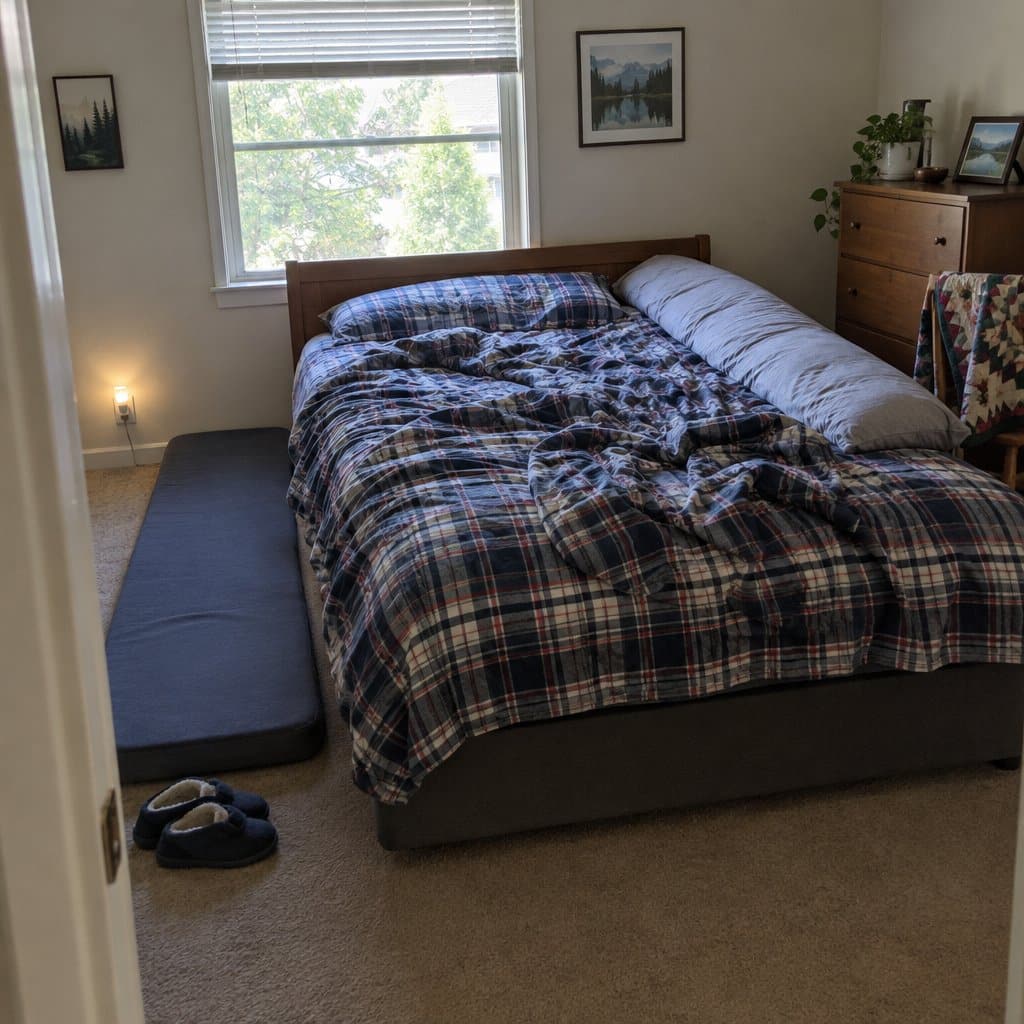
3. Fall Mat
A fall mat is a good way to prevent major injuries from occurring when and if you or your loved one falls out of bed. Fall protection mats are designed to absorb your impact and keep one from getting seriously injured. Therefore, it can be used on each side of the bed as a protective measure against falls from the bed.
Pros:
- Easy to use
- Inexpensive
Cons:
- Won’t prevent falls
3. Use Bed Steps
For some older adults, the act of climbing in and out of the bed is the most dangerous time for them. Once they make it to bed, they are stable and secure.
For these folks, bed steps or stairs could be a tremendous help. We recommend these bed steps for the elderly because they have handrails and non-slip step surfaces. These products provide them with a secure place to hold on to while climbing into bed and exiting it also.
These are a huge help for seniors with tall beds and thick mattresses.
4. Get a Hospital Bed
While you may be able to get away with different measures that allow you to keep the same bed and sleeping environment, you may want to change it entirely. Getting a different bed that is designed to be much safer to sleep in for the elderly may be the best option you have.
Hospital beds are designed with seniors who struggle with mobility in mind. Hospital beds have the unique benefit of being height adjustable which means you will be able to lower the bed to make it much easier to get in and out.
Likewise, it can make the fall much less disastrous if it did occur. It can even help contain yourself or your loved one with built-in rails. A bed like a Posey bed is a hospital bed that is enclosed on every side which makes it impossible to fall out of.
5. Get a Platform Bed
Most platform beds sit low to the ground and are easier to get into. But they can be hard to get up from if you have trouble standing.
However, its real benefit is being closer to the ground which lessens the impact of a fall.
Pros:
- Comfortable
- Plenty of options available
Cons:
- Expensive
6. Grippy Bed Materials
One of the things you can do to outfit your bed to keep you or your loved one from sliding out of bed would be to invest in much more grippy sheets and other bedding. A senior shouldn’t be using slick and slippery bedding that can increase the risk of falling.
Silk and other slick materials shouldn’t be used as sheets or for comforters. Instead, low thread count poly blend sheets or knapped flannel sheets might be best.
Pros:
- Easy to add to existing bed
- Inexpensive
Cons:
- Won’t prevent falls
7. Add Pillows
You can see some body pillows for the elderly here.
Adding pillows on either side of the person will keep them contained. They will be much less likely from sliding over or rolling over too far. After all, the pillows will remind them of where they are on the bed and it will guide them towards the center of the bed.
This can make it much less likely they end up suffering a fall out of bed while sleeping.
Pros:
- Easy to add to existing bed
Cons:
- Won’t directly prevent falls
If Your Loved One Is Falling Out of Bed in a Nursing Home
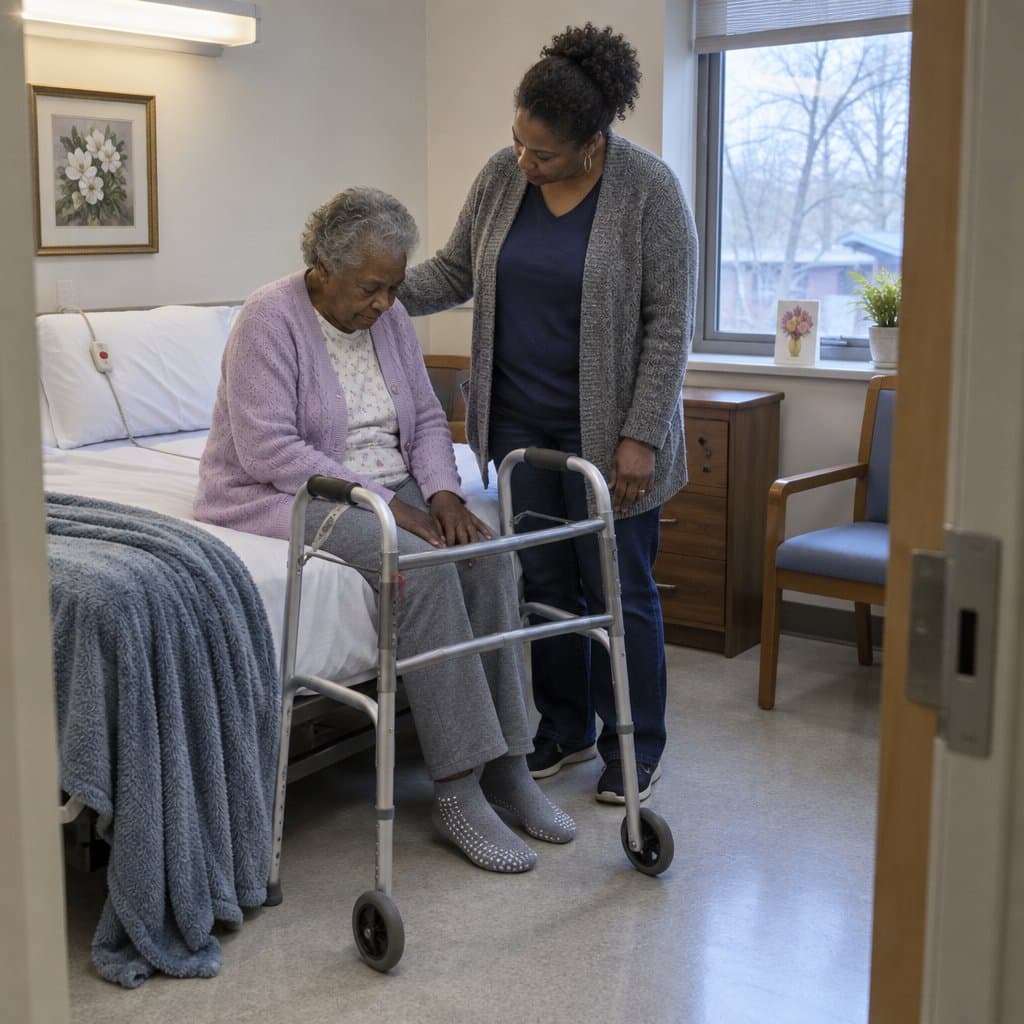
Say your mother lives in a nursing home or care center. Get to know her main caregivers and talk with them about what you see. Keep the focus on prevention, and keep those lines of communication open.
Most people are embarrassed to admit they fell. Unexplained bruising, or seeming more disoriented than usual, can be a sign. With dementia, she may not even realize she fell.
Look at the room too. Toppled or shifted furniture, a wadded-up rug, or spilled food or water can tell you something happened. Someone who refuses to use a walker may feel it means admitting they need help.
When you ask, choose your words with care. Ask questions that need more than a yes or no, such as how she got a bruise. Listen to the answer and notice whether it sounds logical. Trust matters most, and sharing a embarrassing fall of your own can help her open up.
These steps help prevent falls:
- Check that shoes have proper tread, with non-slip soles and easy-adjust ties or Velcro. Avoid thick-soled slippers and jogging shoes.
- Encourage the strength and balance exercises her physician recommends. You can even join in.
- Choose a properly sized blanket for nursing home use that does not touch the floor, since tangled bedding can cause a fall.
- Remind her to wear her glasses and hearing aids, and to use her prescribed walking aids. She should sit fully before standing.
- Use handrails and nightlights, and clear throw rugs and loose shoes.
- Make sure medications are taken as prescribed, and tell staff right away about any bad reaction.
Work with her to find the causes of her falls. Long robes and loose clothing can contribute, so look at clothing made for nursing home residents. Ask staff to install a bed alarm, especially with dementia. If you can, volunteering at the nursing home lets you keep an eye on her yourself.
If she starts to fall, do not try to catch her. Step back, let her go down, and protect yourself. Then follow the steps for after a fall and call for help. Report every fall to the staff on duty. Make sure the facility has a device to lift someone off the floor.
If staff are not addressing your concerns, call an ombudsman. This is a person trained to handle nursing home complaints, and they work with staff, caregivers, you and local authorities if needed.
The trade-off is that you rely on others for much of this. Fixing it one issue at a time takes patience.
Falls From Bed When a Senior Has Dementia
Dementia raises the risk of falling out of bed. The falls can happen during sleep or while getting in and out of bed, and the injuries can range from bruises to broken bones.
Several things add to the risk. Incontinence can mean several bathroom trips at night, sometimes in a dark room. Some medications cause drowsiness or dizziness, and a dose due in the middle of the night can lead someone to lean out of bed for a pill or a glass of water.
Alzheimer’s disease can disrupt sleep, so a person wakes up confused and restless. Dementia can also affect how a person sees space, so the distance from the bed to the floor is hard to judge. For more on this, see this fall prevention checklist.
Start by working out which cause is behind the falls. That tells you which fix to pick. Here are the ones that apply to dementia:
- Lower the bed. A lower bed means a gentler landing if a fall happens.
- Consider a mattress with firm raised edges, which makes rolling out harder. A special mattress cover can turn a regular mattress into one.
- Try bolsters such as wedges, pool noodles or rolls. Some slide under the sheet, while others need to be secured, so install them correctly.
- For advanced dementia, a hospital bed has built-in rails and wheels. Its head raises and lowers, and its height is adjustable. Ask the doctor or an occupational therapist first, because rails can trap a body if there are gaps.
- Clear the bedroom. Move furniture and clutter away from the bed so a fall does not land on something hard.
- Ask the doctor about sleep. If waking at night comes from Alzheimer’s, ask for ways to help your loved one stay asleep. If medication wakes them, ask whether the schedule can change.
Bed rails can help some people, but gaps can trap a body. Ask the doctor or an occupational therapist whether rails are safe for your loved one and which type fits. If rails are approved, one rail on the person’s side is enough when they share the bed. If they sleep alone, rails on both sides are the usual choice.
The trade-off is that most of these lower the chance or the harm of a fall without ruling it out. Pairing a couple of them usually works better than relying on one.
What To Do Right After a Fall From Bed
Say your father has just fallen out of bed. Resist the urge to pull him up right away. Every fall should be treated as serious unless a doctor says otherwise.
Take a moment to help him calm down while you look him over. Check for bruising, bleeding and swelling.
Ask whether anything hurts. If he has dementia, he may not be able to tell you in words, so watch his face for any sign of discomfort.
If you see signs of injury or pain, call 911.
Even if he seems fine, take him to a doctor as soon as you can, because hidden injuries are possible. A person with dementia may not be able to explain what happened, so it falls to you to pass along everything you noticed. The doctor can then run tests to find any hidden injury and tell you how serious it is.
Once you know he is safe to move, you may need help getting him up from the floor. These devices to lift the elderly off the floor after a fall are worth knowing about ahead of time.
The trade-off is that waiting to move him can feel hard when he is upset on the floor. Staying calm and checking first is still the safer order.
Bed Alarms for Someone With Dementia
Say your mother has dementia and wakes up in the night. She may be confused, forget she needs help to get out of bed, and try to do it alone. Memory trouble and confusion can cause a fall in just that way.
Dementia can also make it hard for a person to say what they need. Someone who is uncomfortable may try to shift position or climb out of bed rather than ask you.
A bed alarm is made for this. It alerts you when your loved one moves around in bed, so you know when they may need a hand getting in, getting out, or changing position.
The alarm tells you someone is moving, but it does not keep anyone in the bed. I would use it alongside something that cushions or contains a fall, such as rails or a mat.
Frequently Asked Questions:
Is falling out of bed a sign of dementia?
Falling out of bed isn’t directly a sign of dementia. However, those living with dementia may be more likely to fall from bed. Two reasons are more restlessness through the night and a higher chance of incontinence [2].
How can I help an elderly person get out of bed more safely?
If you are looking to help someone get out of bed safely, handrails alongside the bed can give them something to grab and push against. Bed rails can help some people, but gaps can trap a body. Ask the doctor or an occupational therapist whether rails are safe and which type fits. If you are helping them out of bed yourself, get them safely onto their side and help them find their footing. From there, you can help them grab the handrail and stand.
How can I reduce the chance of an injury from a fall from bed?
One of the best ways to minimize the chances of an injury from falling from a bed is using fall mats on the sides of the bed. Fall protection mats can be excellent additions to the sides of a seniors bed because they are thick and cushioned enough to minimize impact after a fall. You will usually find them made up of high-density polyurethane foam for maximum protection.
Does Medicare pay for hospital beds?
Yes, Medicare will cover hospital beds as durable medical equipment as long as it is prescribed by your doctor [3]. There are some documentation requirements that must be met including a face to face appointment with your doctor.
Does Medicare pay for bed rails?
Yes, but only if the beneficiary already has a hospital bed that doesn’t include bed rails. Medicare will NOT approve rails that can be attached to the existing bed [4].
How can I be alerted that the senior has fallen from bed?
Knowing when a senior falls from their bed is important, because reacting quickly can make a big difference. One of the best ways to find out is with the use of bed alarms. A bed alarm will go off when the person tries to get out of bed. This alerts a caregiver so they can help if assistance is needed. An alarm mat will go off when the person falls out of bed.
How do I know if a fall from the bed is serious enough for medical attention?
If a senior falls and they have hit their head or have swelling in any area of the body, you should seek immediate medical attention. Head injuries can be very serious. Falls are a common cause of traumatic brain injuries [5].
Summary and Final Recommendations
Falls are a real risk for many people, and falling out of bed at night is common. By knowing some of the causes and using some of the solutions above, you can help lower the chances of a fall from bed for yourself or your loved one.
Do you know of other solutions for elderly people falling out of bed at night? Please share them in the comments below!


When my mom was able to walk I hung cow bells on her walker so that I could hear if she got out of bed. I had 2 sets of guard rails on her bed and still she was able to get out. So ultimately we got a hospital bed and it made a huge difference. It also made it easier to get her out of bed because the head of the bed could be lifted.