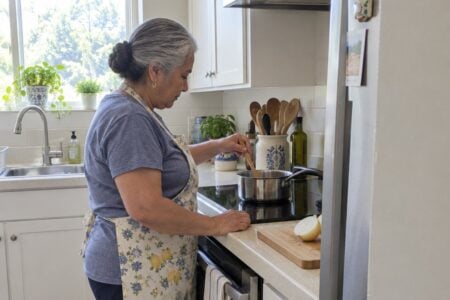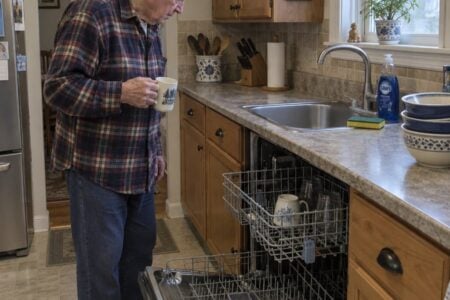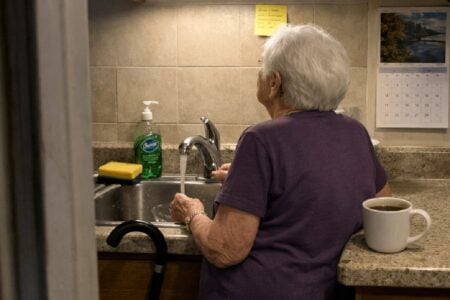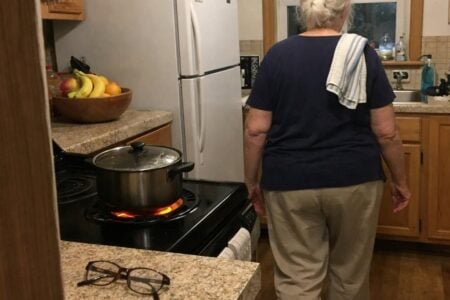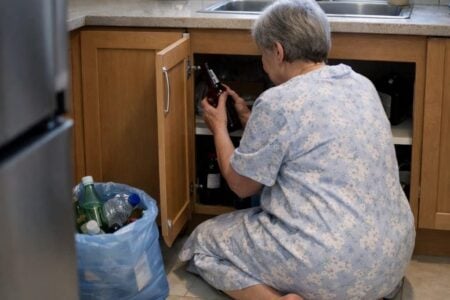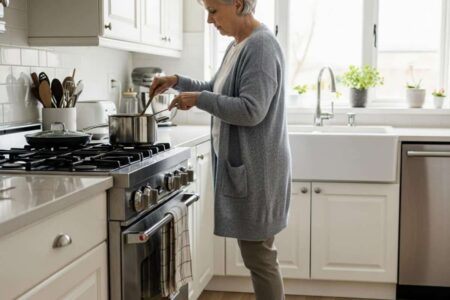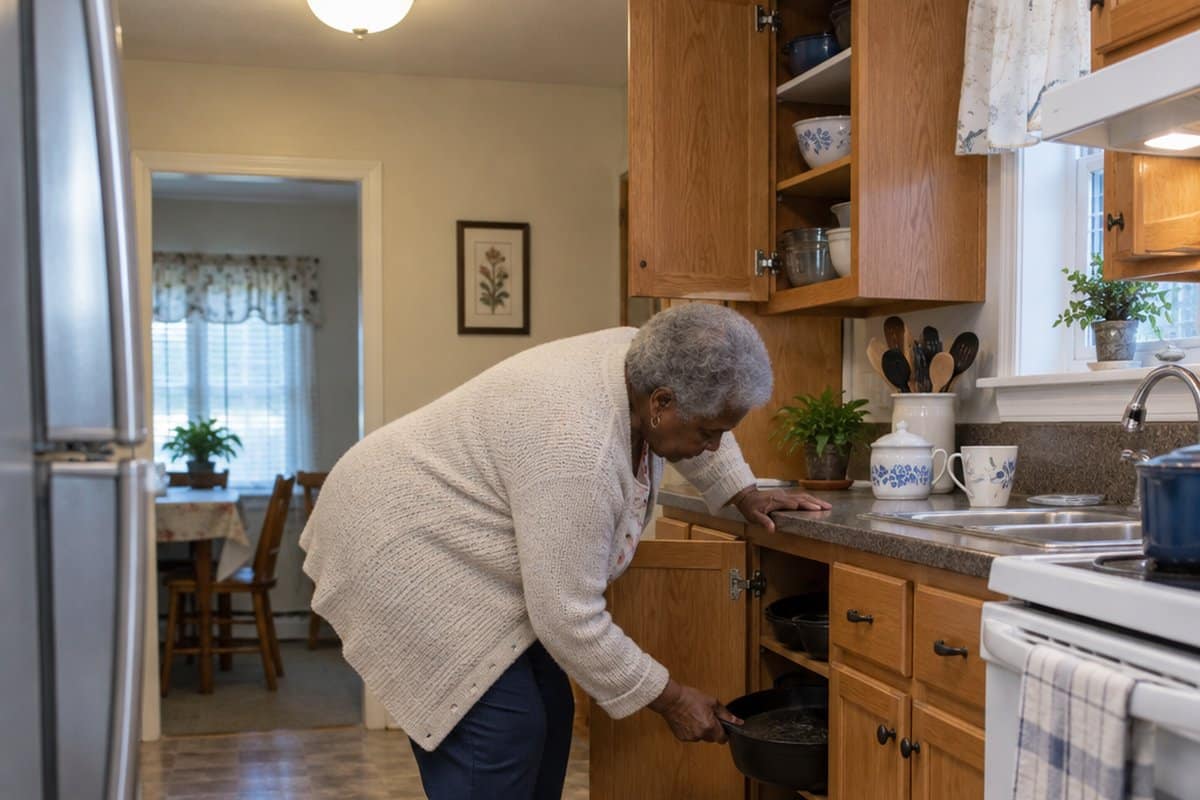
You reach for a pot on a high shelf, and your hand slips near a hot burner. Easy kitchen safety upgrades for seniors can keep that moment from turning into an accident.
This article covers the risks to watch for, low-cost fixes, and ways to organize so things sit within easy reach.
It also looks at kitchen organization products that make storage easier to reach, appliance safety, and ergonomic tools, so cooking stays safe and enjoyable.
- Creating an accessible and ergonomic kitchen environment is key to minimizing the risk of accidents and ensuring ease of use for seniors.
- Simple changes, such as reorganizing items for better reach and investing in appliances designed for safety, can make a big difference.
- Plus, maintaining your kitchen’s comfort, function, and aesthetics makes the space inviting and preserves the pleasure of cooking and spending time in the heart of your home.
Unique Kitchen Safety Risks for Seniors
Kitchens are filled with potential hazards, from hot surfaces to sharp tools. So, let’s talk about what you should watch out for.
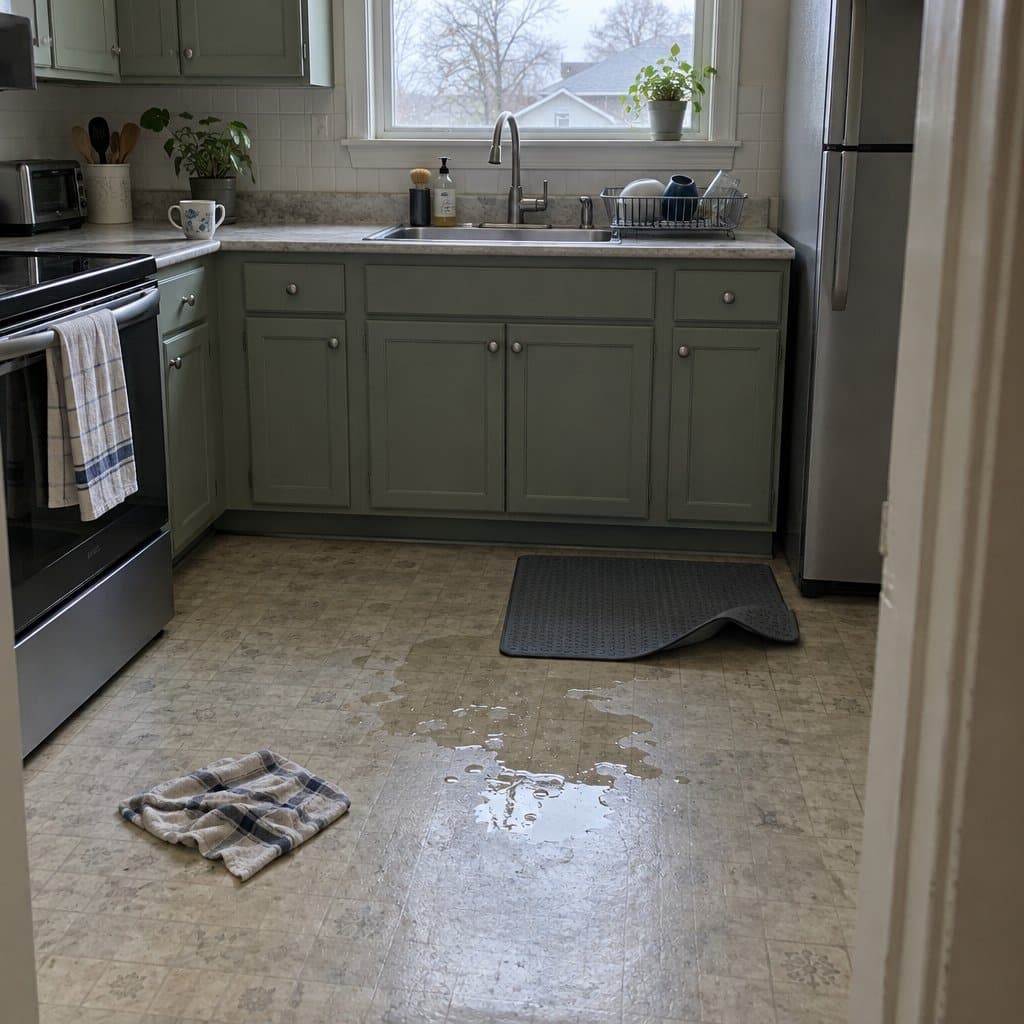
- Slippery Floors: Spills are common, but did you know that a simple liquid spill can be a major slip hazard? Investing in non-slip mats can make a big difference.
- Fire Hazards: Loose clothing can easily catch fire from a stove burner. It’s a good idea to wear fitted clothing while cooking and to keep a fire extinguisher within reach.
- Kitchen Lighting: Poor lighting can increase the risk of cuts and burns. Consider using brighter bulbs and adding night lights to improve visibility, especially if you have low vision or other vision changes.
- Arthritis Challenges: Do your joints ache when you grip kitchen utensils? Utensils with larger handles can be easier to hold and use, reducing the risk of accidents with sharp objects.
- Smoke Detectors: It’s essential to have functioning smoke detectors to alert you of any fire hazards. Make sure they are tested regularly!
- Cooking Safety: When dealing with boiling water, ensure you have a secure grip on the pot and move slowly. If you’re worried about forgetfulness, consider appliances that shut off automatically.
- Emergency Planning: Do you have a plan if a fire occurs? Make sure you have a clear fire escape plan and keep exits accessible.
Remember, your safety in the kitchen is paramount. A simple review of your kitchen practices with an occupational therapist can provide personalized safety tips tailored to your needs.
Stay safe, and continue enjoying your time in the kitchen!
Cost-Effective Kitchen Safety Upgrades
Making your kitchen safer doesn’t have to burn a hole in your pocket. With simple, cost-effective changes, you can minimize risks and enhance safety.
Let’s look at affordable kitchen upgrades that can make a big difference.
- Install an automatic stove shut-off device for peace of mind and safety.
- Set up new smoke alarms or regularly check and maintain existing ones to ensure early detection of fires.
- Install better lighting, specifically under cabinets and over countertops, to improve visibility and safety.
- Use non-slip mats in high-traffic areas to prevent slips and falls.
- Reorganize frequently used items using clear containers and drawer dividers for easy access and efficiency.
- Swap out knives for ones with ergonomic grips to prevent cuts.
- Use grip-enhancing tools for opening jars to reduce strain and risk of injury.
- Ensure items are within easy reach to avoid overstretching or using a step stool.
Remember, staying safe doesn’t have to be expensive or complex. Every small step can contribute to a safer kitchen environment for you.
Organizing for Accessibility
When you’re in the kitchen, organization is more than just about tidiness; it’s about safety and accessibility.
Are you often reaching high or bending low to grab your kitchen essentials?
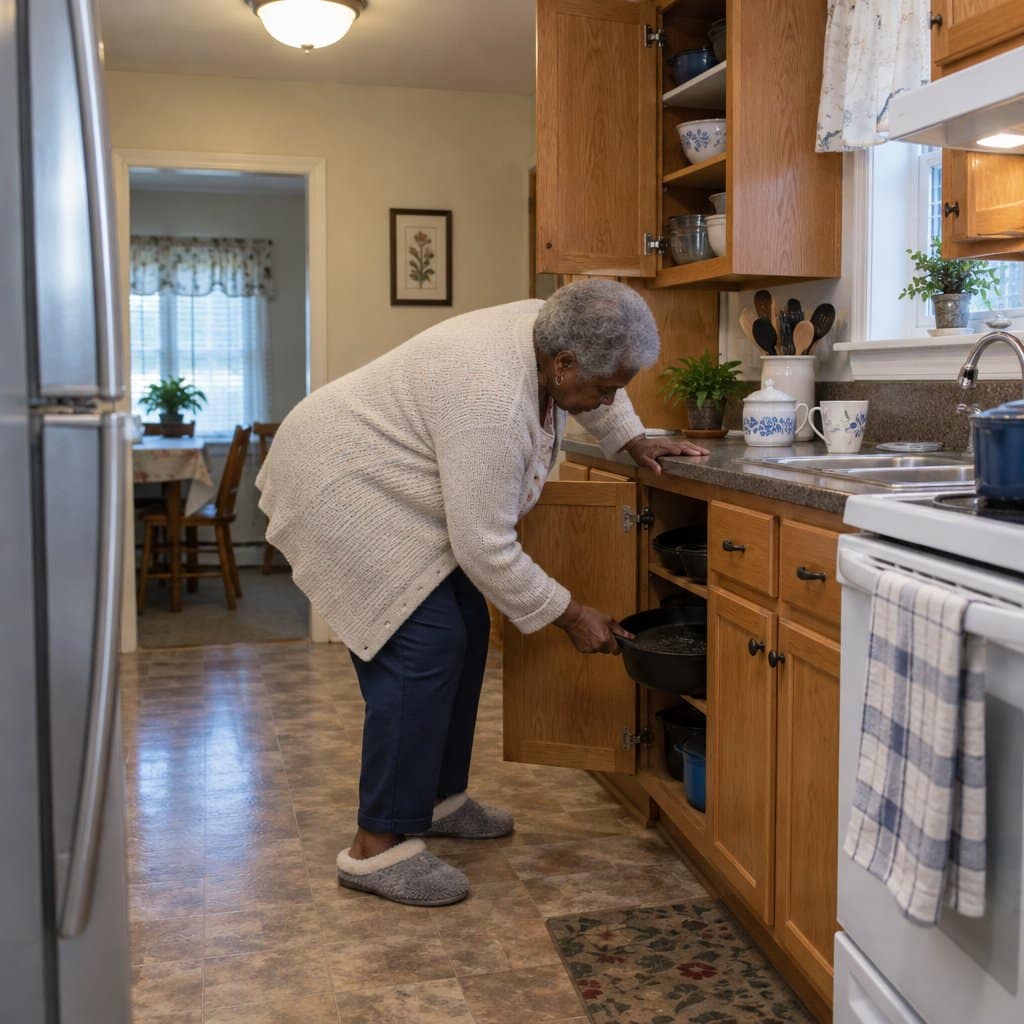
It’s time to re-think the placement of your frequently used items. Keeping things at waist level not only makes for efficient cooking but also minimizes the risk of strain or injury.
Easy Reach, Easy Use
Imagine not having to stretch or strain to reach for your favorite mug or the sugar jar. Sounds convenient, right?
Start by re-arranging items in your cabinets and putting the things you use most often at waist level.
Heavy items, like that trusty cast iron pan, should also live in this easy-to-reach zone. You don’t want to wrestle with weight while whipping up a meal!
Smart Storage Solutions
Now, let’s talk about making the back of the cupboard as accessible as the front.
Ever heard of pull-out shelves or lazy Susans? They bring the farthest items right to your fingertips, transforming cluttered cabinets into organized havens.
Plus, you can see everything at a glance, so there are no more forgotten cans of beans or lost spices.
Quick Tips for Keeping Your Kitchen Accessible:
- Store pots, pans, and utensils close to the stove.
- Use adaptive equipment like easy-grip utensils for added ease of use.
- Install motion-sensitive night lights to safely navigate the kitchen at night.
Organizing your kitchen boosts more than just efficiency; it’s about creating a space where you can cook with confidence and comfort.
Remember, a well-arranged kitchen is a safer, more enjoyable space. So why not give these simple changes a try?
Organizing for Different Homes and Lifestyles
Where you live changes how you set up the kitchen. A few ideas fit each kind of home.
In a home shared with family, the kitchen has to work for everyone. Store commonly used items on the countertop or in lower cabinets, so you can skip the step stool and the high reach.
Keep counters clear and large gadgets put away, so there is a set place to cook. Keep the floor clutter-free to cut down on tripping.
In a small home or apartment, space is the main issue. Hang organizers on doors for extra storage, and let them act as a pantry where there isn’t one.
Shelves or hanging units on walls and inside cabinet doors use space you already have. A kitchen island adds counter space, storage, and a place to sit, and a rolling cart keeps everyday items and cleaning supplies handy. For pull-out shelves and other storage within reach, there is a guide that goes into more detail.
Appliances that do more than one job save room. Combination toaster ovens and air fryers are two examples.
In assisted living or a retirement community, the kitchen is often smaller with less storage. Keep only the essential tools and dishes you use regularly, which is also a good rule if you are downsizing.
Store everyday items together within easy reach. Put daily dishes and flatware in a dish drainer by the sink.
Ask the community staff for help with tasks like grocery shopping and cleaning, so clutter does not build up. Bright colors and high contrast can mark off different kitchen areas so they are easier to see.
If you are choosing kitchen utensils that make cooking easier for a small space, or looking for kitchen gift ideas for someone who has moved, keep the size of their kitchen in mind.
One trade-off: a smaller space leaves less room for every idea above. Pick the few that matter most for your home rather than trying them all.
Organizing Each Part of Your Kitchen
A kitchen works best when each area has its own plan. Here is how to set up the pantry, cabinets, drawers, counters, and refrigerator.
In the pantry, keep frequently used items at eye level and store similar items together. Tiered organizers make cans and jars easier to see. Over-the-door organizers add room.
In the cabinets, store heavy items on lower shelves and everyday items where they are easy to reach. Shelf dividers keep things separated, and clear, labeled containers show you what is inside.
In the drawers, put the things you use most in the top drawers to cut down on bending. Keep knives and other sharp objects in a set, secure spot. Adjustable organizers give every utensil a place, and the right kitchen utensils for easier, safer cooking are worth a look while you are sorting.
On the counters, leave only what you use. A decluttered countertop gives you a safe place to work. Choose appliances with clear controls, and keep daily items in labeled containers.
Put things near where you use them. Mugs go by the coffee maker, glasses by the sink, and cooking utensils by the stove. If counter space is tight, a combination toaster oven can do the work of two machines.
In the refrigerator, use add-on drawers for the things you reach for most. Shelf dividers and clear bins with handles keep like items together. A thermometer shows whether food is staying at the proper temperature.
Rotate items regularly so food does not spoil, and clean the refrigerator and throw out anything expired or moldy.
One trade-off: more containers, bins, and gadgets can crowd a small space. Keep only what you use, so the organizing does not add clutter of its own.
Kitchen Organization Products That Make Storage Easier to Reach
Where the keeper above tells you to move things to waist level, a few storage products do the heavy lifting. Most of them bring the back of the cupboard to you, so you stop reaching and bending.
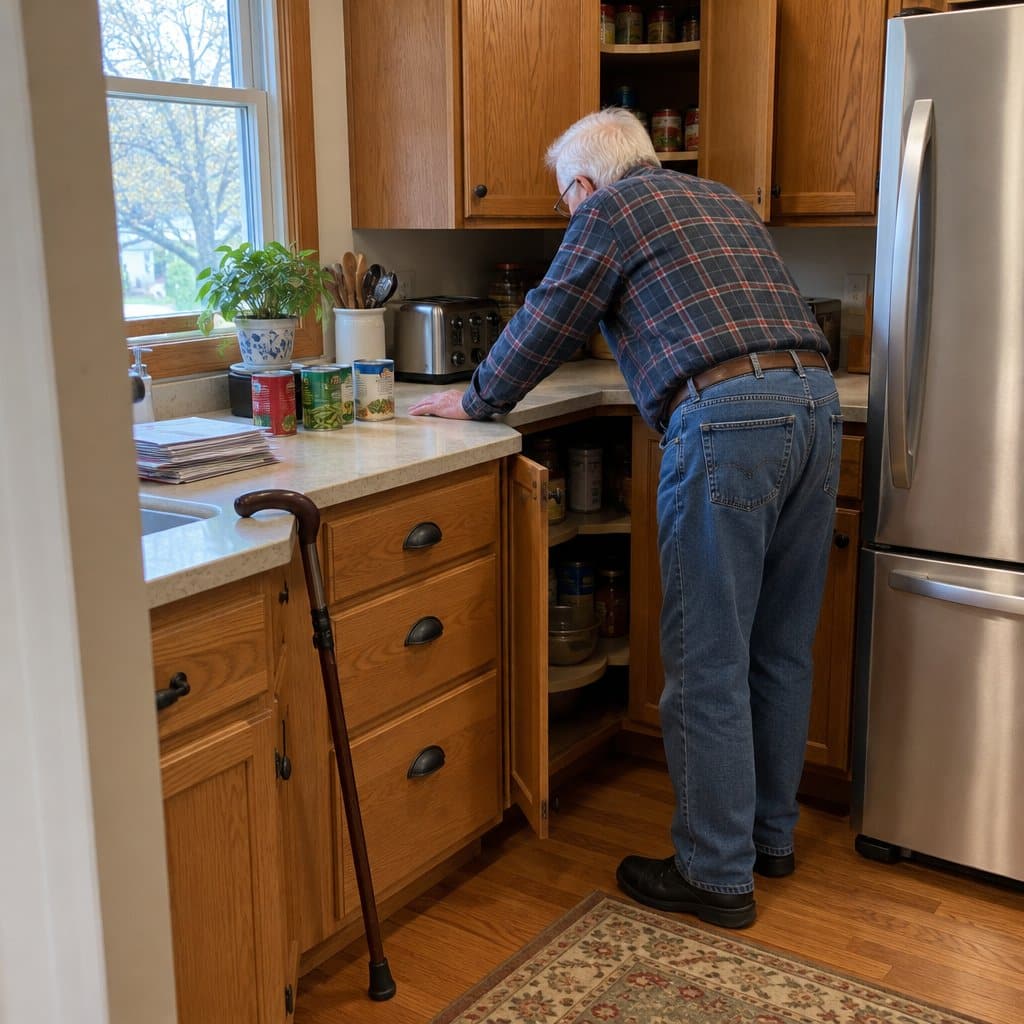
Pull-out shelves and easy-glide drawers make lower cabinets much easier to use. A lazy Susan in a corner cabinet does the same for items that would otherwise sit out of sight. If you want help matching pull-out shelves and corner organizers to your space, there is a storage guide for that.
Clear bins and large-print labels help you find things at a glance. They also help if memory or vision is a concern. Clear lazy Susans work the same way, and keeping countertops clear cuts down on confusion.
Pick products that contrast with what they hold. If your dishes are white, a darker dish strainer is easier to see.
Hanging and over-the-door organizers add storage without taking up cabinet space. They can act as a pantry where there isn’t one. Magnetic knife strips and wall-mounted organizers use vertical space and keep sharp objects stored in a set place.
In the refrigerator, add-on drawers and bins keep things grouped. Put older items in front, and keep a visible thermometer inside.
Other helpful pieces include:
- Adjustable shelving, so you can set the height yourself
- Soft-close drawers and drawer dividers
- Rubberized drawer liners, so items do not slide
- A rolling cart for extra storage you can move
- A dish drainer by the sink for daily dishes and flatware, so you reach less
Some changes are about the tools themselves. Ergonomic utensils and easy-open containers suit limited strength and dexterity. In a small kitchen, a multi-purpose appliance saves space, and dementia friendly kitchen appliances are covered in another article.
If you are buying for someone else, the list of kitchen gift ideas has more to choose from.
One trade-off: pull-out shelves usually have to be fitted into your cabinets, so they take more planning than a clear bin does. Starting with bins, labels, and a lazy Susan is a simple first step.
Appliance Safety
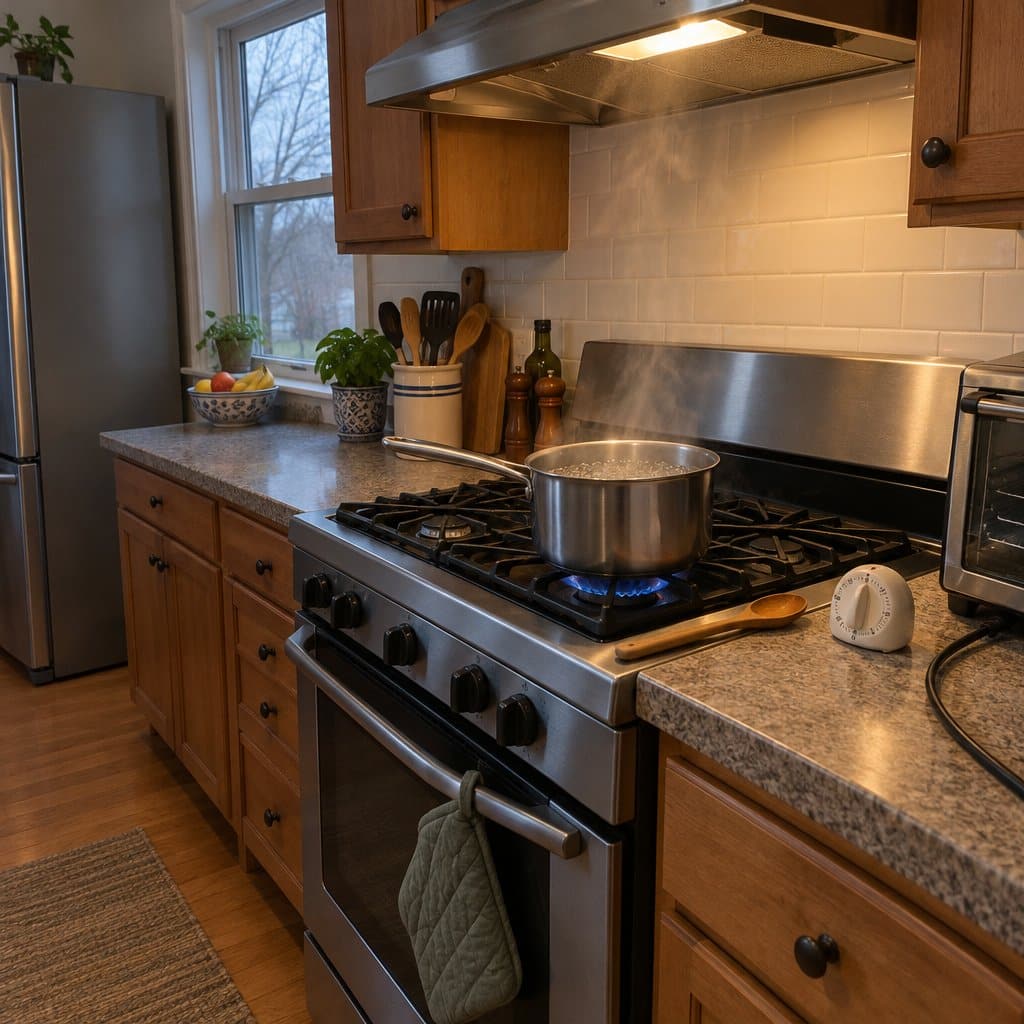
Setting kitchen timers can be your best friend when using kitchen appliances. Whether you’re boiling pasta or baking cookies, a timer serves as an invaluable reminder to prevent overcooking and potential kitchen mishaps.
Have you ever considered the importance of proper ventilation?
Using your stove can lead to smoke, especially when cooking at high temperatures or searing food. An exhaust fan or range hood helps whisk away smoke and reduces the risk of fire and smoke inhalation.
Where do you keep your appliance cords?
It’s crucial to place them away from heat sources and water. Cords near a hot stove can melt, and close to water, they can create electrical hazards. Always keep cords organized and tucked away.
Remember, these simple steps are all about ensuring you can enjoy cooking while staying safe. Cooking should be a joy, not a hazard!
Creating an Ergonomic Kitchen
Have you ever thought about how the design of your kitchen can impact your comfort and safety?
An ergonomic kitchen is all about creating a space that’s tailored to you, making everyday tasks easier and more enjoyable.
The Right Tools
Breeze through meal prep with tools designed to be gentle on your joints.
- Investing in lightweight, easy-grip utensils means less strain on your hands and wrists.
- Lightweight cookware offers less strain when lifting or moving pots and pans.
- Do you struggle with jars and cans? An electric can opener or jar opener takes the effort out of those tasks.
- Ergonomic knives, with their soft, cushioned handles, are a game changer.
They’re not just comfortable. They give you better control, reducing the risk of slips and cuts.
Comfort Underfoot
Ever think about how long you stand at the counter chopping veggies or washing dishes?
Ergonomic kitchen floor mats are the unsung heroes here. They offer cushioning that can alleviate the fatigue that comes from standing on hard surfaces.
Remember, a kitchen that caters to your movement and minimizes effort not only makes cooking more enjoyable but also helps prevent injuries like strains, cuts, and burns.
Matching Kitchen Changes to Mobility, Vision, Strength, and Memory
Different limits call for different fixes. Start with the one that gives you the most trouble in the kitchen.
If mobility is the issue, think about wheelchair access and the chance of a fall in the kitchen. Pull-out shelves and easy-glide drawers make lower cabinets easier to use, and hanging pantry organizers and adjustable shelving help too. For help with reach, my guide to pull-out shelves and other storage within reach goes into more detail.
Grab bars or other personal supports add stability, and they are not only for the bathroom. I explain where grab bars can go in a separate article.
If vision or memory is the concern, large-print labels and clear bins let you see what you have. Group like items together, and keep the countertop clear to cut down on confusion. Labeling containers and appliances clearly also helps with memory or focus.
If strength and grip are the problem, ergonomic utensils, easy-open containers, and soft-close drawers take the strain out of daily tasks. Store sharp objects in a set, secure place. I have a list of practical kitchen utensils if you want ideas.
For meal preparation, labeled shelves, stacking shelves, and add-on refrigerator drawers keep cooking running smoothly. Put appliances within easy reach, and keep a refrigerator thermometer where you can see it.
If you are shopping for someone else, my kitchen gift ideas can help you pick something that fits their situation.
One trade-off: no single change covers every limit. A clear bin helps with vision but does nothing for grip, so match each fix to the problem you actually have.
Maintaining Your Kitchen’s Comfort, Function, and Aesthetics
How you can make it a safer and more comfortable place without sacrificing style? Make it a space that’s just as lovely to look at as it is practical to use.
Get the Lighting Right
First things first: let’s talk about good lighting. Have you ever noticed how everything feels more challenging in a dimly lit room?
Installing bright, clear lighting not only makes your kitchen look great but also helps you avoid mishaps with knives or hot pots.
- Place light switches at waist height to avoid reaching up or bending down.
- Use under-cabinet lighting for safer countertop use.
- Install automatic lights that turn on upon room entry for constant illumination.
Keep the Air Fresh
What about when things get smoky from your famous roast or there’s a lingering fish smell? Kitchen ventilation systems are key. They whisk away odors and smoke to keep your kitchen air as fresh as a spring morning:
- Range hoods can become a focal point, with style options to match any decor.
- Extractor fans blend into the background if you prefer something discreet.
A Place for Everything
Lastly, think about organization. How do you feel when you can’t find what you need?
Frustrated, right?
With the right storage solutions, everything you need is at hand:
- Pull-out shelves allow you to reach pots and pans without stooping.
- Drawer dividers keep your utensils neat and accessible.
- Pegboard Wall Storage: Mount a pegboard on your kitchen wall to hang utensils, pots, and pans for easy access.
- Spice Racks: Use a spice rack to keep your spices organized and within reach.
- Pot Lid Organizers: These can help keep your pot lids neat and prevent them from cluttering your cabinets.
- Over-the-Door Organizers: They can be used to store pantry items, freeing up cabinet space.
- Rotating Tray or Lazy Susan: Great for corner cabinets, it makes reaching items in the back easier. You can put these in refrigerators too!
- Under-Sink Organizers: These can help you make the most of this often unused space, perfect for storing cleaning supplies.
Remember, your kitchen can be both safe and stylish. With a few thoughtful changes, you can create a space that looks like it’s straight out of a magazine, and is a haven for passionate home cooks like yourself. Isn’t that the dream kitchen you deserve?
Keeping Your Kitchen Organized Over Time
A kitchen stays safe when it stays organized, and that takes a few habits more than a one-time cleanup.
Start with what you no longer use. If an item has no job in your kitchen anymore, give it to family or friends or donate it to charity. Keeping the counters clear is easier when you declutter first.
Keep the things you use often within arm’s reach, and store heavier objects at waist height. Store items no lower than the upper thigh, so you are not bending far. Put the dishes you use every day beside the sink, which saves lifting, stretching, and searching.
Place things near where you use them. Dishes and silverware go near the dishwasher, and drinking glasses go near the sink or water dispenser. Mugs belong near the coffee maker.
Design a working triangle, which means arranging the kitchen so moving between your main work areas is easy. Fewer steps make the room simpler to move around in.
Think about grab bars or other personal supports in the kitchen for added stability. Grab bars are not just for the bathroom, and the kitchen is one more place a steady hand can help.
Plan your meals ahead. A steady meal plan cuts down on extra food, so your cupboards and refrigerator do not get overcrowded. Store your ingredients to match the plan.
One trade-off: a meal plan takes some time to set up, and clearing out items you no longer use means making decisions about them. Both pay off in a kitchen that is easier to keep tidy.
Minimizing Disruption to Daily Life
Here are some tips to improve kitchen safety without compromising function:
- Clear the Clutter: Keep countertops clear of unnecessary items. This not only provides ample space for meal preparation but also reduces the risk of accidental spills or burns from overcrowded surfaces.
- Organize for Accessibility: Store frequently used items such as dishes and cooking utensils at waist or eye level. This eliminates the need for reaching high or bending low, reducing the risk of falls.
- Prioritize Proper Lighting: Good lighting is essential especially in areas where you prepare and cook food. Consider installing under-cabinet lights for better illumination.
- Choose Appliances Wisely: Consider investing in appliances with automatic shut-off features or visual/tactile indicators for better safety. Also, opt for lightweight and easy-to-handle appliances that cater to your comfort.
- Non-slip Mats: Use non-slip mats in potentially slippery areas like in front of the sink or stove. This can help prevent falls.
- Avoid Floor Hazards: Keep the kitchen floor clear of hazards like loose rugs, electrical cords, or pet bowls that could cause tripping.
- Invest in Easy-to-Use Utensils: Opt for cooking utensils with easy-to-grip handles. There are many adaptive kitchen tools available that can make tasks like chopping or opening cans easier and safer.
Remember, safety does not mean compromising the comfort or functionality of your kitchen. With these simple modifications, you can ensure your kitchen is a safe, comfortable, and functional space.
Isn’t it nice to know you can enhance your kitchen’s safety without sacrificing the joys of daily living?
DIY vs. Professional Help
When considering making your kitchen safer, you might wonder whether it’s better to roll up your sleeves and do it yourself or to call in the pros.
Let’s break it down.
| DIY Kitchen Improvements | Help from Family or Neighbors | Hiring a Professional Contractor | |
|---|---|---|---|
| Pros | |||
| Cost Savings | Yes | Yes (Often free or reduced) | No |
| Personal Satisfaction | Yes | Varies | No |
| Flexibility | Yes | Varies | No |
| Trust | N/A | Yes | Varies |
| Expertise | No | Varies | Yes |
| Quality of Work | Varies | Varies | Yes |
| Peace of Mind | No | Varies | Yes |
| Cons | |||
| Time Consuming | Yes | No | No |
| Risk of Mistakes | Yes | Varies | No |
| Limited Skills | Yes | Varies | No |
| Cost | No | No | Yes |
| Availability | Yes | Varies | Yes |
| Finding the Right Person | N/A | N/A | Yes |
If you decide to go the pro route, here are a few tips for finding the right contractor:
- Ask for Recommendations: Talk to friends who have had similar work done.
- Read Reviews: Look for contractors with positive feedback from clients.
- Check Credentials: Always ensure they are licensed and insured.
Remember, there’s no shame in asking for help when it’s needed. Your safety is the priority, and sometimes that means calling in someone with the right tools and know-how to make your kitchen as safe as it can be.
Long-Term Benefits of Kitchen Safety Upgrades

When you think about kitchen safety, it’s not just about immediate safety. Think of it as an investment in your future.
By incorporating simple upgrades in the kitchen, you’re paving the way for a safer, more independent life at home.
It’s like setting up guideposts to make sure you can enjoy cooking and spend time in your kitchen without worry!
Improved Home Maintenance
Regular maintenance of appliances and safety equipment is easier when your kitchen is designed with your needs in mind.
Imagine having easily cleanable surfaces and straightforward systems to manage, which could mean less time fixing issues and more time enjoying your days.
Keeping the Independence
Consider how a kitchen tailored to your needs can help you keep cooking and moving freely.
Upgrades like lever-handled faucets or pull-down shelves are more than just conveniences; they’re modifications that help you maintain your self-sufficiency. You’ll have peace of mind, knowing you can handle daily tasks independently.
Here’s the thing, smart kitchen adaptions may also mean saving money in the long run. Cooking safety tips you implement now, like clear pathways and well-organized kitchen tools, help prevent accidents.
Fewer accidents mean fewer unexpected healthcare costs, which can add up rapidly.
Remember, upgrading your kitchen safety isn’t just about what’s happening now; it’s an assurance policy for your future well-being. A few sensible changes can make a world of difference.
Special Notes for Caregivers

As a caregiver, you play a vital role in keeping the kitchen safe. Let’s focus on some practical steps you can take to prevent accidents and maintain a healthy space.
Food Safety
Start by ensuring food labels are clear and easily readable; replace any that are faded. It’s important for seniors to know what they’re consuming, so check expiration dates regularly.
Consider moving to a system of large print labels to make things easier for those with vision impairments.
Handwashing
Always encourage hand washing before and after handling food. A simple reminder or a note near the sink can do wonders.
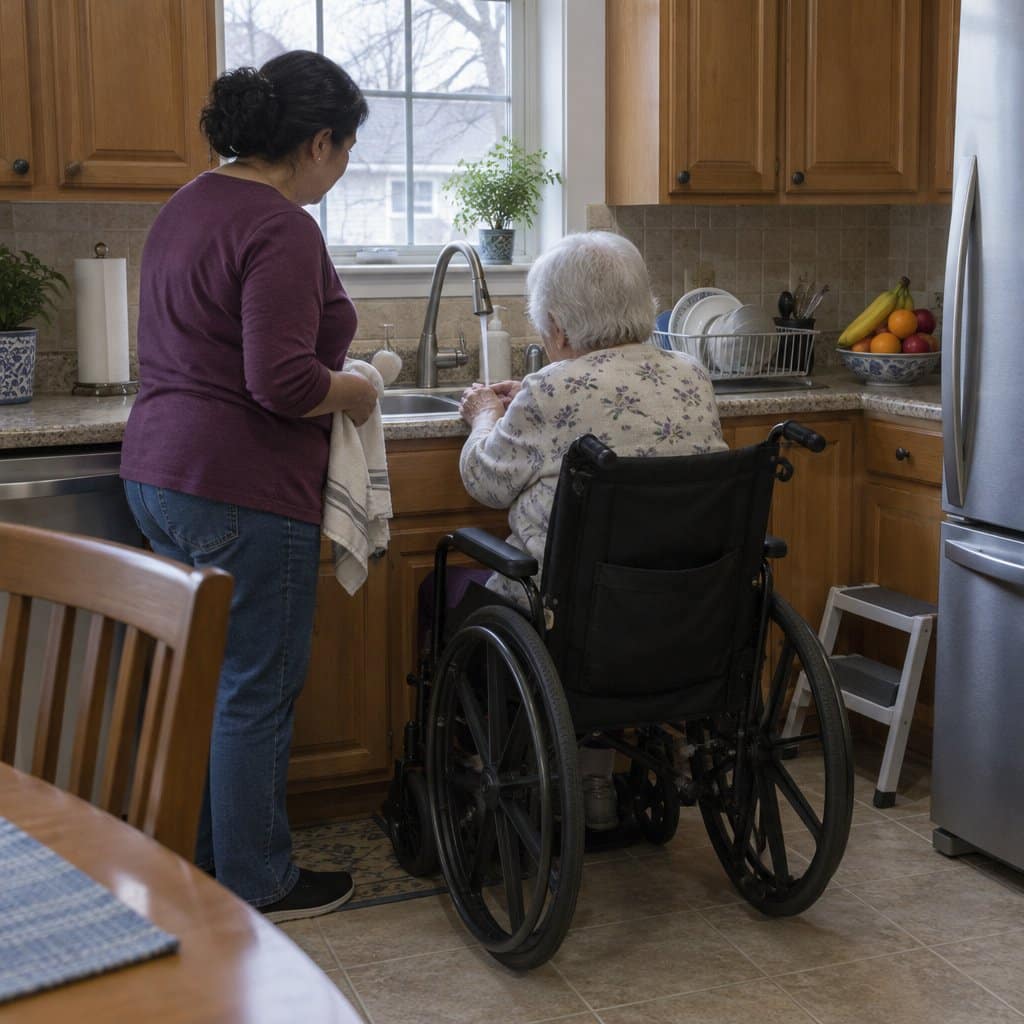
Set up a comfortable stool, so your care receiver can sit down if they need to while washing their hands.
Use of Timers and Microwaves
Use timers and microwaves for safe cooking. A microwave can be a safer option for heating food, as it reduces the risk of burns from an open flame or hot stove.
Timers help ensure that food is cooked for the right amount of time. They can remind both you and them when something is done.
Adapting to Physical Abilities
Adjust the kitchen setup according to the senior’s physical abilities. If bending down is a problem, rearrange commonly used items to be within easy reach.
Install lever-style faucet handles to make turning the tap easier, and electric can openers can help avoid the strain of manual ones.
Bathroom Trips
Additionally, consider the path to the bathroom. Is it clear and free of obstacles? If a senior needs to rush, this can pose a fall risk. Keep the path well-lit and consider installing grab bars along the route for support.
Remember, you’re creating a supportive and safe environment tailored to their needs. Your observance and adjustments can make a world of difference!
Infographic: A Safer Kitchen: Key to Independent Living
Click to View Full Size

Share on Your Site With This Code:
<a href="https://grayingwithgrace.com/kitchen-safety-guide-seniors/"><img style="width:100%;" src="https://grayingwithgrace.com/wp-content/uploads/2024/04/Kitchen-Safety-for-Older-Adults-Infographic.png"></a><br>Design by: <a href="https://grayingwithgrace.com">Graying With Grace</a>
Let’s Make Your Kitchen a Safer Place!
We’ve covered a lot of ground in this article, from understanding the unique risks seniors face in the kitchen, to exploring cost-effective upgrades and organizational tips.
Now, it’s your turn to put these insights into action. Start small, perhaps by reorganizing your items for better reach or installing brighter bulbs. Every little step counts towards making your kitchen a safer and more enjoyable space.
We would love to hear about your progress. Please feel free to share your ideas, experiences, and tips in the comments below. Your feedback could be the inspiration someone else needs to start their own kitchen safety journey!
If you found this article helpful, please consider sharing it with your friends and family on social media. You never know who might benefit from these safety tips.
Remember, the kitchen is the heart of your home. Let’s keep it safe, accessible, and filled with the joy of cooking. Let’s get started!