

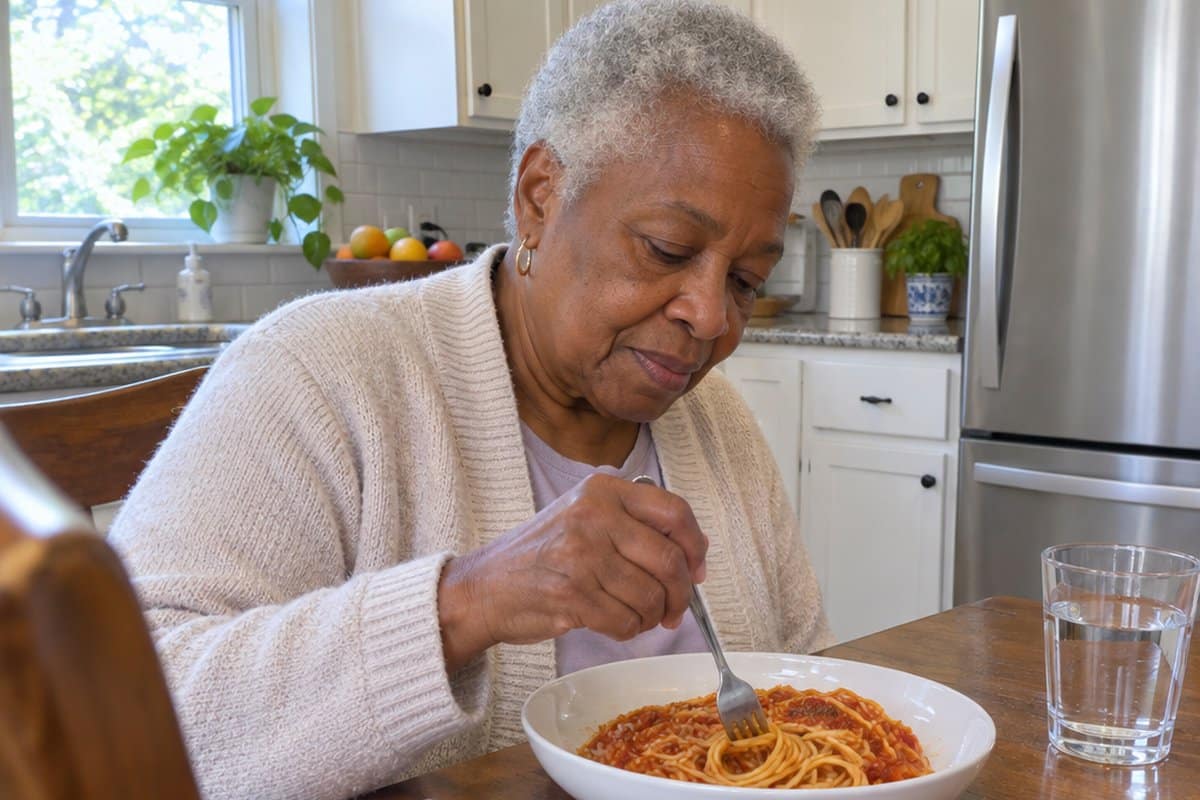
If you want the short list, these are my top plate picks for seniors who want to eat independently with less mess, and you’ll find the details on each one further down.


Losing the ease of feeding yourself is hard to accept, and it brings up a lot of questions. There is no shame in using a little help, and a good plate is one of the simplest kinds.
Eating well matters for your health and for how much you enjoy the day. Special plates are made for people with physical difficulty eating, so food stays on the plate and you can keep feeding yourself.
This article covers the kinds of plates that help and who each one suits. I also point out where a plate falls short, so you don’t buy one that won’t fit your needs.
Why Do Some People Need Special Plates?
Most people take eating for granted. It’s something we do while talking or while watching television.
Using a knife and fork is automatic. But, when illness leaves you weak, eating is difficult.
Tremors in the hands can make food go flying. Arthritis makes it painful to even hold your cutlery.
As if that wasn’t bad enough, declining vision plays a role. This makes it difficult for you to find your food.
Often leading to you pushing it over the edge of the plate. Having trouble feeding even affects your overall nutrition.
If eating has become hard or you are losing weight, tell your doctor; an occupational therapist can suggest the right tools.
There are a lot of things that can go wrong in this most basic of daily care tasks. That’s why there is a variety of aids on the market that can help no matter what limitation you have. These aids can’t remove your physical challenges. But, plates designed for seniors will allow you to independently enjoy your food. That’s the important part.
Plastic Plates or Ceramic?
If you’re buying plates for your senior family member, or for yourself, think about whether you should buy plastic or ceramic options. Choosing the right material makes it easier for your senior to use the plates. And, make caring for and cleaning the plates simpler as well. To help you make the right choice, here are the key factors:
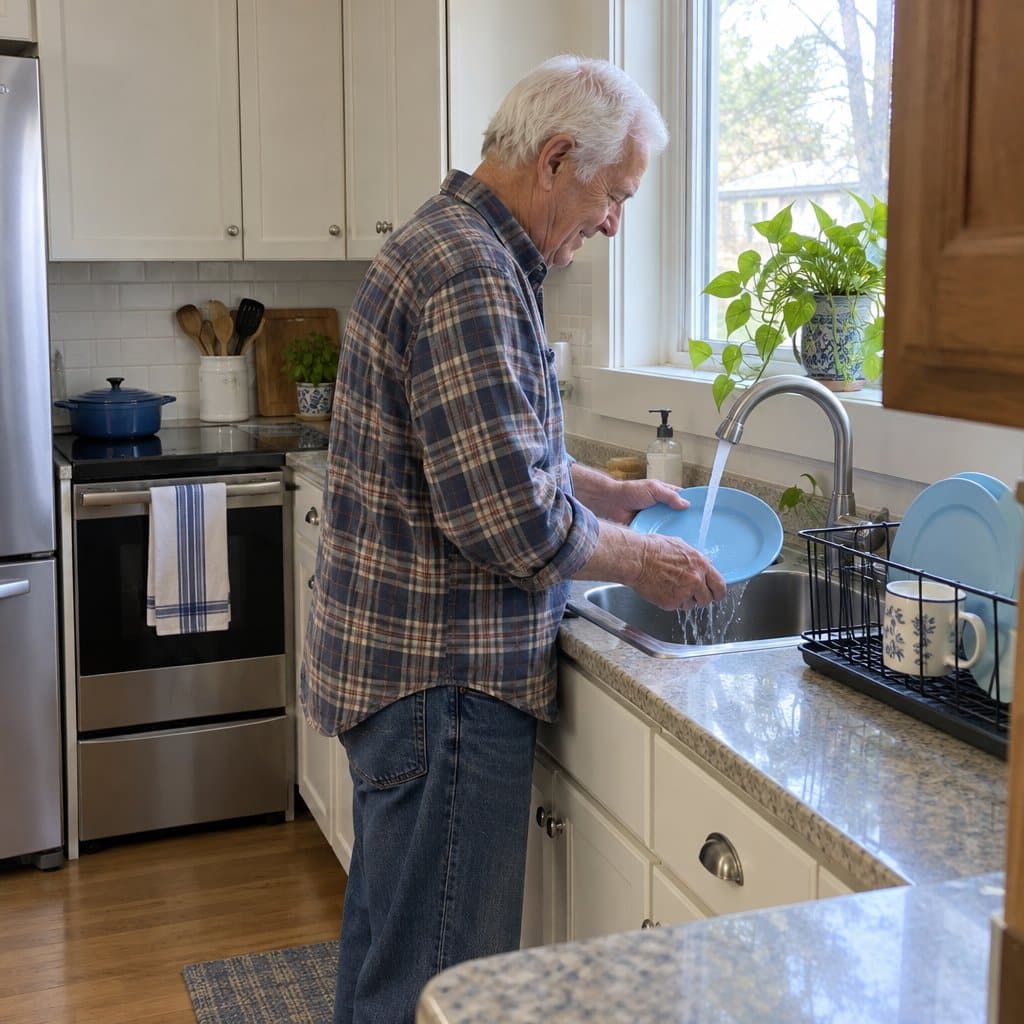
- Are they easy to clean? Normal ceramic plates may look good but they’re often difficult to clean. Plates that are designed for seniors are usually made of plastic. This makes them easy to wash and dishwasher safe. This is a real bonus if you have to do your own dishes after eating. Family members and caregivers will appreciate this too.
- Will they break easily? People who have trouble eating usually have weaknesses in their hands or wrists. This makes it difficult to hold cutlery as well as getting the spoon or fork to their mouth. Unfortunately, these types of physical problems lead to a lot of plate breakages. This usually happens during washing or while moving the plate from a counter to the table. Many plates designed for seniors are made of plastic which is sturdy and hard to break. This is a big help if your plate tends to move a lot and even falls off the table while you’re eating. Even if you do drop the plate, at least you won’t risk injury or even a fall by picking shards of ceramic off the floor. This is an important part of kitchen safety for elders.
So, what’s the verdict? For most situations, plastic plates are probably best.

Plates with Walls
Some seniors have trouble picking up food off of a plate. They chase it with their fork and often push it off the edge of the plate. This is not where you want your food of course. And, it causes a mess that has to be cleaned up.
There are a variety of plates that can help with this issue. The most basic walled plate has raised edges to keep the food on the plate. This is very helpful if you’re eating foods like pasta. Or, if you are the type that likes to mix foods together. These walls won’t totally prevent the food from falling onto the table. But, they are a big help for picking up slippery or awkward foods.
Scoop Bowls and Plates
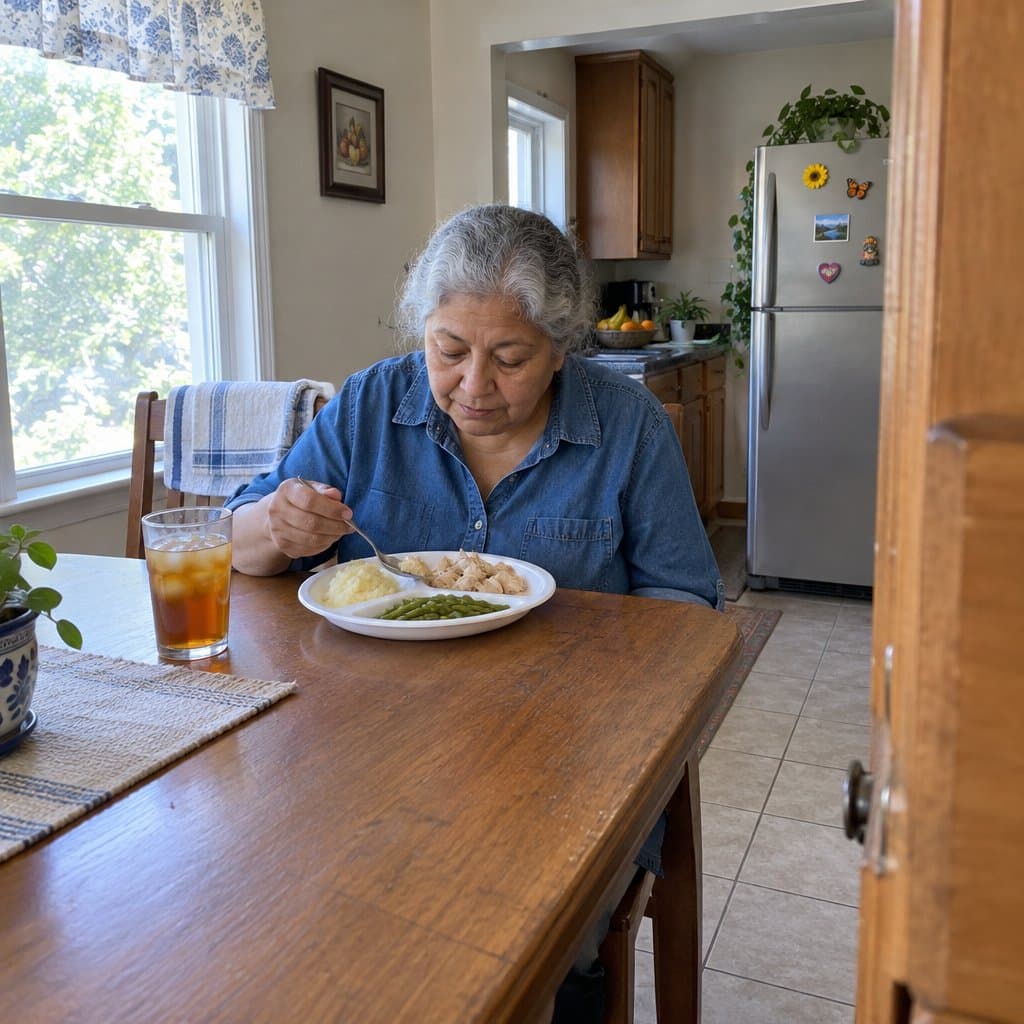
There are also aids called scoop bowls and scoop plates that are designed to make eating softer foods easier for seniors. These have a high raised edge on half the plate. But, the front of the plate is lower. This type of plate helps elderly people scoop the food onto their fork or spoon by pushing it towards the back. Having the open front makes it easier to use too.
Here are some of my recommendations for high-walled scoop plates for elderly and seniors:
Sammons Preston Scoop Plate
This plate has all my suggestions for improving independent eating for seniors. It has a high edge to help with getting food on the utensil. This also prevents a mess by keeping the food on the plate. It is also large enough to get an adult sized portion of food on the plate. Also, unbreakable and dishwasher safe!
Vive Health Plate Guard

The Vive Plate Guard is not a plate. It is a guard that attaches to a plate you already own, and it gives the food a wall to push against. That helps get food onto the fork or spoon instead of over the side.
It is made from BPA-free polyethylene, which is a food-safe plastic. It is meant to fit most standard plates and comes off when you don’t need it, so the same dishes can go back to normal use. Vive describes it as easy to clean.
This suits someone who likes their own dishes and just needs help keeping food in place. It also works well if you want to try a guard before buying a whole new set of adaptive plates.
The trade-off is fit. It is listed at 14 cm in diameter and made for most standard plates, so a plate with an unusual shape or a very wide rim may not hold it well. If you would rather not fiddle with an attachment, a plate with a built-in high edge is simpler.
Vive Health Spill-Proof Scoop Bowl

This is the Spill-Proof Scoop Bowl from Vive Health. It has raised, contoured walls that guide food back onto the spoon or fork, so less ends up on the table or in a lap.
The base has built-in suction that anchors the bowl to the table. That keeps it from sliding or tipping while the person is eating, which helps anyone who is trying to eat on their own.
It suits people with tremors, limited mobility, or coordination difficulties. It is made from BPA-free, food-safe plastic, and Vive backs it with a 60-day guarantee.
One thing to know: suction works best on a smooth, flat surface. A textured or cloth-covered table may not give it much to grab. It also won’t help someone who needs a plate with dividers, since this is a single bowl.
Vive Health Spill-Proof Bowl And Plate Set

This is a plate and bowl set from Vive Health. Both pieces have high, curved edges, which gives the fork or spoon a wall to push against. Food ends up on the utensil instead of over the side.
Each piece also has a built-in suction cup on the bottom. It holds the dish to a flat surface, so it is less likely to slide or tip while the person is eating.
That helps most for someone with limited dexterity or coordination, such as a tremor.
The dishes are made of BPA-free, food-grade plastic that is meant for daily use. Vive backs the set with a one-year guarantee.
Know the trade-off: suction only works on a flat, smooth surface. A textured placemat or a table with a rough finish won’t give it much to grab, and it is worth checking the listing before you put these dishes in the microwave.
Essential Medical Supply Adaptive Dinnerware Set
If you would like to have a once and done solution for helping elderly people eat, here it is. This complete table setting has all the products needed to serve and consume a full meal. While I don’t know if I subscribe to the whole red plate theory, I do know that this set is very helpful regardless of the color.
Plates with Sections
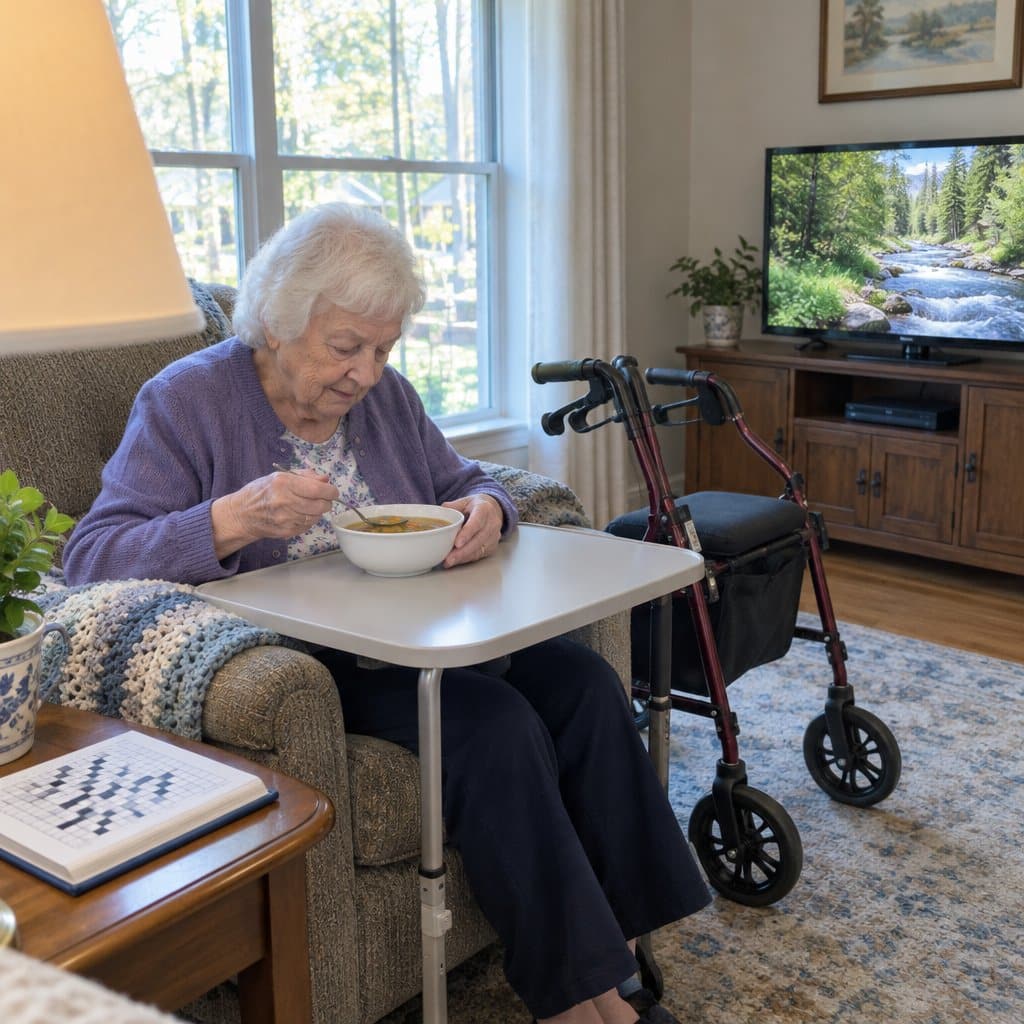
You can also get plates that have partitioned compartments to keep different foods separate. For some, this option is a little more difficult to use. Your spoon will constantly be running into the raised edges. But, these plates are a good choice if you want to keep your foods separate.
This is the case for elderly people who have to eat soft or pureed foods. They are also useful for people who have vision problems. Each type of food is kept separate from the others and easy to find.
Here are my recommended plates with high walls and sections:
GripWare Scoop Plate With Non-Slip Base
This divided scoop plate has a non-slip base, which helps keep the plate from sliding while you eat. Like I’ve said before, that matters for cutting down on spills and keeping food where it belongs.
It is 8.75 inches across, with two 4 fluid ounce compartments and one 8 fluid ounce compartment. The scooped design is meant to support self feeding for people with limited mobility or coordination, so the food has something to push against.
It comes with a vented lid that helps hold in warmth while letting steam escape. The plate is made from melamine-free material and is safe in the microwave and dishwasher.
The dividers suit people with moderate difficulty. If your challenges are more severe, you may need a deeper dish than this one.
Maddak Partitioned Scoop Dish
This sectioned plate has nice, deep walls that are 1-1/2″ high. This ought to really help keep food where it belongs, even for people with more advanced needs.
It also has a lid for storing foods for later or preparing meals in advance. Remove the lid and pop in the microwave for an easy meal.
Also, dishwasher safe for easy cleaning.
Skid-free Plates
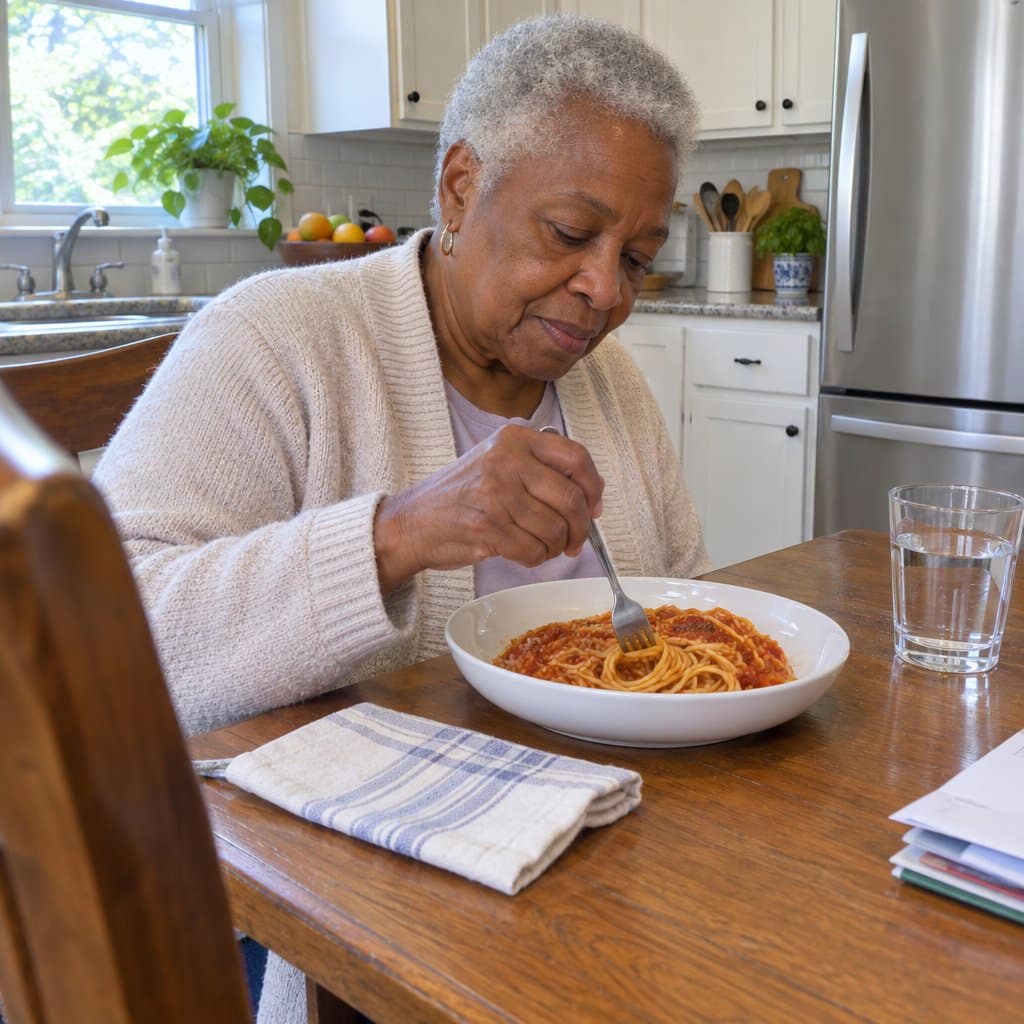
Sometimes it’s not just the food that ends up all over the place. Tremors may cause the plate itself may skid across the table. This is a very slow and tiring way to eat. Weighted plates help because they are heavier than normal plates. They are also usually made of a thicker material and insulated to keep the food warm.
They are also a good option for seniors who have less control over their hands and end up pushing plates off the table. However, weight plates are heavier and may not be a good choice for seniors who do their own cleanup or have the carry their plates.
There are other options for skid-free plates. Some have rubber patches on the bottom. Others use silicone mats in combination with a rubberized bottom.
Another good option to try is plates or bowls that have suction cup bases. Especially when you need an aggressive solution to moving plates. These “stick” in one location to help ensure your plate stays where you want it. These may be a better option than weighted plates. They are lighter and easier to pick up and clean.
Freedom Scoop Plate With Suction Pad
The Freedom Dinnerware Scoop Plate with Suction Pad Base pairs a scoop plate with a pad that grips the table. It is made for people with hand tremors, Parkinson’s disease, paralysis, uncontrolled movement, or other conditions that make it hard to use the hands for eating.
To use it, set the plate with its pad attached on a flat surface and press down with slight pressure. That creates suction, so the plate stays put even if it gets bumped. To release it, lift one corner of the pad.
The high edge of the plate is 1 ½ inches and the low edge is ¾ inch, so food can be pushed against the side and onto the fork or spoon. It suits flat table tops, wheelchair trays, and over-bed tables, and the details also name boats and RVs.
The trade-off is that it is one open space, so foods will run together. If mixed-up food bothers the person eating, or if they get confused by a lot on the plate, this may not be the right fit. Suction also needs a flat surface to hold.
If the person you care for has dementia, a simple suction cup plate divider for dementia mealtimes can keep food in place and make eating less stressful.
Vive Health Spill-Proof Scoop Plate

This scoop plate from Vive Health has a raised, curved lip on the side. You push your fork or spoon against it, and the food slides onto the utensil instead of off the plate. It is made for people with limited dexterity who still want to feed themselves.
The base has a nonslip ring, so the plate stays put on the table while you scoop. The plate is blue, which stands out against a light-colored table or placemat and makes the food easier to see. It is made of a sturdy, food-grade material and is safe for the microwave and dishwasher.
One thing to know: the nonslip ring grips the table, but it is not a suction cup. If a tremor or strong spasticity (stiff, involuntary muscle movement) makes the plate get bumped or pulled, a plate with suction may hold better. Food also sits together in one open space, so this is not the pick if you want foods kept apart.
If the person you care for has dementia, a simple suction cup plate divider for dementia mealtimes can keep food in place and make eating less stressful.
Final Thoughts
When eating gets harder, some basic activities you once did easily can take more effort, and you may need more help day to day. It’s important to accept the help you need and to keep up your regular eating pattern, which supports your health and safety.
But, it’s also important to stay as independent as you can. Tools like special plates for elderly people allow you to perform normal everyday activities. Preparing foods may be simpler by using lightweight pots and pans. Sometimes, a nice easy to use microwave is better for cooking. These devices help you work around your limitations. If eating from a standard plate is causing you trouble, try some of these options. If spills are happening from drinking, check out these spill-proof cups and lightweight coffee cups for seniors. They might just give you the help you need while still allowing you to maintain your independence.
Do you have any other suggestions on how seniors and elders to make feeding easier? Or even safer? Your suggestions are welcome in the comments below. Questions, of course, are welcome too!





Thank you for this website! I am crying with joy to have found you. My mom is almost 90 and recently is needing to have everything pureed. It became challenging and you have given me guidance that is very much appreciated.
Wow – thanks Ilana! This is exactly the reason I work so hard to provide this information to people. Improving the quality of life for our seniors is very important to me. My way of giving back you know?!? Thanks again for your comment and best wishes to you and your mom!
I want Aladdin to sell those covered plates one gets in the hospital (with the heat source in the base to regular people. They don’t. I want three sets !!!!
I agree about the plates with heat source in the bottom. My husband eats slowly per doctors orders. His food gets cold. Reheating in microwave is not the answer as makes food tough.
Loved your website – so informative! It’s also the first one I’ve come across that approaches the subject with compassion and empathy, in addition to the abundance of great information! Well done! Thank you!
Hey Bob – Thanks so much for taking the time to let us know that you find the site helpful! It’s a lot of work and it’s nice to know that people are benefiting from it! THANKS so much – Scott